
REVIEW · VALENCIA MURAL TOURS
Best Street Art in Valencia Walking Tour
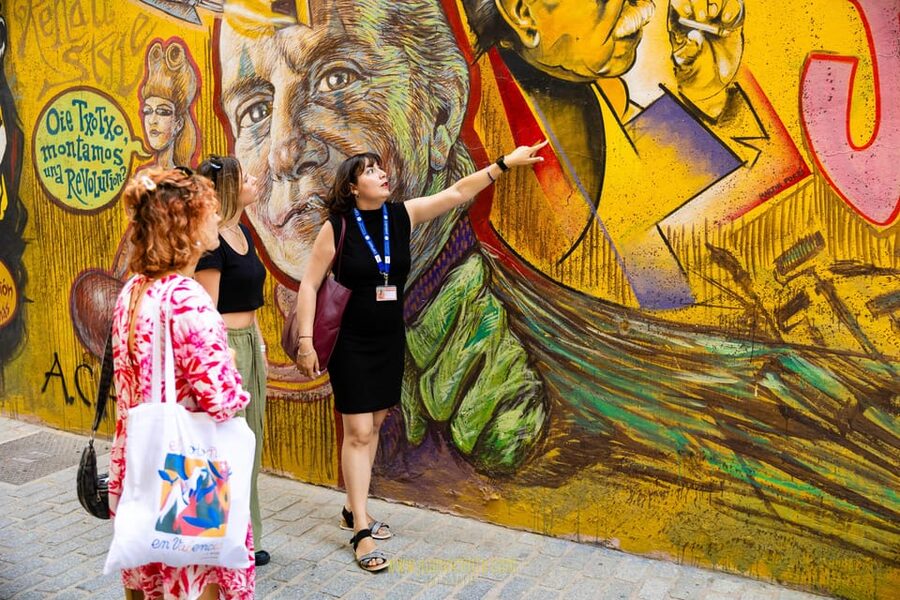
Street art rewards a curious eye. This two-hour Valencia walking tour takes you from Serranos Towers through El Carmen, the CCCC, IVAM, and Velluters, pairing murals with stories about artists, politics, and technique. I especially like the small-group limit of 10 and the focus on works you could easily miss without a local guide. I also like that the route includes both outdoor murals and a museum visit.
The main consideration is pace. Two hours covers several parts of Ciutat Vella, so you will spend much of the time walking and stopping briefly at individual works. The CCCC visit is not available on Mondays, and the tour price of $41 per person is fair if you value interpretation, but less tempting if you only want a quick photo walk.
Key Things to Know Before You Go
- Start behind Serranos Towers: Meet on the Plaza dels Furs side, not at the front of the towers.
- Meet Maria, when she is guiding: She is praised for her clear Spanish, friendly manner, and personal connections with artists.
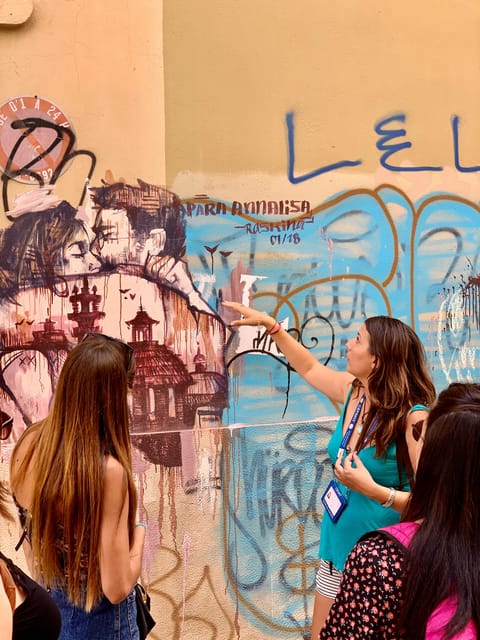
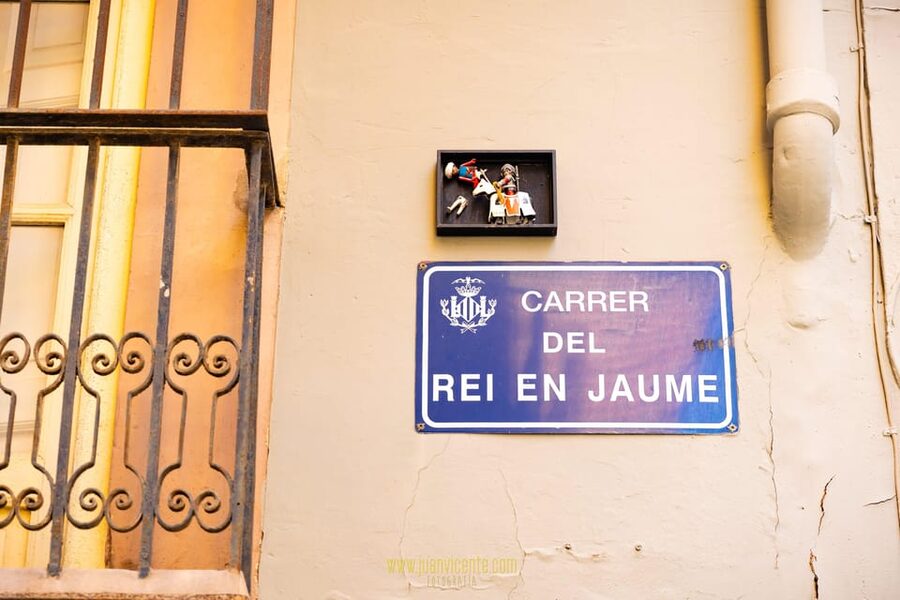
- Look beyond large murals: The route includes paste-ups, stencils, yarn art, and smaller works that are easy to pass without noticing.
- The CCCC adds indoor context: Except on Mondays, you visit the cultural center to see murals and learn about Valencia’s street-art story.
- Expect a small group: No more than 10 participants makes it easier to ask questions and hear explanations.
- Bring practical gear: Comfortable shoes, sunscreen, comfortable clothes, a camera, and a charged phone will all help.
Why Valencia Street Art Deserves Two Hours
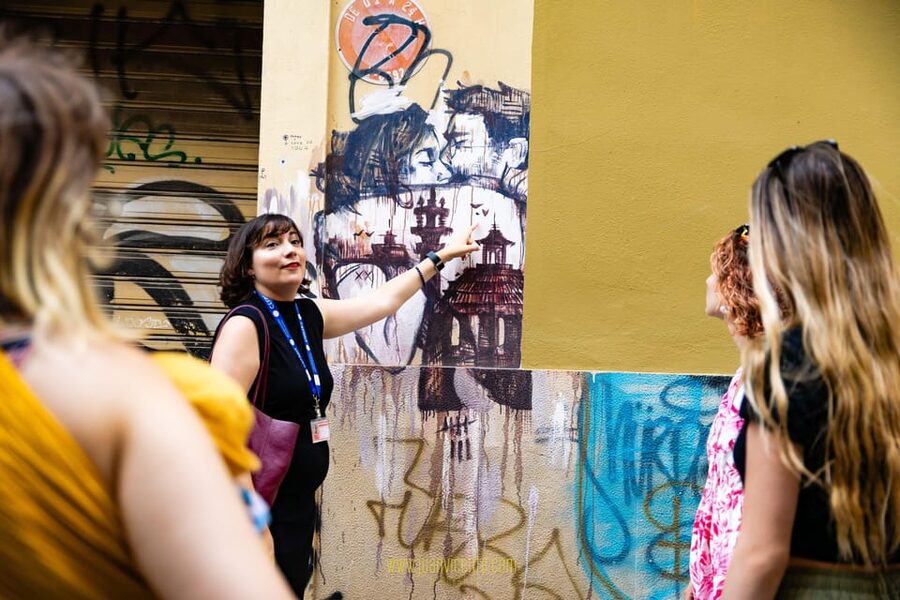
Valencia’s street art is not confined to one gallery or one famous wall. It appears on shutters, side streets, old facades, temporary surfaces, and large blank walls. That scattered nature is exactly why a guided walk helps.
I like the way this tour treats street art as more than decoration. You learn how a mural was made, who made it, and what social or political ideas may sit behind it. The guide also explains how local artists fit into Valencia’s creative scene, giving you a way to read the city after the walk ends.
The experience is led in Spanish, English, French, or Catalan. That language choice matters because the meaning of street art can be hard to catch from a quick translation or a caption beside a picture. The tour is also wheelchair accessible, though you should still ask the provider about the exact route if surface conditions matter to you.
The group limit of 10 is another real advantage. Street-art walks can become frustrating when a guide is speaking to a crowd spread across a narrow lane. Here, you should have a better chance of seeing the work, hearing the explanation, and asking why one artist chose a stencil while another used a paste-up.
More Street Art Walking Tours in Spain
- Barcelona: Raval Street Art and Graffiti Walking Tour
★ 4.9 · 60 reviews - Bilbao: Art District Walking Tour
★ 4.8 · 27 reviews - Granada: “Street Art & The Caves” Unique Guided Walking Tour
★ 5.0 · 27 reviews
Meeting at Serranos Towers
The tour begins behind the Torres de Serranos, on the Plaza dels Furs side. These medieval towers are a useful landmark, but the meeting instruction is specific: do not wait at the main front entrance.
This first area is surrounded by murals, including works tucked away from the main sightseeing paths. That makes the opening section useful even if you already know the cathedral area or have photographed the towers. You start by looking away from the obvious monument and toward the walls around it.
Your guide introduces the idea that street art is temporary. A piece may be painted over, altered, damaged, or removed, so the route is not simply a fixed collection of permanent monuments. You are seeing a changing part of Valencia, with the guide providing the local record and the artist stories that may not be printed anywhere nearby.
Bring your phone fully charged. A camera is included among the suggested items, and you will probably want to photograph both the artwork and the artist names. The provider also supplies a document with the Instagram accounts of the artists, which is handy if you want to follow the work after returning home.
Reading the Walls of El Carmen
From Serranos Towers, the walk moves into the Barrio del Carmen, one of the key areas for Valencia’s street art. The route introduces artists such as David de Limón, Disneylexia, Deih, Hyuro, La Nena Wapa Wapa, Julieta XLF, and Escif.
The value here is not just spotting a famous signature. The guide helps you compare different ways of working. A mural may be painted directly onto a wall, while another image may have been prepared elsewhere and attached as a paste-up. A stencil uses cut shapes to repeat an image or message, and yarn art brings a softer, textile-based approach into the street.
That technical vocabulary gives you a practical skill. After the tour, you may start noticing the difference between a sprayed stencil edge and a brush-painted line. You may also recognize an artist’s repeated character or visual mark in another part of town.
I would pay special attention to the smaller pieces. Large murals announce themselves, but the most enjoyable finds can be tucked beside doorways, on shutters, or along a route you would otherwise treat as a passage between major sights. This is one reason the guide matters. You are not just following a map of big walls.
The route also gives room for discussion about social and political ideas. One participant specifically valued the political and social context that Maria brought to the tour. That is important in Valencia, where a mural can comment on public life, identity, power, or the city itself. You do not need to agree with every message to understand why it is there.
The CCCC Visit, Except on Mondays
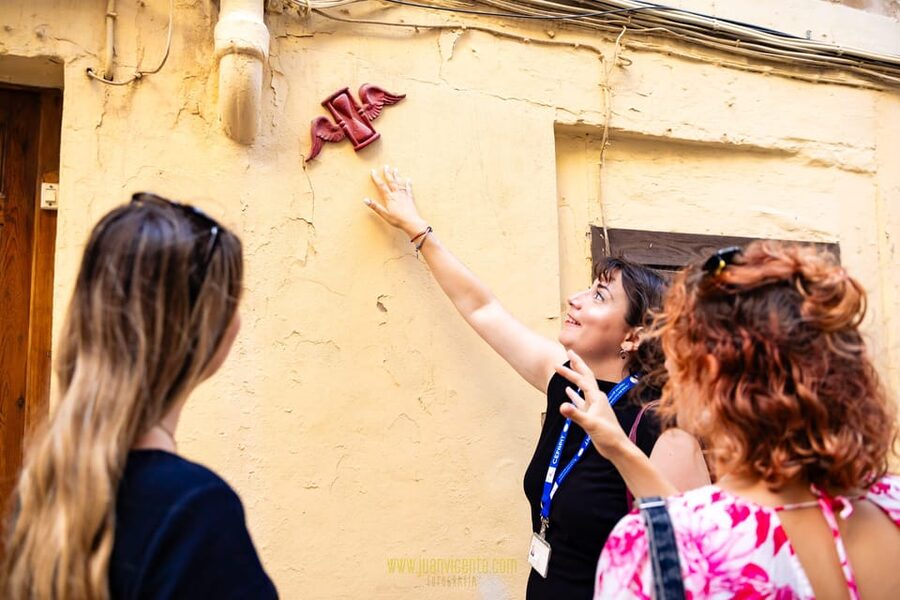
The tour includes a visit to the CCCC, the Centre del Carme Cultura Contemporània, except on Monday. This indoor stop breaks up the walking and gives the tour a useful change of scale.
Outdoor art can be hard to study. Sunlight, parked vehicles, passing pedestrians, and the condition of a wall all affect what you see. Inside the CCCC, you get a more controlled setting for looking at murals and considering how street art relates to contemporary culture.
The museum visit also helps explain Valencia’s place in the wider street-art story. Instead of treating the works as random decoration, the guide connects them to the city’s artists and creative movements. One participant described the museum as a particularly worthwhile addition, and I can see why. It gives the tour a little more substance than a simple walk from wall to wall.
Check the day before you book if Monday is your only available day. The route still has outdoor content, but the CCCC visit is not part of the experience then. That difference may matter if the museum is one of your main reasons for choosing this tour.
Same walls, a different guide:
- Barcelona Street Art and Graffitti Bicycle Tour
★ 5.0 · 361 reviews - Madrid: Street Art Tour with Local Graffiti Hunter
★ 4.8 · 270 reviews - Street Art Guided Tour in Madrid
★ 5.0 · 175 reviews - Barcelona Street Art Tour with Exclusive Artist Studios Visit
★ 5.0 · 152 reviews
Behind the IVAM: Escif and Large-Scale Work
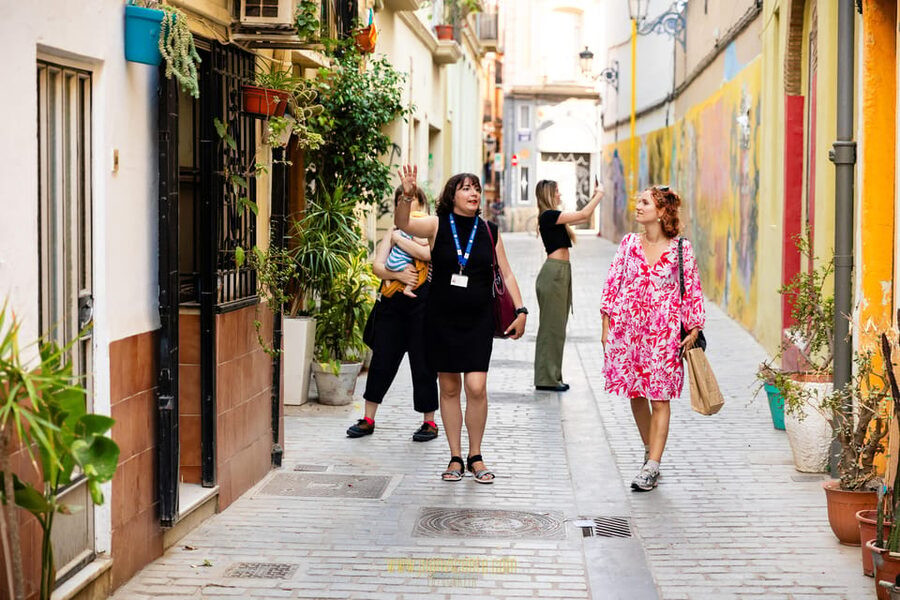
The walk continues to the area behind the IVAM, the Institut Valencià d’Art Modern. Here you see impressive murals by Escif and other artists.
This stop is useful for comparing street art with the work shown in a major modern-art institution. The art is not confined to museum walls. Instead, it sits in the city, exposed to weather and public reaction, and it changes the feel of the surrounding streets.
Escif is one of the names that appears more than once on this route, so you get a chance to think about his work as a body of ideas rather than a single isolated image. The guide can point out visual patterns, references, and the way the work interacts with the building or street around it.
Do not expect every mural to be in perfect condition. Outdoor works can fade or be covered, and that is part of the nature of this art form. If you want pristine images for a photography portfolio, conditions may vary. If you want to understand how public art lives in an ordinary neighborhood, the imperfection is part of the lesson.
Finishing in Velluters
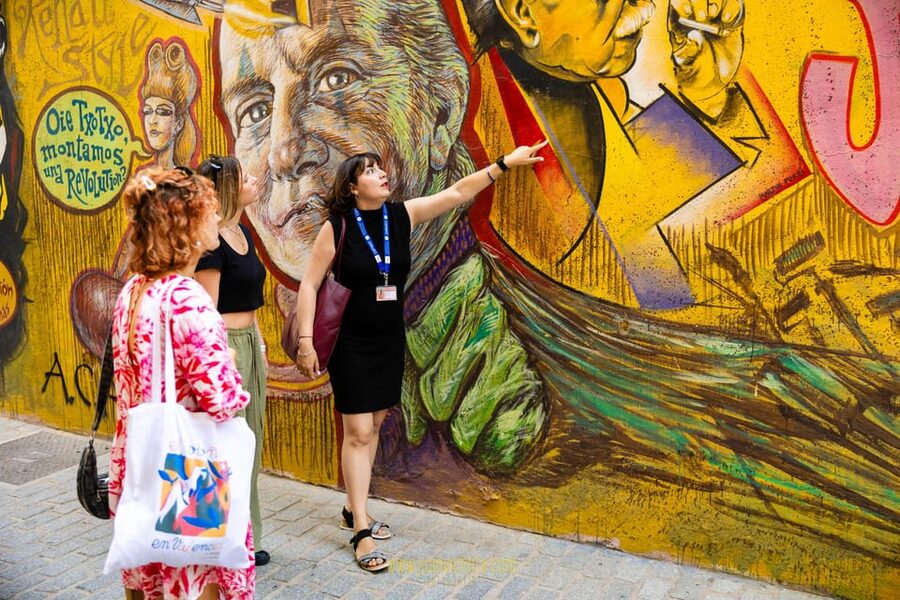
The final section takes you into Velluters and ends at Plaça de la Botxa. Here, the focus is on massive murals made by a group of artists.
This ending gives the tour a broad finish. You begin with smaller and more hidden works around Serranos Towers, then move through the varied streets of El Carmen, add the museum perspective, and finish with large collaborative pieces. You see how individual voices and group projects can shape a neighborhood differently.
A group mural also raises questions that a single-author work does not. Who chose the subject? How did the artists divide the wall? Do their styles blend, or do they remain distinct? You may not get a long discussion at every painting, but the guide’s explanations help you look for those differences.
The finish at Plaça de la Botxa is in Ciutat Vella, making it convenient for continuing your afternoon on foot. The tour does not include food or drinks, but you can buy refreshments during the walk. Since the route lasts two hours, carry water or plan to purchase something along the way, particularly on a sunny day.
What Maria Adds to the Experience
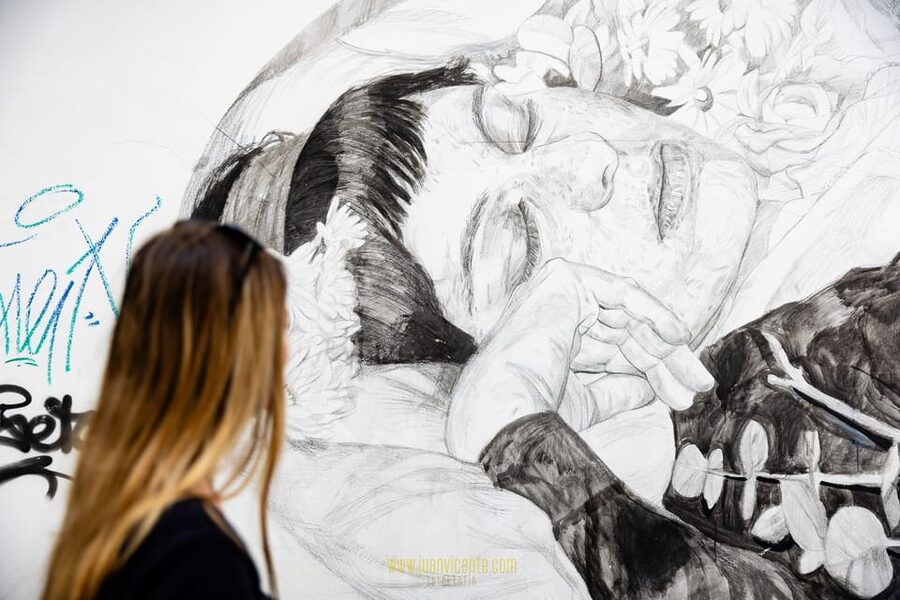
The guide’s quality is central here, and Maria receives especially strong praise. She is described as friendly, passionate, and clear in her explanations. One participant appreciated that she spoke Spanish in an easy-to-understand way, while another valued her political and social insight.
Maria has also personally met several well-known street artists. That does not mean every stop turns into an inside story, but it can add a human touch that you will not get from a printed guidebook. Artist names become more than labels, and techniques become connected to real people working in Valencia.
The best guides know when to explain and when to let you look. Street art can lose its impact if every surface is buried under a lecture. In a small group, you should be able to ask about an artist, a technique, or the meaning of a particular image without holding up a large crowd.
The languages are Spanish, English, French, and Catalan. If you have a preference, select it when booking so the experience matches your needs. The strongest feedback praises both the guide’s subject knowledge and her warm manner, which is a useful combination on a walking tour.
Is $41 a Fair Price?
At $41 per person, this is not the cheapest way to see street art in Valencia. You can walk through El Carmen without paying for a guide, and public murals cost nothing to view.
The price becomes easier to justify when you count what is included: a certified guide, a small group capped at 10, the CCCC visit except on Monday, explanations of several techniques, artist background, and a document listing artist Instagram accounts. You are paying for the stories and the ability to find works that are easy to miss, not for transport or a meal.
I think the price works best for a first visit to Valencia, for anyone with a serious interest in public art, or for visitors who want social and political context rather than quick photographs. If you already know the city’s street-art districts and prefer to wander alone, you may find the fee harder to defend.
The two-hour length is also part of the value. It is long enough to cover several districts without taking over your entire day. It is short enough to fit before lunch, after a morning visit to the cathedral area, or alongside other plans in Ciutat Vella.
Practical Advice for a Better Walk
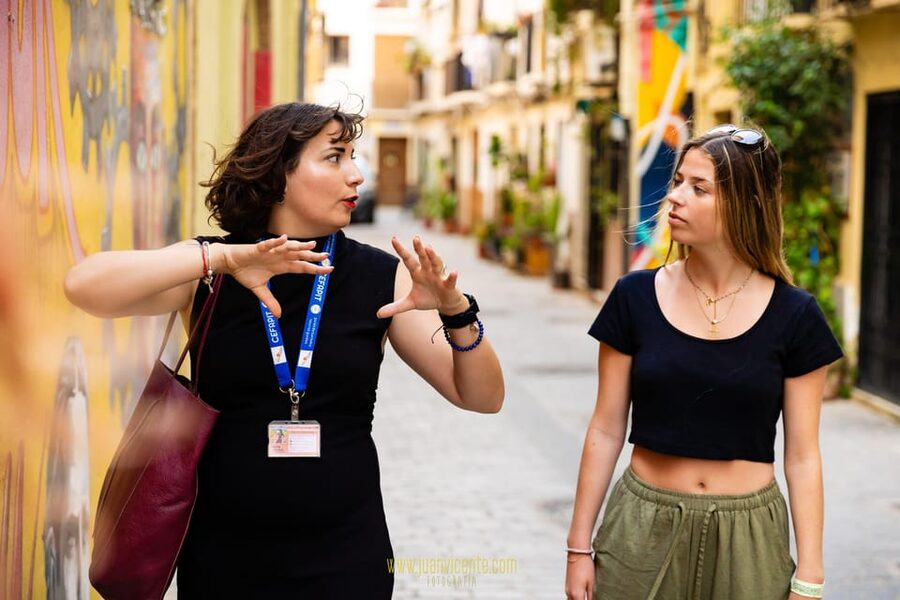
Wear comfortable shoes. The route moves through several parts of the old city, and stopping to look at walls does not make the walking disappear.
Use sunscreen and comfortable clothes. Valencia can be bright, and much of the experience takes place outdoors. A charged smartphone helps with photos, artist accounts, and any digital information you may want to save.
Arrive at the rear side of Serranos Towers, by Plaza dels Furs. This is the most important meeting detail. The towers have more than one obvious side, so give yourself enough time to identify the correct location.
If you want the CCCC visit, avoid Monday. The outdoor route still has plenty to offer, but the museum stop is excluded that day.
You can cancel up to 24 hours before the tour for a full refund, and the booking option allows you to reserve now and pay later. Those policies are useful when your Valencia plans are still shifting. The tour is wheelchair accessible, though anyone needing exact information about surfaces and access should confirm the current route in advance.
Who Should Book This Valencia Art Walk?
I would recommend this walk to you if you like cities best when you understand the people who shape them. It suits art students, photographers, curious first-time visitors, and anyone who has walked past murals without knowing what they were seeing.
It is also a good choice if you want a compact cultural activity. In two hours, you cover outdoor work, a museum setting, artist technique, local names, and social context. That is a lot of ground, but the small group should keep the experience personal.
Families with older children may enjoy the visual variety, especially if the children like drawing or taking photos. The route is less suitable for anyone who dislikes walking, bright outdoor conditions, or pauses for explanation.
The tour is not designed as a food walk, a general old-town tour, or a visit to every major sight in Valencia. Choose it for street art. That focus is its strength.
Should You Book It?
Book this tour if you want to see more than the famous walls and understand how Valencia’s street-art scene works. The mix of El Carmen, the CCCC, the IVAM area, and Velluters gives you a useful view of both small works and massive murals.
The strongest reason to go is the guide, especially if Maria leads your group. Her clear explanations, personal connection with artists, and attention to political and social meaning can turn a collection of walls into a readable part of the city.
Skip it if you would rather explore alone, if $41 feels high for a walking activity, or if Monday is your only day and the CCCC matters to you. For most art-minded visitors, though, the small group, focused route, and practical artist information make this a solid use of two hours in Valencia.
FAQ
Where does the street-art tour begin?
It begins behind the Torres de Serranos, on the Plaza dels Furs side.
Where does the tour finish?
The tour ends at Plaça de la Botxa in Ciutat Vella, Valencia.
How long does the experience last?
The guided walking tour lasts two hours.
What languages are available?
The guide can lead the tour in Spanish, English, French, or Catalan.
Is the CCCC included?
Yes. The tour includes a visit to the CCCC, except on Mondays.
Is the tour wheelchair accessible?
Yes, the activity is listed as wheelchair accessible.
How large is the group?
The tour is limited to 10 participants.
What should I bring?
Bring comfortable shoes, comfortable clothes, sunscreen, a camera, and a charged smartphone.
Can I cancel for a refund?
Yes. You can cancel up to 24 hours in advance for a full refund.
Just added around Spain
- Small-Group Graffiti Tour and Workshop in El Carmen★ 5.0 · 2 reviews
- Bilbao Urban and Street Art Walking Tour★ 5.0 · 2 reviews
- Barcelona Street Art, Graffiti and Tapas Tour★ 4.0 · 5 reviews
- Salamanca: Private Guided Street Art Walking Tour★ 5.0 · 2 reviews
- Private Barcelona Street Art Tour★ 5.0 · 2 reviews
- Barcelona | StreetArt Bike Tour Moco Museum★ 4.6 · 13 reviews
- Madrid Street Art Tour (Malasaña Chueca Gran Via & Lavapies)★ 3.5 · 8 reviews
- Málaga: Street Art Tour in the Soho District★ 5.0 · 4 reviews
Valencia Mural Tours, compared.
Valencia Street Art | Private Tour by Bike or Electric Ride
Read our review →
Valencia Street Art | Small Group Guided Tour by Bike
Read our review →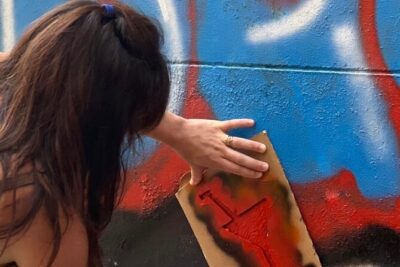
Small-Group Graffiti Tour and Workshop in El Carmen
Read our review →Browse the lists this tour appears in