
REVIEW · MADRID MURAL TOURS
Madrid Street Art Tour (Malasaña Chueca Gran Via & Lavapies)
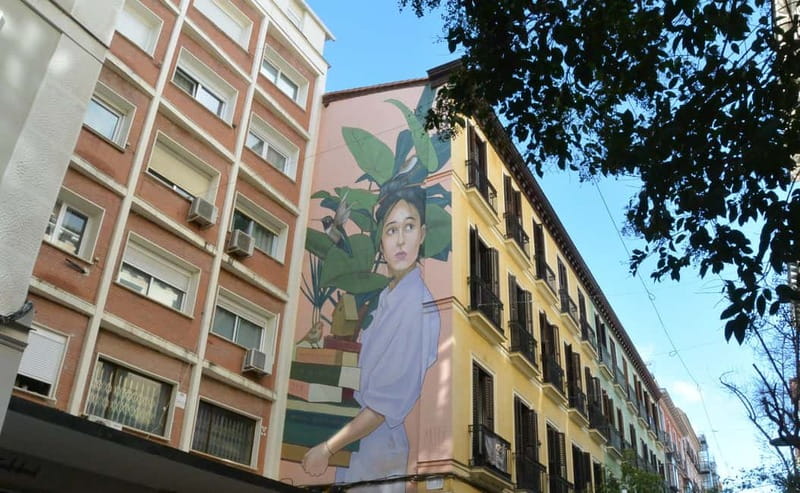
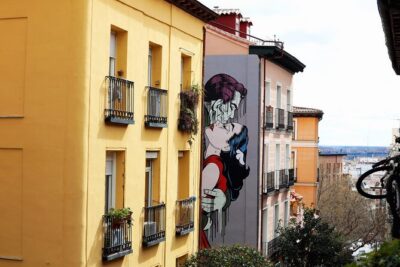
Madrid reveals itself on its walls. This two-hour walk takes you beyond the grand monuments and into Malasaña, Chueca, and Lavapiés, where murals, stickers, mosaics, graffiti, and urban sculpture share space with everyday city life. I like the mix of art and local stories, plus the chance to see the protected signature of Madrid artist Muelle and work linked to Urvanity Art Fair and Calle festivals. The main consideration is simple: you will walk a lot, and one hour of the route alone is spent in Malasaña and Chueca.
I also like the pay-what-you-want format, especially if you are watching your Madrid budget or want a short introduction before choosing which neighborhoods to explore on your own. Guides explain how graffiti began and point out artists such as Okudart, Basket of Nean, El Rey de la Ruina, and Done Street. The experience is conducted in English, and guide Diana has received particular praise for making the walk friendly and enjoyable.
The route covers plenty in two hours, but that pace has tradeoffs. You get a broad look at several districts rather than a slow, detailed study of every mural. If walking is not part of your normal routine, you may find the distance tiring. One participant even suggested a bicycle version would have been easier.
Key points to know before you go
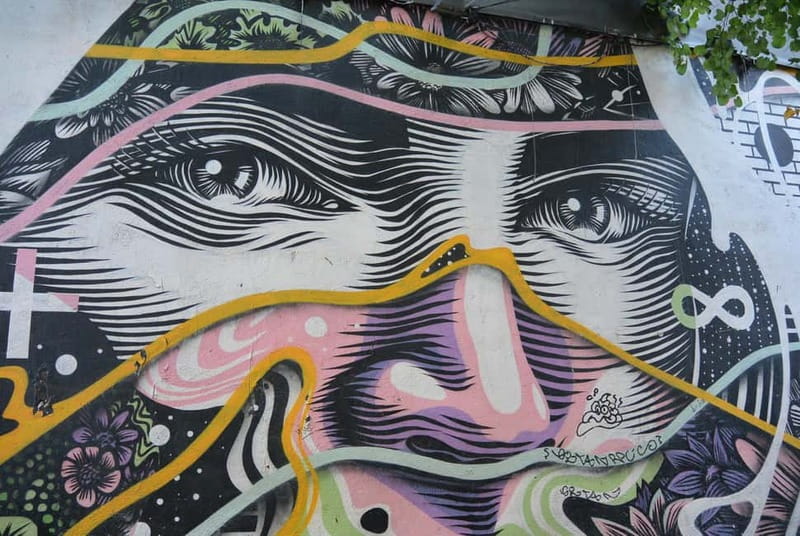
- Muelle’s protected signature: Look for one of Madrid’s earliest and most recognizable graffiti marks, preserved as part of the city’s street-art story.
- Four different sides of Madrid: The walk links central Sol and Gran Vía with the creative streets of Malasaña, Chueca, and Lavapiés.
- A useful street-art primer: You begin with the origins of graffiti before moving on to current murals, paste-ups, mosaics, and sculpture.
- The guide shapes the experience: Diana has been singled out for her warm manner, while other feedback praises the relaxed pace and clear explanations.
- A low-cost introduction: The listed price is $1.77 per person, with no booking fee and an optional tip at the end.
- Bring good walking shoes: The route is two hours on foot, with several stops and neighborhood transfers.
Why Madrid’s walls make a good walking tour
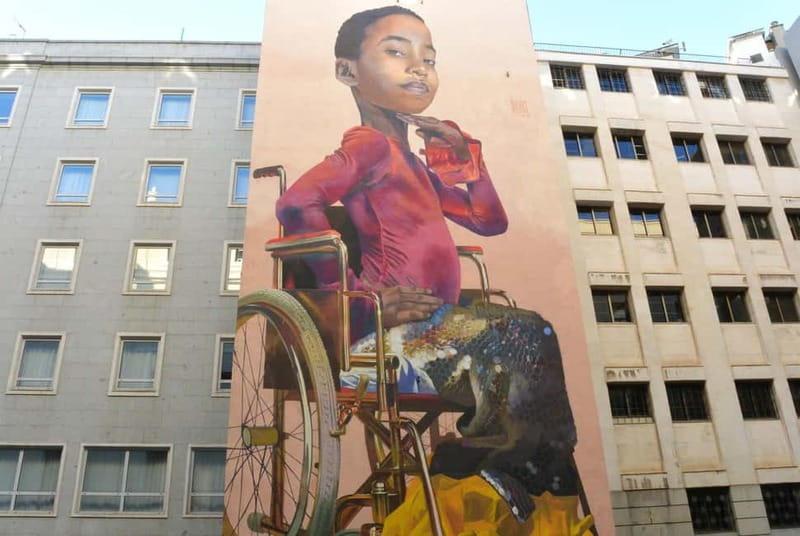
A street-art walk works best when it explains more than what you can already see. This experience begins with a short account of how graffiti developed around the world, giving you a basic framework for looking at the city’s walls. You learn to separate a painted mural from a quick tag, a paste-up from a mosaic, and a planned public artwork from a mark made without official permission.
That context matters in Madrid. The art is not confined to one gallery or designated district. It appears along ordinary streets, beside shops, around apartment blocks, and in areas where old local life meets newer creative work. A guide can point out details you would probably pass without noticing, including the signature of Muelle and work associated with national and international artists.
I like this approach because the city remains the subject. You are not simply being led from one photo stop to another. You are seeing how contemporary art fits into Madrid’s streets, buildings, and neighborhoods.
A few more mural tours around Spain worth a look
- Barcelona Street Art and Graffitti Bicycle Tour
★ 5.0 · 361 reviews - Madrid: Street Art Tour with Local Graffiti Hunter
★ 4.8 · 270 reviews - Street Art Guided Tour in Madrid
★ 5.0 · 175 reviews
Starting at Way Hostel and learning the basics
The meeting point is at the door of Way Hostel Madrid, where the guide waits with the group. From there, the tour proceeds on foot. The first short section takes about five minutes, followed by early photo stops and visits lasting roughly 10 to 15 minutes.
The opening explanation about graffiti gives you a useful starting point before the walk reaches its busiest sequence of sights. Do not expect a formal classroom lecture. The appeal is learning while standing in the neighborhoods where different kinds of street art can be compared side by side.
You should arrive ready to walk rather than treating this as a vehicle-based sightseeing trip. Comfortable clothes and shoes are specifically recommended, and a camera is worth bringing. The art changes, disappears, and gets painted over, so photographs are part of the fun.
Puerta del Sol and the Capitol building
Puerta del Sol appears early in the route, with about 12 minutes set aside for the visit. This central square is a useful point of reference because it connects Madrid’s major streets and helps you understand the city’s layout before moving into the smaller streets.
The Capitol building is also included as a point of interest. The tour does not include entry to attractions or museums, so you will view the building from outside. That is worth keeping in mind if you expect an architectural tour or interior visit. Here, the focus stays on the street and on how art appears within the central city.
These early stops also help balance the tour. You are not spending the entire two hours looking at walls. You see major Madrid landmarks, then move toward districts where the street art becomes the main reason to stop.
Gran Vía, Madrid’s Spanish Broadway
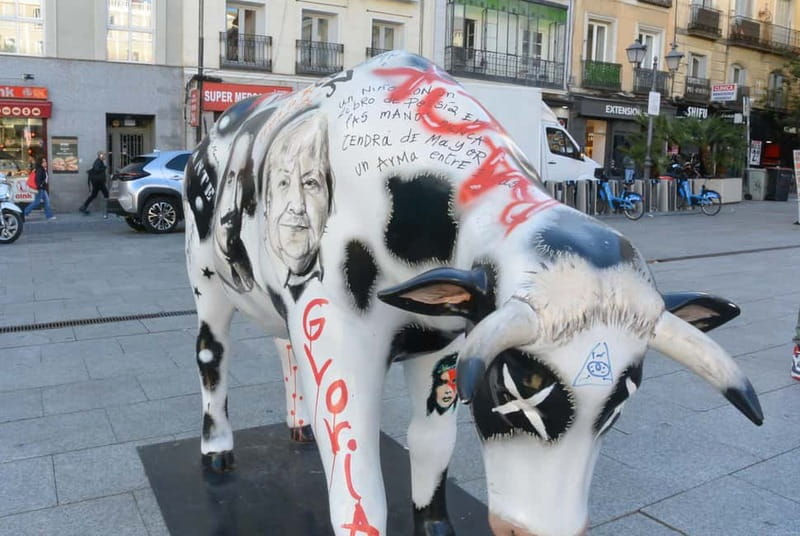
The walk continues to Gran Vía, often called the Spanish Broadway. Around 15 minutes is planned here, enough to take in the grand commercial avenue and its famous buildings without turning the tour into a full architectural survey.
Gran Vía gives you a sharp contrast with Malasaña and Chueca. It is broad, polished, and theatrical, while the later streets are more intimate and layered. The Capitol building fits naturally into this part of the route, adding another recognizable landmark to your photographs.
The tradeoff is time. Fifteen minutes is enough for an introduction, not enough for every detail. If you want to study Gran Vía’s buildings, theaters, and shops at length, plan to return on your own. On this tour, the avenue acts as a bridge between Madrid’s central sights and its more alternative neighborhoods.
Same walls, a different guide:
- Barcelona Street Art Tour with Exclusive Artist Studios Visit
★ 5.0 · 152 reviews - Raval Street Art and Graffiti Guided Tour in Barcelona
★ 5.0 · 81 reviews - Barcelona: Raval Street Art and Graffiti Walking Tour
★ 4.9 · 60 reviews - Barcelona: 3.5-Hour Street Art Tour by Bamboo Bike
★ 5.0 · 56 reviews
Malasaña: old streets with a new creative voice
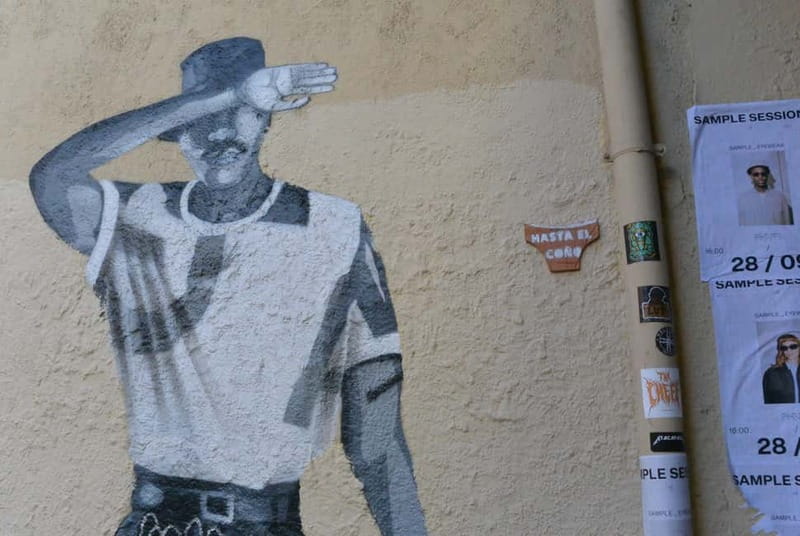
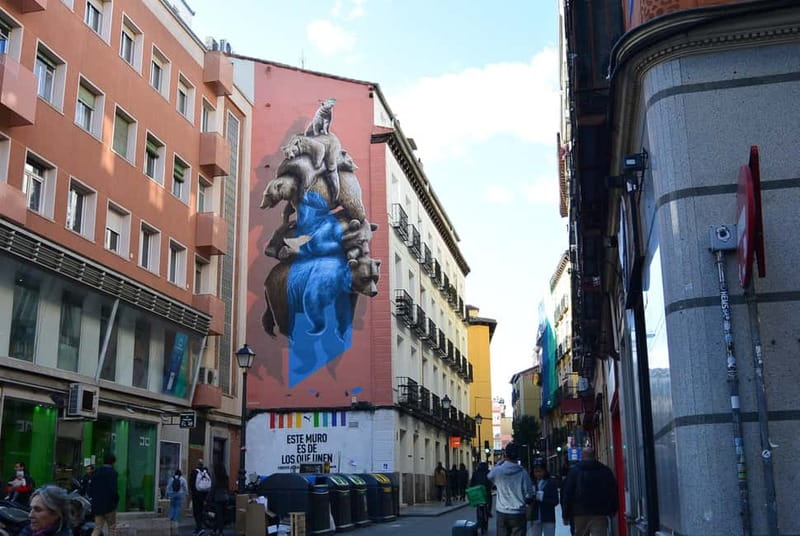
Malasaña receives about 30 minutes, making it one of the main sections of the walk. The neighborhood is known for its hip, creative character, and the tour uses its streets to show how street art can become part of daily city life.
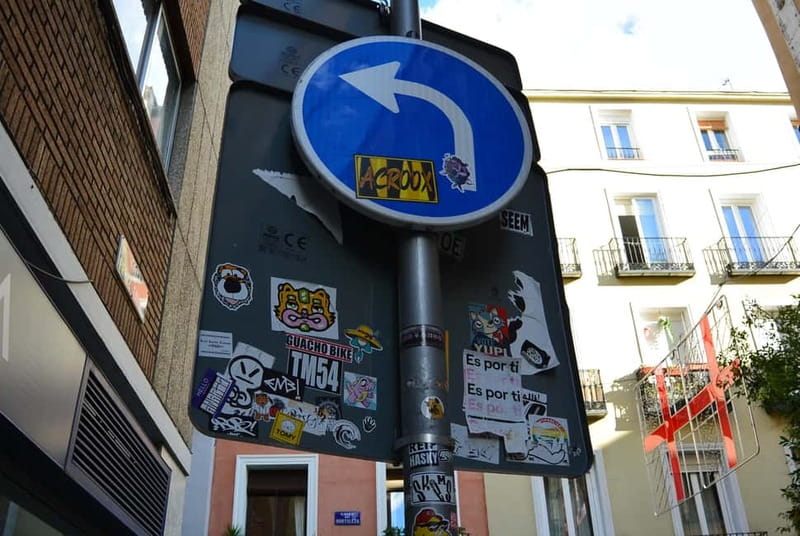
You can expect a mixture of murals, paste-ups, stickers, and other forms of urban art. The supplied route also highlights some of Malasaña’s most recognizable streets, along with Fuencarral Street. These are not museum rooms with fixed walls and labels. They are public spaces, so the exact pieces you see can change.
That uncertainty is part of the appeal, but it also means you should not expect every image shown in promotional material to be present on the day. The guide’s role is important here. A good explanation gives meaning to art that might otherwise look like random color on a wall.
The tour also points to Madrid’s connection with both local and international artists. Names connected with the route include Okudart, Basket of Nean, El Rey de la Ruina, and Done Street. You may see murals, mosaics, and other works associated with these artists, depending on what remains in place.
Chueca and the color of the central city
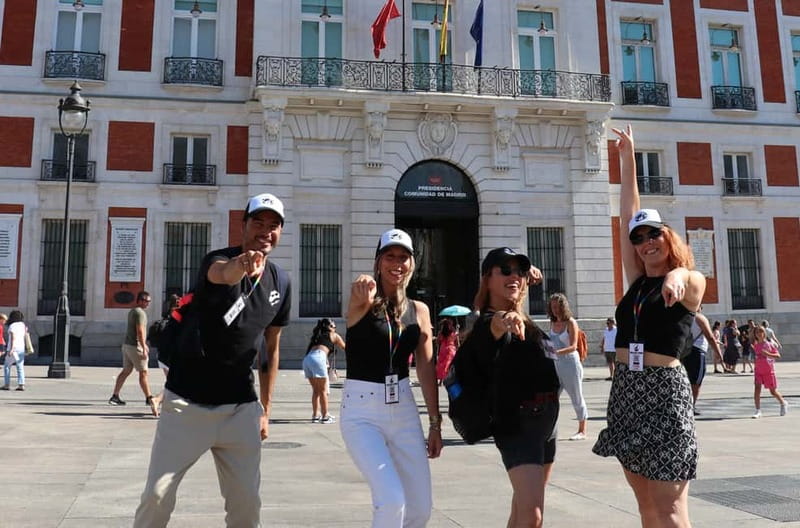
Chueca follows Malasaña, with another 30-minute visit. The route includes Hortaleza Street and focuses on the neighborhood’s strong use of color and its creative public spaces.
This is one of the tour’s better choices because Chueca feels distinct from Malasaña even though the districts are close together. You can compare how artists work with different streets, façades, and local settings. The guide’s comments help connect the visual details with the neighborhood around them.
The walk does not treat Chueca as a separate art gallery. Instead, you see how street art sits among cafés, shops, apartment buildings, and normal city traffic. That makes the experience more useful for anyone interested in Madrid as a living city rather than a collection of monuments.
A 30-minute stop sounds generous, but it passes quickly once you are photographing murals and listening to explanations. If you like to linger over every image, you may want to note down streets and return later.
Lavapiés, the cultural heart of the route
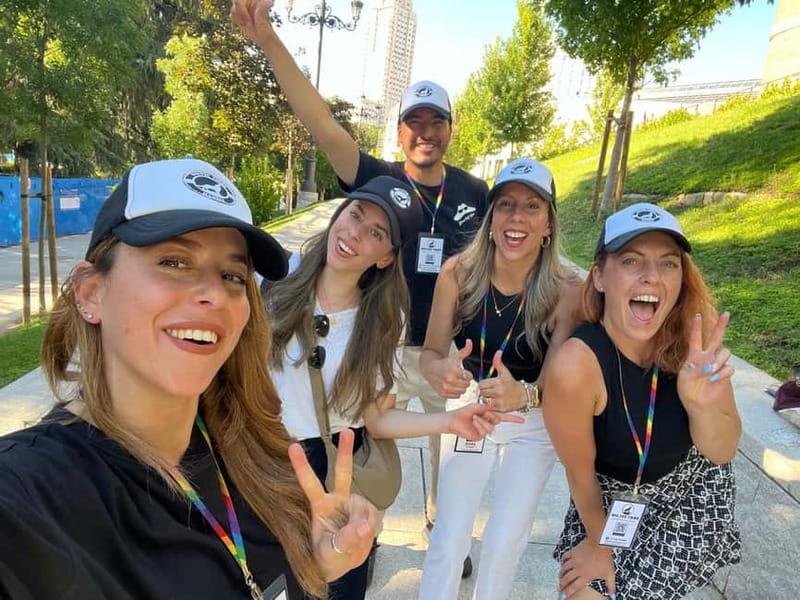
Lavapiés is described as the cultural heart of Madrid and is one of the most meaningful parts of the experience. The neighborhood is known for its older buildings and local character, with multi-story structures that retain the feel of traditional Madrid.
Here, the art takes its place among a more layered urban setting. Murals and paste-ups share the streets with everyday neighborhood life. You get a clearer sense of how contemporary expression can sit beside older forms of architecture and local culture.
Lavapiés is especially useful if you want to get beyond the standard central itinerary. Sol and Gran Vía are essential first stops, but Lavapiés gives you a different view of Madrid. The tour’s inclusion of this district keeps the experience from becoming only a quick walk between famous central landmarks.
The available route details are more specific about the sequence through Sol, Gran Vía, Malasaña, and Chueca than about the exact Lavapiés stop. You should therefore treat Lavapiés as an important neighborhood visit, not a promise of one fixed mural or single attraction.
Art connected with festivals and current work
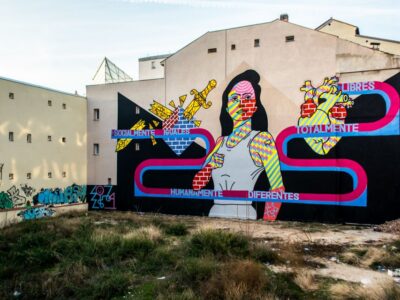
The route includes murals connected with Urvanity Art Fair and Calle festivals. This gives you a look at work tied to organized art events, alongside pieces made in the more informal street-art tradition.
That mix is one of the strongest reasons to take the tour with a guide. You can see how a commissioned mural differs from a sticker, a tag, or a quick paste-up. The guide can also explain how artists leave their mark in very different ways, from large wall paintings to small pieces you might spot only after someone points them out.
The tour highlights artists such as Okudart, Basket of Nean, El Rey de la Ruina, and Done Street. It also includes urban sculpture and mosaics. You will not get a full biography of every artist in two hours, but you will leave with names to investigate and streets to revisit.
One particularly praised detail is an artist’s studio at the end of the experience. Because the exact studio arrangement is not set out in the route details, you should regard this as a possible part of the outing rather than the main reason to book. Still, it adds a personal touch when available and helps connect public art with the people who make it.
The pace, distance, and practical side
The advertised duration is two hours. The route includes short walks of about five and seven minutes, along with visits ranging from 10 to 30 minutes. In practice, you should expect a continuous urban walk with frequent stops, not two hours spent in one neighborhood.
The relaxed pace has earned praise, and that is good news if you want time to listen and take photographs. At the same time, the amount of ground covered means you should not arrive in stiff shoes or expect a completely effortless stroll.
The tour is listed as wheelchair accessible. No further details are provided about surfaces, rest points, or the exact route conditions, so you should confirm any specific mobility needs before booking.
The meeting point is Way Hostel Madrid, and the tour finishes at Calle de la Magdalena, 23, in central Madrid. That ending point is useful because you remain near the city center rather than finishing far outside the main sightseeing area.
Is $1.77 really good value?
At $1.77 per person, the listed cost is unusually low for a two-hour guided walk. The real price is pay what you think the tour was worth, with no booking fee and an optional reward for the guide at the end.
That model can work well if you want to keep your plans flexible. You reserve a place, pay nothing at the start, and decide afterward how much the guide’s time and explanations were worth. It also means you should budget for a tip if you find the tour useful. A very low advertised price does not mean the guide’s work has no value.
The value is strongest for first-time visitors who want orientation in several neighborhoods without paying museum or attraction admission. You get local street-art context, photo stops, and a walking introduction to parts of Madrid that are easy to overlook.
The value is weaker if you want a highly specialized art lecture, a private guide, or long stops at individual works. This is a group walk with a broad route, not a slow academic study.
You can cancel up to 24 hours before the start for a full refund, and you can reserve now while paying later. That is helpful when your Madrid schedule is still changing.
Who should book this Madrid street-art walk?
I would choose this tour if you like seeing a city through ordinary streets, want a low-cost introduction to contemporary art, or need a first look at Malasaña, Chueca, and Lavapiés. It also suits photographers and anyone who enjoys finding murals, stickers, mosaics, and small details that are easy to miss.
It is a good match for visitors who want an English-language guide and prefer a relaxed group outing. The positive comments about the guides, including Diana, point to a friendly style rather than a stiff lecture.
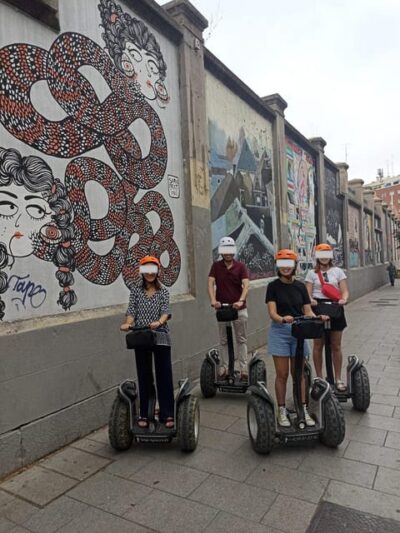
I would think twice if walking is difficult for you or if you want to move at your own pace. The route covers several neighborhoods, and one participant specifically found the amount of walking challenging. A bicycle option was preferred by that person, but no bicycle version is included here.
Should you book it?
Book it if you want an inexpensive, easygoing way to see Madrid’s creative side, especially beyond Puerta del Sol and Gran Vía. The strongest parts are the guide’s street-level explanations, the variety of art forms, and the contrast between Malasaña, Chueca, and Lavapiés.
Skip it if your priority is museum interiors, a private art specialist, or a short route with very little walking. For most visitors who bring comfortable shoes and keep their expectations realistic, the pay-what-you-want format makes this a sensible first step into Madrid’s street-art scene.
FAQ
How long does the Madrid Street Art Tour last?
The tour lasts two hours.
Where does the tour start?
It starts at the door of Way Hostel Madrid, where the guide meets the group.
Where does the tour finish?
The tour finishes at Calle de la Magdalena, 23, Centro, 28012 Madrid, Spain.
Which neighborhoods does the tour visit?
The route includes Malasaña, Chueca, Lavapiés, Sol, and the Gran Vía area.
Is the tour conducted in English?
Yes. The live tour guide language is English.
Is the tour wheelchair accessible?
Yes, the activity is listed as wheelchair accessible. Specific information about route surfaces and rest points is not provided.
Is admission to museums or attractions included?
No. Entry to attractions and museums is not included.
What should you bring?
Bring comfortable shoes, comfortable clothes, and a camera.
Just added around Spain
- Small-Group Graffiti Tour and Workshop in El Carmen★ 5.0 · 2 reviews
- Bilbao Urban and Street Art Walking Tour★ 5.0 · 2 reviews
- Barcelona Street Art, Graffiti and Tapas Tour★ 4.0 · 5 reviews
- Salamanca: Private Guided Street Art Walking Tour★ 5.0 · 2 reviews
- Private Barcelona Street Art Tour★ 5.0 · 2 reviews
- Barcelona | StreetArt Bike Tour Moco Museum★ 4.6 · 13 reviews
- Málaga: Street Art Tour in the Soho District★ 5.0 · 4 reviews
- Madrid: Hidden Street Art Tour★ 5.0 · 11 reviews
Madrid Mural Tours, compared.
Browse the lists this tour appears in