REVIEW · MEXICO CITY MURAL TOURS
Walking Tour – Impressive murals in Historical Center of Mexico City
Murals make Mexico’s past impossible to ignore. This walking tour connects three important art sites in Mexico City’s Historic Center, helping you read the political symbols, indigenous references, and social struggles hidden in works by Diego Rivera and other major muralists. I like the way it pairs major museum sights with street-level history, and I especially value the guides’ focus on the meaning behind the paint, not just the names on the wall.
I also like the choice of morning or afternoon departures, plus the chance to explore places you might skip on your own. Guides such as Balaam and Miguel have been praised for explaining Mexican art, politics, and history in clear, engaging ways. The main drawback is practical: this is a lot of time on your feet, and the route can run close to three hours. A group of up to 25 people may also feel large when everyone gathers around a mural.
Key points to know before booking
- Three major mural sites: Visit San Ildefonso, the Ministry of Public Education, and Palacio de Bellas Artes, with a substitute site on some days.
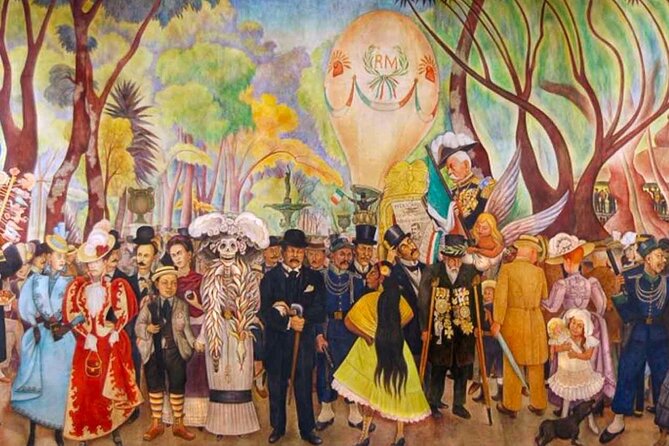
- Rivera gets the most attention: You will see La Creación and many other works connected to Diego Rivera, along with murals by Orozco, Charlot, Amado de la Cueva, and Roberto Montenegro.
- The guide supplies the missing context: Expect discussion of Mexico’s Revolution, indigenous traditions, political conflict, and the social goals of muralism.
- Tuesday requires special attention: The Ministry of Public Education is closed that day, so the route changes to other mural sites.
- Plan for steady walking: The tour begins at San Ildefonso and ends at Bellas Artes, with no transportation included.
- Best for art and history fans: The $51 price makes the most sense if you want interpretation rather than a quick look at famous paintings.
Why Mexican muralism deserves a walking tour
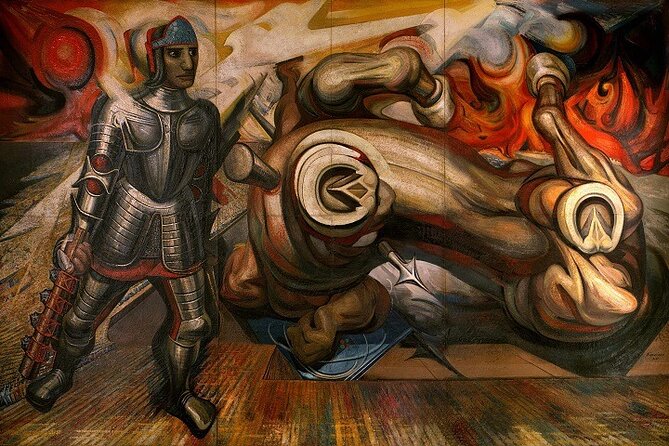
Mexico City’s murals are not simply oversized decorations. They were designed to speak to people in public spaces, including many who had little access to formal art institutions. The subjects often include workers, indigenous communities, revolutionary figures, religious imagery, conquest, and political struggle.
That makes the art rewarding, but also hard to read at first glance. A wall may contain dozens of faces, symbols, historical references, and competing messages. I would not want to rush past these works with only a guidebook paragraph in hand.
This tour gives you a framework. You learn how Mexican muralism developed from the 1920s through the 1960s, why artists argued about politics, and how Rivera, José Clemente Orozco, David Alfaro Siqueiros, and other painters treated public walls as a kind of history book.
The strongest part is the interpretation. Balaam has been singled out for connecting the murals to Aztec origin stories, indigenous religious themes, and the political climate in which the artists worked. Miguel is praised for combining art history with details about Mexico City’s architecture, archaeological sites, churches, and street food.
That broader view matters. You are not only looking at paintings. You are walking through a city where the art, buildings, political history, and daily life overlap.
More Street Art Walking Tours in Mexico
- History and Murals: Walking Tour Guadalajara
★ 5.0 · 237 reviews - Muralist Art Semi Private Walking Tour in Mexico City Downtown
★ 5.0 · 188 reviews - Mexico City: Diego Rivera’s Murals Guided Walking Tour
★ 5.0 · 49 reviews
Starting at Antiguo Colegio de San Ildefonso
The tour begins at Justo Sierra 16, at the former College of San Ildefonso. This building was once the National Preparatory School and is closely tied to the birth of Mexican muralism.
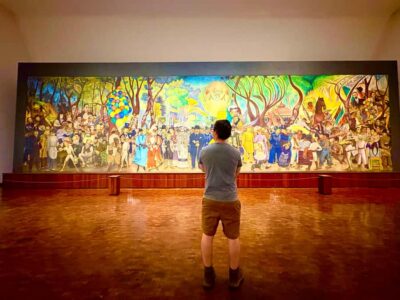
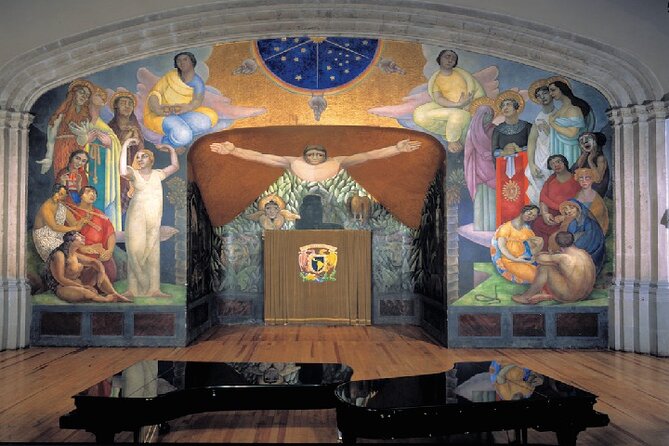
Your main work here is Diego Rivera’s La Creación, painted in the amphitheater. It was Rivera’s first mural, and the setting gives the work extra weight. This is also where Rivera first met a teenage Frida Kahlo, who was then a student.
The stop lasts about 30 minutes, with admission included. That is enough time for a focused explanation, though not enough for a leisurely exploration of every corner of the building. The guide’s role is important here because the mural’s religious, philosophical, and cultural references can be difficult to sort out without help.
I would pay close attention to how the guide explains the shift from European academic painting toward a distinctly Mexican public art. San Ildefonso is a useful opening chapter because it places Rivera at the beginning of the movement rather than presenting him only as an established celebrity.
The building itself also adds atmosphere. You are seeing muralism in a former school, a setting tied to education and public life. That makes the art feel connected to the people and institutions of Mexico, rather than isolated in a gallery.
The Ministry of Public Education and its courtyard murals
The second planned stop is the Ministry of Public Education, known in Spanish as the Secretaría de Educación Pública. This is likely the longest and most rewarding stop for anyone especially interested in Rivera.
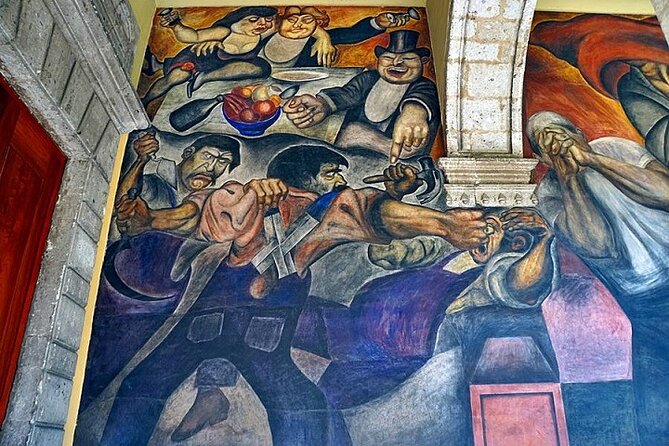
The two courtyards contain more than 3,000 square meters of murals. Works by Rivera appear alongside paintings by Jean Charlot, Amado de la Cueva, and Roberto Montenegro. The scale is impressive, but the real pleasure is the cumulative effect. You move through a whole program of public art rather than viewing one famous wall.
The site also includes two rooms devoted to muralism, a multisensory hall with artistic and historical pieces, a library, a children’s reading room, a Fondo de Cultura Económica bookstore, and a café. Not every part will receive equal attention during a walking tour, but these extra spaces help show that the building functions as more than a mural stop.
Allow about 40 minutes here. The guide can point out political figures, workers, indigenous imagery, and references that are easy to miss when you are standing alone in a courtyard. The best guides do not simply recite dates. They help you ask what Rivera wanted ordinary people to see, and why certain people and events appear on the walls.
This stop is also where the weekday schedule matters most. The Ministry is closed on Tuesdays. On that day, the tour uses alternative mural sites, including the Diego Rivera Mural Museum in some arrangements. Other substitutions described for the route have included Rivera’s mural in Alameda Park, works at the Mural Market, and Rivera murals displayed at Bellas Artes.
Because the exact substitute can change, Tuesday is not the best day if your main goal is the Ministry’s courtyards. The tour still offers important mural art, but you should book another day if those specific courtyards are a priority.
Palacio de Bellas Artes and the grand finale
The tour ends at Palacio de Bellas Artes on Avenida Juárez. This is one of Mexico City’s most recognizable buildings and a major center for exhibitions, dance, theater, and other artistic events.
The building was completed and inaugurated in 1934, and Mexican muralists received commissions for its walls shortly before the opening. The museum inside opened at the same time and was Mexico’s first museum.
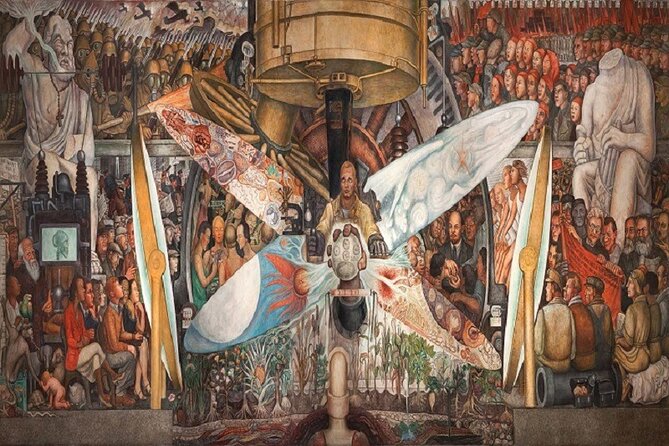
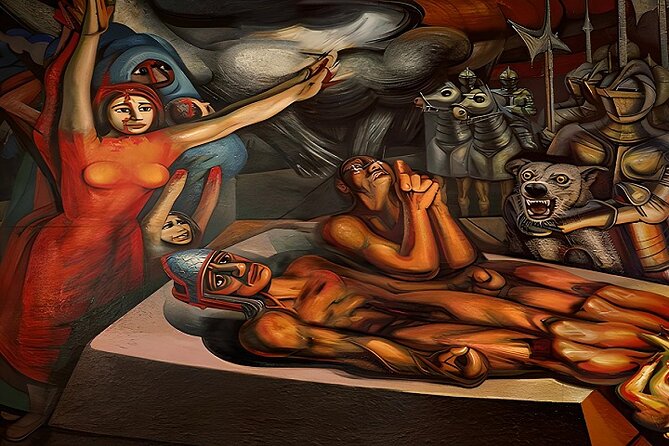
The mural displays here provide a useful final stop because they bring together several artists and styles in one celebrated cultural setting. Rivera, Orozco, and other Mexican muralists are represented, giving the guide a chance to compare their approaches.
Allow about 40 minutes. Admission to Bellas Artes is not included, so check how that cost fits your plans. The tour information clearly includes museum tickets for some stops, but Bellas Artes is listed separately as not included. That distinction matters when you are calculating the total price.
Bellas Artes also makes a convenient ending point. You finish near Alameda Central and other major Historic Center sights, rather than being returned to the starting point. If you have energy, you can continue exploring nearby on your own. If you are tired, the end point is easy to use as a natural break.
More Street Art Walking Tours in Mexico City
- Guided Walking Tour Describing UNAM Murals and Revolution
★ 5.0 · 8 reviews - Mexico City: Historic Center Walking Tour with Murals
★ 5.0 · 6 reviews - Mexico City: The Murals of Mexico Semiprivate Walking Tour
★ 5.0 · 2 reviews - Mexico City: History on Walls. Mexican Murals Walking Tour
★ 5.0 · 2 reviews
The guide is the real value
At $51 per person, this is not the cheapest way to see murals in Mexico City. You can view some public works independently, and the Historic Center contains enough art and architecture to fill a day without a paid tour.
The price becomes easier to justify if you want interpretation. The guides are repeatedly praised for passion, clear explanations, and their ability to connect individual images to Mexican politics and society. Balaam is known for spending time on symbols, indigenous beliefs, and the political positions of artists such as Rivera and Orozco. Miguel has been praised for adjusting the discussion to the group and adding observations about architecture, archaeological digs, and local food.
That personal element changes the experience. A guide may explain why a figure matters, what a symbol represents, or how a mural relates to the conquest and Mexican Revolution. You can ask questions as you go, instead of saving all your confusion for later.
The best accounts describe a tour that feels like a compact art-history class, but one conducted while walking through working city spaces. One guide even helped a participant arrange an e-bike taxi when the route became too ambitious on foot. That is not something to count on, but it shows the value of having a person who can respond to the day’s conditions.
English ability appears strong overall, though one account described occasional difficulty understanding questions and explanations. If you have a complex question about art theory or politics, ask the guide to repeat or rephrase it. That small effort can make a big difference.
Walking time, group size, and pacing
The listed duration is about one to three hours, but you should plan around three hours if you want the full experience. The scheduled visits add up to roughly 110 minutes before allowing for walking, questions, entrances, and time between buildings.
You will be on your feet for most of the tour. Comfortable shoes are essential. Some participants have found the route ambitious, especially when walking between several venues in the Historic Center. A slower group can also affect the pace, and one account noted that some people had trouble keeping up.
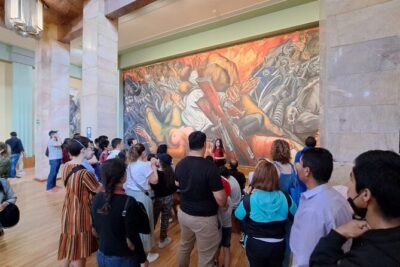
The maximum group size is 25. That is not enormous, but it can feel crowded when the group gathers around a mural or moves through a narrow interior space. Smaller departures can be much more personal, and private-feeling experiences have occurred when only one or two people booked a time slot.
The route does not include transportation. The walking is part of the point because the guide often adds comments about buildings, public squares, churches, street food, and archaeological remains along the way. Still, you should be honest about your stamina before booking.
Morning and afternoon start times make it easier to fit the tour into a larger Mexico City plan. I would choose the morning if you want to continue sightseeing afterward, or the afternoon if you prefer a slower start and want to pair the tour with a morning museum visit.
What happens when the route changes
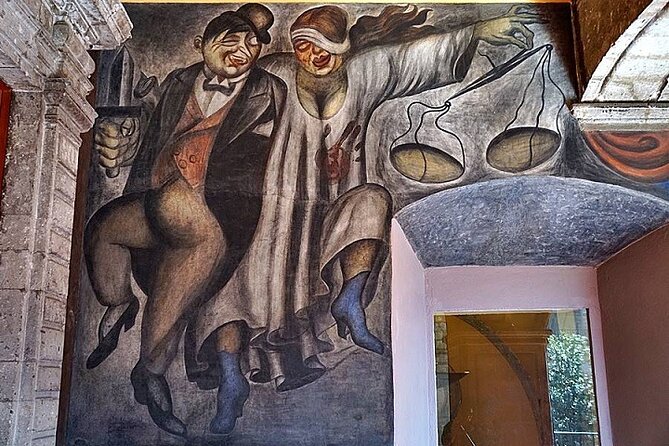
The Tuesday closure at the Ministry of Public Education is the clearest change to expect. The tour should not be treated as identical every day because the schedule affects which buildings you enter.
The alternative route may include the Diego Rivera Mural Museum, Rivera’s mural in Alameda Park, works by American artists Marion and Grace Greenwood at the Mural Market, or other important murals connected to the movement. These substitutions can still be worthwhile, especially if you want a wider view of muralism rather than only Rivera’s work at the Ministry.
There can also be unexpected changes. A protest once closed the Ministry temporarily, and the guide adjusted the route and returned when access was possible. I would treat this as a reminder that the Historic Center is a living civic district, not a controlled museum campus.
The guide may also adjust the route to the group’s interests. If you are especially interested in Rivera, Orozco, political art, indigenous themes, or Mexican history, say so early. The strongest experiences appear to come when the guide knows what you want to understand.
Who will get the most from this tour
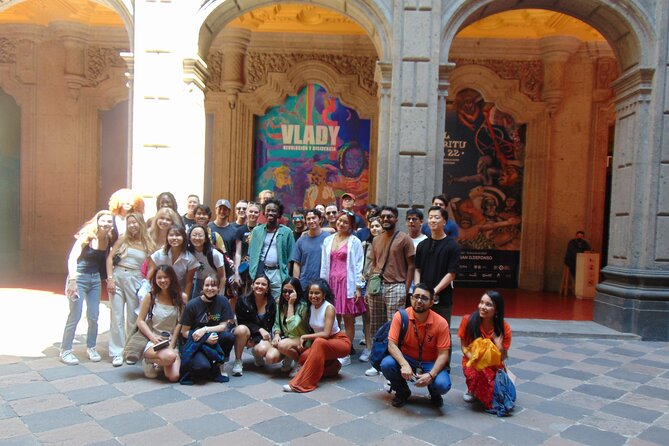
I would recommend this tour most strongly to:
- First-time visitors who want a useful introduction to Mexican muralism.
- Art lovers who want help interpreting Rivera, Orozco, Siqueiros, and related artists.
- People with only a short stay in Mexico City who want several major art sites in one outing.
- Visitors interested in politics, indigenous culture, the conquest, and the Mexican Revolution.
- Anyone who prefers a guide’s explanation to reading labels alone.
It may be less suitable if you want a relaxed stroll with minimal commentary. The discussion can be detailed, and the route is active. It may also disappoint if your only goal is the Ministry of Public Education and you book Tuesday.
The tour works well for solo participants, couples, families, and small business groups. Families should remember that the subject matter includes political conflict and difficult periods in Mexican history. The pace is manageable for most people, but the walking is not negligible.
Booking, tickets, and cancellation
The tour costs $51 per person, with group discounts available. A mobile ticket is accepted, and confirmation is provided when you book.
Museum entrance tickets are included for the covered sites, but Palacio de Bellas Artes admission is not included. Transportation and gratuity are also separate. The tour is near public transportation, and most people can participate, but the provider does not promise a fully step-free route.
You can cancel for a full refund up to 24 hours before the start time. Cancellations or changes made inside that 24-hour window are not refunded or accepted. Cutoff times use Mexico City local time.
Should you book this mural tour?
Book it if you want the murals to make sense, not merely appear in your camera roll. The strongest reasons are the guides, the access to three important buildings, and the explanation of how art connects to Mexico’s political and cultural life.
Choose a day other than Tuesday if the Ministry of Public Education is essential to your plans. Wear good shoes, allow close to three hours, and expect a fair amount of standing. At $51, the value depends on your appetite for interpretation, but for anyone who wants to understand why these murals matter, this is a strong use of time in Mexico City.
FAQ
Where does the tour begin?
It begins at the Former College of San Ildefonso, at Justo Sierra 16 in Mexico City’s Historic Center.
Where does the tour end?
The tour ends at Palacio de Bellas Artes on Avenida Juárez in the Historic Center.
How long does the tour last?
The stated duration is approximately one to three hours. The planned visits and walking can bring the experience close to three hours.
What sites are included?
The planned route includes Antiguo Colegio de San Ildefonso, the Ministry of Public Education, and Palacio de Bellas Artes.
Is the Ministry of Public Education open every day?
No. The Ministry of Public Education is closed on Tuesdays. On that day, the tour visits alternative mural sites, including the Diego Rivera Mural Museum in some arrangements.
Are museum tickets included?
Museum entrance tickets are included for the covered sites. Admission to Palacio de Bellas Artes is not included.
Is transportation included?
No. Transportation is not included. The tour travels between locations on foot.
What language is the tour offered in?
The tour is offered in English.
How many people can join the tour?
The maximum group size is 25 people.
More History Tours in Mexico
- Private Walking Tour Guadalajara History and Murals with Guide
★ 5.0 · 6 reviews - Tour history of Muralism in Mexico
★ 5.0 · 5 reviews - Street Art & Cemetery Cultural Tour – half day
★ 5.0 · 3 reviews - Historic tour in the center and murals of Orozco
★ 5.0 · 2 reviews
Just added around Mexico
- Xochimilco floating gardens, Coyoacan and UNAM murals★ 4.0 · 6 reviews
- UNAM: Murals & Revolution★ 4.9 · 8 reviews
- Street Art & Cemetery Cultural Tour – half day★ 5.0 · 3 reviews
- Graffitis & Munchies biketour Playa del Carmen★ 4.5 · 18 reviews
- Street Art Walk★ 4.5 · 7 reviews
- Tour Women Muralists : Strokes that resist Mexico City★ 5.0 · 7 reviews
- Diego Rivera’s murals, hidden treasures★ 5.0 · 21 reviews
- Mexico City Private Tour with Teotihuacan, Murals, Guadalupe Basilica★ 3.0 · 2 reviews
Mexico City Mural Tours, compared.
Xochimilco, Coyoacan, Frida Kahlo Museum & Murals Tour
Read our review →
La Catrina & Muralism: Diego Rivera’s Legacy & Frida Kahlo
Read our review →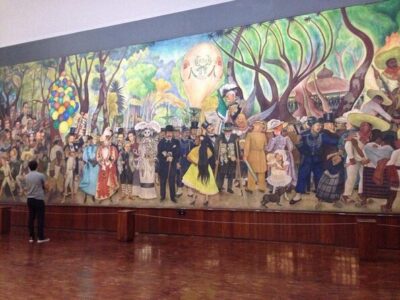
Muralist Art Semi Private Walking Tour in Mexico City Downtown
Read our review →
Xochimilco floating gardens, Coyoacan and UNAM murals
Read our review →