REVIEW · MEXICO CITY MURAL TOURS
Guided Walking Tour Describing UNAM Murals and Revolution
UNAM tells Mexico’s story in paint and stone. This two-hour walk brings you to Juan O’Gorman’s striking Central Library, major murals by Siqueiros, Chávez, and Eppens, and the Olympic stadium linked to the 1968 Games. I like the focused route, which covers three meaningful sites without taking up half your day, and the small group limit of 15 people, which should make it easier to hear the guide. The main consideration is the price: $53.46 is a fair charge for a specialized bilingual tour, but it may feel high if you only want to see the murals without much explanation.
The tour is especially useful if you want context, not just photographs. Fernando is praised for connecting the university’s construction and development with the events of 1968. Still, this is a walking tour with a fixed two-hour schedule, so anyone hoping to explore every corner of UNAM will need extra time before or after.
Key points at a glance
- Juan O’Gorman’s Central Library: Begin with one of UNAM’s most memorable buildings, known for its extraordinary exterior artwork and architecture.
- Murals by several Mexican artists: Spend about an hour looking at works by Siqueiros, Chávez, Eppens, and others.
- 1968 Olympic context: The stadium stop connects sport, politics, student life, and Mexico’s place on the world stage.
- Fernando’s storytelling: His approach links the university’s buildings and growth with the events that shaped modern Mexico.
- Two-hour, small-group format: With a maximum of 15 participants, the tour offers a manageable introduction rather than an all-day campus visit.
- Simple booking terms: You receive confirmation at booking, and cancellation is free up to 24 hours before the start time.
Why UNAM makes such a good walking tour
The National Autonomous University of Mexico is not simply a campus with classrooms. Its buildings, murals, public spaces, and stadium reflect ideas about education, national identity, art, and political change. That gives this tour more substance than a standard architecture stroll.
I like the way the route joins art with events. You are not looking at a mural as an isolated decoration. You are hearing how the university developed, why public art mattered, and how the 1968 Olympic Games fit into Mexico’s modern story.
The tour also keeps its subject under control. Two hours is long enough to introduce the main sites without turning the visit into a tiring lecture. At the same time, you should treat it as an orientation. The schedule does not allow for a full campus tour or a close look at every work of art at UNAM.
The tour is offered in English and includes a bilingual guide. That matters because the murals carry visual details that can be easy to miss when you walk past them on your own. A good guide can point out the people, symbols, and political ideas in the artwork while giving you a clearer sense of the university as a whole.
More Street Art Walking Tours in Mexico
- History and Murals: Walking Tour Guadalajara
★ 5.0 · 237 reviews - Walking Tour – Impressive murals in Historical Center of Mexico City
★ 5.0 · 224 reviews - Muralist Art Semi Private Walking Tour in Mexico City Downtown
★ 5.0 · 188 reviews
Central Library and Juan O’Gorman’s bold opening
The first stop is UNAM’s Central Library, known in Spanish as Biblioteca Central. You have about 20 minutes here, and admission is included.
The building is associated with artist Juan O’Gorman, whose work gives the library an unusual character. Rather than presenting a plain academic building, the library uses architecture and monumental imagery to create a public statement. It is one of the places where UNAM’s educational purpose becomes visible from the outside.
Twenty minutes is enough for an introduction and for taking in the building’s major features. It is not enough for an extended architectural study, so listen closely while the guide explains what you are seeing. If you tend to photograph first and ask questions later, this is a good place to pause and look before moving on.
This stop also sets the tone for the rest of the walk. The tour is not treating art as a separate museum subject. At UNAM, art is built into the spaces used by students and faculty. That makes the first stop useful even if you know little about Mexican muralism.
One hour with UNAM’s major murals
The mural section takes about an hour, making it the longest part of the tour. You will see works by David Alfaro Siqueiros, Chávez, Eppens, and other artists.
That extra time is welcome. Murals can look impressive at first glance, but their scale and detail reward a slower look. A guide can help you separate the broad visual impact from the smaller elements that give each work its meaning. I would expect this to be the part of the walk most appealing to anyone interested in Mexican art.
Siqueiros is one of the names that gives this portion real weight. The inclusion of Chávez, Eppens, and additional artists also helps you see that UNAM’s art program is not represented by one style or one personality. The range of artists gives the tour room to discuss different ways of presenting national identity and public life.
You should also keep your expectations practical. The supplied details do not promise entry into every building or a private viewing area. The experience focuses on seeing and discussing the murals at UNAM, with admission listed as free. If you want an extensive art lecture or a complete catalogue of campus murals, this short visit will not cover everything.
Still, the hour is well used. For many people, murals are easier to understand when they are tied to the building and institution around them. You get a better sense of why the university became such an important setting for large-scale public art.
The Olympic stadium and the events of 1968
The final stop is Estadio Olímpico Universitario, with about 30 minutes devoted to the stadium, the 1968 Olympic Games, and a mural by Diego Rivera.
This is where the tour expands beyond art and architecture. The Olympic Games give the guide a chance to explain how UNAM connected with a major international event. The stadium also adds a different kind of scale to the day. After looking closely at library walls and murals, you are considering a structure designed for mass gatherings and global attention.
The reference to 1968 is especially important. The tour connects the Games with the events of that year, giving you a chance to consider the university not just as a cultural center but also as a place tied to major social and political change. Fernando is praised for explaining the university’s construction and development alongside the famous events of 1968. That combination should make this stop more than a quick look at a sports venue.
Diego Rivera’s mural adds another art connection before the walk ends. You will not have a long time here, so the guide’s explanation matters. Thirty minutes is a compact visit, but it gives the stadium enough space to function as a proper stop rather than a hurried photo break.
The stadium portion may appeal most to people who want Mexico City history connected to real places. If your main interest is only mural technique, you may find the Olympic discussion less central. If you want to understand how art, public institutions, sport, and politics meet, this is an important part of the route.
More Street Art Walking Tours in Mexico City
- Mexico City: Diego Rivera’s Murals Guided Walking Tour
★ 5.0 · 49 reviews - Mexico City: Historic Center Walking Tour with Murals
★ 5.0 · 6 reviews - Mexico City: The Murals of Mexico Semiprivate Walking Tour
★ 5.0 · 2 reviews - Mexico City: History on Walls. Mexican Murals Walking Tour
★ 5.0 · 2 reviews
What Fernando adds to the experience
The strongest personal detail available about the tour is the praise for Fernando’s storytelling. He is described as an effective history teller with a great deal to explain about the university’s construction, development, and the 1968 events.
That description points to the real value of the experience. UNAM is large and visually demanding. Without guidance, you can see impressive buildings and murals while missing the connections between them. Fernando’s role appears to be making those connections clear rather than simply pointing out names and dates.
The experience includes a bilingual guide, and it is offered in English. Since the tour deals with art and political history, clear explanation is more useful than a guide who only provides quick labels. You should still ask questions if something interests you. The group size is capped at 15, which gives you a better chance of staying involved than a very large campus group.
The available praise centers on the guide’s explanations, not on food, special access, or entertainment. That tells you how to judge the tour. Book it for interpretation and context. Do not book it expecting extras that are not included.
Is $53.46 a good value?
At $53.46 per person, the tour sits in the range where the guide must add real value. Admission to the listed stops is free, so you are paying primarily for the bilingual instruction, the route, and the historical interpretation.
I think the price can make sense for a first visit to UNAM, especially if you have limited time in Mexico City. The route covers the library, several important mural works, and the Olympic stadium in about two hours. You get a structured introduction instead of spending time figuring out what to see and how the sites connect.
The value is less convincing if you are already familiar with UNAM or are comfortable exploring independently. Since the sites themselves have no admission charge, an independent visitor can see them without paying a tour fee. In that case, the benefit depends on how much you want an English-language explanation and a planned route.
The maximum group size of 15 helps support the price. It is still a group tour, but not a crowd-sized one. You can expect a more personal format than a coach excursion, though the experience may vary with the pace of the group and the questions people ask.
Tips are not included. You should regard gratuity as optional and separate from the advertised price. The tour price covers the stated guided experience, not a tip for the guide.
Timing, meeting point, and practical planning
The meeting point is listed at Rectoría de la UNAM Escolar, Ciudad Universitaria, in Coyoacán. The tour ends back at the same meeting point, which makes planning easier if you have another activity afterward.
The experience lasts approximately two hours. The stated schedule adds up to the full visit: 20 minutes at the Central Library, one hour with the murals, and 30 minutes at the Olympic stadium. Allow a little flexibility around the start and finish when arranging your day, since walking tours can run slightly ahead or behind schedule.
The location is near public transportation, which is useful because Ciudad Universitaria is not a compact downtown attraction. Check your route before leaving, and make sure you are heading to the specified UNAM meeting point rather than a different campus entrance.
Most people can participate, according to the supplied information. No special access limitations are stated, but the experience is still a walking tour. You should be prepared to move between the three stops and remain with the group for the scheduled period.
Confirmation arrives at the time of booking. Free cancellation is available if you cancel at least 24 hours before the start time. A cancellation made less than 24 hours before the start, or changes made inside that period, are not accepted for a refund.
Who should book this UNAM walk?
I would recommend it to a first-time visitor who wants a compact introduction to UNAM and prefers explanation over self-guided wandering. It is also a good fit for anyone interested in Mexican muralism, university architecture, or the connection between the 1968 Olympics and Mexico City.
Art lovers should appreciate the hour devoted to Siqueiros, Chávez, Eppens, and other muralists. People interested in modern Mexican events will likely value the stadium discussion and the guide’s links between UNAM’s growth and 1968.
Families and mixed-interest groups may also find the format useful because the route changes subject several times. You move from architecture to murals to sport and public events. That variety can keep a short visit lively without requiring a full day.
I would be more cautious if you want a long, quiet examination of each mural or an independent schedule. The tour has a fixed route, fixed approximate timing, and a group limit rather than a private format. You will see the major elements named for the experience, but you will not have unlimited time at each one.
Should you book the guided UNAM murals tour?
Book it if context is your main reason for visiting. The Central Library, UNAM murals, and Olympic stadium are free to enter, but the bilingual guide gives the visit its purpose. Fernando’s explanations about construction, development, and 1968 are the clearest reason to choose a guided walk rather than simply showing up.
Skip it if you only want quick photographs or already know the campus well. For everyone else, the $53.46 cost buys a focused two-hour introduction to one of Mexico City’s most important cultural and educational spaces. The tour is short, specialized, and best suited to curious visitors who want the buildings and murals to make sense.
FAQ
Where does the tour start?
It starts at Rectoría de la UNAM Escolar, Ciudad Universitaria, Coyoacán, Mexico City.
Where does the tour end?
The activity ends back at the meeting point.
How long does the tour last?
It lasts approximately two hours.
What language is the tour offered in?
The tour is offered in English and includes a bilingual guide.
How much does the tour cost?
The listed price is $53.46 per person.
How many people can join the tour?
The maximum group size is 15 people.
Is admission to the stops included?
Admission tickets are listed as free for the Central Library, the UNAM mural section, and Estadio Olímpico Universitario.
What sites are visited?
The route includes UNAM’s Central Library, murals by Siqueiros, Chávez, Eppens, and others, plus Estadio Olímpico Universitario.
Are tips included?
No. Tips are not included.
Can I cancel for a full refund?
Yes, if you cancel at least 24 hours before the experience start time. Cancellations made less than 24 hours before the start time are not refunded.
More Political Mural Tours in Mexico
- UNAM: Murals & Revolution
★ 4.9 · 8 reviews - Belfast’s Political Mural Taxi Tour
★ 5.0 · 1,180 reviews - Belfast: Private Black Taxi Cab Political Murals Tour
★ 4.9 · 425 reviews - Political Wall Murals and Peacewall
★ 4.9 · 247 reviews
More Muralism Tours in Mexico
- CDMX: Xochimilco, Coyoacan, Frida Kahlo Museum & Murals Tour
★ 4.4 · 3,025 reviews - La Catrina & Muralism: Diego Rivera’s Legacy & Frida Kahlo
★ 4.5 · 197 reviews - Xochimilco floating gardens, Coyoacan and UNAM murals
★ 4.0 · 53 reviews - Diego Rivera’s murals, hidden treasures
★ 5.0 · 21 reviews
Just added around Mexico
- Xochimilco floating gardens, Coyoacan and UNAM murals★ 4.0 · 6 reviews
- UNAM: Murals & Revolution★ 4.9 · 8 reviews
- Street Art & Cemetery Cultural Tour – half day★ 5.0 · 3 reviews
- Graffitis & Munchies biketour Playa del Carmen★ 4.5 · 18 reviews
- Street Art Walk★ 4.5 · 7 reviews
- Tour Women Muralists : Strokes that resist Mexico City★ 5.0 · 7 reviews
- Diego Rivera’s murals, hidden treasures★ 5.0 · 21 reviews
- Mexico City Private Tour with Teotihuacan, Murals, Guadalupe Basilica★ 3.0 · 2 reviews
Mexico City Mural Tours, compared.
Xochimilco, Coyoacan, Frida Kahlo Museum & Murals Tour
Read our review →
Walking Tour – Impressive murals in Historical Center of Mexico City
Read our review →
La Catrina & Muralism: Diego Rivera’s Legacy & Frida Kahlo
Read our review →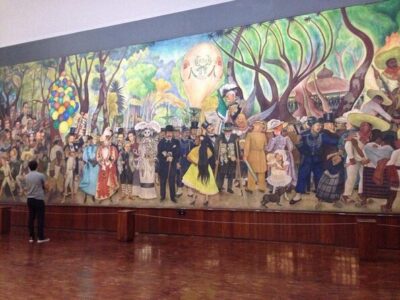
Muralist Art Semi Private Walking Tour in Mexico City Downtown
Read our review →
Xochimilco floating gardens, Coyoacan and UNAM murals
Read our review →