REVIEW · MEXICO CITY MURAL TOURS
Muralist Art Semi Private Walking Tour in Mexico City Downtown
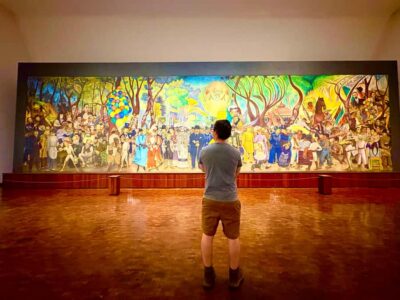
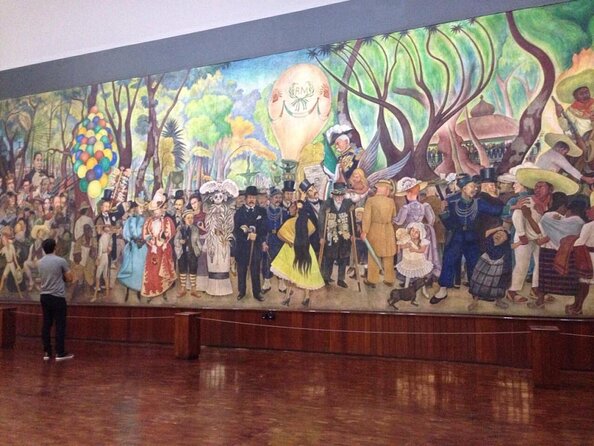
Murals make Mexico City’s past impossible to ignore. The Muralist Art Semi Private Walking Tour in Mexico City Downtown brings you to works by Diego Rivera, José Clemente Orozco, David Siqueiros, and other major artists, while a bilingual guide explains the political ideas, social struggles, and artistic choices behind them. I especially like the small maximum of eight people, which makes it easier to ask questions, and the included museum admissions, which keeps the $58.12 price from creeping upward.
The main thing to consider is the physical side. This is about three and a half hours of walking, standing, looking up, and stopping often. Comfortable shoes are not a polite suggestion here. The tour also suits people who want serious explanation rather than a quick photo stop, so you may find it intense if you prefer a lighter sightseeing outing.
Key points before you book
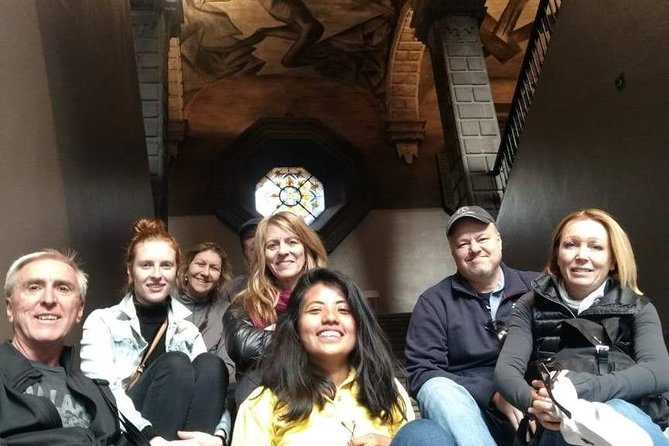
- Three major mural spaces: Visit the Ministry of Education, Antiguo Colegio de San Ildefonso, and Palacio de Bellas Artes.
- Small-group format: The maximum is eight people, though your group could be smaller or even private depending on bookings.
- Strong art and history focus: Expect discussion of Mexican politics, social issues, culture, architecture, and the lives of the artists.
- Admissions are included: Tickets to all museums visited are covered in the tour price.
- English-speaking bilingual guide: Guides such as Emiliano and Emilio are praised for clear explanations and thoughtful interpretation.
- Central downtown finish: The walk ends inside the mural museum at Palacio de Bellas Artes.
Why Mexican muralism works so well as a city introduction
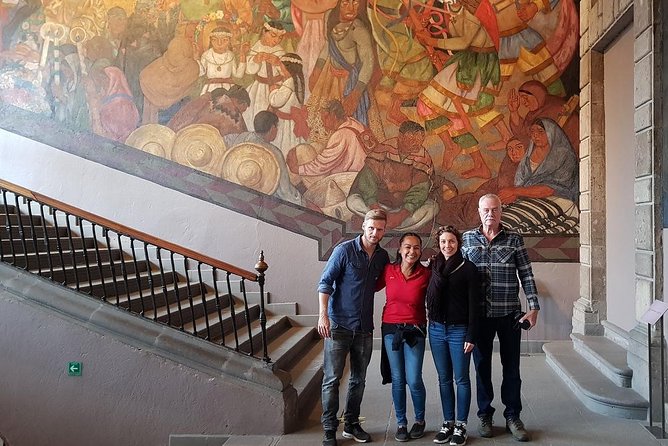
Mexico City’s murals are not decoration pasted onto a city’s walls. They were created to communicate. Many were meant to reach people who did not have access to books, galleries, or formal education. The images carry arguments about labor, power, religion, class, indigenous identity, revolution, and national pride.
That is why I think this tour works better than simply wandering from one famous building to another. You see the art in its original public and institutional settings, then connect the images to the country’s political and cultural story. A skilled guide can point out details that are easy to miss when you are standing in a large courtyard or beneath a high ceiling.
You will not simply hear a list of artists and dates. The strongest part of the experience is learning how a mural can work on several levels at once. A figure may represent a historical person, a social group, or a larger political idea. A crowded scene may tell a story about labor or inequality. The guide’s job is to help you look longer and ask better questions.
The tour has received a perfect five-star rating from 188 reviews, and every recorded rating recommends it. That level of consistency is especially useful for a subject that depends so much on the guide. Past guests repeatedly praised Emiliano or Emilio for making difficult ideas clear, answering questions patiently, and connecting the murals to present-day political concerns.
More Private Mural Tours in Mexico
- Cancun Private Street Art Tour
★ 5.0 · 30 reviews - Private Mexico City Mural Art Tour
★ 5.0 · 13 reviews - Mexico City Private Street Art Tour
★ 5.0 · 11 reviews
Starting at the Ministry of Education murals
The first portion takes you to the Ministry of Education, a building filled with murals by Diego Rivera and other important Mexican muralists. This is one of the tour’s most useful stops because it can be easy to miss when you explore downtown without a guide.
The setting matters. These murals are not isolated paintings in a quiet gallery. They occupy an important public building, and their placement helps explain how Mexican muralism reached ordinary citizens. As you move through the building, you can consider how the art interacts with courtyards, walls, doorways, and the movement of people through the space.
Expect the guide to help you examine figures, symbols, scenes of work, and social contrasts. The point is not only to identify Rivera’s hand. You are also encouraged to think about what the artist wanted the viewer to notice and how the mural functioned in its original setting.
This is where a small group pays off. With no more than eight people, you have a better chance of hearing the explanation clearly and stopping to ask why a particular image appears where it does. If you have a specific interest in Rivera, labor, revolutionary politics, or public art, this is a good place to raise it.
The Ministry of Education stop also sets the tone for the rest of the walk. You are not racing through a checklist of famous names. You are learning a method for looking at Mexican muralism.
Antiguo Colegio de San Ildefonso, the movement’s early home
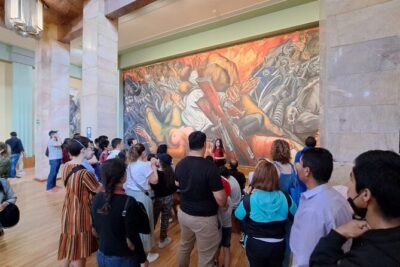
The Antiguo Colegio de San Ildefonso is described as the cradle of the Mexican Muralist movement, and it offers a strong historical bridge between the artists and the movement they helped shape. You will see murals by José Clemente Orozco, Diego Rivera, and Jean Charlot in a former college building with its own architectural character.
The planned visit here lasts about an hour, with admission included. That is enough time to give the murals proper attention instead of treating the building as a quick indoor stop.
Orozco’s work is especially important in understanding that Mexican muralism was never just cheerful national imagery. His murals can be forceful, tense, and critical. A good explanation helps you notice the emotional weight of the figures and the way the scenes reflect conflict, violence, or social pressure.
Jean Charlot adds another useful angle. Seeing several artists in the same building allows you to compare their choices rather than studying each painter in isolation. Look at how they handle bodies, movement, color, scale, and historical subjects. Even without formal art training, you can begin to see that the muralists had distinct voices.
This stop is also a good test of your sightseeing style. The tour asks you to stand in front of a work and stay with it. You may be invited to describe what you notice before the guide supplies an interpretation. That approach makes the visit more active, but it also means the tour is not designed for someone who wants only a quick introduction.
Palacio de Bellas Artes and its 17 murals
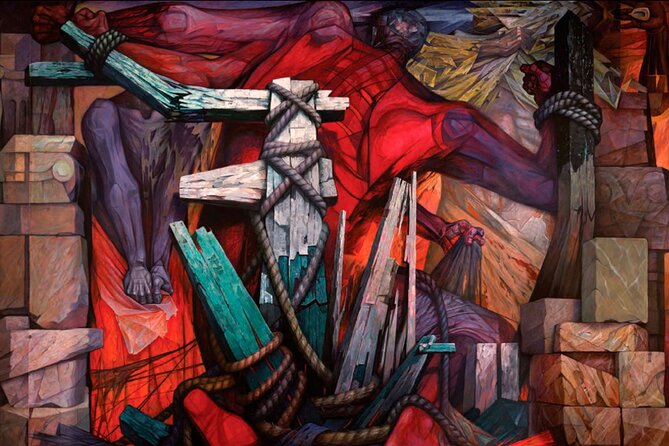
The tour ends at Palacio de Bellas Artes, one of Mexico City’s most famous artistic buildings. Inside, you will see 17 murals by different artists created over the years. This is the grand finale, and it gives the guide a chance to bring together the artistic and political threads introduced earlier.
The building itself adds to the experience. You are not looking at murals in a plain exhibition room. The art is part of a major cultural landmark, and the setting encourages comparisons between architecture, public identity, and national art.
The guide can help you sort through the range of artists and subjects. Rivera, Orozco, and Siqueiros are central names, but the building’s collection also shows how muralism developed across different periods and artistic approaches. You will likely spend time examining how each artist treats history, people, authority, and the future of Mexico.
The tour ends inside the Mural Museum of Palacio de Bellas Artes, rather than simply dropping you outside the building. That is a practical advantage. You can continue looking at the murals after the guided portion if you still have the energy and interest, though the tour itself does not promise extra free time.
Siqueiros is particularly important to the story because his work often feels forceful and experimental. The guide’s interpretation can help you understand how technique and political message work together. You may leave with a clearer sense that these murals were not passive images. They were designed to confront the viewer.
More Private Mural Tours in Mexico City
- Private Street Art Tour in Rome
★ 4.0 · 4 reviews - Private Street Food & Mural Art Tour in Mexico City
★ 3.5 · 3 reviews - Mexico City Private Tour with Teotihuacan, Murals, Guadalupe Basilica
★ 3.0 · 2 reviews
The guide is the heart of the experience
For this tour, the guide matters more than almost any other feature. The strongest praise goes to Emiliano and Emilio, who are described as personable, clear, thoughtful, and deeply informed about art and Mexican history. The comments also stress that they answer questions rather than delivering a fixed speech and moving on.
That flexibility is valuable. A family group may want a broad introduction, while an art student may ask about style, composition, or historical context. A visitor interested in politics may focus on social inequality and public power. The guide appears able to adjust the discussion without losing the larger story.
You should expect more than biographical facts. The explanations connect the artists’ lives to the social and political pressures around them. They also ask you to form your own response to what you see. That makes the tour feel closer to a guided class than a standard downtown walk.
English is offered, and the guide is bilingual. The praise for clear English is notable because these murals often involve complicated political ideas and unfamiliar historical references. Good communication matters when a single word or symbol can change how you understand an entire scene.
The tour can also run longer than the advertised three and a half hours. One account describes nearly four hours because the group had many questions and did not want to stop. That sounds like a benefit if you enjoy a serious discussion, but plan your day with some flexibility rather than scheduling a tight appointment immediately afterward.
Price, group size, and what you receive
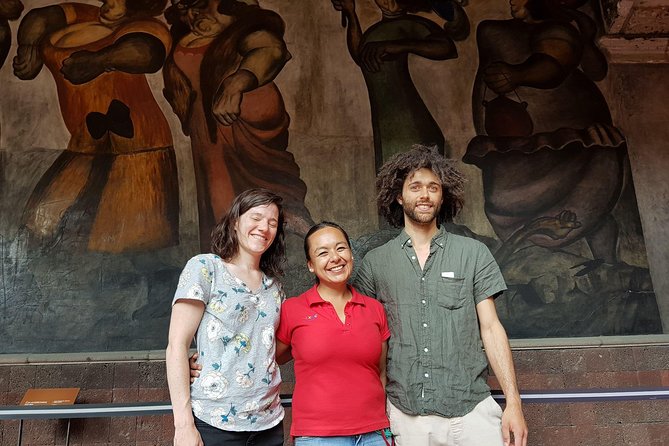
At $58.12 per person, the price is reasonable for a three-and-a-half-hour guided visit with admissions to all museums included. You are paying for access to several major mural sites, a small group, and interpretation that would be difficult to reproduce with a guidebook alone.
The value improves if you care about context. If you already have a strong background in Mexican muralism and prefer to explore alone, the price may feel less necessary. But if you want to understand why the murals were made, how the artists differed, and how the works connect to Mexican political life, the guide adds real value.
A group discount is available. Since the maximum is eight people, you avoid the feel of a large bus tour. Your actual group may be smaller. Some bookings have resulted in groups of only a few people, and a party of four has even experienced the walk as a private outing.
Admissions are included, but transportation to the meeting point is not. You begin at Portal de Escribanos in Santo Domingo, in Centro Histórico, and finish at Palacio de Bellas Artes. You need to arrange your own way to the starting point, but the central location is near public transportation.
Who will enjoy this walk most
I would choose this tour if you like art, architecture, Mexican politics, or social history. It is also a strong choice early in your stay because it can give you a framework for seeing other public art around the city.
Families can enjoy it if children or teenagers are willing to walk and listen for several hours. The tour is not built around games or entertainment, though. It asks for attention and curiosity.
Solo visitors may find the small group especially useful. You have a natural setting for questions and discussion without committing to a fully private guide. Couples and friends who want one substantial cultural activity can also get a lot from it.
Artists and art students should find plenty to consider, particularly in the comparisons between Rivera, Orozco, Siqueiros, and Charlot. You do not need academic training, but you should be comfortable spending time with individual works.
I would hesitate to recommend it if you dislike museums, standing, or political discussion. The tour does not seem designed for a quick introduction followed by free wandering. Its strength is the depth of the explanation.
Practical advice for a comfortable visit
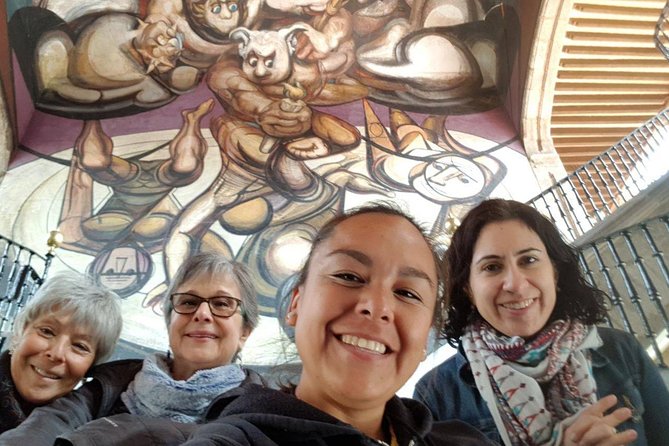
Wear your best walking shoes. You will cover downtown streets and spend long periods standing inside the buildings. Several accounts specifically warn about the amount of walking and standing, so take that seriously.
Allow more than three and a half hours if possible. The official duration is approximate, and an interested group may run close to four hours. I would avoid booking a meal, museum appointment, or performance immediately after the scheduled finish.
Arrive at the Portal de Escribanos meeting point with enough time to orient yourself. The tour does not include transportation to the start, and the end point is inside Palacio de Bellas Artes.
Bring your questions. The guides are praised for handling them, and the experience becomes more rewarding when you look closely before hearing the explanation. Ask about symbols, historical figures, political messages, artistic technique, or the relationship between the mural and its building.
Finally, keep your attention open to more than Diego Rivera. Rivera is the best-known name, but Orozco, Siqueiros, Charlot, and other artists make the story broader and more interesting. The point is to understand Mexican muralism as a movement, not just collect a few famous images.
Should you book the Muralist Art Walking Tour?
Book it if you want Mexico City’s murals to make sense, not just look impressive. The small group, included admissions, central route, and strong guides make this a good value for an art-focused half day.
Skip it if you want a short, casual stroll or dislike long periods of standing. For everyone else, especially anyone interested in art, architecture, political history, or Mexican culture, this is one of the better ways to meet downtown through its walls.
Free cancellation is available when you cancel at least 24 hours before the start time. The tour is offered in English, allows service animals, is near public transportation, and is suitable for most people who can manage the walking.
FAQ
How long does the mural walking tour last?
The scheduled duration is approximately three hours and 30 minutes. It may run longer when the group has many questions or discussions.
What is the tour price?
The price is $58.12 per person. Group discounts are available.
What language is the tour offered in?
The tour is offered in English and includes a certified bilingual guide.
How many people can join the tour?
The maximum group size is eight people. Depending on bookings, the group may be smaller.
Where does the tour begin?
The tour begins at Portal de Escribanos in Santo Domingo, Centro Histórico, Mexico City.
Where does the tour end?
The tour ends inside the Mural Museum of Palacio de Bellas Artes.
Are museum admission tickets included?
Yes. Entrance tickets to all museums visited during the tour are included.
Is transportation included?
No. Transportation to the meeting point is not included. The route is near public transportation.
Which muralists will I see?
The tour includes works by Diego Rivera, José Clemente Orozco, David Siqueiros, Jean Charlot, and other important mural artists.
Can I cancel for a full refund?
Yes, if you cancel at least 24 hours before the experience’s start time. Cancellations made less than 24 hours in advance are not refunded.
More Street Art Walking Tours in Mexico City
- Mexico City: Historic Center Walking Tour with Murals
★ 5.0 · 6 reviews - Mexico City: The Murals of Mexico Semiprivate Walking Tour
★ 5.0 · 2 reviews - Mexico City: History on Walls. Mexican Murals Walking Tour
★ 5.0 · 2 reviews
More Street Art Walking Tours in Mexico
- History and Murals: Walking Tour Guadalajara
★ 5.0 · 237 reviews - Walking Tour – Impressive murals in Historical Center of Mexico City
★ 5.0 · 224 reviews - Mexico City: Diego Rivera’s Murals Guided Walking Tour
★ 5.0 · 49 reviews - Guided Walking Tour Describing UNAM Murals and Revolution
★ 5.0 · 8 reviews
Just added around Mexico
- Xochimilco floating gardens, Coyoacan and UNAM murals★ 4.0 · 6 reviews
- UNAM: Murals & Revolution★ 4.9 · 8 reviews
- Street Art & Cemetery Cultural Tour – half day★ 5.0 · 3 reviews
- Graffitis & Munchies biketour Playa del Carmen★ 4.5 · 18 reviews
- Street Art Walk★ 4.5 · 7 reviews
- Tour Women Muralists : Strokes that resist Mexico City★ 5.0 · 7 reviews
- Diego Rivera’s murals, hidden treasures★ 5.0 · 21 reviews
- Mexico City Private Tour with Teotihuacan, Murals, Guadalupe Basilica★ 3.0 · 2 reviews
Mexico City Mural Tours, compared.
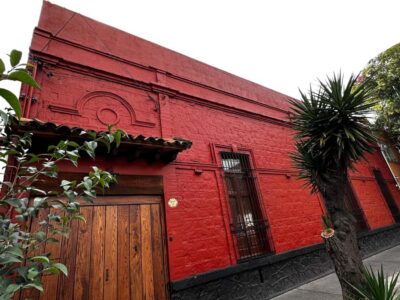
Xochimilco, Coyoacan, Frida Kahlo Museum & Murals Tour
Read our review →
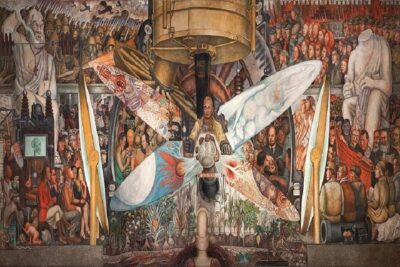
Walking Tour – Impressive murals in Historical Center of Mexico City
Read our review →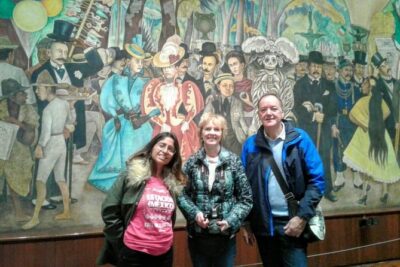
La Catrina & Muralism: Diego Rivera’s Legacy & Frida Kahlo
Read our review →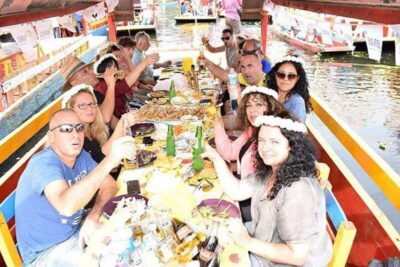
Xochimilco floating gardens, Coyoacan and UNAM murals
Read our review →