
REVIEW · MEXICO CITY MURAL TOURS
Mexico City: The Murals of Mexico Semiprivate Walking Tour
Art can explain a revolution fast. This three-hour walking tour uses Mexico City’s major murals to show how artists helped shape the country’s modern identity after the Mexican Revolution. I like the small groups, limited to eight people, and the fact that museum admission is included. I also like that the focus goes beyond famous names, teaching you how to spot each artist’s methods later on.
The main consideration is pace. You will walk about 1.5 kilometers, or one mile, and the tour runs rain or shine. The route is not long, but three hours of standing, looking, and listening may feel demanding if you prefer a quick introduction rather than a detailed art lesson.
Key points before you book
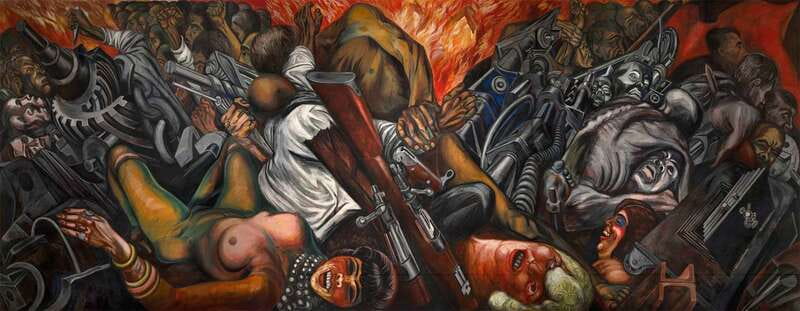
- Orozco gets special attention: One booking reaction singled out Orozco as a major discovery, so keep an eye out for his work and the force of his imagery.
- Three important art venues are included: You visit the Antiguo Colegio de San Ildefonso, the Secretariat of Public Education building, and the Museo del Palacio de Bellas Artes.
- The tour explains the mural movement: You learn how public art became a tool for education, political discussion, cultural identity, and social change after the 1920s.
- The group is capped at eight: That is small enough for a more personal guide-led walk and easier questions than on a large coach tour.
- The route covers about one mile: Comfortable shoes matter, though the distance itself is manageable for most walkers.
- Photography costs extra: Museum entry is included, but photography permits must be purchased separately at the box office.
Why Mexican murals matter beyond decoration
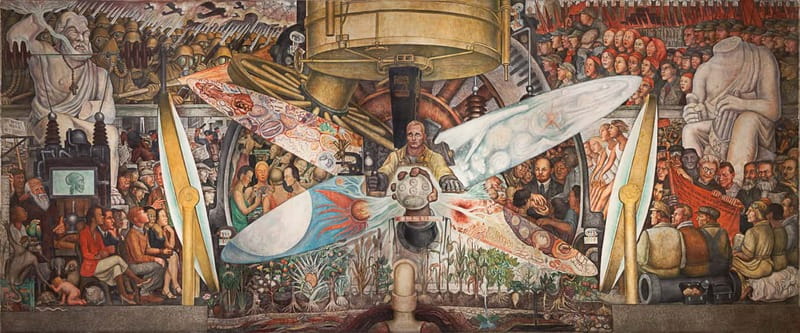
Mexico’s mural movement grew after the Mexican Revolution in the 1920s. The country was dealing with questions of identity, education, politics, progress, and the place of ordinary people in public life. Murals offered a way to address those subjects in spaces that people could enter and see without buying a private art collection.
That public purpose is the key to this tour. You are not simply looking at large paintings on impressive walls. You are learning why the murals were made so large, why their subjects often include workers and Indigenous communities, and why the artists treated art as a form of public speech.
The tour presents mural painting as one of the defining artistic expressions of the 20th century. That is useful context because the scale and drama of the works can otherwise distract from their message. A guide can point out who is being represented, what political or social idea is being raised, and how different artists approached the same national concerns.
You also learn to separate the major artists by technique. This is one of the most practical promises of the walk. Instead of leaving with a blur of enormous paintings, you should gain a basic visual vocabulary that helps you recognize an artist in another building later.
The guiding idea comes from David Alfaro Siqueiros, who argued that an artist should paint as clearly as a person speaks. That approach helps explain the direct style of many Mexican murals. The pictures were intended to communicate, not merely to decorate.
More Street Art Walking Tours in Mexico
- History and Murals: Walking Tour Guadalajara
★ 5.0 · 237 reviews - Walking Tour – Impressive murals in Historical Center of Mexico City
★ 5.0 · 224 reviews - Muralist Art Semi Private Walking Tour in Mexico City Downtown
★ 5.0 · 188 reviews
Meeting at Santo Domingo Square
The tour begins at the corner of Santo Domingo Square and República de Cuba Street, outside Domingo Santo Hotel Boutique. This is an important detail because the guide does not collect you from your hotel. You need to make your own way to the meeting point and arrive ready to walk.
Santo Domingo Square gives the outing an appropriate start. You are beginning in the historic center, close to the streets and public buildings that make the city’s past visible. The meeting point is specific, which is helpful in a dense part of Mexico City, but you should still allow enough time to find the corner without rushing.
The guide leads the group on foot rather than moving between sites by vehicle. That keeps the route connected. Streets are not just empty links between museums. They help you see how public art fits into the city and how Mexico City itself became part of the artistic story.
Because the group is limited to eight people, you should have a better chance to hear explanations and ask about details that catch your eye. This format also suits anyone who finds large guided groups tiring or impersonal.
Antiguo Colegio de San Ildefonso
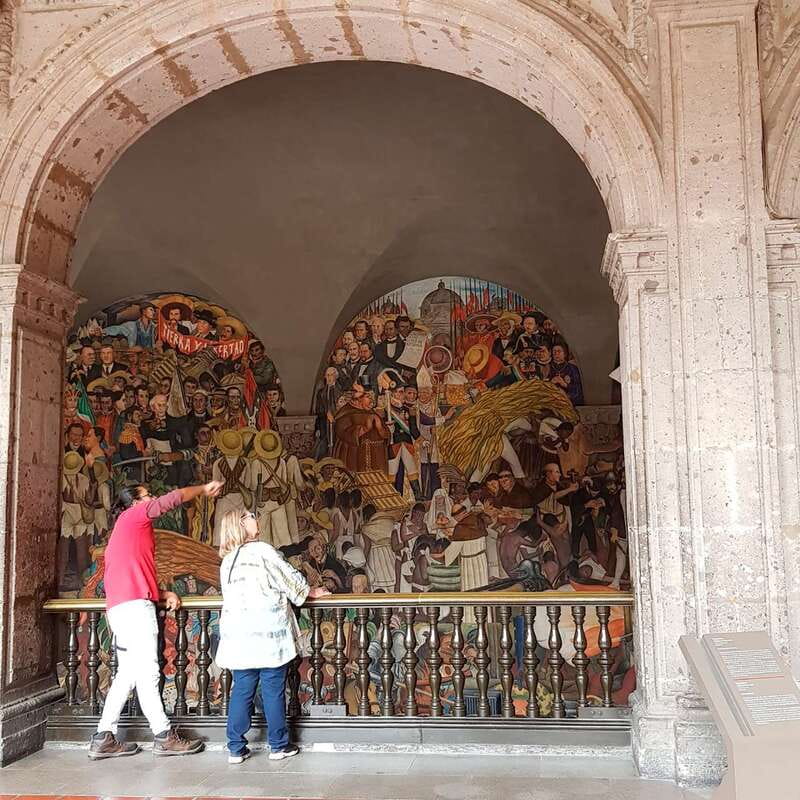
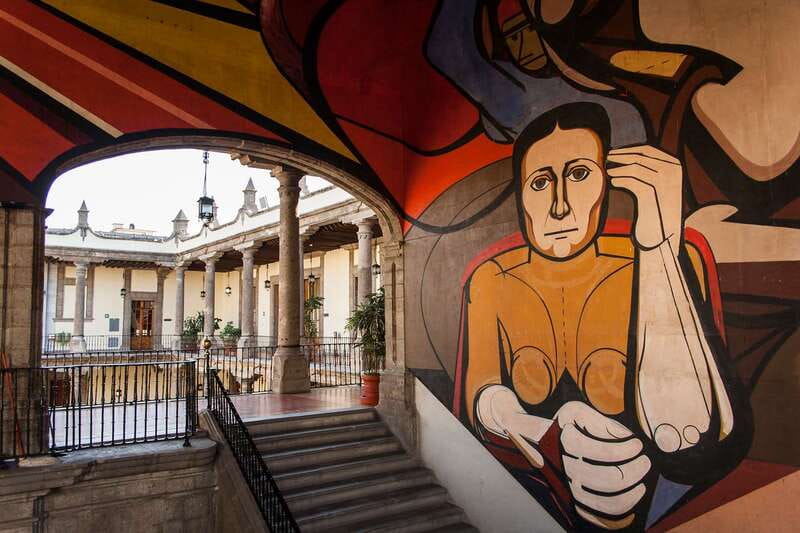
One of the included stops is the Antiguo Colegio de San Ildefonso. The building is important here because it is tied to the early development of Mexico’s mural movement. You can expect the guide to use the murals and the building itself to explain how public art gained a new role after the revolution.
The setting gives the tour a strong sense of origins. Rather than seeing murals as isolated masterpieces, you begin to understand the movement as part of a wider effort to teach and shape public ideas. The art was placed where ordinary people could encounter it, and the building provides a setting in which that goal becomes easier to grasp.
This stop should appeal to visitors who like to connect art with politics and education. The guide’s explanation is likely to matter as much as the images because many murals contain historical references and symbolic figures that are not immediately clear.
The drawback is that a guided visit can feel more concentrated than a casual museum visit. You will be following the tour’s interpretation and schedule rather than wandering freely. If you want to study every work at your own pace, make a note of anything you want to revisit later.
The Secretariat of Public Education building
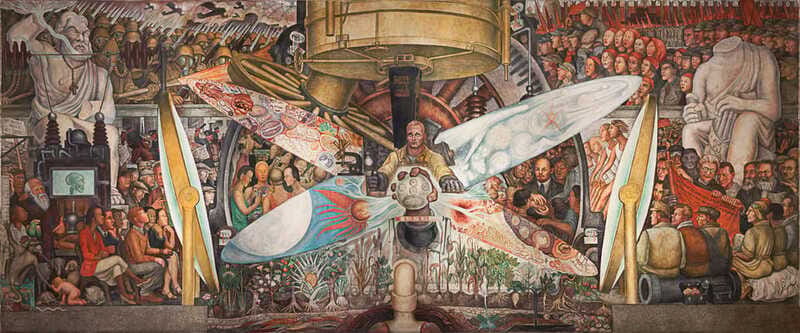
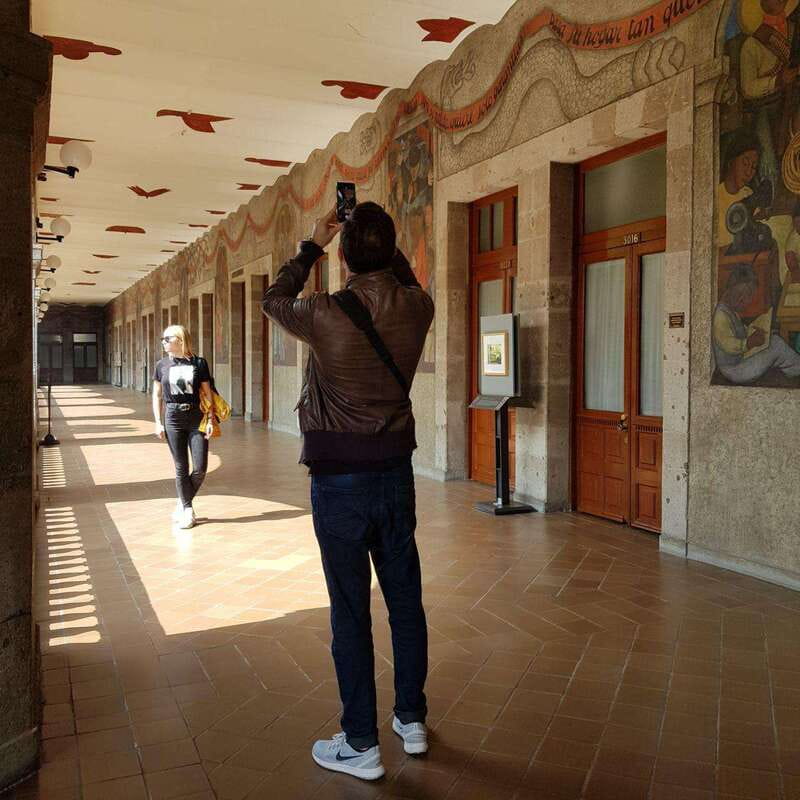
The tour also includes admission to the building of the Secretariat of Public Education. This stop reinforces one of the movement’s central ideas: art could educate people in public places.
The building is especially useful for understanding the connection between government, education, and mural painting. The murals were not tucked away for specialists. Their messages were placed in a setting linked to public life, where art could reach a broad audience.
Here, the guide can help you compare different artists’ choices. Look for changes in composition, figures, movement, and tone. The point is not simply to remember a list of names. You are learning how to look for the fingerprints of each artist.
That makes the stop worthwhile even if you are not an art expert. You do not need prior knowledge of Mexican painting. The tour is designed to give you a framework, so later works become easier to identify.
More Street Art Walking Tours in Mexico City
- Mexico City: Diego Rivera’s Murals Guided Walking Tour
★ 5.0 · 49 reviews - Guided Walking Tour Describing UNAM Murals and Revolution
★ 5.0 · 8 reviews - Mexico City: Historic Center Walking Tour with Murals
★ 5.0 · 6 reviews - Mexico City: History on Walls. Mexican Murals Walking Tour
★ 5.0 · 2 reviews
Museo del Palacio de Bellas Artes
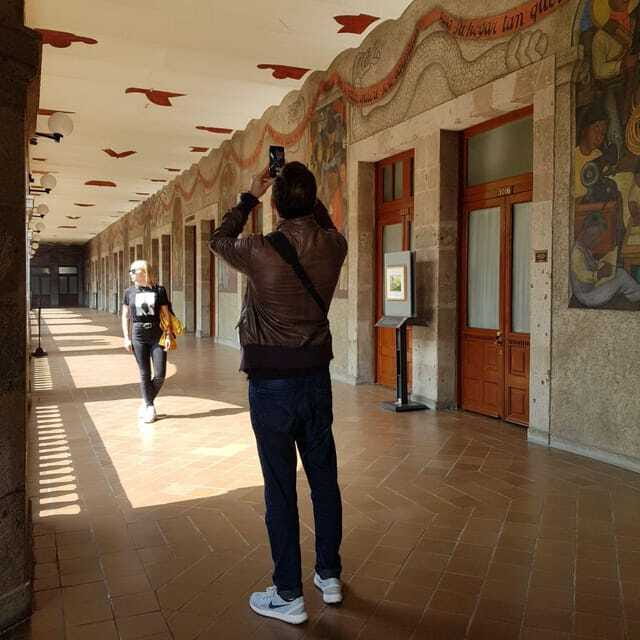
The final major museum admission is to the Museo del Palacio de Bellas Artes. This is one of Mexico City’s best-known cultural venues, and its murals give the tour a broad finish.
By this point, you have already examined the origins and public purpose of the mural movement. Bellas Artes lets you see how important mural painting became within Mexico’s formal cultural institutions. The visit also gives you another chance to compare artists and techniques rather than judging one work in isolation.
This is where the earlier instruction about recognizing artists can pay off. You can look for recurring visual choices and ask why one painter’s treatment feels different from another’s. Orozco deserves particular attention. One booking response described discovering his work as the highlight, and that is a useful hint for anyone deciding where to focus.
Keep your expectations practical. Admission is included, but photography permits are not. If you want to take pictures inside the museums, you must buy the permit at the box office. The tour takes place on a schedule, so photography may also compete with the time you have for looking and listening.
What the guide adds to the murals
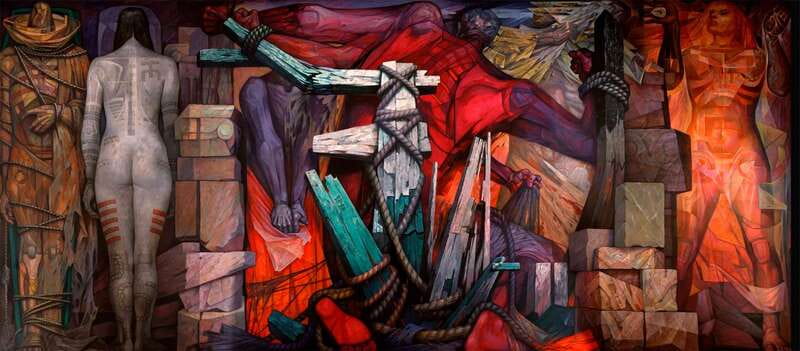
A mural can be impressive even without explanation, but the guide’s role is to make the images readable. The tour is led in English by a professional guide with a focus on this subject, and the small group should make it easier to ask direct questions.
I like the promise of learning both history and technique. Those two subjects belong together here. A political message may be clearer when you know how an artist arranged the figures, while a visual choice may make more sense once you understand the period’s social concerns.
The tour also gives you a useful way to remember artists after the walk. Instead of memorizing isolated names, you compare how each painter handled movement, scale, figures, and public messages. That is a better long-term souvenir than a stack of photographs.
Still, your experience will depend partly on how much art history you enjoy. If you prefer a short introduction with only a few headline facts, three hours may feel long. If you like asking questions and examining details, the duration gives the subject room to breathe.
Timing, distance, and comfort
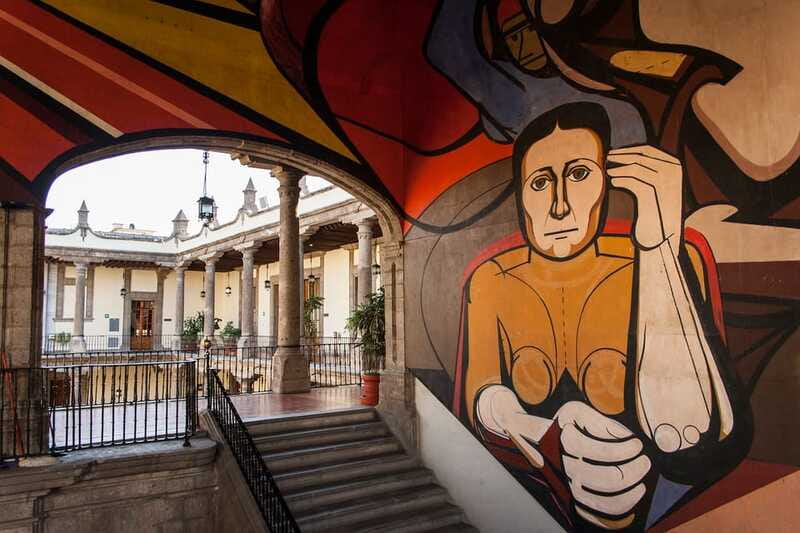
The experience is listed as three hours, with the description also referring to a 3-plus-hour walking tour. Plan for roughly three hours or a little more rather than trying to fit a tight appointment immediately afterward.
The total walking distance is about 1.5 kilometers. That is only around one mile, but the outing includes museum visits and time on your feet. Wear comfortable shoes, as requested by the operator. The tour runs in rain or shine, so check the weather and bring suitable protection.
The route is described as wheelchair accessible. That is valuable information for visitors who need step-free access, but the tour still involves movement through several buildings and city streets. If you have specific mobility needs, confirm the details before booking.
The experience is not suitable for people with visual impairments. That limitation matters because the tour depends heavily on seeing mural details, comparing techniques, and interpreting large visual scenes.
Is the $52 price fair?
At $52 per person, the price is reasonable if you want a guided art lesson rather than simple museum entry. Three admissions are included, along with a professional English-speaking guide and a small group capped at eight participants.
The value comes from combining several places in one organized route. Buying entry separately would not provide the same help with context, artist identification, or connections between the buildings. The guide is also doing more than pointing out famous murals. The stated goal is to explain the mural movement and teach you how to recognize different artists.
The price is less compelling if you only want to see a few murals quickly or prefer to explore without a guide. Photography permits cost extra, and hotel pickup and drop-off are not included. You also need to reach the meeting point yourself.
For someone interested in Mexican history, public art, or the work of Orozco, Siqueiros, and other muralists, the included admissions and specialist explanation make the cost easier to justify. For a visitor with no interest in art, a shorter general walking tour may be a better use of time and money.
Who should book this walking tour?
I would recommend it to you if you like seeing a city through its public buildings and visual culture. It is especially suited to first-time visitors who want a structured introduction to Mexico’s mural movement without committing to a full-day museum program.
It also fits travelers who prefer small groups. Eight people is a practical limit: intimate enough for questions, but still social without the awkwardness of a private tour.
Families with older children or teenagers may find the public messages and dramatic scale more engaging than a traditional lecture. The three-hour length should be considered carefully, since younger children may not enjoy extended explanations.
Art students, teachers, photographers, and anyone interested in Mexican political history will get the most from the route. Bring a notebook if you want to record artist names and techniques. If you plan to take pictures, budget for the museum photography permits.
The tour is not the best match for anyone who dislikes scheduled visits, cannot walk and stand comfortably for several hours, or needs a visual experience adapted for impaired sight.
Should you book the murals tour?
Book this tour if you want the murals explained, not just photographed. The small group, three museum admissions, English-language guide, and focus on artist techniques give the experience real value at $52.
The strongest reason to go is the chance to connect art with Mexico’s post-revolution identity. The most useful practical tip is to wear good shoes and allow the full three hours. Pay attention to Orozco, compare each artist’s technique, and remember that photography inside the museums requires an extra permit.
Skip it if you want a quick, independent look or if your schedule cannot handle a rain-or-shine walking tour. For everyone else, this is a focused way to understand why Mexico’s murals became public lessons in art, politics, and national identity.
FAQ
How long does the mural walking tour last?
The tour lasts three hours, with the description also referring to a 3-plus-hour walking experience.
How far will I walk?
You will walk about 1.5 kilometers, or one mile, during the tour.
What language is the tour offered in?
The live tour guide speaks English.
How many people are in the group?
The group is limited to eight participants.
Where is the meeting point?
Meet the guide at the corner of Santo Domingo Square and República de Cuba Street, just outside Domingo Santo Hotel Boutique.
Are museum admission tickets included?
Yes. Admission to the Antiguo Colegio de San Ildefonso, the Secretariat of Public Education building, and the Museo del Palacio de Bellas Artes is included.
Are photography permits included?
No. Photography permits inside the museums are not included. You can purchase them at the box office.
Is hotel pickup and drop-off included?
No. You need to make your own way to the meeting point, and hotel transportation is not included.
Is the tour wheelchair accessible?
The activity is described as wheelchair accessible.
Can I cancel for a full refund?
Yes. You can cancel up to 24 hours in advance for a full refund.
Just added around Mexico
- Xochimilco floating gardens, Coyoacan and UNAM murals★ 4.0 · 6 reviews
- UNAM: Murals & Revolution★ 4.9 · 8 reviews
- Street Art & Cemetery Cultural Tour – half day★ 5.0 · 3 reviews
- Graffitis & Munchies biketour Playa del Carmen★ 4.5 · 18 reviews
- Street Art Walk★ 4.5 · 7 reviews
- Tour Women Muralists : Strokes that resist Mexico City★ 5.0 · 7 reviews
- Diego Rivera’s murals, hidden treasures★ 5.0 · 21 reviews
- Mexico City Private Tour with Teotihuacan, Murals, Guadalupe Basilica★ 3.0 · 2 reviews
Mexico City Mural Tours, compared.
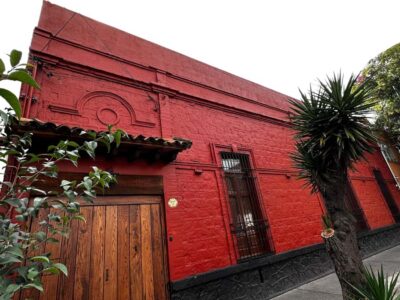
Xochimilco, Coyoacan, Frida Kahlo Museum & Murals Tour
Read our review →
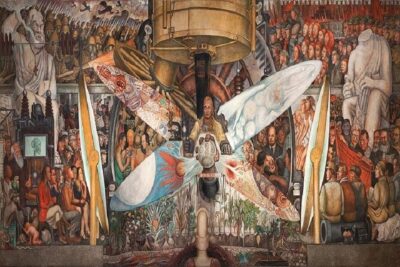
Walking Tour – Impressive murals in Historical Center of Mexico City
Read our review →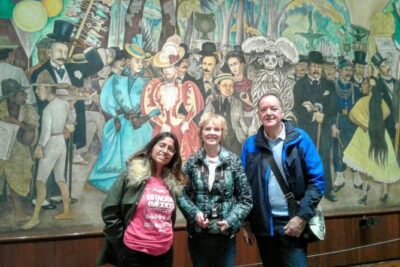
La Catrina & Muralism: Diego Rivera’s Legacy & Frida Kahlo
Read our review →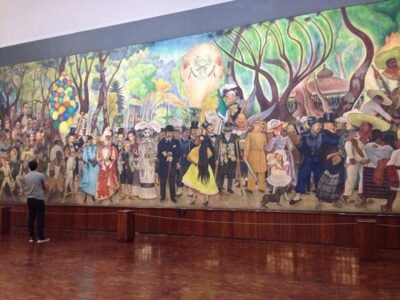
Muralist Art Semi Private Walking Tour in Mexico City Downtown
Read our review →
Xochimilco floating gardens, Coyoacan and UNAM murals
Read our review →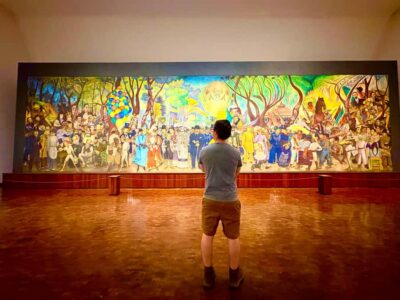
Browse the lists this tour appears in