
REVIEW · MEXICO CITY MURAL TOURS
Tour history of Muralism in Mexico
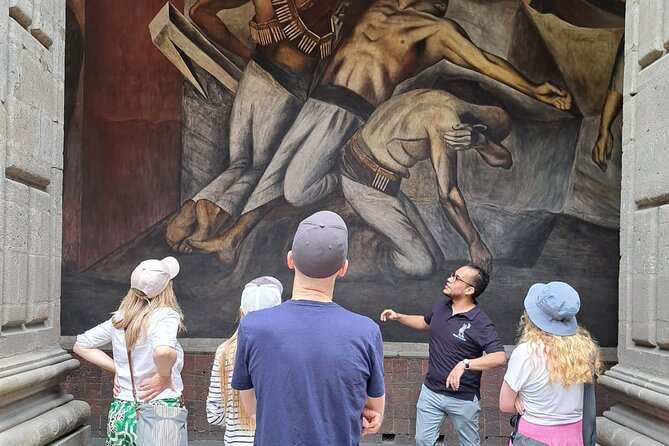
Murals turn Mexico City into an open book. This 3.5-hour walking tour links three important art sites in the Historic Center, from the former Jesuit school of San Ildefonso to Diego Rivera’s work at the Secretariat of Public Education and the murals near Bellas Artes. I especially like the three-stop route, which gives you more context than visiting one mural site alone, and the English-speaking guide, who can explain the politics, artists, and public purpose behind the paintings. The main consideration is time: with roughly 35 to 45 minutes at each major stop, you will get an introduction rather than a slow, museum-style visit.
The $59.57 price includes entry fees, which makes the tour easier to budget. I also like that it begins at San Ildefonso and ends at Palacio de Bellas Artes, keeping you in the Historic Center rather than sending you across town between sights. The group may include up to 35 people, so the quality of the experience will depend partly on how clearly your guide manages the group.
Key points to know before booking
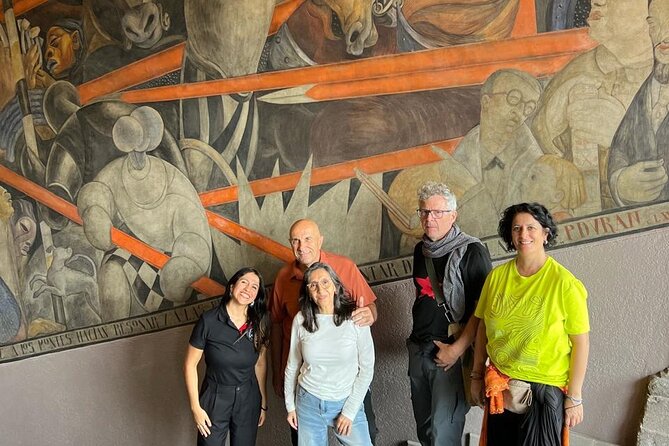
- Three major mural sites in one route: Visit San Ildefonso, the Abelardo L. Rodríguez Market, and the Secretariat of Public Education.
- A look beyond famous names: The market stop introduces the Greenwood sisters, among the first women to paint in Mexico.
- Diego Rivera receives the most attention: Nearly 45 minutes are set aside for his murals at the Secretariat of Public Education.
- Historic Center setting: The tour begins at Justo Sierra 16 and finishes at Palacio de Bellas Artes.
- Admissions are included: You do not need to pay separate entry fees at the scheduled stops.
- Free cancellation up to 24 hours ahead: A full refund is available if you cancel at least one day before the start time.
Why Mexico City’s murals need a guided visit
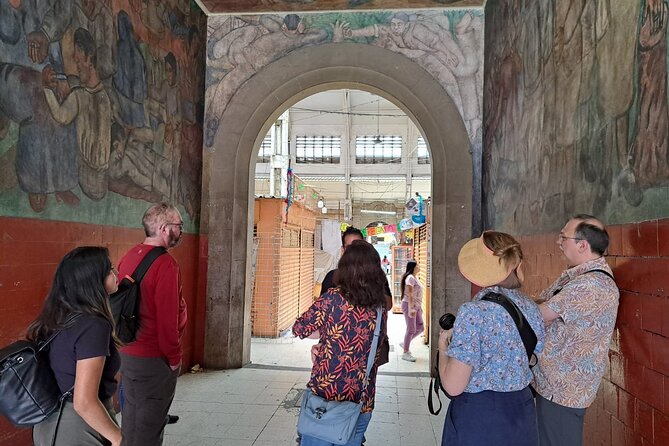
Mexico’s mural movement is not just a collection of large paintings. These works were made for public buildings, schools, markets, and government institutions. They were meant to reach people who might never enter a fine-art museum.
That public setting matters. You are not simply looking at color and technique. You are seeing art placed where people worked, studied, shopped, and handled government business. A guide can point out how the murals connect to Mexican identity, social class, education, labor, and political ideas.
This route is useful because each location gives you a different setting. San Ildefonso brings together colonial architecture and early mural work. The Abelardo L. Rodríguez Market shows how mural painting entered an everyday commercial space. The Secretariat of Public Education presents Diego Rivera’s large project across a government building.
I like that progression. It moves from a former school to a market and then to a major public institution. The route gives you a better sense of muralism as a public project, not just a gallery movement.
More Muralism Tours in Mexico:
- CDMX: Xochimilco, Coyoacan, Frida Kahlo Museum & Murals Tour
★ 4.4 · 3,025 reviews - La Catrina & Muralism: Diego Rivera’s Legacy & Frida Kahlo
★ 4.5 · 197 reviews - Muralist Art Semi Private Walking Tour in Mexico City Downtown
★ 5.0 · 188 reviews
San Ildefonso: colonial walls and early mural history
The tour starts at the Antiguo Colegio de San Ildefonso on Justo Sierra Street. The building began as a Jesuit school in the 16th century, and its colonial architecture provides an impressive setting for the art inside.
You will spend about 35 minutes here, with admission included. The building is known for works by Diego Rivera, José Clemente Orozco, and David Alfaro Siqueiros. These are three central names in Mexican muralism, so this first stop gives you a useful introduction to the artists who shaped the movement.
The value of San Ildefonso comes from the combination of place and painting. You are not entering a modern white-walled gallery. The murals belong to an old educational institution with its own architectural character. That contrast helps explain why public buildings were so important to Mexican muralists.
A guide is particularly helpful here because the paintings can contain historical and political references that are not obvious at first glance. You might notice figures, symbols, or scenes without knowing what they represent. A well-informed explanation can turn a quick look into a more meaningful reading.
The 35-minute visit is enough for a focused introduction, but it is not enough to study every work at length. If you already know the art of Rivera, Orozco, or Siqueiros, you may wish for more time. If you are new to Mexican muralism, the shorter visit may be just right because it gives you a clear start without overwhelming you.
Abelardo L. Rodríguez Market: muralism in daily life
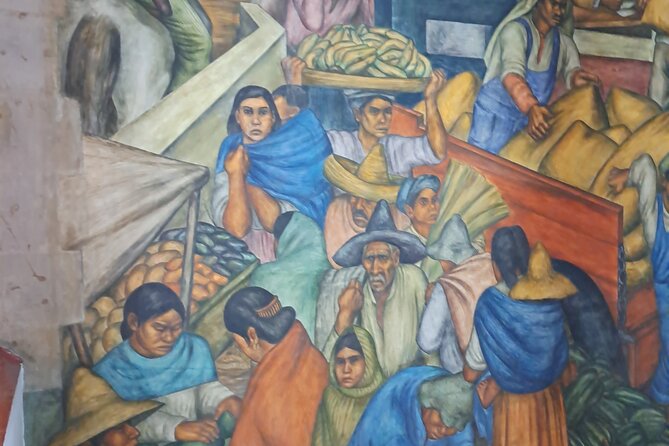
The second stop shifts the mood. At the Abelardo L. Rodríguez Market, you see mural painting in a working market rather than in a former school or formal cultural venue.
The visit lasts about 35 minutes and includes entry. The point is not only to admire the paintings. You also get a sense of the setting, where people begin their day early and carry on ordinary business. That everyday context is central to understanding why these murals matter.
This may be the most distinctive stop on the route. The market offers a look at Mexico beyond the polished cultural institutions most visitors seek out. The murals are connected to daily life, labor, and the people who use the building. You may find the surroundings less controlled than a museum, but that is part of the appeal.
The guide explains the larger pictorial project and introduces the many artists involved. One especially useful detail is the role of the Greenwood sisters, described as the first women to paint in Mexico. Their inclusion broadens the story beyond the best-known male muralists.
That makes this stop important for anyone who wants a fuller picture of Mexican art. A tour that only focuses on Rivera, Orozco, and Siqueiros can leave out other artists and other kinds of work. The market helps correct that narrow view.
There is also a practical tradeoff. A market is a working public place, not a quiet art museum. You may need to pay close attention to the guide while taking in the surroundings. If you prefer formal galleries and carefully arranged displays, this stop may feel less straightforward. If you want to see how art connects with ordinary public life, it should be one of the most memorable parts of the tour.
Diego Rivera at the Secretariat of Public Education
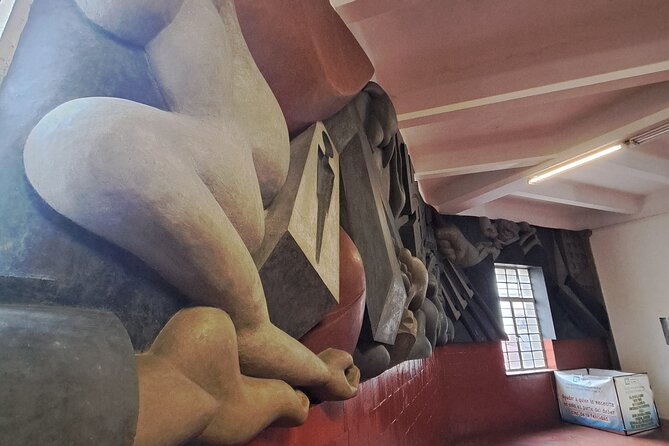
The longest scheduled visit takes place at the Secretariat of Public Education, where Diego Rivera’s murals fill the building. You have about 45 minutes here, and the guide explains the story behind the project.
This is the route’s main Diego Rivera stop. The building functions today as a museum of muralism, giving you time to see a large group of his works rather than one isolated painting. That matters because Rivera’s ideas are easier to follow when you can compare several murals in the same setting.
I like the way this stop follows the market. At the market, you learn that muralism could be part of a working neighborhood building. At the Secretariat, you see the scale and ambition of a major government-sponsored project. The two stops show different sides of the same public-art tradition.
Forty-five minutes is still a planned overview, not an exhaustive art study. You will likely hear the project’s main story and discuss selected murals, but you should not expect to examine every painted surface in detail. Ask your guide which work deserves your closest attention if you want to use your time well.
This is also the point where the tour’s structure pays off. By now, you have seen murals connected to education, markets, and government. Rivera’s work becomes easier to place within that broader setting.
More History Tours in Mexico:
- History and Murals: Walking Tour Guadalajara
★ 5.0 · 237 reviews - Walking Tour – Impressive murals in Historical Center of Mexico City
★ 5.0 · 224 reviews - Private Walking Tour Guadalajara History and Murals with Guide
★ 5.0 · 6 reviews - Mexico City: Historic Center Walking Tour with Murals
★ 5.0 · 6 reviews
Finishing at Palacio de Bellas Artes
The tour ends at Palacio de Bellas Artes on Avenida Juárez. The final explanation covers the murals inside the Fine Arts Palace.
The end point is practical. Bellas Artes is one of Mexico City’s best-known cultural sites, and finishing there leaves you in the Historic Center with an obvious next stop. The tour does not simply drop you back at the starting point. Instead, it closes the story by connecting the route to another major mural location.
The information provided does not specify a separate timed visit inside the palace, so think of this as the final explanation rather than another full museum session. You will want to clarify with the guide exactly how much time is set aside for the Bellas Artes murals on your date.
This final stop also gives the tour a strong geographic shape. You begin at San Ildefonso, continue through the market and Secretariat of Public Education, and finish at Bellas Artes. That makes sense for a half-day plan in the Historic Center, especially if you want to continue sightseeing after the tour.
What the $59.57 price includes
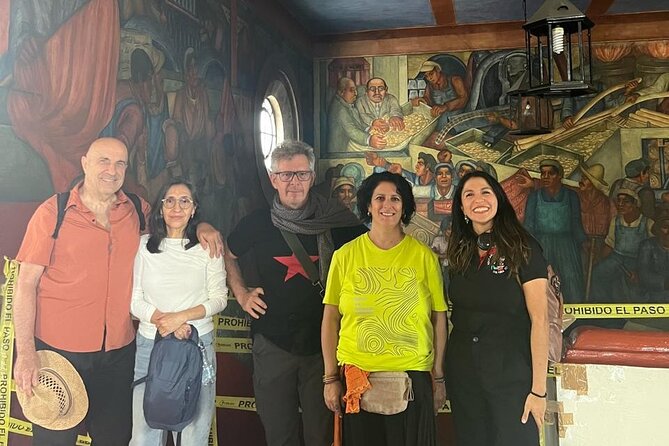
At $59.57 per person, the tour is not the cheapest way to walk through the Historic Center. The price includes entries, though, which removes the need to handle separate admission payments at the scheduled sites.
The value depends on how much interpretation you want. You could visit public buildings on your own, but the route covers several locations with different backgrounds. The guide’s role is to connect the paintings, artists, and settings into one story.
I would consider the price fair for someone who wants guided art history rather than a simple walk past famous buildings. The tour is less compelling if you already know the mural sites well or prefer to spend an entire afternoon at one museum.
The small number of published ratings means you should not treat the perfect score as a guarantee of the exact experience on every date. Still, the praise focuses on useful qualities: the guide was prompt, well informed, and personable. Those traits matter here because the tour depends heavily on explanation.
Timing, group size, and walking expectations
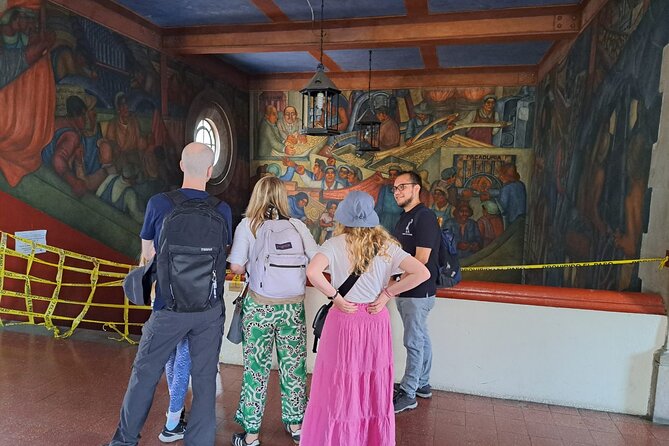
The experience lasts about 3 hours and 30 minutes. The three named stops account for about 1 hour and 55 minutes of scheduled viewing time, with the remaining time used for movement and explanations.
That is a sensible pace for a walking route through the Historic Center. You see several locations without spending the entire day on one subject. Still, wear comfortable shoes and plan to stay attentive while moving between sites.
The group can include up to 35 people. That is a fairly large maximum for an art tour. A strong guide should keep the group together and make sure people at the back can hear, but you may not receive the same personal attention as you would in a very small group.
You receive confirmation when you book, and the experience is offered in English. It is near public transportation, which helps with arrival and departure. Service animals are allowed, and most people can take part according to the available information.
The meeting point is the former College of San Ildefonso at Justo Sierra 16 in the Centro Histórico. The tour ends at Palacio de Bellas Artes, on Avenida Juárez. Check the exact start time carefully, since the cancellation deadline uses local Mexico City time.
Who will get the most from this tour
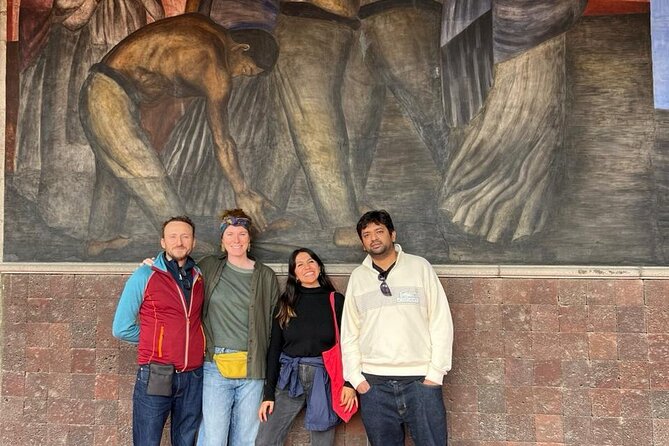
I would recommend this experience to you if you want a clear introduction to Mexican muralism and prefer seeing art in its original public settings. It suits first-time visitors who want cultural context without committing to a full day of museum visits.
It is also a good choice if you already plan to explore the Historic Center. The start and finish points make it easy to combine with other central sights, and the route gives you a ready-made reason to visit buildings you might otherwise overlook.
The tour is especially useful for people interested in the social role of art. The market stop and the Greenwood sisters add subjects that a standard Diego Rivera tour may not cover.
You may want a different plan if you prefer slow, independent viewing. The schedule is fixed, each stop has a limited time, and a group of up to 35 people can make close examination harder. Serious art students may want to return on their own after the tour for a longer look.
Booking and cancellation advice
The tour is often booked about 26 days in advance, so planning ahead is sensible if your Mexico City dates are fixed. Confirmation arrives at the time of booking.
You can cancel for a full refund up to 24 hours before the start time. Cancellations or changes made less than 24 hours before the tour are not refunded or accepted. The experience also requires a minimum number of participants, and if it is canceled for that reason, you will be offered another date or experience, or a full refund.
FAQ
How long is the muralism tour?
The tour lasts approximately 3 hours and 30 minutes.
What language is the tour offered in?
The experience is offered in English.
Where does the tour begin?
It begins at the former College of San Ildefonso, located at Justo Sierra 16 in Mexico City’s Centro Histórico.
Where does the tour end?
It ends at Palacio de Bellas Artes on Avenida Juárez. The final explanation covers the murals at the Fine Arts Palace.
Are admission fees included?
Yes. Entry fees for the included stops are covered in the tour price.
Can I cancel for a full refund?
Yes, if you cancel at least 24 hours before the experience begins. Cancellations made within 24 hours are not refunded.
Should you book the muralism tour?
Book it if you want a guided introduction to Mexico City’s public art, especially if you value context more than free time. The strongest features are the varied route, the market setting, the attention to Diego Rivera, and the chance to learn about the Greenwood sisters.
I would be cautious if you want a small private group or hours of quiet museum viewing. With a maximum of 35 people and limited time at each stop, this is best treated as a well-organized overview.
For most first-time visitors interested in Mexican art, the route offers good value at $59.57 because it joins several important sites and includes admission. Bring comfortable shoes, arrive ready to listen, and leave room in your schedule after Bellas Artes for more exploring in the Historic Center.
Just added around Mexico
- Xochimilco floating gardens, Coyoacan and UNAM murals★ 4.0 · 6 reviews
- UNAM: Murals & Revolution★ 4.9 · 8 reviews
- Street Art & Cemetery Cultural Tour – half day★ 5.0 · 3 reviews
- Graffitis & Munchies biketour Playa del Carmen★ 4.5 · 18 reviews
- Street Art Walk★ 4.5 · 7 reviews
- Tour Women Muralists : Strokes that resist Mexico City★ 5.0 · 7 reviews
- Diego Rivera’s murals, hidden treasures★ 5.0 · 21 reviews
- Mexico City Private Tour with Teotihuacan, Murals, Guadalupe Basilica★ 3.0 · 2 reviews
Mexico City Mural Tours, compared.
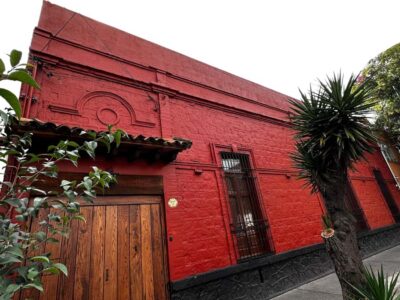
Xochimilco, Coyoacan, Frida Kahlo Museum & Murals Tour
Read our review →
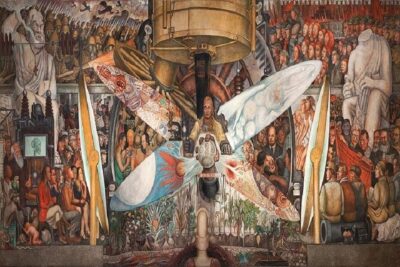
Walking Tour – Impressive murals in Historical Center of Mexico City
Read our review →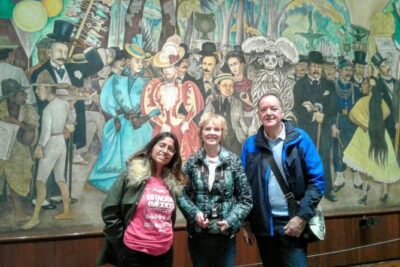
La Catrina & Muralism: Diego Rivera’s Legacy & Frida Kahlo
Read our review →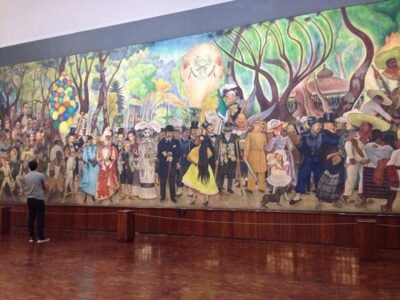
Muralist Art Semi Private Walking Tour in Mexico City Downtown
Read our review →
Xochimilco floating gardens, Coyoacan and UNAM murals
Read our review →
Browse the lists this tour appears in