
REVIEW · BUDAPEST MURAL TOURS
Original Budapest Alternative Street Art & Jewish Tour
Budapest’s walls tell stories. This three-hour walk links street art, local culture, the Jewish Quarter, and the lively 6th and 7th districts in one social outing. I like the focus on public art by local creators, especially the work connected with Színes Város, or Colourful City. I also like the low entry price of $25.20 per person, with tip-based guiding giving you some control over what the experience is worth.
The main caution is guide quality. Several accounts praise guides for explaining art and history with warmth and skill, but others describe guides who had only worked for a week and struggled with basic questions. A guide even pointed out the former Jewish ghetto in the wrong location. That makes this a promising tour, but not one I would book without keeping expectations flexible.
Key points to know before booking
- About three hours on foot: The tour links Lépcső Street, Terézváros, Andrássy Avenue, and the 7th District.
- Art with a local angle: Színes Város and its colorful public projects are central to the street-art theme.
- Starts at St. Stephen’s Basilica: Meet at Szent István tér 1 at 11:00 a.m.
- Best for curious first-time visitors: You get neighborhood orientation, social contact, and recommendations for more places to see.
- Guide quality can vary: Strong guiding earns high praise, but limited training has caused serious factual mistakes.
- Low-cost, tip-based format: The listed price is modest, but the guide works for tips, so budget for an additional amount if the walk serves you well.
What this Budapest walk is really about

This is not a museum tour with a long list of dates and formal displays. It is a street-level introduction to the parts of central Budapest where old buildings, nightlife, local art, and Jewish history meet.
You spend the walk in and around the 6th and 7th districts. These neighborhoods are among the city’s most social areas, with side streets and public spaces that show a less polished side of Budapest. That is part of the appeal. Instead of only seeing major monuments, you look at walls, corners, stairways, and everyday city scenes.
I see this as a useful choice if you want context before exploring on your own. The guide can point out the feel of Terézváros, explain how the 7th District differs from the nearby 6th, and offer suggestions for places to return to later. One strong account praised a guide for giving many recommendations, which is exactly the sort of extra help that can turn a short walking tour into a useful first day in the city.
The title includes the Jewish Tour label, and the walk goes through an area closely tied to Budapest’s Jewish past. Still, you should not treat it as a full Jewish heritage tour. The route also gives substantial attention to alternative culture and public art. If you want a detailed account of synagogues, wartime events, and Jewish communal life, you may need a more specialized tour.
More Alternative City Tours in the world:
- London Bike Tour: Landmarks, Secret Gems, Pub Stop & Street Art
★ 5.0 · 943 reviews - Budapest: Street Art and Underground Movements Walking Tour
★ 5.0 · 365 reviews - Berlin: Street Art and Alternative Tour
★ 4.7 · 98 reviews
Starting at St. Stephen’s Basilica at 11:00
The meeting point is St. Stephen’s Basilica, at Szent István tér 1. This is a practical central start, and the open square should be easy to identify. The group begins at 11:00 a.m., so plan to arrive early rather than rushing in at the last moment.
Starting near the basilica places you close to both Andrássy Avenue and the inner districts. The route then moves toward the city’s alternative side, where public art and nightlife culture become more visible.
The tour uses a mobile ticket, and confirmation is provided when you book. You do not need an admission ticket for the listed stops. Bottled water is not included, so bring your own, especially on a warm day. The activity requires good weather, and the end point can vary, so avoid making a tight reservation immediately afterward.
The maximum group size is listed as 100 people. That is a large possible group for a walking tour. A smaller turnout could feel relaxed and conversational, but a busy departure may make it harder to hear or ask questions. If personal attention matters to you, arrive early and stay near the guide.
Lépcső Street Art: an easy opening to the city’s creative side
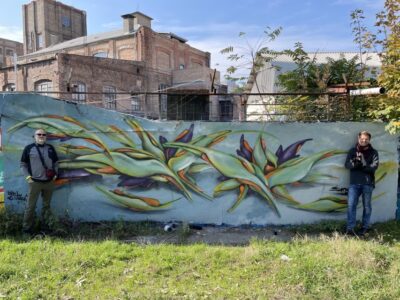
The first stop is Lépcső Street Art, with about 30 minutes set aside for this part of the walk. The name points to the kind of setting this tour favors: not a major gallery, but art integrated into an ordinary urban space.
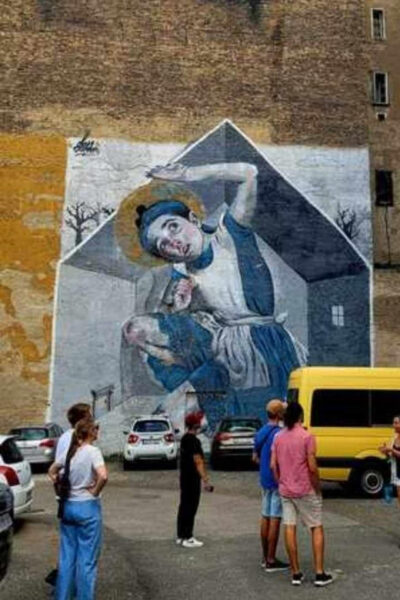
That choice matters. Public art in Budapest often appears in places you might otherwise pass without a second look. A stairway, side road, or plain wall can become a small local landmark. The guide’s role is to help you notice the work, explain its place in the city, and connect it to the wider street-art movement.
I like this opening because it gives the group something concrete to discuss right away. It also sets a useful expectation. You are not being led from one grand sight to another. You are learning how to read the city’s smaller visual details.
The quality of this stop depends heavily on the guide. A strong guide can explain the artist, the idea behind the work, and why the location matters. A poorly prepared guide may simply point at a wall and move on. That difference is important here because the art itself is free and accessible. The value comes from the explanation.
Terézváros: seeing how a district changes after dark
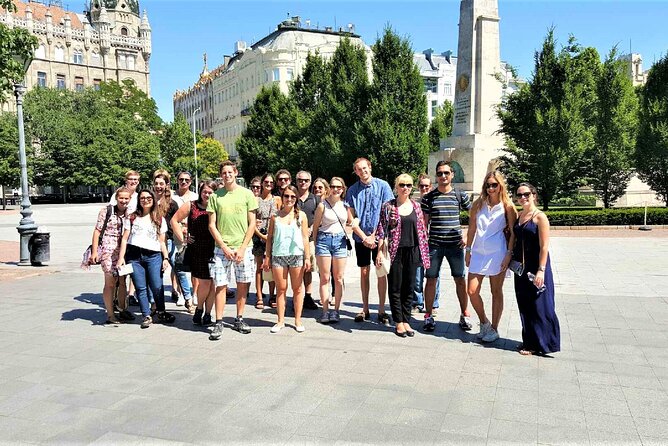
The tour then spends roughly 30 minutes in Terézváros, Budapest’s 6th District. The neighborhood is presented as part of the city’s social and youthful side, where residents and visitors gather to eat, drink, meet, and explore.
You may find this stop especially useful if you are still learning Budapest’s layout. The district is not treated as a collection of isolated sights. Instead, you get a sense of how the central neighborhoods connect and how their atmosphere changes from one street to the next.
The alternative theme works well here because Terézváros is more than grand avenues and historic façades. The guide can help you notice the mix of everyday city life, creative projects, and entertainment venues. You also get a chance to ask practical questions about where to go later.
This is one of the parts that can feel vague if the guide does not add enough detail. The itinerary gives Terézváros half an hour, but it does not promise a particular monument or interior visit. Think of it as neighborhood orientation, not a formal sightseeing stop.
A few more mural tours around the world worth a look
- Medellin: Comuna 13 Graffiti Tour, Cable Car & Street Food
★ 4.8 · 9,046 reviews - CDMX: Xochimilco, Coyoacan, Frida Kahlo Museum & Murals Tour
★ 4.4 · 3,025 reviews - Amsterdam: Streetart Museum STRAAT Entrance Ticket
★ 4.8 · 2,137 reviews - Belfast: Murals Taxi Tour
★ 4.9 · 2,047 reviews
Andrássy Avenue and the move into the 7th District
Andrássy Avenue forms an important transition in the route. Király Street marks the southern side of the route described for this section, and crossing it takes you into Budapest’s 7th District.
This change of district gives the walk some structure. You are not simply wandering through streets at random. The route uses recognizable boundaries to explain how central Budapest is divided and how the character shifts as you move from one area to another.
The 7th District is the heart of the tour’s social atmosphere. It is where the alternative culture theme makes the most sense, with street art, nightlife, local projects, and the area’s Jewish associations all overlapping. I would expect the guide to talk about the district as a living part of the city, not just a preserved historic quarter.
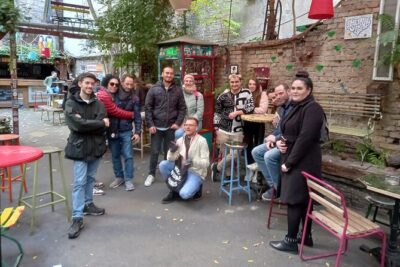
This is also where the tour’s conversational format can work best. You are encouraged to socialize with the rest of the group, and the guide can answer questions as you walk. If you prefer quiet sightseeing or a tightly scripted lecture, the informal approach may feel loose. If you enjoy meeting other people and sharing tips, it is a strong match.
Színes Város and Budapest’s colorful public art
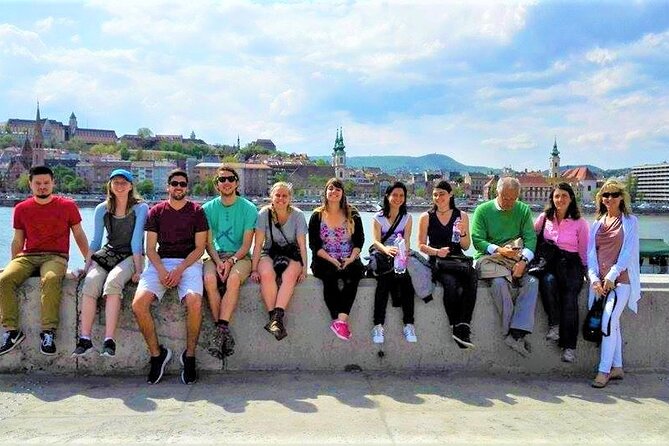
The final listed stop is Színes Esernyők, with another 30 minutes devoted to Budapest’s public-art culture. The wider theme is Színes Város, or Colourful City, a local art movement associated with bringing color and creative work to landmarks and ordinary side roads.
This is the most distinctive part of the route. Many city tours mention murals as a quick photo stop. Here, the public-art movement is part of the main subject. You get a chance to see how art can change the feel of a common street without turning it into a formal attraction.
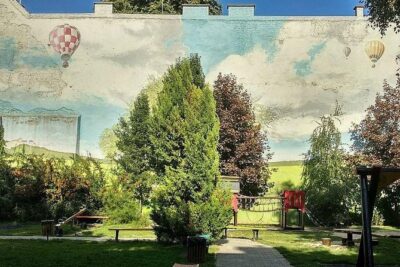
The colorful umbrellas referenced in the stop name suggest the playful side of the program. The exact artwork visible on the day may depend on the route and current conditions, so I would not book this expecting one fixed exhibit. Street art changes. Pieces can be repainted, removed, or replaced, and that is part of the medium.
The Színes Város connection also gives the guide a chance to explain Budapest’s local creative identity. That is more useful than simply collecting photographs. You learn why certain streets receive artistic attention and how public projects can give an ordinary corner a new role in the neighborhood.
The Jewish Quarter connection, and an important warning

The Jewish Quarter is one of the strongest reasons to choose this walk. You get to see the district as a place of present-day social life as well as a place marked by the past. That combination helps explain why the area attracts so many different kinds of visitors.
Still, factual accuracy matters greatly here. One account describes a guide placing the former Jewish ghetto in the wrong location, while another says the guide lacked the preparation needed to answer questions. This is not a minor complaint. Historical errors in a place connected to wartime persecution can mislead you in ways that a wrong restaurant tip cannot.
The best advice is simple: ask questions, listen for clear explanations, and verify important historical claims through a museum, memorial, or specialist tour. I would enjoy the street-art and district-orientation side of this experience while treating it as a general introduction rather than my only source for Jewish history in Budapest.
Guide quality is the deciding factor
The strongest praise centers on guides who combine art knowledge, historical background, friendliness, and practical recommendations. One guide was described as exceptional in explaining both art and history, while another was praised for being friendly, professional, and generous with suggestions for other places to visit.
That is exactly what you want from a walk like this. The stops themselves are free. The guide creates the value by connecting them, providing context, and helping you understand what you are seeing.
But the experience has a clear weak point. Two accounts describe guides who had been on the job for only one week. In those cases, the guides could not answer many questions, and one made a significant historical mistake. The problem appears to be inconsistent preparation, not the idea behind the tour.
This means I would book it when the schedule and price suit me, but I would not depend on it for every important fact. If your main reason for booking is art and social atmosphere, a less polished guide may still provide a pleasant morning. If your main reason is detailed Jewish history, guide consistency becomes a serious concern.
Is $25.20 good value?
At $25.20 per person, the price is reasonable for a three-hour guided walk in central Budapest. You are paying for time, local interpretation, neighborhood orientation, and the chance to ask questions. There are no separate admission costs for the listed stops.
The tip-based format also affects the value calculation. The guide works for tips, so the listed price is not the whole story if you want to reward a strong experience. I would think of the fee as a low starting price and keep an additional tip in mind for a guide who provides accurate explanations and useful advice.
The value is highest for a first visit. You can use the walk to identify streets and districts you want to revisit, then return later at your own pace. It is less valuable if you already know the 6th and 7th districts well and are looking for access to private sites or a specialist lecture.
The possible group size of up to 100 people is another value issue. A large group can make the price attractive, but it may reduce the personal feel. If the group is crowded, you may need to work harder to hear and stay close.
Who should book this walk?
I would recommend it to you if you want a light, social introduction to Budapest’s alternative culture. It suits solo visitors, couples, and friends who enjoy walking, public art, and neighborhood stories more than formal museum tours.
It also works well early in a Budapest stay. The guide’s recommendations can help you plan later meals, walks, and evening outings. The route gives you a working map of the 6th and 7th districts instead of keeping you inside one landmark.
You may want another option if you need a specialist Jewish history tour, a small private group, guaranteed guide expertise, or a fixed list of artworks. The 100-person maximum is generous, and the guide-training concerns are real.
Wear comfortable shoes and bring water. The walk lasts about three hours, and the end point varies. Since the route depends on good weather, keep some flexibility in your day.
Cancellation and booking details
You can cancel for a full refund up to 24 hours before the 11:00 a.m. start time. Changes or cancellations made within 24 hours are not refunded.
If bad weather cancels the experience, you are offered another date or a full refund. The same applies if the minimum number of participants is not reached. Confirmation arrives at booking, and most people can take part.
Should you book the Original Budapest Alternative Tour?
Book it if you want street art, district orientation, and a friendly social walk at a modest price. The Színes Város focus gives the experience a local angle, and a strong guide can add useful art and history context while pointing you toward places worth visiting later.
I would skip it as your only Jewish Quarter experience, especially if detailed historical accuracy is your top priority. The guide can make or break the morning, and the reports of weak training deserve attention.
For many visitors, this is a worthwhile introduction rather than a definitive Budapest history tour. Go for the creative streets, the 6th and 7th District atmosphere, and the chance to get practical recommendations. Just keep your plans flexible and your expectations clear.
FAQ
How long is the Budapest Alternative Street Art and Jewish Tour?
The tour lasts approximately three hours.
Where does the tour begin?
It begins at St. Stephen’s Basilica, Budapest, Szent István tér 1, at 11:00 a.m.
Where does the tour end?
The end point varies.
What is included in the price?
A local tour guide is included. The listed stops do not require an admission ticket.
Is bottled water included?
No. Bottled water is not included, so you should bring your own.
Can I cancel for a full refund?
Yes. You can cancel at least 24 hours before the experience starts for a full refund. Cancellations within 24 hours are not refunded.
Just added around the world
- Your Own Belgrade: Street Art and Hidden Gems Walking Tour★ 5.0 · 2 reviews
- Vancouver: Street Art & Craft Coffee Walking Tour w/ Tasting★ 4.8 · 11 reviews
- Wynwood Walls Street Art & Neighborhood Walking Tour★ 4.9 · 9 reviews
- Xochimilco floating gardens, Coyoacan and UNAM murals★ 4.0 · 6 reviews
- UNAM: Murals & Revolution★ 4.9 · 8 reviews
- Urban Canvas: Osaka Street Art Bike Tour★ 5.0 · 10 reviews
- Vancouver: Street Art & Craft Beer Walking Tour with Tasting★ 4.8 · 14 reviews
- Small-Group Graffiti Tour and Workshop in El Carmen★ 5.0 · 2 reviews
Budapest Mural Tours, compared.
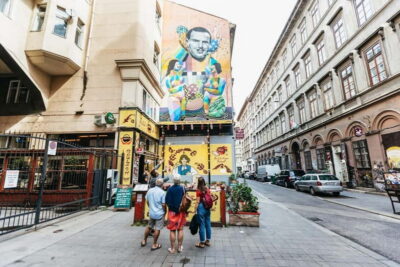
Street Art and Underground Movements Walking Tour
Read our review →

Budapest Vibe: Ruin Bars, Street Art and Culture Tour
Read our review →
Browse the lists this tour appears in