
REVIEW · BUDAPEST MURAL TOURS
Alternative Street Art Free Walking Tour of Budapest
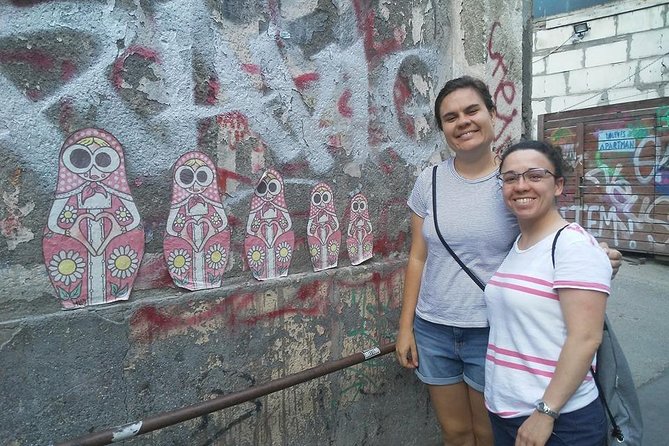
Budapest hides its best stories on walls. This 100-minute street art walk explores the historic Jewish District, where murals, graffiti, commissioned art, and social history meet. I like the way the tour treats street art as more than decoration, and I like that guides such as Victoria, Peter, and Alexandria connect the artwork to daily life and Hungary’s past.
The price is another strong point: about $3.62 per person, with tipping expected for the guide. The main thing to watch is the meeting information. The description points to a yellow umbrella at Blaha Lujza Tér, while the stated meeting point is Rákóczi tér, so check your confirmation carefully before setting out.
Five things to know before you go
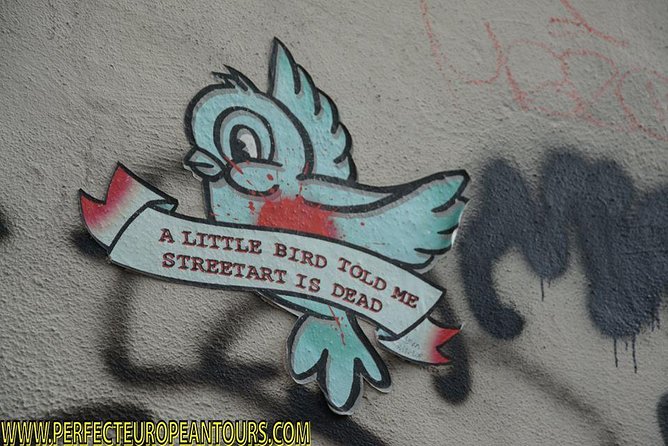
- The art comes with context: You will see small pieces, large commissioned murals, and graffiti while learning how Budapest’s political and social past shapes the modern art scene.
- The Jewish District is the real subject: The walk explains why this part of the city became a center for youth culture, alternative art, and ruin bars.
- Victoria receives especially warm praise: Her clear, direct style and wide knowledge of Hungarian history make the tour useful even if you are not an art enthusiast.
- The tour finishes around ruin-bar culture: The route ends at, or near, Szimpla Kert, with attention given to Budapest’s famous grassroots bar scene.
- It is an excellent-value tip-based walk: You pay a small booking fee, then decide what the guide’s work was worth.
- Keep an eye on the start point: Rákóczi tér is listed as the meeting point, but the yellow umbrella is associated with Blaha Lujza Tér in the tour directions.
Why Budapest street art is worth your time

A standard Budapest sightseeing walk usually points you toward grand buildings, bridges, thermal baths, and churches. This tour takes a different route. It asks you to look at side streets, blank walls, small tags, large murals, and designs that can be easy to miss when you are simply walking between major sights.
I like that approach. Street art gives you a quick reading of a neighborhood. A mural may tell you something about national identity, local politics, memory, or the way a younger generation wants to use public space. A smaller piece may be less polished but more personal. The guide’s job is to help you notice those differences rather than treating every painted wall as the same.
You should not book this expecting a formal gallery tour. The focus is urban art in its natural setting, mixed with stories about Budapest and Hungary. That makes the walk especially useful early in a stay, when you want to understand the city beyond its postcard views.
The tour lasts about one hour and 40 minutes. That is long enough to build a clear picture of the neighborhood without taking up half your day. You will be walking outdoors for most of that time, so comfortable shoes and weather-ready clothing make sense.
More Alternative City Tours in the world:
- London Bike Tour: Landmarks, Secret Gems, Pub Stop & Street Art
★ 5.0 · 943 reviews - Budapest: Street Art and Underground Movements Walking Tour
★ 5.0 · 365 reviews - Berlin: Street Art and Alternative Tour
★ 4.7 · 98 reviews
Rákóczi tér and finding the guide
The published meeting point is Rákóczi tér, Budapest 1084. The directions also describe a guide carrying a yellow umbrella at central Blaha Lujza Tér. Since both locations appear in the information, you should use the final booking confirmation as your authority and allow a few extra minutes to get oriented.
This is a practical issue, not a small one. A walking tour cannot wait long for a late arrival, and Budapest’s busy central streets can make a simple meeting point less obvious than it looks on a map. Look for the guide’s yellow umbrella and keep the tour provider name, Perfect European Tours, available on your phone.
The tour is offered in English. The group limit is listed as 15 people, though one past description refers to a maximum of 25, so the exact limit may vary by departure. Either way, this is intended to be a small-group experience rather than a large crowd following a flag.
That size matters. You can usually hear the guide better, ask questions, and stop without blocking a whole street. One especially fortunate departure had only a single booking, creating a private-style walk. You should not count on that, but a modest group gives the guide more room to interact with people.
The Jewish District as an open-air gallery
The historic Jewish neighborhood gives the tour its setting and its substance. You are not simply moving from mural to mural. The guide explains how the district changed over time and why it became associated with alternative art, youth culture, and ruin bars.
That background is one of the tour’s strongest features. The artwork makes more sense when you understand the streets around it. The guide may point out how public art reflects political memories, social pressure, changing city life, or the experiences of people living in Hungary today.
Victoria receives especially strong praise for this part of the walk. She has lived in Hungary for more than 25 years and brings both historical study and personal experience to the discussion. Her approach is described as direct, witty, and academic without becoming stiff. That combination suits a subject that can easily become either a list of dates or a shallow photo hunt.
You will also hear about life after communism and the changes that followed. The tour can be valuable even if you are only mildly interested in graffiti because the art acts as a doorway into modern Hungary. It gives you a look at how public spaces carry arguments about identity and change.
Do keep your expectations sensible. This is a short walking tour, not a full course in Hungarian history. The depth depends on the guide and the group’s questions. Still, the historical framing appears to be a central strength, not a brief add-on.
Small pieces, murals, and commissioned art
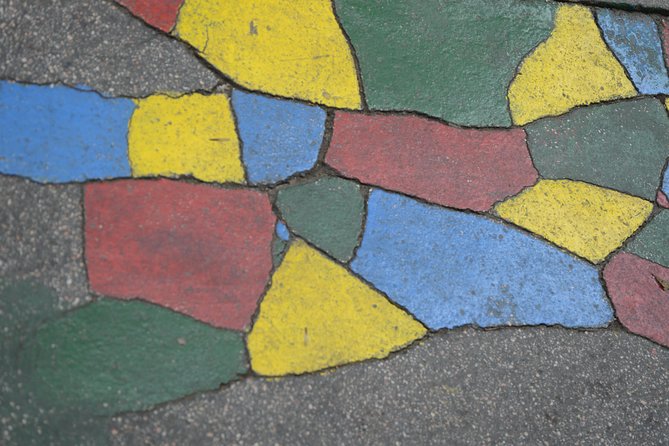
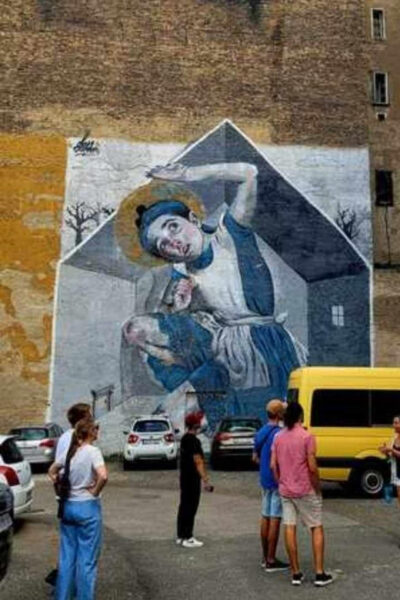
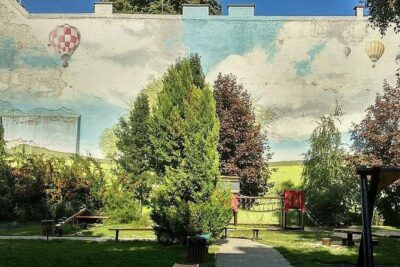
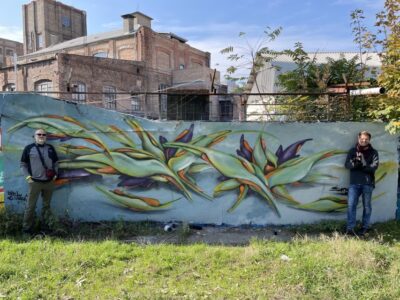
One smart feature is the mix of artwork. You may see local artists’ smaller pieces alongside graffiti and corporate commissioned murals. That range prevents the walk from presenting street art as one single movement.
A commissioned mural has a different purpose from an illegal tag. A large wall may be designed to improve a tired building or support a public message. A tiny piece can be harder to find and more personal. Your guide helps explain those differences, which makes the walk more thoughtful than a simple search for the biggest photograph.
Alexandria is also praised for showing both commissioned street art and graffiti. That is useful because many visitors have a narrow idea of urban art. You may arrive expecting bright murals and leave with a better sense of the arguments around ownership, public space, and artistic freedom.
The route is not presented as a gallery with fixed indoor exhibits. Art can change, disappear, or be covered, so the exact pieces you see may differ from one departure to the next. That is part of the nature of street art, but it also means you should value the guide’s interpretation as much as any single wall.
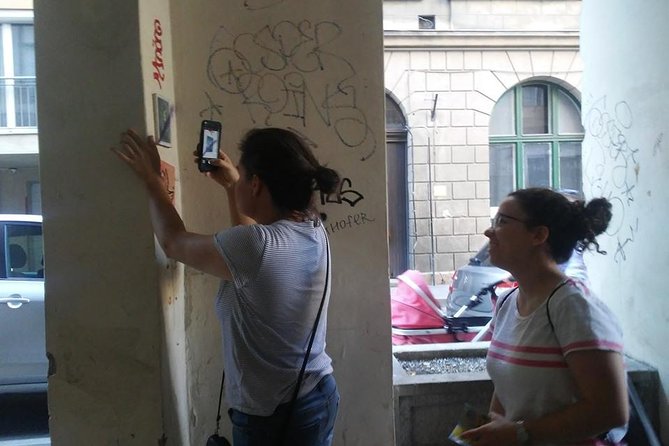
Bring your phone or camera if you like taking pictures, but keep your attention on the explanation. The most valuable part of the tour is often the reason a piece matters, not just the image itself.
More Street Art Walking Tours in the world:
- London: Street Art and Graffiti Guided Walking Tour
★ 4.9 · 1,354 reviews - Berlin: City Street Art Guided Walking Tour
★ 4.8 · 1,051 reviews - Naples Spanish Quarters Walking Tour Street Art, Folklore & Sweet
★ 5.0 · 797 reviews - Lisbon: Kickstart Street Art Walking Tour
★ 4.9 · 717 reviews
How the walk handles history and modern life
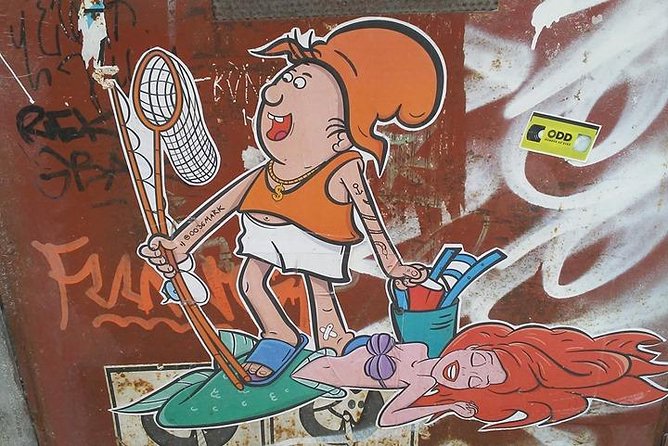
The guides do more than name artists. They connect urban art to Hungary’s political and social story, including the country’s post-communist years and present-day life. That gives you a more grounded view of Budapest than a tour focused only on pretty facades.
Victoria is repeatedly praised for providing historical context without rushing. That pace matters. If a guide moves too quickly, street art becomes a series of stops with no time to look. Here, the walk seems designed to let you examine the work and ask questions.
The personal element can also be useful. One guide shared experiences of living in Hungary, giving the discussion a human scale. You should remember that personal observations are not the same as a complete picture of the country, but they can make recent history easier to understand.
The subject may occasionally become serious. Public art tied to politics, identity, and difficult periods is not always light entertainment. That is a strength if you want substance, though less suitable if you want a purely decorative walk with no social discussion.
The guides also add lighter details and local facts. Peter is praised for his fun facts and easy manner, while Alexandria is described as engaging and informative. The experience seems to depend somewhat on your assigned guide, but the strongest accounts point to guides who can balance humor with serious material.
Finishing with Szimpla Kert and ruin-bar culture
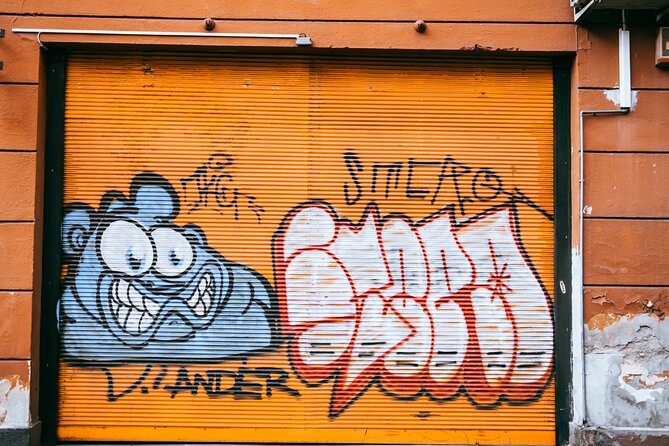
The tour finishes at Szimpla Kert, Budapest’s best-known ruin bar, with the endpoint also given as Auróra u. 11. The information describes the finish as a grassroots community ruin bar, and the walk may include an introduction to other ruin bars along the way.
This is a clever ending. You learn about an important part of the district’s modern identity, then arrive at a place where you can see that culture in person. Several guides have suggested other ruin bars and, in some cases, continued to one after the walk when heading that way themselves.
You are free to stay for a drink after the tour, but that cost is not included. The same applies to parking and public toilet use. Szimpla Kert can be lively and visually chaotic, so it may not suit you if you prefer quiet cafés or polished cocktail lounges. If you want to understand why ruin bars matter to Budapest’s current cultural life, though, the ending is well chosen.
Do not assume the finish means a hosted bar visit with drinks included. The professional guide is included, but anything you order afterward is your responsibility. Think of the final stop as a useful orientation, not a prepaid nightlife package.
Price, tipping, and overall value
At roughly $3.62 per person, this is one of the least expensive ways to spend 100 minutes in Budapest. The low booking price is possible because the walk operates on a tip model. You pay the small reservation charge, then tip the guide according to the quality of the experience and your budget.
That structure can be excellent value. You receive a guided introduction to the Jewish District, modern urban art, Hungarian history, and ruin-bar culture for less than many conventional sightseeing activities cost. The tour also gives you practical ideas for what to see and do later in the neighborhood.
The tip-based format requires a little judgment. Bring some local cash if possible, or be prepared to ask how the guide prefers to receive tips. The listed price should not be treated as the full social cost of the experience, since the guide’s earnings depend heavily on gratuities.
A small group improves the value further. You are not paying mainly to stand at the back of a crowd. You have a better chance to ask about a particular mural, local customs, or the neighborhood’s recent changes.
Who will enjoy this walk most
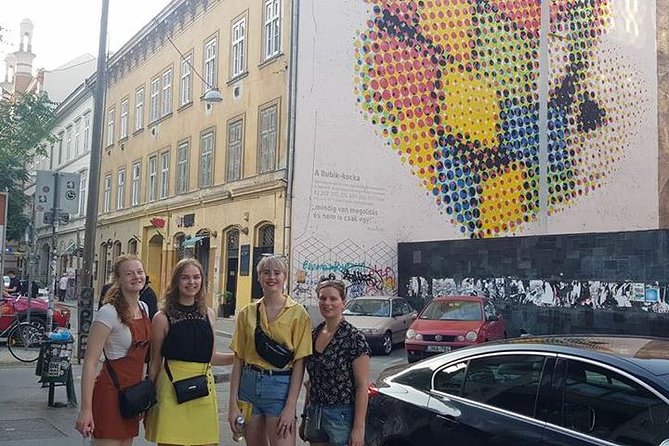
I would choose this tour for you if you like city history with a modern edge. It suits art fans, photographers, design-minded visitors, students, and anyone who has already seen the main Budapest sights and wants something less conventional.
It is also a good choice if you are unsure about street art. The historical material gives the walk enough range to remain worthwhile even when you do not care about graffiti. You will see how art fits into the life of a neighborhood rather than treating it as a collection of walls for social media.
Families can participate, and service animals are allowed. Most people can take part, but the experience is a walking tour, so you should be comfortable spending close to two hours outdoors. The group size, route, and weather can affect the pace.
I would be more cautious about booking if your priority is major architecture, indoor attractions, or a fully fixed itinerary. Street art changes, exact stops may vary, and the tour’s appeal depends on the guide’s storytelling. It is also not the best match for someone who wants a private, luxury experience with transport.
Practical booking advice
You can cancel for a full refund up to 24 hours before the start time. Changes or cancellations inside that window are not accepted for a refund. The tour may be canceled if poor weather affects the experience or if the minimum number of bookings is not reached, in which case you are offered another date, another experience, or a full refund.
The activity is near public transportation, which makes it easier to reach without a car. Parking fees are not included, and you would pay separately to use a public toilet.
I would book a few weeks ahead if your Budapest dates are fixed. The average booking lead time is about 22 days, suggesting that popular departures can fill before the last minute. After booking, check the confirmation for the exact meeting point, then arrive early enough to locate the yellow umbrella.
Should you book the Alternative Street Art Free Walking Tour?
Yes, if you want Budapest explained through its side streets, public art, and recent social history. The strongest reason to go is the combination of street art and context. Guides such as Victoria make the walk feel like a lesson in modern Hungary, not just a photo stop between ruin bars.
The main cautions are simple: verify the meeting point, expect to tip, and remember that the tour depends on outdoor conditions and the guide assigned to your group. If those terms suit you, the low price makes this an easy addition to a Budapest itinerary.
FAQ
How long does the Alternative Street Art Free Walking Tour last?
The tour lasts approximately 1 hour and 40 minutes.
How much does the tour cost?
The listed price is about $3.62 per person. The walk operates as a complimentary tour with a booking fee, and tipping the guide is expected.
What language is the tour offered in?
The tour is offered in English.
Where does the tour meet?
The stated meeting point is Rákóczi tér in Budapest. The directions also mention finding a guide with a yellow umbrella at Blaha Lujza Tér, so check your booking confirmation for the exact meeting instructions.
Where does the tour finish?
The tour finishes at or near Szimpla Kert. The endpoint is also listed as Auróra u. 11, Budapest 1084.
Is Szimpla Kert admission included?
The tour information lists free admission for the stop at Szimpla Kert. Drinks and other purchases at the ruin bar are not included.
Can I cancel the tour for a full refund?
Yes. You can cancel at least 24 hours before the start time for a full refund. Poor weather or failure to meet the minimum number of participants may also lead to an alternative date or a full refund.
Just added around the world
- Your Own Belgrade: Street Art and Hidden Gems Walking Tour★ 5.0 · 2 reviews
- Vancouver: Street Art & Craft Coffee Walking Tour w/ Tasting★ 4.8 · 11 reviews
- Wynwood Walls Street Art & Neighborhood Walking Tour★ 4.9 · 9 reviews
- Xochimilco floating gardens, Coyoacan and UNAM murals★ 4.0 · 6 reviews
- UNAM: Murals & Revolution★ 4.9 · 8 reviews
- Urban Canvas: Osaka Street Art Bike Tour★ 5.0 · 10 reviews
- Vancouver: Street Art & Craft Beer Walking Tour with Tasting★ 4.8 · 14 reviews
- Small-Group Graffiti Tour and Workshop in El Carmen★ 5.0 · 2 reviews
Budapest Mural Tours, compared.
Street Art and Underground Movements Walking Tour
Read our review →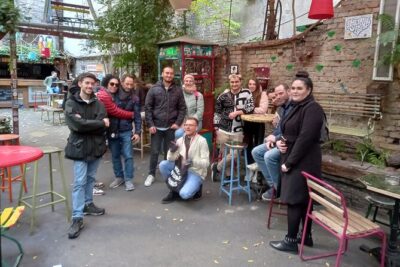

Budapest Vibe: Ruin Bars, Street Art and Culture Tour
Read our review →
Original Budapest Alternative Street Art & Jewish Tour
Read our review →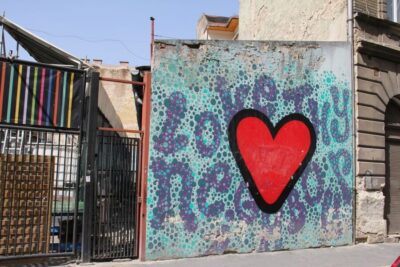
Browse the lists this tour appears in