
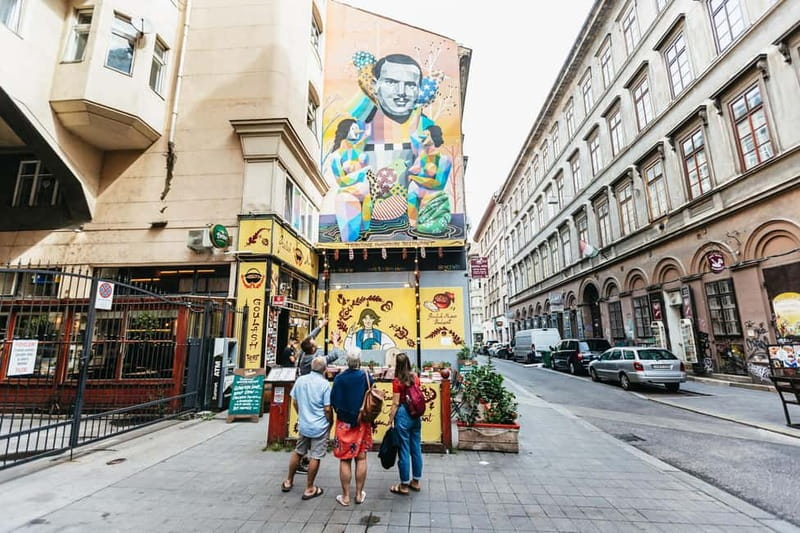
REVIEW · BUDAPEST MURAL TOURS
Budapest: Street Art and Underground Movements Walking Tour
Look closer, and Budapest starts talking. This two-hour walk reveals the city through murals, stickers, paste-ups, lettering, sculptures, and the social messages tucked into its walls. I like the way ET and Suzie connect art with Budapest’s culture and recent public life, rather than treating street art as a backdrop for photographs.
I also like the small-group format, limited to eight people. It gives you room to ask questions and notice tiny pieces you would likely miss alone. The main consideration is that street art changes constantly, so the exact works and route may shift, and people expecting only large murals could be surprised by the attention given to stickers and smaller pieces.
Key points before you book
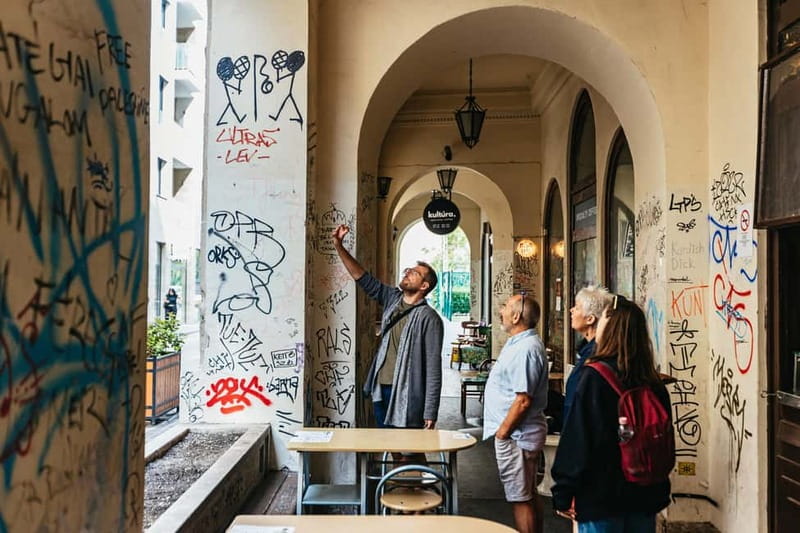
- Two hours in central Budapest: The walk begins at Telep-Art Galéria and ends at Központ, with the route taking in local art and underground culture.
- More than murals: Expect stickers, paste-ups, public art, lettering, bronze mini-sculptures, and other forms of street expression.
- Strong local perspective: ET brings academic study, personal experience, and links to Budapest’s art scene into his explanations. Suzie also leads some departures.
- Small and interactive: Groups are capped at eight, making it easier to ask questions and keep the discussion informal.
- Useful follow-up material: A summary after the tour can include artist names and an interactive map of Budapest’s Kolodko mini sculptures.
- Good value for curious visitors: At $28 per person, the tour costs less than many longer sightseeing activities while giving you a new way to read the city.
Starting at Telep-Art Galéria
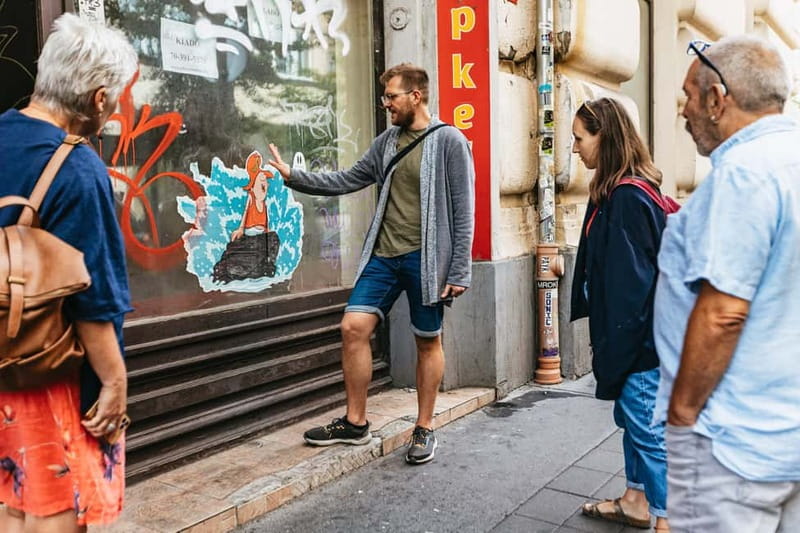
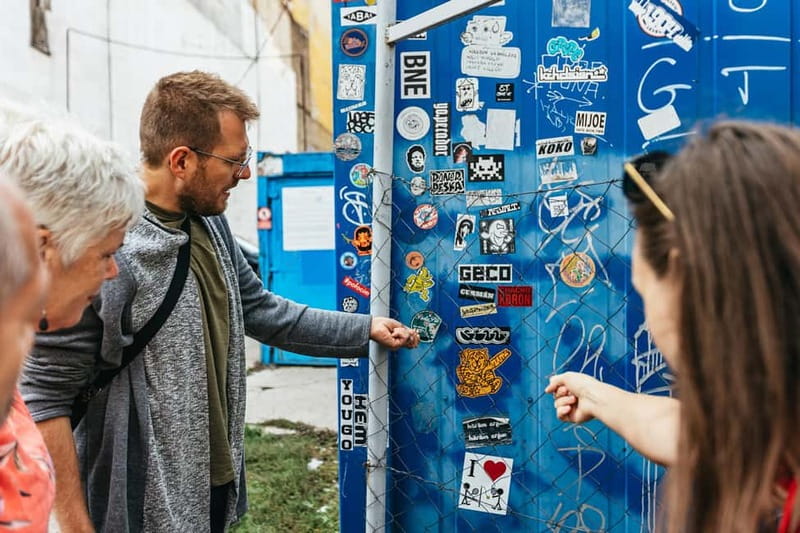
The meeting point is Telep-Art Galéria, described as a cool bar with stickers covering the walls. That is a fitting place to begin. You are not gathering beside a grand monument and then being hurried toward another one. You start in a setting that already hints at the visual language of the tour.
This first stop also helps set expectations. Street art here is not limited to legal murals or polished public projects. The walk looks at the smaller marks that often disappear into the city: stickers, paste-ups, lettering, and tiny images placed at eye level or above a doorway.
I would arrive ready to look around before the walk starts. The meeting place itself may help you understand the difference between a standard city sightseeing tour and this more specialized experience. You will be looking for details from the first few minutes.
The tour is conducted in English. Since the group can be as small as eight, you should have a fair chance to hear the guide clearly and ask about an artist, symbol, or political reference that catches your attention.
More Alternative City Tours in the world:
- London Bike Tour: Landmarks, Secret Gems, Pub Stop & Street Art
★ 5.0 · 943 reviews - Berlin: Street Art and Alternative Tour
★ 4.7 · 98 reviews - San Antonio E-Bike Tour: Murals, Street Art and Hidden Gems
★ 5.0 · 88 reviews
Reading Budapest through small works
The most useful idea here is learning how to see. A large mural demands your attention, but a sticker can disappear beside a drainpipe, shop sign, or doorway. Once someone points out how artists work with those small spaces, you start noticing them across the city.
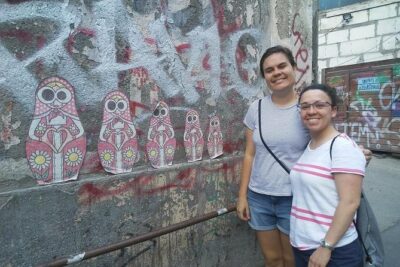
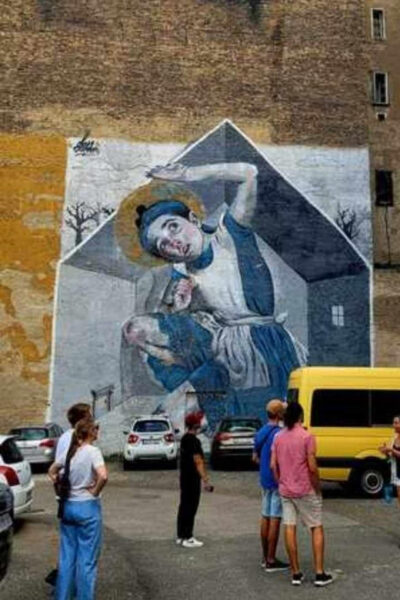
The route includes different kinds of urban art rather than a single style. You might see sanctioned murals, unofficial graffiti, stickers, paste-ups, public sculptures, and miniature works. That range matters because it presents street art as a set of methods and communities, not one uniform movement.
The experience also gives context for the messages behind the art. The guide explains social, cultural, and political ideas connected to the pieces, along with stories about artists and techniques. This makes the walk more than a hunt for colorful walls.
The Elizabeth and Jewish Quarter feature prominently in the route described by past participants. This part of Budapest is especially useful for a street art walk because public art, nightlife, older neighborhood history, and newer forms of protest or commentary sit close together.
You should not expect every work to be explained as a fixed museum object. Street art can be altered, painted over, moved, or removed. That uncertainty is part of the subject, but it also means your exact experience will depend on what remains on the walls that day.
The secret stop and the changing route
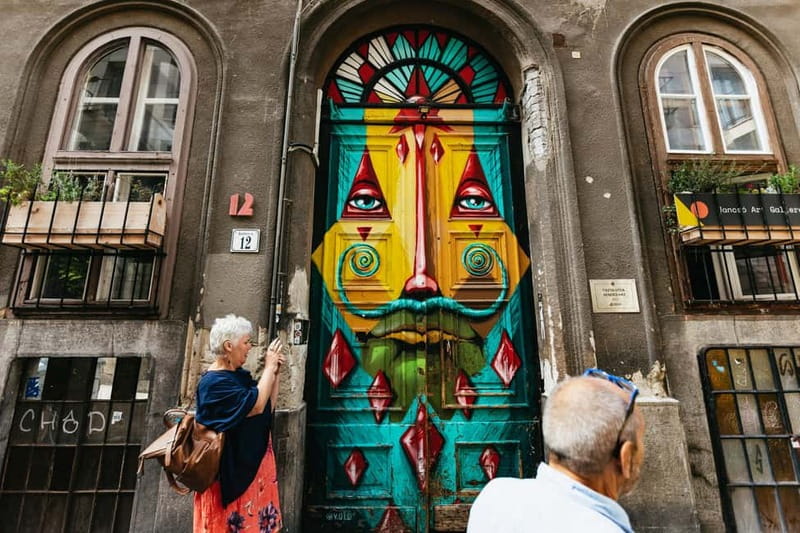
The listed itinerary includes a secret stop during the guided walk. Its precise nature is not given, which is intentional. Past departures have included stops at places such as a local bookshop, a cafe, and the Szimpla Kert ruin bar during a quiet daytime visit.
I would treat these as possible additions rather than guaranteed stops. The route appears to respond to the group, the available artworks, and the guide’s local connections. That flexibility can make the walk feel personal, but it also means you should not book it expecting a fixed checklist of sights.
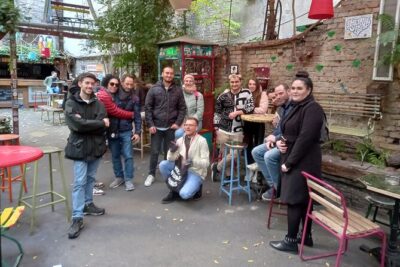
The possible visit to Szimpla Kert is a particularly nice touch. A ruin bar is usually associated with evening crowds, yet seeing the interior in daylight lets you pay attention to its objects, decorations, and wall art without the nighttime rush. It adds a local place to the route without turning the tour into a standard bar crawl.
Other small surprises have included a coffee stop, a gift, and an entertaining Rubik’s Cube demonstration. These details are not the central purpose of the tour, and they may vary. Still, they help explain why the walk seems to work well as a social experience for people who enjoy conversation as much as photographs.
ET’s approach to Budapest’s underground culture
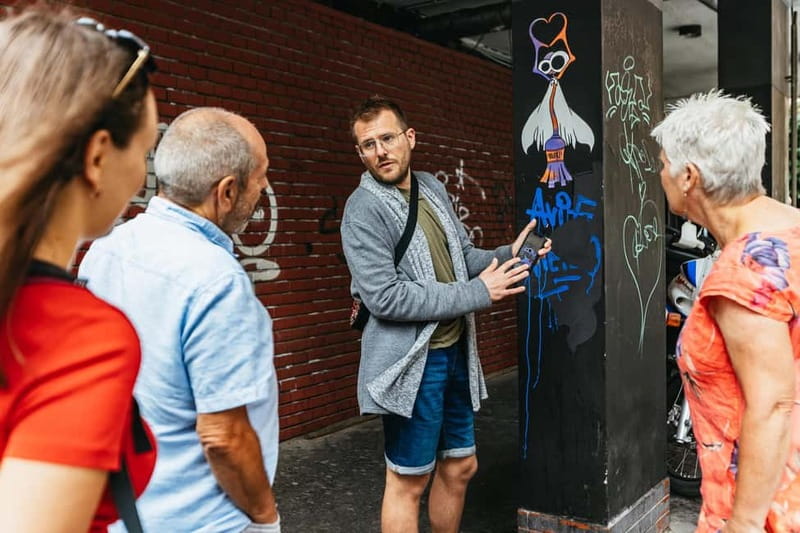
ET is the main guide named for this experience, and his background is a major part of its appeal. He has studied street art movements at graduate level and brings personal experience, local relationships, and familiarity with Budapest’s artists into the discussion.
That combination matters. A guide can point at a mural and read its text from a distance. ET’s role is more useful when he explains who made it, how the work fits into local street culture, and why a certain image or phrase might matter in Budapest.
His style also seems to be highly interactive. He makes an effort to learn about the people in the group, invites questions, and adjusts the discussion to the group’s interests. That is valuable on a subject where visitors arrive with very different levels of experience.
You do not need to know much about art before joining. Several people with little background in street art found the explanations easy to follow, while those already interested in the scene appreciated the detail. ET also offers recommendations for other places to visit, eat, or explore after the walk.
Suzie leads some tours and receives similar praise for her friendly and well-informed approach. If your departure is led by her, you can still expect the same broad subject: Budapest’s street art, local artists, and the culture behind the work.
More Street Art Walking Tours in the world:
- London: Street Art and Graffiti Guided Walking Tour
★ 4.9 · 1,354 reviews - Berlin: City Street Art Guided Walking Tour
★ 4.8 · 1,051 reviews - Naples Spanish Quarters Walking Tour Street Art, Folklore & Sweet
★ 5.0 · 797 reviews - Lisbon: Kickstart Street Art Walking Tour
★ 4.9 · 717 reviews
Why the political and social context matters
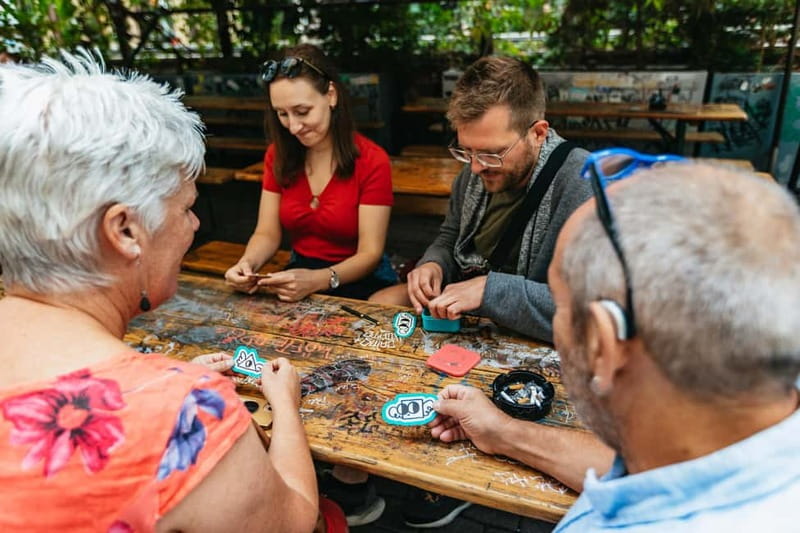
Street art can look like decoration when you see it without context. The guide helps you ask better questions: Who placed this here? Who was meant to see it? Is it legal, tolerated, temporary, commercial, personal, or political?
That framework gives the tour more weight than a simple list of photo stops. You learn how artists use public space to comment on culture and society. You also see why underground movements can matter in a city, even when their work appears in very small forms.
The tour links contemporary pieces to Budapest’s history and current issues without presenting the city only through official landmarks. This is one of its strongest features. You are not replacing the Parliament, Buda Castle, or the thermal baths, but adding another layer to the city you see between those major stops.
I would especially recommend taking the tour early in your Budapest visit. Afterward, you will recognize artists, stickers, and symbols elsewhere, and you can use the guide’s suggestions to explore on your own. The walk is short enough to fit into a first or second day without taking over your schedule.
What the final stop at Központ adds
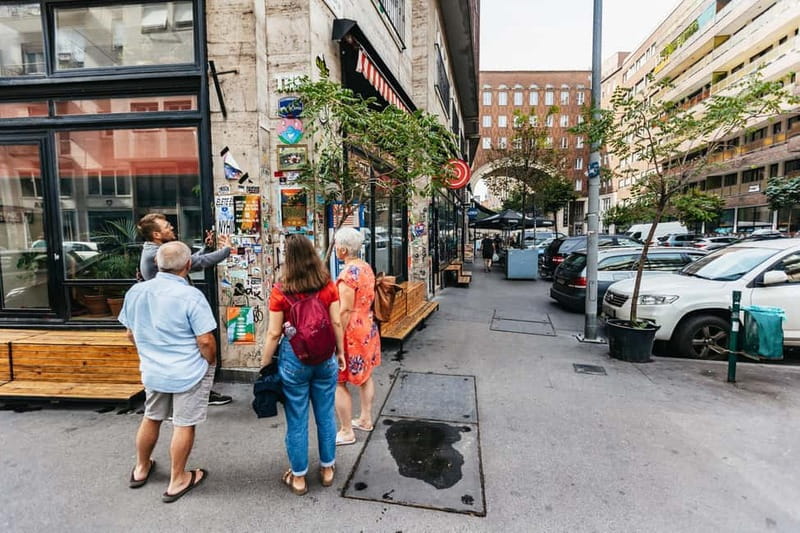
The tour finishes at Központ. The end point gives you a practical place to continue your day, especially if you want to discuss what you saw, find a meal, or explore more of central Pest.
A finish at a local venue also fits the tone of the experience. This is not a loop that returns you to a major transport landmark with a quick goodbye. You end in the city’s social and cultural zone, where you can keep watching for the small works the guide has taught you to spot.
The included follow-up summary is useful here. It can help you remember artist names, techniques, and references after the walk. An interactive map showing the locations of Kolodko mini sculptures is an especially good extra for anyone who wants to continue the hunt independently.
That follow-up material improves the value of the $28 price. You are paying for the two-hour walk, but you also leave with tools for further exploring Budapest’s public art.
Is $28 fair for two hours?
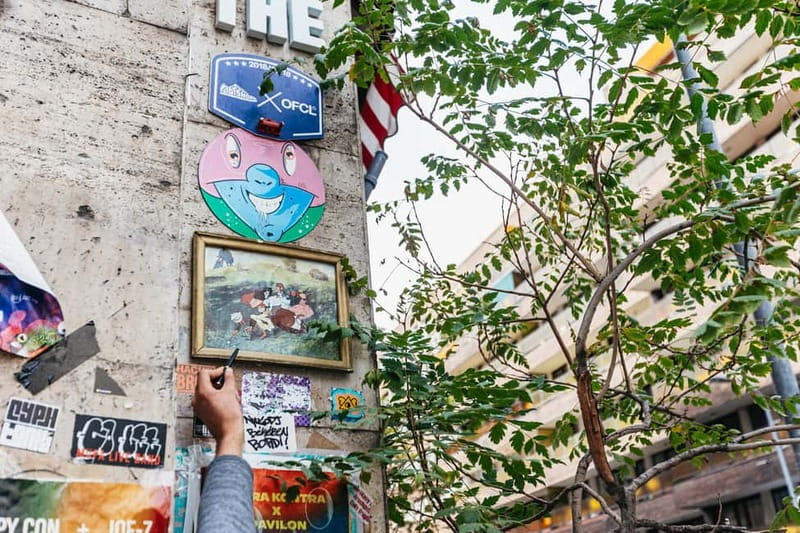
At $28 per person, this is a reasonable price for a small-group walking tour with a live guide. The group limit of eight is important: you are paying not only for information but also for a more personal format where questions do not get lost in a crowd.
The value is strongest if you care about local culture, contemporary art, photography, or seeing cities beyond their famous sights. You are less likely to find it worthwhile if you want a general introduction to Budapest’s major landmarks or a tour built around long interior visits.
There is no food or drink included, although the route may include an optional cafe stop or pass a bar. Budget separately for anything you choose to buy. Comfortable shoes are sensible because the experience is a walking tour, and the weather can affect how pleasant it feels. One person found the guide engaging even in very cold conditions, but winter visitors should still dress properly.
Free cancellation up to 24 hours before the start and a reserve-now, pay-later option make the booking flexible. The tour is also listed as wheelchair accessible, which is useful for planning, though you may want to confirm route conditions for your particular departure if accessibility is a major concern.
The people who will enjoy this most
I would choose this tour if you want to understand how Budapest’s public spaces are used by artists and local communities. It suits visitors who enjoy asking questions and noticing small details more than checking off famous monuments.
It is also a good fit for families. The interactive style, short duration, and hunt for unusual works can keep younger participants interested, especially if they like stickers, mini sculptures, or visual puzzles. The guide’s conversational approach gives the group something to discuss rather than asking everyone to listen silently.
Couples, solo visitors, and small groups of friends should also find it easy to join in. The limited group size encourages conversation between participants, so it can be a pleasant way to meet other people without the forced feeling of a large group activity.
Art students and regular gallery visitors will appreciate the artist references and discussion of techniques. Beginners may get even more from it because the walk explains what to look for. You do not need an art vocabulary to enjoy the route.
A few limits to keep in mind
This is not a conventional history tour. Budapest’s past appears through the stories and messages connected to public art, but you should not expect a full chronological account of the city.
The route can also be visually uneven. One block may offer a striking mural, while the next may focus on a tiny sticker or a piece that is partly damaged. That is an honest reflection of street art, but visitors who want constant large-scale attractions may prefer a dedicated mural tour.
Street art is also personal and political. Some subjects may invite discussion or challenge your assumptions. That is part of the point, but it may not suit someone looking for a purely light sightseeing walk.
Finally, the exact stops are not fixed. The city changes, artworks disappear, and the guide may respond to the group. I see that as a strength, but you should book this for the way of seeing it offers, not for a guaranteed list of individual artworks.
Should you book the Budapest street art walk?
Book it if you want a thoughtful, small-scale look at Budapest’s contemporary culture. ET’s academic background, local connections, and easy way with questions give the tour substance, while the possible cafe, bookshop, or ruin-bar stops keep it grounded in everyday city life.
I would make it an early Budapest activity, then use the supplied artist information and Kolodko map to keep exploring afterward. At $28, it offers good value for a two-hour experience, particularly because it changes how you see the streets for the rest of your stay.
Skip it only if your priority is major landmarks, formal galleries, or a fixed route with guaranteed sights. For curious visitors who want stickers, sculptures, protest art, and local stories, this is a smart way to see a less official side of Budapest.
FAQ
How long is the Budapest street art tour?
The guided walk lasts two hours.
Where does the tour begin?
It begins at Telep-Art Galéria, a bar with many stickers on its walls.
Where does the tour finish?
The tour ends at Központ.
What language is the tour conducted in?
The live tour is conducted in English.
How large is the group?
The group is limited to eight participants.
Is the tour wheelchair accessible?
Yes, the activity is listed as wheelchair accessible.
Just added around the world
- Your Own Belgrade: Street Art and Hidden Gems Walking Tour★ 5.0 · 2 reviews
- Vancouver: Street Art & Craft Coffee Walking Tour w/ Tasting★ 4.8 · 11 reviews
- Wynwood Walls Street Art & Neighborhood Walking Tour★ 4.9 · 9 reviews
- Xochimilco floating gardens, Coyoacan and UNAM murals★ 4.0 · 6 reviews
- Urban Canvas: Osaka Street Art Bike Tour★ 5.0 · 10 reviews
- Vancouver: Street Art & Craft Beer Walking Tour with Tasting★ 4.8 · 14 reviews
- UNAM: Murals & Revolution★ 4.9 · 8 reviews
- Small-Group Graffiti Tour and Workshop in El Carmen★ 5.0 · 2 reviews
Budapest Mural Tours, compared.

Budapest Vibe: Ruin Bars, Street Art and Culture Tour
Read our review →
Original Budapest Alternative Street Art & Jewish Tour
Read our review →
Browse the lists this tour appears in