
REVIEW · BUDAPEST MURAL TOURS
Budapest Vibe: Ruin Bars, Street Art and Culture Tour
Budapest gets stranger after sunset. This 3.5-hour walking tour links ruin bars, street art, Jewish Quarter history, and local drinks in a small group led by Lena, with lángos waiting at the finish. I like the mix of nightlife and culture, and I like that the group is limited to 10 people, which leaves room for questions and conversation.
The tour also avoids making ruin bars the whole story. You’ll look at murals, architecture, small Kolodko statues, and the difficult wartime history of the Jewish Quarter. The main consideration is pace: two hours of walking through Erzsébetváros, plus several stops, may feel tiring if you want a slow, sit-down afternoon.
The price is $60.15 per person, including one alcoholic drink or soft drink and an English or Russian guide. That is fair if you value local explanation and company, but less attractive if you mainly want a cheap bar crawl.
Key points at a glance
- Small group of no more than 10: This is a useful size for a walking tour, especially inside crowded bars and narrow city streets.
- Lena leads the experience: Her strongest qualities are her warmth, clear explanations, and strong knowledge of Budapest’s murals, Jewish Quarter, and drinking culture.
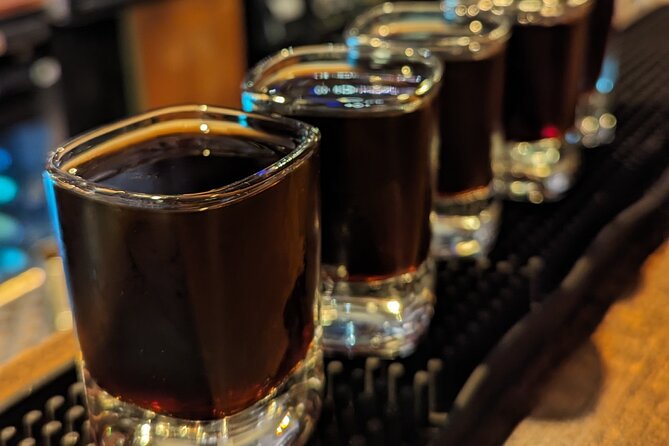
- One welcome drink is included: You can choose a glass of traditional Hungarian alcohol or a refreshing soft drink.
- The route ends with lángos: A portion of Hungarian fried street food gives the tour a satisfying local-food finish.
- Daytime or early-evening appeal: You can see the art and architecture without committing to the louder feel of late-night ruin-bar visits.
- The focus goes beyond nightlife: Stories about World War II, Jewish Budapest, hidden sculptures, and local drinks give the bars a proper setting.
Why this Budapest walk is different from a bar crawl
Budapest’s ruin bars are famous, but a night of drinks alone can leave you with little sense of why these places matter. This tour gives the bars a wider setting. You walk through central Pest, look closely at the city’s walls and side streets, and learn how the Jewish Quarter changed over time.
I especially like that the experience brings together things that can otherwise feel disconnected. Street art, wartime memory, odd little statues, traditional drinks, and a plate of lángos may sound like a loose collection. On foot, they create a more personal introduction to Erzsébetváros.
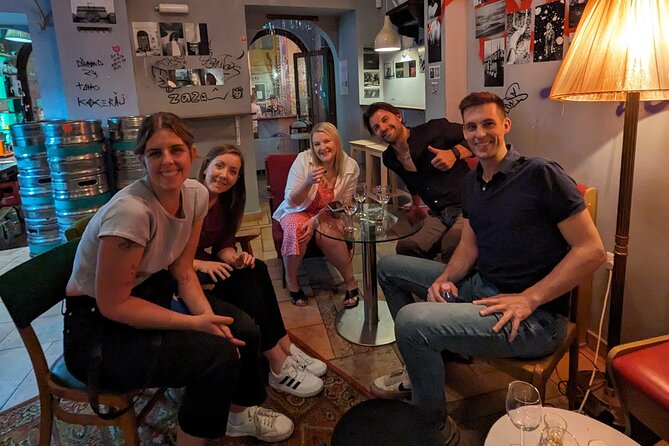
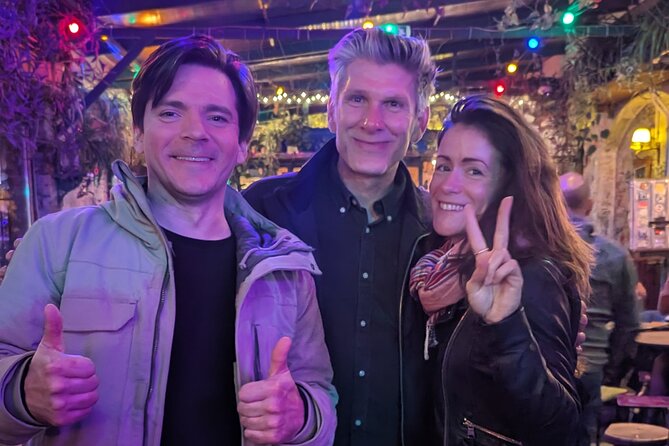
The tone appears friendly rather than formal. Lena is praised for keeping the conversation lively, explaining details clearly, and making the group comfortable. A small group helps here. You are not listening to a speech from the back of a crowd, and you can ask about a mural, a drink, or a building as you go.
The route lasts about three hours and 30 minutes. That is long enough to give Budapest’s nightlife district context, but short enough to fit into a day of sightseeing. You should still wear comfortable shoes. The schedule includes about two hours of walking in Erzsébetváros, with drinks, food, and short stops added around it.
More Bar and Pub Tours in the world:
- London Bike Tour: Landmarks, Secret Gems, Pub Stop & Street Art
★ 5.0 · 943 reviews - Nashville Combo Tour: Sightseeing, Murals & Brewery/Distillery
★ 5.0 · 641 reviews - London: Landmarks & Secrets Bike Tour with Pub & Street Art
★ 4.9 · 314 reviews
Starting at the Budapest Ferris Wheel
The tour begins at the Budapest Ferris Wheel in Erzsébet tér, in the central Pest area. This is a practical meeting point for anyone already exploring the city center. From there, the route heads toward the district famous for its bars, murals, old buildings, and small-scale public art.
The opening drink gives the group an easy way to meet. One glass of traditional Hungarian alcohol is included, though you can choose a soft drink instead. The supplied information does not name the exact alcohol, so you should ask Lena what is being served that day if you have a preference.
Alcohol is served only to people aged 18 and above. Anyone under 18 receives a non-alcoholic drink. That makes the tour more flexible for mixed-age groups, although the general subject of the experience remains strongly tied to Budapest’s bar culture.
The group size is capped at 10. That matters more than it might seem. Ruin bars are atmospheric but can have crowded rooms, unusual layouts, and plenty of visual distractions. A small party is easier to keep together and gives you a better chance to hear the guide.
Erzsébetváros, murals, and the city’s harder stories
The longest part of the route is a two-hour walk through Erzsébetváros, the central Pest district associated with Budapest’s Jewish Quarter and ruin-bar scene. This is where the tour earns much of its price.
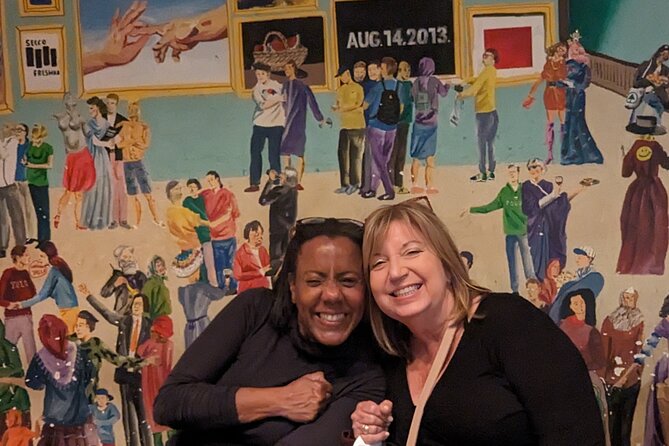
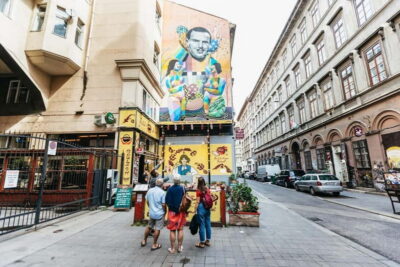
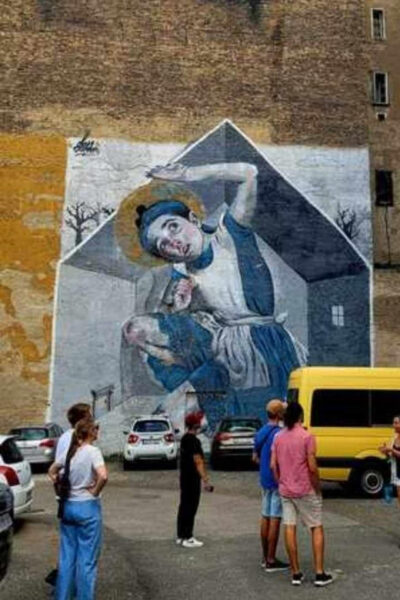
You’ll look at street art, unusual architecture, and small sculptures that are easy to miss if you are simply walking from one bar to another. The murals are not treated as decoration alone. Lena explains the ideas and stories behind them, giving you reasons to pause instead of rushing past with a camera.
The history here also requires care. One of the strongest parts of the experience is its attention to the Jewish experience during World War II. This adds weight to an area that is often presented only as a nightlife zone. You can enjoy the creative art and oddball bars while also recognizing that the streets carry painful memories.
That balance is important. The tour is not described as a formal museum visit, and it cannot cover every part of Budapest’s past in a few hours. But it appears to offer enough context to prevent the district from becoming a collection of fashionable drinking spots.
I would choose this tour early in a Budapest visit if you want help reading the city. The guide points out details you might otherwise miss, and the route can make later independent walks through the district more rewarding.
Ruin bars with local drinks, not just loud music
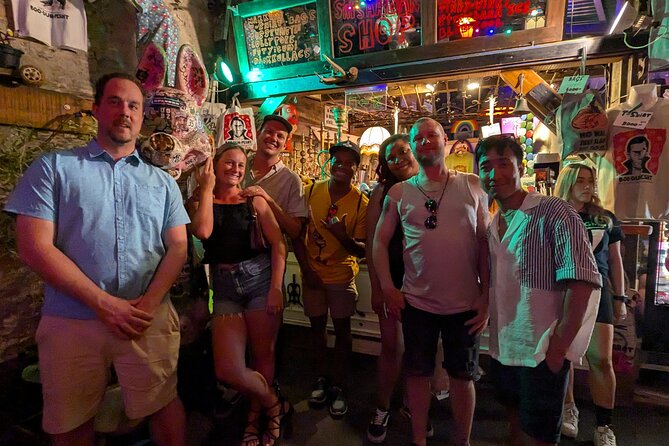
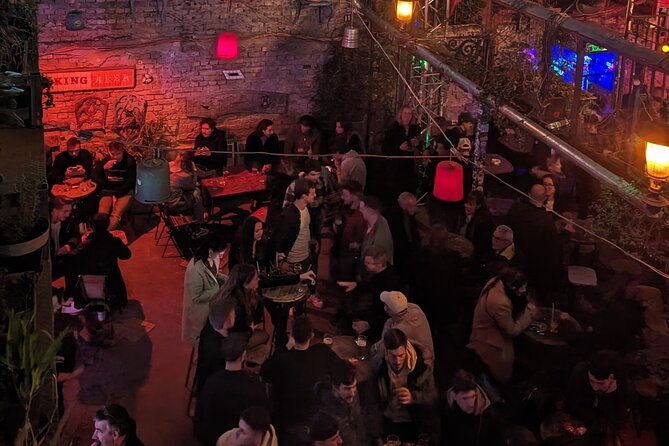
The first ruin-bar portion lasts about 30 minutes and includes visits to several unusual bars with local drinks. Later, you spend about 20 minutes at Szimpla Kert, Budapest’s oldest and most famous ruin bar.
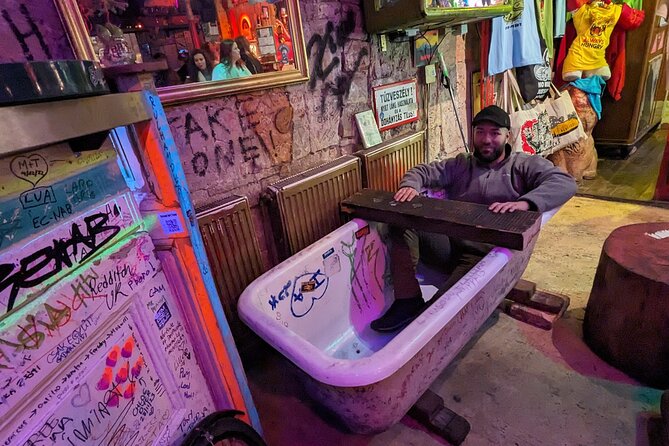
The term ruin bar refers to bars set in old, worn, or partly repurposed buildings, often filled with mismatched furniture, bold objects, and layers of visual clutter. The charm is not polished luxury. It is the feeling that someone turned an aging space into a social room without smoothing away every rough edge.
Szimpla Kert is the headline stop. It is the place most associated with the city’s ruin-bar identity, so seeing it with someone who can explain its role is useful. Twenty minutes is enough to get a sense of the setting, but not long enough for a full night out. That is a benefit if you want variety, though a drawback if you hoped to settle in for an extended drink.
The guide also recommends traditional drinks beyond the first included beverage. The additional drinks are not included in the price, so budget for anything you decide to order after the welcome drink. Lena’s role is to explain the local food and drink culture, not to force you into a set tasting menu.
This distinction keeps the experience flexible. You can listen, ask questions, and choose what suits you. If alcohol is not your thing, the tour still includes architecture, murals, sculpture, history, and food, and non-alcoholic drinks are available for under-18 participants.
More Nights Out in the world:
- Miami Pedal Pub: Arts District Party Bike Pub Crawl
★ 4.5 · 38 reviews - Brisbane Small Bars and Street Art Tour
★ 5.0 · 34 reviews - Brisbane: Small Bars and Street Art Tour with a Drink
★ 5.0 · 15 reviews - Sydney Small Bars and Street Art Tour
★ 5.0 · 14 reviews
Kolodko statues and Budapest’s small surprises
A short stop is dedicated to Kolodko Szobor: Maci, one of the small sculptures created by artist Mihály Kolodko. These mini statues have become recognizable markers around Budapest, often placed in locations where you might walk past without noticing them.
The stop lasts only about 10 minutes, so do not expect a full art lecture. Its value is practical: you learn to look down side streets, along the edges of buildings, and in overlooked corners. Once you know about the statues, you may notice more of them during the rest of your stay.
The Maci reference points to one of Kolodko’s bear sculptures. The tour promises to find some of these small works and explain the stories behind them. That gives the walking route a playful change of pace after the heavier discussion of wartime history.
I like this part because it makes Budapest feel less like a list of major sights. The city rewards attention at street level. A tiny sculpture can take only a minute to see, yet it may become one of the details you remember after the grand buildings blur together.
Lángos brings the walk to a proper finish
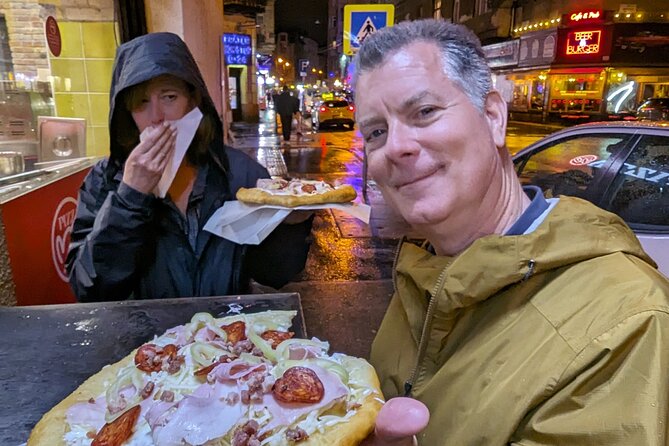
The tour ends on Wesselényi Street with lángos at Lángosom Wesselényi utca. Lángos is a traditional Hungarian street food made from fried dough, often served with toppings. The supplied details do not specify which topping or portion is included, so ask the guide what you will receive.
This final stop matters because the tour is not only about drinks. A long walk through bars and streets can leave you hungry, and a local snack gives the experience a clear finish. It also helps you connect the city’s everyday food culture with its nightlife.
Food is not listed as included in the price, despite the stop being part of the route. The information says snacks are not included, so plan to pay for the lángos yourself unless Lena explains otherwise. This is a small but important budgeting point.
Wesselényi Street is also the end point. You are not returned to the Ferris Wheel, so note the route before booking. The ending is useful if you want to continue exploring the Jewish Quarter or find another nearby restaurant, but you should not assume the tour finishes where it starts.
Is $60.15 a fair price?
At $60.15, this is not the cheapest way to visit a ruin bar. You could walk through Erzsébetváros independently, enter Szimpla Kert, buy your own drinks, and order lángos for less money.
The value comes from the combination. You receive about three and a half hours of guiding, an included welcome drink, a route through street art and architecture, explanations of Jewish Quarter history, time in several ruin bars, and help understanding local food and drink customs. You also avoid having to research which streets and bars are worth your time.
The 10-person maximum improves the calculation. A huge group would make the small sculptures and murals harder to discuss, and it would be less comfortable inside busy bars. A small party also gives you a better chance to speak with Lena directly.
I would consider the price worthwhile for a first visit, especially if you are interested in stories and local context rather than just nightlife. If you already know Budapest well and only want to drink at Szimpla Kert, the value is weaker.
The rating is five out of five from 14 published ratings, with the experience recommended by 100 percent of those rating it. That is a small sample, so I would not treat it as proof that every outing will be identical. Still, the repeated praise points to a consistent strength: Lena’s personal style and ability to pack a great deal of information into a relaxed walk.
Who will enjoy this tour most?
I would recommend it to first-time visitors who want an introduction to Pest beyond the major monuments. It suits people who enjoy street photography, urban art, local food, unusual architecture, and informal history.
It is also a good fit if you want to experience ruin bars without making a late night of it. One published account specifically valued avoiding the louder nighttime atmosphere and enjoying a more relaxed outing. That makes the tour useful for an afternoon or early evening.
Couples, solo visitors, and small friend groups should find the format easy to join. The small maximum means solo participants are less likely to disappear into a large crowd, while friends still have plenty of chances to talk with one another.
Families can book it, with non-alcoholic drinks provided for anyone under 18. Keep in mind that the experience centers on bars, so parents should decide if that setting suits their group.
You should reconsider it if you dislike walking, want a formal architectural tour, or expect a full meal and several included drinks. The route is social and flexible, not a structured tasting course or a museum-style lecture.
Practical details before you book
The tour is offered in English, with a tailored guide available in English or Russian. Confirmation arrives at booking, and a mobile ticket is accepted.
The start point is the Budapest Ferris Wheel at Erzsébet tér, 1051 Budapest. The finish is on Wesselényi Street. Public transportation is nearby, and service animals are allowed. Most people can participate, though the two-hour walking section makes comfortable footwear a sensible choice.
The tour requires good weather. If poor weather causes cancellation, you are offered another date or a full refund. It also requires a minimum number of participants, so a cancellation is possible if that number is not reached.
Free cancellation is available up to 24 hours before the start time. Changes or cancellations made less than 24 hours before the start are not accepted for a refund. The cut-off follows Budapest local time.
The experience is often booked about 21 days ahead. That does not guarantee it will sell out, but the small group limit makes advance planning sensible during busy periods.
Should you book the Budapest Vibe tour?
Book it if you want context, conversation, and a small taste of Budapest nightlife, rather than a simple bar-hopping evening. Lena’s role is the main reason to choose it. She brings together street art, Jewish Quarter history, Kolodko sculptures, drinks, and lángos in a route that feels more personal than a checklist of sights.
Skip it if your main aim is to spend hours drinking in one bar, or if you want food and alcohol fully covered by the ticket. The price is fair for the guiding and small group, but the extra drinks and lángos can add to your cost.
For most first-time visitors, I would book this tour near the start of a Budapest stay. It gives you a useful map of Erzsébetváros, points out details you can revisit later, and offers a friendly way to understand why Budapest’s ruin bars are only one part of the story.
FAQ
Where does the Budapest Vibe tour start?
It starts at the Budapest Ferris Wheel in Erzsébet tér, Budapest, 1051 Hungary.
Where does the tour finish?
The tour ends on Wesselényi Street in Budapest.
How long does the experience last?
The tour lasts approximately three hours and 30 minutes.
How many people can join the tour?
The maximum group size is 10 people.
What languages are available?
The experience is offered in English, and a tailored guide is available in English or Russian.
Is a drink included?
Yes. One welcome drink is included. You can choose one glass of traditional Hungarian alcohol or a soft drink.
Can anyone under 18 join?
People under 18 can join and receive non-alcoholic drinks. Alcohol is served only to people aged 18 and above.
Can I cancel for a refund?
Yes. You can cancel at least 24 hours before the start time for a full refund. Poor weather or failure to meet the minimum number of participants can also lead to an alternative date or a full refund.
Just added around the world
- Your Own Belgrade: Street Art and Hidden Gems Walking Tour★ 5.0 · 2 reviews
- Vancouver: Street Art & Craft Coffee Walking Tour w/ Tasting★ 4.8 · 11 reviews
- Wynwood Walls Street Art & Neighborhood Walking Tour★ 4.9 · 9 reviews
- Xochimilco floating gardens, Coyoacan and UNAM murals★ 4.0 · 6 reviews
- UNAM: Murals & Revolution★ 4.9 · 8 reviews
- Urban Canvas: Osaka Street Art Bike Tour★ 5.0 · 10 reviews
- Vancouver: Street Art & Craft Beer Walking Tour with Tasting★ 4.8 · 14 reviews
- Small-Group Graffiti Tour and Workshop in El Carmen★ 5.0 · 2 reviews
Budapest Mural Tours, compared.
Street Art and Underground Movements Walking Tour
Read our review →
Original Budapest Alternative Street Art & Jewish Tour
Read our review →
Browse the lists this tour appears in