REVIEW · MEXICO CITY MURAL TOURS
Mexico City: Diego Rivera’s Murals Guided Walking Tour
Walls can tell a nation’s story. This 3.5-hour walk follows Diego Rivera through Mexico City, linking monumental art with the Mexican Revolution, public education, politics, and everyday life. I especially like the close look at Rivera’s murals and the way the guides explain why each scene matters, not just who painted it. I also like that museum tickets are included, so you can focus on the art rather than sorting out admissions along the way.
The main drawback is timing. A late start can feel rushed because some venues close around 5:30 or 6 p.m. The route also depends on access at each site, and one stop may occasionally be closed for a holiday, security rule, or other change. A guide such as Jorge, David, Francisco, or Laila can adjust the plan, but I would still choose an earlier departure if you have the option.
Key points to know before you go
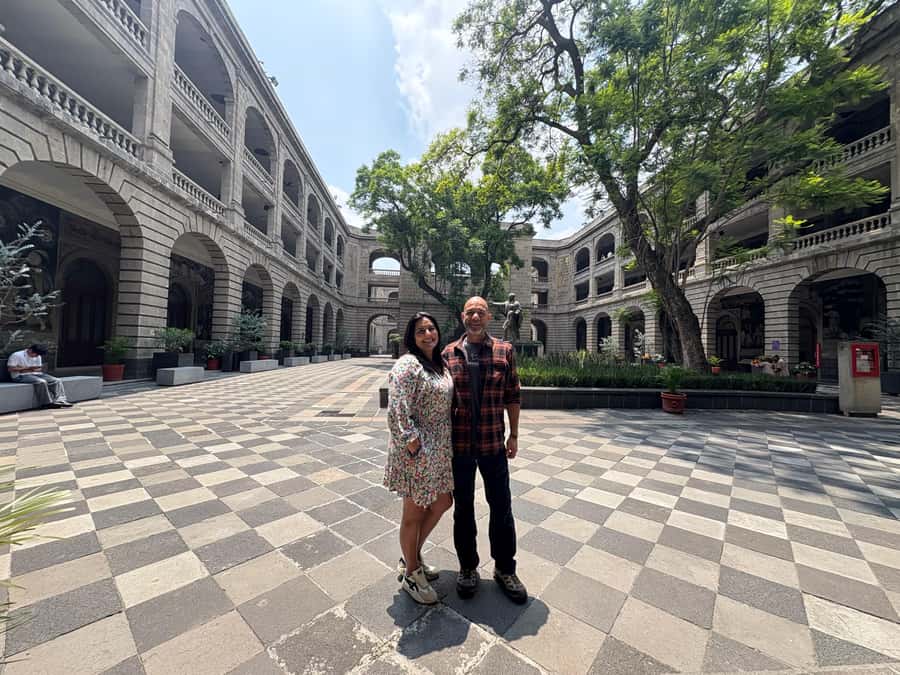
- See Rivera’s work in several settings: The route combines the Secretaría de Educación Pública, Palace of Fine Arts, and Diego Rivera Mural Museum.
- Get the story behind the images: Your guide connects the murals to the Revolution, Mexican identity, labor, politics, and public education.
- Expect strong guide-led interpretation: Jorge, David, Francisco, Leila, Laila, and others have been praised for clear explanations, warmth, patience, and flexibility.
- Allow 3.5 hours on foot: Comfortable shoes matter, and you will be moving between major cultural sites in central Mexico City.
- Check the departure time carefully: The 3 p.m. start was too tight for one visitor, while an earlier time allowed more breathing room.
- Good for families and mixed groups: A guide has accommodated children, a stroller, an older adult, and different interests during the walk.
Why Rivera’s walls make a better history lesson
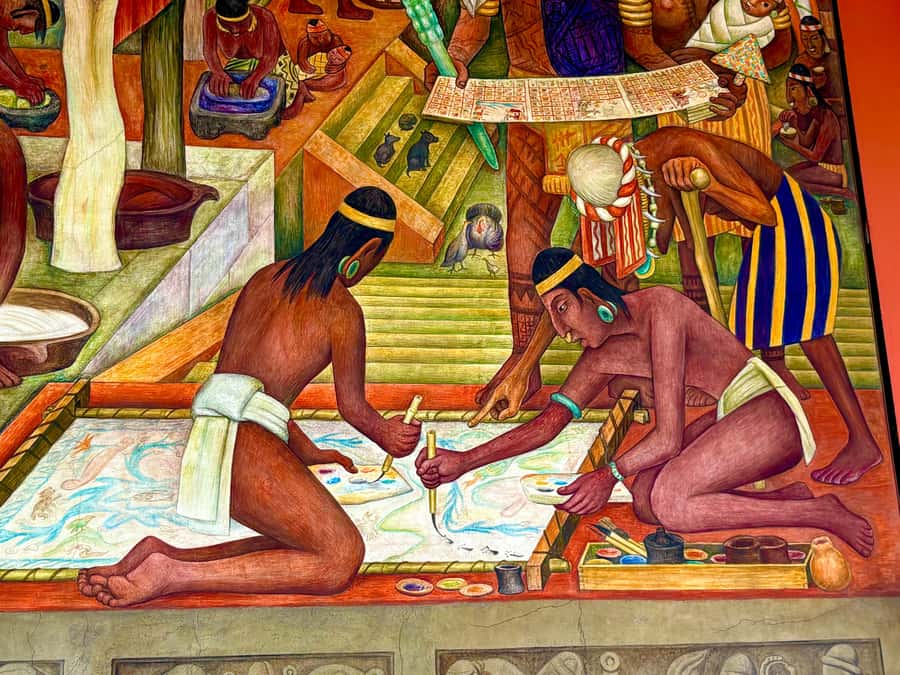
Diego Rivera did not treat murals as decoration. He used public walls to reach people who might never enter an art museum, turning history, politics, work, religion, and social conflict into large scenes that could be read by an entire city.
That matters on this tour because Rivera’s pictures can look simple at first. You may see workers, farmers, soldiers, teachers, merchants, and political figures. Your guide helps you sort out who they are, what they represent, and why Rivera placed them together.
The Mexican Revolution provides the central frame. After the Revolution, public art became a way to teach citizens about the country’s past and argue about its future. Rivera and fellow muralists José Clemente Orozco and David Alfaro Siqueiros became known as Los Tres Grandes, or the Three Great Ones.
You do not need a degree in art history to enjoy the walk. The point is not to memorize dates or artistic terms. It is to understand the choices behind the images and see how Rivera’s work reflects the hopes and tensions of post-revolutionary Mexico.
More Street Art Walking Tours in Mexico
- History and Murals: Walking Tour Guadalajara
★ 5.0 · 237 reviews - Walking Tour – Impressive murals in Historical Center of Mexico City
★ 5.0 · 224 reviews - Muralist Art Semi Private Walking Tour in Mexico City Downtown
★ 5.0 · 188 reviews
Starting at Museo Vivo del Muralismo
The tour begins at Museo Vivo del Muralismo, which gives the experience a natural starting point. You meet your guide there before setting off through central Mexico City.
Bring a passport or ID card, as requested for the activity. You should also wear comfortable shoes. This is a walking tour, not a coach excursion with brief stops at the curb, so your comfort will affect how much attention you can give the murals.
The exact flow can change. Museum hours, holidays, security rules, and other conditions may affect access. That flexibility is useful, but it also means you should treat the listed route as a plan rather than a guarantee carved in stone.
Secretaría de Educación Pública: the longest and most rewarding stop
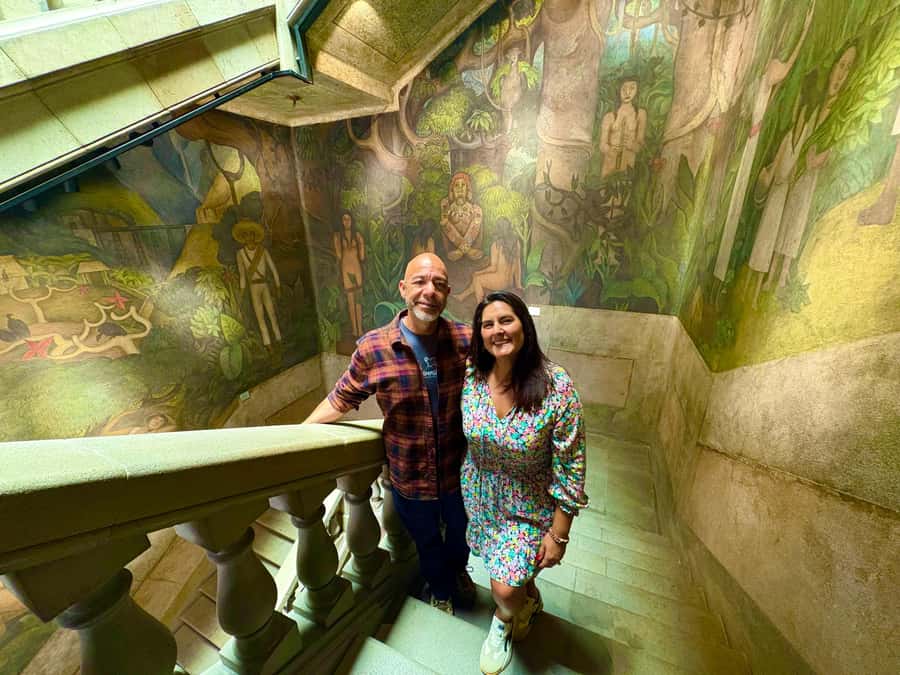
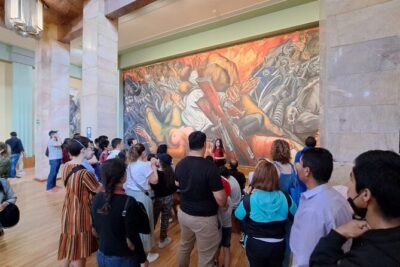
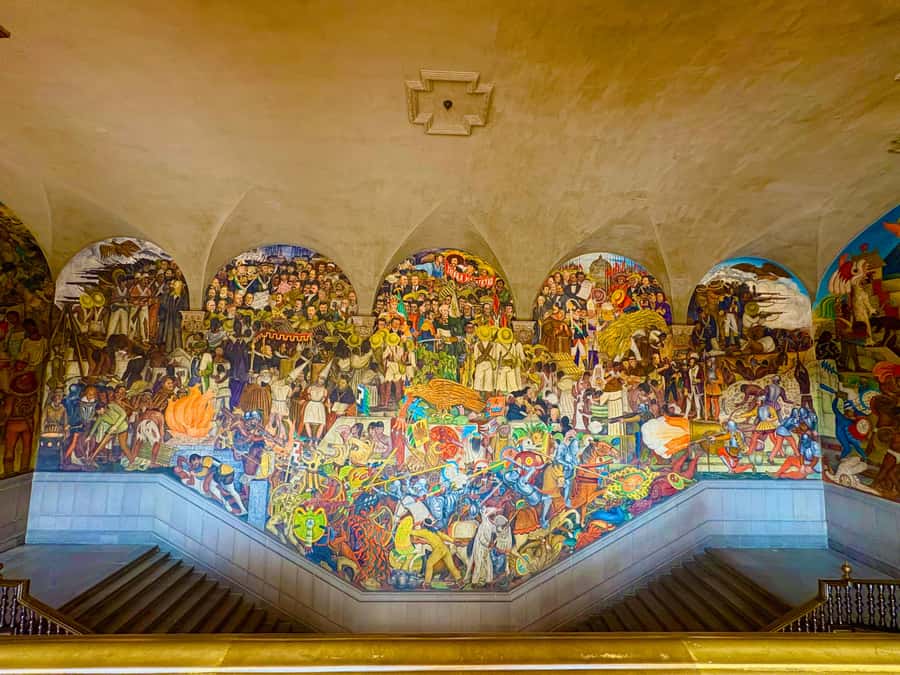
The tour spends about 1.5 hours at the Secretaría de Educación Pública, also described as the Edificio Anexo. This is the longest stop, and that is a good choice. Rivera’s work needs time because the walls are crowded with people, events, symbols, and competing ideas.
This stop helps you understand Rivera’s public mission. The art was made for a government setting, not a private collector’s living room. The building becomes part of the message: education, national identity, and history are presented in a public place where many kinds of people could encounter them.
I would pay close attention to how your guide moves through the murals. A good explanation can show you where to look first, then help you notice smaller details that are easy to miss alone. Jorge has been praised for making the meaning clear and connecting the artwork to Mexican history. Other guides, including David, Francisco, and Laila, have also been described as warm, prepared, and open to questions.
The scale can be surprising. Seeing one Rivera mural in a reproduction is very different from standing close to a wall covered with connected scenes. You begin to understand why these works function like visual history books, though they are never neutral textbooks. Rivera had strong political views, and his choices reflect them.
This stop is also where the tour earns much of its price. Without interpretation, you could walk through, admire the colors, and leave with only a general impression. With a guide, the visit becomes a lesson in how art can teach, persuade, and sometimes provoke.
Palace of Fine Arts: Rivera in a grand setting
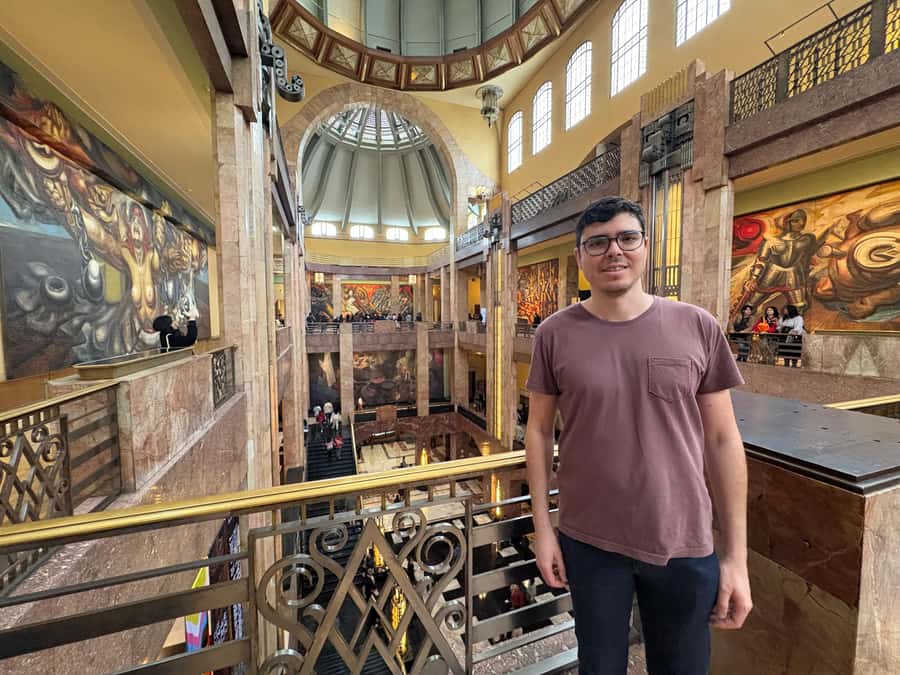
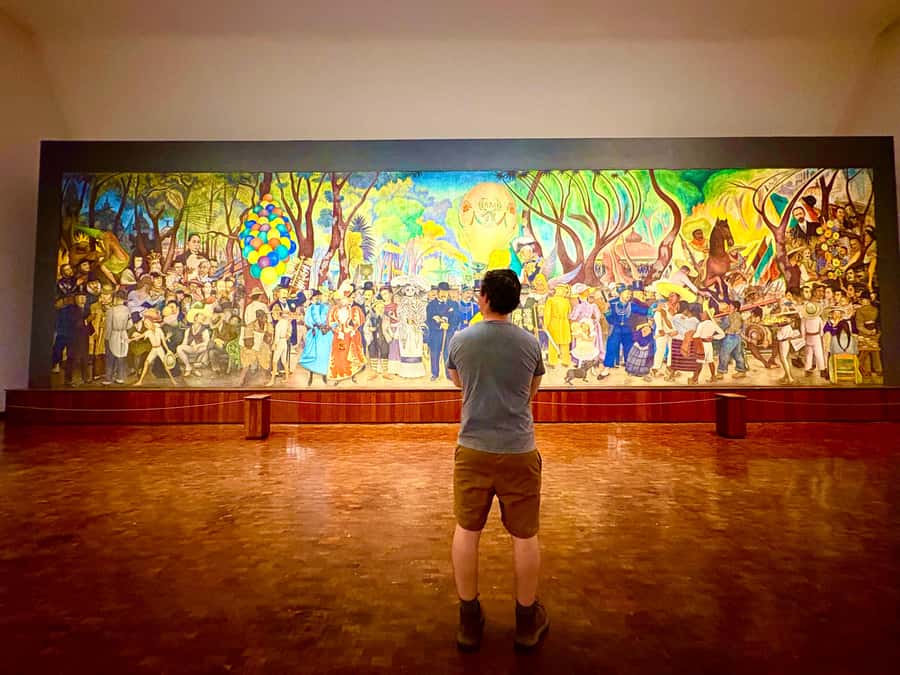
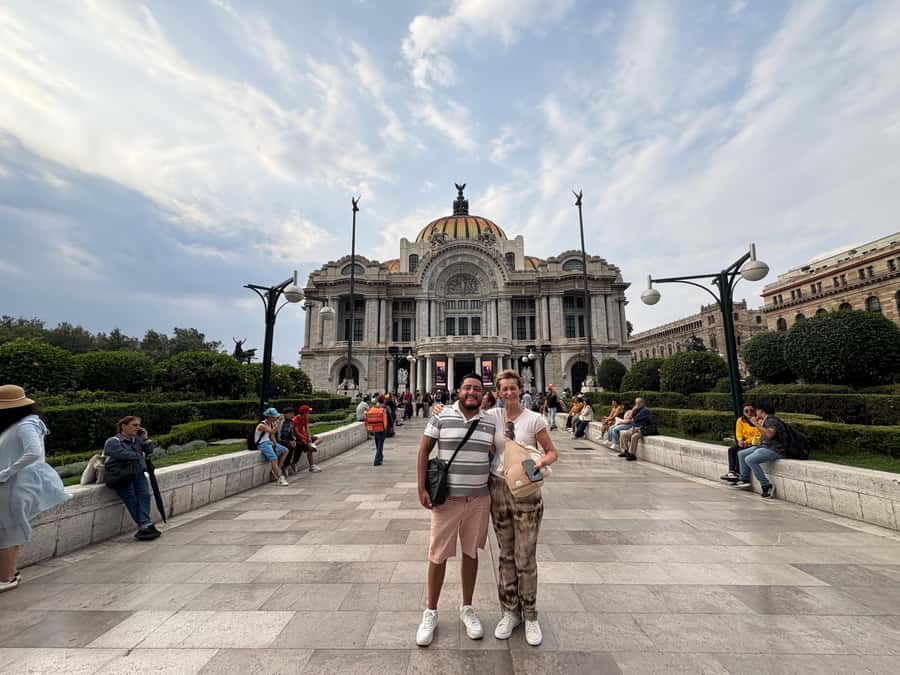
The itinerary includes about 40 minutes at the Palace of Fine Arts. This changes the mood of the tour. At the Secretaría de Educación Pública, Rivera’s murals are tied closely to public education and government. At the Palace of Fine Arts, you see them in one of Mexico City’s major cultural settings.
Forty minutes is enough for a focused visit, but do not expect to study every detail at length. Your guide will likely direct your attention to the most important works and explain how Rivera’s art fits into the larger story of Mexican muralism.
This is a useful contrast. Rivera’s work can feel political and public in one setting, then take on a different weight inside a formal arts institution. The route asks you to think about where art is placed, who sees it, and how its meaning changes with the building around it.
Access at major cultural sites is not always predictable. Some departures have encountered holiday closures or security restrictions connected with murals at the Palacio Nacional. In those cases, guides have provided alternate plans or invited visitors to return with another group. That kind of flexibility is valuable, but I would not book the last possible departure if seeing every planned work is essential to you.
More Street Art Walking Tours in Mexico City
- Guided Walking Tour Describing UNAM Murals and Revolution
★ 5.0 · 8 reviews - Mexico City: Historic Center Walking Tour with Murals
★ 5.0 · 6 reviews - Mexico City: The Murals of Mexico Semiprivate Walking Tour
★ 5.0 · 2 reviews - Mexico City: History on Walls. Mexican Murals Walking Tour
★ 5.0 · 2 reviews
Diego Rivera Mural Museum: a focused finish
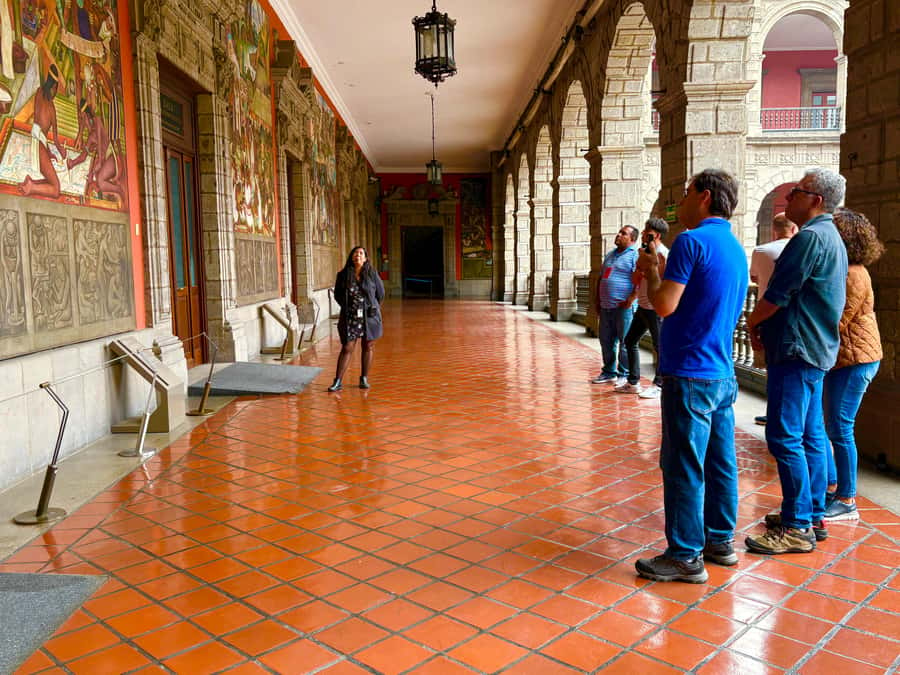
The Diego Rivera Mural Museum is scheduled for about 25 minutes. It is the shortest museum visit, so expect a concentrated look rather than a long, slow gallery session.
The museum gives the tour a clear ending because you have already seen Rivera’s work in larger institutional settings. Here, the focus narrows. Your guide can help you connect earlier themes with the work on view and point out changes in Rivera’s approach.
One useful feature of this route is that it does not present Rivera as a frozen figure. You can trace changes in his style and subject matter from earlier work to later work. One visitor specifically appreciated seeing this development across three locations, including the way Rivera’s relationship with Frida Kahlo fits into his life and career.
If you are mainly interested in Rivera’s painting technique, this final stop may be the part you want to linger over. The schedule does not promise much extra time, so ask questions as you go rather than saving everything for the end.
The guides are the real value
The tour’s strongest feature is its guiding. Art is available without a guide, but interpretation is what turns the route into something more than a museum visit.
Jorge has been praised for his enthusiasm, wit, patience, and care with questions. He has worked well with couples, families, older adults, and children. David has received especially strong comments for his command of Rivera and Mexican history, relaxed manner, and willingness to spend extra time on a subject.
Francisco has been praised for clear speech, preparation, and the ability to bring the murals to life. He also adapted his language skills for an Italian-speaking visitor. Laila and Leila, whose names appear in different forms in the supplied information, have been described as warm, personable, and highly informed.
You should not assume you will receive a specific guide, but these examples give you a sense of the service. The best guides do more than recite facts. They ask what interests you, adjust their pace, and create a conversation around the art.
That flexibility can matter if you are not an art specialist. You might want the political background, the connection with Frida Kahlo, Rivera’s artistic development, or the daily life shown in the murals. Tell your guide early. The experience appears to work especially well when the conversation is shaped around your interests.
What the walking pace is really like
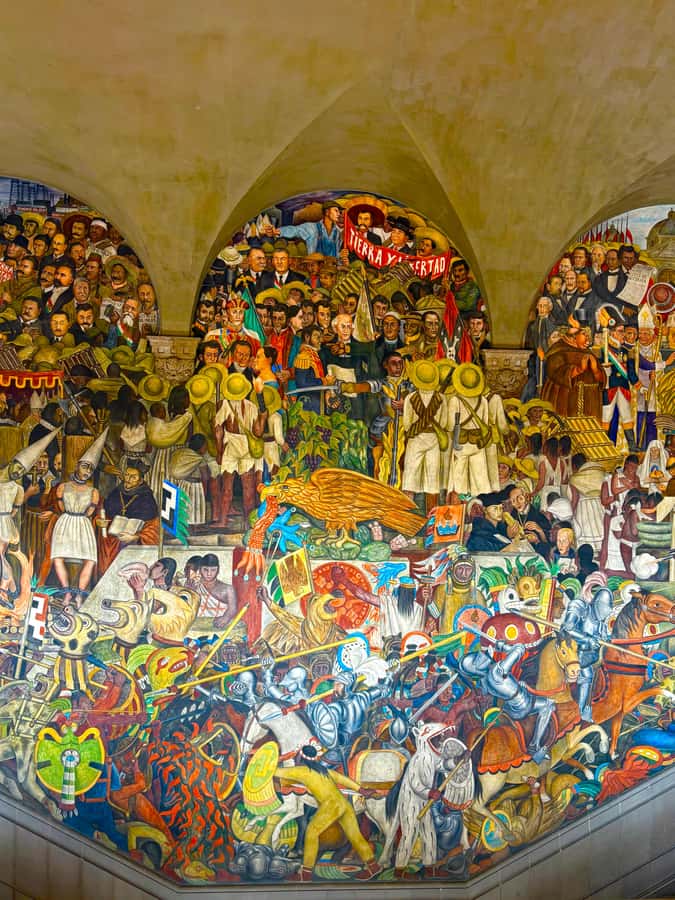
The activity lasts 3.5 hours and includes several cultural sites. The supplied information does not give a precise distance or group size, so you should not assume a particular walking mileage or a private tour.
What is clear is that you will spend much of the experience on foot and moving between stops. Wear shoes you can comfortably use for several hours. Families can manage the route, and one guide was praised for helping a group with an older woman, three children, and a stroller, but the pace may still feel demanding for anyone who has difficulty walking.
The city itself becomes part of the lesson. You are not sealed inside one museum. You move through Mexico City and see how monumental art fits into civic buildings, public streets, and the daily life around them.
I like this format because it gives the artwork a physical setting. The murals are not isolated objects. They belong to the city and to the political moment that produced them.
Price and value at $78
At $78 per person, this is not a cheap walk. The value depends on how much context you want and how confidently you can interpret large, complex murals on your own.
Museum admission is included, along with a live guide in Spanish, English, French, or German. You are paying for more than entry tickets. You are paying for route planning, explanations, historical background, and help when access changes.
I think the price is reasonable for visitors who want a serious introduction to Rivera and Mexican muralism in one half-day. Several stops would be difficult to connect efficiently without planning, and the art can be hard to read without guidance.
The value is lower if you prefer to move quickly, avoid scheduled tours, or simply want to photograph the buildings. You can visit cultural sites independently, but you may miss the links between them. This tour is designed for understanding, not just sightseeing.
Meals, drinks, and transport to and from the meeting point are not included. Plan those costs separately. Since the tour returns to Museo Vivo del Muralismo, you can arrange your next activity from there, but the experience itself does not provide transfers.
Timing, closures, and the smart way to book
Choose an earlier departure when possible. One 3 p.m. start created pressure because the venues closed around 5:30 or 6 p.m. A 3.5-hour tour needs room for walking, questions, and unexpected delays.
The company allows cancellation up to 24 hours before the activity for a full refund, and you can reserve now and pay later. Those policies are useful if your Mexico City schedule is still moving around.
Still, flexibility does not remove the need to check the date and starting time. Venue access can change without notice. A guide may offer an alternative route, as happened when the Museo de Muralismo was closed, but you should book this experience for its overall subject rather than for one single room or mural.
Who should book this mural walk?
I would recommend it most strongly to first-time visitors who want a cultural introduction to Mexico City. It also suits anyone interested in political art, the Mexican Revolution, Frida Kahlo’s connection with Rivera, or the history of public education in Mexico.
Families can benefit because the guide supplies the structure and answers questions as they arise. The experience also works for solo visitors and couples who want more conversation than a self-guided museum visit normally provides.
Art experts may find some material familiar, but the route still offers a practical advantage: it places several Rivera works together and shows how his style and concerns developed. Visitors who dislike walking, fixed schedules, or long explanations should think twice.
The perfect audience is someone who looks at a mural and asks, What am I supposed to notice here? This tour is built to answer that question.
Should you book it?
Book this tour if you want Diego Rivera’s murals explained in their historical and political setting, not simply photographed. The route covers three important stops, museum entry is included, and the guides have earned especially strong praise for warmth, flexibility, and clear teaching.
Choose an early time, wear good shoes, and keep your schedule open enough for a changed stop. At $78, it is worthwhile for anyone who wants a guided cultural lesson with real context. If you prefer a quick look at the sights or want complete control over your pace, visit independently instead.
FAQ
How long does the Diego Rivera mural tour last?
The tour lasts 3.5 hours.
Where does the tour begin and end?
It begins and ends at Museo Vivo del Muralismo.
Which places are included?
The route includes Secretaría de Educación Pública, Palace of Fine Arts, and Diego Rivera Mural Museum.
Are museum tickets included?
Yes. Entrance tickets to all museums on the tour are included.
What languages are available?
Live guides are available in Spanish, English, French, and German.
Is transportation included?
No. Transportation to and from the starting point is not included.
What should I bring?
Bring a passport or ID card and wear comfortable shoes for walking.
Can I cancel for a refund?
Yes. You can cancel up to 24 hours in advance for a full refund. You can also reserve now and pay later.
More Muralism Tours in Mexico
- CDMX: Xochimilco, Coyoacan, Frida Kahlo Museum & Murals Tour
★ 4.4 · 3,025 reviews - La Catrina & Muralism: Diego Rivera’s Legacy & Frida Kahlo
★ 4.5 · 197 reviews - Xochimilco floating gardens, Coyoacan and UNAM murals
★ 4.0 · 53 reviews - Diego Rivera’s murals, hidden treasures
★ 5.0 · 21 reviews
Just added around Mexico
- Xochimilco floating gardens, Coyoacan and UNAM murals★ 4.0 · 6 reviews
- UNAM: Murals & Revolution★ 4.9 · 8 reviews
- Street Art & Cemetery Cultural Tour – half day★ 5.0 · 3 reviews
- Graffitis & Munchies biketour Playa del Carmen★ 4.5 · 18 reviews
- Street Art Walk★ 4.5 · 7 reviews
- Tour Women Muralists : Strokes that resist Mexico City★ 5.0 · 7 reviews
- Diego Rivera’s murals, hidden treasures★ 5.0 · 21 reviews
- Mexico City Private Tour with Teotihuacan, Murals, Guadalupe Basilica★ 3.0 · 2 reviews
Mexico City Mural Tours, compared.
Xochimilco, Coyoacan, Frida Kahlo Museum & Murals Tour
Read our review →
Walking Tour – Impressive murals in Historical Center of Mexico City
Read our review →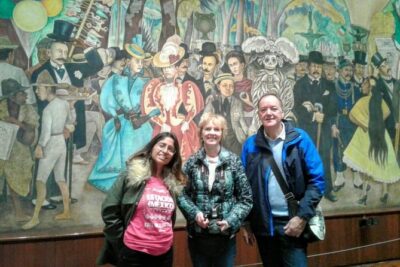
La Catrina & Muralism: Diego Rivera’s Legacy & Frida Kahlo
Read our review →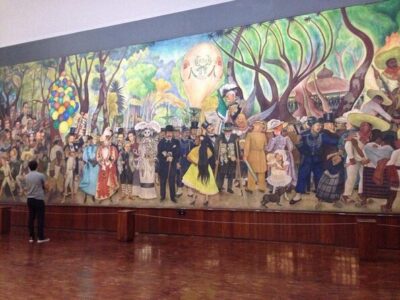
Muralist Art Semi Private Walking Tour in Mexico City Downtown
Read our review →
Xochimilco floating gardens, Coyoacan and UNAM murals
Read our review →