
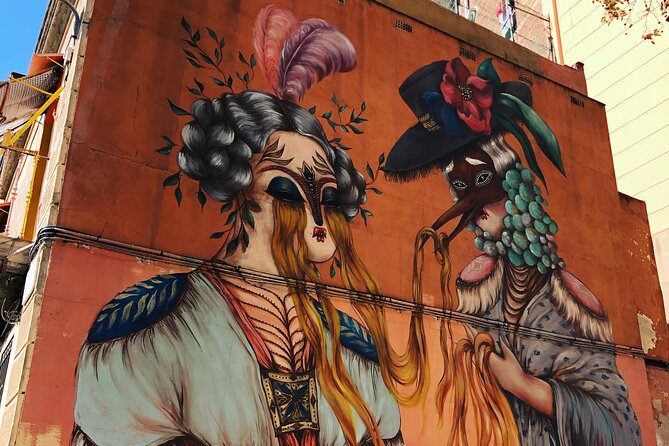
REVIEW · BARCELONA MURAL TOURS
Street Art, Sculptures & Crime Stories Walking Tour – Barcelona
Barcelona has more than Gaudí. This 2.5-hour walk follows street art, old crimes, political murals, sculptures, and overlooked details from El Raval to El Born. I like the way it connects art with the city’s rougher past, and I like that guide Liliia, also called Leila in one review, adds practical food and drink suggestions along the way. The main drawback is the price: at $108.37 per person, this is costly for a walking tour, especially if your group is not small.
The route covers four central districts, with the longest stops in El Raval and El Born. You should expect city walking on ordinary streets rather than museum visits, and the art can change over time. Still, the small maximum group of 15, the option to tailor the walk, and the guide’s strong record make this a good choice for anyone who wants Barcelona beyond the standard sights.
Five things to know before you book
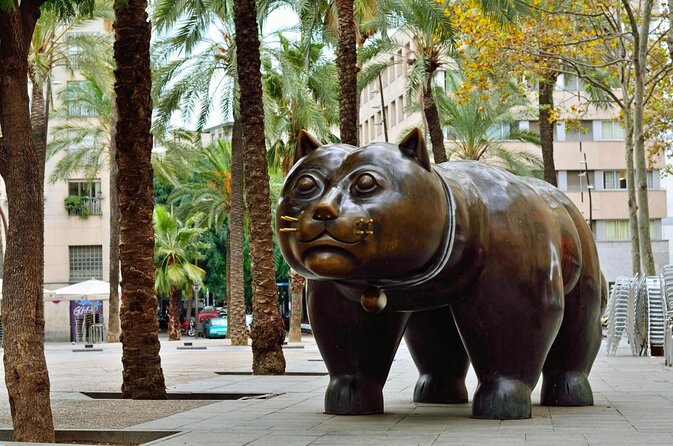
- El Raval sets the tone: Expect social and political art, local legends, and stories linked to the district’s difficult past.
- The route crosses four historic neighborhoods: You walk from Carrer Nou de la Rambla through La Rambla and the Gothic Quarter, ending near Ciutadella in El Born.
- The guide supplies context, not just directions: Liliia is praised for explaining both the artwork and the history around it.
- It is a long city walk with no snack stop included: Wear sensible shoes and eat beforehand if you need regular food breaks.
- The small-group format can become very personal: The maximum is 15 people, and one booking became a one-person tour when nobody else signed up.
- The cost pays for interpretation: At $108.37, the value depends on how much you want expert commentary, customization, and local recommendations.
Starting in El Raval, where art carries an edge
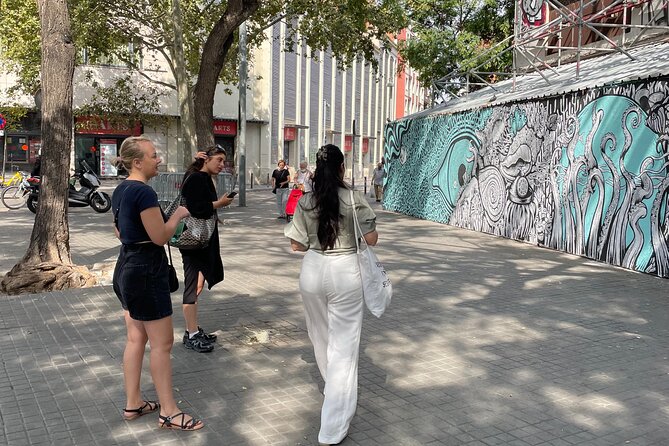
The walk begins at Carrer Nou de la Rambla, 105, in Ciutat Vella. That puts you near El Raval, a district with a complicated reputation and a strong creative pulse. The first hour is devoted to this neighborhood, giving you time to look closely rather than race from one photo stop to the next.
El Raval’s street art is not presented as decoration alone. The focus is on social struggles, political ideas, local legends, and the way the district changed from a dangerous quarter into a cultural center. That context is important. Without it, a mural is just a colorful wall. With a guide, you can connect the image to the people, conflicts, and public debates around it.
You can expect a mix of large murals and tiny pieces tucked into alleys and doorways. The smaller works may be easy to miss if you walk through El Raval alone, while the large works help you understand how public art shapes the neighborhood’s identity. The guide also points out mosaics tied to the area’s rebellious character.
The crime-story element gives this first section a different flavor from a standard art walk. One location is linked to a dramatic historical killing that later inspired neighborhood art. The exact story is part of the guide’s presentation, but the broader point is clear: streets can preserve memory in unexpected ways. Here, a wall or mosaic may carry an echo of an event that official monuments barely mention.
I would give El Raval your full attention. It is the longest stop, and it seems to be where the tour’s combination of crime, politics, art, and local life works best. If you prefer polished historic streets and formal galleries, this section may feel rough around the edges. That is also its appeal.
More Street Art Walking Tours in Spain
- Barcelona: Raval Street Art and Graffiti Walking Tour
★ 4.9 · 60 reviews - Bilbao: Art District Walking Tour
★ 4.8 · 27 reviews - Granada: “Street Art & The Caves” Unique Guided Walking Tour
★ 5.0 · 27 reviews
La Rambla reveals art beneath the crowds
The route then reaches La Rambla, Barcelona’s famous central boulevard. You get about 20 minutes here, so this is a short segment rather than a full exploration of the avenue.
The key stop is Joan Miró’s mosaic set into the pavement. Millions of people pass over it, yet many never look down. A guide helps you pause for the detail and understand why this small act of noticing matters. It is a good reminder that Barcelona’s public art is not always hanging on a wall. Sometimes it is under your feet.
The walk also includes philosophical street art and contemporary pieces dealing with identity, freedom, and city life. That broadens the tour beyond graffiti technique. You are asked to consider what public art says about belonging, movement, and the use of shared space.
La Rambla is also the busiest part of the route. Street performers, flower stalls, and historic theaters create plenty to see, but the crowds can make the art harder to study. Keep your belongings secure in any crowded part of central Barcelona, and stay close enough to hear the guide.
This stop works best as a bridge between El Raval and the older quarters. It gives you a famous Barcelona setting, but the point is not to spend your time on the usual postcard view. Instead, you learn to spot the art that sits in plain sight.
The Gothic Quarter puts new art against old stone
From La Rambla, the walk enters the Gothic Quarter, the city’s old core. This district brings Roman remains, medieval lanes, Gothic arches, and contemporary street art into the same short walk.
The contrast is the main attraction. A bright mural beside ancient stone can look jarring at first, but that tension explains why the district remains such a useful place to discuss Barcelona’s changing identity. The old city is not frozen in the past. New artists keep adding their own view of the streets.
The guide points out contemporary pieces hidden in alleys and courtyards, along with installations that reinterpret medieval legends. These are the kinds of details that are easy to pass without a local eye. The route also includes work associated with Picasso’s early Barcelona years, giving the stop a link to the city’s better-known art story.
You should keep your expectations realistic. This is not a museum tour, and you may not see every piece in the same condition described by the guide. Street art can be painted over, removed, or changed. That impermanence is part of the medium, but it also means the experience depends on current conditions.
The Gothic Quarter section lasts about 20 minutes. That is enough to make a focused set of stops, but not enough for a complete tour of the district. If you want extensive Roman archaeology or a detailed visit to every Gothic landmark, you will need separate time afterward.
El Born finishes with optical tricks and dark tales
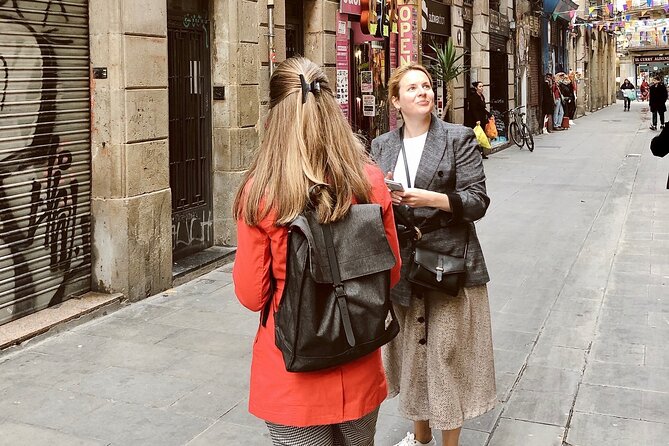
The final and longest section takes place in El Born and La Ribera. You spend about 40 minutes here, ending at Carrer Antic de Sant Joan, 7, not far from Ciutadella.
El Born is presented as a creative center with a strong connection to public art, historic markets, and darker stories from the past. The neighborhood once hosted medieval executions, while today its streets attract galleries, cafes, and contemporary art. That change gives the guide plenty to work with.
One highlight is optical illusion art by local artists with international recognition. These pieces play with perspective and make buildings or surfaces appear to change. They are particularly good stops for anyone who enjoys photography, though the guide’s explanation matters more than a quick picture. You learn how the artwork manipulates what you see and why it works in the street.
The route also includes the famous staring building facade, where windows and architectural details seem to watch people passing by. It is an amusing and slightly eerie detail, exactly the sort of thing you might miss while hurrying to the next major sight.
Near Santa Caterina Market, the tour points out colorful murals and the market’s wavy Gaudí-inspired roof. This makes a strong final stop because it brings together public art, food culture, architecture, and the everyday life of the neighborhood.
Ending in El Born is practical. You are close to Ciutadella, and the guide can provide suggestions for what to do next. The walk does not include snacks, but the finish makes it easy to continue on your own. Past participants specifically valued lunch, coffee, bar, and restaurant suggestions from Liliia, so ask for recommendations before saying goodbye.
More Street Art Walking Tours in Barcelona:
- London: Street Art and Graffiti Guided Walking Tour
★ 4.9 · 1,354 reviews - Berlin: City Street Art Guided Walking Tour
★ 4.8 · 1,051 reviews - Naples Spanish Quarters Walking Tour Street Art, Folklore & Sweet
★ 5.0 · 797 reviews - Lisbon: Kickstart Street Art Walking Tour
★ 4.9 · 717 reviews
What the guide adds to the walk
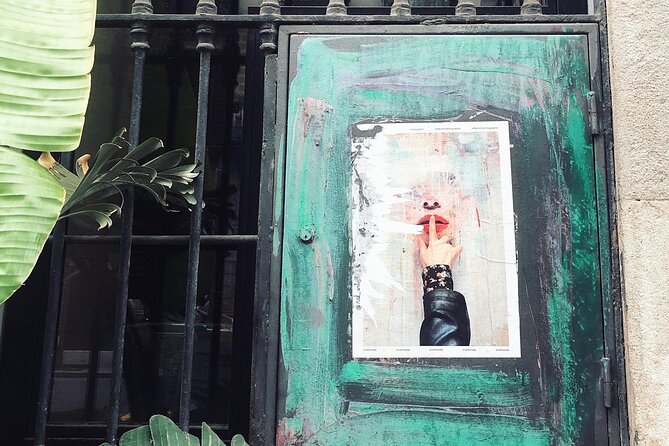
The quality of this experience depends heavily on the guide. The strongest praise goes to Liliia, who is described as friendly, professional, personable, and well informed about both street artists and Barcelona’s past.
That combination matters. An art specialist who knows little local history would miss the crime stories and neighborhood changes. A history guide without an eye for art might walk past the small works hidden in doorways. The best moments here seem to come from linking both subjects.
The guide also takes questions and adjusts the experience to the group. The tour can be customized, which may help if you are especially interested in political murals, sculpture, local history, photography, or unusual Barcelona stories. You should mention your interests early rather than assume the guide will know exactly what you want.
The small-group structure should make conversation easier than on a large coach excursion. The maximum is 15 people, and one booking turned into a private experience because no other person had registered. That cannot be guaranteed, but it shows how the format can sometimes become unusually personal.
The end-of-tour recommendations are another useful extra. You receive a list of suggestions, and the guide has offered direct advice about lunch and local places to eat or drink. That kind of information can be worth a lot in Barcelona, where a good neighborhood suggestion is often more useful than another generic city-center address.
Is $108.37 a fair price?
The price is the biggest question. $108.37 per person is a serious amount for 2.5 hours on foot, especially because there are no paid attraction admissions or snacks included.
You are not paying for entry tickets. You are paying for a specialized route, a small group, a guide who interprets the art and history, possible customization, and practical advice for the rest of your stay. If you would otherwise wander through these neighborhoods without understanding what you were seeing, the cost may feel justified.
The value is strongest for first-time visitors who have already seen the major architectural sights or want a different view of Barcelona. It also makes more sense if your group values personal guiding and wants to ask questions along the way.
For a budget-conscious visitor, the price may be hard to defend. You can walk through these districts independently, and much of the art is outdoors. If you mainly want a list of murals for photographs, this tour may offer more interpretation than you need.
Group discounts are available, which could improve the calculation for several people booking together. The tour is also offered in English and accepts mobile tickets, making the practical side simple.
Timing, walking comfort, and practical planning
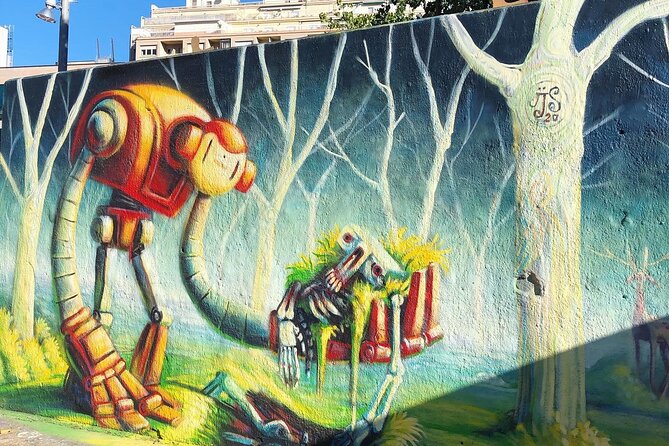
Plan for about 2 hours and 30 minutes of steady city walking. The route moves through central neighborhoods and ends in a different district from where it begins, so comfortable shoes are more important than stylish ones.
Eat before the start or plan your next meal in El Born. Snacks are not included. The route passes areas with food options, but the tour itself is focused on art and stories rather than scheduled refreshments.
The starting point is at Carrer Nou de la Rambla, 105. The end is Carrer Antic de Sant Joan, 7, in El Born, close to Ciutadella. You are near public transportation, and service animals are allowed. Most people can take part, though anyone who finds extended urban walking difficult should consider the length and uneven character of old-city streets.
Confirmation arrives when you book. Free cancellation is available if you cancel at least 24 hours before the start time. Changes or cancellations made inside that window are not accepted for a refund.
Who should choose this Barcelona art walk?
I would recommend it most strongly to you if you:
- Want street art with political, social, and historical context
- Prefer small-group guiding to a large city tour
- Have already seen Barcelona’s main landmarks and want something less predictable
- Like local stories about crime, legends, and neighborhood change
- Enjoy photography and unusual buildings
- Appreciate restaurant and coffee suggestions from a local guide
You may want to skip it if you dislike walking, want indoor galleries, or need a low-cost activity. It is also not the best match if your main goal is a full tour of Roman and Gothic monuments. The historic architecture supports the street-art story, but it is not the sole subject.
Should you book Street Art, Sculptures & Crime Stories?
Book it if you want Barcelona explained through its walls, pavements, alleys, and neighborhood changes. The most praised elements are the guide’s personal attention, strong grasp of local art and history, thoughtful route, and useful recommendations for eating and drinking afterward.
The price is high, but the experience offers more than a mural checklist. You get El Raval’s harder stories, Miró on La Rambla, contemporary art against Gothic stone, and El Born’s optical illusions and watchful facade. If that mix sounds more appealing than another pass by the city’s standard monuments, this is a smart splurge.
FAQ
How long does the tour last?
The tour lasts approximately 2 hours and 30 minutes.
Where does the tour start?
It starts at Carrer Nou de la Rambla, 105, Ciutat Vella, 08001 Barcelona, Spain.
Where does the tour finish?
It finishes at Carrer Antic de Sant Joan, 7, Ciutat Vella, 08003 Barcelona, near Ciutadella in El Born.
Which Barcelona neighborhoods are included?
The route includes El Raval, La Rambla, the Gothic Quarter, and El Born or La Ribera.
Is the tour offered in English?
Yes. The experience is offered in English.
What is the maximum group size?
The maximum group size is 15 people.
Can the tour be customized?
Yes. The experience may be customized for you and your group.
Are snacks included?
No. Snacks are not included.
Are service animals allowed?
Yes. Service animals are allowed.
Can I cancel for a full refund?
Yes, if you cancel at least 24 hours before the experience start time. Cancellations made less than 24 hours before the start time are not refunded.
Just added around Barcelona
- Barcelona Street Art, Graffiti and Tapas Tour★ 4.0 · 5 reviews
- Private Barcelona Street Art Tour★ 5.0 · 2 reviews
- Barcelona | StreetArt Bike Tour Moco Museum★ 4.6 · 13 reviews
- Barcelona Street Art, Graffiti & Tapas Tour★ 5.0 · 5 reviews
- Barcelona | Street Art Bike tour★ 5.0 · 3 reviews
- Barcelona: Insider Street Art Tour with Private Studio Visit★ 5.0 · 21 reviews
- Barcelona: Graffiti E-Scooter Tour★ 4.4 · 9 reviews
- Barcelona: Street Art & Visit to Galleries Tour★ 4.7 · 30 reviews
Barcelona Mural Tours, compared.
Barcelona Street Art and Graffitti Bicycle Tour
Read our review →
Barcelona Street Art Tour with Exclusive Artist Studios Visit
Read our review →
Raval Street Art and Graffiti Guided Tour in Barcelona
Read our review →
Private Barcelona Street Art Workshop with a Street Artist
Read our review →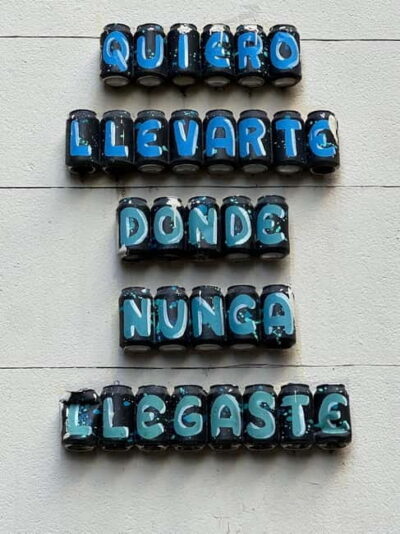
Barcelona Art & Wine: Galleries, Studios & Street Art
Read our review →Browse the lists this tour appears in