
REVIEW · MADRID MURAL TOURS
Madrid: Street Art Tour with Local Graffiti Hunter
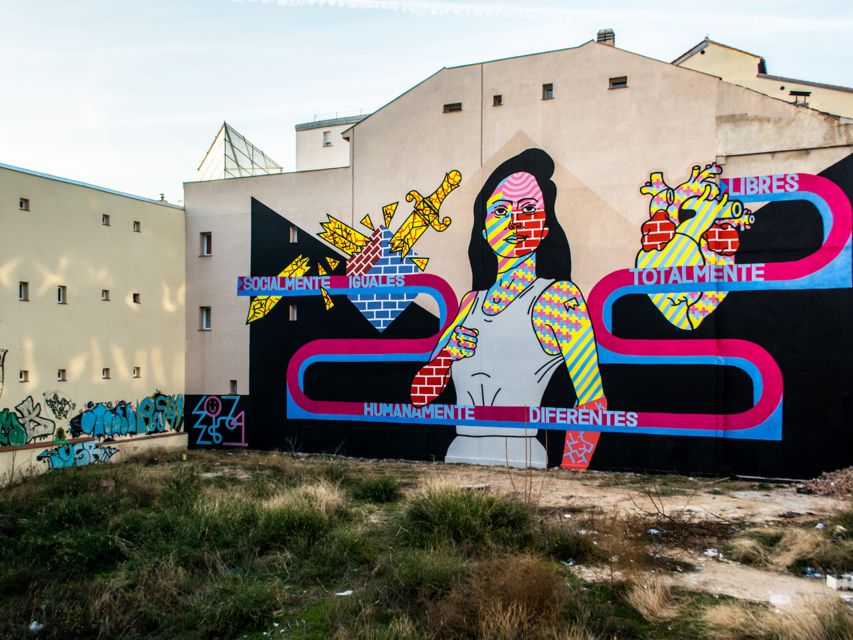
Madrid puts its art on the street. This two-hour walk through Lavapiés, Embajadores, and La Latina offers a lively look at the city’s underground art scene, with a guide who works within it. I like the local perspective and the chance to see graffiti, stencils, stickers, and large legal murals in the streets where they belong. I also like that the tour brings you into neighborhoods beyond Madrid’s usual museum circuit.
The main consideration is that this is a walking tour, not a formal gallery visit. You’ll spend much of the time outdoors, and the art changes over time. The guide may be Esther, Julien, Santiago, Yago, or another member of the team, so the tone can vary, but the strongest praise centers on their enthusiasm, clear English, and ability to connect art with neighborhood life.
Key things to know before you book
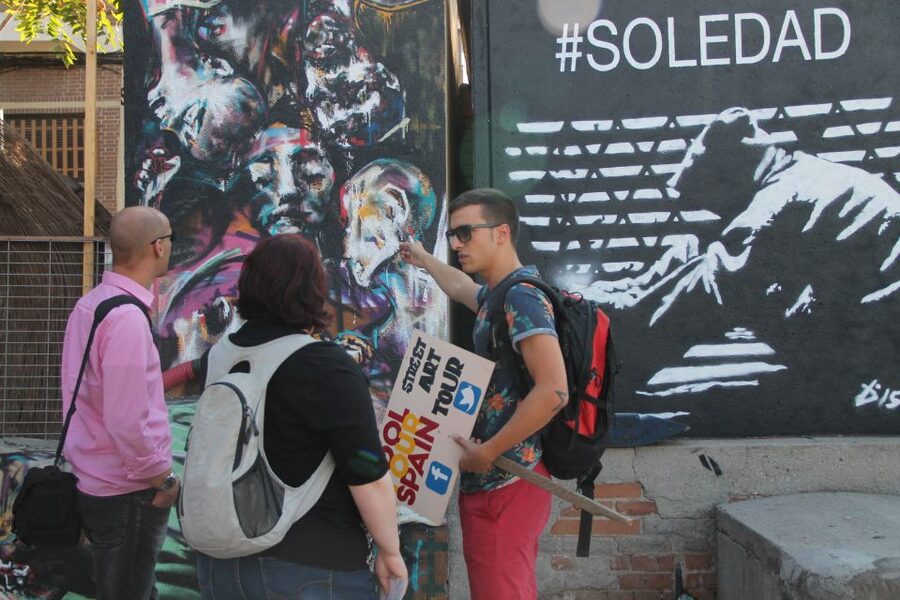
- The tour begins at Teatro Valle-Inclán: Meet at Calle de Valencia, 1, near Lavapiés Metro station.
- La Tabacalera is a major stop: The former tobacco factory carries large-scale urban art and also hosts free community activities.
- Esta es una Plaza gives the tour a local feel: This unusual public space provides context for how art and neighborhood projects can share the same streets.
- You may see many forms of street art: Expect graffiti, stencils, stickers, murals, and work by both established and newer artists.
- The guide is part of the scene: Several guides are artists or graffiti writers, and the company works with Madrid street-art festivals.
- The price is reasonable for a two-hour specialist walk: At $29 per person, you are paying for interpretation, local knowledge, and a focused route rather than transport or refreshments.
Why Lavapiés is the right place for this walk
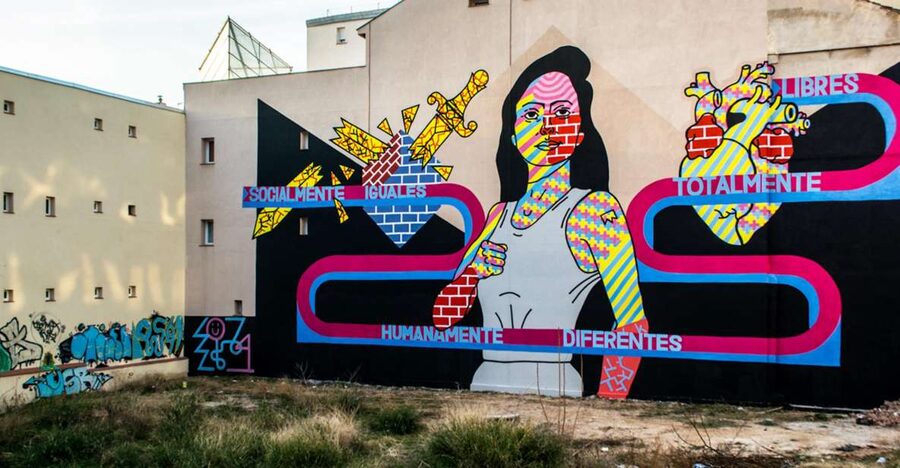
Lavapiés gives you more than a backdrop for painted walls. It is a multicultural part of Madrid with a strong neighborhood identity, and the art helps you read the streets in a different way.
Your guide explains how urban art fits into Madrid’s culture, including the difference between graffiti, commissioned murals, stencils, and sticker work. That distinction matters. A quick look at a painted wall can blur all these forms together, but a local graffiti writer can point out technique, intention, and the tension between legal and unauthorized work.
I like this approach because it turns an ordinary walk into a lesson in how public space is used. You are not only asking who painted something or how it was made. You are also considering who the work is for, how it affects a neighborhood, and what happens when a community gives artists room to work.
The route also helps you see Madrid outside the grand central sights. You will not spend the morning moving between famous monuments. Instead, you walk through streets where daily life continues around the art. That makes this a useful choice if you have already visited the Prado or Thyssen-Bornemisza and want a different view of the city.
More Graffiti Tours in Spain
- Raval Street Art and Graffiti Guided Tour in Barcelona
★ 5.0 · 81 reviews - Barcelona: Raval Street Art and Graffiti Walking Tour
★ 4.9 · 60 reviews - Barcelona: Graffiti E-Scooter Tour
★ 4.4 · 9 reviews
Starting at Teatro Valle-Inclán and meeting your guide
The meeting point is the entrance to Teatro Valle-Inclán on Calle de Valencia, 1. Lavapiés is the nearest Metro station, so the start is fairly easy to reach by public transport.
The tour is operated in English, and the guides have been praised for clear speech and an easy way with questions. Julien, Esther, Santiago, Javier, Hector, Ana, Mario, and others have led this experience at different times. The guide roster changes, so you should think of the tour as a shared format delivered by different local personalities.
That variety can be a strength. Some guides have worked as artists themselves, while others bring a strong interest in the history and culture of Lavapiés. Hector, for example, has been described as an accomplished street artist, and several guides have shared firsthand stories from the local art world.
Groups are often small enough for questions and discussion. That is important on a subject with no single correct interpretation. You can ask why one wall is legal, how a stencil was made, or what a particular image might mean without feeling lost in a large crowd.
Reading the walls of Lavapiés
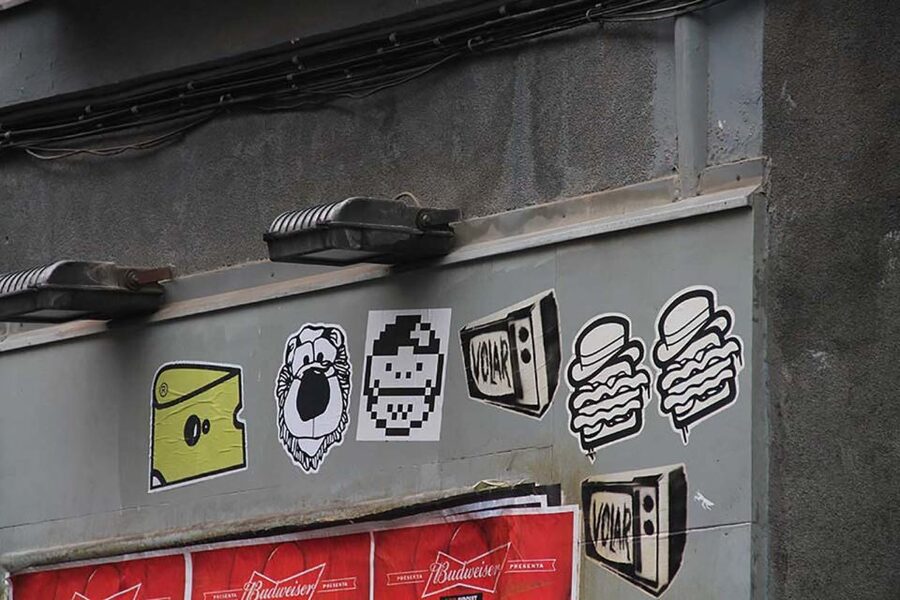
The first part of the walk takes you through Lavapiés, where the art appears in many forms. You may see painted walls, quick tags, stencils, stickers, and more carefully planned pieces. The point is not to collect a checklist of famous works. It is to understand how different artists use the same streets.
A good guide helps you notice details you might otherwise miss. A stencil can look simple until someone explains the layering and repeatable design. A sticker may seem minor beside a giant mural, but it can be part of an artist’s wider presence in the city. The route gives each form its place.
The best guides also keep the walk conversational. Esther has been praised for asking questions and making the tour feel like a discussion rather than a lecture. Julien has been noted for speaking clearly and keeping both street-art fans and complete beginners involved.
You do not need an art background to enjoy this. If you already follow graffiti, you will get more from the comments on artists and techniques. If you are new to the subject, the guide gives you a useful framework without assuming you know the vocabulary.
The pace is another advantage. The route lasts two hours, and the walk has been described as steady without feeling rushed. You should still wear comfortable shoes, since the experience moves through several neighborhoods and includes time standing while the guide explains each piece.
Calle Argumosa and Calle de Embajadores
The route continues along Calle Argumosa and Calle de Embajadores. These streets connect the art to the broader character of the area, with the guide pointing out works and explaining how the urban-art scene developed around them.
This is where the tour feels less like a series of photo stops and more like a neighborhood walk. You get a sense of how murals and smaller works sit alongside businesses, apartments, public spaces, and ordinary foot traffic.
The guide may also share practical tips about Madrid beyond the art. Julien has offered suggestions about nightlife and places to visit on a Saturday evening, while other guides have explained local customs and small features of Lavapiés. Those extras are not the main product, but they can make the tour useful early in your stay.
The route is also handled with attention to the neighborhood. One guide has been praised for keeping the group from blocking traffic, and another for stressing responsible and sustainable tourism. That is worth noting. Street-art tours can become intrusive if a group crowds doorways or treats a lived-in neighborhood like a film set. Here, the stated approach is to look closely while respecting the people who live and work nearby.
Same walls, a different guide:
- Barcelona Street Art and Graffitti Bicycle Tour
★ 5.0 · 361 reviews - Street Art Guided Tour in Madrid
★ 5.0 · 175 reviews - Barcelona Street Art Tour with Exclusive Artist Studios Visit
★ 5.0 · 152 reviews - Barcelona: 3.5-Hour Street Art Tour by Bamboo Bike
★ 5.0 · 56 reviews
La Tabacalera and Madrid’s large-scale murals
One of the strongest stops is La Tabacalera, the former tobacco factory on Calle de Embajadores. Its walls provide a large canvas for urban art, including work connected with the Muros Tabacalera street-art festival.
The scale changes the way you look. In Lavapiés, you may be studying a small sticker or a piece tucked into a corner. At La Tabacalera, the walls allow artists to work on a much larger plane. Your guide explains the artists, techniques, and social setting behind the work, giving the murals more meaning than a quick photograph can provide.
La Tabacalera is also more than a wall for murals. The space offers free workshops in photography, dance, yoga, cycling, longboarding, and other activities. That detail helps explain why the site matters to the neighborhood. It is a place where art, recreation, and community activity meet.
You may also see one of the largest murals in Madrid’s Center District during the walk. The exact works on view can change, and the tour should not be treated as a guaranteed list of individual pieces. The value is in having someone explain what you are seeing and how the site fits into Madrid’s wider art scene.
Some visitors have even encountered an artist working on a new mural during the tour. That is an accidental bonus rather than something you should expect, but it shows the advantage of seeing public art in an active neighborhood rather than behind museum glass.
Esta es una Plaza and Plaza del Sombrerete
The tour includes an insider’s look at Esta es una Plaza, a community-oriented public space in Lavapiés. Here, the guide can discuss veteran artists as well as newer names and show how urban art can become part of a shared neighborhood setting.
This stop adds balance to the large murals at La Tabacalera. Instead of focusing only on scale, it asks you to consider how art works in a smaller public place. A piece can be important because of its size, but it can also matter because of where it is, who uses the space, and how long it remains part of the local scene.
The walk also reaches Plaza del Sombrerete, sometimes referred to by the nearby Calle del Sombrerete. This gives you another chance to compare styles and generations of artists. The guide can point out established work alongside pieces by newer talents, helping you see Madrid’s street art as an active scene rather than a finished collection.
For me, this is one of the most useful parts of the route. You begin with the basic question of whether you like a piece. By the end, you are also thinking about authorship, permission, public ownership, and the changing character of urban spaces.
What the guides do best
The strongest feature of this experience is not the route alone. It is the person leading it.
The guides are repeatedly praised for being warm, funny, and passionate. Santiago has been described as especially interactive, while Esther has been praised for combining art knowledge with local history. Julien is known for a clear voice and an easy manner, which helps when the group spreads out slightly to take photographs.
Several guides are artists or graffiti writers themselves. That gives them a practical connection to the subject. They can talk about materials, methods, and the working culture around graffiti in a way that a general city guide may not be able to match.
The tour also works well for mixed groups. Teenagers can engage with questions about art, ethics, and community. Adults who have never studied street art can follow the explanations. Experienced art fans can ask more pointed questions about technique and artists.
The experience is at its best when you participate. Look closely, ask questions, and tell the guide what catches your eye. You will get more from the walk if you treat it as a conversation rather than a passive sightseeing circuit.
Price, timing, and practical value
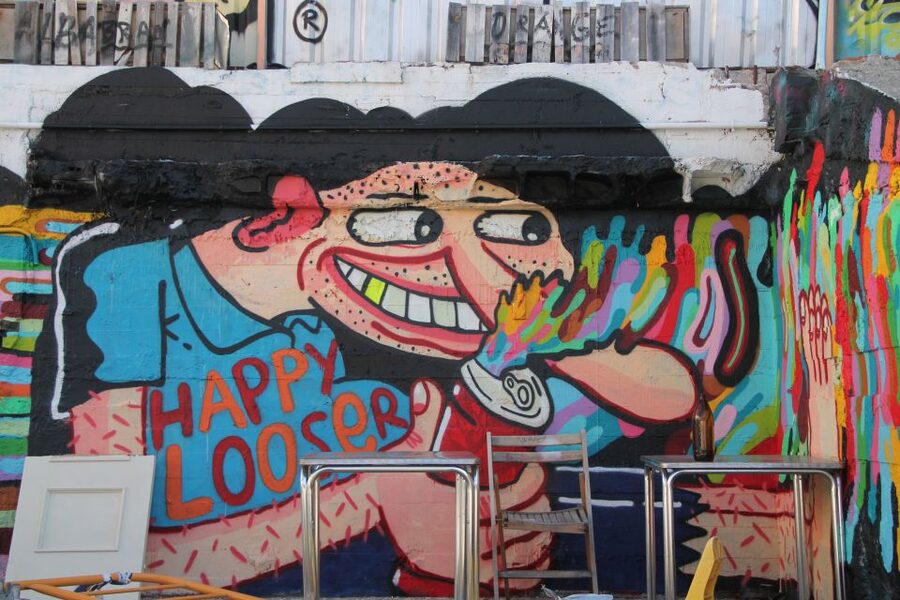
At $29 per person, this is fairly priced for a two-hour specialist walking tour in central Madrid. You are not paying for a ticketed attraction, transport, or drinks. You are paying for a focused route and a guide who interprets art that you could otherwise pass without understanding.
That makes the value depend on your interests. If you enjoy public art, neighborhood walks, photography, or alternative city culture, the cost is easy to justify. If you prefer major monuments, air-conditioned museums, or a more formal lecture, this may feel less essential.
The tour is wheelchair accessible, though the published information does not give detailed route notes about every surface or stop. If you need precise access information, ask the operator before booking.
Bring comfortable shoes and a passport or identity card. The tour runs in English, lasts two hours, and does not include beverages. Cancellation is free up to 24 hours before the start, and you can reserve while paying later, which is useful if your Madrid plans are still shifting.
Rain is worth considering. The walk is not automatically canceled because of bad weather, so check the forecast and be ready for outdoor conditions. One past booking attempt to change dates because of rain proved difficult, so do not assume weather alone will make rescheduling simple.
Who should book this Madrid street-art tour?
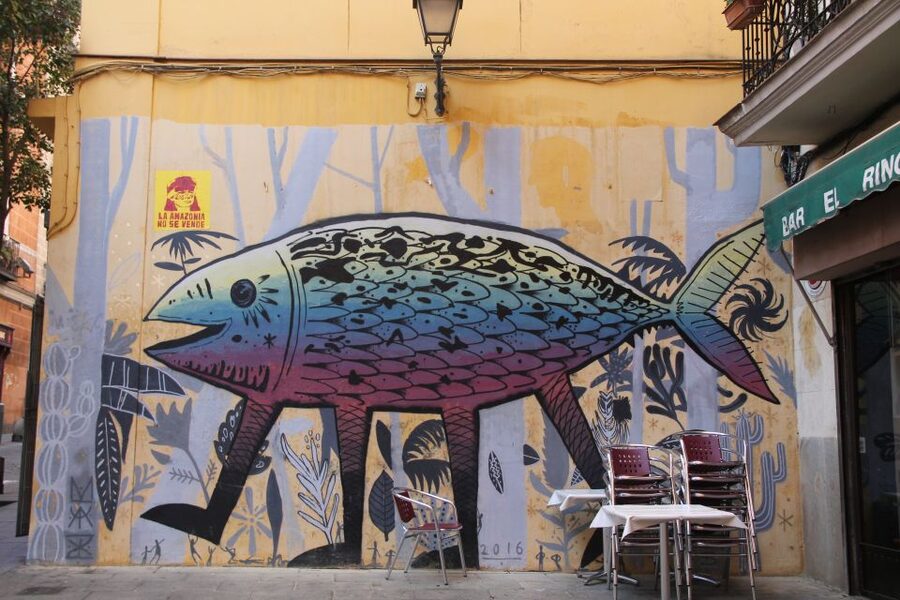
I would recommend it to first-time visitors who want to see a less polished and more local side of Madrid. It is also a good choice after visiting the city’s major museums, since the tour changes the question from what belongs in a gallery to what belongs on a public wall.
Families with older children and teenagers should find plenty to discuss, especially around creativity, ownership, and public space. The tour also suits solo visitors who want a structured walk through Lavapiés without joining a large sightseeing group.
Art fans will appreciate the attention to technique and artists. Casual sightseers can enjoy the neighborhoods and photography even without a strong interest in graffiti.
I would think twice if you dislike walking outdoors, need a tightly fixed list of famous works, or want guaranteed access to a particular mural. Street art is not a museum collection, and the experience depends on the guide, the current works, and the mood of the streets that day.
Should you book it?
Book this tour if you want Madrid explained through its walls rather than only through its palaces and museums. The best reason to go is the guide’s local point of view, especially if you get an artist or graffiti writer who can explain both technique and neighborhood life.
At $29, the two-hour route offers good value, particularly for visitors who want an introduction to Lavapiés, Embajadores, and La Latina. Choose a dry day if possible, wear comfortable shoes, and arrive ready to look closely. You may leave with more than photographs. You may start noticing how every public wall tells you something about the city.
FAQ
Where does the Madrid street-art tour meet?
The meeting point is at the entrance of Teatro Valle-Inclán, Calle de Valencia, 1, 28012 Madrid. The nearest Metro station is Lavapiés.
How long does the street-art tour last?
The tour lasts two hours. Starting times vary, so you need to check availability for your chosen date.
What language is the tour conducted in?
The tour is conducted in English with a live English-speaking guide.
Which Madrid neighborhoods does the tour visit?
The route covers Lavapiés, Embajadores, and La Latina. Stops include La Tabacalera, Esta es una Plaza, Plaza del Sombrerete, Calle Argumosa, and Calle de Embajadores.
Is the tour wheelchair accessible?
Yes, the activity is listed as wheelchair accessible. The available information does not provide detailed access notes for every part of the route, so contact the operator if you need specific details.
What should I bring, and are drinks included?
Bring comfortable shoes and a passport or identity card. Beverages are not included.
Just added around Spain
- Small-Group Graffiti Tour and Workshop in El Carmen★ 5.0 · 2 reviews
- Bilbao Urban and Street Art Walking Tour★ 5.0 · 2 reviews
- Barcelona Street Art, Graffiti and Tapas Tour★ 4.0 · 5 reviews
- Salamanca: Private Guided Street Art Walking Tour★ 5.0 · 2 reviews
- Private Barcelona Street Art Tour★ 5.0 · 2 reviews
- Barcelona | StreetArt Bike Tour Moco Museum★ 4.6 · 13 reviews
- Madrid Street Art Tour (Malasaña Chueca Gran Via & Lavapies)★ 3.5 · 8 reviews
- Málaga: Street Art Tour in the Soho District★ 5.0 · 4 reviews
Madrid Mural Tours, compared.

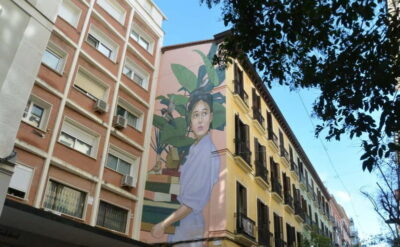
Madrid Street Art Tour (Malasaña Chueca Gran Via & Lavapies)
Read our review →
Browse the lists this tour appears in