
REVIEW · MEXICO CITY MURAL TOURS
Mexico City: Art Naco, murals & street art bike tour
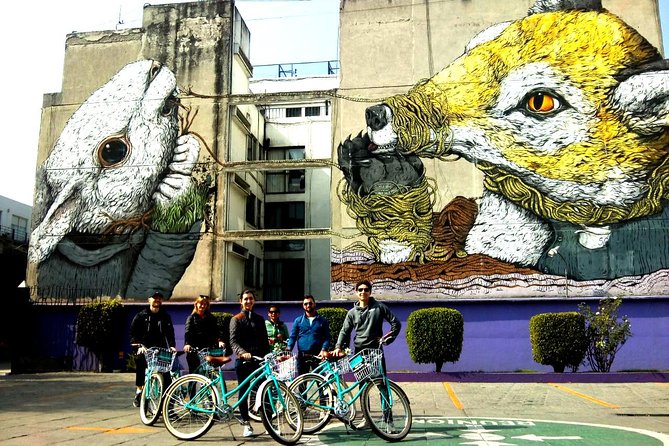
See Mexico City beyond the postcard. This three-hour ride pairs street art with local neighborhoods, taking you through places many first-time visitors would miss. I especially like the stops at artists’ workshops and the chance to taste street food rather than simply look at the city from a bus window.
The guides bring real energy to the outing. Alberto, Iván, Gabi, and others have been praised for their grasp of art, city history, and local life. The main consideration is traffic: you need to feel reasonably comfortable on a bicycle, and taller riders should ask about larger frames because some bikes may feel small.
Key points to know before you book
- Three very different routes: Choose North, Downtown, or South, with art and neighborhoods changing sharply from one route to another.
- Artists’ spaces are a highlight: Some rides include access to a workshop or arts center, adding context beyond painted walls.
- Strong traffic support: A second Poray team member often helps guide the group through intersections.
- A real street-food stop: Tacos, tlacoyos, gorditas, and drinks may feature, with vegetarian and vegan needs accommodated on some outings.
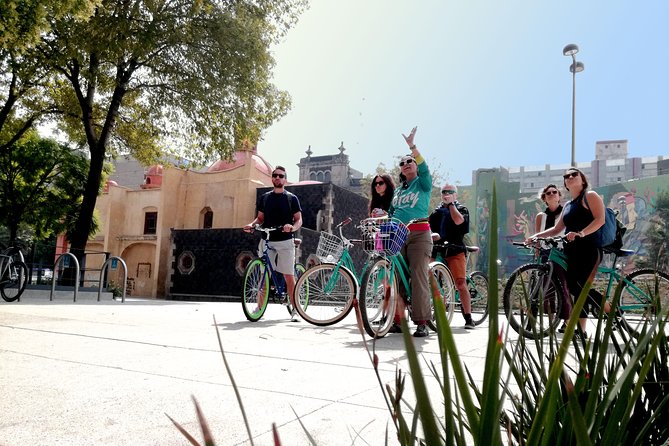
- Small groups matter: The tour is limited to 10 people, so guides can adjust the pace and answer questions.
- Good orientation for a first visit: You get ideas for neighborhoods, food, museums, and later sightseeing.
Why this bike tour reveals a different Mexico City
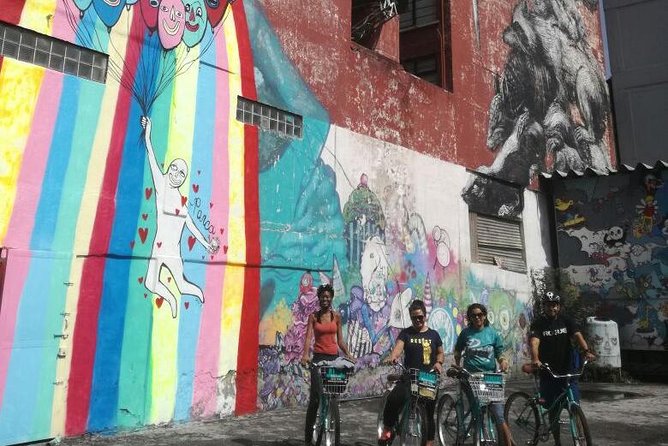
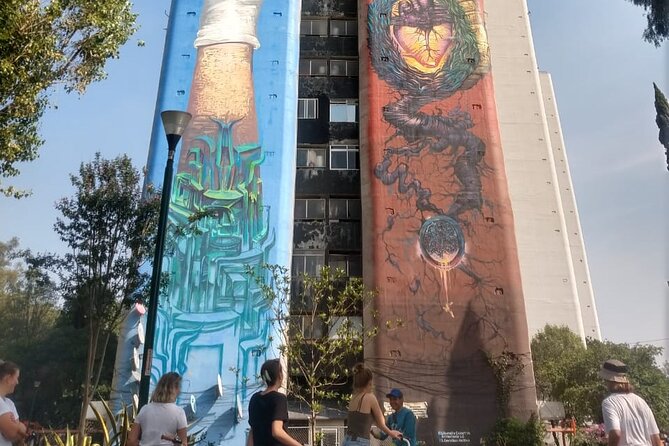
Mexico City is too large to understand from the Zócalo alone. Its art appears on library walls, workshop facades, housing projects, old colonial buildings, and neighborhood corners. A bicycle lets you connect those places at street level, with enough speed to cover ground but enough time to stop and look.
This is not a polished sightseeing loop built only around famous attractions. The route moves through barrios where daily life is part of the view. You may pass old buildings, modern additions, Aztec remains, community spaces, and murals that tell stories about Mexican identity and local memory.
I like that the art is treated as a doorway into the city, not as decoration. Guides explain who made the work, what the images refer to, and how the surrounding neighborhood fits into Mexico City’s past and present. The result feels more like a moving conversation than a checklist of murals.
The $52 price is fair for three hours when you consider that it includes a bicycle, local guide, bottled water, a street-food snack, and personal injury insurance. You are also paying for route planning and traffic support, two things that are difficult to arrange on your own. It is less compelling if your main goal is a long, athletic ride or a formal museum tour.
More Street Art Bike Tours in Mexico:
- Mexico City; ART NACO : Murals & Street Art Bike Tour
★ 5.0 · 284 reviews - London Bike Tour: Landmarks, Secret Gems, Pub Stop & Street Art
★ 5.0 · 943 reviews - Barcelona Street Art and Graffitti Bicycle Tour
★ 5.0 · 361 reviews
Choosing between the North, Downtown, and South routes
The most important booking decision is the route. These are not minor variations on the same ride. Each one offers a different slice of Mexico City.
The North Route: Buenavista, Guerrero, and Tlatelolco
The North Route is the strongest choice if you want art tied to Mexican stories, public spaces, and neighborhood identity. You ride through Buenavista, Guerrero, and Tlatelolco, stopping for murals and cultural landmarks.
The Vasconcelos Library is one of the major sights. Its architecture and public role make it more than a quick photo stop. It has also been used as a community center, and the building gives the route a change of scale after riding along neighborhood streets.
The 8A Workshop adds an artist-led element. Access to a working studio or collective can be one of the most memorable parts of the outing because you see where ideas are developed, not only where finished paintings are displayed.
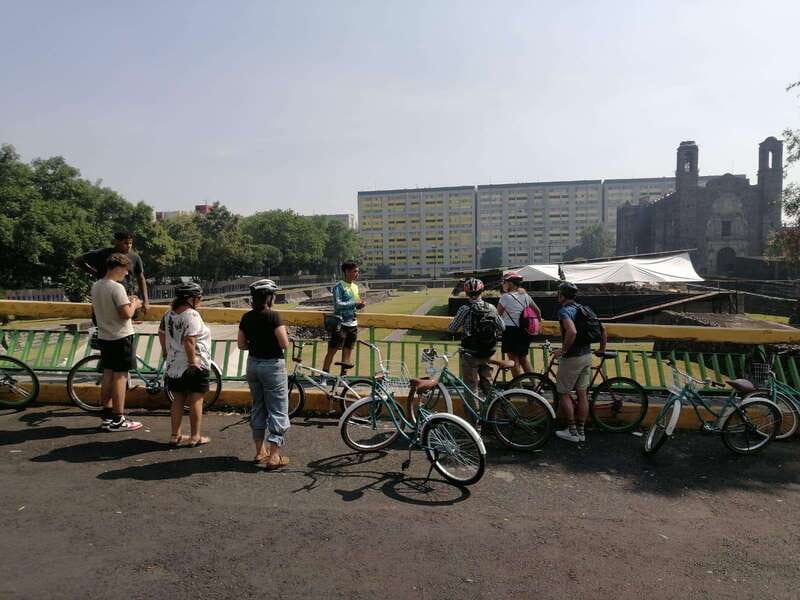
Three Cultures Square brings together different periods of Mexican history in one place. The route uses the murals and surrounding remains to explain how the city has changed over time. You should expect a ride with plenty of context, not just a series of colorful walls.
This route also suits you if you want to see areas outside the usual Roma, Condesa, and historic-center circuit. One rider described the ride through Buenavista, Guerrero, and Tlatelolco as a highlight precisely because it felt so different from the more familiar visitor zones.
The Downtown Route: Obrera, Doctores, and the central city
The Downtown Route offers the broadest mix of street art, old architecture, and central Mexico City sights. You move through Obrera and Doctores, then connect with places such as the Zócalo and Regina Alley.
The appeal here is contrast. Murals and graffiti appear alongside colonial and modern architecture, so the city feels layered without needing a museum label on every wall. Famous artists and amateurs both contribute to the visual mix.
The route may include the 75 Degrees Workshop and MUJAM, the Museum of Ancient Mexican Toys. MUJAM gives the ride another angle on Mexican culture, shifting from current street art to objects and play from earlier generations.
Regina Alley is a useful stop because it shows how public art can change the feel of an urban passage. The Zócalo brings you close to one of Mexico City’s best-known civic spaces, but the route does not stay only in the formal center. Its value comes from linking landmark areas with less polished streets nearby.
Choose this route if you want a first-day overview. It can help you decide where to return later for food, architecture, museums, or more street art.
More Bike Tours in Mexico:
- Street Art Bike Ride
★ 5.0 · 125 reviews - London: Landmarks & Secrets Bike Tour with Pub & Street Art
★ 4.9 · 314 reviews - Cologne: Ehrenfeld Street Art Bike Tour
★ 4.9 · 105 reviews - Urban Adventures Amsterdam Bike Tour, Graffiti and Magnet Fishing
★ 5.0 · 105 reviews
The South Route: Coyoacán and Frida’s neighborhood
The South Route focuses on Coyoacán and the area associated with Frida Kahlo. It is the clearest pick if you already know you want a southern Mexico City experience.
Coyoacán has a different rhythm from the central routes, and its art stops give the ride a more neighborhood-based feel. The information provided does not promise entry to the Frida Kahlo Museum, so do not book this as a substitute for a museum visit.
There is one practical point to handle before you pay: the South Route starts south of the city, not at the usual Poray shop near Hidalgo. Tell the operator in advance if you want this option. Otherwise, you could arrive at the wrong meeting point.
Street food turns a sightseeing stop into a local lesson
The food stop is a small part of the three-hour tour, but it adds a lot. Depending on the route and day, you might try tacos, tlacoyos, gorditas, or another traditional snack, along with a drink such as agua de jamaica.
That matters because street food gives you a direct connection to ordinary city life. You are not only hearing about Mexican food traditions from a guide. You are stopping at a local food stand and trying something in the setting where residents eat it.
Dietary needs can be handled on some outings. Vegetarian and vegan participants have been accommodated, but you should tell the provider ahead of time rather than rely on a last-minute adjustment.
If you are cautious about street food, the stop is still useful even if you choose a small portion. One rider who had an unsettled stomach beforehand was glad to take part. That does not guarantee how your own body will react, so use your judgment and carry water.
The guides make the art easier to understand
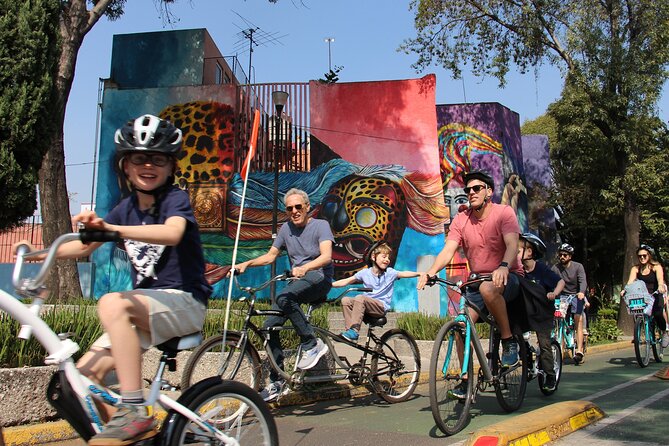
The guide is the heart of this experience. Art on a wall can be attractive but confusing when you do not know the symbols, people, or events behind it. Poray’s guides connect the images to Mexican culture and city history in plain language.
Iván has been especially praised for explaining both the art and the city, while Alberto is known for thoughtful commentary, food suggestions, and a clear affection for Mexico City. Gabi has also guided the tour in English and has been praised for making history easy to follow. Other guides, including Oscar, Danny, Daniel, Timo, and Super, have helped lead rides or support the group.
Language options are English, Spanish, and German. If you want a full explanation in English, state that when booking. The experience is much better when you can follow the story behind the murals instead of catching only the visual highlights.
Guides may also adjust the route when group size and conditions allow. A solo participant once received a more personal ride with extra recommendations for food and later sightseeing. That kind of flexibility is more likely in a small group than on a large bus excursion.
Safety, traffic, and the actual riding effort
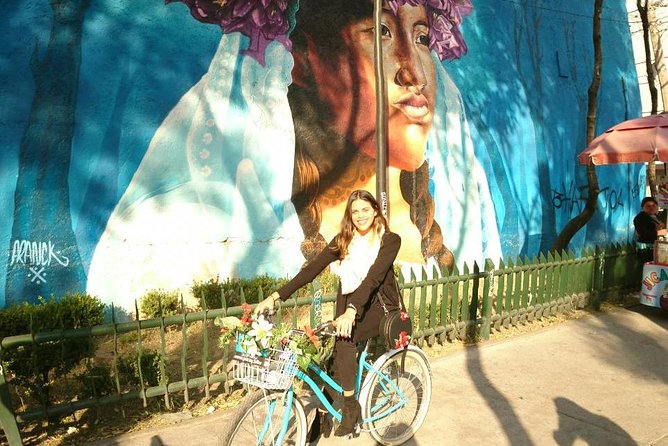
You ride through Mexico City traffic, so this is not a completely traffic-free park outing. Still, the route is designed to keep the pace manageable, with bike lanes or mainly pedestrian streets used where possible.
A second Poray team member often rides along to help at intersections, keep the group together, and watch for traffic. This support was repeatedly valued by riders who were not regular cyclists. It is one of the strongest reasons to choose a guided ride instead of renting a bicycle independently.
The city is generally flat along these routes, and the pace has been described as leisurely or easy for people with modest cycling experience. You do not need to be an athlete. You do need to be able to start, stop, turn, and remain alert around other road users.
The group limit is 10 participants. Smaller numbers reduce the chance of getting separated and give you more time to ask about a mural or take photographs. The operator may use a lead guide and one or more assistants, especially when the route crosses busy streets.
One practical weakness is bicycle size. A tall couple, one 6 feet and the other 6 feet 4 inches, found the available bikes too small. If you are tall, ask about frame sizes before arrival. Comfortable shoes, sunglasses, a hat, and sunscreen are sensible choices. Ask about a helmet if you want one, since helmet use is not clearly listed among the included items.
The tour is described as wheelchair accessible, though the activity itself involves bicycle riding. If accessibility affects your plans, confirm exactly how the provider handles the ride before booking.
Meeting point and timing
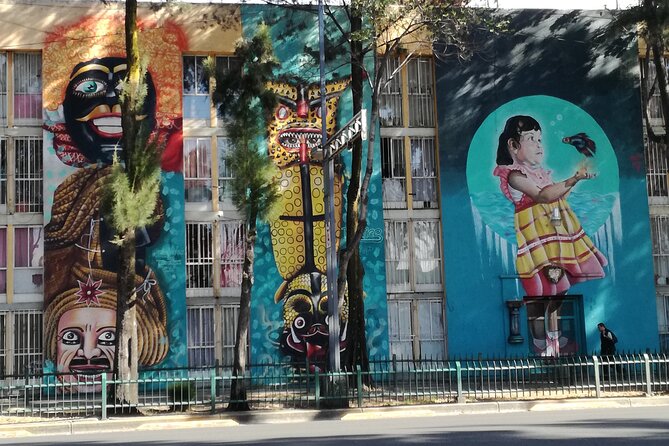
The standard meeting point is Poray Bike Rental Shop, next to the Fontan Hotel and in front of the Hidalgo Metrobus Station. The return point is the same shop for the North and Downtown arrangements.
Allow a little extra time to find the entrance. The shop is beside the hotel, not necessarily through the hotel’s main doorway. The South Route uses a different starting point south of the city, so confirm that location clearly.
The ride lasts three hours. That includes cycling, photo stops, explanations, and the food break. You will not see every mural in Mexico City in that time, but you will get a focused route through selected neighborhoods rather than a rushed attempt to cover the whole city.
For a first visit, I like taking this tour early in your stay. The ride can help you decide where to return, and guides often share useful suggestions for pozole, other local dishes, museums, and neighborhoods.
Who will get the most from the $52 price
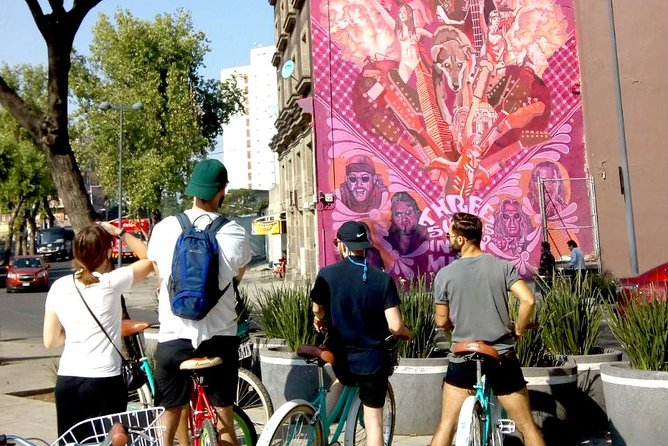
This tour is a good match for you if you want:
- Street art with cultural and historical explanation
- A small group rather than a large coach
- A relaxed ride through less familiar neighborhoods
- A local snack included in the price
- Help handling city traffic
- A guide who can answer questions in English, Spanish, or German
It is less suitable if you dislike bicycles, want a quiet vehicle-based tour, or expect every stop to be a major museum. It also may not be ideal for very tall riders unless a larger bike is available.
At $52, the value comes from the combination. A bicycle rental alone would not provide the route, local interpretation, food stop, or traffic support. A walking tour would offer more time at each site but would cover less ground. This ride gives you a useful middle path.
Free cancellation is available up to 24 hours before the start, and you can reserve now and pay later. Those terms help if your Mexico City schedule is still shifting, though the most important planning detail remains the route and starting point.
Should you book the Art Naco bike tour?
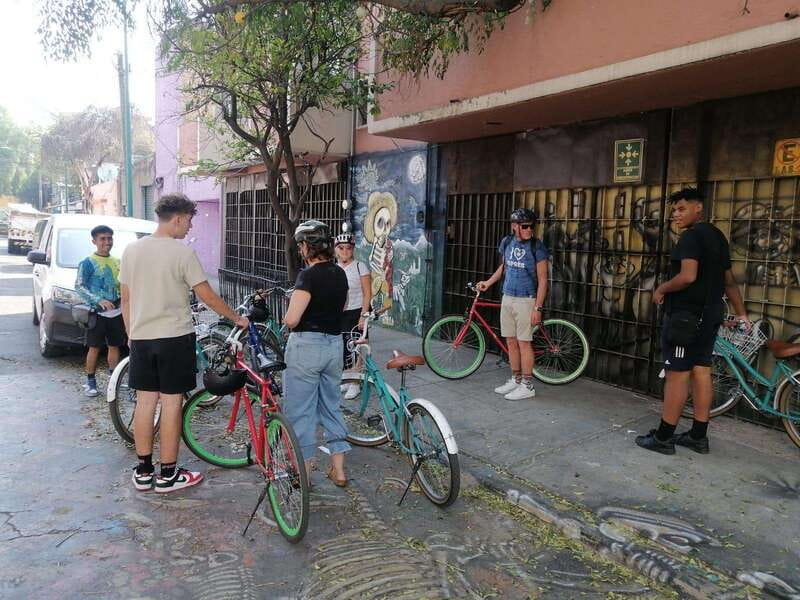
I would book it if you want to see Mexico City through murals, neighborhood streets, food, and conversation rather than only through famous monuments. The strongest version of the experience is the North or Downtown Route, especially if you are curious about areas you would not visit alone.
Pick the South Route if Coyoacán is a priority, and confirm the southern meeting point first. If you are tall, ask about bike size. If you are nervous in traffic, request the safest available route and make sure your language preference and dietary needs are noted.
The tour works best early in a trip, when you still need your bearings and fresh ideas. It is not a substitute for the Frida Kahlo Museum, MUJAM, or a full historical tour, but it can show you how art, food, public space, and daily life fit together across Mexico City.
FAQ
How long does the Art Naco bike tour last?
The tour lasts three hours, including cycling, photo stops, explanations, and a street-food or snack stop.
How much does the tour cost?
The listed price is $52 per person.
Where does the standard tour meet?
The standard meeting point is Poray Bike Rental Shop, next to the Fontan Hotel and in front of the Hidalgo Metrobus Station.
Where does the tour finish?
The North and Downtown arrangements return to Poray Bike Rental Shop.
What routes are available?
You can choose the North Route, Downtown Route, or South Route. The North Route covers Buenavista, Guerrero, and Tlatelolco. The Downtown Route includes central areas, Obrera, and Doctores. The South Route focuses on Coyoacán and Frida’s neighborhood.
Does the South Route use the same starting point?
No. The South Route starts south of the city. You should inform the provider if you want this route.
What languages are offered?
The live tour guide can provide the experience in English, Spanish, or German.
Is the tour suitable for a small group?
Yes. The group is limited to 10 participants.
Are bicycles and food included?
Yes. The price includes a bicycle, bottled water, street food or snacks, the street art tour, a local guide, and personal injury insurance. Additional drinks are not included.
Can I cancel the booking?
You can cancel up to 24 hours in advance for a full refund. Reserve now and pay later is also available.
Just added around Mexico
- Xochimilco floating gardens, Coyoacan and UNAM murals★ 4.0 · 6 reviews
- UNAM: Murals & Revolution★ 4.9 · 8 reviews
- Street Art & Cemetery Cultural Tour – half day★ 5.0 · 3 reviews
- Graffitis & Munchies biketour Playa del Carmen★ 4.5 · 18 reviews
- Street Art Walk★ 4.5 · 7 reviews
- Tour Women Muralists : Strokes that resist Mexico City★ 5.0 · 7 reviews
- Diego Rivera’s murals, hidden treasures★ 5.0 · 21 reviews
- Mexico City Private Tour with Teotihuacan, Murals, Guadalupe Basilica★ 3.0 · 2 reviews
Mexico City Mural Tours, compared.
Xochimilco, Coyoacan, Frida Kahlo Museum & Murals Tour
Read our review →
Walking Tour – Impressive murals in Historical Center of Mexico City
Read our review →
La Catrina & Muralism: Diego Rivera’s Legacy & Frida Kahlo
Read our review →
Muralist Art Semi Private Walking Tour in Mexico City Downtown
Read our review →
Xochimilco floating gardens, Coyoacan and UNAM murals
Read our review →
Browse the lists this tour appears in