
REVIEW · MEXICO CITY MURAL TOURS
Mexican muralism with a true Art lover
Murals can change how you read a city. This 2.5-hour walk connects Bellas Artes, San Ildefonso, and Museo Vivo del Muralismo through the work of Diego Rivera, José Clemente Orozco, and David Alfaro Siqueiros. I like the focus on real conversation, and I like that politics, revolution, conquest, and art are treated as parts of one story rather than separate school subjects. The main drawback is that the tour moves through several museums in a short time, so serious art lovers may want more time at individual works.
The small-group format, limited to 10 people, should make questions easier and discussion more natural. José Vicente Figueroa, the experience provider, is praised for his clear explanations and warm personality. Just remember to budget about $8 extra for museum admission, and wear shoes suited to walking between the venues.
Key points to know before you book
- Rivera’s Man Controller of the Universe begins the story: The Bellas Artes visit gives you an immediate look at art tied to politics and social change.
- Three major muralists get equal attention: Rivera, Orozco, and Siqueiros are the central figures, with room for other artists such as Tamayo and Camarena.
- San Ildefonso explains where the movement grew: Its murals help you understand how Mexican muralism developed as a public art form.
- The route includes Mexico City’s historic center: A walk along 5 de Mayo and Madero leads toward the Zócalo and adds architecture to the art lesson.
- It ends with 248 Rivera murals: Museo Vivo del Muralismo brings the tour to a large collection, plus ceramics, pre-Hispanic murals, and newer works.
- Languages and costs are practical: Tours are offered in English, Spanish, Portuguese, German, Italian, and Russian, with entrance fees paid separately.
Why this mural tour works for curious art lovers
This is not a quick photo stop at one famous painting. The route is built around a question: how did Mexican artists turn walls into a public voice?
That question gives the tour purpose. You are not simply moving from one museum to another and hearing names recited. The discussion links the murals to the Mexican Revolution, the Spanish conquest, modern politics, and the relationship between Mexico and the United States. That wider setting matters because the paintings can look grand and decorative at first glance. Their subjects become clearer when you understand whom they praise, criticize, or represent.
I also like the scale of the group. With no more than 10 participants, you have a better chance to ask why a figure appears in a mural, what a symbol means, or how one painter differed from another. Feedback about José Vicente repeatedly points to his ability to answer questions in detail without turning the experience into a stiff lecture.
The strongest praise centers on his enthusiasm and ability to make the murals feel alive. That is useful in Mexico City, where even a single building can contain more art than you can absorb in one visit. A good guide helps you decide what deserves your attention.
More Muralism Tours in Mexico:
- CDMX: Xochimilco, Coyoacan, Frida Kahlo Museum & Murals Tour
★ 4.4 · 3,025 reviews - La Catrina & Muralism: Diego Rivera’s Legacy & Frida Kahlo
★ 4.5 · 197 reviews - Muralist Art Semi Private Walking Tour in Mexico City Downtown
★ 5.0 · 188 reviews
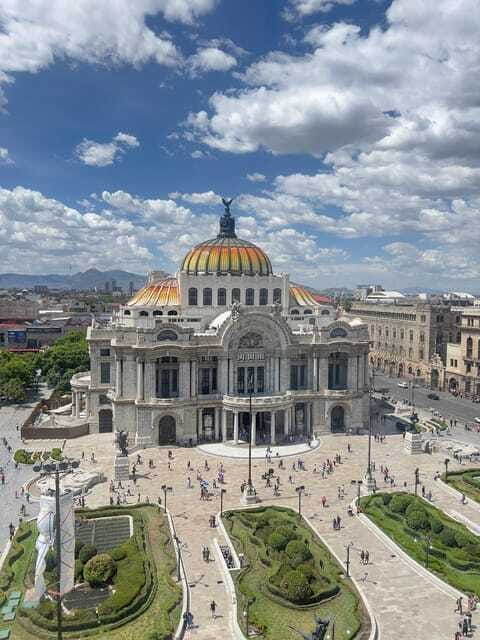
Starting beneath the dome of Bellas Artes
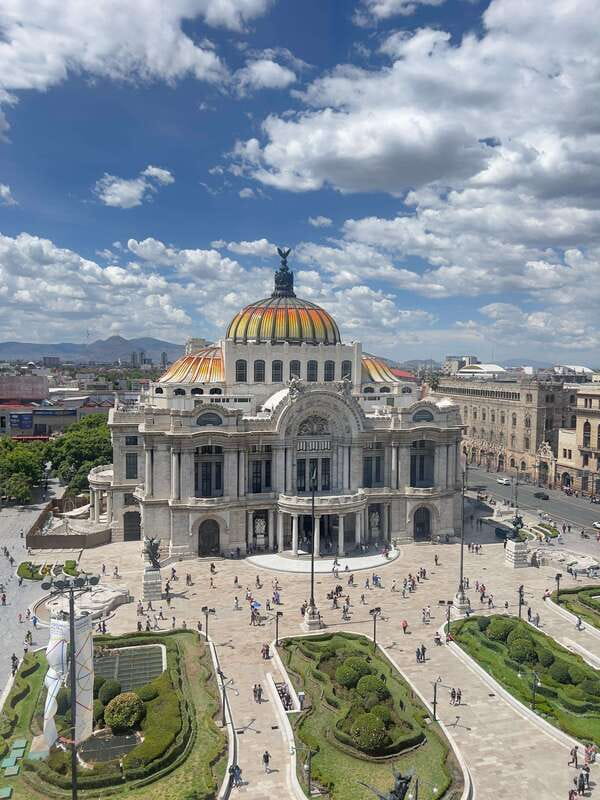
Meet outside the main gate of Palacio de Bellas Artes. The building itself is worth noticing before the mural discussion begins. Its neoclassical design gives the first stop a formal, grand setting, while the artworks inside bring in revolution, labor, social class, and national identity.
The Bellas Artes visit lasts about an hour. It is the longest single museum stop in the first part of the route, and it gives the guide room to introduce the three central muralists: Diego Rivera, Orozco, and Siqueiros.
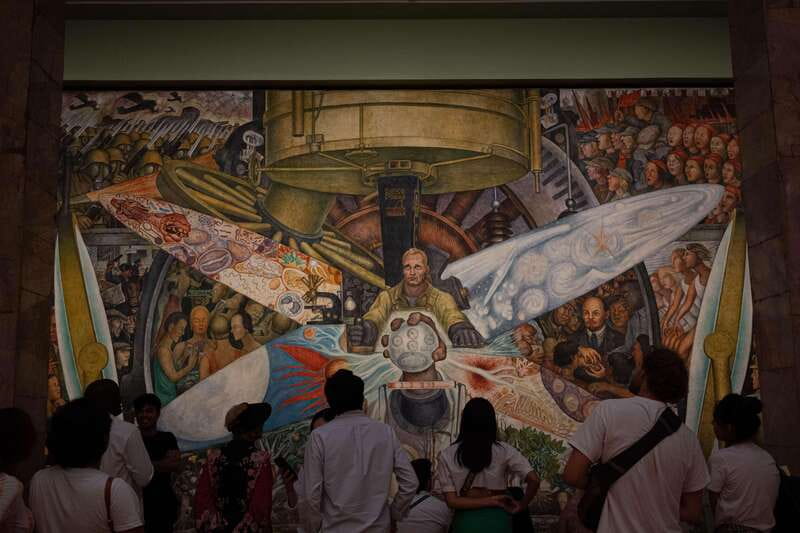
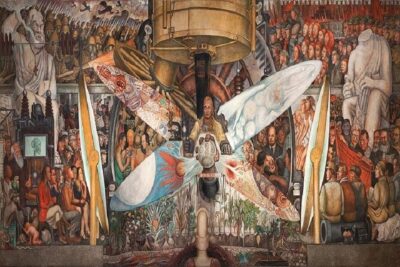
Rivera’s Man Controller of the Universe is a natural starting point. The mural invites questions about technology, power, workers, and competing political ideas. The experience is not limited to Rivera, though. Orozco and Siqueiros receive serious attention, which is important because many first-time visitors know Rivera’s name but have only a vague sense of how different the other two painters could be.
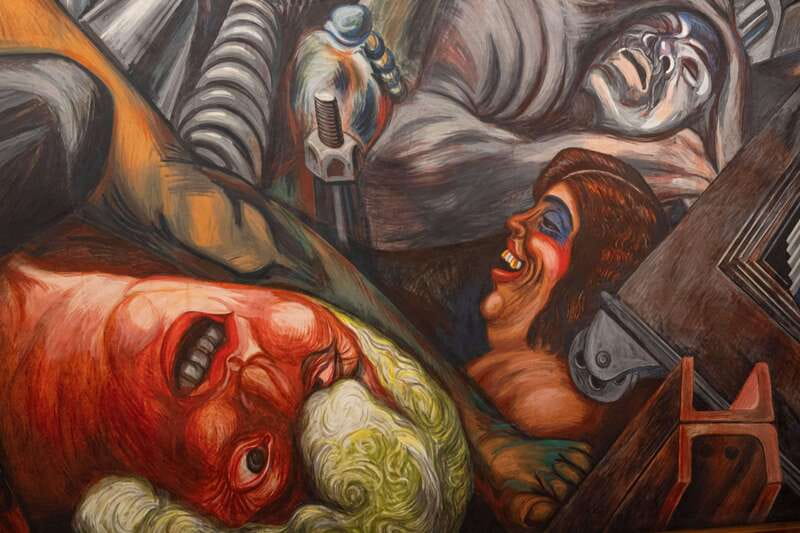
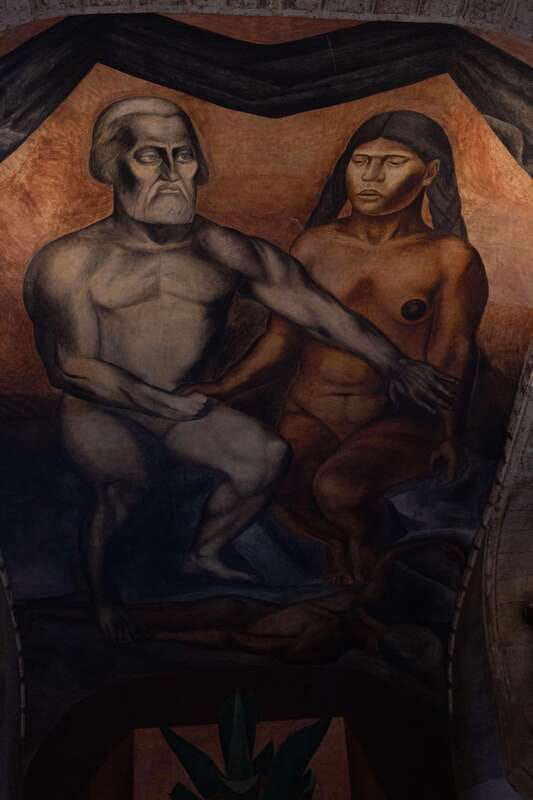
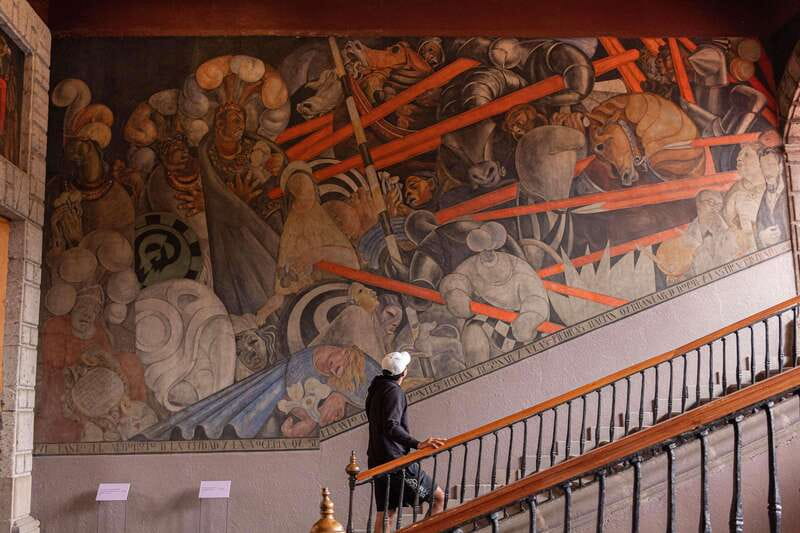
Orozco often brings a more tragic and forceful view of conflict. Siqueiros is associated with movement, intensity, and modern political conviction. Rivera’s work can appear more orderly and narrative by comparison. You do not need an art degree to follow these contrasts. The guide’s job is to point out how composition, figures, and subject matter create different kinds of political messages.
The entrance ticket to Bellas Artes costs about 90 Mexican pesos, listed as roughly $5. Photography rules, temporary exhibitions, and museum conditions can change, so check current details before you go. The key practical point is simple: the advertised price does not cover this admission.
Walking 5 de Mayo and Madero toward the Zócalo
After the first museum visit, you walk for about 15 minutes along 5 de Mayo and Madero Street. This section is short, but it keeps the experience from becoming a string of indoor galleries.
Look up as you walk. The route passes neoclassical and baroque-style palaces, giving you a quick architectural reading of central Mexico City. The buildings help explain why the murals were placed in public institutions rather than hidden in private collections. The streets themselves connect government, religion, commerce, and civic life.
The walk leads toward the Zócalo, Mexico City’s great central square. The formal guided portion here is listed at about 10 minutes, so expect a brief orientation rather than a full city tour. That is enough to connect the public setting to the public purpose of muralism.
This part may be less satisfying if you want a long architectural walk or extensive time in the square. The focus remains muralism. Still, I would not skip it. A short outdoor break also helps the pace, especially after an hour inside Bellas Artes.
San Ildefonso and the early mural movement
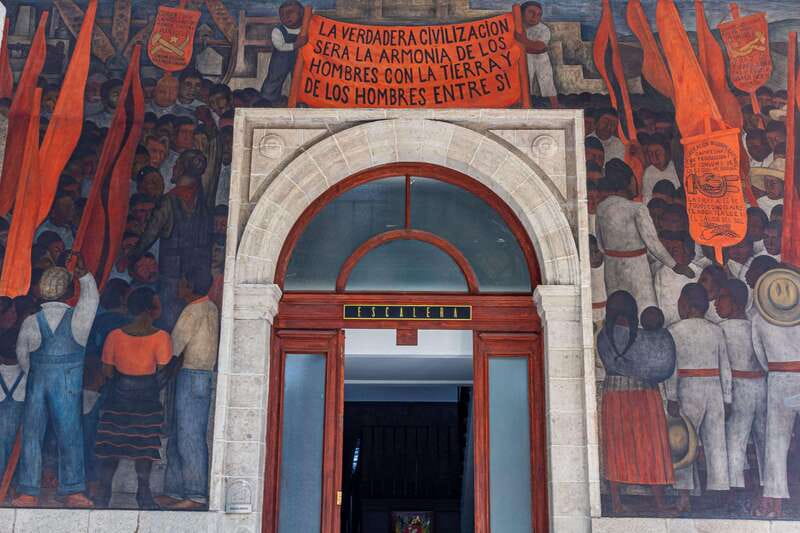
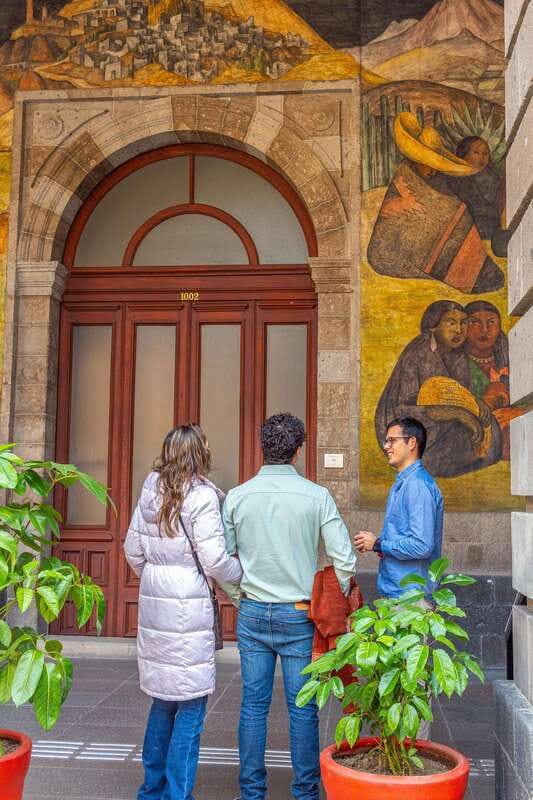
The next major stop is the Former College of San Ildefonso, now the San Ildefonso Museum. This is where the tour moves from famous individual works to the setting in which Mexican muralism first took shape.
The museum is especially useful because it helps explain the movement’s working conditions and audience. Murals were painted on large public walls, where students, workers, officials, and ordinary passersby could see them. The art was not meant only for a small room of collectors.
Expect a guided visit rather than a quick independent look. The guide uses the murals to discuss the movement’s dynamics, including how artists presented history, social struggle, education, and national identity. This is also a good place to ask about artists beyond the usual trio.
One person who deserves more attention is Rufino Tamayo. Another is Jorge González Camarena, whose work broadens the picture of Mexican mural art. The strongest feedback about this experience points out that it does not stop with Rivera. That is a real benefit if you already know the basic Rivera story and want a wider view.
Admission to San Ildefonso costs about 50 Mexican pesos, or roughly $3. Add this to the Bellas Artes ticket when planning your budget. The museum stop is valuable, but time is the tradeoff. If you are the sort of art lover who reads every wall label and studies every panel, you may wish for a longer visit than a 2.5-hour walking experience can provide.
A few more mural tours around Mexico worth a look
- Cancun Street Food Tour with Food Stalls, Local Market and Murals
★ 5.0 · 723 reviews - Mexico City; ART NACO : Murals & Street Art Bike Tour
★ 5.0 · 284 reviews - History and Murals: Walking Tour Guadalajara
★ 5.0 · 237 reviews - Walking Tour – Impressive murals in Historical Center of Mexico City
★ 5.0 · 224 reviews
Finishing with Rivera at Museo Vivo del Muralismo
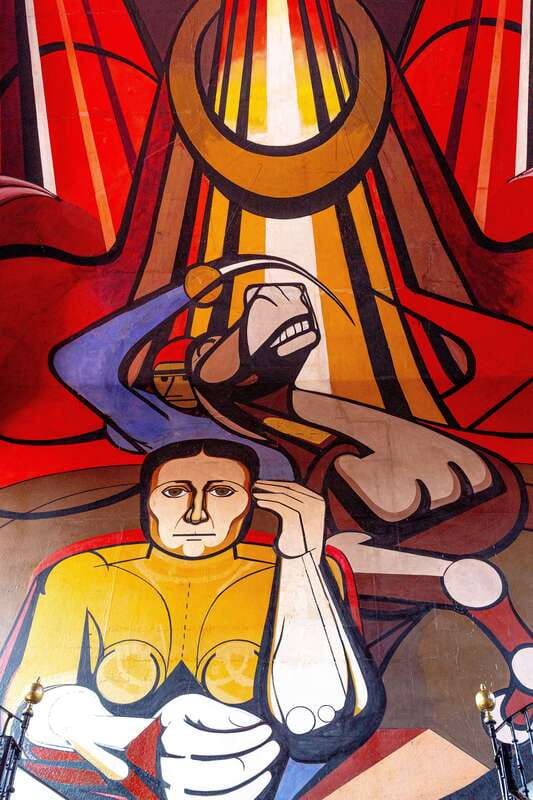
The final stop is Museo Vivo del Muralismo, where the experience ends. The guided portion here is listed at about 45 minutes.
The headline number is striking: the museum houses 248 murals by Diego Rivera. That makes the last stop a strong finish for anyone who wants to see how one of Mexico’s best-known artists worked across a large body of material rather than judging him from a single famous image.
The museum also includes newer art, ceramics, and pre-Hispanic murals. That wider collection matters because it places muralism within a longer Mexican artistic tradition. You are encouraged to see connections between older visual forms, modern public art, and later work.
The name can cause a little confusion. This is not an outdoor street-art walk. It is a museum visit with a major mural collection, and the tour ends there. If you are hoping to return to Bellas Artes afterward, plan your own transport and schedule separately.
The 45-minute visit should give you a useful overview. It may not be enough for a slow, private study of all the works, but it gives you a substantial final chapter after the earlier stops.
How much the $52 price is worth
The listed price is $52 per person. You also need around $8 for entrance tickets, bringing the likely total to about $60 before any personal spending.
That is not the cheapest way to see these museums. You are paying for interpretation, organization, and a connected route through several major art sites. If you visited each place alone, you might save money, but you would also need to build the historical links yourself.
For me, the value depends on your interest level. If you mainly want quick photographs of famous buildings, the price is harder to justify. If you want to understand why Mexican muralism matters and how Rivera, Orozco, Siqueiros, Tamayo, and Camarena differ, the cost is more reasonable.
The bilingual guide is included, and the tour is available in English, Spanish, Portuguese, German, Italian, and Russian. The language range is a practical strength, especially for people who would find an art discussion difficult in a second language.
The experience also allows free cancellation up to 24 hours before departure, and you can reserve now while paying later. Those terms help if your Mexico City plans are still shifting, though the main value remains the guide rather than the booking flexibility.
Who will get the most from this experience
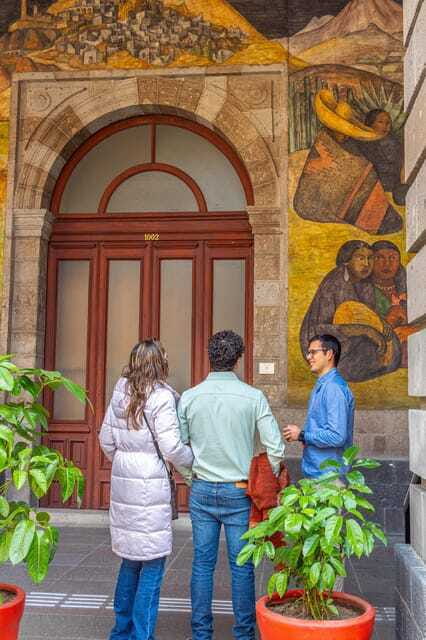
I would choose this tour if you want context, conversation, and a clear introduction to Mexican art. It suits people who know Rivera’s name but want to understand the larger movement. It also works for serious art lovers who prefer asking questions to reading labels alone.
The tour is particularly useful early in a Mexico City visit. You can later return to a museum with a sharper eye, noticing political symbols, historical references, and differences in painting style that might otherwise pass unnoticed.
It is less suited to someone who wants a relaxed museum day. The schedule covers multiple sites in 2.5 hours, so the pace has a purpose. You will walk between venues, listen to explanations, and keep moving.
It may also disappoint if your only goal is to see every mural at length. This is a guided overview with depth in its discussion, not an all-day art seminar.
The group limit of 10 helps. It is small enough for a personal exchange, but it is still a group walk. If several people ask detailed questions, the timing at each location may shift.
Practical tips for a smoother visit
Meet outside the main gate of Palacio de Bellas Artes, not at a later museum. Arriving with a little extra time is sensible because the building and surrounding streets can be busy, and finding the exact meeting point is easier before the group gathers.
Wear comfortable walking shoes. The route includes the museum interiors and a walk along 5 de Mayo and Madero, followed by more standing and walking at San Ildefonso and Museo Vivo del Muralismo.
Keep about $8 in Mexican pesos or equivalent funds for the two admissions. The listed prices are 90 pesos for Bellas Artes and 50 pesos for San Ildefonso, but exchange rates and museum policies can change.
Choose the guide language carefully when booking. English, Spanish, Portuguese, German, Italian, and Russian are listed, giving you a good chance to follow the political and artistic discussion without strain.
Finally, bring questions. José Vicente is praised for engaging dialogue rather than a memorized script. Asking about a symbol, a historical figure, or the difference between Rivera and Siqueiros will make the experience more useful.
Should you book Mexican muralism with a true art lover?
Book it if you want to see Mexico City’s murals as political and cultural documents, not just colorful backdrops. The route links three important institutions, includes a short historic-center walk, and gives real attention to Rivera, Orozco, and Siqueiros while leaving room for other artists.
I would especially recommend it to first-time visitors who want a strong foundation, and to returning visitors who feel they have seen Rivera but have not yet understood the broader movement. The $52 price plus admissions is fair when you value expert discussion and a carefully connected route.
Skip it if you want hours of quiet museum time or a simple highlight reel. For everyone else, the small group, multilingual options, and unusually strong praise for José Vicente’s teaching make this one of the better ways to begin understanding Mexican muralism.
FAQ
Where does the tour begin?
It begins outside the main gate of Palacio de Bellas Artes in Mexico City.
Where does the tour finish?
The tour finishes at Museo Vivo del Muralismo.
How long does the experience last?
The experience lasts 2.5 hours.
How much does the tour cost?
The listed price is $52 per person.
Are museum tickets included?
No. You should plan for about $8 in total admission costs per person, including about 90 Mexican pesos for Bellas Artes and 50 Mexican pesos for San Ildefonso.
Which languages are available?
The tour is offered in English, Spanish, Portuguese, German, Italian, and Russian.
How large is the group?
The group is limited to 10 participants.
Just added around Mexico
- Xochimilco floating gardens, Coyoacan and UNAM murals★ 4.0 · 6 reviews
- UNAM: Murals & Revolution★ 4.9 · 8 reviews
- Street Art & Cemetery Cultural Tour – half day★ 5.0 · 3 reviews
- Graffitis & Munchies biketour Playa del Carmen★ 4.5 · 18 reviews
- Street Art Walk★ 4.5 · 7 reviews
- Tour Women Muralists : Strokes that resist Mexico City★ 5.0 · 7 reviews
- Diego Rivera’s murals, hidden treasures★ 5.0 · 21 reviews
- Mexico City Private Tour with Teotihuacan, Murals, Guadalupe Basilica★ 3.0 · 2 reviews
Mexico City Mural Tours, compared.
Xochimilco, Coyoacan, Frida Kahlo Museum & Murals Tour
Read our review →
Walking Tour – Impressive murals in Historical Center of Mexico City
Read our review →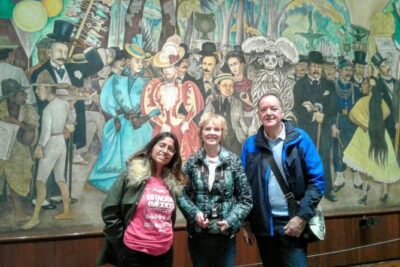
La Catrina & Muralism: Diego Rivera’s Legacy & Frida Kahlo
Read our review →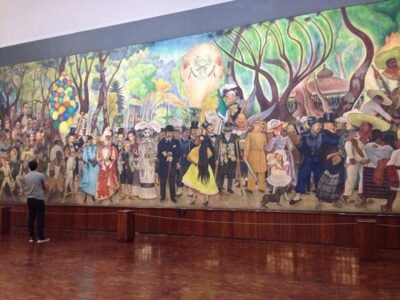
Muralist Art Semi Private Walking Tour in Mexico City Downtown
Read our review →
Xochimilco floating gardens, Coyoacan and UNAM murals
Read our review →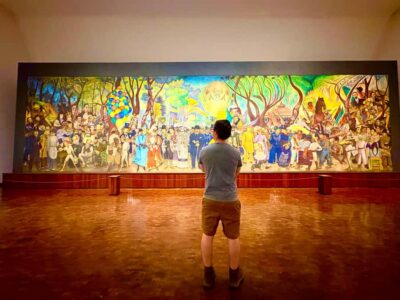
Browse the lists this tour appears in