
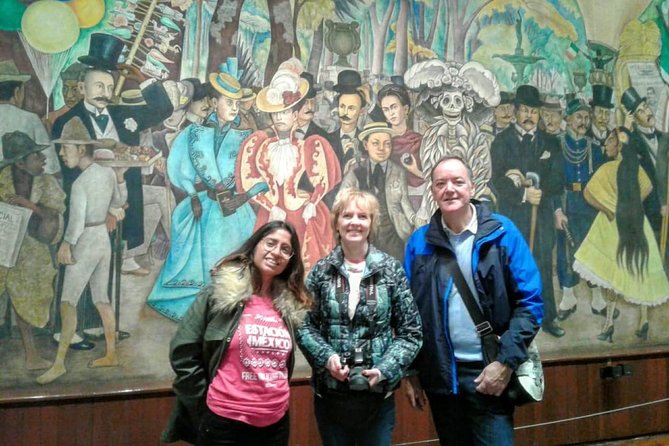
REVIEW · MEXICO CITY MURAL TOURS
La Catrina & Muralism: Diego Rivera’s Legacy & Frida Kahlo
Murals tell Mexico’s story. This three-hour tour links Diego Rivera, Frida Kahlo, La Catrina, and the birth of Mexican muralism across several important art sites. I like the way it connects paintings to politics, memory, and national identity instead of treating the murals as pretty backdrops. I also like the local guide approach, with English and Spanish tours led by art enthusiasts such as Jesús, Sam, Aldo, and Luís.
The main consideration is pace. You cover several places on foot, with about 20 minutes on public transport between stops, so comfortable shoes matter. Large bags, luggage, food, baby carriages, and flash photography are not allowed, and the tour price does not include meals or transportation to the meeting point.
Key points to know before you go
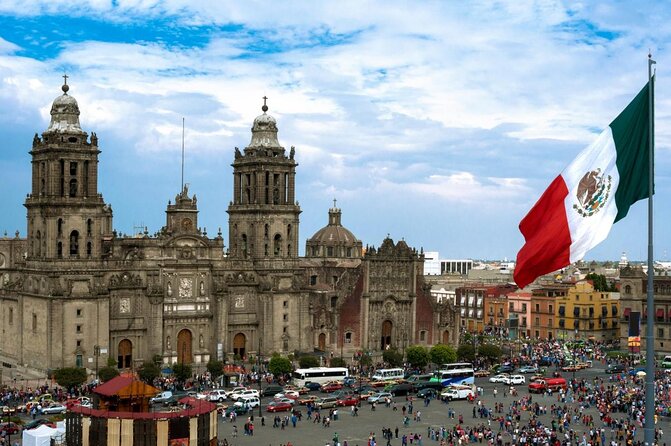
- Start at San Ildefonso: The former college is presented as the birthplace of Mexican muralism and the place connected to Rivera and Kahlo’s early romance.
- Follow the story across four art sites: You visit San Ildefonso, Museo Vivo del Muralismo, the Diego Rivera Mural Museum, and the Palace of Fine Arts.
- See La Catrina in context: The famous skeleton figure is explained as a Day of the Dead symbol with a long cultural life in Mexico.
- Expect interpretation, not just sightseeing: The guide explains mural techniques, symbols, social criticism, and the history behind the scenes.
- Plan for a walking tour: The route lasts three hours and includes public transportation, so wear supportive shoes and bring sunscreen.
- Pay for access to a specialist guide: At $58 per person, the value depends on how much you want the historical and artistic meaning explained.
Why Rivera’s murals need a guide
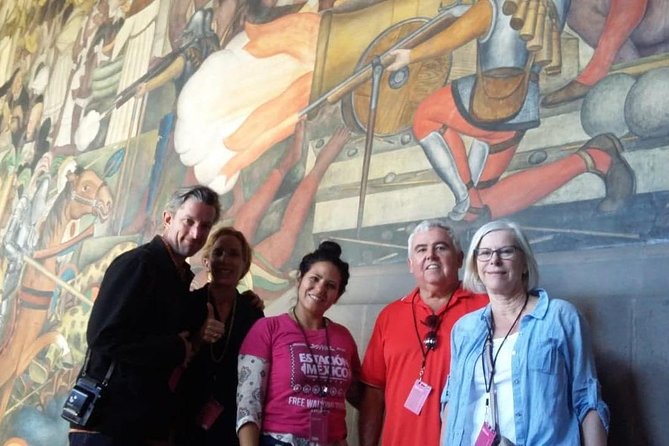
Diego Rivera’s murals can look clear at first glance. Workers, farmers, political leaders, skeletons, factories, and historic figures fill the walls. But the meaning often sits below the surface. A guide can show you who is represented, why certain figures appear together, and how the image reflects Mexico’s changing sense of itself.
That is the main reason I see value in this experience. You are not simply moving from one famous building to another. You are following an artistic idea: public art should speak to ordinary people and carry national history into shared spaces.
The tour places Rivera within the wider mural movement. You learn about the earliest stages of muralism, the techniques artists used, and the social criticism built into the work. The focus is not only on Rivera’s biography. It is also on how murals helped shape Mexican cultural identity.
That approach suits you if you enjoy art with a political and historical purpose. If you prefer quiet museum time, long independent visits, or a tour focused only on Frida Kahlo, the three-hour route may feel too guided and too tightly packed.
More Muralism Tours in Mexico:
- CDMX: Xochimilco, Coyoacan, Frida Kahlo Museum & Murals Tour
★ 4.4 · 3,025 reviews - La Catrina & Muralism: Diego Rivera’s Legacy & Frida Kahlo
★ 4.5 · 197 reviews - Muralist Art Semi Private Walking Tour in Mexico City Downtown
★ 5.0 · 188 reviews
San Ildefonso: the opening chapter
The meeting point is in front of the entrance to the former College of San Ildefonso. Guides wait in pink shirts and carry umbrellas, a useful detail in a busy city where finding a group can take a few minutes.
This first stop sets the tone. San Ildefonso is described as the birthplace of muralism, so the guide begins with Rivera’s artistic vision and the movement’s place in Mexico’s cultural life. You get the basic background before seeing later works, which makes the rest of the route easier to follow.
The building also carries a personal connection. This is where the relationship between Diego Rivera and Frida Kahlo began, a romance that was passionate and difficult. That connection gives the visit a human angle, but the tour does not treat their relationship as celebrity gossip. Instead, it helps explain the personal and artistic forces around Rivera’s work.
I like this balance. You hear about Kahlo because she matters to Rivera’s story and to Mexico’s modern art identity, but the route remains centered on muralism. The guide’s job is to connect the people, the building, and the art without reducing everything to a love story.
San Ildefonso is also where you begin looking closely at murals as historical documents. Watch for the way the guide moves between visual details and larger events. You may see how a worker’s pose, a political figure, or a traditional symbol carries a message beyond the painted surface.
Museo Vivo del Muralismo and the movement’s first ideas
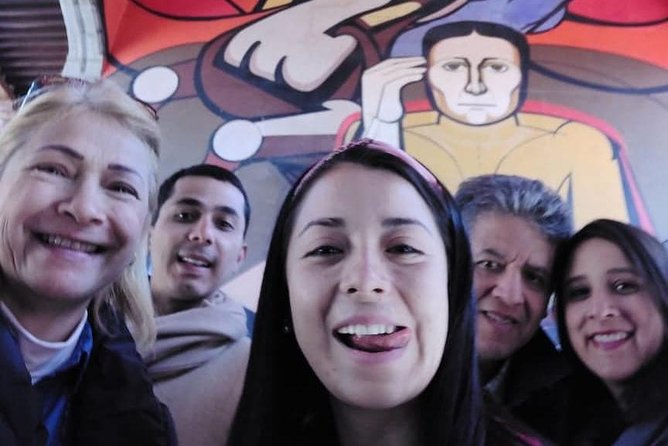
The next stop is Museo Vivo del Muralismo, where the focus remains on the development of Mexican muralism. This part of the tour gives you space to understand the movement as a group effort rather than a one-man achievement.
The useful question here is not only who painted a mural. It is why murals mattered in public life. A wall can reach people who may never enter a formal gallery. It can present a version of Mexican history in a place where communities work, study, or pass through every day.
Your guide explains the historical context and the methods behind the paintings. This is where a good explanation can change the visit. Rather than seeing a large scene as one busy image, you learn to break it into figures, symbols, social groups, and visual choices.
The tour also examines the tension between beauty and criticism. Rivera’s work can be visually powerful while making pointed comments about class, labor, political authority, and the direction of Mexico. You are encouraged to see both sides at once.
The stop should appeal to families and first-time visitors. Jesús received especially strong praise for keeping children ages 10 and 12 involved during the route, which suggests that the explanations can work for younger listeners when the guide adjusts the pace and language. That is useful if you are planning a first Mexico City visit with children who may not normally choose an art tour.
The 20-minute public transport connection
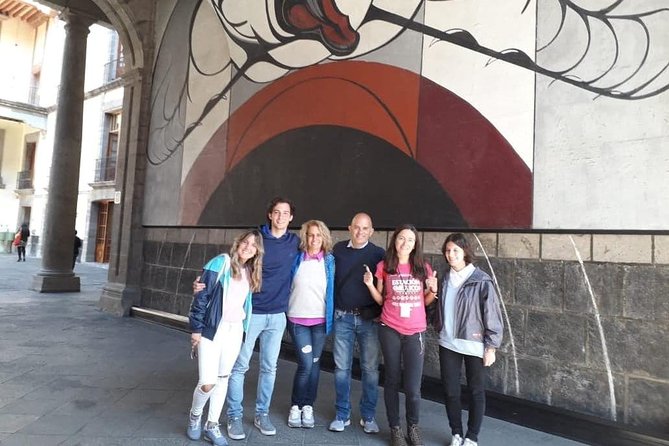
Between the central stops, the group uses public transportation for about 20 minutes. This is a small but important part of the plan. The tour is not a private vehicle excursion, and you should expect the route to feel like a city walk with transit rather than a door-to-door museum transfer.
Public transport keeps the experience connected to the city itself. You move through Mexico City as people do in daily life, then arrive at another place where art and memory meet. At the same time, it adds a little uncertainty to the rhythm of the tour. You should allow energy for walking, standing, and moving with the group.
Wear comfortable shoes and use sunscreen. A small amount of practical preparation makes a big difference, especially because large bags and luggage are not allowed. Food and flash photography are also prohibited, and baby carriages are not permitted.
The experience is listed as wheelchair accessible, though the route still involves walking. If mobility details are important for you, confirm the current conditions with the provider before booking, particularly because the tour includes several venues and public transportation.
A few more mural tours around Mexico worth a look
- Cancun Street Food Tour with Food Stalls, Local Market and Murals
★ 5.0 · 723 reviews - Mexico City; ART NACO : Murals & Street Art Bike Tour
★ 5.0 · 284 reviews - History and Murals: Walking Tour Guadalajara
★ 5.0 · 237 reviews - Walking Tour – Impressive murals in Historical Center of Mexico City
★ 5.0 · 224 reviews
Diego Rivera Mural Museum and La Catrina
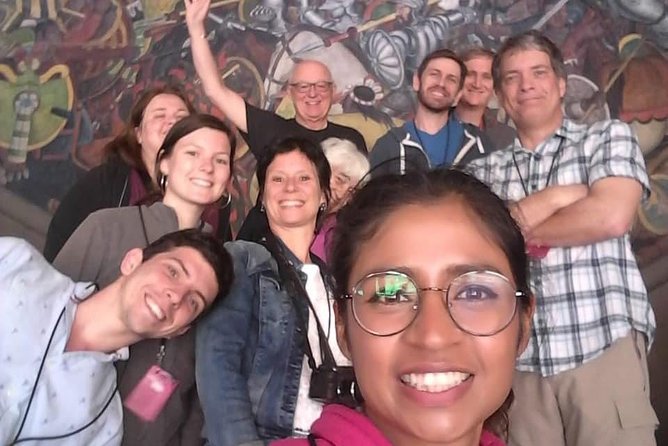
The Diego Rivera Mural Museum is one of the clearest reasons to choose this route. Here, Rivera’s legacy receives its most direct attention, and the famous depiction of La Catrina becomes a central point of the visit.
La Catrina is widely recognized as a symbol of the Day of the Dead. Her image now appears in films, celebrations, and Mexico City’s famous Day of the Dead parade. The tour places her within the history of Rivera’s art and explains why the figure has such lasting power.
You will want to look beyond the skull. La Catrina is not presented as a simple decoration or a spooky mascot. She represents a cultural idea tied to death, memory, social identity, and the way Mexican traditions can challenge the powerful. The guide explains the symbol’s meaning and shows how Rivera used it within a larger scene.
This is likely the most memorable stop for many first-time visitors because the image is instantly recognizable. It is also a good place to practice the tour’s main skill: reading a mural in layers. First, notice the composition. Then identify the people and symbols. Finally, ask what the scene says about Mexican society.
Sam was praised for explaining the symbolism beneath Rivera’s murals, and that is exactly the kind of help this stop requires. Without context, La Catrina is striking. With context, she becomes part of a much larger conversation about history and social criticism.
Palace of Fine Arts: ending with Mexico’s grand stage
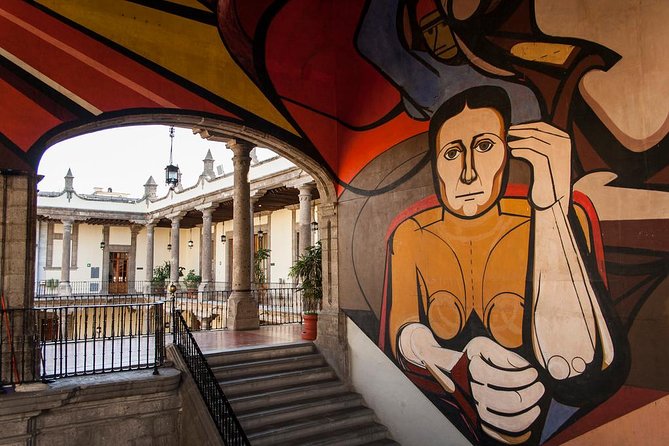
The tour finishes at the Palace of Fine Arts, also known as Palacio de Bellas Artes. This final stop brings the mural story into one of Mexico City’s best-known cultural buildings.
The ending is practical as well as artistic. Since the tour finishes at the palace, you can continue exploring the area afterward if your schedule allows, though the experience itself ends there. The supplied details do not specify extra free time or admission beyond the guided visit, so do not assume that every part of the building is included outside the tour plan.
At Bellas Artes, the guide ties together the ideas introduced earlier: Rivera’s role, the development of muralism, the connection between art and public memory, and the way Mexican artists used large-scale painting to speak about society.
The route’s structure works well because the final stop does not arrive out of nowhere. You have already learned how to look at murals, so you can better understand why a grand cultural venue matters. The art is not isolated from national life. It is part of the way Mexico presents its history and values.
What the guides add to the experience
The quality of this tour depends heavily on the guide. The strongest feedback centers on clear explanations, patience, enthusiasm, and the ability to connect art with Mexican history.
Jesús is noted for keeping a family group engaged. Sam is praised for explaining symbolism below the surface. Aldo is described as patient and kind while discussing Mexico’s past, Rivera’s paintings, historical sites, and the amphitheater connected to Rivera and Kahlo. Luís is praised for explaining Mexican history and culture through Rivera’s work in clear terms.
You may not receive the same guide on every departure, but the named guides show the kind of experience the provider aims to offer: personal, informed, and focused on meaning rather than speed.
A local guide also gives you a viewpoint that a museum label cannot. You can ask questions, pause over details, and hear how the guide connects a painting to Mexican life. That is especially useful if you are new to Rivera or are visiting Mexico City for the first time.
The tour is offered in Spanish and English. When booking, check the available language and start time. You should also arrive at the San Ildefonso entrance and look for the pink shirts and umbrellas.
Is $58 per person a fair price?
At $58 per person, this is not the cheapest way to see murals. You still pay for your own food and drinks, and transportation to the starting point is not included. The price also makes most sense if you value guided interpretation rather than simply entering buildings and looking around on your own.
I think the cost is reasonable for visitors who want one focused route through several important places. You receive three hours of guiding, a planned sequence, historical background, and help understanding symbols that can be easy to miss.
The value is lower if you already know Rivera’s work well, speak confidently about Mexican muralism, or prefer to spend a long time studying one museum. This is a broad introduction rather than a slow research visit.
There is also flexibility built into the booking terms. You can reserve now and pay later, and cancellation is allowed up to 24 hours in advance for a full refund. Those conditions help if your Mexico City schedule is still changing.
Who should book this mural tour?
I would recommend it to first-time visitors who want cultural context early in a Mexico City trip. It gives you a useful framework for understanding Rivera, Kahlo, public art, and La Catrina before you encounter related images elsewhere.
Families may also find it a good fit. The route has several changes of setting, and Jesús’s work with children suggests that the subject can be made accessible without flattening the history.
Art lovers should book if they want to study mural symbolism and technique with help from a guide. The tour is also a good choice for anyone curious about how art can carry political and cultural messages.
I would hesitate if you dislike walking, cannot manage a 20-minute public transport segment, or need to carry a large bag. The wheelchair-accessible designation is helpful, but the walking requirement and transit portion still deserve attention when planning.
Should you book La Catrina and Muralism?
Book this tour if you want Rivera’s paintings to make sense, not merely look impressive. The strongest part is the connection between mural technique, Mexican history, La Catrina, and the complicated story of Rivera and Kahlo.
The best practical choice is to take it near the start of your Mexico City visit, when the background can shape what you see later. Bring comfortable shoes, sunscreen, and only what you need. If $58 fits your budget and you prefer a guided cultural experience, this route offers a focused and thoughtful introduction to one of Mexico’s most important art movements.
FAQ
Where does the tour begin?
The tour begins in front of the entrance to the former College of San Ildefonso. Guides can be identified by their pink shirts and umbrellas.
Where does the tour finish?
The tour finishes at the Palace of Fine Arts, also called Palacio de Bellas Artes.
How long does the experience last?
The tour lasts three hours.
What languages are available?
The live tour guide is available in English and Spanish.
Is transportation to the meeting point included?
No. Transportation to the starting point is not included. The route itself includes about 20 minutes of public transportation between stops.
Are meals and drinks included?
No. Meals and drinks are not included.
Is the tour wheelchair accessible?
Yes, the activity is listed as wheelchair accessible. It also involves walking and public transportation.
What should I bring?
Bring comfortable shoes and sunscreen.
Can I bring luggage or a large bag?
No. Luggage and large bags are not allowed. Bags, food, flash photography, and baby carriages are also listed as not allowed.
Can I cancel the booking?
Yes. You can cancel up to 24 hours in advance for a full refund. You can also reserve now and pay later.
Just added around Mexico
- Xochimilco floating gardens, Coyoacan and UNAM murals★ 4.0 · 6 reviews
- UNAM: Murals & Revolution★ 4.9 · 8 reviews
- Street Art & Cemetery Cultural Tour – half day★ 5.0 · 3 reviews
- Graffitis & Munchies biketour Playa del Carmen★ 4.5 · 18 reviews
- Street Art Walk★ 4.5 · 7 reviews
- Tour Women Muralists : Strokes that resist Mexico City★ 5.0 · 7 reviews
- Diego Rivera’s murals, hidden treasures★ 5.0 · 21 reviews
- Mexico City Private Tour with Teotihuacan, Murals, Guadalupe Basilica★ 3.0 · 2 reviews
Mexico City Mural Tours, compared.
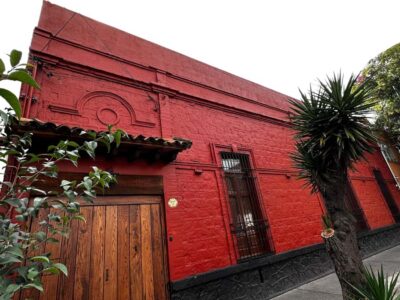
Xochimilco, Coyoacan, Frida Kahlo Museum & Murals Tour
Read our review →
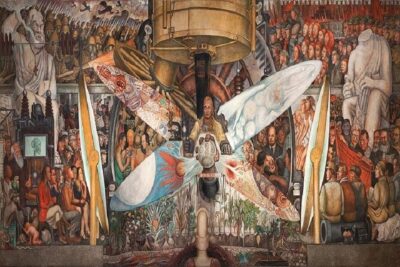
Walking Tour – Impressive murals in Historical Center of Mexico City
Read our review →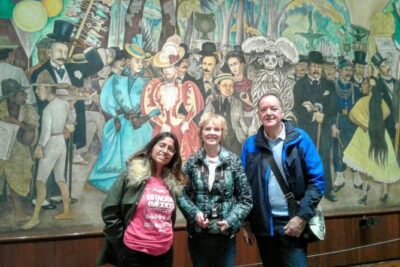
La Catrina & Muralism: Diego Rivera’s Legacy & Frida Kahlo
Read our review →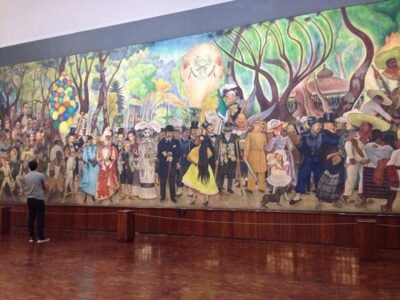
Muralist Art Semi Private Walking Tour in Mexico City Downtown
Read our review →
Xochimilco floating gardens, Coyoacan and UNAM murals
Read our review →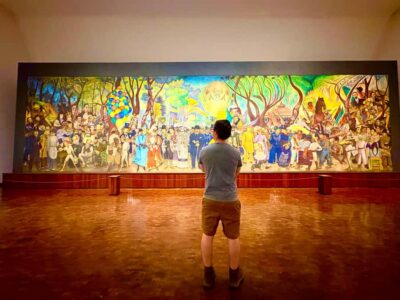
Browse the lists this tour appears in