
REVIEW · JOHANNESBURG MURAL TOURS
Johannesburg: Street Art and Culture in Maboneng!
Art tells the city’s story. This two-hour walk through Maboneng connects striking murals with Johannesburg’s mining past, apartheid-era memories, and its changing inner-city life. I especially like the focus on both local and international artists, and the chance to hear about Maboneng from guides with personal ties to the area. The main drawback is that two hours goes quickly, so this is an introduction rather than a full tour of Johannesburg’s art scene.
I also like the relaxed start at Home of the Bean, where you can get coffee before walking. The stop at the Hideout Bar adds a curious historical layer, while the Maboneng Arts Village gives you a look at working artists and local creative businesses. You pay about $40 per person, so the value depends on how much context you want with the murals rather than simply taking photographs.
Ayanda receives the strongest praise, with visitors describing him as warm, articulate, funny, and deeply familiar with the neighborhood. Other guides, including Bonny, Kaiser, and Michael, have also led the walk. Bring a payment card or some cash if you may buy art, crafts, food, or drinks along the way.
Key points to know before you book
- Maboneng’s transformation is central: You learn how an old industrial district changed from 2009 into a popular arts and food precinct.
- The art comes with context: Murals by artists such as ESPO Powers and DBongz are explained through their themes, creators, and place in Johannesburg’s street-art culture.
- The walk begins with coffee: Meet inside Home of the Bean at Fox and Berea Streets, beneath the bridge.
- The Hideout Bar adds a historical twist: This space at Curiocity Backpackers is described as an alleged former hiding place for Nelson Mandela and other anti-apartheid activists.
- Local life is part of the route: You see galleries, informal traders, shops, restaurants, and residents using the neighborhood in everyday ways.
- You need sensible city habits: Stay with the guide, keep valuables secure, and use the tour as your introduction to Maboneng rather than wandering unfamiliar streets alone.
Starting at Home of the Bean under the bridge
The meeting point is Home of the Bean, at the corner of Fox and Berea Streets. It occupies an old industrial-looking building beneath the bridge, so do not expect a polished hotel lobby or a large tour office. If you arrive early, wait inside the coffee shop.
This is a good meeting place because the tour begins with a short safety briefing and time for coffee. The coffee is not included, and food and drinks throughout the walk are your own expense. That gives you some control: grab a quick drink and start walking, or order something more substantial if your schedule allows.
The operator usually sends a WhatsApp message or text around 30 minutes before the start. That is useful in a city where meeting points can be confusing, especially if you are arriving by car or using a rideshare. One visitor also received help arranging a parking spot near the meeting point.
The initial briefing lasts about 15 minutes. Take it seriously without becoming nervous. Maboneng is an active inner-city neighborhood, not a closed museum. The guide can explain how to move through the area, where to keep an eye on your belongings, and how to handle purchases from street artists and informal traders.
A few more mural tours around the world worth a look
- Medellin: Comuna 13 Graffiti Tour, Cable Car & Street Food
★ 4.8 · 9,046 reviews - CDMX: Xochimilco, Coyoacan, Frida Kahlo Museum & Murals Tour
★ 4.4 · 3,025 reviews - Amsterdam: Streetart Museum STRAAT Entrance Ticket
★ 4.8 · 2,137 reviews
Walking through Maboneng’s industrial past
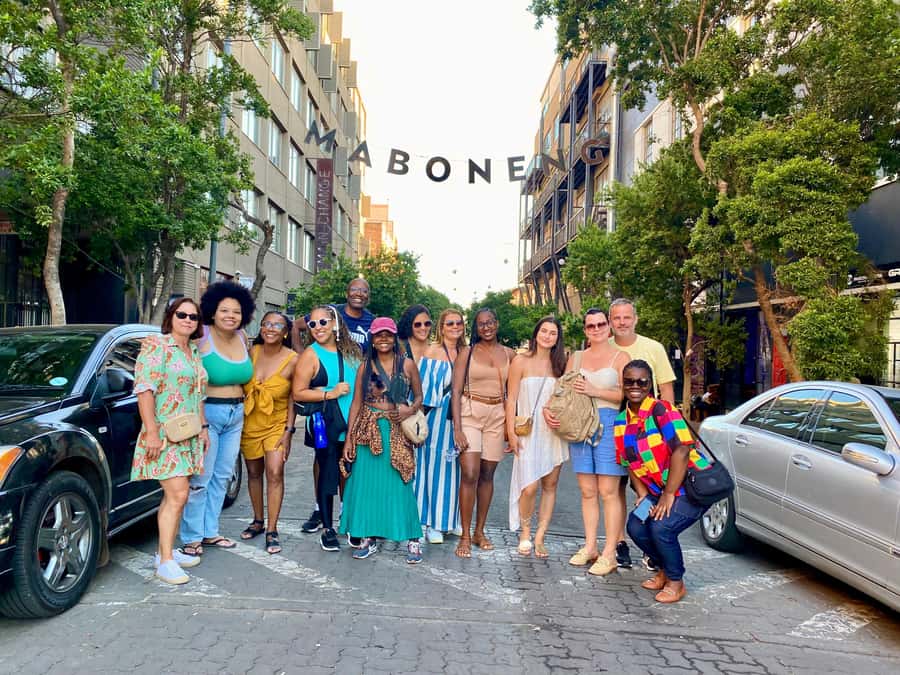
The first major part of the walk introduces Maboneng as a former industrial and mining-linked area. The name means Place of Light, and the tour uses that idea to explore what the neighborhood has become since its redevelopment began in 2009.
What makes this useful is the contrast. You are not simply looking at colorful walls in a fashionable district. You are seeing old industrial buildings, new creative businesses, art spaces, restaurants, and public areas placed beside one another. The guide explains how this change was funded and what the redevelopment was meant to achieve.
That context matters because regeneration can be both exciting and complicated. A neighborhood can gain restaurants, galleries, and safer public spaces while also becoming more expensive and more appealing to outsiders. The tour does not treat Maboneng as a perfect success story. The discussion of gentrification and redevelopment helps you think about who benefits from the changes and how local life is affected.
Several people who took the walk appreciated learning about the area’s development rather than hearing only a list of dates. Ayanda, in particular, is praised for speaking from personal experience of Maboneng and for explaining Johannesburg in a wider South African context.
Reading the murals, from ESPO Powers to DBongz
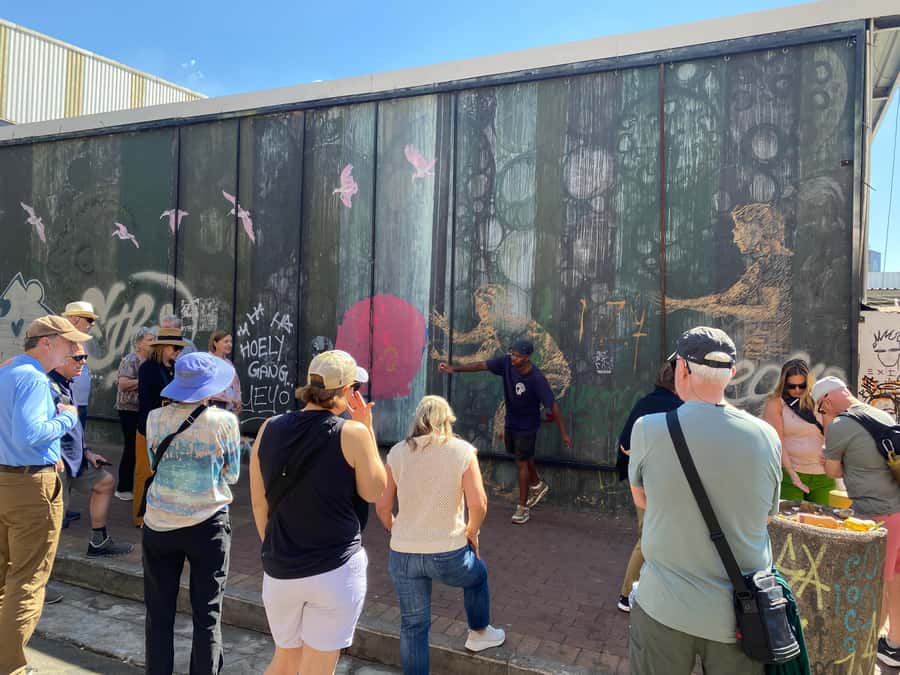
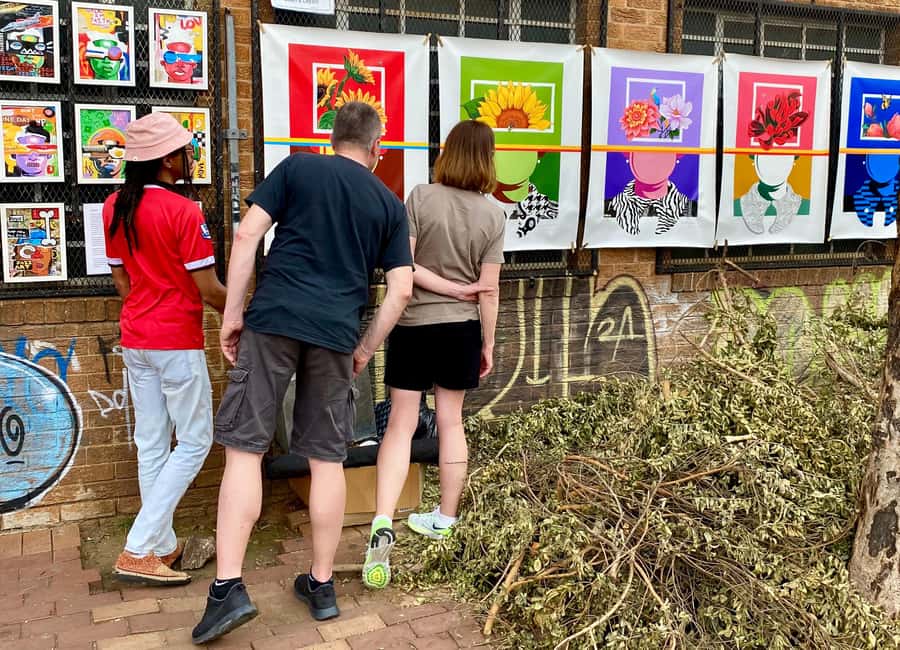
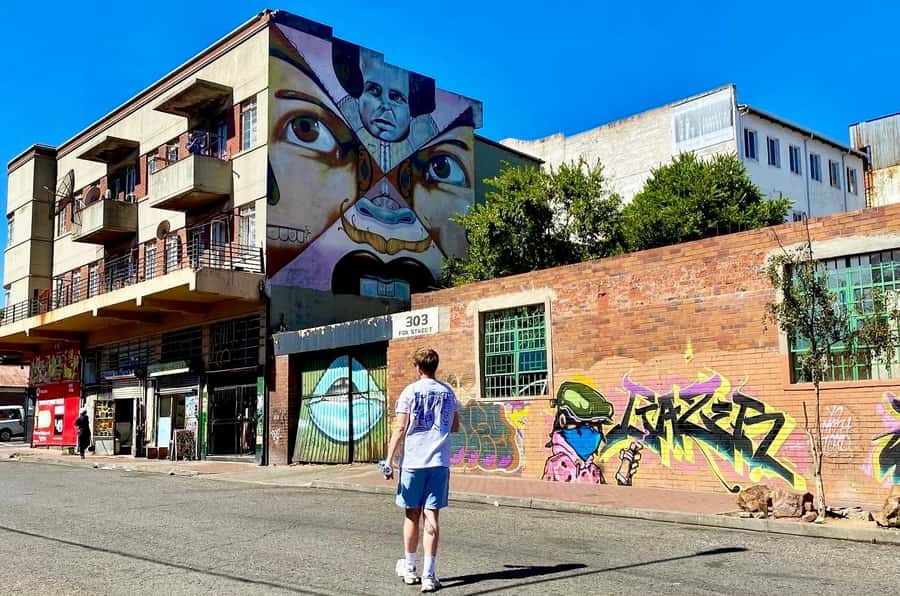
Street art is the main reason to book this walk, but the guide makes it more than a photo stop. You look at murals by local and international artists, including ESPO Powers and DBongz, while hearing about the people who made them and the ideas behind their work.
The route helps you notice details you could easily miss alone. A mural may reflect identity, politics, city life, memory, or the social questions facing Johannesburg. The guide also explains the difference between commissioned public art and the wider graffiti culture that grew through informal creative networks.
This is where a guide adds real value. Without background, you might walk past a wall, snap a picture, and move on. With context, the artwork becomes a way to think about the city. Several comments praise the explanations of individual artists and the stories behind particular pieces.
The art is not presented as a single style. You can expect different approaches, from large painted walls to more informal street work. Some pieces may change over time, as public art is repainted, weathered, or covered. That is part of the nature of street art, but it also means the exact selection may vary.
If you enjoy photography, allow yourself time to look up, behind corners, and across building fronts. The guide will direct your attention, but you should still bring a charged phone or camera. The walk is short enough to stay focused, yet varied enough that you will probably want more time at certain walls than the schedule allows.
A stop at Maboneng Arts Village
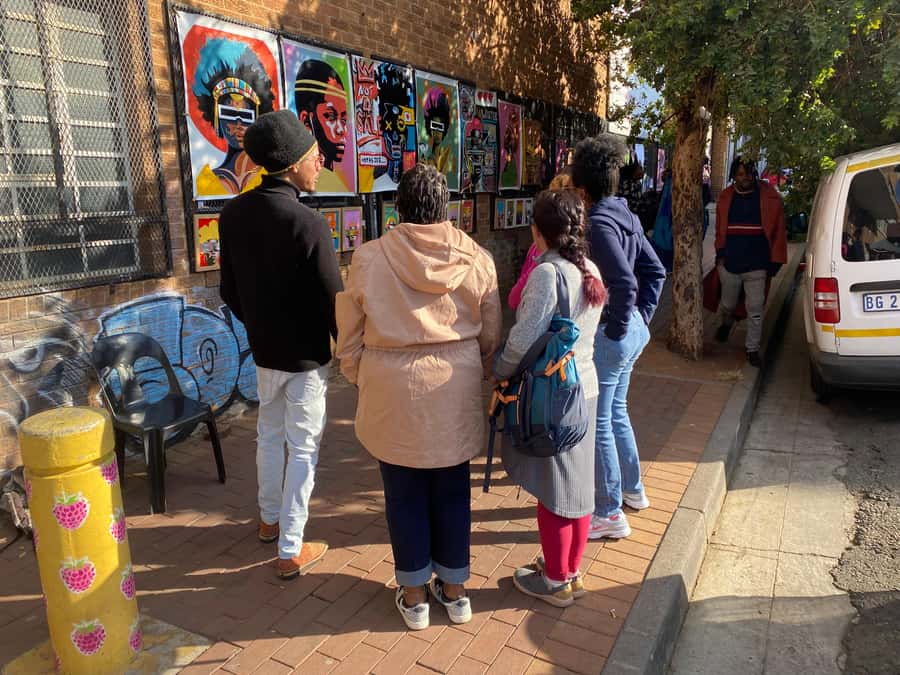
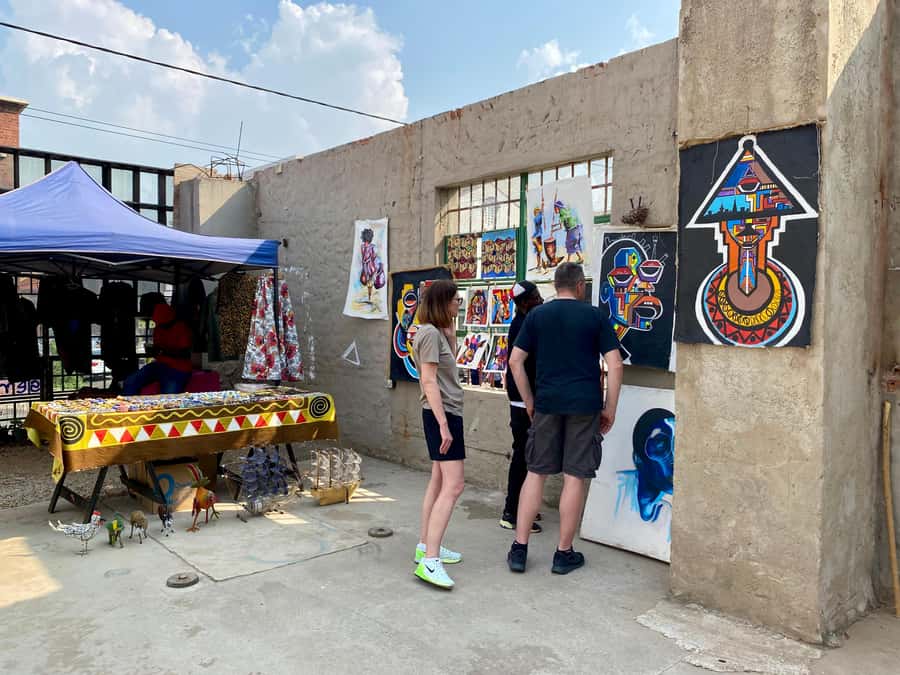
Maboneng Arts Village provides a more direct link to artists and makers. It is a space where creatives can sell their work, so the stop gives you a chance to browse rather than simply observe art on a wall.
This part is useful if you want to take home something connected to Johannesburg. Bring cash or a card if you might buy a piece, craft, gift, or small item. Purchases are not included, and you should not feel obliged to buy anything. The value of the stop is also in seeing how art functions as a livelihood within the neighborhood.
The area includes curio and gift stores, galleries, restaurants, and informal traders. That mixture gives you a better sense of Maboneng than a route limited to polished venues. You see the creative economy, but you also see people working, shopping, eating, and moving through the district.
Do not expect a large, formal gallery visit with a long time for quiet viewing. This is a walking tour, so the stop is part of a wider story. If you want to spend hours shopping or studying art, plan a return visit.
Same walls, a different guide:
- Belfast: Murals Taxi Tour
★ 4.9 · 2,047 reviews - Wynwood Graffiti Golf Cart Small-Group Tour
★ 5.0 · 1,646 reviews - London: Street Art and Graffiti Guided Walking Tour
★ 4.9 · 1,354 reviews - Lisbon: Street Art Tour
★ 4.9 · 1,324 reviews
The Hideout Bar and Johannesburg’s harder stories
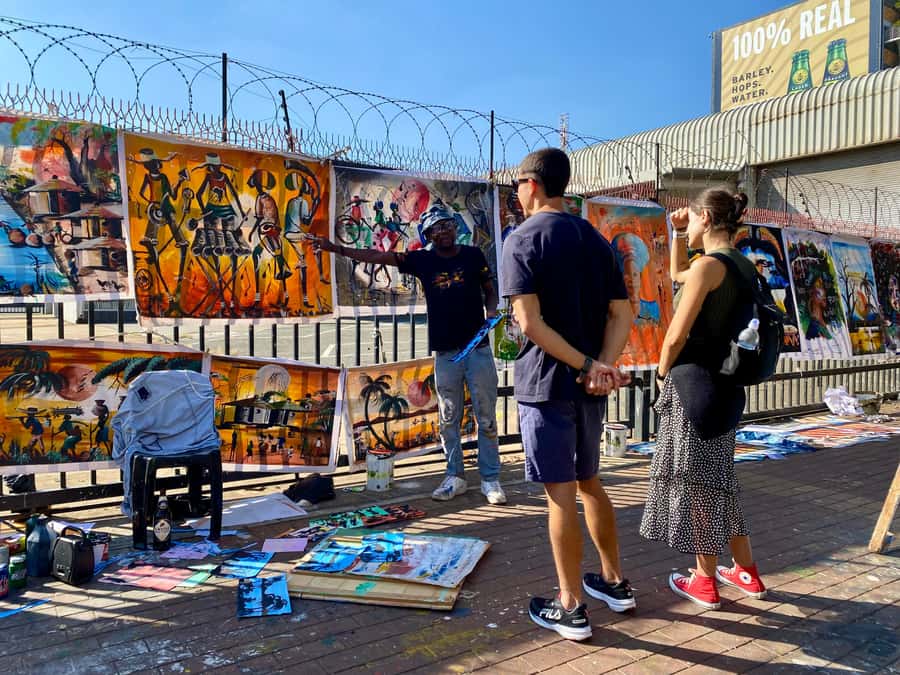
The Hideout Bar at Curiocity Backpackers is one of the more unusual stops. It is described as an alleged hiding place for Nelson Mandela and other anti-apartheid activists. The word alleged matters. Treat this as a local story and historical point of interest, not as a fully documented museum exhibit.
The stop adds weight to the walk. Maboneng is not only about new restaurants and stylish streets. Johannesburg’s political past runs through its neighborhoods, buildings, and personal memories. Hearing about resistance movements in a former hideout connects the district to the broader struggle against apartheid.
The bar also changes the pace of the tour. After looking at walls and storefronts, you step into a place linked to political history and local storytelling. It is the kind of detail you might not discover on your own during a short visit.
Food and drinks at the bar are not included. You can ask the guide about stopping for something, but keep in mind that the total tour time is only two hours. A long drink break could reduce the time available for the street art and neighborhood walk.
A viewpoint and the changing face of Maboneng
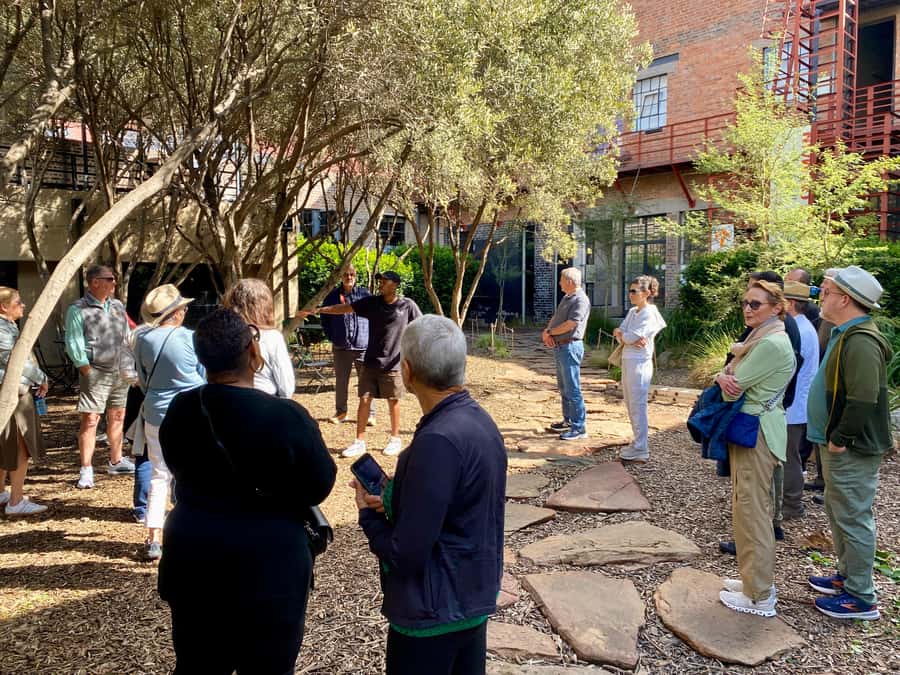
The route includes a viewpoint, with scenic views along the way. This gives you a chance to look beyond the close-up details of the murals and see how the district fits into Johannesburg’s inner city.
The viewpoint is especially helpful after the redevelopment discussion. From above or from a more open position, you can compare older industrial structures with newer creative spaces. The city is easier to understand when you see these parts together rather than as isolated attractions.
The viewpoint stop lasts about 15 minutes. It is not a long sightseeing session, and the exact view may depend on the route and access on the day. Still, it breaks up the walking and gives you a natural point for photographs.
By this stage, you will have seen several versions of Maboneng: a former industrial zone, a public art district, a commercial area, a home for local residents, and a place marketed to visitors. That mixture is the heart of the tour.
What the two-hour schedule feels like
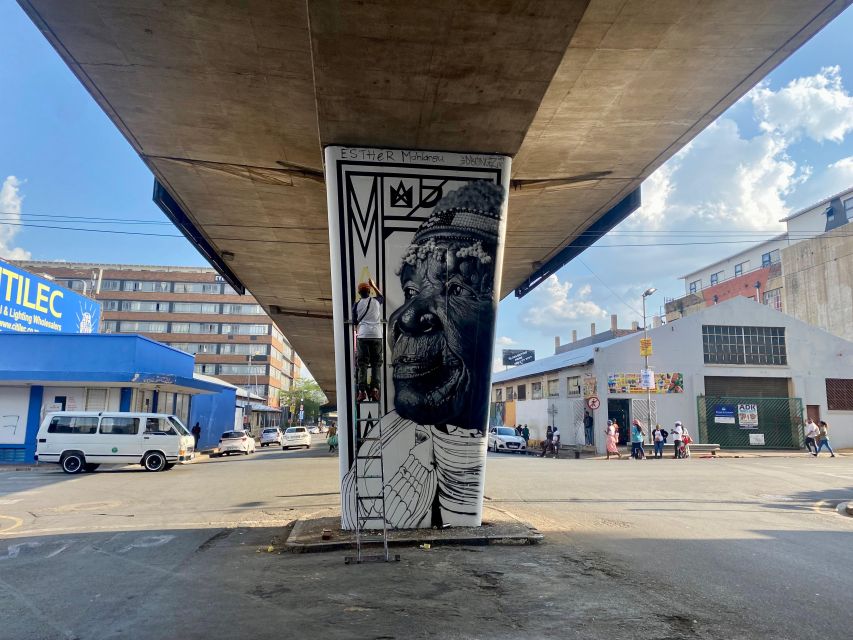
The timing is brisk but manageable. After the 15-minute introduction and safety briefing, the route uses several short walking and sightseeing sections. You move through Maboneng, stop at a historical site, visit the arts village, see a viewpoint, and return to Home of the Bean.
The benefit of this format is focus. You get a clear introduction without giving up an entire morning or afternoon. It works well if you have a short stay in Johannesburg, are between other activities, or want to understand the area before returning independently.
The limitation is depth. Two hours cannot cover every mural, gallery, story, and social issue in Maboneng. You may leave with a list of places you want to revisit. That is not a flaw, but you should book this as a strong orientation rather than a complete examination of the district.
The walk is offered in English only. English speakers who enjoy conversation and questions should find the format easy to follow. The guide encourages questions, and several people praised the clear explanations and willingness to discuss Johannesburg beyond the immediate route.
Safety, comfort, and group feel
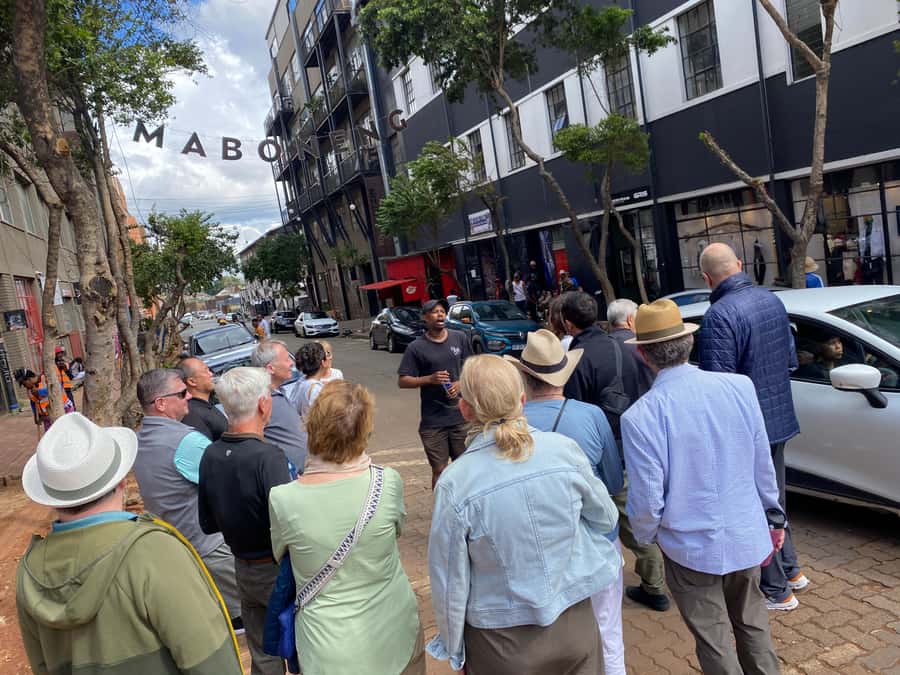
Safety is a practical concern for any walk in Johannesburg’s inner city. The tour gives you a structured way to see Maboneng with a local guide, and several people said they felt safe throughout the route. One person specifically appreciated being able to explore streets they would not have visited alone.
That does not mean you should switch off your common sense. Keep valuables close, avoid displaying large amounts of cash, and stay with the group. Use a trusted transport option to reach the meeting point and ask the guide if you need help with parking or an ATM.
The walk is listed as wheelchair accessible. Since it takes place on city streets and includes several walking sections, you should still confirm any personal mobility needs before booking. Street surfaces, entrances, and crowd levels can affect how easy each stop feels.
Group size can vary. One person described a friendly group of two to four, but that should not be treated as a guarantee. A small group makes it easier to ask questions and hear personal stories. A larger group may feel less intimate.
Is $40 a fair price?
At $40 per person, this is not the cheapest way to see public art in Johannesburg. You could walk through parts of Maboneng without paying for a guide. The question is what you would miss without one.
The fee covers a live English-speaking guide and entry to the sites visited. It does not cover coffee, food, drinks, or anything you buy from artists and traders. You are paying mainly for interpretation, local knowledge, route planning, and a more comfortable introduction to the district.
For a first visit, I think the price is reasonable if you care about the stories behind the art and want a local perspective on redevelopment. It is less compelling if you only want quick photos or already know Maboneng well.
The strongest value comes from the guides. Ayanda receives repeated praise for his understanding of the neighborhood, street art, Johannesburg, and South African history. He is also described as friendly, patient, and passionate, with a good sense of humor. Bonny, Kaiser, and Michael are also named positively, though the guide assigned to your date may differ.
The tour allows free cancellation up to 24 hours before the start, and you can reserve now and pay later. Those terms are useful if your Johannesburg plans are still shifting.
Who should book this walk?
I would choose this tour if you want:
- An easy introduction to Maboneng with local context
- Street art explained rather than simply photographed
- A short activity that fits into a busy Johannesburg schedule
- A look at redevelopment, gentrification, and the creative economy
- Historical stories linked to apartheid and the inner city
- A guided way to explore streets you might not visit alone
- Time to ask questions about Johannesburg and South Africa
It suits solo visitors, couples, small groups, and older children who can manage a two-hour urban walk. It is also useful at the start of a Johannesburg visit because the guide can help you understand the city’s layout and suggest ideas for the rest of your stay.
I would skip it if you dislike walking, want a long gallery visit, or prefer exploring without a set schedule. The tour stays focused on Maboneng and does not replace a broader Johannesburg history tour.
Should you book the Maboneng street-art tour?
Yes, if you want the art to come with a story. The murals are the visual draw, but the real value is the link between public art, industrial buildings, political memory, local business, and the neighborhood’s uncertain future.
Book it early in your Johannesburg stay if possible. You will get your bearings, learn how Maboneng developed, and see which places deserve a second visit. Arrive inside Home of the Bean, bring sensible city gear, and carry cash or a card for optional purchases.
The tour is short, focused, and highly guide-dependent. With someone like Ayanda, who brings personal connection and clear explanations, it can become one of the most useful ways to meet present-day Johannesburg without reducing the city to a postcard.
FAQ
Where does the Maboneng street-art tour start?
It starts at Home of the Bean coffee shop on the corner of Fox and Berea Streets, under the bridge. Wait inside the coffee shop if you arrive before the tour.
How long does the tour last?
The tour lasts two hours, including the safety briefing, walking sections, sightseeing stops, the arts village, the Hideout Bar, and a viewpoint.
Is coffee or food included?
No. Coffee, food, and drinks are not included, so you pay for anything you order during the tour.
What language is the tour offered in?
The tour is offered in English only and includes a live English-speaking guide.
Is the tour wheelchair accessible?
Yes, the activity is listed as wheelchair accessible.
Can I cancel the booking?
Yes. You can cancel up to 24 hours in advance for a full refund. You can also reserve now and pay later.
Just added around the world
- Your Own Belgrade: Street Art and Hidden Gems Walking Tour★ 5.0 · 2 reviews
- Vancouver: Street Art & Craft Coffee Walking Tour w/ Tasting★ 4.8 · 11 reviews
- Wynwood Walls Street Art & Neighborhood Walking Tour★ 4.9 · 9 reviews
- Xochimilco floating gardens, Coyoacan and UNAM murals★ 4.0 · 6 reviews
- UNAM: Murals & Revolution★ 4.9 · 8 reviews
- Urban Canvas: Osaka Street Art Bike Tour★ 5.0 · 10 reviews
- Vancouver: Street Art & Craft Beer Walking Tour with Tasting★ 4.8 · 14 reviews
- Small-Group Graffiti Tour and Workshop in El Carmen★ 5.0 · 2 reviews
Johannesburg Mural Tours, compared.
Colours of Johannesburg: A Graffiti & Street Art Tour
Read our review →
(Meet the Artist)Art Gallery & Street Art tour with lunch
Read our review →
Johannesburg Street Art & Museum Walking or E-scooter Tour
Read our review →
Browse the lists this tour appears in