
REVIEW · JOHANNESBURG MURAL TOURS
Johannesburg: Maboneng Street Art & Culture Tour
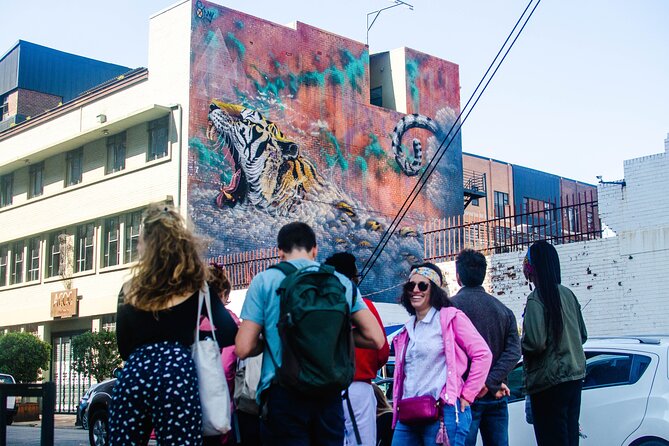
Art changes the way you see a city. This two-hour walk through Johannesburg’s Maboneng Precinct pairs striking murals with the stories behind them, making the neighborhood easier to understand than it would be on your own. I like the way the tour connects street art with community life, and I also like the personal attention provided by guides such as Refiloe, Mulalo, and Heshare.
The tour is short, focused, and limited to 10 people, which keeps the walk manageable. The main consideration is timing: some parts of Maboneng can feel quiet in the morning, and the experience involves walking outdoors rather than visiting a formal museum. Still, at $37.51 per person, it offers a useful introduction to one of Johannesburg’s most creative districts.
Key points to know before you go
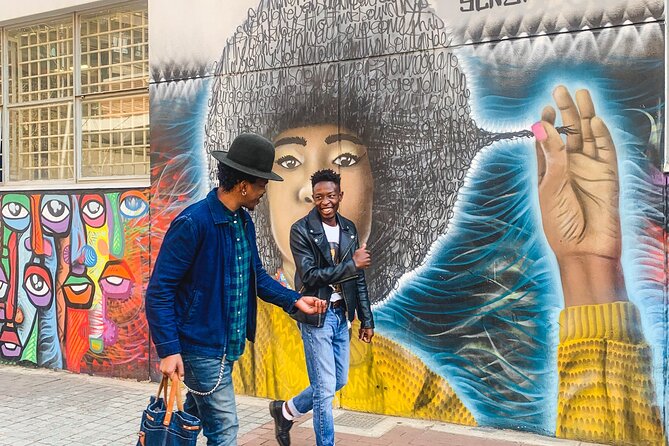
- Maboneng through local eyes: Learn what the murals mean and how artists connect their work with community issues.
- Strong guide element: Refiloe, Mulalo, Heshare, and other local guides are praised for their warmth, clear explanations, and personal insight.
- A small-group walk: The maximum group size is 10, with occasional one-on-one tours when bookings are light.
- Art plus neighborhood context: You see murals, graffiti, galleries, shops, cafés, and changing urban spaces rather than isolated works of art.
- Easy meeting point: Start and finish at Home of the Bean, at Fox and Berea streets, under the bridge.
- Bring time for Fox Street: The tour ends near cafés, food, shopping, and local businesses, giving you a good reason to stay in Maboneng afterward.
Why Maboneng makes a good walking tour
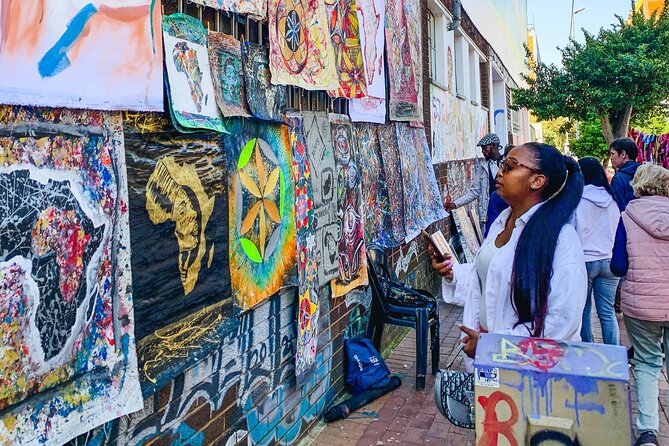
Maboneng is known for murals, galleries, public art, and a mix of old industrial buildings and newer urban projects. That mixture is part of the appeal. You are not walking through a polished open-air museum. You are seeing a district still shaped by change, creativity, business, and community life.
The area has also been part of an effort to change how people view a once troubled section of Johannesburg. That story adds useful context to the artwork. A mural is not just a colorful wall here. It may speak to identity, activism, local pride, social change, or the hopes of community groups.
I like tours that help you see more than the obvious photograph. Maboneng has plenty of colorful surfaces, but the guide explains who made the work, what influenced it, and why it matters locally. Without that background, you might pass a powerful mural, take a quick picture, and miss its point.
The tour also gives you a practical introduction to the neighborhood. Guides point out galleries and local businesses along the way, so you can return later for coffee, food, shopping, or a slower look at the art.
A few more mural tours around the world worth a look
- Medellin: Comuna 13 Graffiti Tour, Cable Car & Street Food
★ 4.8 · 9,046 reviews - CDMX: Xochimilco, Coyoacan, Frida Kahlo Museum & Murals Tour
★ 4.4 · 3,025 reviews - Amsterdam: Streetart Museum STRAAT Entrance Ticket
★ 4.8 · 2,137 reviews
Meeting at Home of the Bean on Fox Street
The meeting point is Home of the Bean, at the corner of Fox and Berea streets under the bridge. It can look like an old industrial building from the outside, so do not wait on the pavement if you arrive early. The instructions ask you to wait inside the coffee shop.
That is a sensible arrangement. It gives you a clear indoor place to meet, and the coffee shop can also be useful before or after the walk. The operator plans to contact you by WhatsApp or message about 30 minutes before the start time, especially if there are changes to the booking.
The tour begins and ends at the same location. That makes planning easier, particularly if you are using nearby public transport or arranging a ride back to your accommodation. The area is near public transportation, although the supplied information does not specify particular routes or stations.
Try to arrive with enough time to find the coffee shop without rushing. Meeting points under bridges and in former industrial areas are not always as obvious as a hotel lobby.
The first murals: learning to read the walls
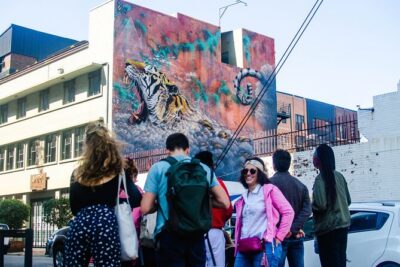
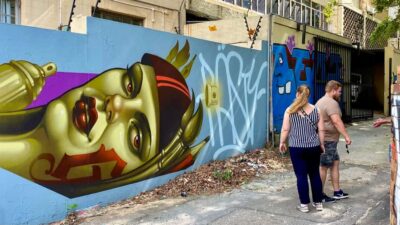
The opening part of the walk introduces Maboneng through its public art. You will see a range of work, including large murals and graffiti, rather than one fixed artistic style. That variety is important because it shows how different artists use the same neighborhood in different ways.
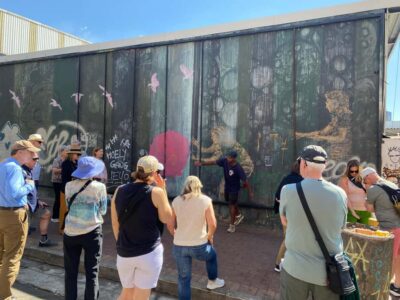
Your guide’s role is the main reason to choose this experience. The walk is not simply a search for attractive backdrops. You hear stories about the artists and the ideas that shaped their work. Guides also explain how street art can affect attitudes inside local communities.
That connection between art and place is one of the tour’s strongest features. A guide may point out how a particular image reflects South African culture, local identity, or a wider social concern. The details will vary by route and by guide, but the goal is consistent: help you understand why the art is there.
Several guides receive especially warm praise. Refiloe is described as friendly, professional, passionate, and good at making people feel at home in Maboneng. Mulalo is praised for covering both the area’s past and present, along with the artists and their work. Heshare is noted for explaining not only the art and history but also the culture of the community.
Names and guide assignments can change, so you should not book solely in the hope of having one particular guide. Still, the repeated strength of the guiding is a good reason to consider this walk instead of exploring the murals alone.
Art, activism, and the changing neighborhood
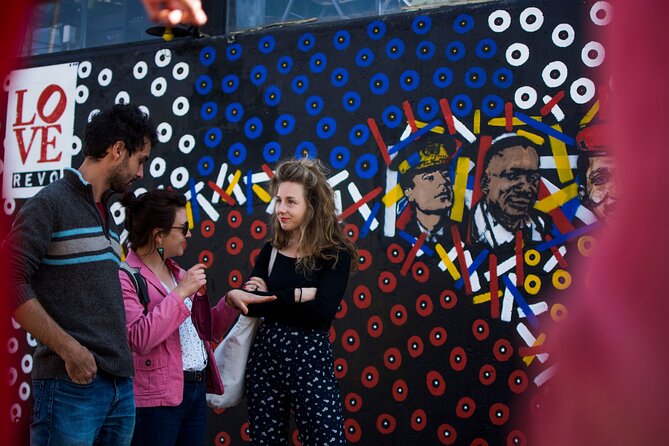
One of the most useful themes is the link between public art and activism. The murals are not presented as decoration alone. They can reflect arguments, memories, struggles, hopes, and efforts to change how a community is seen.
You will also hear about Maboneng’s changing identity. The district has been described as an attempt to improve and renew an area once viewed as dangerous. That renewal has brought new shops, cafés, galleries, and creative spaces, but the neighborhood remains a work in progress.
That balance matters. A short tour cannot explain every social or economic issue affecting Johannesburg, and it should not pretend that murals alone tell the whole story. What it can do is give you a starting point. You begin to notice how art, property development, local businesses, and community life share the same streets.
I appreciate that the tour does not reduce Maboneng to a simple success story. The area can be lively and attractive, while also showing signs of uneven change. That tension makes the walk more interesting and gives the art greater weight.
Same walls, a different guide:
- Belfast: Murals Taxi Tour
★ 4.9 · 2,047 reviews - Wynwood Graffiti Golf Cart Small-Group Tour
★ 5.0 · 1,646 reviews - London: Street Art and Graffiti Guided Walking Tour
★ 4.9 · 1,354 reviews - Lisbon: Street Art Tour
★ 4.9 · 1,324 reviews
Galleries, shops, and everyday Maboneng
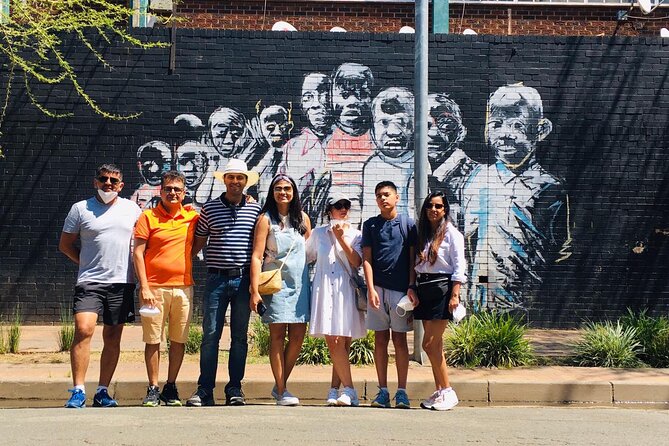
The route is not limited to walls. You explore a neighborhood with galleries, shops, cafés, and places to eat. The exact stops may depend on the day, local activity, and the guide’s route, but the broader point is to see how creative work fits into ordinary city life.
This makes the experience useful for someone visiting Johannesburg for the first time. You get a sense of Maboneng’s layout and character, then have the option to stay in the area after the tour. Fox Street is a particularly practical place to continue your visit, with coffee, shopping, and food nearby.
Do not expect a shopping tour or a formal gallery crawl. The emphasis remains on street art and local stories. The businesses are an added benefit, not the central feature.
The neighborhood can also feel different depending on the time of day. One account describes a quiet morning with little activity, though the walk still felt comfortable and safe. If you want maximum street energy, ask about the available start times before booking. If you prefer a calmer walk with fewer distractions, a quieter period may suit you better.
Safety and the value of a local guide
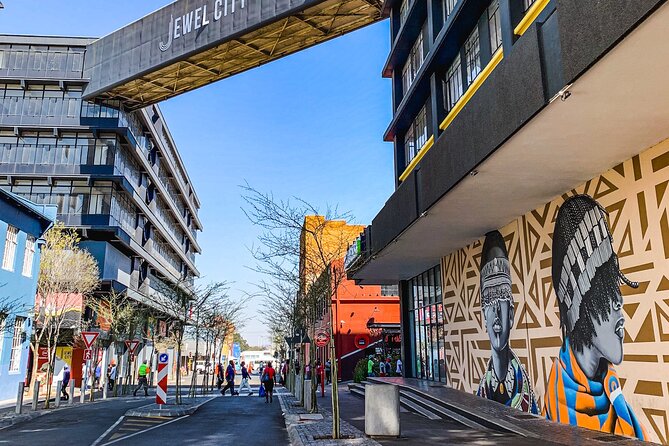
Safety is an important part of deciding how to explore Johannesburg. The strongest praise for this experience concerns the guides’ ability to make people feel comfortable while walking through the district.
The guide keeps the group together, explains where you are, and helps you move through the streets with more confidence. That does not remove the need for normal city awareness, but it is useful if you are unfamiliar with Johannesburg or would rather not search for murals alone.
The small group size helps. With a maximum of 10 people, the guide can answer questions and keep the walk personal. At least one booking became a one-on-one tour, and the guide made the solo participant feel included rather than awkward. That is encouraging if you are traveling alone.
You should still use ordinary precautions. Keep an eye on your belongings, follow the guide’s directions, and avoid wandering off from the group. The tour provides local guidance, not a guarantee that every street situation will feel the same throughout the day.
How long the walk feels
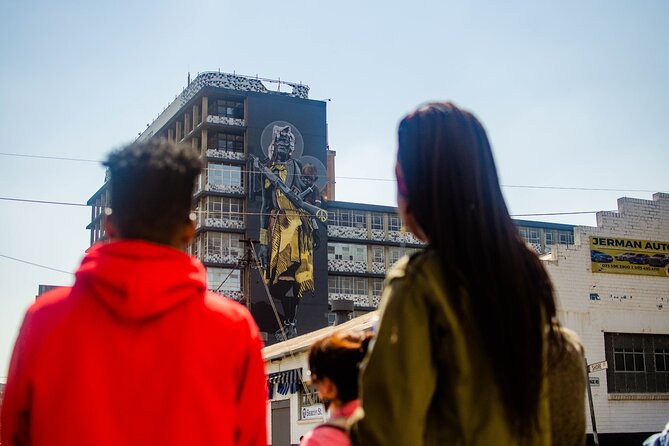
The advertised duration is about two hours, though one account describes a walk closer to three hours. The exact length may depend on the pace, group size, questions, and how much time the guide spends discussing individual works.
Two hours is enough for a useful introduction without taking over your entire day. You can fit it between other Johannesburg plans, then remain in Maboneng for lunch, coffee, or shopping.
This is still a walking tour, so wear comfortable shoes and be ready to spend the full time outdoors. The supplied details do not promise refreshments, entrance fees, transport, or other inclusions. Additional purchases are your responsibility.
Photography makes sense here. The murals are a major reason to come, and one particularly useful tip is simple: bring your camera. Ask before photographing people closely, and listen when the guide explains which details are important.
The $37.51 price and what you receive
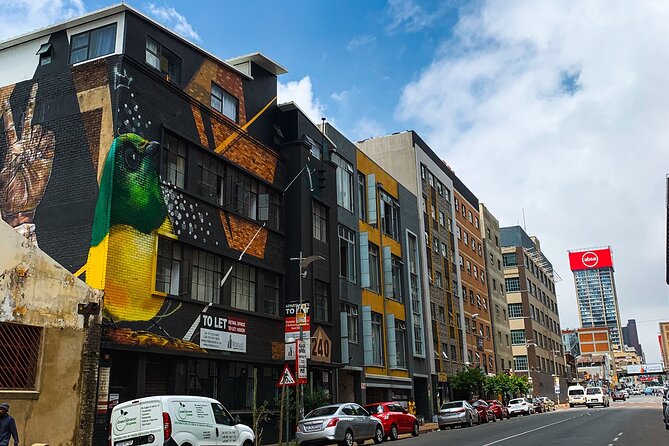
At $37.51 per person, this is not the cheapest way to take a neighborhood walk. Its value depends on how much you want context rather than a quick look at painted walls.
The price covers the guided experience, but no additional items or costs are included. You will need to pay separately for coffee, food, shopping, or anything else you choose to buy in Maboneng.
I think the cost makes the most sense for three types of visitors:
- You want an organized introduction to Johannesburg’s street art.
- You care about artists, meaning, and community stories.
- You would feel more comfortable exploring Maboneng with a local guide.
If you are happy to walk around and photograph murals without explanations, you may find the price harder to justify. The tour’s main product is not transport or admission to a major attraction. It is the guide’s local interpretation.
The rating of 4.9 from 140 reviews and a 99 percent recommendation rate point to consistently strong satisfaction, especially with the guiding. The most repeated praise is for friendly, informed, engaging guides who explain the art while helping the group feel at ease.
Who should book this experience
I would recommend this tour to solo visitors, couples, small groups, and anyone with a strong interest in public art. It also suits people who want a gentle introduction to Johannesburg’s cultural side without committing to a full-day city tour.
It is a good choice for a final day in Johannesburg because the route ends back at Maboneng, where you can have coffee, eat, shop, or take a last look at the area.
Families and older visitors may also enjoy it if everyone is comfortable walking for about two hours. The information says most people can participate, but it does not provide specific details about wheelchair access, step-free routes, or seating. If those details matter to you, contact the operator before booking.
This may be less suitable if you dislike urban walking, want a formal museum experience, or have only a few hours and cannot risk a longer-than-planned route. It is also not designed as a complete overview of Johannesburg. It focuses closely on Maboneng and its street art.
Booking, group size, and cancellations
Confirmation is provided when you book, and the mobile ticket makes it easy to keep the reservation on your phone. The maximum group size is 10, though the actual group may be smaller.
The operator, One Day Africa, provides a contact line for questions and says it will communicate by WhatsApp or message around 30 minutes before the start time if there are changes. Save the contact details and check your messages before leaving for the meeting point.
Free cancellation is available up to 24 hours before the experience begins, with a full refund. Cancellations or changes made within 24 hours are not accepted for a refund. The cut-off follows local Johannesburg time.
Should you book the Maboneng street art walk?
Book it if you want meaning behind the murals, a friendly local guide, and a clear way to explore Maboneng without guessing where to go. The strongest part of the experience is the human explanation, especially the way guides connect art with Johannesburg’s culture, activism, and changing communities.
Skip it if you only want a quick photo stop or prefer to explore independently. Also keep in mind that Maboneng may be quiet at certain times, and the walk can run longer than two hours.
For most visitors interested in Johannesburg’s creative side, this is a well-priced, focused introduction. Stay afterward on Fox Street for coffee or food, and the tour becomes more than a two-hour walk. It gives you a useful starting point for seeing the city with sharper eyes.
FAQ
How long is the Maboneng Street Art and Culture Tour?
The scheduled duration is approximately two hours. The actual walk may vary, with one described experience lasting about three hours.
What is the price of the tour?
The listed price is $37.51 per person.
Where does the tour start?
The tour starts at Maboneng Society, 26 Van Beek Street, New Doornfontein, Johannesburg, 2001. The meeting instructions identify Home of the Bean, at the corner of Fox and Berea streets under the bridge, as the place to wait inside before the tour.
Where does the tour finish?
The tour finishes at the same Maboneng Society address where it begins.
What will I see on the tour?
You will see murals, graffiti, galleries, and other public artwork in Maboneng. The guide also shares stories about the artists, their inspiration, the neighborhood, and the role of street art in local communities.
Is the tour suitable for solo visitors?
Yes. The experience has hosted one-person bookings, and the guide made the solo participant feel included. The maximum group size is 10 people.
Is public transportation available near the tour?
The meeting point is near public transportation. Specific routes or stations are not provided.
Are food and drinks included?
No. Additional items and costs are not included. You can buy coffee, food, or other items separately in Maboneng.
What is the cancellation policy?
You can cancel at least 24 hours before the start time for a full refund. Cancellations or booking changes made less than 24 hours before the start time are not accepted for a refund.
Just added around the world
- Your Own Belgrade: Street Art and Hidden Gems Walking Tour★ 5.0 · 2 reviews
- Vancouver: Street Art & Craft Coffee Walking Tour w/ Tasting★ 4.8 · 11 reviews
- Wynwood Walls Street Art & Neighborhood Walking Tour★ 4.9 · 9 reviews
- Xochimilco floating gardens, Coyoacan and UNAM murals★ 4.0 · 6 reviews
- UNAM: Murals & Revolution★ 4.9 · 8 reviews
- Urban Canvas: Osaka Street Art Bike Tour★ 5.0 · 10 reviews
- Vancouver: Street Art & Craft Beer Walking Tour with Tasting★ 4.8 · 14 reviews
- Zagreb Street Art Private Walking Tour with a Local Artist★ 5.0 · 12 reviews
Johannesburg Mural Tours, compared.
Colours of Johannesburg: A Graffiti & Street Art Tour
Read our review →
(Meet the Artist)Art Gallery & Street Art tour with lunch
Read our review →
Johannesburg Street Art & Museum Walking or E-scooter Tour
Read our review →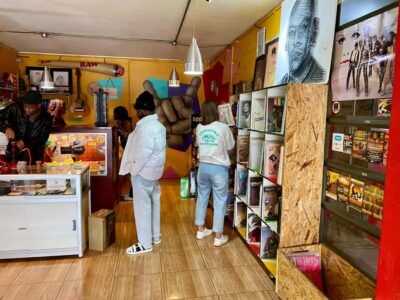
Browse the lists this tour appears in