
REVIEW · JOHANNESBURG MURAL TOURS
Colours of Johannesburg: A Graffiti & Street Art Tour
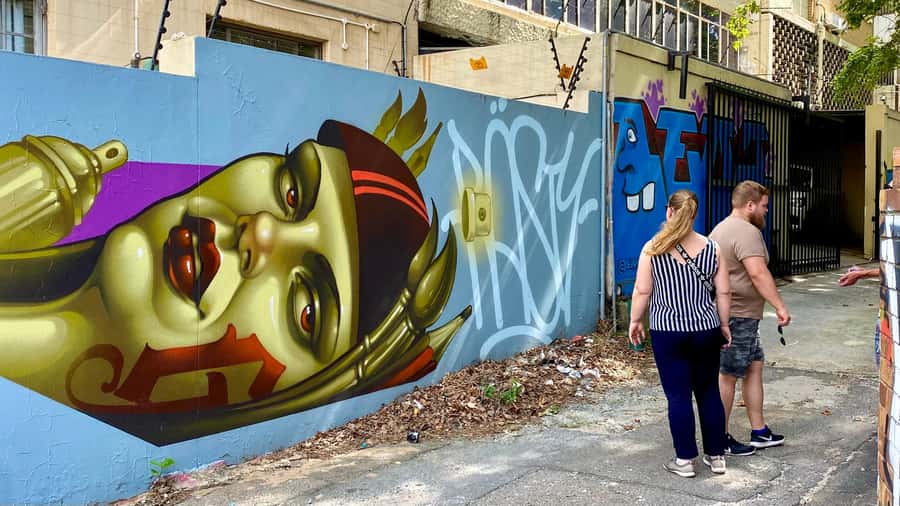
Walls tell Johannesburg’s story. This 210-minute walk and ride through Braamfontein, Newtown and Maboneng shows you how graffiti and street art differ, then explains why both matter to the city. I like the strong local focus, especially the chance to visit a graffiti supply store and see work connected to artists who live and work in Johannesburg. I also like that transport between districts is included, so you are not left trying to cross the inner city on foot.
The main drawback is that this is not a quick photo walk. You will spend about three and a half hours on foot, with stops to listen, look closely and ask questions. The graffiti store may be closed from December 24 to January 20, and an artist may join the tour only if available. Still, with a price of $43 per person, this is a good-value choice for anyone who wants context rather than a simple wall-by-wall photo stop.
Key points to know before you book
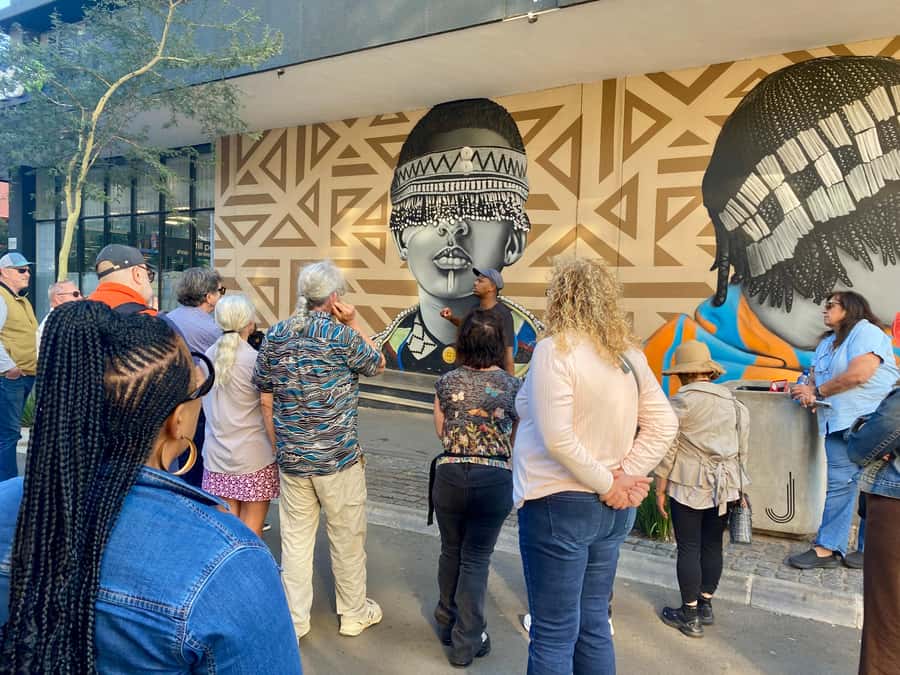
- Three very different districts: The route links Braamfontein, Newtown and Maboneng, giving you three views of Johannesburg’s street culture.
- Graffiti is explained, not just pointed out: You learn about tags, graffiti writing, murals and commissioned street art, including the relationship between them.
- Ayanda brings local insight: If Ayanda leads your tour, expect plenty of knowledge about the artists, neighborhoods, South African history and daily city life.
- Transport is included between areas: You walk within each district, then ride between districts during the tour.
- The graffiti store adds a useful extra stop: You may buy locally designed merchandise or see an exhibition when the store is open.
- Bring water and good shoes: This is an active city walk with several walking sections and about 210 minutes on the schedule.
Why this tour gives Johannesburg’s walls a voice
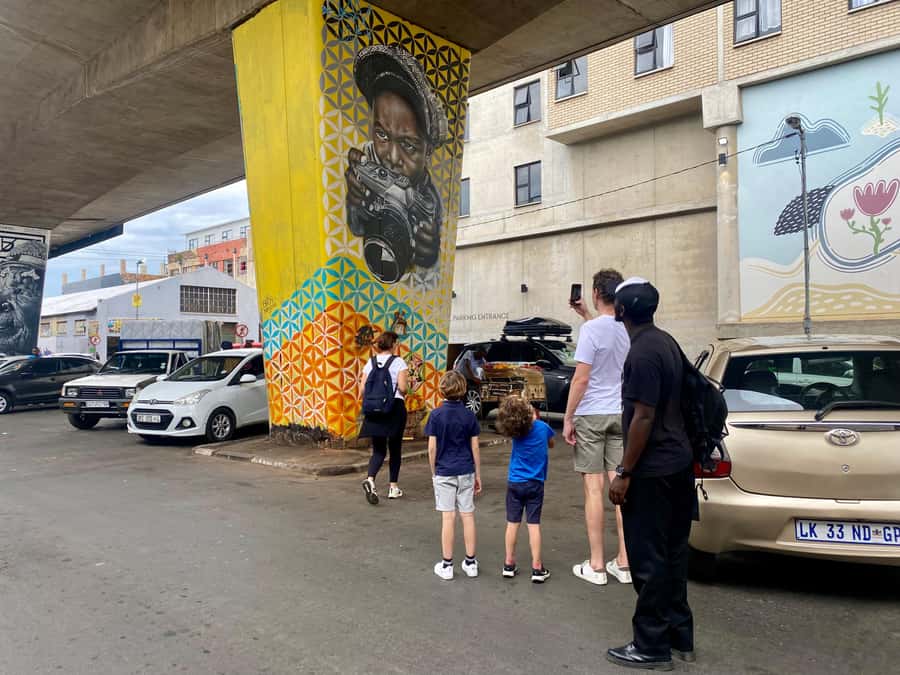
Johannesburg’s street art is easy to notice but harder to understand. A large mural might be a commissioned public artwork, a neighborhood statement, a commercial project or part of a wider arts program. A small tag may look like a quick scribble to an outsider, yet it can identify a writer whose work appears across the city.
This tour helps you separate those forms. You learn how graffiti and street art overlap, where they differ, and how both have shaped parts of central Johannesburg. That distinction gives the walk more purpose. Instead of collecting random photographs, you start looking for styles, names, repeated symbols and signs of an artist’s hand.
I especially like the connection between art and urban change. Braamfontein and Maboneng are not presented as blank backdrops for murals. Their walls are part of how these districts developed, marketed themselves and attracted creative activity. Newtown brings another layer, with its long connection to arts and culture and its reputation as a center for underground creative work.
The result is part art lesson, part city walk and part conversation about who gets to shape public space.
More Graffiti Tours in the world:
- Medellin: Comuna 13 Graffiti Tour, Cable Car & Street Food
★ 4.8 · 9,046 reviews - Wynwood Graffiti Golf Cart Small-Group Tour
★ 5.0 · 1,646 reviews - London: Street Art and Graffiti Guided Walking Tour
★ 4.9 · 1,354 reviews
Starting at Skinner Café on Juta Street
The tour begins inside Skinner Café at 70 Juta Street. Look for the green café on the corner, with large see-through windows and a small outdoor seating area facing Juta Street. This is a practical meeting point because it is easy to identify, and you can settle in before the walk starts.
The opening safety briefing takes about 15 minutes at a local restaurant. That pause matters. Johannesburg’s inner city rewards attention, and a short orientation helps you understand how the day will work before you move through several districts.
You should arrive ready to walk. Wear comfortable shoes and carry water. The itinerary includes about an hour in Braamfontein, 45 minutes in Newtown and another 45 minutes in Maboneng, with transport between those areas. The overall schedule is 210 minutes, though one particularly generous outing lasted about four hours. I would keep a little extra time free, especially if you enjoy asking questions or shopping at the art store.
Braamfontein: murals, tags and a district in transition
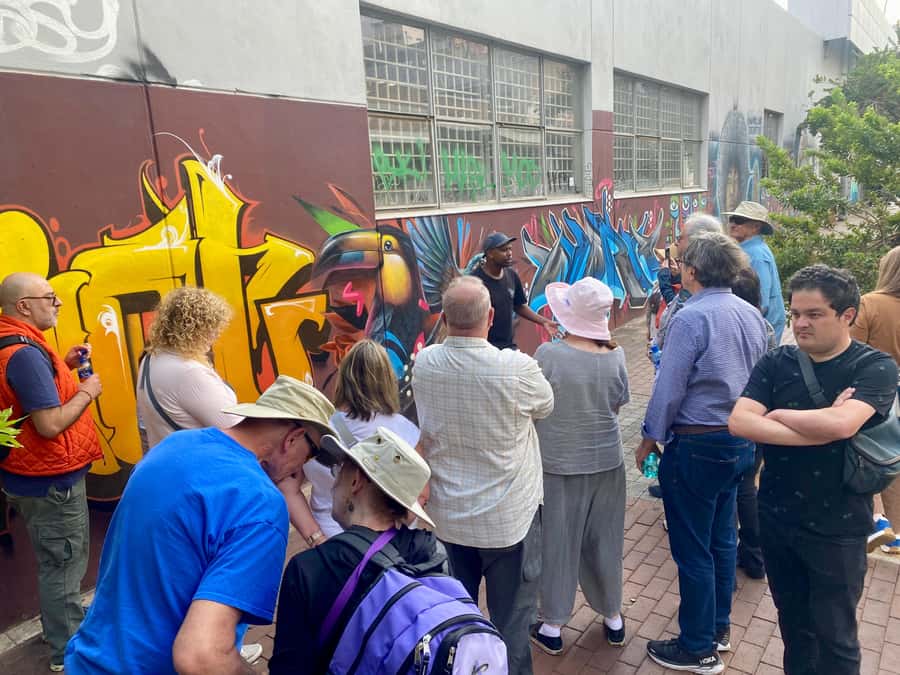
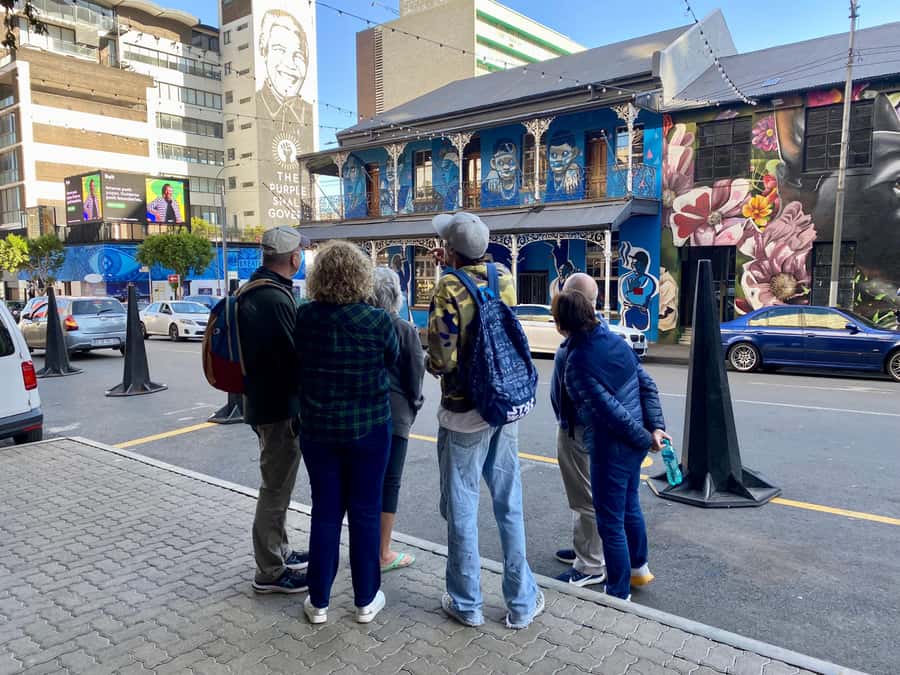
Braamfontein is the first major art stop, and it gives you the best introduction to the tour’s main ideas. The precinct has large murals on prominent walls, along with smaller works and graffiti placed in less obvious corners. You will see how different scales and styles share the same streets.
The guide explains how street art affected the development of Braamfontein from 2003 onward. That point is important because it moves the experience beyond look at this colorful wall. You begin to consider how public art can help a district attract visitors, support creative businesses and create a stronger identity.
You can expect about an hour of guided walking and sightseeing here. The pace allows time to stop for photographs and examine details. Look closely at signatures and tags. The tour aims to help you recognize prolific local graffiti writers, not simply admire the biggest mural in front of you.
If you enjoy design, photography or urban planning, Braamfontein may be your favorite section. The art appears in many forms, and the area offers a useful lesson in how creative work can change the way people read a neighborhood. The tradeoff is that the amount of information can feel dense if you only want a relaxed stroll. This is an interpretive tour, so plan to listen.
The local graffiti store: supplies, shirts and a closer look
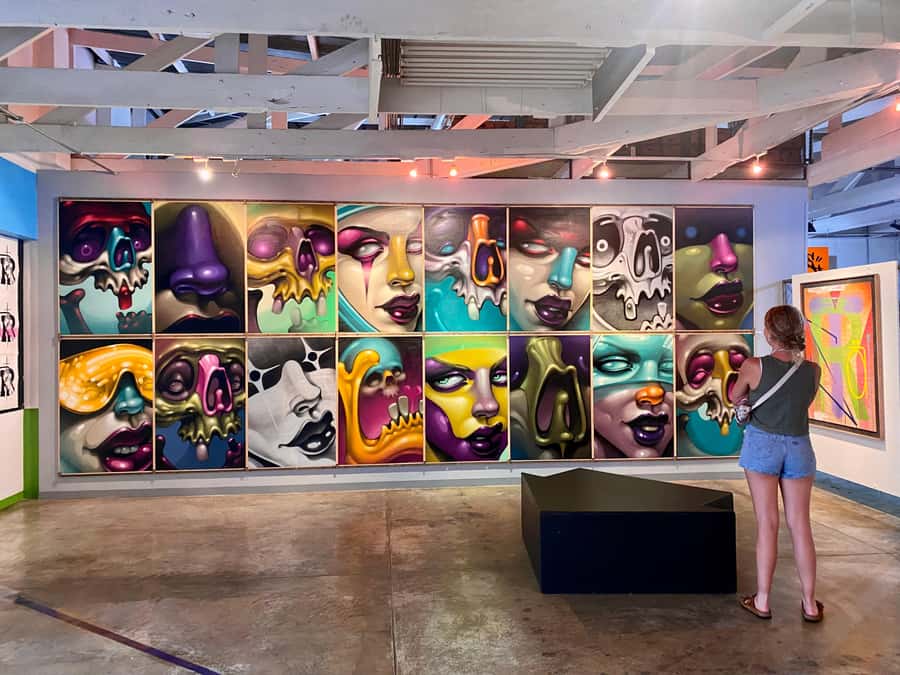
The secret stop is a local graffiti store, visited for about 15 minutes when it is open. It is where local artists get supplies, so the stop connects the finished pieces on the streets with the practical tools behind them.
You may have a chance to buy merchandise designed by local graffiti artists. You may also be able to step into an exhibition room when work is displayed there. One visitor bought a favorite T-shirt designed by a graffiti artist at the store and later received compliments on it during a safari trip. That makes this more useful than a standard souvenir stop: you can take home a piece connected to Johannesburg’s own creative scene.
There is an important timing note. The store is closed during the festive period from December 24 through January 20. The tour still runs, but this part cannot be guaranteed outside normal opening conditions. If the store is important to you, contact the operator before booking for those dates.
A few more mural tours around the world worth a look
- CDMX: Xochimilco, Coyoacan, Frida Kahlo Museum & Murals Tour
★ 4.4 · 3,025 reviews - Amsterdam: Streetart Museum STRAAT Entrance Ticket
★ 4.8 · 2,137 reviews - Belfast: Murals Taxi Tour
★ 4.9 · 2,047 reviews - Lisbon: Street Art Tour
★ 4.9 · 1,324 reviews
Newtown: Johannesburg’s arts center and graffiti stronghold
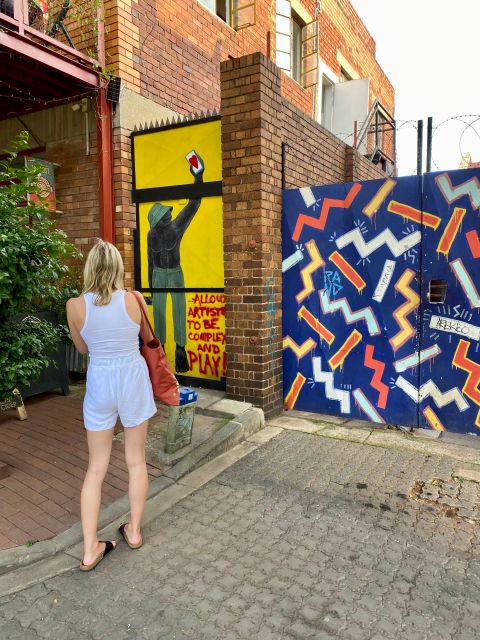
From Braamfontein, the route continues to Newtown. Transport between districts is included, so you do not need to arrange your own ride. Within Newtown, expect a 45-minute section with a photo stop, guided sightseeing and more walking.
Newtown is described as the spiritual home of arts and culture in the inner city, with a history reaching back to 1886. Its connection to underground creative activity gives the graffiti here a different feel from the larger, more polished murals in Braamfontein.
This is where the tour’s distinction between graffiti and street art becomes especially useful. You may see carefully planned public art beside work that is more personal, coded or tied to a particular writer. The guide adds context about who made the work and how it fits into Johannesburg’s wider culture.
The Newtown section should suit you if you like art with an edge and prefer local stories to a neat, official presentation. It can also be the most demanding part for someone who wants only a short, easy outing. The tour keeps moving across a city district, and the value comes from the explanations as much as the images.
Maboneng: murals, local tags and the final walk
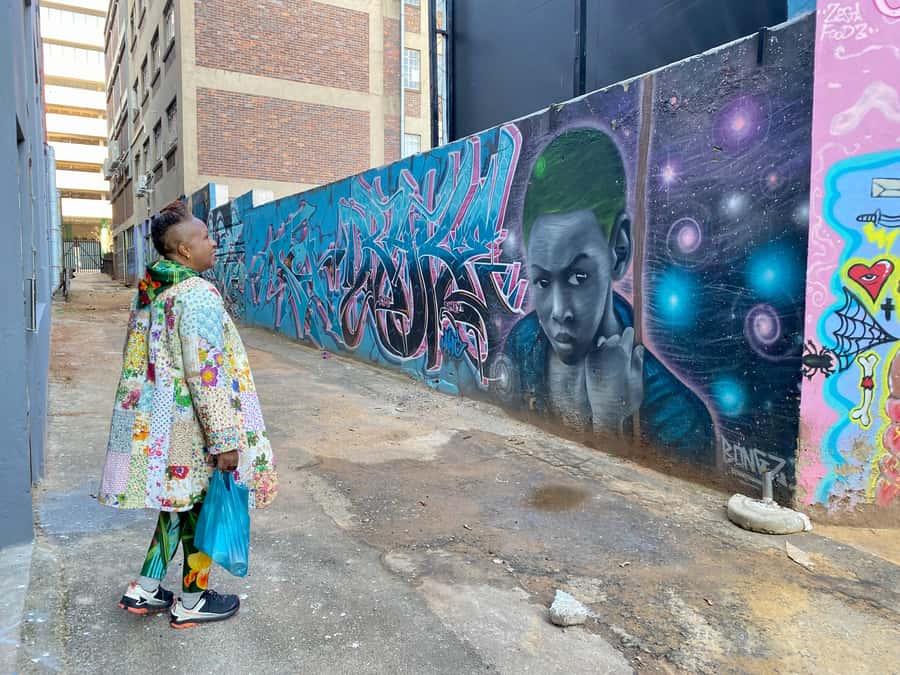
The final district is Maboneng, where the tour ends at Home of the Bean. You spend about 45 minutes walking, sightseeing and shopping, with an aerial view listed among the activities. The area contains large murals, detailed works by international artists and familiar tags from local graffiti writers.
Maboneng shows how several kinds of street culture can exist close together. A carefully planned mural may sit near a repeated tag that only makes sense once you know the artist’s name. The guide helps you read those layers instead of treating every mark as the same thing.
This is also a pleasant place to finish because you have time to look around after the main explanations. Home of the Bean gives you a clear endpoint, and Maboneng offers options for lingering if your schedule allows. The tour itself ends there, so hotel drop-off is not included. If you need pickup or drop-off, you must contact the operator separately.
I would save your most relaxed photography for Maboneng. By this point, you will have learned what to look for, and the final stop lets you apply it. You may find yourself noticing repeated names, color choices and placement rather than simply photographing the largest wall.
The value of a guide who knows the city personally
The strongest feature here is the guide’s local perspective. Ayanda is the founder of the tour company and, when he leads your outing, brings personal familiarity with the neighborhoods and many of the artists. His explanations also extend into Johannesburg and South African history, which helps place the art in a wider setting.
That matters because a street art tour can easily become a list of names and colors. A guide who understands the city can explain why a piece matters, how an area changed and how street culture reflects the people who live there. Ayanda is also described as friendly, helpful and open to questions beyond graffiti, which is useful if you want to connect the art with everyday life in Johannesburg.
You can request or confirm the guide when booking, but the supplied information does not promise that Ayanda leads every date. An artist may sometimes join the tour too, yet that depends entirely on availability. Treat that as a pleasant possibility, not part of the guaranteed package.
What the $43 price really includes
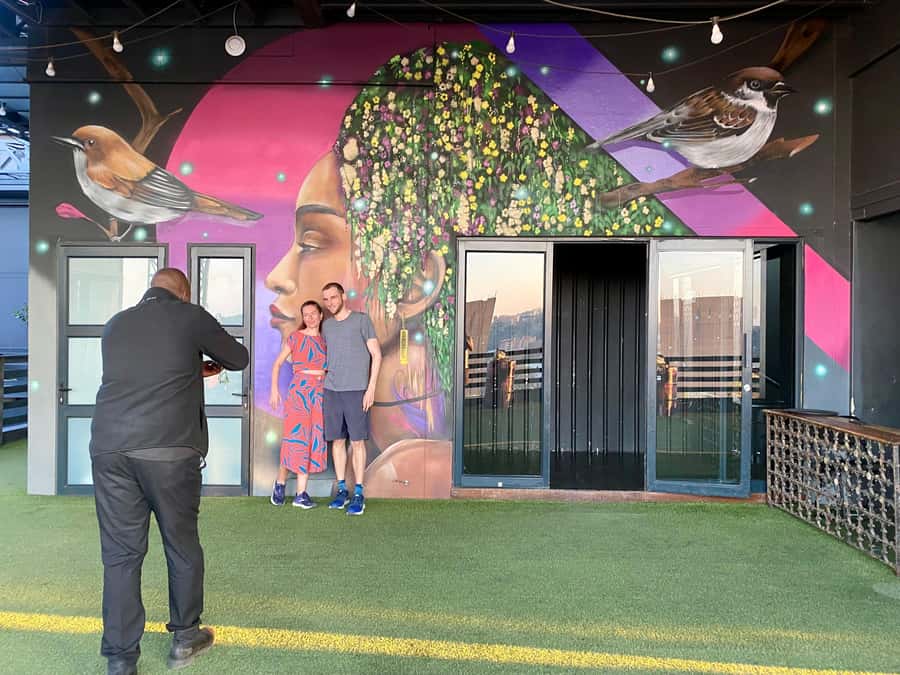
At $43 per person, the price is fair for a 210-minute guided experience covering three districts. The biggest practical value is the included transport between neighborhoods. Without it, crossing from Braamfontein to Newtown and then Maboneng would take extra planning and time.
You are also paying for interpretation, not just transportation. The guide connects murals, tags, city development and South African culture in a way that would be difficult to assemble from a casual walk. The local store visit adds another layer, especially if you want art supplies, a locally designed shirt or a look at an exhibition.
The value is weaker if you only want a short mural walk or prefer exploring independently. You will spend much of the time listening and walking, and the store may be closed. But for a visitor with limited time in Johannesburg who wants a safer, more informed introduction to central street culture, the cost makes sense.
Who will enjoy this most
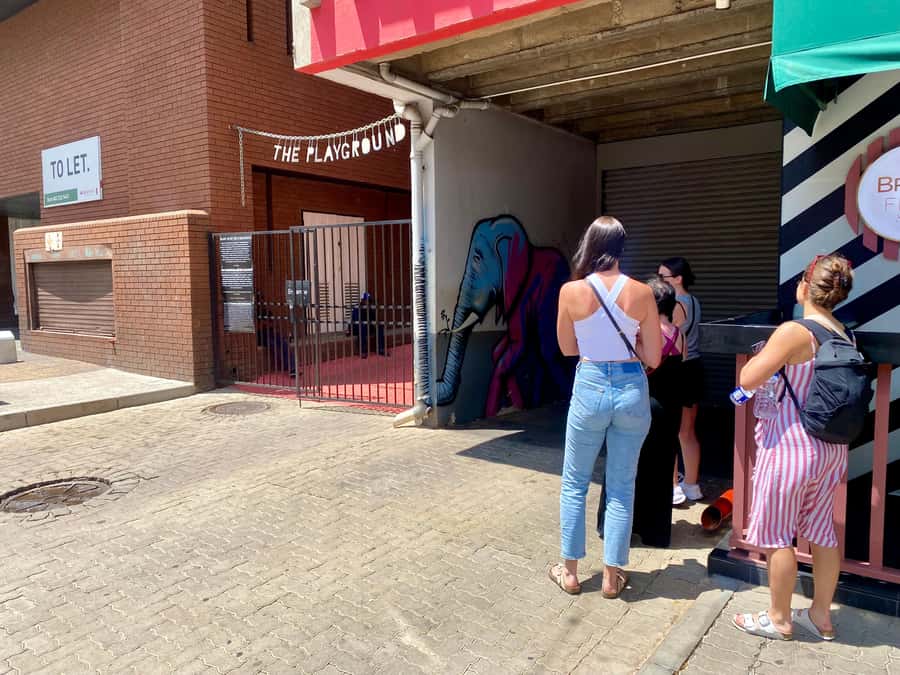
I would recommend this tour to you if you enjoy photography, public art, urban culture or local history. It also suits first-time visitors who want to see central Johannesburg with a guide rather than move between districts alone.
It is a good match for anyone who likes asking questions. One outing became especially valuable because the guide had time to answer questions about topics beyond art. A private or very small group can therefore feel much more personal, though group size is not specified and should not be assumed.
Families with older children may enjoy the visual side, but the operator does not provide a specific child age recommendation. I would judge it by your child’s ability to walk for several hours and listen during guided stops.
This is less suitable for anyone with limited walking stamina, anyone wanting a guaranteed artist demonstration or anyone visiting during the festive period mainly for the graffiti store. The language is English only, so you should be comfortable following a full tour in English.
Practical advice for a better afternoon
Wear shoes you can walk in comfortably. The itinerary divides the time among three districts, and the experience depends on seeing the streets at walking pace rather than viewing everything through a vehicle window.
Bring water and keep your camera ready, but do not rush from wall to wall. Small tags and details are part of the lesson. If you photograph a mural, also listen for the artist’s name and the story of the neighborhood around it.
Allow more than the advertised three and a half hours if you like conversation. A past outing ran to four hours, and questions can add time. The tour ends at Home of the Bean, not at your hotel, so plan your next move from Maboneng.
You can cancel up to 24 hours before the start for a full refund, and you can reserve now and pay later. Those options are helpful if your Johannesburg schedule is still shifting.
Should you book Colours of Johannesburg?
Book this tour if you want Johannesburg’s street art explained by someone closely connected to the city. The route covers three important inner-city districts, transport is included between them, and the guide adds useful context about artists, graffiti culture and urban change.
I would skip it only if you want a very short photo stop, dislike walking, or need a guaranteed artist appearance and store visit. For everyone else, $43 buys a thoughtful afternoon that can change how you see the city’s walls long after the tour ends.
FAQ
How long does the tour last?
The scheduled duration is 210 minutes, or about three and a half hours. One outing lasted about four hours, so allow some extra time if you expect a lot of questions.
Where does the tour start?
It starts inside Skinner Café at 70 Juta Street. The café is green, has large see-through windows and a small seating area outside on Juta Street.
Where does the tour finish?
The tour finishes at Home of the Bean in the Maboneng Precinct.
Which neighborhoods does the tour visit?
The route includes Braamfontein, Newtown and Maboneng.
Is transport included?
Yes. Transport between the neighborhoods during the tour is included. Hotel pickup and drop-off are not included.
Is the graffiti store always open?
No. The store is closed during the festive period from December 24 through January 20, and opening availability can vary.
Can I buy local artwork or merchandise?
You may be able to buy merchandise designed by local graffiti artists at the graffiti store. An exhibition room may also be open when work is displayed there.
Will a graffiti artist join the tour?
A graffiti artist may sometimes join, but this depends on the artist’s availability and is not guaranteed for your date.
What language is the tour offered in?
The tour is offered in English only, with a live English-speaking guide.
What should I bring?
Bring comfortable shoes and water. The tour includes several walking sections across the three districts.
Can I cancel the booking?
You can cancel up to 24 hours in advance for a full refund. You can also reserve now and pay later.
Just added around the world
- Your Own Belgrade: Street Art and Hidden Gems Walking Tour★ 5.0 · 2 reviews
- Vancouver: Street Art & Craft Coffee Walking Tour w/ Tasting★ 4.8 · 11 reviews
- Wynwood Walls Street Art & Neighborhood Walking Tour★ 4.9 · 9 reviews
- Xochimilco floating gardens, Coyoacan and UNAM murals★ 4.0 · 6 reviews
- UNAM: Murals & Revolution★ 4.9 · 8 reviews
- Urban Canvas: Osaka Street Art Bike Tour★ 5.0 · 10 reviews
- Vancouver: Street Art & Craft Beer Walking Tour with Tasting★ 4.8 · 14 reviews
- Small-Group Graffiti Tour and Workshop in El Carmen★ 5.0 · 2 reviews
Johannesburg Mural Tours, compared.
(Meet the Artist)Art Gallery & Street Art tour with lunch
Read our review →
Johannesburg Street Art & Museum Walking or E-scooter Tour
Read our review →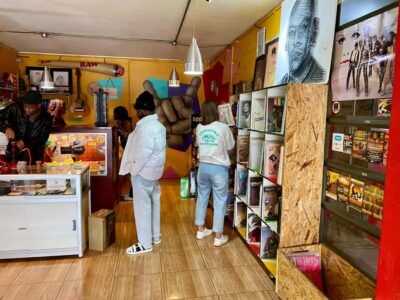
Browse the lists this tour appears in