
REVIEW · MEXICO CITY MURAL TOURS
Exploring Mexican Muralism: A Journey through Bellas Artes Palace
Look up, and Mexico’s story appears. This 90-minute tour of Palacio de Bellas Artes brings together the building’s unusual architecture and its famous murals, with time to examine the work of Diego Rivera, José Clemente Orozco, David Alfaro Siqueiros, and Rufino Tamayo. I especially like the small group limit of six and the way guide Mercedes Iriondo connects art with politics, labor, mythology, and social change. The main drawback is its narrow focus: if you want a broad tour of Mexico City, this outing covers only one major site.
The tour also earns praise for its calm, question-friendly approach. Mercedes is described as patient, enthusiastic, and generous with her time, which matters when murals are packed with symbols and historical references. At $60 per person, I consider it a fair price if you want interpretation rather than a quick look around, but it may feel high if you prefer to explore the palace at your own speed.
Key points to know before you book
- The group never exceeds six people, making it easier to hear explanations and ask questions.
- The tour begins at Madero Monument at 11:00 a.m. in Mexico City’s Centro district.
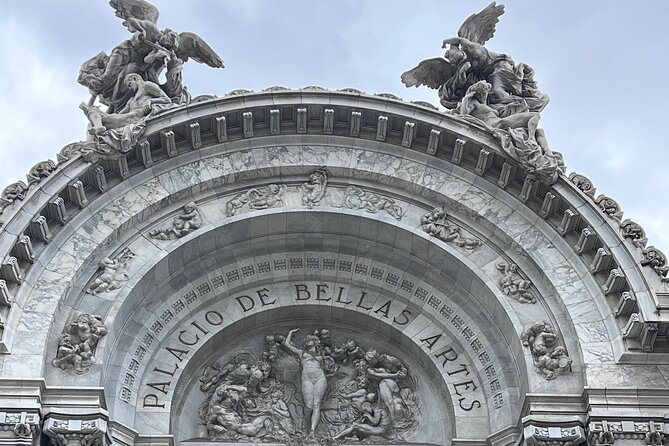
- The opening 10 minutes focus on the exterior, including façade details and unusual architectural features.
- The main 80-minute visit takes place inside Bellas Artes, centered on major Mexican murals.
- The guide is Mercedes Iriondo, whose approach combines art, politics, culture, and economic change.
- Free cancellation is available up to 24 hours before the start time, with no refund for later cancellations.
Why the Palace of Fine Arts deserves focused attention
Palacio de Bellas Artes is not just a room full of famous paintings. The building itself sets the tone before you enter. The first part of the tour looks at the exterior, including details of the façade that give the palace its distinctive appearance.
You have only about 10 minutes outside, so this is an introduction rather than a full architectural lecture. Still, that short pause is useful. Instead of rushing indoors, you get a chance to notice how the palace presents itself as a national cultural building, not simply an exhibition hall.
I like this opening because it gives the murals a physical setting. Mexican muralism was designed for public spaces, and the scale of the Palace of Fine Arts matters. These are not small paintings tucked into a private gallery. They occupy walls and demand attention as part of the building’s public identity.
The short exterior stop may feel too brief if architecture is your main interest. You will not receive a long survey of every decorative feature. The emphasis quickly shifts to the art inside, where the tour has much more time to work.
More Muralism Tours in Mexico:
- CDMX: Xochimilco, Coyoacan, Frida Kahlo Museum & Murals Tour
★ 4.4 · 3,025 reviews - La Catrina & Muralism: Diego Rivera’s Legacy & Frida Kahlo
★ 4.5 · 197 reviews - Muralist Art Semi Private Walking Tour in Mexico City Downtown
★ 5.0 · 188 reviews
Entering Bellas Artes and facing the murals
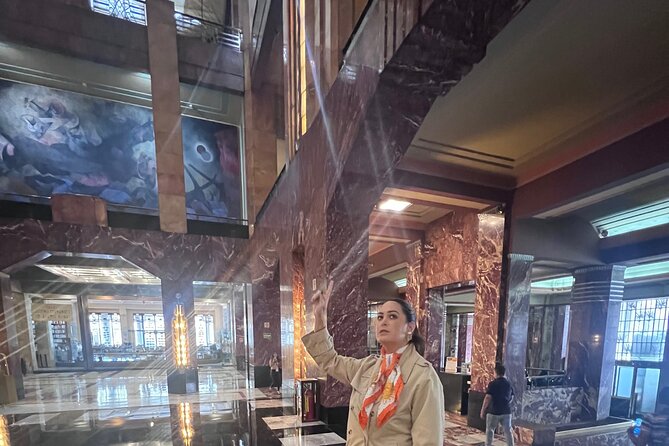
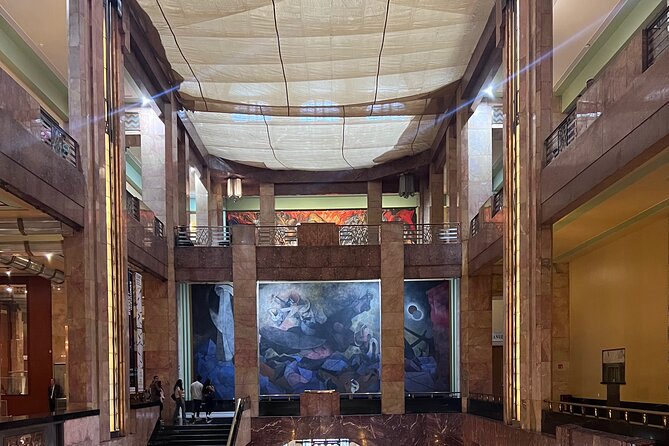
The interior portion lasts about 80 minutes, making up most of the visit. Here, the walls carry works by Diego Rivera, José Clemente Orozco, David Alfaro Siqueiros, and Rufino Tamayo.
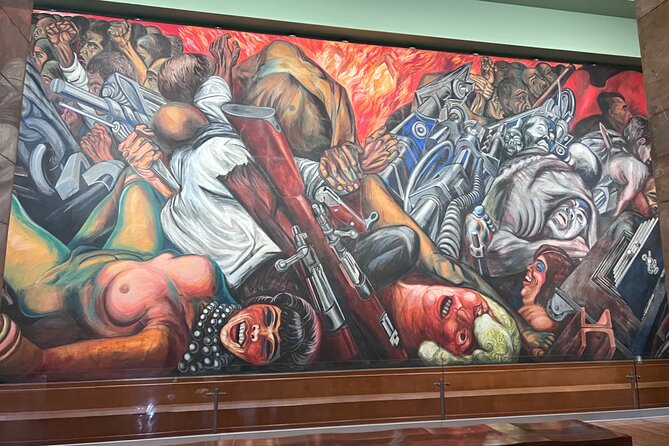
These artists did not all speak in the same visual language. Their different styles give the visit its range. One mural may guide you toward political conflict or labor, while another may draw on mythology, nature, or Mexico’s pre-Hispanic past. The point is not simply to identify names. It is to see how each artist used public art to make ideas visible to a large audience.
The murals also cover a broad view of Mexican life. You can expect themes connected to rural communities, cities, industry, social change, and national identity. The art moves between the past and the modern world, showing how Mexican artists wrestled with a country changing around them.
This is where a guide adds real value. Without context, it is easy to admire the colors and imposing figures while missing the argument beneath the surface. Mercedes helps connect the images to the Mexican Revolution, labor struggles, political beliefs, cultural traditions, and economic transitions.
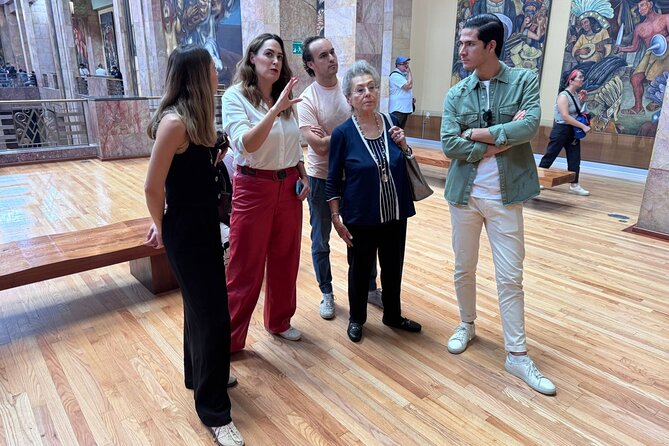
I would not treat this as a silent art appreciation visit. The tour is built around explanation and conversation. You are encouraged to ask questions, and the small group gives you a better chance to pause when a particular figure, symbol, or historical reference catches your eye.
How Mercedes Iriondo shapes the visit
Mercedes Iriondo is the named guide for this experience, and her strength is the connection between art and national development. She does not treat the murals as isolated works. Instead, she places them within the political and social changes that shaped modern Mexico.
That approach is especially useful for first-time visitors. You do not need a background in Mexican history or art before arriving. The tour is designed to help you understand why these murals were created, what they say about the country, and how the artists’ styles differ.
I also like that Mercedes appears comfortable with questions. Her previous tours have been praised for patience, enthusiasm, and a willingness to share extra details. Those qualities matter in a museum setting, where a rigid script can make a visit feel rushed.
The experience seems best suited to people who want to talk about what they are seeing. If you prefer a guide who gives a short introduction and then leaves you alone, this may be more instruction than you want. If you enjoy asking why an image appears, how an artist’s politics shaped a work, or how one mural differs from another, the format should suit you well.
One useful detail is that Mercedes has also guided visitors who brought their own knowledge and questions. That suggests the tour can work for both beginners and people already interested in Mexican art. You do not need to choose between a basic overview and a serious discussion.
A closer look at the four major artists
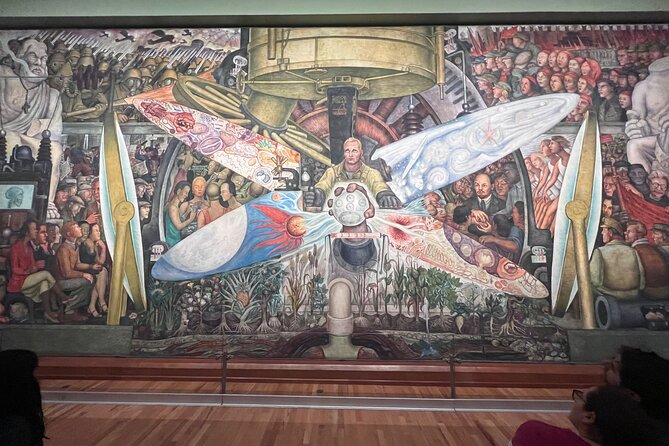
Diego Rivera is perhaps the most familiar name in the group, and his work helps many visitors enter the subject. His murals often bring ordinary workers, historical figures, and major political forces into the same visual field. A guide can help you read how those figures relate rather than seeing them as a crowd of dramatic faces.
José Clemente Orozco offers a different mood and viewpoint. His work is tied to conflict, power, and the human cost of political change. Looking at his murals alongside Rivera’s lets you compare two artists addressing similar national questions through different visual choices.
David Alfaro Siqueiros adds another strong voice to the visit. His work is associated with forceful compositions and political commitment. The value of seeing his murals in the same building is that the comparison becomes immediate. You can look from one artist to another and consider how line, scale, movement, and subject change the message.
Rufino Tamayo broadens the picture again. His work brings another treatment of Mexican identity, mythology, and modern art. Including Tamayo prevents the visit from becoming a simple account of three politically engaged muralists. It shows that Mexican muralism contains more than one style or point of view.
You may not leave able to identify every work by sight, and that is not the goal. The real gain is a clearer sense of how these artists used public walls to discuss Mexico’s past, present, and future.
A few more mural tours around Mexico worth a look
- Cancun Street Food Tour with Food Stalls, Local Market and Murals
★ 5.0 · 723 reviews - Mexico City; ART NACO : Murals & Street Art Bike Tour
★ 5.0 · 284 reviews - History and Murals: Walking Tour Guadalajara
★ 5.0 · 237 reviews - Walking Tour – Impressive murals in Historical Center of Mexico City
★ 5.0 · 224 reviews
The historical themes behind the paint
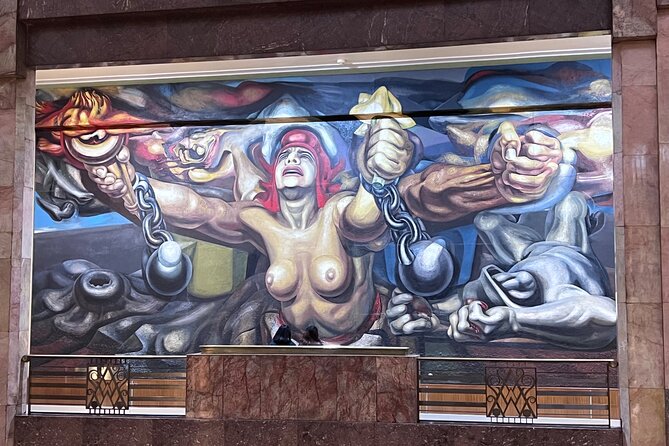
The tour connects the murals with the Mexican Revolution and labor struggles, but it does not stop there. It also addresses mythology, social evolution, industrialization, and the movement from pre-Hispanic traditions into contemporary life.
That range gives the visit its intellectual weight. The murals are not merely decorative scenes celebrating Mexico. They can be read as arguments about who belongs in the national story, how society should change, and what Mexico should remember.
You will encounter a mixture of rural and urban imagery. Nature and industry appear side by side. Historical memory meets modern production. Those contrasts help explain why the murals remain useful for understanding Mexican identity: they show a country trying to define itself through change.
I find this especially valuable when visiting Mexico City for the first time. The city can present many eras at once, but it is not always easy to connect them. The murals provide a visual route through those shifts, and the guide supplies the links.
The art may also raise uncomfortable questions. Political murals are rarely neutral, and the tour’s attention to power, labor, and social struggle means you are asked to think rather than simply admire. That is a strength, though visitors looking only for pretty architecture may find the discussion more serious than expected.
Is $60 a good value for 90 minutes?
The price is $60 per person. That is not the cheapest way to enter a cultural site, especially if you are happy reading labels or exploring on your own. The value comes from the focused interpretation, the small group, and the time spent placing the murals in context.
A maximum of six people is important here. In a large group, it can be hard to hear or ask questions in front of crowded walls. With fewer participants, the guide can respond to individual interests and spend more time on a work that has caught your attention.
You are paying for about 90 minutes, including 10 minutes outside and 80 minutes inside. That makes the tour compact enough to fit into a full day in Centro while still giving the murals proper attention.
I would book it if Mexican art, history, or politics is a major reason for your visit. I would skip it if your budget is tight and you only want a general look at Bellas Artes. In that case, self-guided time may offer better value.
The consistently positive response to Mercedes also matters. Her patience, preparation, and enthusiasm are not minor extras in an art tour. They shape whether the information feels clear or overwhelming.
Meeting at Madero Monument at 11:00 a.m.
The tour starts at Madero Monument in Colonia Centro, Cuauhtémoc, at 11:00 a.m. It ends back at the meeting point after the visit.
The meeting point is near public transportation, which makes it practical for a morning plan in central Mexico City. You should allow enough time to reach the monument and find the group without rushing. The supplied details do not specify a separate transport service, hotel pickup, or a meal, so plan to arrive independently.
Most people can take part, and the group size is capped at six. The activity is short, but you will spend much of it looking closely at walls and listening to explanations. Comfortable clothing and shoes are sensible, though no special equipment is listed.
Confirmation arrives when you book. If your plans change, cancellation is free until 24 hours before the local start time. Cancellations or changes made later are not refunded or accepted, so check your schedule before the final day.
Who will enjoy this Palace of Fine Arts tour?
I recommend it most strongly to:
- First-time visitors who want a clear introduction to Mexican muralism
- People interested in the links between art, politics, and social change
- Museum visitors who prefer discussion over a quick walk-through
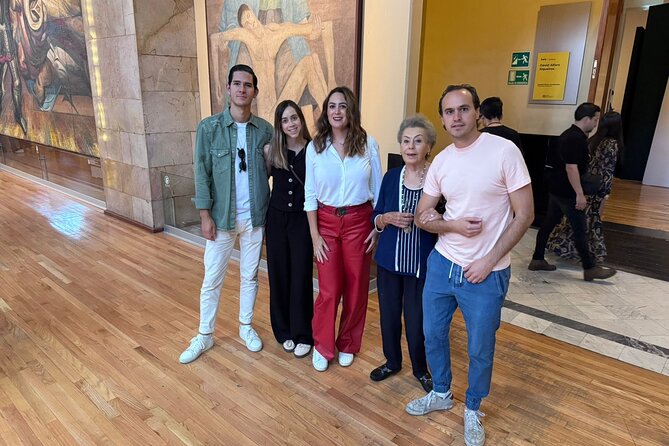
- Couples or small groups who value a personal guide
- Anyone curious about the differences between Rivera, Orozco, Siqueiros, and Tamayo
It may be less suitable if you want a broad city tour, extensive architectural coverage, or complete freedom to set your own pace. The visit stays centered on Bellas Artes and its murals.
Families and mixed-interest groups can still find value here, especially if someone in the group enjoys history or visual art. The small size and question-based approach may help keep the visit personal, but the tour’s historical themes could be more demanding for very young children.
Should you book it?
Book this tour if you want the Palace of Fine Arts to make sense, not just look impressive. The building provides the setting, but the murals provide the substance, and Mercedes Iriondo’s historical explanations help you see how art, politics, labor, mythology, and national identity meet on the walls.
At $60, it is a focused specialist tour rather than a bargain attraction. The strongest reason to choose it is the six-person limit and the guide’s patient, engaging style. If you have only a short time in Mexico City and want one serious cultural visit, this is a sound choice.
FAQ
Where does the tour begin?
It begins at Madero Monument in Colonia Centro, Cuauhtémoc, Mexico City.
What time does the tour start?
The start time is 11:00 a.m.
Where does the tour end?
The activity ends back at the meeting point.
How long does the tour last?
The tour lasts approximately 1 hour and 30 minutes.
How much does the tour cost?
The price is $60 per person.
What language is offered?
The tour is offered in English.
How many people can join?
The maximum group size is six travelers.
What does the exterior portion cover?
The opening portion explores the Palace of Fine Arts architecture, including façade elements and distinctive details.
Which muralists are included?
The tour covers works by Diego Rivera, José Clemente Orozco, David Alfaro Siqueiros, and Rufino Tamayo.
Can I cancel for a full refund?
Yes. You can cancel for a full refund up to 24 hours before the experience starts. Cancellations made less than 24 hours before the start time are not refunded.
Just added around Mexico
- Xochimilco floating gardens, Coyoacan and UNAM murals★ 4.0 · 6 reviews
- UNAM: Murals & Revolution★ 4.9 · 8 reviews
- Street Art & Cemetery Cultural Tour – half day★ 5.0 · 3 reviews
- Graffitis & Munchies biketour Playa del Carmen★ 4.5 · 18 reviews
- Street Art Walk★ 4.5 · 7 reviews
- Diego Rivera’s murals, hidden treasures★ 5.0 · 21 reviews
- Tour Women Muralists : Strokes that resist Mexico City★ 5.0 · 7 reviews
- Mexico City Private Tour with Teotihuacan, Murals, Guadalupe Basilica★ 3.0 · 2 reviews
Mexico City Mural Tours, compared.
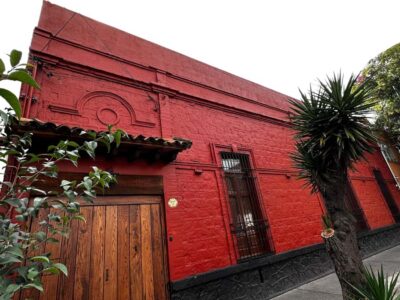
Xochimilco, Coyoacan, Frida Kahlo Museum & Murals Tour
Read our review →
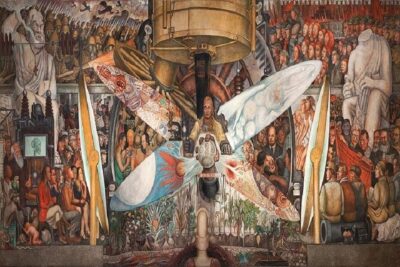
Walking Tour – Impressive murals in Historical Center of Mexico City
Read our review →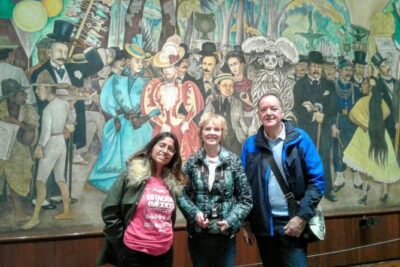
La Catrina & Muralism: Diego Rivera’s Legacy & Frida Kahlo
Read our review →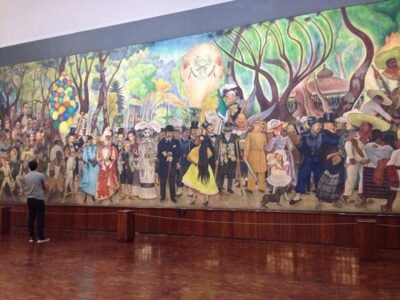
Muralist Art Semi Private Walking Tour in Mexico City Downtown
Read our review →
Xochimilco floating gardens, Coyoacan and UNAM murals
Read our review →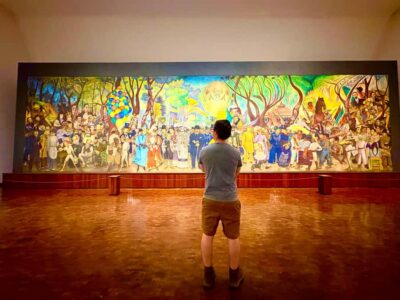
Browse the lists this tour appears in