
REVIEW · MEXICO CITY MURAL TOURS
Diego Rivera at the Living Museum of Muralism
Mexico’s walls do the talking. This two-hour visit to the Museo Vivo del Muralismo explores three floors of the former Secretary of Public Education, where Diego Rivera and other artists created more than 280 murals. I like the setting’s grand architecture, and I like that a bilingual guide adds context about Mexican politics, culture, and art. The main caution is price: museum entry is free, and a free English tour may be available at noon.
The small group, capped at 15 people, should make it easier to follow explanations and ask questions. If you get José as your guide, you may benefit from his strong English, Italian, thoughtful observations, and clear passion for Mexican culture. Still, you should compare this paid experience with the museum’s own free offerings before booking.
Key points to know before you go
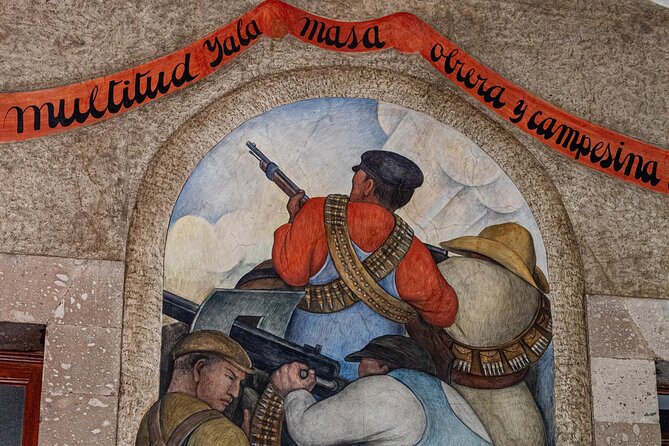
- More than 280 murals fill a former government headquarters, turning the building itself into part of the museum experience.
- Diego Rivera’s work takes center stage, especially on the first floor, with other major Mexican artists represented too.
- Siqueiros appears on the second-floor stairway, offering a useful contrast to Rivera’s style and subject matter.
- The museum does not charge admission, so the $53.55 price mainly pays for the bilingual guided experience.
- Groups are limited to 15 people, a practical size for discussion inside a mural-filled building.
- José has earned special praise for his English, Italian, cultural insight, and engaging teaching style, though guide assignment is not guaranteed.
Why this building matters as much as the murals
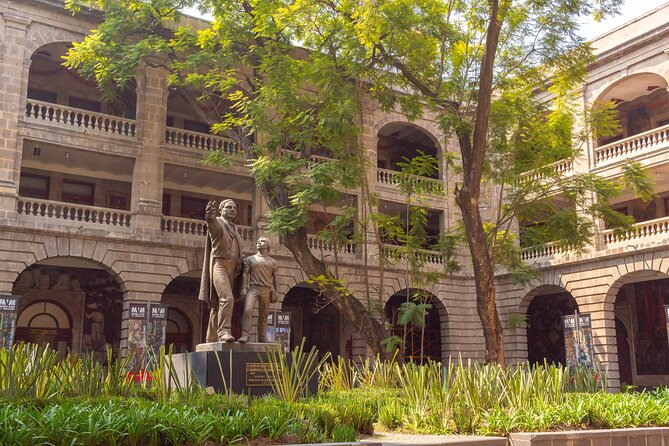
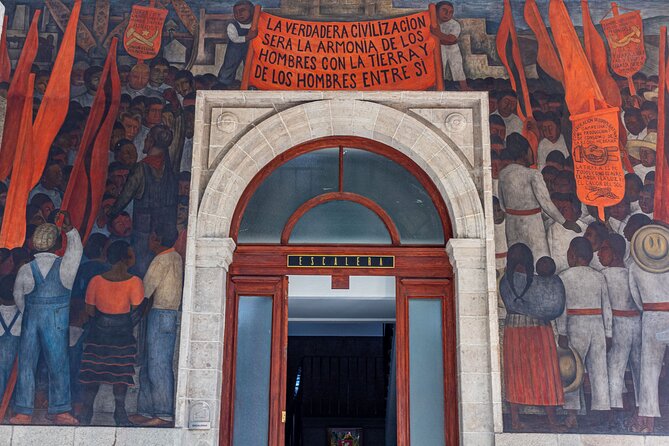
The address is República de Argentina 28 in Mexico City’s Centro Histórico. You are not walking into a plain gallery with white walls and isolated paintings. You are entering a former headquarters of the Ministry of Public Education, a government building whose corridors, stairways, courtyards, and rooms carry the art directly into the architecture.
That setting helps explain why this visit can feel different from a standard museum stop. Rivera’s murals were made for public spaces, not private collectors. They were meant to meet workers, students, and ordinary citizens as they moved through the building. The art is part of the daily route, not simply placed behind glass.
I especially like this arrangement for first-time visitors to Mexican muralism. Instead of seeing one famous panel and moving on, you get a sense of scale. Three floors give the guide room to connect individual murals with larger subjects such as labor, education, politics, national identity, and Mexican society.
The building also gives the visit a strong visual rhythm. You may move from a long mural-covered passage to a stairway display, then into another room where the architecture frames the artwork. Details about the building’s former government role make the murals easier to understand, because the location tells you who the art was meant to reach.
More Muralism Tours in Mexico:
- CDMX: Xochimilco, Coyoacan, Frida Kahlo Museum & Murals Tour
★ 4.4 · 3,025 reviews - La Catrina & Muralism: Diego Rivera’s Legacy & Frida Kahlo
★ 4.5 · 197 reviews - Muralist Art Semi Private Walking Tour in Mexico City Downtown
★ 5.0 · 188 reviews
Following Diego Rivera across three floors
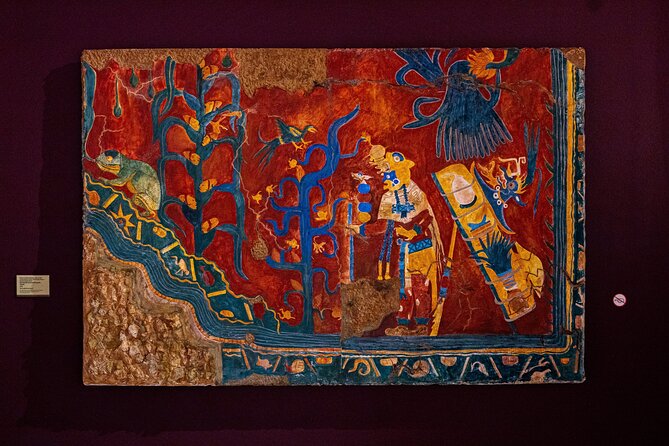
The main focus is Diego Rivera, one of Mexico’s best-known muralists. The first floor contains a major concentration of his work, and this is likely where much of the tour’s attention will go.
A guide can help you read Rivera’s murals as more than large, colorful scenes. Look for the way people are grouped, the gestures that direct your eye, and the balance between daily work and political ideas. Rivera often packed public murals with people, symbols, and historical references. Without explanation, you can admire the scale and color while missing the argument underneath.
That guided interpretation is the strongest reason to consider paying for this experience. A bilingual guide can point out connections between individual scenes and Mexico’s cultural and political development. You may also get help separating Rivera’s own work from murals by other artists, which is useful in a building with such a large collection.
I would not expect every mural to receive equal attention in a two-hour visit. With more than 280 works in the building, the guide has to make choices. That is not a flaw, but it means you should think of the tour as an introduction and guided route rather than a complete study of every image.
If you enjoy stopping for a long time at one painting, a self-guided visit may suit you better. A group tour keeps moving so that the full three-floor route fits within roughly two hours. The benefit is structure. The tradeoff is less time for your own pace.
The Siqueiros display on the stairway
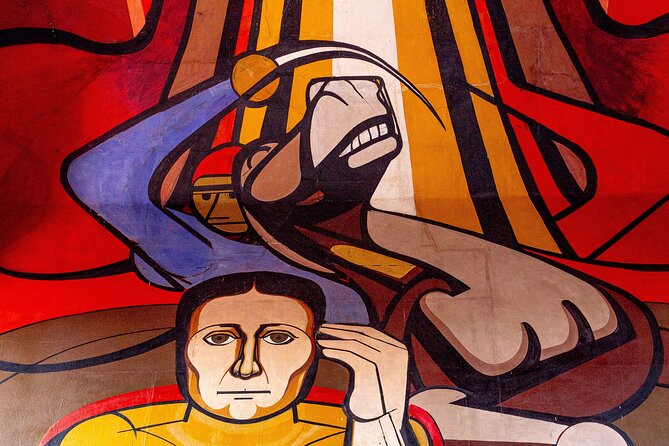
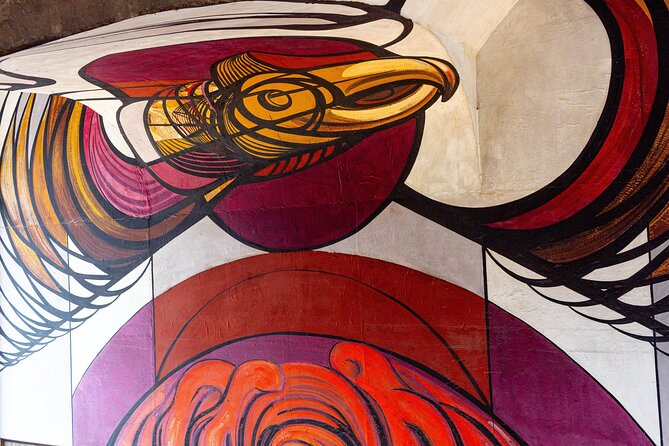
The second-floor stairway offers an especially memorable change of voice. A striking exhibition of David Alfaro Siqueiros appears there, giving you a chance to compare his work with Rivera’s.
The location matters. A stairway is not a quiet gallery, and the art meets you as you move between floors. That placement creates a more active encounter with the murals. You may notice how the angles, movement, and placement of the figures work with the building’s circulation rather than against it.
Siqueiros and Rivera both belong to Mexico’s major mural tradition, but a good guide can help you notice differences in mood, composition, and political expression. This is where the bilingual explanations can add real value. You are not simply collecting famous names. You are seeing how several artists approached the public mural in different ways.
The available information does not specify exactly how long the tour stops at the Siqueiros display, so I would treat it as one important part of the route rather than a separate full exhibition visit. If Siqueiros is your main interest, ask at the start how the guide plans to divide the two hours.
What the bilingual guide adds
The experience includes a bilingual guide, and guide quality appears to be its most important variable. A strong guide can turn a wall of figures into a readable story. A weak one would leave you with little more than a fast walk through a remarkable building.
José receives particularly warm praise for his preparation, kindness, welcoming manner, and ability to explain ideas clearly. His English is described as strong, and he also speaks Italian. He is associated with thoughtful discussion of Mexican culture, history, and politics, rather than simple fact recitation.
That matters because muralism can quickly become confusing. You may hear names, dates, political movements, and artistic terms in quick succession. The best explanations give you a few clear ideas to carry from room to room, then encourage you to look again and form your own opinion.
José is also described as a poet and composer who hopes to write a novel. That detail suggests a guide with broad cultural interests and an expressive way of speaking. It does not guarantee that he will lead your particular departure, so treat it as a useful possibility, not a promise.
The group limit of 15 is another positive. You are less likely to be lost in a large crowd, and it should be easier to hear the guide in corridors or stairways. A small group also makes questions more practical. The experience is still shared, so you will not have complete freedom to stop at every mural.
More Street Art Museums and Galleries in Mexico:
- Explore Modern Art & Murals in Mexico City’s Best Museums
★ 5.0 · 2 reviews - Mexico City: Murals at the Museum of San Ildefonso
★ 5.0 · 2 reviews - Amsterdam: Streetart Museum STRAAT Entrance Ticket
★ 4.8 · 2,137 reviews - STRAAT Museum – Museum for Street Art Amsterdam Admission Ticket
★ 5.0 · 192 reviews
Is $53.55 a fair price?
The listed price is $53.55 per person. Since museum admission is free, this is not an entry ticket in the usual sense. You are mainly paying for the organized route, bilingual interpretation, and the convenience of having someone frame the collection for you.
That can be good value if you want an art-focused introduction and prefer not to prepare in advance. Rivera’s murals are numerous and visually dense. A guide can save you time by identifying the most important works and explaining what you are seeing.
The price is harder to justify if you are comfortable exploring on your own. A free English tour may be available at noon, and entry itself requires no payment. The museum’s free option may be especially useful if your schedule lines up with it.
I would compare three choices:
- Choose the paid tour if guide-led interpretation is your priority.
- Choose the free museum visit if you want to browse slowly and read at your own pace.
- Check for the free noon English tour before paying, particularly if your schedule is flexible.
The paid experience still has advantages over simply arriving without a plan. You have a stated two-hour route, a bilingual guide, and a small maximum group. For someone with limited time in the Centro Histórico, that organization may be worth the cost.
The listing says the tour is booked around 21 days ahead on average. That suggests planning early is sensible, especially if you want a particular date. It does not mean every departure sells out, but last-minute availability should not be assumed.
Meeting in the Centro Histórico
The meeting point is the Museo Vivo del Muralismo at República de Argentina 28, in the Centro neighborhood of Cuauhtémoc. The activity begins and ends at the same location, which simplifies the rest of your day.
The museum is near public transportation, making it easier to add to a broader Centro Histórico plan. You can arrange other sightseeing before or after without needing a separate return transfer. No transportation is included, so you are responsible for getting to the meeting point.
The exact starting time is not provided here. Check that carefully before booking, especially if you hope to match the paid tour with other appointments or the museum’s free noon offering.
Plan for the full two hours rather than assuming the visit will be a quick look. Three floors and a large mural collection require time, even with a focused route. You may also want a few quiet minutes at the end to look again at a work that caught your attention.
The activity is described as suitable for most people, and the group maximum is 15. Specific mobility details are not provided, so anyone who needs particular arrangements should confirm them before booking.
Who will get the most from this tour?
I would recommend this experience most strongly to you if you are curious about Mexican art but do not yet know how to read muralism. The guide can supply the cultural and political frame that helps the images make sense.
It also suits a first visit to Mexico City, a short stay, or a Monday plan when some museums may be closed or operating on different schedules. The museum itself offers a substantial cultural stop without an admission charge.
Art students, teachers, and anyone interested in public art may find the building especially useful. You can study how murals work in corridors and stairways, how several artists share one institutional setting, and how a government building becomes a place for public storytelling.
You may want to skip the paid tour if you dislike fixed pacing, prefer silence, or already have a strong background in Rivera and Siqueiros. The free entry gives you a chance to make your own route. You could also ask whether the museum’s own English tour fits your plans.
Families and mixed-interest groups may appreciate the two-hour length, but the subject matter can become dense. The guide’s style will shape how accessible the visit feels. A thoughtful guide can keep younger or less art-focused members involved, while a more academic presentation may test their patience.
Booking and cancellation details
Confirmation is provided when you book. Mobile tickets are accepted, and the experience is offered in English, with a bilingual guide included.
Tips are not included. Carrying some cash or planning to tip separately is sensible if the guide gives you a strong, personal experience.
You can cancel for a full refund up to 24 hours before the local start time. Cancellations or changes made within 24 hours are not refunded or accepted. That rule matters if your Mexico City schedule is still shifting, so avoid booking too early unless your plans are firm.
Should you book this mural tour?
Book it if you want a guided introduction to Diego Rivera, Siqueiros, and Mexico’s public mural tradition in a remarkable former government building. The three-floor route, small group, and bilingual explanation give the visit useful structure, and José sounds like an excellent guide if he is assigned to your group.
Before paying $53.55, check the museum’s free options. Entry costs nothing, and a free English tour may run at noon. If that timing works, you can save the money and still receive guidance from museum staff.
My practical call is simple: choose the paid tour for interpretation and convenience, not for admission. Choose the free option for flexibility and value. Either way, give this museum a proper two-hour slot. The murals deserve more than a quick glance while you rush through the historic center.
FAQ
Where does the Diego Rivera mural tour begin?
It begins at the Museo Vivo del Muralismo, República de Argentina 28, Centro Histórico de la Ciudad de México, Centro, Cuauhtémoc, 06020 Ciudad de México, CDMX, Mexico.
Where does the tour end?
The activity ends back at the same meeting point, the Museo Vivo del Muralismo.
How long does the experience last?
The tour lasts approximately two hours.
What language is the tour offered in?
The experience is offered in English and includes a bilingual guide.
How much does the tour cost?
The listed price is $53.55 per person.
Is museum admission included?
Museum admission is free. The paid experience covers the guided visit rather than a separate admission charge.
How many people can join the tour?
The activity has a maximum group size of 15 people.
Can I cancel for a refund?
Yes. You can cancel at least 24 hours before the local start time for a full refund. Cancellations or changes made less than 24 hours before the start time are not refunded or accepted.
Just added around Mexico
- Xochimilco floating gardens, Coyoacan and UNAM murals★ 4.0 · 6 reviews
- UNAM: Murals & Revolution★ 4.9 · 8 reviews
- Street Art & Cemetery Cultural Tour – half day★ 5.0 · 3 reviews
- Graffitis & Munchies biketour Playa del Carmen★ 4.5 · 18 reviews
- Street Art Walk★ 4.5 · 7 reviews
- Tour Women Muralists : Strokes that resist Mexico City★ 5.0 · 7 reviews
- Diego Rivera’s murals, hidden treasures★ 5.0 · 21 reviews
- Mexico City Private Tour with Teotihuacan, Murals, Guadalupe Basilica★ 3.0 · 2 reviews
Mexico City Mural Tours, compared.
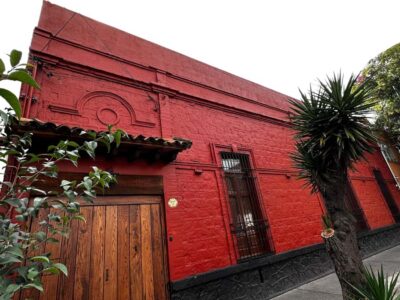
Xochimilco, Coyoacan, Frida Kahlo Museum & Murals Tour
Read our review →
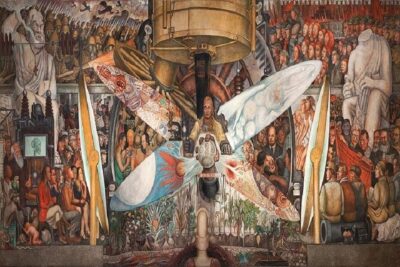
Walking Tour – Impressive murals in Historical Center of Mexico City
Read our review →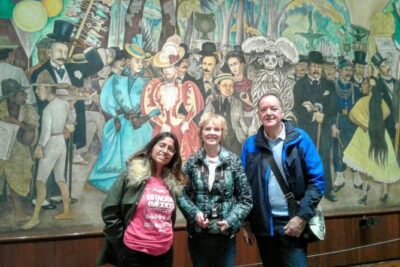
La Catrina & Muralism: Diego Rivera’s Legacy & Frida Kahlo
Read our review →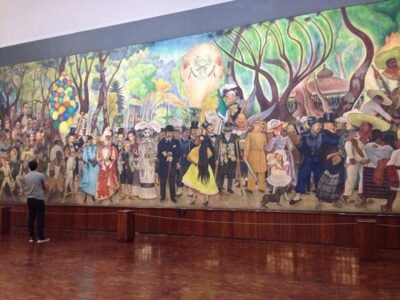
Muralist Art Semi Private Walking Tour in Mexico City Downtown
Read our review →
Xochimilco floating gardens, Coyoacan and UNAM murals
Read our review →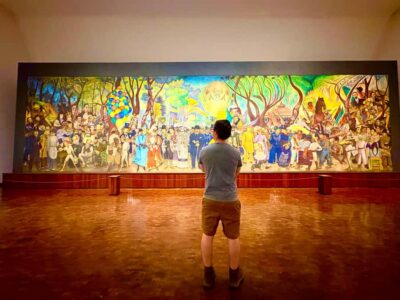
Browse the lists this tour appears in