
REVIEW · BERLIN MURAL TOURS
Berlin: Alternative & Street Art Tour
Berlin wears its history on the walls. This three-hour tour connects street art, punk, techno, squatting culture, and creative community spaces across Mitte, Kreuzberg, and Friedrichshain. I like its focus on living culture rather than polished landmarks, and I like that places such as Haus Schwarzenberg and the Treehouse on the Wall give the stories a real setting.
The $23 price is fair for a guided introduction to a side of Berlin that can be hard to find on your own. The main consideration is simple: this is an outdoor experience in rain or shine, and the route covers several districts, so comfortable shoes and weather-ready clothing matter.
Key points to know before booking
- Haus Schwarzenberg offers a close look at Berlin’s street art and alternative creative scene.
- YAAM Beach brings together reggae, music, graffiti, and community beside the Spree.
- Künstlerhaus Bethanien connects contemporary art with Berlin’s squatting and housing activism.
- The Treehouse on the Wall shows how an unusual act of defiance became a lasting city symbol.
- SO36 carries the story of Kreuzberg punk and Berlin’s eclectic music culture.
- English-speaking guides such as Damien and Antonio Castello have earned especially warm praise for their energy and clear explanations.
Why this is a different kind of Berlin tour
Berlin’s major sights tell only part of the story. The Brandenburg Gate, Museum Island, and the Berlin Wall Memorial explain the city’s political past, but this tour asks a different question: how did Berlin become a home for artists, musicians, activists, squatters, and people who wanted to live outside the usual rules?
That question leads you away from the grand ceremonial center and into places shaped by experimentation. You see walls used as canvases, former industrial or institutional spaces turned toward art, and community venues that refuse to fit a single label.
I like this approach because alternative culture is not treated as decoration. Punk, techno, graffiti, political activism, and squatting are presented as forces that changed how Berliners used their city. The guide’s stories are meant to explain why so many artists live in Berlin and why the city continues to attract people who want room to try something new.
The tour travels through Mitte, Kreuzberg, and Friedrichshain. These districts are not interchangeable. Mitte has central city energy and important street-art sites. Kreuzberg brings a strong multicultural identity, political history, and punk connections. Friedrichshain adds creative spaces and the atmosphere around the former Wall and the Spree.
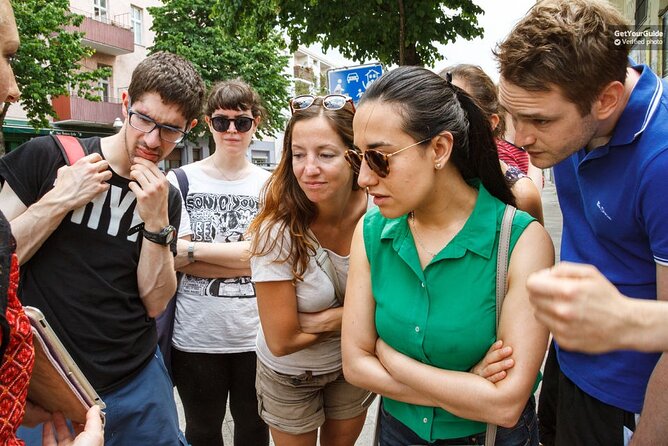
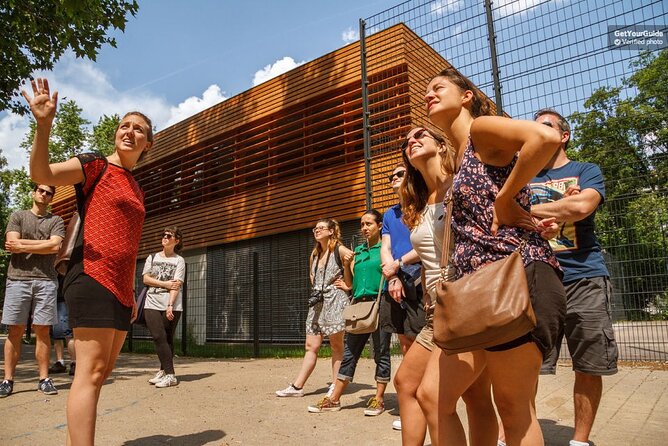
You should expect a walking-based experience with stops rather than a formal museum presentation. That means the city itself is the subject. You may spend time looking at murals, buildings, public spaces, and unusual structures while your guide fills in the political and cultural background.
More Alternative City Tours in Germany
- Berlin: Street Art and Alternative Tour
★ 4.7 · 98 reviews - Street Art and Alternative Tour of Berlin in French
★ 5.0 · 49 reviews - Berlin Alternative Street Art Tour
★ 4.0 · 26 reviews
Starting beneath the TV tower
The meeting point is directly beneath the Berlin TV tower, in front of Vapiano restaurant. This is a practical starting place because the tower is one of Berlin’s easiest landmarks to identify, especially if you are still finding your way around central Berlin.
Arrive with enough time to locate the exact meeting spot. A large central landmark can have plenty of foot traffic, so being near the restaurant rather than simply somewhere around Alexanderplatz matters. You will want your phone charged as well, since the tour promises plenty of photo opportunities.
The opening location also creates a useful contrast. You begin near one of Berlin’s most recognizable symbols of official modernity, then move toward spaces shaped by grassroots culture, artistic rebellion, and alternative ways of living. That change in atmosphere is part of the point.
The tour lasts three hours. That is long enough to build a connected story, but short enough to fit into a busy Berlin day. You can schedule it early in your visit to get ideas for later exploration, or place it after the main historic sights when you are ready to see a less formal side of the city.
Haus Schwarzenberg and Berlin’s street-art language
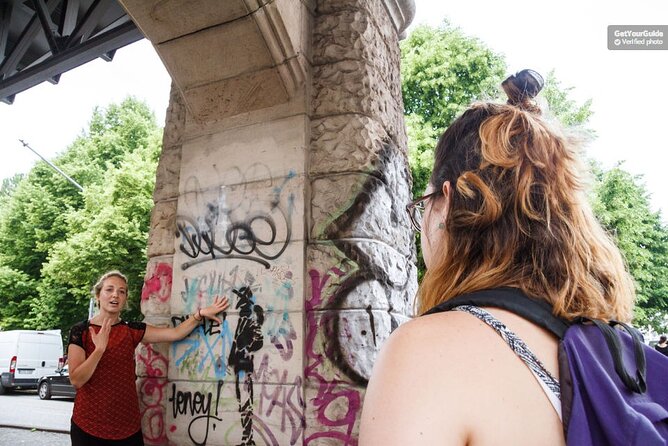
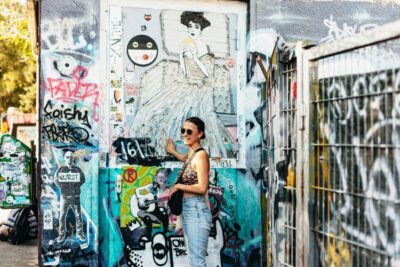
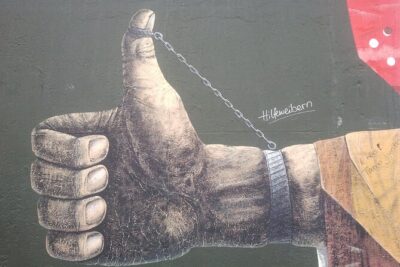
Haus Schwarzenberg is one of the strongest stops for people who come mainly for urban art. Its walls and surfaces are filled with street art, murals, and changing creative work. This is not the same as looking at a single framed painting. The building and its surroundings are part of the work.
Your guide can help you read the place beyond color and spectacle. Berlin’s street art often carries political messages, personal statements, humor, and arguments about who has the right to shape public space. Without context, you may simply see a striking wall. With context, you start to understand why that wall matters.
This stop should be especially useful if you enjoy photography. The layered surfaces, unusual details, and changing artwork create many possible images. Bring a camera or keep your phone ready, but also give yourself time to look closely. Street art rewards attention to small details.
One limitation is that public art changes. A mural may be painted over, altered, or replaced. That is part of the nature of the scene, but it means the exact visual experience can vary. The tour’s value is not only in seeing a particular picture. It is in learning how Berlin treats the city as an open, shifting art space.
The Treehouse on the Wall
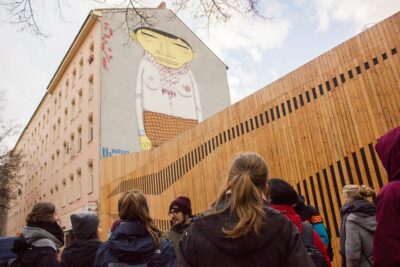
The Treehouse on the Wall is one of the tour’s most unusual sights. It represents ingenuity and defiance, and it gives you a physical reminder that Berlin’s former division shaped everyday decisions about land, borders, and ownership.
The appeal here is the story behind an object that might otherwise look simply eccentric. A treehouse beside the former Wall brings together humor, resistance, and practical creativity. It shows how an individual act can become part of a much larger city story.
This is also a good example of why a local guide helps. A photograph can show you the structure, but the guide explains how it fits into Berlin’s culture of protest and alternative living. The stop is less about architecture in the traditional sense and more about the idea of refusing to accept the city exactly as it is handed to you.
The Treehouse is likely to appeal to people who enjoy odd details and human-scale history. If you prefer grand monuments, it may seem modest at first. Give it a moment. Its importance comes from the attitude it represents.
More Alternative City Tours in Berlin:
- Berlin: Alternative Street Art Tour
★ 4.4 · 18 reviews - Alternative Berlin & Street Art Tour
★ 4.5 · 14 reviews - Alternative Berlin Private Tour with Jacob – Graffiti and Squats
★ 5.0 · 6 reviews - Alternative Berlin / Street art tour – Private group
★ 5.0 · 6 reviews
Künstlerhaus Bethanien and the squatting movement
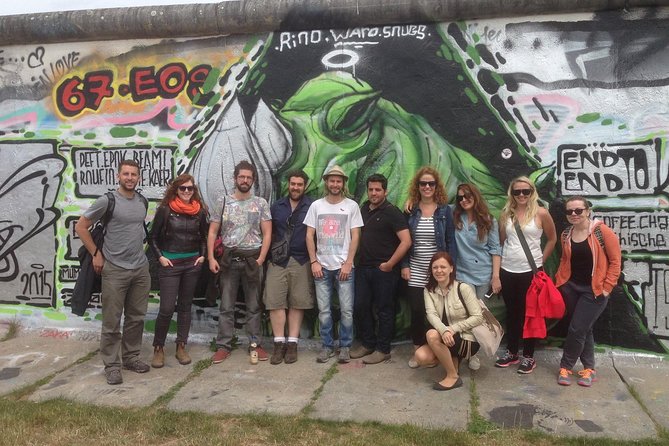
Künstlerhaus Bethanien brings the tour into the relationship between art, housing, and activism. It is a center for contemporary art, but it also connects to the origins of Berlin’s squatting scene and alternative housing movements.
That connection is important. In Berlin, squatting was not only about occupying empty buildings. It was tied to arguments over housing, community control, property, and the right to use neglected urban spaces. Artists and activists often helped turn abandoned or disputed areas into places for living and creative work.
At Bethanien, you get a clearer sense of how cultural spaces can grow out of political conflict. The tour does not present alternative culture as a collection of colorful curiosities. It shows how art and activism often overlap, especially when people are challenging the way a city is managed.
This stop may be more meaningful if you already know a little about Berlin after reunification, but you do not need a background in urban politics. A good guide can provide the basic timeline and explain why the squatting movement mattered.
Do not expect a quiet gallery visit with time for a full exhibition. The stop belongs to a larger walking route, so the emphasis is on place, context, and the story of Berlin’s alternative housing culture.
YAAM Beach, reggae, and community by the river
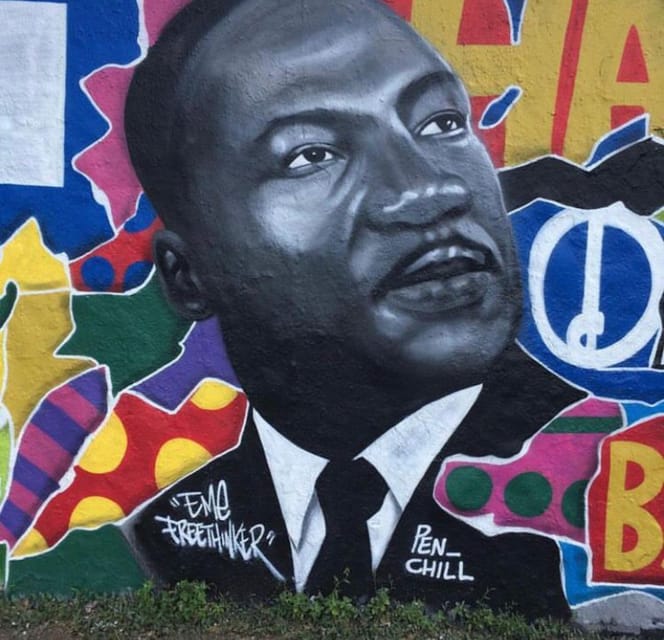
YAAM Beach adds music and community to the route. The space is associated with reggae, live music, graffiti, and a multicultural atmosphere. It gives you a break from the heavier political and historical themes while showing another way Berlin’s alternative scene gathers people together.
The name beach can be slightly misleading if you imagine a classic seaside resort. This is a city setting, shaped by music, art, and social activity. Its appeal comes from the contrast between an urban capital and a relaxed riverside meeting place.
I like this stop because it shows that Berlin’s alternative culture is not only about protest. It is also about pleasure, music, food, friendship, and creating a place where different communities can meet. The combination of reggae and graffiti gives the tour a different rhythm here.
Conditions and activity can vary, especially because this is an outdoor setting. The tour takes place rain or shine, so YAAM may feel very different on a bright afternoon than on a wet day. You should treat it as a cultural stop rather than a guaranteed beach day.
SO36 and the sound of Kreuzberg
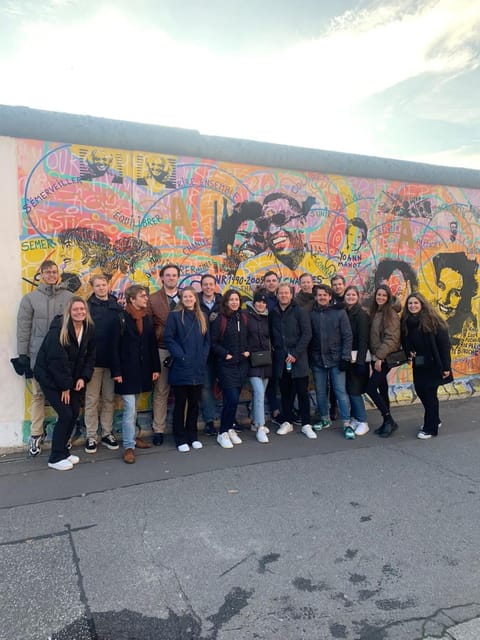
SO36 is tied to Berlin’s punk, alternative music, and club culture. The venue’s name carries weight in Kreuzberg, where music and political identity have long shared the same streets.
The guide’s job here is to show how punk was more than a style of clothing or a loud night out. It expressed frustration with authority, housing pressure, social rules, and the desire to build an independent community. SO36 helps place those ideas in a real neighborhood.
This is also where the tour’s music story broadens. It moves from punk toward techno and the underground scenes that helped make Berlin famous after the Wall fell. You learn how clubs and informal venues became part of the city’s identity, often using spaces that had been ignored or left empty.
You should not expect entry into a club performance or a full nightlife experience as part of the three-hour tour. The value is in understanding the setting and the cultural history around it. If you plan to go out later, the stop may give you useful context for Berlin’s club culture.
What the guide adds to the experience
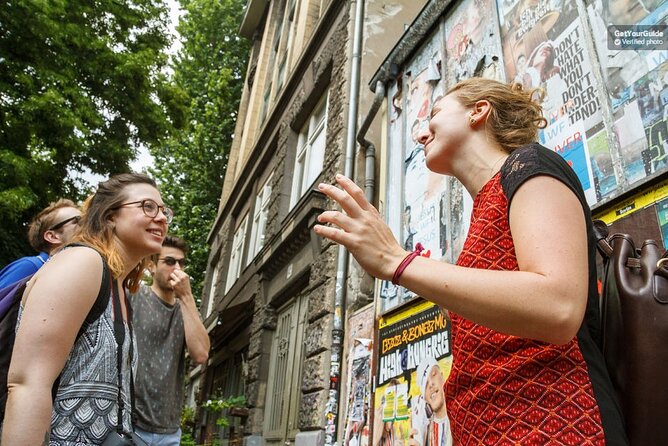
The guide is central to this tour. The locations are interesting, but their meaning is not always obvious from the street. You need someone who can connect the art, buildings, neighborhoods, and movements.
The strongest comments about the tour focus on the guides’ enthusiasm and clear explanations. Damien is praised for making the alternative side of Berlin pleasant to discover, while Antonio Castello receives especially warm approval for the insight he brought to the experience. Jacqueline also described her guide as friendly and calm when explaining things.
Those details suggest a tour style that is conversational rather than academic. That suits the subject. Berlin’s alternative culture is full of complicated stories, but you do not need a lecture packed with dates and names. You need a guide who can explain why a place matters without draining the energy from it.
The quality of the experience may depend heavily on the individual guide. That is normal for a neighborhood tour built around stories and interpretation. If you enjoy asking questions, use the opportunity. Ask about the art you see, the history of squatting, how techno developed, or why artists continue to choose Berlin.
Price, pace, and what you need to bring
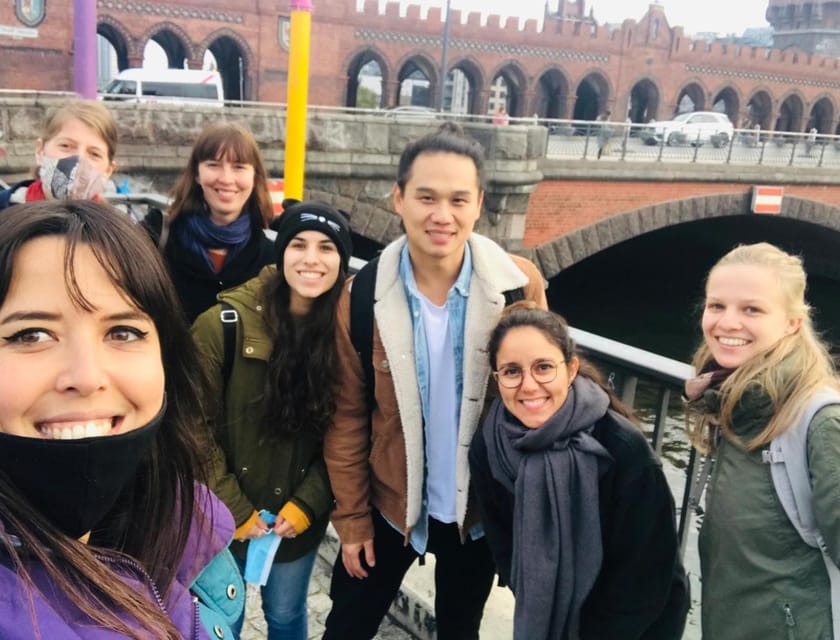
At $23 per person, this tour offers good value if you want a guided introduction to Berlin’s alternative culture. You are paying for three hours of local explanation across several districts, not for admission to a major museum or a luxury sightseeing service.
The price does not include food, drinks, transportation tickets, or tips. Plan for those costs separately. Since the route connects Mitte, Kreuzberg, and Friedrichshain, check the day’s transportation needs and have a valid ticket if your group uses public transport during the route.
Wear comfortable shoes. The experience is described as a walking tour, and three hours on city streets can feel long in poor footwear. Bring water, a rain jacket, and sun protection depending on the forecast. The rain-or-shine policy is clear, so do not assume bad weather will cancel the outing.
The tour is listed as wheelchair accessible, which is useful information when planning. Still, the experience includes public streets, outdoor sites, and changing urban spaces. If you have specific mobility needs, confirm the route details before booking.
Free cancellation is available up to 24 hours before the start time, and you can reserve now and pay later. Those policies make it easier to fit the tour into a changing Berlin schedule.
Who will enjoy this Berlin experience most?
I would recommend this tour to you if you have already seen Berlin’s main historic sights and want to understand the city’s creative and rebellious side. It also works well early in a first visit because it can point you toward neighborhoods and cultural spaces you might otherwise miss.
It is a good match for:
- People who enjoy graffiti, murals, photography, and contemporary art
- Visitors curious about punk, techno, reggae, and club culture
- Anyone interested in squatting, housing activism, and alternative communities
- Families with older children who can handle a three-hour city walk
- People who prefer neighborhood stories to formal sightseeing
- Private groups looking for a different way to see Berlin
It may be less suitable if you want a relaxed sightseeing ride, a museum-heavy itinerary, or a tightly controlled schedule indoors. The route is shaped by the city, the weather, and the guide’s storytelling. That openness is part of its appeal, but it will not suit everyone.
Should you book the Alternative and Street Art Tour?
Book it if you want Berlin explained through its murals, music venues, community spaces, and acts of resistance. At $23, the price is modest for three hours of guided context, and the route covers several important parts of the city’s alternative identity.
I would especially choose it for an early or middle day of a Berlin visit. You will get a better sense of what makes neighborhoods such as Kreuzberg and Friedrichshain different, and you may leave with a longer list of places to explore on your own.
Skip it if rain, walking, or outdoor conditions would spoil your day. Otherwise, this is a useful, lively introduction to the Berlin that does not appear on every standard sightseeing route.
FAQ
How long does the Berlin Alternative and Street Art Tour last?
The tour lasts three hours.
How much does the tour cost?
The listed price is $23 per person.
Where does the tour meet?
The meeting point is directly beneath the TV tower, in front of Vapiano restaurant.
What language is the tour conducted in?
The tour is conducted in English with a live English-speaking guide.
Which Berlin districts does the tour visit?
The route travels through Mitte, Kreuzberg, and Friedrichshain.
Is transportation included?
Transportation tickets are not included. Food, drinks, and gratuities are also separate.
Does the tour operate in bad weather?
Yes. The tour takes place rain or shine.
Is the tour wheelchair accessible?
Yes, the activity is listed as wheelchair accessible.
Just added around Berlin
- Graffiti Workshop Berlin with professional graffiti artists★ 4.0 · 4 reviews
- Alternative Berlin Private Tour with Jacob – Graffiti and Squats★ 5.0 · 6 reviews
- Alternative Berlin & Street Art Tour★ 4.5 · 14 reviews
- Open graffiti workshop in the Mauerpark in Berlin★ 5.0 · 2 reviews
- Private Alternative Berlin Tour -Murals, Graffiti and Squats★ 4.8 · 5 reviews
- Street Art Workshop & Tour – Private Group★ 5.0 · 2 reviews
- Street Art & Berlin Gay, Queer, Trans History + Free Gay Map★ 4.9 · 15 reviews
- Berlin : Private Street Art Walking Tour (Private Tour)★ 5.0 · 2 reviews
Berlin Mural Tours, compared.


East Meets West: Berlin Food Culture & Street Art
Read our review →
Street Art and Alternative Tour of Berlin in French
Read our review →Browse the lists this tour appears in