
REVIEW · BARCELONA MURAL TOURS
Barcelona Street Art Tour with Exclusive Artist Studios Visit
Barcelona’s walls reward a slower walk. This two-hour tour moves through El Raval, the Gothic Quarter, Poble Sec, and other art-heavy corners, then brings you into a working studio where artists can explain their process. I love the small group of up to 12 and the chance to meet artists rather than simply photograph their work. I also like how the tour helps you notice tags, murals, and small details long after the walk ends.
The main consideration is that street art changes quickly, and the tour may not focus on only the largest murals. One past participant wanted to see more large-scale works, while most praised the mix of art, local stories, and studio access. Guide quality also matters, though names including Luke, Juan, Katrina, Jimi, Valentina, Bernardo, and Kathryn appear in the feedback, with especially warm comments about their passion and personal knowledge of the scene.
Key points at a glance
- Artist-led city walk: Guides may bring personal experience as working artists, not just general sightseeing commentary.
- Six contrasting stops: The route links El Raval, the Gothic Quarter, Poble Sec, Las Ramblas, Tres Xemeneies, and BienCuadrado.
- Working studio access: The private visit is the tour’s special feature, with a chance to see artists at work and ask direct questions.
- Small-group format: A maximum of 12 people makes it easier to hear the guide and ask about individual pieces.
- Useful early-trip activity: You begin spotting signatures, styles, and small works around Barcelona after the tour.
- Good value at $33.88: For two hours, gallery access, a selected route, and studio time, the price is reasonable for anyone interested in urban art.
Why this Barcelona street art tour is different
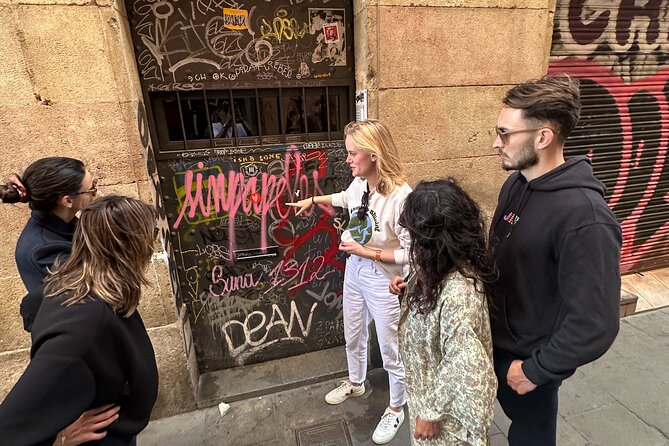
Barcelona is easy to admire through Gaudí, medieval lanes, and grand plazas. Street art asks you to look lower, higher, and sometimes behind an ordinary doorway. A painted shutter, a tiny signature, or a half-hidden character may carry as much local meaning as a work in a formal museum.
This experience gives you a way into that less polished side of the city. You are not simply taken to a wall, given the artist’s name, and sent on your way. The guide explains how the city’s graffiti and street art developed, how artists work in public space, and why some pieces become recognized beyond the street.
I especially like the practical effect of the tour. Afterward, you are likely to notice work you would previously have walked past. Several people described continuing to spot signatures and images during the rest of their time in Barcelona. That makes the experience useful beyond its two-hour schedule.
The tone appears informal and personal. Guides such as Luke and Juan are described as having close links to the local art scene, while Jimi and Katrina were praised for being warm, clear, and enthusiastic. The exact guide is important because this is a story-led walk, not a recorded audio route.
A few more mural tours around Barcelona worth a look
- Barcelona Street Art and Graffitti Bicycle Tour
★ 5.0 · 361 reviews - Raval Street Art and Graffiti Guided Tour in Barcelona
★ 5.0 · 81 reviews - Barcelona: Raval Street Art and Graffiti Walking Tour
★ 4.9 · 60 reviews
Starting on Paral·lel and entering El Raval
The meeting point is outside Teatre Condal at Avinguda del Paral·lel, 91. This places you near Barcelona’s theatre district and gives the outing a fitting start: you begin among entertainment venues before moving toward the city’s street-level art culture.
The first substantial section is El Raval, scheduled for about 30 minutes. This neighborhood is known here for its mix of record stores, skate parks, bodegas, small squares, and narrow lanes. That setting matters. Street art makes more sense when you see it beside everyday businesses and local gathering places, not only on a designated art trail.
Your guide points out visible pieces as well as works you might miss on your own. The value is in learning how to look: notice recurring marks, different methods, changes in scale, and the way a piece responds to its wall or street. You may also hear about the people and communities behind the work.
El Raval is an area where the route may feel more like neighborhood exploration than a parade of famous murals. That is a plus if you want a less packaged view of Barcelona. If your main goal is a long list of monumental paintings, you may find this section more subtle than expected.
Gothic Quarter galleries and medieval streets
The tour then continues into the Gothic Quarter for about 30 minutes. Its old lanes, courtyards, squares, and cathedral architecture create a striking contrast with spray paint, paste-ups, tags, and contemporary gallery work.
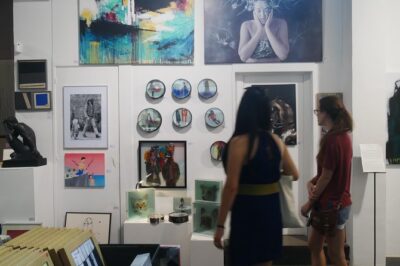
This section includes a visit to a street art gallery. That shift from public wall to indoor exhibition helps explain how artists move between street practice and gallery presentation. You can compare work designed for passing pedestrians with pieces made to be studied at closer range.
The setting also gives the guide room to connect art with Barcelona’s wider cultural story. Juan, in particular, was praised for explaining how Barcelona became home to a varied international art community. Other guides have added comments about architecture, city history, and local customs, so the tour is not limited to technical art terms.
I would pay attention to the guide’s explanation of context rather than trying to photograph every piece. Some works may disappear or change, but an understanding of styles and symbols remains useful for the rest of your visit.
Poble Sec murals along Paral·lel
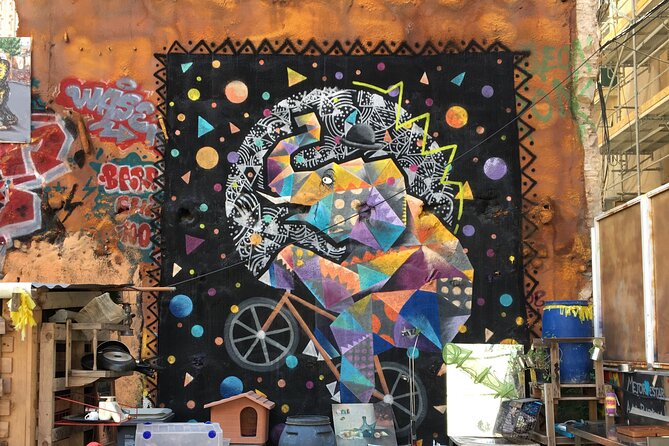
The Poble Sec portion takes about 10 minutes and begins around Paral·lel, the avenue associated with Barcelona’s theatre culture. The focus here is on large murals by internationally recognized artists.
This is the quickest stop, so expect an introduction rather than a long examination of each wall. It works well as a contrast with El Raval and the Gothic Quarter. You see how street art can occupy a broad public surface and become part of the city’s visual identity.
The short timing is also a reminder that this is a walking route with several themes, not a single-site mural tour. You get range: large public works, small marks, gallery pieces, and studio work. The trade-off is that no one location receives an extended lecture.
Same walls, a different guide:
- Barcelona: 3.5-Hour Street Art Tour by Bamboo Bike
★ 5.0 · 56 reviews - Private Barcelona Street Art Workshop with a Street Artist
★ 5.0 · 34 reviews - Barcelona: Street Art & Visit to Galleries Tour
★ 4.7 · 30 reviews - Barcelona Art & Wine: Galleries, Studios & Street Art
★ 5.0 · 26 reviews
Tres Xemeneies, skateboards, and living street art
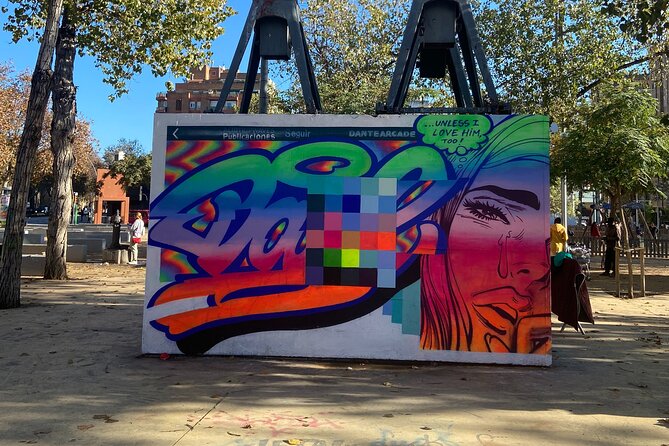
The Jardins de les Tres Xemeneies section lasts about 15 minutes. It is presented as one of Europe’s important street art locations, with space for murals, skateboarding, basketball, street gymnastics, and new work by individuals and crews.
This may be the most energetic stop. The park setting shows street art as part of a public social space rather than decoration pasted onto a quiet wall. You might see people using the area while artists leave their mark, giving the place a sense of constant change.
It is also a strong photo stop. Still, do not expect a static outdoor museum. The work can change, and activity in the park may compete with your attention. I would bring a phone or camera, but keep listening. The guide’s explanation of the site’s role in European street art culture is more valuable than collecting a quick series of images.
Las Ramblas, where people walk past the details
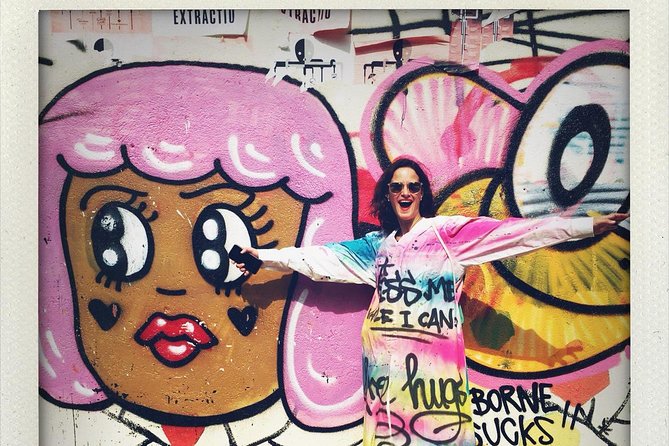
The Las Ramblas stop is brief, about five minutes, but it has a clever purpose. You cross between El Raval and the Gothic Quarter near the section where artists set up stalls.
This is a useful lesson in how much city art goes unnoticed. Las Ramblas is one of Barcelona’s busiest promenades, yet many pedestrians focus on the main flow of people and shops. The guide draws your attention to works in plain sight, showing that street art is not confined to an obvious mural wall.
Because this stop is short, treat it as a visual prompt rather than a full sightseeing pause. It may change how you walk through central Barcelona later. Look at shutters, side walls, pasted images, and small marks near eye level.
The BienCuadrado studio visit
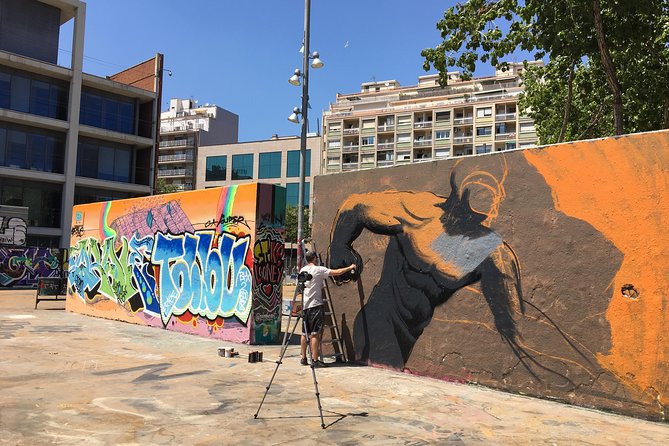
The final 30 minutes at BienCuadrado are the heart of the experience. You receive a private visit to the studio space, meet artists connected with the local scene, and get a look at how their work is made.
This is where the tour becomes more personal. Instead of only hearing about artists through a guide, you may see people working and ask questions about inspiration, tools, methods, and life in Barcelona’s art community. The chance to speak directly with artists is repeatedly described as one of the strongest parts of the experience.
The studio also includes a gallery area. Small works can be purchased, including pieces made from repurposed spray cans. Buying art is not part of the price, and there is no stated requirement to purchase anything. That is good news if you want to browse without pressure, while still having the option of taking home something more personal than a standard souvenir.
Allow yourself to slow down here. Thirty minutes can pass quickly when you are looking at works in progress and discussing how public art differs from gallery art. You may also be able to remain afterward at the studio or gallery, though the listed tour duration is approximately two hours.
What the guides add to the experience
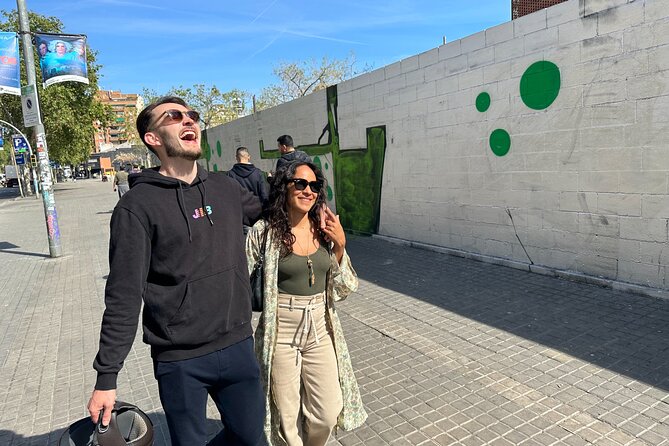
This tour depends heavily on the person leading it. The strongest guide comments describe Luke as passionate and entertaining, Juan as an artist with a clear understanding of the local scene, and Bernardo as someone who explains graffiti rules, recurring artists, and the stories behind the work.
Katrina was praised for her warmth and command of the area. Jimi added city history, architecture, food, and drink suggestions alongside the art. Valentina was noted for explaining different forms of street art and their historical meaning.
That range suggests a guide may shape the tour’s balance. One guide may focus more on technique and artists, another on Barcelona’s neighborhoods and history. If you have strong interests, ask questions early. The small group makes conversation easier than on a large city tour.
There is one important practical warning. A single booking received a complaint that the guide did not appear and that follow-up was slow. That appears to be an isolated service problem among otherwise very strong feedback, but it is still worth keeping your confirmation details and contacting the provider promptly if anything seems unclear before departure.
Price, group size, and practical value
At $33.88 per person, this is fairly priced for a two-hour guided walk with an art historian or artist guide, gallery access, and a private studio visit. You are paying for access and interpretation, not just transport between walls.
The maximum group size is 12. That is small enough for direct questions, though the experience will feel different with two people than with a full group. Group discounts are available, but the amount is not specified.
The tour is offered in English and includes a mobile ticket. The start is near public transportation at Teatre Condal, while the end is at Canal Gallery on Carrer del Palau, 4, in the Gothic Quarter. From there, you are close to public transport, taxis, shops, restaurants, and central city sights.
Wear comfortable shoes. The route covers several neighborhoods on foot, and street art is best seen at walking pace. The tour is open to most people, and service animals are allowed. Since the route involves city streets, parks, galleries, and a studio, anyone with specific mobility needs should confirm details before booking.
Free cancellation is available until 24 hours before the start time. Inside that window, the payment is not refunded. The operator also requires a minimum number of participants, so a cancellation by the provider can result in another date, another experience, or a full refund.
Who should book it
I would choose this tour early in a Barcelona visit if you want an alternative way to understand the city. The practical benefit is that you can use the guide’s lessons during every later walk. Families with older children and teenagers may also enjoy it, since the format combines movement, visual discovery, and direct contact with artists.
It suits you especially well if you like contemporary art, graffiti, photography, urban culture, or neighborhood walks. It is also a good fit if you have already seen the major architectural sights and want a different side of Barcelona.
You may want to skip it if your main priority is a guaranteed collection of enormous murals, a museum-style presentation, or a fully predictable route. Street art changes, and the exact pieces can vary. The experience is strongest when you enjoy stories, local context, and the act of noticing.
Should you book the Barcelona Street Art Tour?
Yes, if the studio visit appeals to you. The walk itself offers a useful introduction to Barcelona’s public art, but the time at BienCuadrado gives the tour its real character. You can connect walls and signatures with working people, tools, ideas, and a local art community.
At $33.88, the combination of a small group, several neighborhoods, a gallery, and studio access is good value. Book it near the start of your stay if you can, then spend the next few days looking up from the pavement and noticing what you once missed.
FAQ
How long does the Barcelona Street Art Tour last?
The experience lasts approximately two hours.
What is the price of the tour?
The listed price is $33.88 per person.
In what language is the tour offered?
The tour is offered in English.
Where does the tour start?
It starts at Teatre Condal, Avinguda del Paral·lel, 91, Sants-Montjuïc, Barcelona.
Where does the tour end?
It ends at Canal Gallery, Carrer del Palau, 4, local derecho, in Barcelona’s Gothic Quarter.
What neighborhoods and locations are included?
The route includes El Raval, the Gothic Quarter, Poble Sec, Jardins de les Tres Xemeneies, Las Ramblas, and BienCuadrado.
Is a studio visit included?
Yes. The tour includes an exclusive visit to the BienCuadrado artist studio space.
What is included in the price?
The price includes an artist or art historian guide, a selected street art route, an urban art gallery visit, a private studio visit, and exposure to different styles of Barcelona street art.
How large is the group?
The tour has a maximum of 12 participants.
Can I cancel for a refund?
Yes. You can receive a full refund if you cancel at least 24 hours before the start time. Cancellations made less than 24 hours before the start time are not refunded.
Just added around Barcelona
- Barcelona Street Art, Graffiti and Tapas Tour★ 4.0 · 5 reviews
- Private Barcelona Street Art Tour★ 5.0 · 2 reviews
- Barcelona | StreetArt Bike Tour Moco Museum★ 4.6 · 13 reviews
- Barcelona Street Art, Graffiti & Tapas Tour★ 5.0 · 5 reviews
- Barcelona | Street Art Bike tour★ 5.0 · 3 reviews
- Barcelona: Graffiti E-Scooter Tour★ 4.4 · 9 reviews
- Barcelona: Insider Street Art Tour with Private Studio Visit★ 5.0 · 21 reviews
- Street Art, Sculptures & Crime Stories Walking Tour – Barcelona★ 5.0 · 11 reviews
Barcelona Mural Tours, compared.
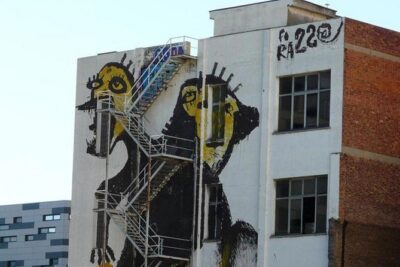
Barcelona Street Art and Graffitti Bicycle Tour
Read our review →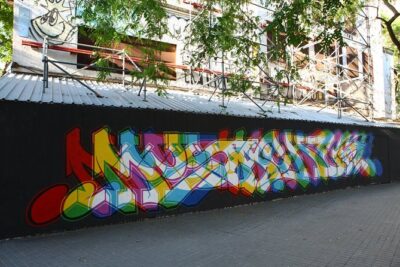
Raval Street Art and Graffiti Guided Tour in Barcelona
Read our review →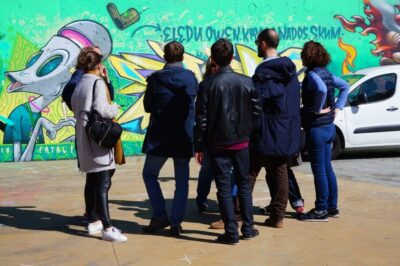
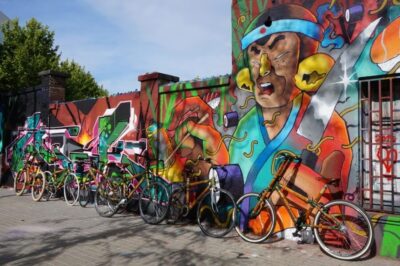
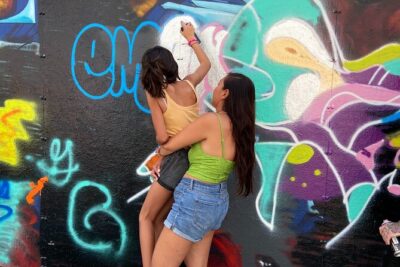
Private Barcelona Street Art Workshop with a Street Artist
Read our review →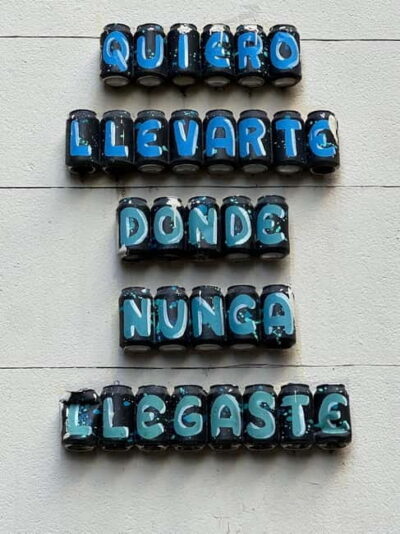
Barcelona Art & Wine: Galleries, Studios & Street Art
Read our review →
Insider Street Art Tour with Private Studio Visit
Read our review →Browse the lists this tour appears in