
REVIEW · PORTUGAL MURAL TOURS
Porto Tour: Street Art & Architecture Experience 3h
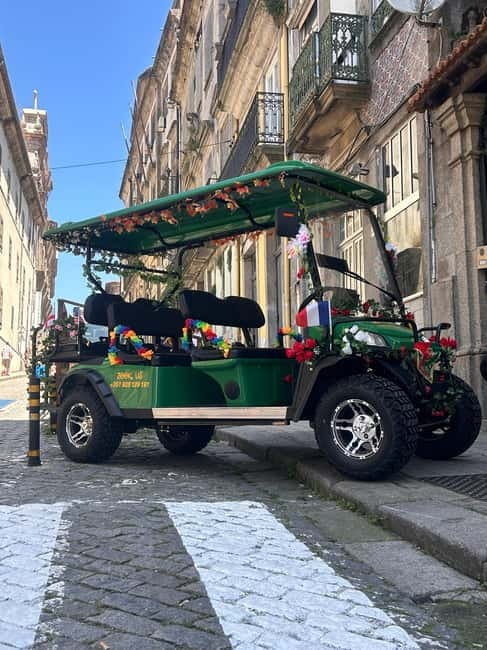
Porto wears its art on the walls. This three-hour private tuk tuk ride mixes old tiles, stone churches, modern buildings, and bold street art, giving you a quick way to see the city beyond its postcard center. I especially like the focus on Vhils and Odeith, plus the route through creative districts such as Cedofeita, Miguel Bombarda, and Bonfim.
I also like the private format and the guide’s flexible role. Filipe is praised for being responsive and enthusiastic, while Gonzalo is noted for his strong grasp of Porto’s street art and city life. The main drawback is the price: at $233 for up to three people, it makes the most sense for a small group sharing the cost, not a solo visitor watching every euro.
What Makes This Porto Tour Worth Your Time
- Street art by major names: Look for work associated with Vhils, known for carved faces, and Odeith, famous for 3D graffiti.
- A useful old-to-new route: The ride links tiled historic buildings with modern design near the Fine Arts Faculty and other contemporary structures.
- Three creative districts: Cedofeita, Miguel Bombarda, and Bonfim give you different views of Porto’s changing urban culture.
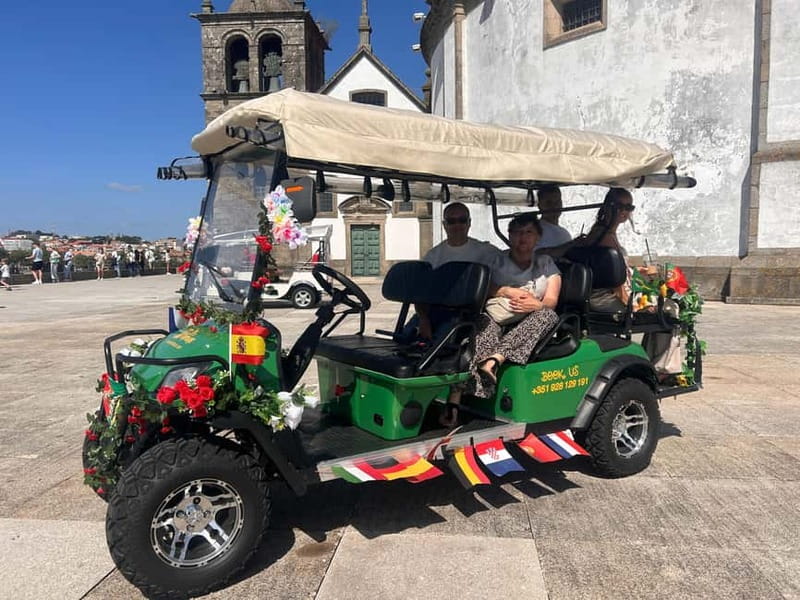
- Private tuk tuk transport: You get a comfortable overview without committing to a large group or a long walking route.
- A guide-led experience: Portuguese, English, Spanish, and French are available, with guides including Filipe, Gonzalo, and Duarte.
- Good for a short stay: If you have only a little time in Porto, this can cover a lot of ground in one focused outing.
Starting at Estatua de Vimara Pérez
The tour begins at Estatua de Vimara Pérez, a central starting point near Porto’s historic core. From there, the tuk tuk gives you an immediate sense of the city’s layered design rather than treating street art as an isolated attraction.
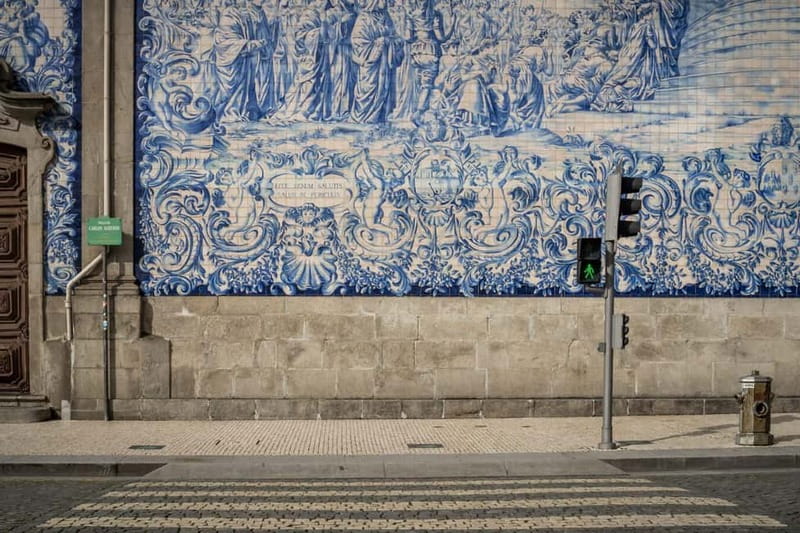
You can expect the opening section to connect Porto’s familiar blue-and-white tiles with neoclassical facades and less obvious modern details. That contrast is the main idea running through the experience. Porto is not presented as an old city with a few new decorations. Instead, you see how new design and public art have found room among older buildings.
The tuk tuk matters here. Porto has steep streets and a compact center that can be tiring on foot, especially when you want to cover several districts in three hours. You still get out for visits and guided stops, but the vehicle handles much of the distance between them.
This is not a formal architecture lecture. The guide’s job is to point out what you might otherwise pass without noticing, then explain why it matters. That makes the route useful if you want context without spending an entire day in museums.
More Three-Hour Experiences in Portugal:
- 3-Hour Guided Street Art Walking Tour of Lisbon
★ 5.0 · 278 reviews - Lisbon: 3-Hour Street Art Tuk Tuk Tour
★ 4.8 · 86 reviews - Lisbon 3-Hour Street Art Tour
★ 4.6 · 63 reviews
Reading Porto Through Tiles, Stone, and Modern Lines
The architecture portion gives the tour its balance. Street art can be exciting, but without some understanding of the city around it, murals become a series of colorful backdrops. Here, your guide places them beside Porto’s older materials and building styles.
You will see the familiar combination of tiled facades, heavy stone, neoclassical buildings, and churches with baroque details. Then the route brings in cleaner, more recent forms, including modern buildings connected with the Fine Arts Faculty. The appeal is in the visual argument: old Porto and contemporary Porto occupy the same streets, sometimes only a few steps apart.
I find this especially useful for anyone interested in design, photography, or urban change. You are not just collecting mural photos. You are looking at how a city’s character shifts when artists, students, architects, and local communities work within an old setting.
The guide may also point out architectural details that are easy to miss from a standard sightseeing route. Since the experience is private, you can ask questions and request more explanation about the subjects that interest you most. That flexibility is a real advantage over a fixed group tour.
Baixa, Cedofeita, and Miguel Bombarda
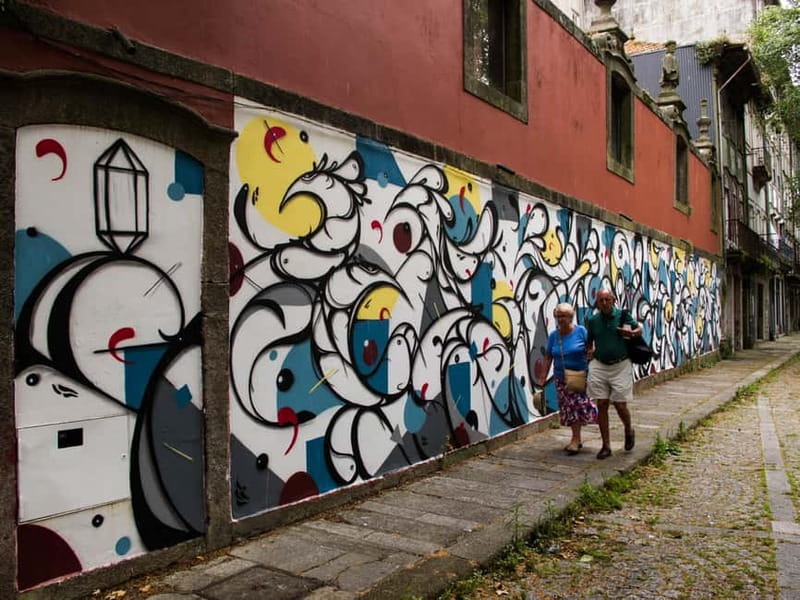
The route then moves into Porto’s creative core, including Baixa, Cedofeita, and the Miguel Bombarda area. These districts are important because the art is part of the streetscape, not shut behind a museum entrance.
Miguel Bombarda is particularly associated with galleries, design, and contemporary culture. The tour description also points to street interventions and large murals, so you should expect a mixture rather than one single style. Some works may be polished and highly visible. Others may be smaller, more temporary, or easy to miss without a guide.
Cedofeita adds another layer. It is a good place to see how independent cultural activity and everyday city life sit together. Instead of a purpose-built art zone, you get art among ordinary streets and buildings. That setting helps explain why public art in Porto can feel connected to local identity rather than simply placed there for decoration.
The limitation is that street art changes. A mural may fade, be painted over, or be blocked by construction. The exact works you see can vary. That is part of the nature of the subject, but it also means this tour is less predictable than a museum visit.
Vhils, Odeith, and the Stories Behind the Walls
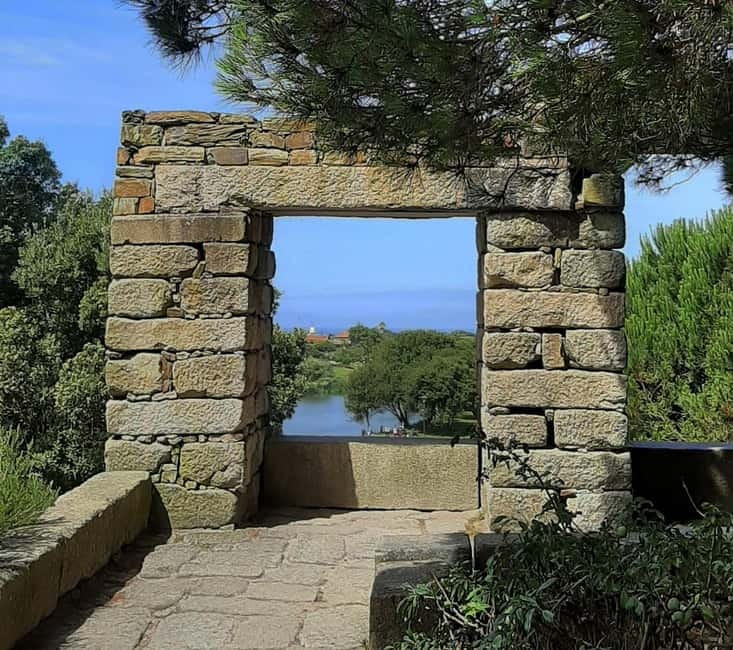
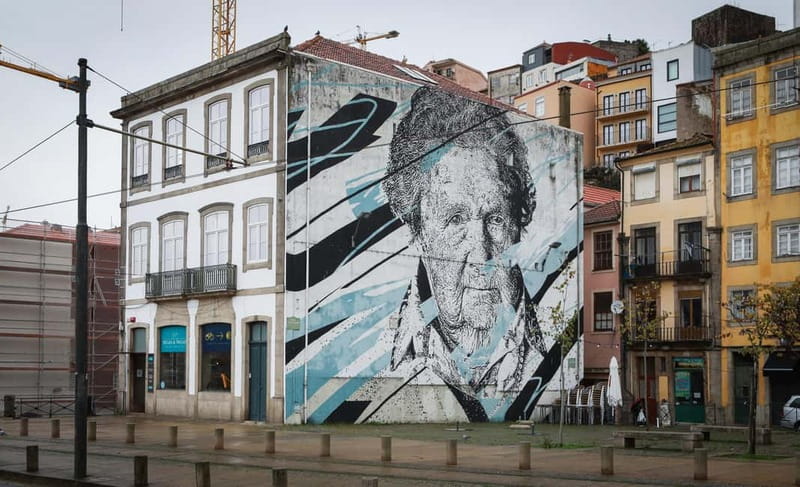
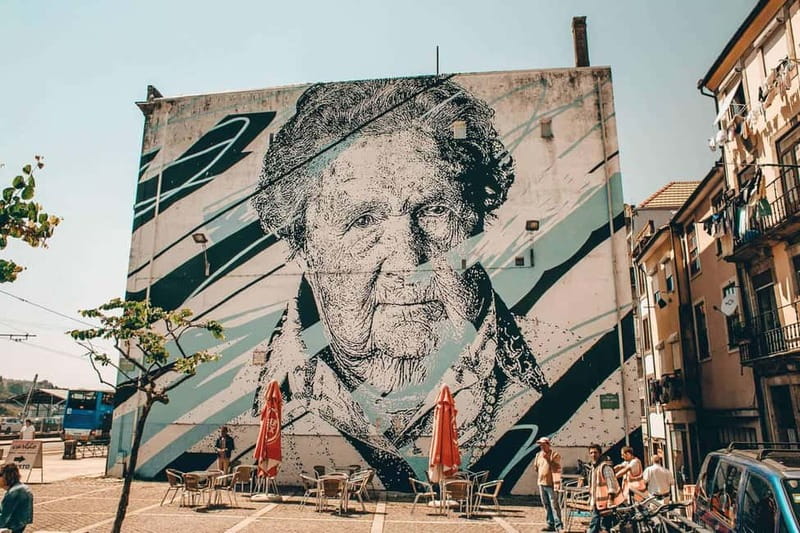
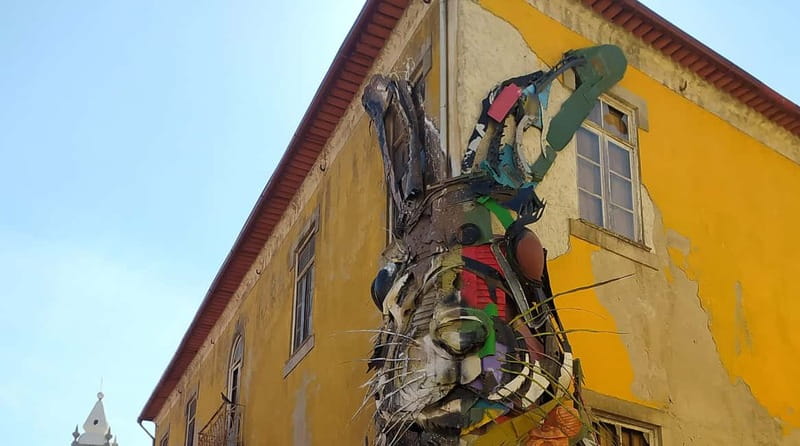
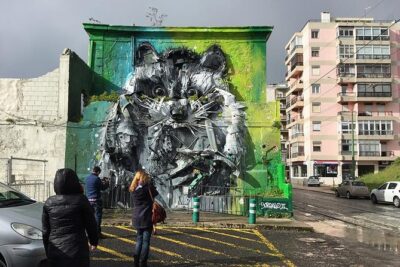
The strongest artistic focus is on figures such as Vhils and Odeith. Vhils is known for carving human faces into walls, using removal rather than simply adding paint. Odeith is associated with large 3D graffiti that appears to bend or project from the surface.
These examples give you two very different ways to think about street art. One artist works through texture, damage, and the physical surface of a building. The other plays with depth and visual illusion. Seeing those approaches in the city makes the art easier to understand than reading a short caption beside a photograph.
Your guide also discusses community projects, underground pieces, and works connected with identity, resistance, and change. That context is valuable because some street art is meant to look striking, while other work carries a clear social message.
Gonzalo received especially warm praise for explaining Porto’s art scene and answering questions about everyday life in the city. That kind of conversation can make a major difference. If you want only a quick succession of photo stops, any guide can point to walls. If you want to understand why a piece exists and how it fits Porto, ask questions as you go.
Duarte is also described as helpful and well informed, though one useful improvement would be a written list of the sights covered. I agree with that practical point. Street art routes can move quickly, and a short list of artists or locations would help you remember what you saw afterward.
A few more mural tours around Portugal worth a look
- Lisbon: Street Art Tour
★ 4.9 · 1,324 reviews - Lisbon: Kickstart Street Art Walking Tour
★ 4.9 · 717 reviews - Lisbon: Street Art Tuk Tuk Tour
★ 4.9 · 372 reviews - LISBON Street Art Tour
★ 5.0 · 371 reviews
Bonfim and Porto’s Changing Urban Character
Bonfim is one of the named stops, and it broadens the tour beyond the best-known central districts. The area helps show Porto as a city still changing, not just a preserved historic center.
The point is not simply to find more walls covered in paint. You are looking at how art appears in neighborhoods with their own identity, buildings, and daily rhythm. The tour presents Porto’s urban transformation through the relationship between old structures and newer creative work.
This part may appeal most if you enjoy cities in transition. You can see how design, art, and local culture affect the feel of a neighborhood without turning the whole area into a formal attraction.
The tuk tuk is useful again because it lets you connect Bonfim with the central and western parts of the route. On foot, covering all these areas in three hours would require a brisk pace. With transportation included, you have more time for explanation and short visits.
Still, do not expect long periods at every location. Three hours sounds generous, but the tour covers several districts and includes travel between them. If you want to photograph every mural or study each building at length, you may feel rushed. This is best treated as a broad introduction, not a specialist art workshop.
What the Private Tuk Tuk Format Adds
The private group setup allows up to three people, with a multilingual guide and transportation included. Hotel pickup and drop-off are also included, which can simplify the day, especially if your accommodation is not close to the starting point.
The main benefit is control. You can ask about a certain artist, pause for a photograph, or spend more time on architecture if that is your interest. A private guide can also adjust the explanation for a first-time visitor, an art student, a photographer, or someone mainly interested in Porto’s social history.
The tuk tuk itself creates a pleasant middle ground. You are not sealed inside a bus, but you are also not walking every steep street. You get an open view of the city and a quick way to cover ground.
There are tradeoffs. A tuk tuk has limited space, and this is not the right choice if you want a long, quiet look at each artwork. It is also a sightseeing format rather than a fully active walking experience. Wear comfortable shoes because the tour still includes walking and visits outside the vehicle.
The private setup also explains the price. At $233 for up to three people, the cost works out to about $78 per person for three participants. For two people, it is about $117 each, and for one person, the price becomes much harder to justify. Hotel pickup, transportation, a private guide, and three hours of tailored attention improve the value for a small group.
What the Guides Add to the Experience
Guide quality appears to be one of the strongest parts of this experience. Filipe is described as responsive before the tour and enthusiastic during it. That matters because clear communication before pickup can remove a lot of small travel worries.
Gonzalo is praised for his grasp of the street art scene, Porto’s history, and daily life in the city. His flexibility is also important. A guide who can follow your questions will make the tour feel more personal than a memorized route.
Duarte is described as helpful and well informed. The one practical gap is the lack of a posted list of sights, so I recommend keeping a note on your phone as you go. Write down artist names, neighborhoods, and any work you want to find again.
Languages available are Portuguese, English, Spanish, and French. Because this is a private experience, language choice can make the explanations easier to follow and gives you more freedom to ask questions.
Who Should Book It?
I would recommend this tour to you if you want a quick but thoughtful introduction to Porto’s contemporary culture. It suits art lovers, design students, photographers, content creators, and anyone who has already seen the main churches and viewpoints and wants a different angle.
It is also a sensible choice for a short stay. One five-star rating describes the experience as a good way to see a lot of Porto in limited time, and that is exactly where the tour has its strongest practical value.
Families or mixed-interest groups may also like it because the tuk tuk reduces the walking burden while the subject keeps the route varied. The guide can connect architecture, public art, history, and local life rather than focusing on only one narrow theme.
I would think twice if your main goal is a slow museum-style art visit. The tour covers several districts, and street art changes constantly. You may see many works, but you will not have unlimited time to study each one.
Practical Details Before You Go
The tour lasts three hours and returns to Estatua de Vimara Pérez. Hotel pickup and drop-off are included, as is transportation during the experience.
Bring a camera. The route is built around visual details, including murals, carved wall portraits, tiles, modern facades, and city views. A bottle of water is also sensible, and comfortable shoes are important because the tour includes walking despite the tuk tuk.
The experience is wheelchair accessible. It is also available for private groups, with live guiding in Portuguese, English, Spanish, or French.
You can cancel up to 24 hours in advance for a full refund. A reserve-now, pay-later option is available, which helps if your Porto schedule is still shifting. Museum tickets and other separate activities are not included, so budget for those only if you decide to add them elsewhere.
Final Recommendation: A Good Choice for Creative Porto
I would book this tour if you are traveling with two other people, care about street art, and want a guide who can connect murals with Porto’s older architecture and daily life. The private tuk tuk format gives you useful coverage in three hours, and the strongest guide feedback centers on enthusiasm, flexibility, and strong knowledge of the city’s art scene.
I would skip it if you are alone and focused on keeping costs low, or if you prefer to spend a long time at a small number of artworks. For the right group, though, this is a smart way to see Porto’s less formal, more creative side without giving up the city’s historic character.
FAQ
How long does the Porto street art and architecture tour last?
The tour lasts three hours, including the guided route through Porto’s central and creative districts.
Where does the tour start and finish?
It starts and ends at Estatua de Vimara Pérez.
Which neighborhoods are included?
The route includes areas such as Baixa, Cedofeita, Miguel Bombarda, and Bonfim. The named itinerary specifically includes guided visits in Cedofeita and Bonfim.
Which artists might I learn about?
The experience highlights Vhils, known for carving faces into walls, and Odeith, known for 3D graffiti. The guide also discusses community projects and underground street art.
What languages are available?
Live guiding is available in Portuguese, English, Spanish, and French.
Is transportation included, and is the tour wheelchair accessible?
Transportation is included, along with hotel pickup and drop-off. The experience is wheelchair accessible.
Just added around Portugal
- Street Art and Architecture:Porto Speaks Through Its Streets★ 3.0 · 2 reviews
- Street Art – Tuk Tuk Tour★ 5.0 · 17 reviews
- Street Art Tour by Tuk Tuk Joy★ 5.0 · 2 reviews
- Lisbon Street Art and Lookout Point Tour★ 5.0 · 17 reviews
- Lisbon Street Art Walk★ 5.0 · 17 reviews
- Street Art at Lisbon★ 5.0 · 2 reviews
- Private Tuk Tuk of the Old Town Lisbon and Street Art Highlights★ 5.0 · 20 reviews
- Lisbon Street Art – Private Tuk Tuk Tour with pickup★ 5.0 · 17 reviews
Portugal Mural Tours, compared.
3-Hour Guided Street Art Walking Tour of Lisbon
Read our review →
Browse the lists this tour appears in