

REVIEW · LISBON MURAL TOURS
LISBON Street Art Tour
Look up and Lisbon changes. This three-hour walk takes you through Mouraria, Graça, São Vicente, and Alfama, where murals, tile work, photographs, and smaller pieces tell stories about the city. I like the small groups of no more than 10 and the fact that guides such as Diogo, Vero, Ben, and Luisa bring first-hand knowledge of Lisbon’s art scene.
I also like the route’s local feel. You explore steep lanes and ordinary residential streets rather than simply checking off famous monuments. The main drawback is physical: hills, stairs, and a good deal of walking make this a poor choice if you have mobility limits or dislike strenuous city walks.
Key details before you book
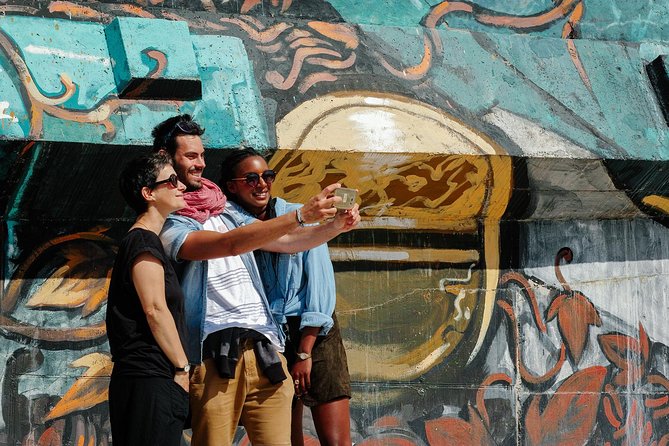
- Mouraria’s fado connection: Begin among old lanes where fado took root, with local character shown through murals and photography.
- A serious hill walk: The route climbs toward Graça and includes steep streets, stairs, and downhill sections.
- Art explained in context: Guides discuss techniques, artists, graffiti, political ideas, and the difference between legal street art and unauthorized work.
- Small-group attention: A maximum of 10 people gives you room to ask questions and keep the pace personal.
- A changing outdoor gallery: New work appears, older pieces fade, and some art may be altered before your next visit.
- Useful price point: At $24.20 per person, the tour offers three hours of guiding for less than many major sightseeing activities in Lisbon.
Why this walk shows you another Lisbon

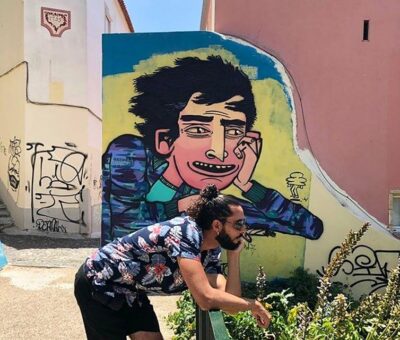
Lisbon is famous for tiled façades, lookout points, yellow trams, and grand river views. This tour adds a less polished but highly revealing side of the city. You walk through neighborhoods where art appears on shutters, walls, stairways, façades, and overlooked corners.
The value is not just in seeing large murals. A guide helps you notice small details you could easily pass without understanding. A painted figure may refer to local politics. A wall of portraits may connect with fado. A piece that looks like a simple tag may belong to a wider movement, artist, or debate about public space.
That context makes the walk worthwhile. You are not just photographing colorful walls. You are learning how Lisbon’s streets reflect its communities, its artists, and its changes.
The guides bring different strengths. Diogo is praised for his strong command of the subject and his ability to point out pieces that are easy to miss. Vero combines art knowledge with an academic interest in Portuguese culture and the human experience. Ben, Luisa, and other guides have also been praised for making the tour clear, friendly, and enjoyable.
The guide may be a practicing artist or connected with the Lisbon art collective behind the tour. That matters because you get more than basic dates and artist names. You may hear how a work was made, why it was approved, how it relates to graffiti, or what happens when someone adds to it later.
A few more mural tours around Lisbon worth a look
- Lisbon: Street Art Tour
★ 4.9 · 1,324 reviews - Lisbon: Kickstart Street Art Walking Tour
★ 4.9 · 717 reviews - Lisbon: Street Art Tuk Tuk Tour
★ 4.9 · 372 reviews
Starting in Mouraria at Escadinhas de São Cristóvão
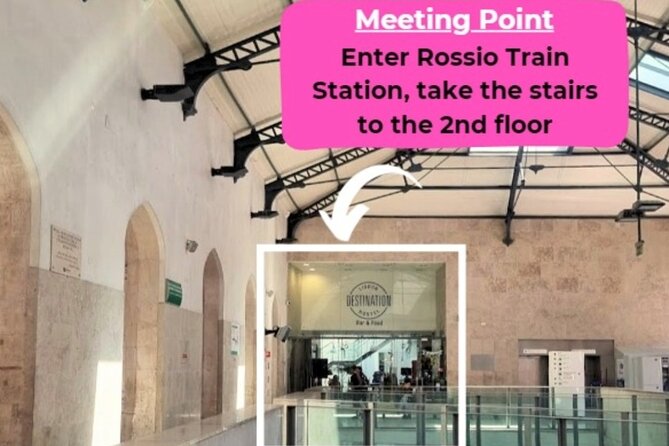
The meeting point is Largo da Graça 13, a convenient central location. From there, the walk reaches Escadinhas de São Cristóvão in Mouraria, with about an hour devoted to this part of the route.
Mouraria is one of Lisbon’s most characterful old neighborhoods. Its narrow streets and stairways give the tour a fitting setting. You are walking through an area associated with the roots of fado, then looking at how that identity appears in public art.
The walls here function like an open-air gallery, but not a tidy one. Art and daily life share the same space. A mural may sit beside an aging wall, a residential doorway, or a street used by local people going about their day. That contrast is part of the appeal.
Photography has a particular role in this section. The tour includes local portraits and images connected with fado singers, giving you a visual link between the neighborhood and its musical tradition. It is a good reminder that street art is not limited to spray-painted lettering or giant cartoon figures.
Your guide can also explain the difference between graffiti and street art. That distinction helps you read the city more carefully. Some work is formally approved and designed for a particular wall. Other marks may be unauthorized, temporary, or intended for a smaller audience.
The one-hour stop is long enough to look closely instead of rushing from wall to wall. Still, you should expect an active start. The old streets are not flat, and the tour may pause often because there is plenty to point out.
The climb to Miradouro da Graça
The next stop is Miradouro da Graça, also known as the Sophia de Mello Breyner Andresen viewpoint. The scheduled visit lasts about 15 minutes, but reaching it is part of the experience.
The climb is not a minor detail. Graça sits high above much of Lisbon, and several people who enjoyed this walk specifically warn about the stairs and uphill streets. You may find the climb tiring in hot weather, and a January walk can be uncomfortable if rain arrives. Bring proper walking shoes and an umbrella during wet months.
The reward is a broad view over the city, along with one of the better vantage points for seeing street art in its urban setting. Here, the art is not isolated from Lisbon. It sits within the hills, rooftops, old neighborhoods, and layers of daily life.
The viewpoint stop also gives your legs a short break. Do not expect a long sightseeing pause with café time or a formal monument visit. It is a brief stop designed for views, photographs, and orientation before continuing through Graça.
Graça and São Vicente: the main art walk
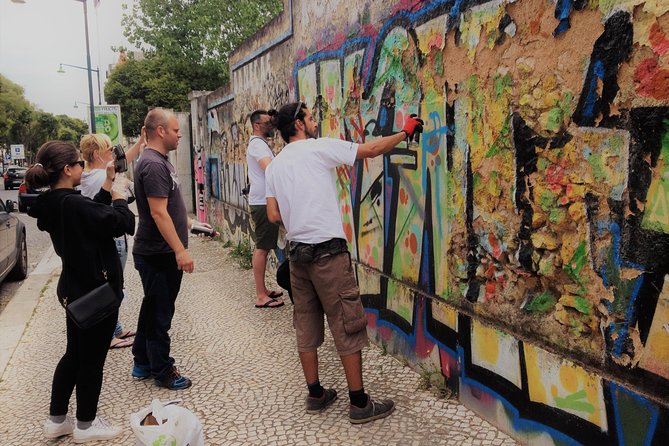
The longest section takes about 90 minutes through Graça and São Vicente. This is where the tour earns much of its appeal.
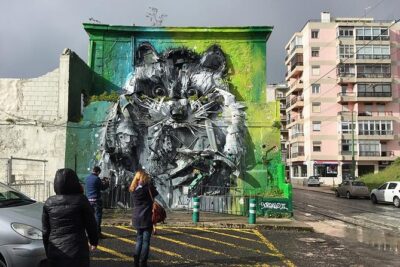
Graça has a strong local identity and plenty of large murals. The work ranges from local artists to internationally recognized names, so you get variety in both scale and style. One wall may use bold colors and simple forms, while another may carry a more direct social or political message.
You will also pass the tour’s Walls of Fame. This part of the route connects Lisbon’s street scene with the wider international art world. The guide can explain who made the work, what methods were used, and how artists fit into the city’s public-art culture.
I especially like the way this section gives you time to ask questions. In a group of 10 or fewer, you are less likely to be left at the back while the guide talks to someone else. Solo visitors can also find the format comfortable, since the guide makes an effort to include the whole group.
The route is not a fixed museum collection. Street art changes. Pieces fade, get painted over, are altered by other artists, or appear without warning. One guide was reportedly surprised to encounter both new additions and work connected with the collective’s own projects. That uncertainty is part of the point. The city is still making the gallery as you walk through it.
You should also expect the tour to take the full three hours. Some groups have continued longer when everyone had energy and questions. That can be a benefit if you want detail, but it means you should not schedule a tight appointment immediately afterward.
Same walls, a different guide:
- 3-Hour Guided Street Art Walking Tour of Lisbon
★ 5.0 · 278 reviews - Lisbon Street Art Walking Tour
★ 5.0 · 141 reviews - Lisbon: 3-Hour Street Art Tuk Tuk Tour
★ 4.8 · 86 reviews - Lisbon: Street Art Walk
★ 5.0 · 79 reviews
Jardim Botto Machado and the long azulejo wall

The final named stop is Jardim Botto Machado, with about 15 minutes set aside for the visit. Here you see a particularly colorful example of Lisbon’s tile tradition: a very long azulejo wall representing the city in a familiar Portuguese style.
This closing stop broadens the tour beyond modern murals. Lisbon’s public art is not only spray paint and paste-ups. Painted tiles are central to the city’s visual identity, and the wall provides a useful connection between older decorative traditions and newer forms of public expression.
The contrast is valuable. Earlier, you may have been discussing underground work, political imagery, or artists painting large façades. At Jardim Botto Machado, the focus shifts toward the patterned, ceramic surfaces that many people associate with Lisbon.
It is also a strong place for photos. The colors and repeated tile designs give you something different from the rough textures of the older lanes. Since the stop is short, take your pictures early and stay close while the guide explains what you are seeing.
What the guides add to the experience

A self-guided walk can show you that Lisbon has murals. This tour tries to explain why they are there.
The strongest part of the guiding is the connection between art and place. You learn about artists and techniques, but also about the cultural and political ideas behind individual pieces. That can include the difference between a legal commission and an unauthorized mark, or the way local artists respond to changing neighborhoods.
Several guides are described as practicing artists or as people who work with the Lisbon art collective. That first-hand perspective gives the explanations more weight. You may hear about the practical side of painting, the challenges of working outdoors, or the way artists react when a piece is tagged or replaced.
Vero’s background in anthropology adds another angle. Her approach connects street art with Portuguese culture and the local human experience. Diogo is particularly well regarded for his passion and ability to show art you might otherwise miss.
The guides also offer useful local suggestions. They can point you toward other neighborhoods with street art and recommend places to eat. These suggestions are a welcome bonus, especially if you want to continue exploring after the tour ends.
One guide sometimes brings a dog named Billy. That is not a guaranteed feature, but it has added a friendly touch to some walks.
The walking challenge: stairs, hills, and weather

You need moderate physical fitness for this tour. The route includes steep uphill sections, stairs, and steep downhill areas. One participant described climbing hundreds of stairs, while others emphasized the amount of walking and the effort required on hot days.
Comfortable shoes are essential. This is not the time for thin sandals, hard dress shoes, or anything that rubs. Carry water, especially in warm weather, and consider a small snack because the walk can take the full scheduled time.
Weather also affects the experience. Rain can make steep streets less comfortable, and an umbrella was specifically recommended for January. Lisbon’s hills feel much harder in heat, so a cooler part of the day may be preferable if your schedule allows.
People with mobility limitations should think carefully before booking. The tour is not presented as step-free, and the route’s hills are central to reaching the art. Service animals are allowed, and public transportation is nearby, but neither fact removes the physical demands of the walk.
Price, group size, and practical value
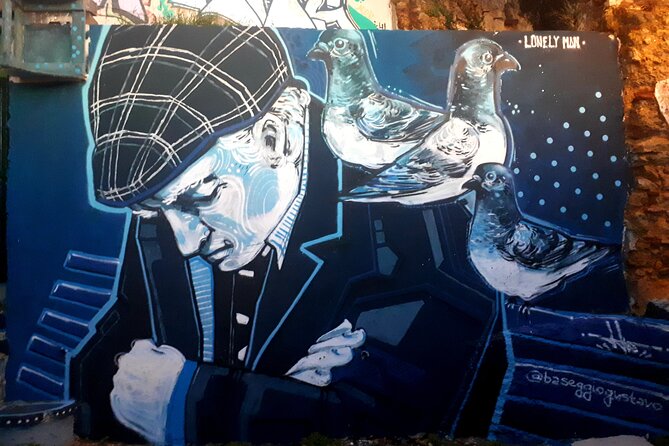
At $24.20 per person, this is a reasonably priced way to spend three hours in Lisbon. You are paying for a guide, local interpretation, and access to parts of Graça, Mouraria, and São Vicente that you might not locate on your own.
The value is strongest if you care about art, local culture, photography, or neighborhood walks. It is less useful if you want a relaxed sightseeing ride or a short activity with minimal exertion.
The group limit of 10 is important. A larger walking group can make narrow streets awkward and questions difficult. Here, the small format allows the guide to stop for details and keep an eye on the group as it moves through stairs and hills.
The start and finish are both listed at Largo da Graça 13, though the actual ending may be somewhere in Graça or Alfama depending on the time and the group’s energy. Plan your next activity with some flexibility rather than assuming you will finish at the exact starting point.
Confirmation is sent when you book. The tour is offered in English and uses a mobile ticket. Free cancellation is available up to 24 hours before the start time. Inside that window, the payment is not refunded, and changes are not accepted.
Who should book this Lisbon walk?
I would choose this tour if you want to understand Lisbon through its walls rather than only through major sights. It suits art lovers, photographers, curious first-time visitors, solo visitors, and anyone who enjoys walking through real neighborhoods.
It is also a good choice for people who want more than a list of artist names. The strongest guiding connects street art with fado, local identity, political ideas, changing neighborhoods, and tile traditions.
I would skip it if you have difficulty with stairs, need a flat route, or prefer a quiet activity. The art may be the headline, but the hills are an unavoidable part of the package.
Should you book the Lisbon Street Art Tour?
Book it if you can handle a demanding city walk and want a thoughtful look at Lisbon’s creative life. The $24.20 price is fair, the group is small, and the guides add meaning that photographs alone cannot provide.
Wear good shoes, bring water, allow more than three hours if your schedule is flexible, and keep your camera ready. This is a changing outdoor gallery, so the exact art will shift over time. That makes the walk feel less like a standard sightseeing circuit and more like a conversation with the city as it is now.
FAQ
How long does the Lisbon Street Art Tour last?
The tour lasts approximately three hours. Some walks may run longer if the group has time and energy for extra discussion.
Where does the tour begin?
The meeting point is Largo da Graça 13, 1170-364 Lisboa, Portugal.
Where does the tour finish?
The listed return point is Largo da Graça 13, though the walk may finish somewhere in Graça or Alfama depending on the time and the group’s energy.
How many people can join the tour?
The maximum group size is 10 people.
Is the tour available in English?
Yes. The tour is offered in English.
How difficult is the walking?
You should have a moderate fitness level. The route includes uphill streets, steep downhill sections, and many stairs, so comfortable walking shoes are important.
Can I cancel for a full refund?
Yes, if you cancel at least 24 hours before the experience begins. Cancellations or changes made less than 24 hours in advance are not refunded.
Just added around Lisbon
- Street Art Tour by Tuk Tuk Joy★ 5.0 · 2 reviews
- Lisbon Street Art and Lookout Point Tour★ 5.0 · 17 reviews
- Street Art – Tuk Tuk Tour★ 5.0 · 17 reviews
- Lisbon Street Art Walk★ 5.0 · 17 reviews
- Street Art at Lisbon★ 5.0 · 2 reviews
- Private Tuk Tuk of the Old Town Lisbon and Street Art Highlights★ 5.0 · 20 reviews
- Discover Lisbon’s Best Street Art★ 5.0 · 6 reviews
- Lisbon Street Art – Private Tuk Tuk Tour with pickup★ 5.0 · 17 reviews
Lisbon Mural Tours, compared.


3-Hour Guided Street Art Walking Tour of Lisbon
Read our review →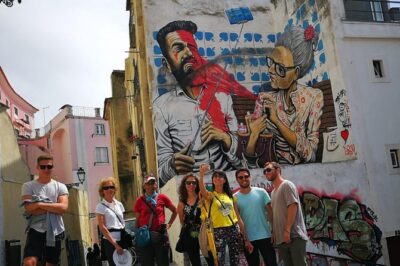



Lisbon Street Art – Private Guided Tour in a Electric Tuk Tuk
Read our review →Browse the lists this tour appears in