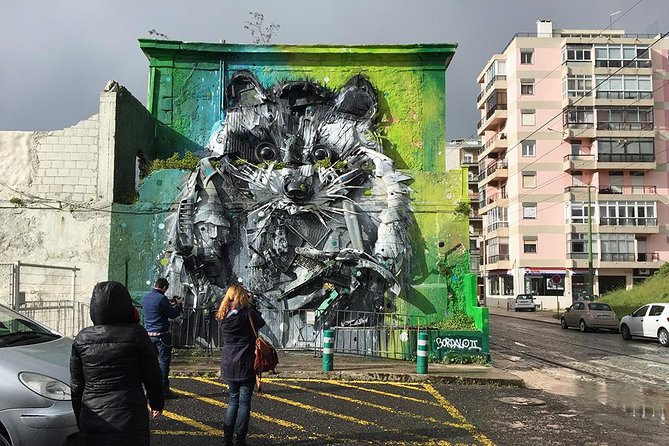
REVIEW · LISBON MURAL TOURS
3-Hour Guided Street Art Walking Tour of Lisbon
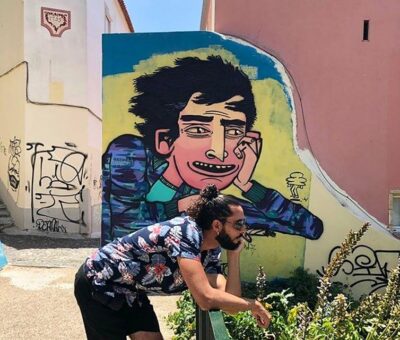
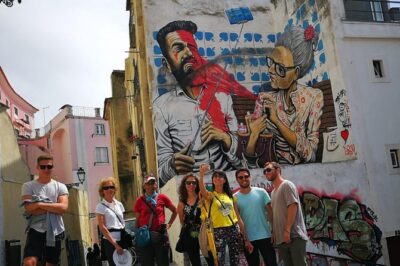
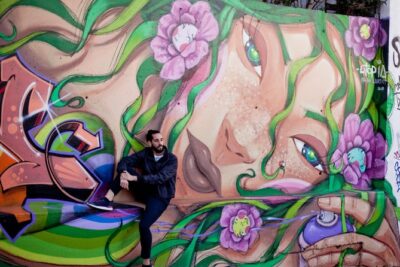
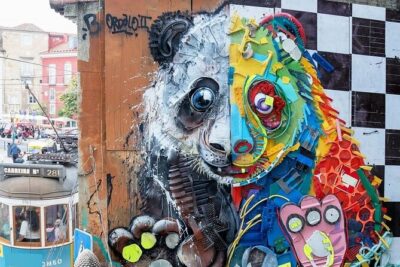
Lisbon’s walls tell better stories than guidebooks. This three-hour walk links murals, graffiti, tiled buildings, worker history, and city viewpoints, giving you a fresh way to read Lisbon beyond its famous trams and monuments. I like the small-group format, capped at 12 people in the tour details, because it gives you a fair chance to ask questions. I also like the guides’ broad view of art, which includes azulejos, architecture, political messages, and the changing rules around public artwork.
The main drawback is the walking. Lisbon is a city of steep streets, polished cobbles, rough pavement, and hills that do not apologize for themselves. The route is rewarding, but you should wear proper shoes and expect a steady three hours. A few people found the full length tiring, even while enjoying the tour.
- You see far more than graffiti: The route includes murals, tags, tilework, cobblestones, political art, and decorated buildings.
- The route crosses five distinctive areas: Bairro Alto, Calçada da Glória, Baixa, Graça, and Alfama each give the art a different setting.
- Guides add social context: Erica, Maria, Laith, Leigh, and other guides are praised for explaining artists, politics, local history, and artistic methods.
- The route ends with strong city views: Graça provides a natural rest point and a broad look over Lisbon.
- The walk is active and hilly: Uneven ground and uphill sections make comfortable shoes essential.
- The price buys interpretation, not just sightseeing: At $42.27 per person, the value depends on how much you want to understand the art rather than simply photograph it.
Why Lisbon Works So Well for Street Art
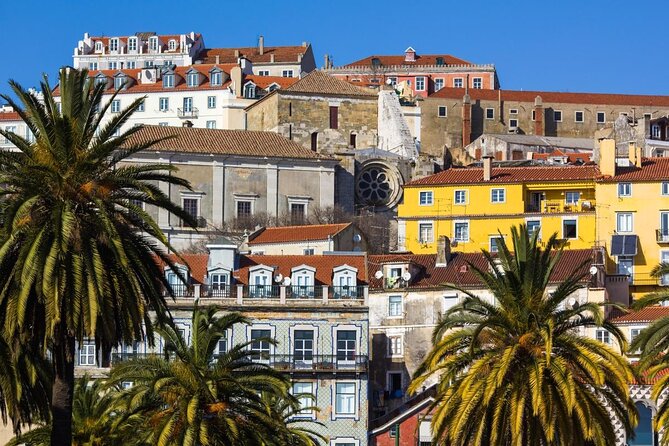
Lisbon gives street art room to argue with the city around it. A painted wall may sit beside old tilework, a steep lane, a workers’ neighborhood, or an ornate building. That mix is the reason this tour feels like more than a hunt for colorful walls.
You are not simply taken from one photo stop to another. The guide explains how different forms of public art fit into Lisbon’s culture. You learn about artists, styles, symbols, social issues, and the question of what the city allows to remain on a wall.
That wider approach earned strong praise from people who arrived knowing little about street art. Several guides are singled out by name. Erica is described as warm, clear, and especially good at placing the art in its political and social setting. Maria is praised for her fluent English and thoughtful interpretations. Laith is often noted for his energy, international knowledge, and practical understanding of street art. One account says he even brought a spray can so participants could try it themselves.
Guide assignments can change, so you should not book solely around one name. Still, the repeated praise for the guiding style is important. The art matters here, but the explanation is what turns a walk into a useful introduction to Lisbon.
Starting in Bairro Alto After Dark
The meeting point is at R. Luz Soriano 67, in the Bairro Alto area. This quarter is known for its nightlife traditions, and the first section uses that setting to explain how street art connects with a neighborhood that changes character after sunset.
You can expect about 30 minutes here. The point is not only to spot artwork, but to notice how paintings, tags, and wall pieces interact with the quarter’s narrow streets and evening identity. Your guide may explain the difference between forms of street art and show you details that are easy to miss when you walk alone.
This is a useful opening because it gives you a vocabulary for the rest of the route. You begin to look for technique, scale, location, and message instead of treating every painted surface as the same thing.
Bairro Alto is also a practical place to begin because you are still fresh. The route becomes more demanding later, so pay attention early and ask questions while the group is small and everyone has energy.
More Street Art Walking Tours in Lisbon
- Lisbon: Kickstart Street Art Walking Tour
★ 4.9 · 717 reviews - Lisbon Street Art Walking Tour
★ 5.0 · 141 reviews - Lisbon: Street Art Walk
★ 5.0 · 79 reviews
Calçada da Glória, Lisbon’s Open-Air Art Gallery
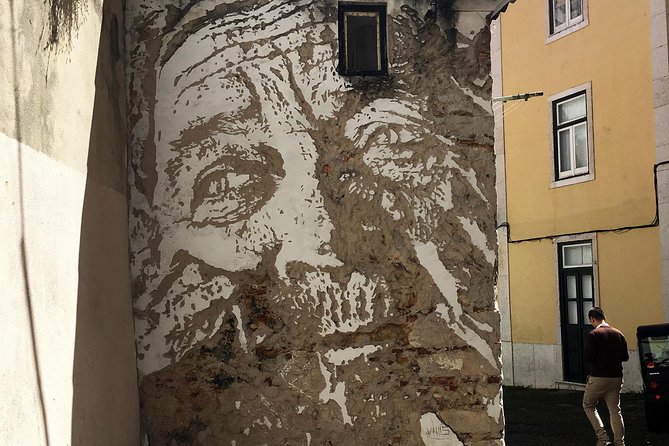
The next stop is the Elevador da Glória area, where Calçada da Glória functions as one of Lisbon’s recognized urban art galleries. Artists from Portugal and elsewhere have used this setting for large public projects, making it one of the clearest places to see how street art can be displayed with some official support.
You get roughly 30 minutes here. Expect larger works and a stronger sense of street art as a public program rather than something found only by accident. The guide can help you understand why a particular wall was chosen, how artists work at scale, and how the city decides what stays.
This section should appeal to photographers. The artwork is presented in a concentrated area, and the sloping street adds a distinctly Lisbon backdrop. Still, do not expect a museum with fixed displays. Outdoor art changes. Pieces may be painted over, weathered, or replaced, which is part of the subject.
The Elevador da Glória itself is a major Lisbon landmark, but this experience uses the surrounding art as its focus. If you have already ridden the funicular, you still gain something new by looking closely at the walls and hearing the guide’s interpretation.
Baixa, Azulejos, and the Art Under Your Feet
In Baixa, the tour broadens the definition of street art. You explore the stories and symbols found in Lisbon’s azulejos, along with the patterns and surfaces of the city’s cobblestone streets.
This is one of the smartest parts of the route. If you think street art only means spray paint, Baixa asks you to reconsider. Tiles can carry images, decoration, identity, and history in a way that belongs to Lisbon’s public spaces. The pavement matters too, since the calçada portuguesa creates another visual layer beneath the walls.
You spend around 30 minutes here. Your guide may point out designs you would otherwise pass without a thought. Look down as well as ahead. Lisbon rewards that habit, and this part of the tour helps you notice how much visual work is built into ordinary streets.
The drawback is that this stop may feel less dramatic if you came mainly for giant murals. It is more about symbols, materials, and local design than a single big photographic moment. I would treat it as a valuable change of pace, not a disappointment.
Graça and the Politics on the Walls
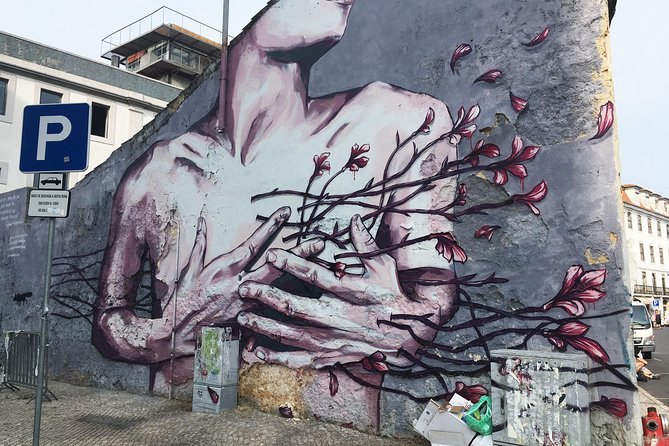
The route then climbs toward Miradouro da Graça, officially named Miradouro da Graça, Sophia de Mello Breyner Andresen. Graça is a residential district with connections to workers’ unions and workers’ rights, and the street art here reflects that past.
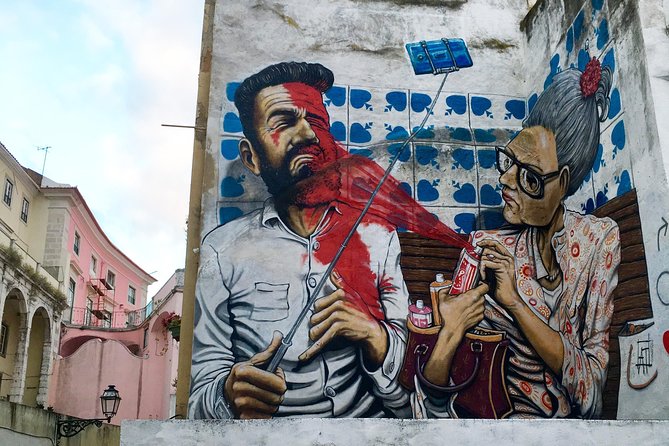
This is where the tour’s social side becomes especially clear. Public art is not presented as decoration alone. It can express anger, solidarity, memory, identity, or disagreement. Your guide explains how the neighborhood’s working history informs the images and messages you see.
The walk to Graça is also where the physical demands become more obvious. Lisbon’s hills are part of the experience, but they can test anyone who is out of shape or unused to uneven streets. The tour is not recommended for people with mobility issues, and you must be able to manage unpaved or rough terrain.
The reward is the viewpoint. The Miradouro da Graça gives you a pause, a place to take in the city, and a useful break in the route. Drinks and bathroom opportunities were appreciated by people on earlier departures, though food and drinks are not included in the price. Bring water or plan to buy it during a break.
More Street Art Walking Tours in Portugal
- Lisbon: Street Art and Historical Walking Tour
★ 4.9 · 42 reviews - Lisbon Street Art Walk
★ 5.0 · 17 reviews
Alfama and the Chão do Loureiro Car Park

The final area is Alfama, where the tour visits Chão do Loureiro. Here, a car park has been transformed into a five-floor street art gallery featuring prominent artists from Lisbon’s south bank.
This is an unusual venue and one of the route’s strongest surprises. Instead of finding paintings scattered across a lane, you see a whole building used to display public art. The vertical setting gives you a chance to compare different artists and styles in one place.
The end of the route also provides a satisfying sense of arrival. You finish at Miradouro da Graça, Calçada da Graça, rather than returning to the starting point. That matters when planning your day. You will need to make your own way back to your hotel or the next sight, but you also finish in an area with good views and further walking options.
The tour covers about 30 minutes at each listed stop, though the transitions between neighborhoods make the total experience three hours. You should not expect five isolated half-hour visits. This is a connected walk through Lisbon, with uphill stretches and time spent moving between art sites.
What the Guides Add
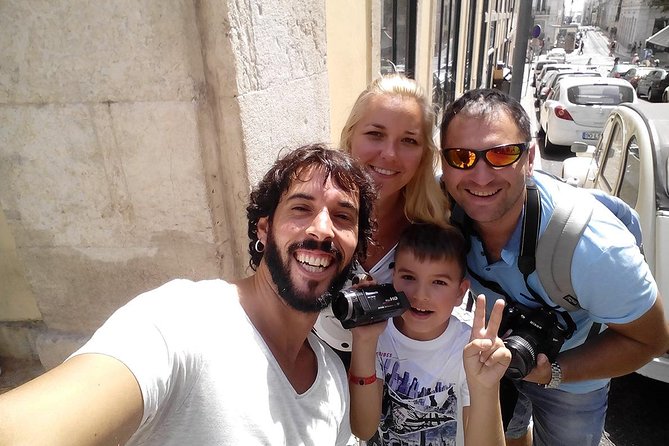
The strongest part of this experience is the guide’s ability to connect art with place. You hear about the artists and the techniques, but also about politics, social questions, city rules, and the international street art scene.
Erica receives repeated praise for making the subject accessible and for relating it to general Lisbon history. Maria is described as sensitive and reflective, with a personal connection to the city. Laith is praised for explaining street art terms, methods, styles, and international links. Leigh is also described as passionate and well informed.
One especially useful feature is the dialogue. Guides answer questions, invite discussion, and offer recommendations for the rest of your stay. That makes the tour helpful even if you are new to the subject. You learn how to keep looking after the walk ends.
The small group helps. A maximum of 12 people is given in the tour information, while the additional details list a maximum of 15. In either case, this is not a giant group experience. Ask about the exact group limit when booking if that detail matters to you.
Price, Pace, and Practical Value
At $42.27 per person, the tour sits in a reasonable range for a three-hour guided city experience. You are paying for a local guide, interpretation, route planning, and access to places you might not connect on your own.
The value is strongest if you want context. You could walk through Bairro Alto, Baixa, Graça, and Alfama without paying anything, but you would likely miss the links between the art and the neighborhoods. The tour also saves you from planning a route across several hills.
The value is weaker if you only want quick photographs. The walk is paced for explanation, questions, and conversation. It is not a fast circuit of the biggest murals.
A rest break is included around the halfway point. Food and drinks are not included, so carry water and wear clothing suited to a long walk. Comfortable shoes are essential. This is not the day for flimsy sandals or new footwear.
The tour is offered in English and uses a mobile ticket. Hotel pickup and drop-off are not included. Public transportation is nearby, but you will need to reach the meeting point yourself and arrange your own return from the endpoint.
It is currently recommended by 99 percent of participants, with a 4.9 rating from 278 ratings. The high score matches the main pattern of praise: strong guides, a surprising route, useful cultural background, and a good mix of art and city sightseeing. The small number of less positive comments focus mainly on the length and hills, not on poor organization or weak content.
Who Should Book This Walk?
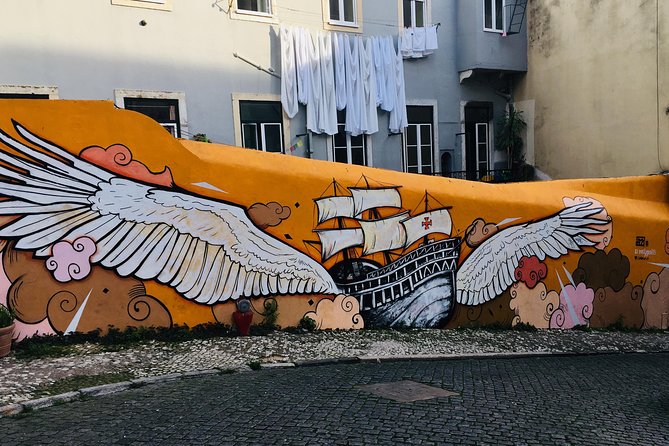
I would choose this tour if you want to see Lisbon through local walls and public spaces rather than only through churches and monuments. It suits art fans, photographers, first-time visitors, and anyone curious about how cities decide what belongs in public view.
It is also a good choice if you know little about street art. The guides explain the subject without assuming you already understand the terms or styles. Several people began with no real interest in graffiti and finished with a new appreciation for the art.
You should think twice if walking uphill for three hours will be difficult. The route includes cobbled streets, uneven ground, and hills. It is not recommended for people with mobility issues, and most participants need to be comfortable walking continuously with breaks.
Solo visitors may find the small group useful. One person even received extra help getting safely back to a hotel after the tour. That is not a guaranteed service, but it shows the personal care some guides bring to the experience.
Book it early if your schedule is fixed. It is often reserved about 26 days in advance. Free cancellation is available up to 24 hours before the start time. Poor weather can lead to a new date or a full refund, and the activity requires suitable weather.
Should You Book the Lisbon Street Art Tour?
Yes, if you want more than a collection of wall photos. The route gives you five neighborhoods, a viewpoint, tilework, working-class history, political art, and a chance to understand how Lisbon’s public art scene works.
I would not choose it for a relaxed stroll or a mobility-friendly outing. The three-hour length and hills are real. But if you have good shoes, steady legs, and curiosity, $42.27 buys a lively introduction to a side of Lisbon you could easily miss on your own.
Book this near the start of your stay if possible. You will leave with new places to seek out, a better eye for Lisbon’s walls, and useful ideas for the rest of your time in the city.
FAQ
How long is the Lisbon street art tour?
The walking tour lasts approximately three hours.
What is the price?
The listed price is $42.27 per person.
Where does the tour begin?
It begins at R. Luz Soriano 67, 1200-246 Lisboa, Portugal.
Where does the tour end?
It ends at Miradouro da Graça, Calçada da Graça, 1100-265 Lisboa, Portugal.
Which neighborhoods are included?
The route includes Bairro Alto, the Elevador da Glória area, Baixa de Lisboa, Graça, and Alfama.
Is the tour offered in English?
Yes. The tour is offered in English.
What is included?
A local guide, a rest break around the halfway point, and a small-group format are included.
Are food and drinks included?
No. Food and drinks are not included.
How large is the group?
The tour information gives a maximum group size of 12 people. Additional details state that the activity can have up to 15 participants.
Is the tour suitable for people with mobility issues?
The tour is not recommended for people with mobility issues. You must be able to walk on unpaved or uneven terrain, and comfortable clothing and shoes are advised.
More Three-Hour Experiences in Lisbon
- Lisbon: 3-Hour Street Art Tuk Tuk Tour
★ 4.8 · 86 reviews - Lisbon 3-Hour Street Art Tour
★ 4.6 · 63 reviews - Berlin: 3-Hour Street Art Tour
★ 4.7 · 778 reviews - 3-Hour Atlanta Beltline Food, Street Art and History Tour
★ 5.0 · 345 reviews
Just added around Lisbon
- Street Art – Tuk Tuk Tour★ 5.0 · 17 reviews
- Street Art Tour by Tuk Tuk Joy★ 5.0 · 2 reviews
- Lisbon Street Art and Lookout Point Tour★ 5.0 · 17 reviews
- Lisbon Street Art Walk★ 5.0 · 17 reviews
- Street Art at Lisbon★ 5.0 · 2 reviews
- Private Tuk Tuk of the Old Town Lisbon and Street Art Highlights★ 5.0 · 20 reviews
- Lisbon Street Art – Private Tuk Tuk Tour with pickup★ 5.0 · 17 reviews
- Discover Lisbon’s Best Street Art★ 5.0 · 6 reviews
Lisbon Mural Tours, compared.