
REVIEW · MEXICO CITY MURAL TOURS
Diego Rivera’s murals, hidden treasures
Murals make Mexico’s past impossible to ignore. This three-hour Mexico City tour links Diego Rivera’s bold public art with the stories behind it, taking you from the Public Education Secretariat to Palacio de Bellas Artes and the Diego Rivera Mural Museum. I especially like the three-part route, which gives you different views of Rivera’s work, and the way guides such as David and Laila bring politics, ordinary life, and Mexican identity into the discussion. The main consideration is time: one hour at each stop goes quickly, so this suits you best if you want a focused introduction rather than a slow museum day.
I also like that the $80.60 price includes admission and a guide, which keeps the outing simple. The small maximum of 15 people should make it easier to hear explanations and ask questions. The first museum is subject to availability, and the tour is offered Wednesday through Monday, so check the date and language before you book.
Key points at a glance
- Three major Rivera stops: Visit the Museo Vivo del Muralismo, Palacio de Bellas Artes, and Museo Mural Diego Rivera in about three hours.
- The first stop is unusually broad: The Public Education Secretariat contains a large collection of Rivera murals plus works by several other Mexican artists.
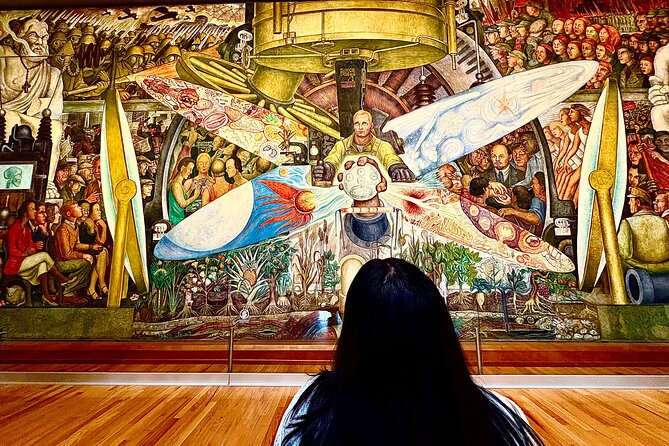
- Bellas Artes adds a famous controversy: See the replica of Rivera’s Man at the Crossroads, the mural destroyed in New York by the Rockefeller family.
- Guides are the strongest part: David and Laila are praised for clear storytelling, flexibility, and personal tips about Mexico City.
- Tickets are included: The $80.60 fee covers entrance costs and guiding, but gratuities are extra.
- Small-group format: The tour accepts no more than 15 people and begins and ends at República de Argentina 28.
Why this Rivera tour works well in Mexico City
Diego Rivera’s murals are not simply large paintings on public walls. They are arguments about Mexico. They show workers, teachers, farmers, revolutionaries, children, political leaders, and people caught in the unequal systems Rivera wanted to expose.
That is why a guided visit can help. You can look at a crowded mural for several minutes and still miss the connections between its figures. A good guide gives you a way into the scene, then helps you connect one painting to another.
This route also avoids putting all your attention on a single famous work. You see Rivera in an institutional setting at the Public Education Secretariat, a grand national setting at Bellas Artes, and a compact historical scene at the Diego Rivera Mural Museum. That range gives you a better sense of his working life and his ideas.
I would not choose this tour if you want a long, quiet museum visit with plenty of time for every room. Each stop receives about an hour. I would choose it if you want a firm introduction, useful context, and three important sites handled in one morning or afternoon.
More Muralism Tours in Mexico:
- CDMX: Xochimilco, Coyoacan, Frida Kahlo Museum & Murals Tour
★ 4.4 · 3,025 reviews - La Catrina & Muralism: Diego Rivera’s Legacy & Frida Kahlo
★ 4.5 · 197 reviews - Muralist Art Semi Private Walking Tour in Mexico City Downtown
★ 5.0 · 188 reviews
Starting at the Museo Vivo del Muralismo
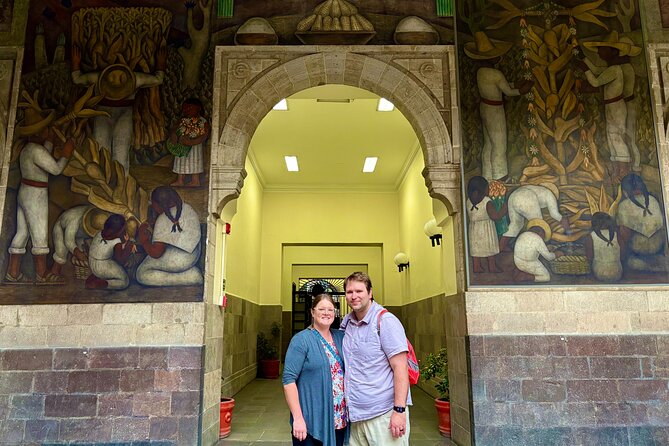
The meeting point is Museo Vivo del Muralismo at República de Argentina 28 in Mexico City’s Centro Histórico. The tour begins and ends here, which is useful if you want to continue exploring the historic center afterward or return to a familiar location.
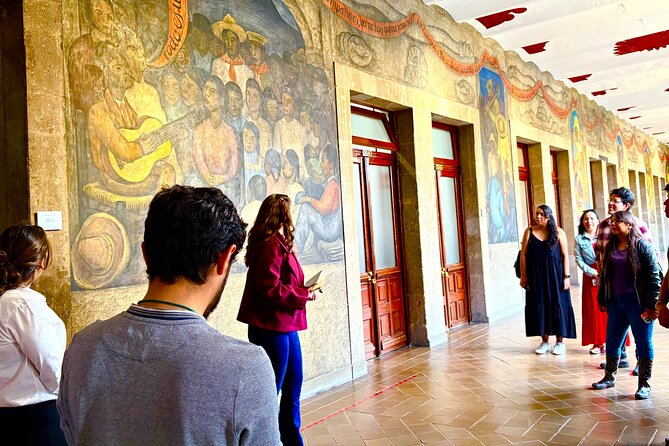
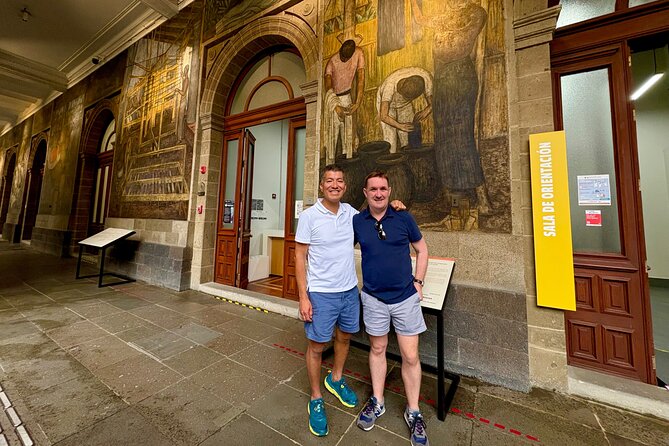
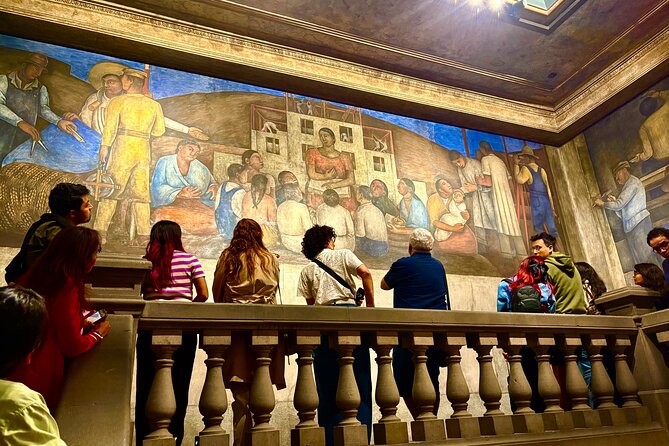
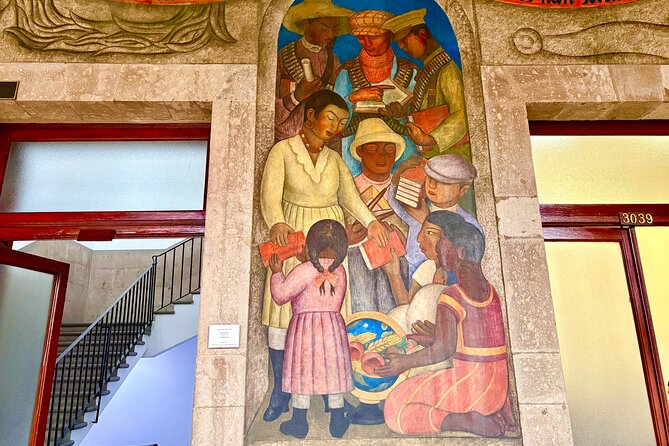
The museum occupies the Public Education Secretariat, the building described as containing the largest number of Diego Rivera murals on the tour. This is the most substantial part of the experience from an art-history point of view. You are not seeing one isolated masterpiece. You are looking at a large group of works in the setting where Rivera created a public vision of Mexico.
The murals cover ideas tied to the struggle of the Mexican people, everyday trades, festivals, education, cultural missions, revolution, inequality, identity, and national hopes. That list may sound broad, but it is exactly what makes the visit useful. Rivera wanted art to reach people outside elite galleries, and public walls gave him a way to place history and political ideas in daily life.
You can expect the guide to explain how Rivera’s years in Europe shaped his return to Mexico, then show how his art changed when he worked with Mexican subjects and public institutions. The supplied tour information also points to the work of David Alfaro Siqueiros, Roberto Montenegro, Amado de la Cueva, Jean Charlot, Federico Canessi, and Manuel Felguérez.
That wider cast matters. You are not being told that Rivera created Mexican muralism alone. The museum places him among other artists and lets you compare different approaches to national identity, labor, and social change.
The first stop lasts about an hour, and admission is listed as free. There is one practical catch: access to Museo Vivo del Muralismo depends on availability for the scheduled date and time and can change without notice. If this stop is especially important to you, treat that condition seriously and confirm the plan before setting your expectations.
Palacio de Bellas Artes and Rivera’s New York controversy
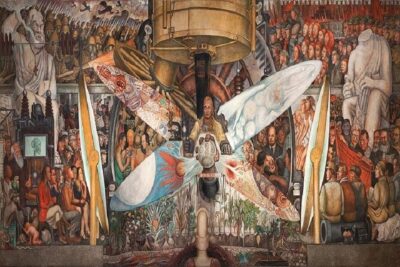
The second stop is Palacio de Bellas Artes, Mexico City’s major cultural center. The building itself gives the visit a grander setting, but the focus here is Rivera’s mural known as Man at the Crossroads.
The original mural was commissioned for Rockefeller Center in New York. It depicted a central figure controlling the universe and included political imagery that caused a major dispute. The Rockefeller family ultimately destroyed the work. At Bellas Artes, you see a replica of that controversial mural.
This is a strong stop because the painting comes with a clear story about art, power, money, and censorship. Rivera was not creating harmless decoration. His murals often asked who controls society, who benefits from industry, and how ordinary people fit into political systems.
A guide can help you read the competing symbols without reducing the work to a single political slogan. Look for the contrast between workers, machines, leaders, and the central figure. The point is not only that the mural was controversial. It is that the controversy reveals how public art can threaten the people who pay for it.
You receive about an hour here, with admission included. That is enough for a guided explanation and a close look at the mural, but you may want more time if you also hope to explore the building’s other cultural offerings. The tour is centered on Rivera, so keep your expectations focused.
The Diego Rivera Mural Museum’s crowded history lesson
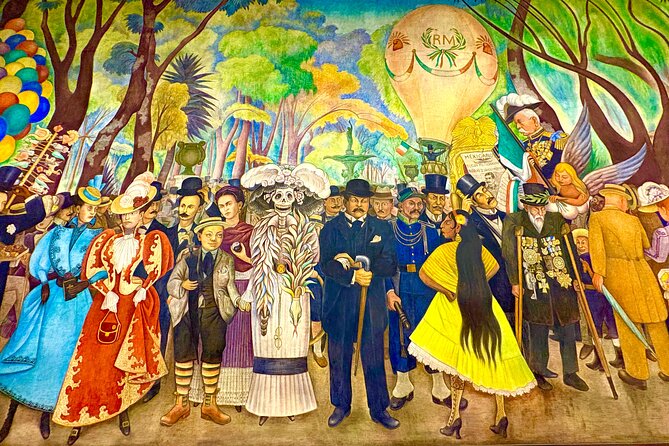
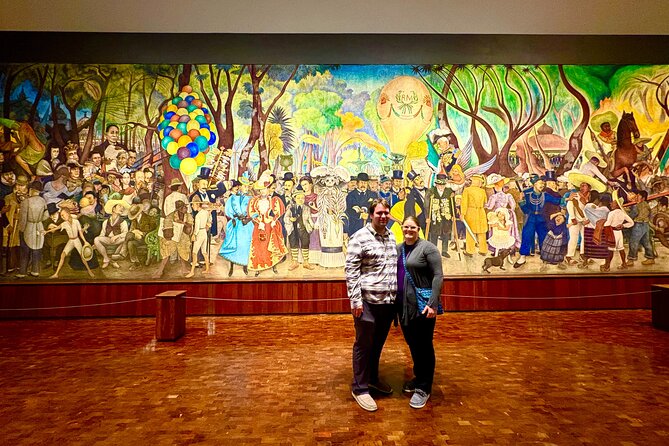
The final stop is Museo Mural Diego Rivera, home to one of Mexico City’s most impressive Rivera murals. Its main work brings characters from Mexican history together in one scene.
This is a different experience from the Public Education Secretariat. Instead of moving through a large collection of murals and artists, you concentrate on one major composition. The pleasure comes from looking closely and noticing how Rivera fits different historical figures into the same visual world.
The mural turns history into a gathering. You may find yourself identifying figures, asking why they were included, and considering how Rivera wanted Mexicans to remember the past. The guide’s role is especially useful here because a crowded historical scene can feel confusing without a framework.
The museum is described as a hidden treasure of Mexico City, but I would keep the practical meaning simple: it is a compact museum that makes sense as part of a Rivera-focused route. The one-hour visit gives you enough time to understand the central mural without making the entire tour feel like a single painting lesson.
Admission is included. Since this is the third stop, pay attention to your energy. The tour moves through three museums and cultural sites in roughly three hours, so the last hour may feel more demanding if you prefer a slow pace.
A few more mural tours around Mexico worth a look
- Cancun Street Food Tour with Food Stalls, Local Market and Murals
★ 5.0 · 723 reviews - Mexico City; ART NACO : Murals & Street Art Bike Tour
★ 5.0 · 284 reviews - History and Murals: Walking Tour Guadalajara
★ 5.0 · 237 reviews - Walking Tour – Impressive murals in Historical Center of Mexico City
★ 5.0 · 224 reviews
What guides David and Laila add
The strongest praise goes to the guides, especially David and Laila. David is described as an excellent ambassador for the service, with one visitor saying that his payment could never match the value he provided. Another account calls him flexible, engaging, and able to make the history feel alive.
That tells you what to hope for from the guiding style: not just dates and names, but connections between the murals, Rivera’s choices, and Mexico’s political story. A guide who can adjust to the group is also useful when one painting sparks more questions than expected.
Laila receives similar praise for her spirit and command of the subject. Her explanations helped connect the Rivera works with a visitor’s earlier experience of his art, turning separate museum visits into a more coherent picture.
One solo visitor who joined a Spanish-language tour also found Laila friendly and passionate, and received extra suggestions for food and museums around the city, along with small gifts. The listed tour language is English, so do not assume that Spanish is part of every departure. If language matters to you, confirm it when booking.
The personal city advice is a welcome bonus, but I would book this for the mural instruction, not for gifts or restaurant suggestions. Those extras depend on the guide and the circumstances of the visit.
Is $80.60 a fair price?
At $80.60 per person, this is not a bargain-priced museum visit. It becomes easier to justify because the fee includes all listed entrance tickets and a guide.
You are paying for three hours of organized access to three important Rivera-related sites, plus the interpretation that ties them together. If you visited each place alone, you would save the guiding fee, but you would also need to build your own route and research the political and artistic background.
The price makes the most sense for first-time visitors to Mexico City, people with limited time, and anyone who wants the murals explained rather than simply photographed. It is less attractive for museum regulars who already know Rivera’s work and prefer to move independently.
Tips are not included. Plan to leave extra money if the guide gives you the attentive, flexible service described by the strong guide feedback.
Timing, group size, and practical planning
The tour lasts approximately three hours and accepts a maximum of 15 people. That is small enough to feel more manageable than a large coach excursion, though the actual experience will depend on the number who book your departure.
The route begins at Museo Vivo del Muralismo and ends at the same meeting point. The site is near public transportation, so you have a practical way to reach the start, but the supplied details do not specify the exact transport method between stops. Ask for that information if you need to plan around mobility or a tight schedule.
The tour operates Wednesday through Monday. Museo Vivo del Muralismo is not listed as open on Tuesdays for this experience, so avoid choosing that day.
Confirmation arrives when you book. Service animals are allowed, and the activity states that most people can participate. If you have a particular access concern, ask before reserving because the information does not describe every building condition or the movement between sites.
The cancellation rule is straightforward: cancel at least 24 hours before the local start time for a full refund. A cancellation or change made inside that 24-hour window is not accepted for a refund.
Who should book this experience?
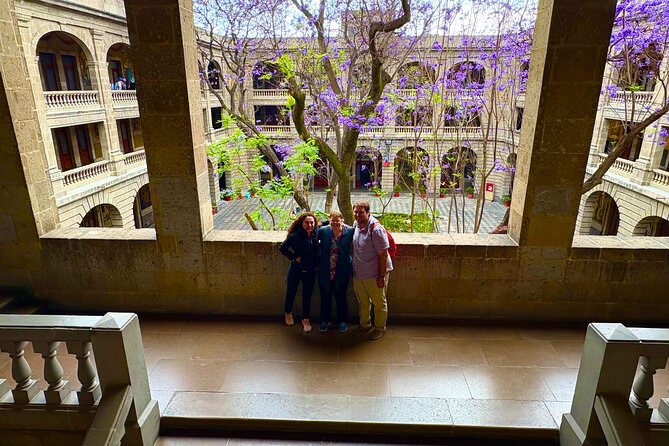
I would recommend this tour to you if Rivera is a main reason you want to visit Mexico City, but you want help making sense of the murals. It is also a good choice if you have only a few days in the city and want three major stops connected by one subject.
It suits solo visitors particularly well. The small group, guide interaction, and practical city suggestions can make the outing feel more personal than simply entering museums alone.
Art-history students, politically curious visitors, and anyone interested in the Mexican Revolution will get the most from it. Parents with older children may also find the public murals easier to discuss than a long sequence of traditional gallery paintings.
I would hesitate if you dislike fixed schedules or need a great deal of time at each site. Three hours is efficient, but it leaves little room to wander. I would also confirm the first museum’s availability and the tour language before paying.
Should you book Diego Rivera’s Murals and Hidden Treasures?
Yes, if you want a focused, well-guided introduction to Rivera and Mexican muralism. The strongest reason to book is the combination of three distinct sites and guides such as David and Laila, whose explanations turn impressive images into readable history.
The main caution is pace. You will spend about an hour at each stop, and the first museum’s access can change. For $80.60, the value is in the guide and the included admissions, not in leisurely museum time.
If that tradeoff works for you, this is a smart way to see Rivera’s Mexico City work, understand the Rockefeller controversy, and leave with a clearer idea of why these murals still carry such force.
FAQ
How much does the Diego Rivera mural tour cost?
The tour costs $80.60 per person. Entrance fees and the guide are included, while tips are not included.
How long does the tour last?
The experience lasts approximately three hours, with about one hour allocated to each of the three stops.
What language is the tour offered in?
The tour information lists English as the available language. One separate booking account described a Spanish-language departure, so confirm the language of your selected tour before booking.
Where does the tour begin?
It begins at Museo Vivo del Muralismo, República de Argentina 28, Centro Histórico, Mexico City.
Where does the tour end?
The activity ends back at the original meeting point at Museo Vivo del Muralismo.
What places does the tour visit?
It visits Museo Vivo del Muralismo, Palacio de Bellas Artes, and Museo Mural Diego Rivera.
Are admission tickets included?
Yes. All listed entrance tickets are included in the tour price. Admission to Museo Vivo del Muralismo is subject to availability and can change without prior notice.
How many people can join the tour?
The tour has a maximum group size of 15 people.
Can I cancel for a full refund?
Yes. You can receive a full refund if you cancel at least 24 hours before the experience’s local start time. Cancellations or changes made less than 24 hours before the start are not accepted for a refund.
Just added around Mexico
- Xochimilco floating gardens, Coyoacan and UNAM murals★ 4.0 · 6 reviews
- UNAM: Murals & Revolution★ 4.9 · 8 reviews
- Street Art & Cemetery Cultural Tour – half day★ 5.0 · 3 reviews
- Graffitis & Munchies biketour Playa del Carmen★ 4.5 · 18 reviews
- Street Art Walk★ 4.5 · 7 reviews
- Tour Women Muralists : Strokes that resist Mexico City★ 5.0 · 7 reviews
- Mexico City Private Tour with Teotihuacan, Murals, Guadalupe Basilica★ 3.0 · 2 reviews
- Private Street Food & Mural Art Tour in Mexico City★ 3.5 · 3 reviews
Mexico City Mural Tours, compared.
Xochimilco, Coyoacan, Frida Kahlo Museum & Murals Tour
Read our review →
Walking Tour – Impressive murals in Historical Center of Mexico City
Read our review →
La Catrina & Muralism: Diego Rivera’s Legacy & Frida Kahlo
Read our review →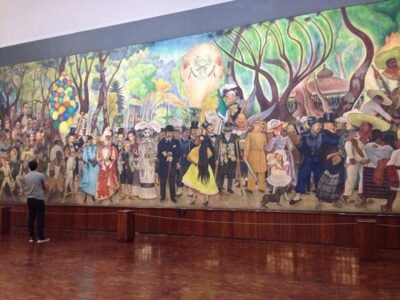
Muralist Art Semi Private Walking Tour in Mexico City Downtown
Read our review →
Xochimilco floating gardens, Coyoacan and UNAM murals
Read our review →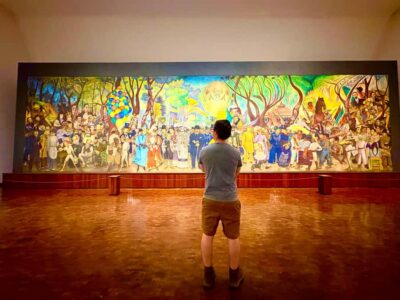
Browse the lists this tour appears in