
REVIEW · MEXICO CITY MURAL TOURS
Tour Evolution of Muralism paints your Grafiti
Mexico City tells its story on walls. This four-hour outing connects the birthplace of Mexican muralism with a working market and a former flour factory covered in graffiti, giving you art, politics, and public life in one compact tour. I especially like the small maximum of 12 people and the chance to spray your own graffiti at the end.
I also like the way public transportation becomes part of the experience rather than an afterthought. You ride the Metro and bus between sites, which gives the day a more local feel. The main tradeoff is physical: you cover plenty of ground, so comfortable walking shoes are a must, and lunch is not included.
Key points about the muralism and graffiti tour
- Mexican muralism begins at San Ildefonso: Spend about 90 minutes among major works by Diego Rivera, David Alfaro Siqueiros, and José Clemente Orozco.
- The Abelardo L. Rodríguez Market is an unusual art stop: Roughly 1,450 square meters of walls and ceilings carry murals by students of Rivera.
- Public transportation adds local flavor: The route uses the Metro and bus, not a private vehicle.
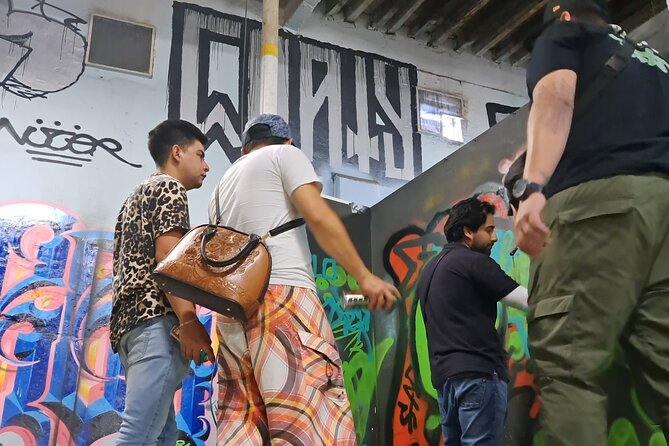
- Ex Fábrica MX ends the tour with contemporary street art: The former flour factory now holds bars, shops, and colorful graffiti.
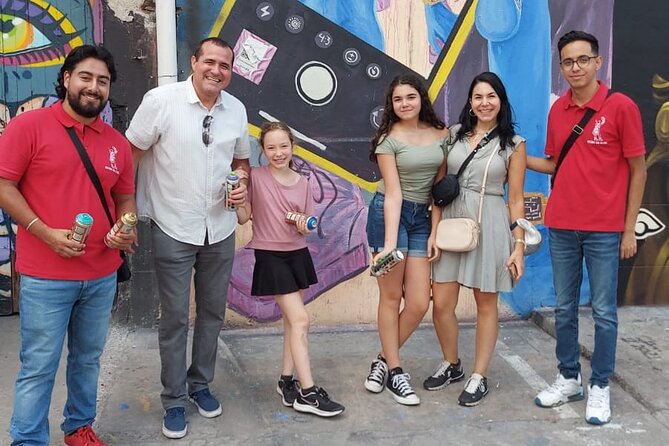
- You get to make your own graffiti: The hands-on activity gives the final stop more purpose than a simple photo opportunity.
- Small groups suit discussion: The tour has a maximum of 12 participants, with a certified English-speaking guide.
Why this tour works for curious art lovers

Mexico City muralism is not just decoration. It grew alongside the political and social changes that followed the Mexican Revolution, and many murals were meant to be read by ordinary people in public places. This tour helps you see that public role instead of treating the paintings as isolated museum objects.
I like the broad sweep of the route. You begin with major historical works, move to a less polished but very important public market, then finish with modern graffiti in a repurposed industrial space. The result is a clear progression from government-backed muralism to contemporary urban expression.
The guide matters here. A good guide can point out symbols, figures, political messages, and artistic choices that are easy to miss when you look at a large wall on your own. Jorge is praised for explaining how to break down a mural and for connecting the work of Rivera and Orozco to later art. Jaime is also associated with the tour and is described as a professional, engaging speaker.
The experience is offered in English and includes a certified guide. Because the group is capped at 12, you should have a better chance to ask questions than on a large coach excursion. That matters when the subject includes Spanish names, political movements, and complex murals packed with small details.
More Muralism Tours in Mexico:
- CDMX: Xochimilco, Coyoacan, Frida Kahlo Museum & Murals Tour
★ 4.4 · 3,025 reviews - La Catrina & Muralism: Diego Rivera’s Legacy & Frida Kahlo
★ 4.5 · 197 reviews - Muralist Art Semi Private Walking Tour in Mexico City Downtown
★ 5.0 · 188 reviews
Starting beside Mexico City’s Metropolitan Cathedral
The meeting point is Mexico City’s Metropolitan Cathedral at Plaza de la Constitución in the Centro Histórico. This puts you in one of the city’s most central and recognizable locations, though the square can be busy, so allow enough time to find the exact meeting spot.
From there, the guide leads you into the first major stop, the Antiguo Colegio de San Ildefonso. The route uses public transportation, including the Metro and bus. For some people, that is part of the appeal. You are not sealed inside a tourist vehicle, and the movement between neighborhoods helps connect the art to the city around it.
Still, public transportation requires a little flexibility. Stations and transfers can add walking, and the group needs to stay together. If you prefer a private ride and a slower pace, this may not be the right format.
San Ildefonso and the roots of Mexican muralism
The Antiguo Colegio de San Ildefonso is a colonial building in the historic center and one of Mexico City’s key cultural spaces. It is also closely tied to the beginning of the Mexican muralism movement, making it a strong place to start the tour.
You spend about 90 minutes here, and admission is included. That gives the guide enough time to move beyond a quick look at famous names. Works by Diego Rivera, David Alfaro Siqueiros, José Clemente Orozco, and other artists appear throughout the building.
The setting matters. These paintings are part of the architecture, not framed pieces placed in a neutral gallery. As you look up at walls and corridors, the building itself becomes part of the lesson. The guide can help you understand how the artists used large public surfaces to address education, labor, politics, and national identity.
San Ildefonso also served as an important center of education and intellectual life for more than six decades. That background gives the murals added weight. They were not created in an empty shell. They occupied a place where generations of students and public figures encountered ideas.
I would give this stop your full attention. The murals can feel overwhelming at first because there is so much to see. Taking photographs of artist signatures may help you remember names later, especially if Spanish names are difficult to keep straight.
The Abelardo L. Rodríguez Market’s working walls
The second stop shifts the mood. The Abelardo L. Rodríguez Market was built as a modern popular market in the early twentieth century, following the model of an earlier market known as Dos de Abril. Its purpose was practical, but its walls and ceiling became an enormous public art project.
About 1,450 square meters are covered with murals. The works were painted by, and under the direction of, students of Diego Rivera. Admission is free, and the visit lasts about 90 minutes.
This is one of the tour’s most unusual stops because the art shares space with a market. You are not looking at murals in a quiet museum environment. The setting helps explain why Mexican muralism had such public reach. Art was placed where workers, families, and shoppers could see it during daily life.
The subject matter is direct. Many paintings reflect socialist ideas and the Mexican government’s effort to promote the benefits of the 1910 Revolution. You will encounter themes involving the exploitation of workers, peasants, and miners.
That political focus gives the stop real substance, but it also means you benefit greatly from explanation. Without context, a large scene of labor or conflict can be hard to read. A guide can point out who holds power, who is being depicted as oppressed, and how the painting fits the period in which it was made.
The market may feel less polished than San Ildefonso. That is part of its character, but it also means you should not expect a formal gallery visit. I like the contrast. The stop shows how muralism functioned in ordinary public life, not just in grand cultural buildings.
A few more mural tours around Mexico worth a look
- Cancun Street Food Tour with Food Stalls, Local Market and Murals
★ 5.0 · 723 reviews - Mexico City; ART NACO : Murals & Street Art Bike Tour
★ 5.0 · 284 reviews - History and Murals: Walking Tour Guadalajara
★ 5.0 · 237 reviews - Walking Tour – Impressive murals in Historical Center of Mexico City
★ 5.0 · 224 reviews
Riding the Metro and bus between art stops
Transportation is included, but not in the form of a private car. You use Mexico City’s public system, including Metro and bus travel. This makes the tour feel connected to the city’s daily rhythm and gives you a small taste of how residents move between neighborhoods.
It also affects the pace. The overall experience lasts about three and a half to four hours, and some of that time is spent getting from one place to another. For me, that is worthwhile because the route does not isolate each attraction. You see that muralism and graffiti exist within a living city rather than inside a sealed sightseeing circuit.
Wear walking shoes. One direct tip from the experience is that you cover a lot of ground. You should also keep your belongings secure and stay close to the guide during transfers, though no special equipment is required.
The public transport element may be especially appealing to families with older children and teenagers. It adds movement and variety, and the final graffiti activity gives younger participants something active to look forward to. An 11-year-old is specifically described as enjoying the explanations and painting activity, but the tour is not presented as a children-only outing.
Ex Fábrica MX and the move into graffiti
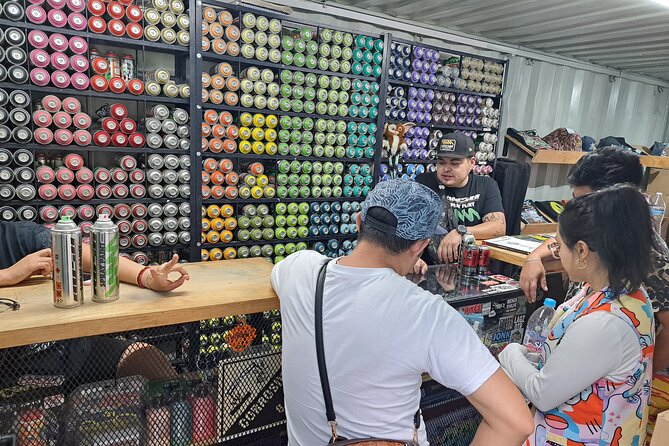
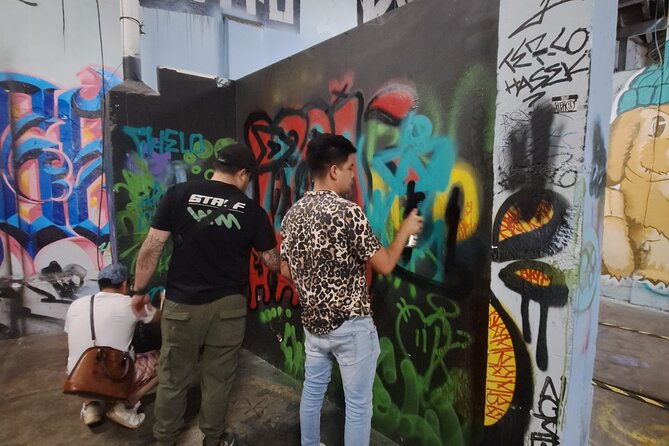
The tour ends at Ex Fábrica MX, on Primavera in the Tacuba area. The site was once a flour factory from the 1940s. After being abandoned, it was rehabilitated as an art district, with urban art as its main visual language.
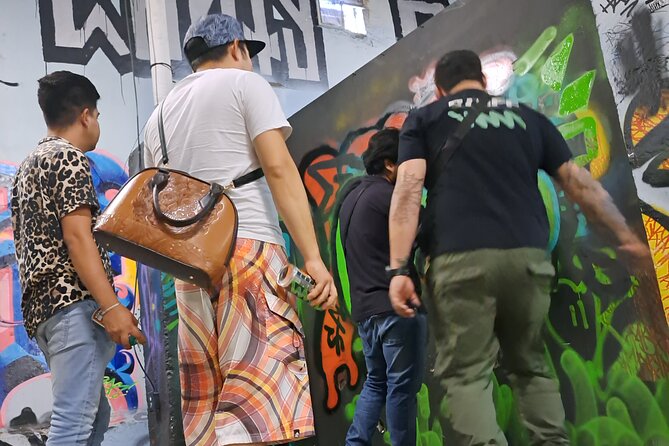
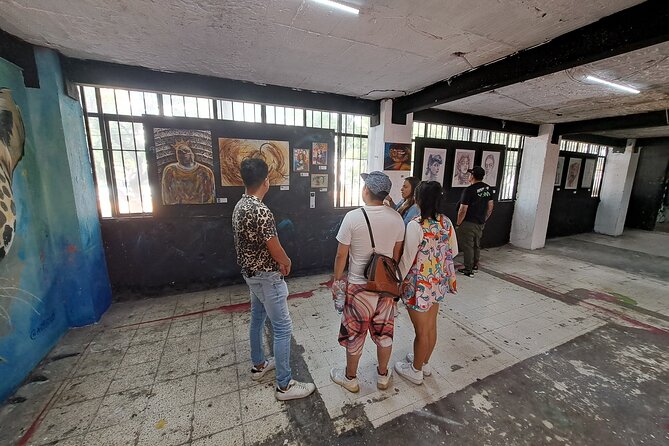
You spend about 40 minutes here, and admission is free. The former factory now includes bars and shops, while walls and other surfaces carry bright graffiti and large figures. It is a striking change from the historical murals at San Ildefonso and the political market paintings.
This final stop shows how old industrial spaces can be given a new public use. Instead of presenting art in a finished institutional setting, Ex Fábrica MX feels more informal and open. You can relax, look around, take photographs, and see how contemporary artists use color and scale.
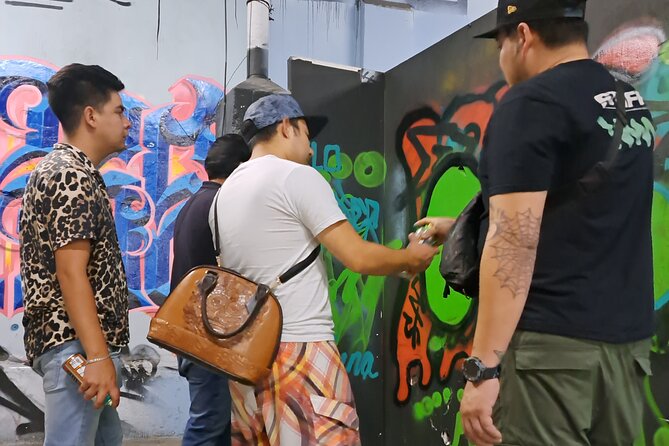
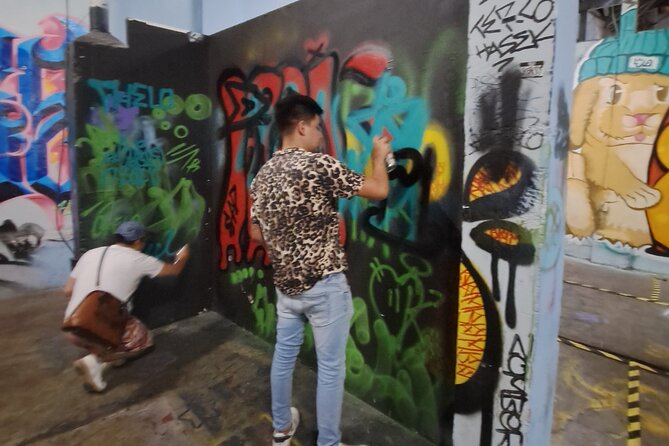
The best part is the chance to spray your own graffiti. That activity turns you from an observer into a participant, even if your contribution is modest. You do not need to arrive with artistic training. The value is in trying the medium and understanding, in a small way, the physical act behind the finished walls.
Ex Fábrica MX is also a good ending because it leaves room for a different kind of conversation. After spending hours examining political symbolism and historical subjects, you can think about how public art works today. The factory setting makes the contrast clear.
What the $71.36 price includes
At $71.36 per person, this is not the cheapest way to see Mexico City, but the price is easier to justify when you consider what is included. You receive a certified English-speaking guide, admission to San Ildefonso, public transportation during the route, and a guided visit to two places that can be difficult to understand on your own.
The value rests mainly in interpretation. You could reach the sites independently, but you would need to arrange the route, pay for transportation, research the artists, and work out the political context of the murals. The guide brings those pieces together in a single half-day outing.
The two free stops also help. You are not paying repeated entrance fees, and the paid admission is already handled at San Ildefonso. Food and drinks are not included, so plan to eat before or after the tour, or carry something suitable if permitted during the route.
The schedule is long enough to feel substantial without taking a full day. If you want a quick photo tour, it may feel too detailed. If you want to understand why the murals look the way they do, the length works in your favor.
Who should book this experience?
I would recommend it to you if you enjoy art with social and political meaning. It is also a good match for families with teenagers who like graffiti, visitors who want lesser-known cultural stops, and anyone who prefers a guide-led introduction before exploring more of Mexico City independently.
The tour suits people who enjoy asking questions. The strongest feedback centers on the guide’s ability to explain symbolism, historical change, and the way mural messages developed over time. That is the heart of the experience.
You should think twice if you dislike public transportation, long walks, or visits to active public spaces. The route is not built around long breaks, private transfers, or a quiet museum atmosphere. You may also find the market murals less immediately impressive than the grander works at San Ildefonso.
The format is accessible to most people, and service animals are allowed. The experience is near public transportation and has a maximum of 12 participants, but the supplied information does not give a specific distance, step count, or detailed mobility plan. Contact the provider if you need that information before booking.
Cancellation and practical planning
You can cancel up to 24 hours before the start time for a full refund. Changes or cancellations made less than 24 hours before the start time are not accepted for a refund, and the cut-off follows local Mexico City time.
Confirmation arrives when you book, and the tour is available with a mobile ticket. Since the experience is often booked about 15 days ahead, reserving early may help if your dates are fixed, though availability can change.
Bring comfortable walking shoes and a phone or camera for recording artist names and details. You will likely remember the major images, but the signatures and smaller symbols are easy to lose track of after several hours of mural viewing.
Should you book the muralism and graffiti tour?
Book it if you want more than colorful photographs. This experience explains how Mexican muralism carried messages about workers, education, revolution, and power, then shows how public art continues through present-day graffiti.
The strongest reasons to go are the range of locations, the small group, the public transportation route, and the hands-on finish at Ex Fábrica MX. The main costs are time, walking, and a willingness to use the Metro and bus.
If those tradeoffs sound fine, the $71.36 price offers solid value. You leave with a clearer way to look at murals, a better sense of Mexico City’s art culture, and your own small piece of graffiti made along the way.
FAQ
How long does the tour last?
The tour lasts approximately three and a half to four hours.
Where does the tour begin?
It begins at Mexico City’s Metropolitan Cathedral in Plaza de la Constitución, in the Centro Histórico.
Where does the tour end?
It ends at Ex Fábrica MX, located at Primavera 106 in Tacuba, Miguel Hidalgo.
What language is the tour offered in?
The tour is offered in English.
What is included in the price?
A certified guide, public transportation, and admission to the Antiguo Colegio de San Ildefonso are included.
Is food included?
No. Lunch, food, and drinks are not included.
Does the tour use public transportation?
Yes. The route uses public transportation, including the Metro and bus.
Is graffiti painting part of the experience?
Yes. At Ex Fábrica MX, you have the opportunity to spray your own graffiti.
How large is the group?
The tour has a maximum of 12 participants.
Are service animals allowed?
Yes. Service animals are allowed on the tour.
Just added around Mexico
- Xochimilco floating gardens, Coyoacan and UNAM murals★ 4.0 · 6 reviews
- UNAM: Murals & Revolution★ 4.9 · 8 reviews
- Street Art & Cemetery Cultural Tour – half day★ 5.0 · 3 reviews
- Graffitis & Munchies biketour Playa del Carmen★ 4.5 · 18 reviews
- Street Art Walk★ 4.5 · 7 reviews
- Tour Women Muralists : Strokes that resist Mexico City★ 5.0 · 7 reviews
- Diego Rivera’s murals, hidden treasures★ 5.0 · 21 reviews
- Mexico City Private Tour with Teotihuacan, Murals, Guadalupe Basilica★ 3.0 · 2 reviews
Mexico City Mural Tours, compared.
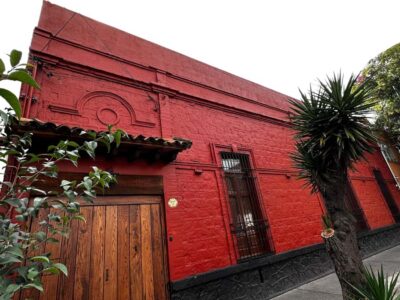
Xochimilco, Coyoacan, Frida Kahlo Museum & Murals Tour
Read our review →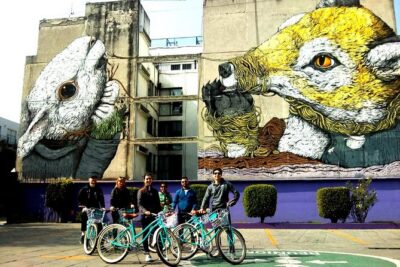
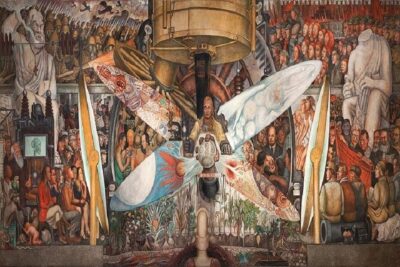
Walking Tour – Impressive murals in Historical Center of Mexico City
Read our review →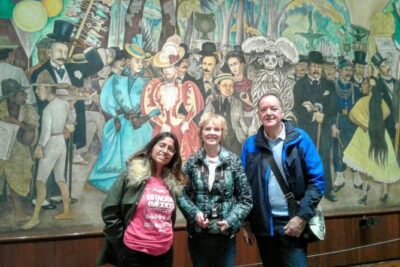
La Catrina & Muralism: Diego Rivera’s Legacy & Frida Kahlo
Read our review →
Muralist Art Semi Private Walking Tour in Mexico City Downtown
Read our review →
Xochimilco floating gardens, Coyoacan and UNAM murals
Read our review →
Browse the lists this tour appears in