
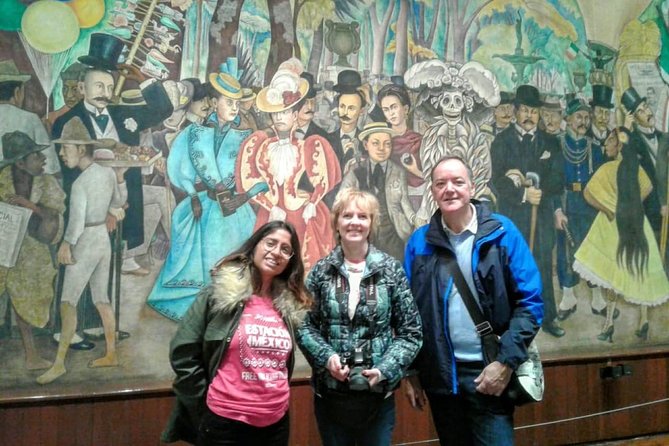
REVIEW · MEXICO CITY MURAL TOURS
La Catrina & Muralism: Diego Rivera’s Legacy & Frida Kahlo
Murals turn Mexico City into an open-air classroom. This 2.5-hour walking tour connects Diego Rivera, Frida Kahlo, José Clemente Orozco, David Alfaro Siqueiros, and the powerful political art movement that followed the Mexican Revolution. I like the way it pairs major museums with public art that can be easy to miss, and I like that museum admission and public transportation are included in the $66.14 price.
The main consideration is time. The advertised duration is about two hours and 30 minutes, but a thoughtful guide may spend longer with questions and extra murals. Some outings have lasted three and a half to four hours, with little sitting and no scheduled food or water stop. Bring water, eat beforehand, and wear shoes made for city pavement.
Key points to know before you book
- La Catrina gives the tour a memorable center: At the Museo Mural Diego Rivera, you see one of Mexico’s best-known paintings, where Día de Muertos imagery and national history meet.
- The route begins where Rivera and Kahlo met: Antiguo Colegio de San Ildefonso adds a personal story before the tour turns to public art and politics.
- The best moments may be the less obvious ones: Guides have shown murals inside markets and corners of historic buildings that are difficult to find alone.
- A small group keeps the art readable: The maximum is 12 people, making it easier to ask questions and hear the guide.
- Your guide shapes the experience: Addy, Sofía, Ulysses, Wariyor, Diana, David, Erin, and Guerrero have all led outings praised for clear storytelling and strong enthusiasm.
- The tour suits art and history fans: It is less ideal if you want a relaxed sightseeing walk with frequent breaks.
Why Mexican muralism matters
Mexican muralism was not simply decoration placed on grand buildings. It became a public way to tell the story of Mexico after the Revolution, often showing workers, Indigenous communities, political leaders, social conflict, and the struggle for a fairer country.
That context changes how you look at the paintings. A crowded wall can seem confusing when you first see it. With a guide pointing out symbols, artists, and competing versions of Mexican history, the scenes begin to work like a visual newspaper.
Rivera is the best-known name here, but the movement was larger than one artist. The route can introduce you to Orozco and Siqueiros as well, along with artists and students influenced by them. I especially like that the tour connects the paintings to the people and political pressures behind them instead of treating each mural as an isolated masterpiece.
You should expect direct discussion of difficult subjects. The art can be political, critical, and sometimes unsettling. That is part of its value. These murals were made to speak to ordinary people, not only to museum specialists.
More Muralism Tours in Mexico:
- CDMX: Xochimilco, Coyoacan, Frida Kahlo Museum & Murals Tour
★ 4.4 · 3,025 reviews - Muralist Art Semi Private Walking Tour in Mexico City Downtown
★ 5.0 · 188 reviews - Xochimilco floating gardens, Coyoacan and UNAM murals
★ 4.0 · 53 reviews
Starting at Antiguo Colegio de San Ildefonso
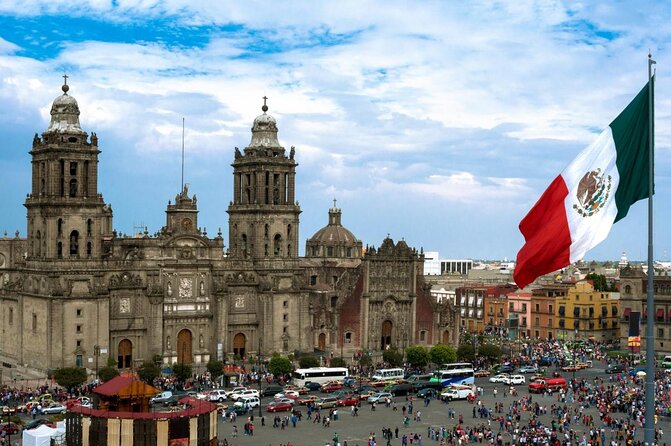
The meeting point is Antiguo Colegio de San Ildefonso, at Justo Sierra 16 in Centro Histórico. The tour begins at 11:00 a.m., a useful time for visitors who want breakfast first and still have most of the afternoon ahead.
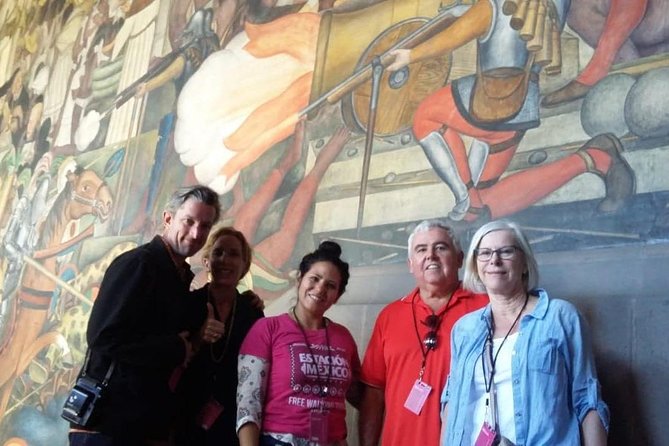
The opening stop lasts about 35 minutes, with admission included. Here, the guide introduces Diego Rivera’s life and work and explains the importance of the building in the story of Mexican art. This is also where Rivera and Frida Kahlo’s relationship began, giving the tour a human opening before it moves into larger questions of politics and national identity.
That connection is more than a celebrity anecdote. Rivera and Kahlo are often packaged as colorful art-world icons, but their work was tied to arguments about class, culture, revolution, and Mexico’s future. Starting with their relationship helps you see Rivera as both a person and a public figure.
You will be standing and looking upward at art for much of the visit. The stop is not a long lecture, but the guide’s ability to explain details matters. Addy has been praised for warmth and clear communication, while Sofía has been praised for her passion and strong grasp of the subject. Your guide may be different, but the operator uses an English-only format so the story can move at a steady pace.
Museo Vivo del Muralismo and the power of public walls
The second stop is Museo Vivo del Muralismo, a site arranged across two courtyards and three levels. Plan on roughly 35 minutes here, with the ticket covered in the tour price.
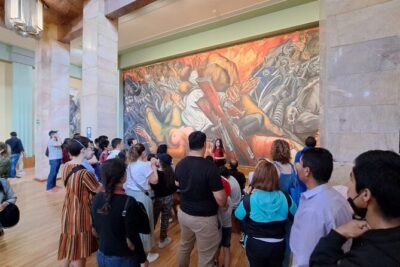
This stop helps show how muralism works in public space. Rather than presenting one painting in a quiet room, the setting asks you to consider how art interacts with architecture, movement, and daily life. Courtyards and multiple levels also mean more walking and standing, so this is where comfortable footwear begins to matter.
Guides have often made this section more rewarding by pointing out parts of the building that are easy to pass without noticing. One guide showed areas of the Secretary of Education building that a participant had missed on a previous solo visit. That is the real value of this kind of tour: not merely getting inside, but learning where to look and why a detail matters.
The tour may also include murals in or near market areas, depending on the day’s access and availability. These settings can feel more connected to everyday Mexico City than a formal gallery. They are also less predictable. Crowds, access, and the exact route can change, and the operator notes that museums may be substituted when availability requires it.
Museo Mural Diego Rivera and La Catrina
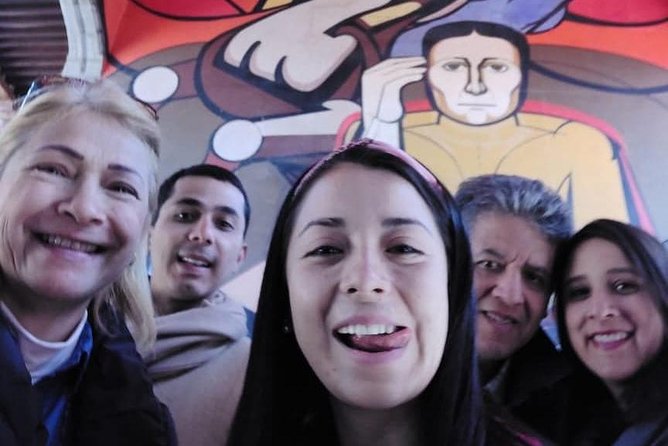
The third stop is the Museo Mural Diego Rivera, with about 30 minutes set aside. This is the clearest payoff for anyone booking specifically to see La Catrina.
Rivera’s famous mural brings together figures from Mexican history, popular culture, and Día de Muertos imagery. La Catrina, the elegant skeleton, is the visual anchor. She is instantly recognizable, but the painting rewards a closer look at the surrounding characters and references.
A guide can help you avoid the common mistake of treating the mural as a colorful group portrait. It is also a statement about how Mexico remembers its past and how social classes are represented. You may hear how La Catrina became such a powerful symbol, and how Rivera placed her within a broader view of Mexican society.
The museum stop is compact, which is helpful if you have limited time. It can also feel short if you want to study every figure. If your group asks many questions, the experience may run beyond the stated schedule. That is not necessarily bad, but it affects afternoon plans.
A few more mural tours around Mexico worth a look
- Cancun Street Food Tour with Food Stalls, Local Market and Murals
★ 5.0 · 723 reviews - Mexico City; ART NACO : Murals & Street Art Bike Tour
★ 5.0 · 284 reviews - History and Murals: Walking Tour Guadalajara
★ 5.0 · 237 reviews - Walking Tour – Impressive murals in Historical Center of Mexico City
★ 5.0 · 224 reviews
Palacio de Bellas Artes and Rivera’s controversial mural
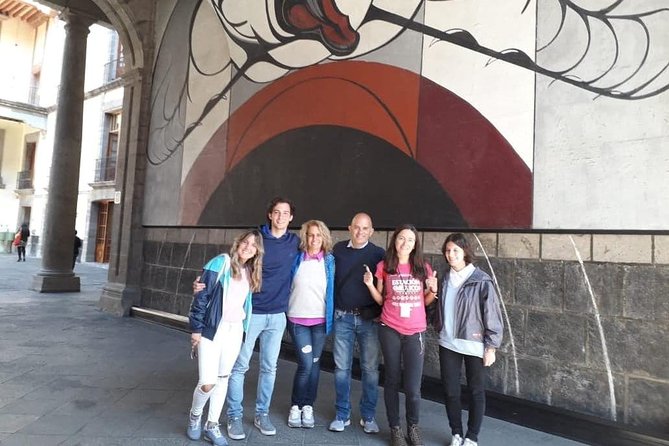
The tour ends at Palacio de Bellas Artes, Mexico City’s major cultural venue. The final stop lasts about 30 minutes and includes admission.
This is a strong ending because Bellas Artes brings Rivera’s public reputation into focus. The building houses his controversial mural created in the United States, later preserved for people to see in Mexico. The story illustrates how political art can create conflict far beyond the wall where it began.
Your guide can explain the arguments around the mural and show how Rivera’s ideas traveled across borders. This gives the tour a wider reach. You are no longer looking only at Mexican buildings or local scenes. You are considering who controls public art, who gets represented, and what happens when an artist’s politics collide with a patron’s expectations.
The tour finishes near the Palace of Fine Arts on Avenida Juárez. Your guide will offer suggestions for things to do nearby and places to eat. That practical ending is useful because the area gives you an easy next stop, though the tour does not include food or drinks.
The guides make the difference
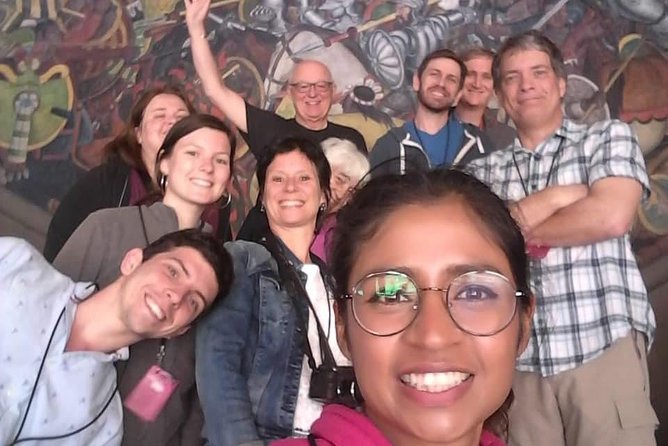
The operator’s strongest asset is its guiding team. The names attached to past outings include Addy, Sofía, Ulysses, Wariyor, Diana, David, Erin, and Guerrero. The guide assigned to your date can vary, so you should not book around one specific person unless the operator confirms that arrangement.
The praise is consistent in a few important ways. Guides explain art in plain language, connect murals to Mexican history, and welcome questions. Ulysses and Wariyor have been especially praised for finding murals that are hard to locate independently. One guide even helped finish a mural visit later in the day after the group ran out of time.
That level of care is not guaranteed on every departure, but it shows what the tour can offer at its best. The guide is not simply escorting you between museums. The guide is helping you read the city.
Group size matters here. With a maximum of 12 people, you have a better chance of hearing explanations and asking about a detail that catches your eye. A smaller group may also make it easier to linger, though a group interested in every question can make the outing longer than planned.
How demanding is the walk?
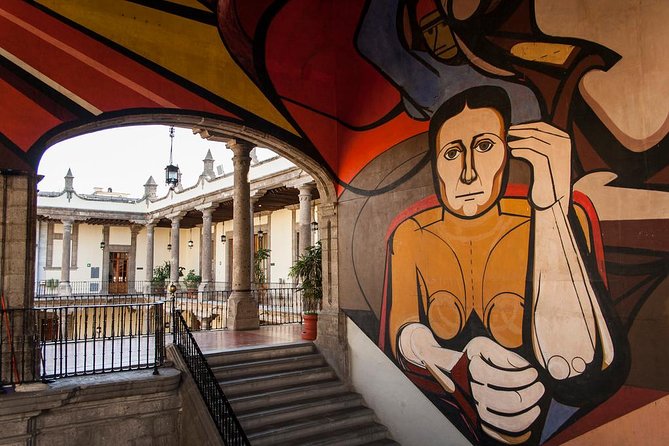
This is an active city tour. You will walk between stops, use public transportation, and spend much of the museum time standing. One participant described the outing as almost entirely standing, while another advised being ready to walk even though the distance was not extreme.
The route is not presented as a strenuous hike. Most travelers can participate, and the meeting point is near public transportation. Still, you should not treat this as a seated museum visit.
Wear comfortable shoes and carry water. Bring a small snack if you are sensitive to late lunches, since food and drinks are not included and there may be no official break. The 11:00 a.m. start makes breakfast important.
The route ends in Centro Histórico, so you are not stranded at the end. Your guide can suggest nearby food and activities, making it easy to continue exploring after Bellas Artes.
Is $66.14 a fair price?
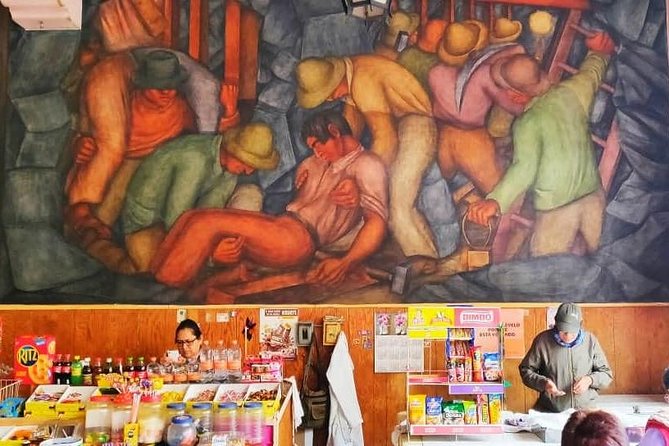
At $66.14 per person, this is not the cheapest way to see downtown murals. You could visit some museums independently for less, depending on ticket prices and the day’s access. The price makes more sense if you want interpretation, route planning, public transportation, and a guide who can connect the paintings to one another.
Admission to the listed museums is included, as is public transportation. You are also paying for the time saved finding entrances, locating less obvious murals, and working out how the sites fit together.
The value is strongest for a first visit to Mexico City, an art-focused day, or anyone who has already seen the major buildings but felt unsure what the murals meant. It is weaker for confident museum visitors who prefer to read wall text alone and set their own pace.
A 4.7 rating from 197 ratings and a 93 percent recommendation rate point to a dependable experience, though the schedule issue is worth taking seriously. If you have a timed lunch, theater booking, or afternoon excursion, allow extra room after the official end time.
Who should book this mural walk?
I would recommend it to:
- First-time Mexico City visitors who want a strong introduction to Centro Histórico.
- Art lovers interested in Rivera, Kahlo, Orozco, Siqueiros, and public art.
- Families with older children or teenagers who can manage several hours of standing.
- Solo visitors who want context and company without a very large group.
- Anyone curious about Mexican history but unsure where to begin.
I would be cautious about recommending it to someone who needs frequent sitting or a firm two-and-a-half-hour schedule. It also may not suit you if you want a general city tour with markets, food, and architecture as equal priorities. This is an art and history walk first.
Booking details worth remembering
Confirmation arrives when you book. The tour is offered in English, uses a mobile ticket, starts at 11:00 a.m., and ends near Palacio de Bellas Artes. Museums may change if availability requires it, so keep some flexibility in your expectations.
Free cancellation is available up to 24 hours before the start time for a full refund. Cancellations or changes made within 24 hours are not refunded or accepted.
Should you book La Catrina and Muralism?
Book this tour if you want Mexican muralism explained rather than simply photographed. The best parts are the links between art, revolution, class, identity, and daily life, plus the chance to see murals you might otherwise walk past.
I would set aside at least half a day, even though the listed duration is about two hours and 30 minutes. Bring water, eat first, and let the guide take time with the paintings. For an art-minded visit to Mexico City, this is a well-priced way to give the city’s walls a voice.
FAQ
How long is the La Catrina and Muralism tour?
The advertised duration is approximately two hours and 30 minutes.
What time does the tour start?
The tour starts at 11:00 a.m.
Where does the tour begin?
It begins at Antiguo Colegio de San Ildefonso, Justo Sierra 16, Centro Histórico de la Ciudad de México.
Where does the tour end?
It ends near Palacio de Bellas Artes on Avenida Juárez in Centro Histórico.
Is the tour offered in English?
Yes. The experience is offered in English and uses a one-language format.
Are museum tickets included?
Yes. Admission tickets for the museums on the route are included.
Is public transportation included?
Yes. Public transportation is included in the experience.
How many people can join the tour?
The maximum group size is 12 people.
Is food or drink included?
No. Food and drinks are not included.
Can the museums on the route change?
Yes. The museums may change depending on availability.
What is the cancellation policy?
You can cancel up to 24 hours before the start time for a full refund. Cancellations or changes made less than 24 hours before the start time are not accepted or refunded.
Just added around Mexico
- Xochimilco floating gardens, Coyoacan and UNAM murals★ 4.0 · 6 reviews
- UNAM: Murals & Revolution★ 4.9 · 8 reviews
- Street Art & Cemetery Cultural Tour – half day★ 5.0 · 3 reviews
- Graffitis & Munchies biketour Playa del Carmen★ 4.5 · 18 reviews
- Street Art Walk★ 4.5 · 7 reviews
- Tour Women Muralists : Strokes that resist Mexico City★ 5.0 · 7 reviews
- Diego Rivera’s murals, hidden treasures★ 5.0 · 21 reviews
- Mexico City Private Tour with Teotihuacan, Murals, Guadalupe Basilica★ 3.0 · 2 reviews
Mexico City Mural Tours, compared.
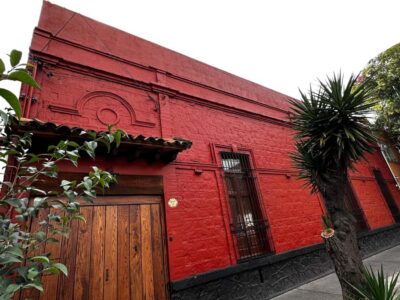
Xochimilco, Coyoacan, Frida Kahlo Museum & Murals Tour
Read our review →
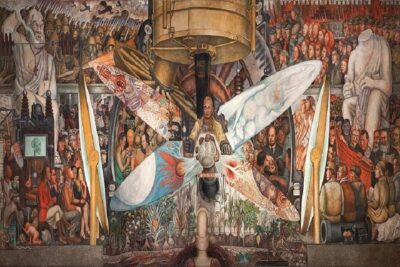
Walking Tour – Impressive murals in Historical Center of Mexico City
Read our review →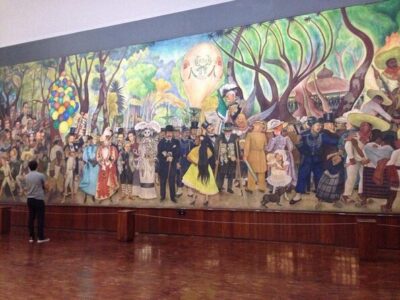
Muralist Art Semi Private Walking Tour in Mexico City Downtown
Read our review →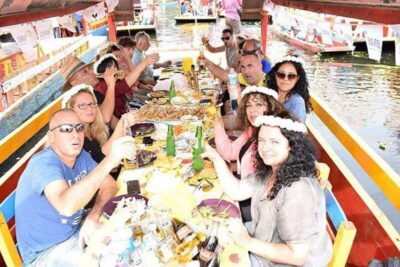
Xochimilco floating gardens, Coyoacan and UNAM murals
Read our review →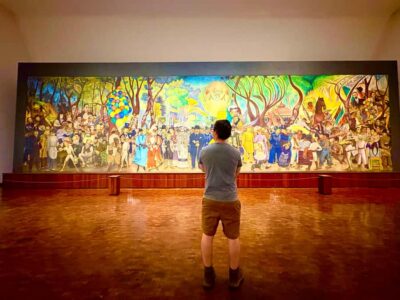
Browse the lists this tour appears in