
REVIEW · MEXICO CITY MURAL TOURS
Palace of Fine Arts Mural Tour
Murals tell Mexico’s story in pictures. This one-hour-to-90-minute tour makes Mexico City’s Palacio de Bellas Artes easier to read, pairing its grand architecture with the political, social, and artistic ideas behind its murals. I especially like the focus on Diego Rivera’s destroyed Rockefeller Center mural and the attention given to artists beyond Rivera, including Orozco, Siqueiros, Camarena, and Tamayo. The tour also earns points for using a certified guide and keeping the subject focused.
The strongest part is the explanation. Leon, the English-speaking guide praised in the tour feedback, explains symbolism, historical setting, and artistic background rather than simply pointing at large painted walls. I also like the central location, since the tour begins and ends at the Palace in the Historic Center. The main consideration is the admission detail: the tour information says entries are included, yet also says admission is not included, so confirm exactly what your $56.75 covers before paying.
Key points to know before you book
- Seventeen murals are part of the discussion, with works by Rivera, Siqueiros, Orozco, Camarena, Tamayo, and other major Mexican artists.
- Rivera’s Rockefeller Center mural gets special attention, including the political ideas that led to its destruction.
- Leon receives repeated praise for clear English, strong preparation, and detailed explanations of symbolism and context.
- The tour lasts about 60 to 90 minutes, making it a manageable cultural stop in the Historic Center.
- The group may reach 35 people, so your position near the guide can affect how easily you hear and see.
- The price is $56.75 per person, which makes the guide’s interpretation the main part of the value.
Why the Palacio de Bellas Artes matters
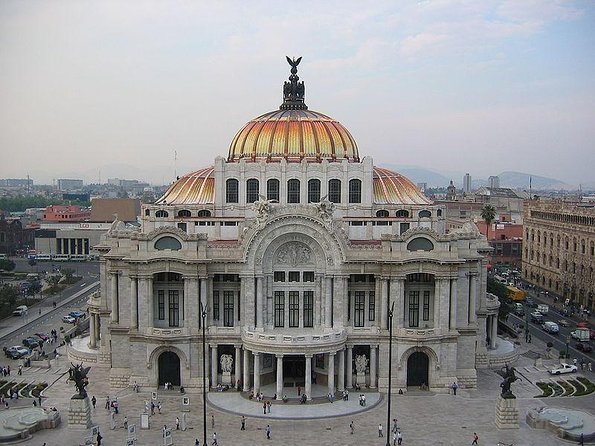
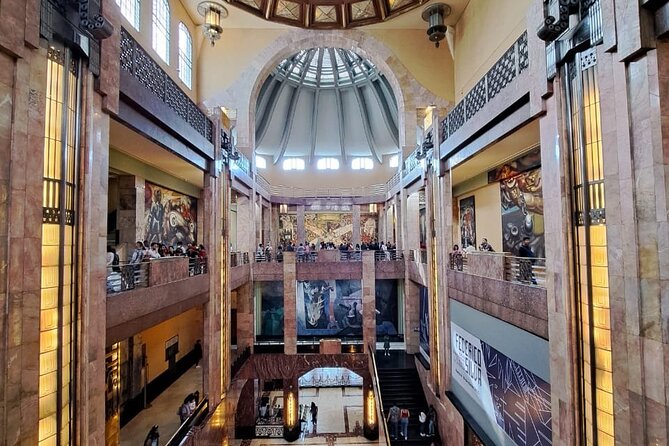
The Palacio de Bellas Artes is more than a handsome building in central Mexico City. It is described as the country’s most emblematic site in the Historic Center and an important part of Mexico’s national story. The building was declared a UNESCO World Heritage Site in 1987, giving the tour a setting that matters before you even reach the murals.
The tour begins outside the Palace on Avenida Juárez and covers both the exterior and interior architecture. That is useful because many visitors rush toward the mural rooms and miss the building itself. Your guide explains the project associated with Porfirio Díaz, helping you see the Palace as a product of a particular political and cultural period rather than as a decorative backdrop.
You should expect a compact visit rather than a full museum day. The focus is on the architecture and the murals, not on every gallery or performance space. That narrow subject is a benefit if you want a clear introduction to Mexican muralism, but it may feel limited if you hoped to explore the entire Palace at length.
A few more mural tours around Mexico worth a look
- CDMX: Xochimilco, Coyoacan, Frida Kahlo Museum & Murals Tour
★ 4.4 · 3,025 reviews - Cancun Street Food Tour with Food Stalls, Local Market and Murals
★ 5.0 · 723 reviews - Mexico City; ART NACO : Murals & Street Art Bike Tour
★ 5.0 · 284 reviews
Reading the murals instead of just looking at them
Large murals can be difficult to understand without context. Their scale catches your eye, but the figures, symbols, and political references can blur together. This is where a good guide earns the fee. The tour explains what you are seeing, why it was painted, and how each artist used public art to address Mexican society and history.
The strongest praise centers on this kind of explanation. Leon is described as especially prepared, friendly, and effective in English. One detailed account notes that he explained each mural’s history and smaller visual details, while another highlights his treatment of symbolism and the artists’ backgrounds.
That approach suits you if you enjoy asking why is this here? rather than simply taking photographs. It also helps if you know little about Mexican muralism. You do not need a specialist’s vocabulary to follow the visit, since the stated emphasis is on stories, meaning, and historical setting.
A group of up to 35 people can change the feel of the experience. With a group that size, you may need to stay close to the guide to catch every point and get a clear view. The tour is still short enough to remain manageable, but it is not a private art lesson.
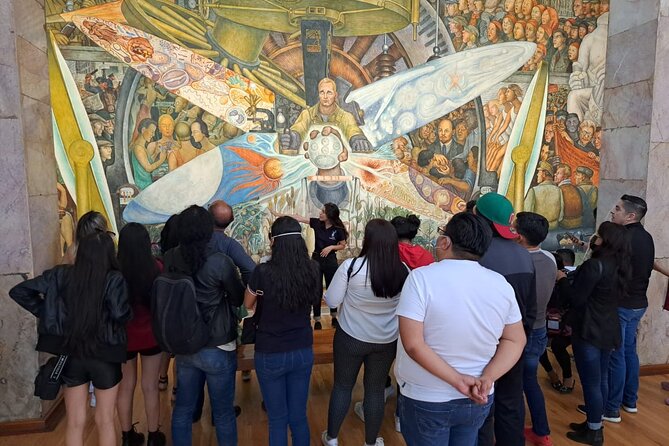
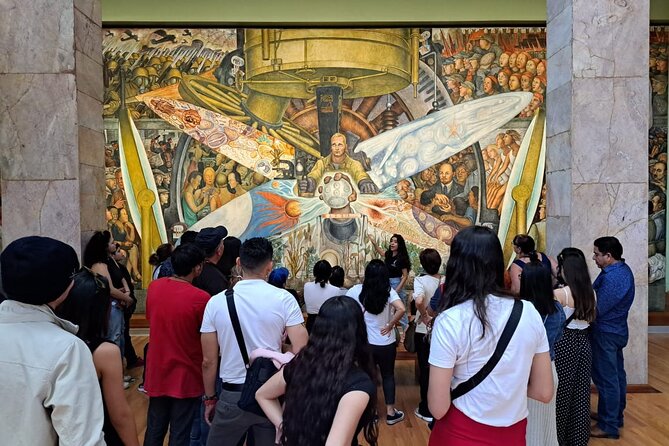
Diego Rivera’s Universe Controlled Man
One of the main works discussed is Universe Controlled Man, by Diego Rivera. Rivera’s murals often connect science, labor, politics, and daily life, so this painting gives the guide a useful starting point for explaining how muralism works.
The title itself points toward a central idea: humans trying to understand and shape the forces around them. Your guide places the work within Rivera’s wider artistic and political concerns, rather than treating it as an isolated decoration.
This is also where the story of Rivera’s Rockefeller Center mural comes into play. The destroyed work is one of the most memorable episodes in the tour because it links art, money, politics, and censorship. Rivera painted the mural for Rockefeller Center in New York, but the work was destroyed because of its political content and ideology.
That story adds useful context to the Palace murals. It shows that these paintings were not neutral wall coverings. They could carry arguments, challenge powerful people, and create public controversy. If you know only Rivera’s name, this portion gives you a sharper sense of why his work still provokes discussion.
Liberation and the human cost of history
González Camarena’s Liberation adds another voice to the visit. The title suggests freedom as a central subject, and the guide explains its symbolism and historical meaning.
This work helps keep the tour from becoming a single-artist celebration. Rivera is perhaps the best-known name here, but Mexican muralism was a broad movement with different styles and concerns. Camarena’s contribution gives you a chance to compare how another artist approached national identity and liberation.
The value lies in the comparison. You can look for differences in mood, composition, and visual language while the guide explains the background. The tour information does not promise an extended art-class treatment of every brushstroke, so expect a clear overview rather than a technical lecture.
Same walls, a different guide:
- History and Murals: Walking Tour Guadalajara
★ 5.0 · 237 reviews - Walking Tour – Impressive murals in Historical Center of Mexico City
★ 5.0 · 224 reviews - La Catrina & Muralism: Diego Rivera’s Legacy & Frida Kahlo
★ 4.5 · 197 reviews - Muralist Art Semi Private Walking Tour in Mexico City Downtown
★ 5.0 · 188 reviews
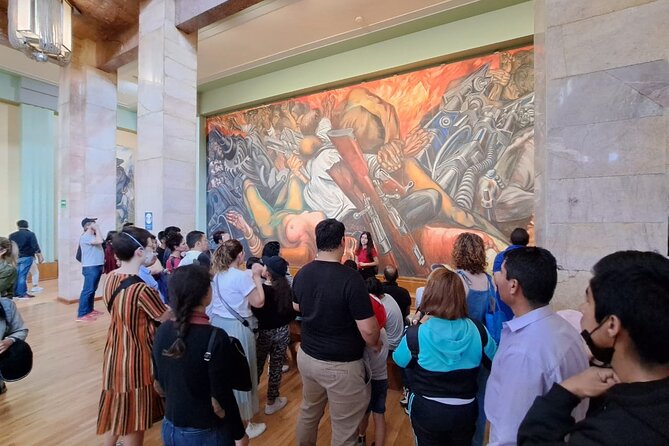
Orozco’s Katharsis
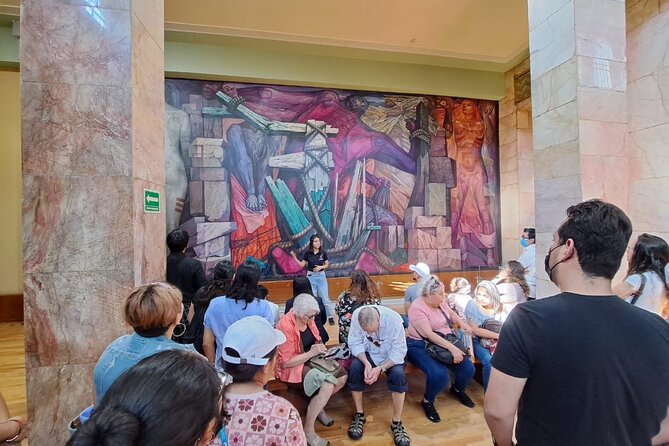
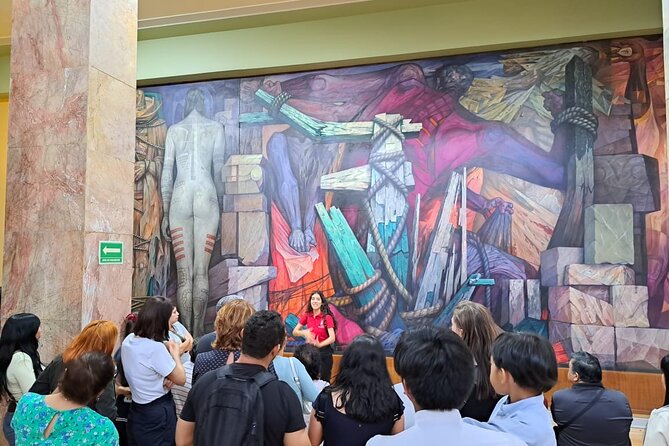
José Clemente Orozco’s Katharsis brings a darker force to the Palace. Even without a long explanation, the title suggests release through crisis, conflict, or suffering. Orozco is known for work that can feel severe and unsettling, and the guide uses the mural to discuss the artist’s historical and cultural concerns.
This is one of the places where a guide adds real value. A quick solo look might leave you with a powerful image but little sense of its argument. The tour connects the visual drama to broader ideas about society and human behavior.
If your taste runs toward cheerful sightseeing, this section may feel intense. That is not a flaw, but you should know that the Palace murals address conflict and political tension as well as national pride. The experience asks you to look at difficult subjects, not just admire color and scale.
The Carnival of Huejotzingo
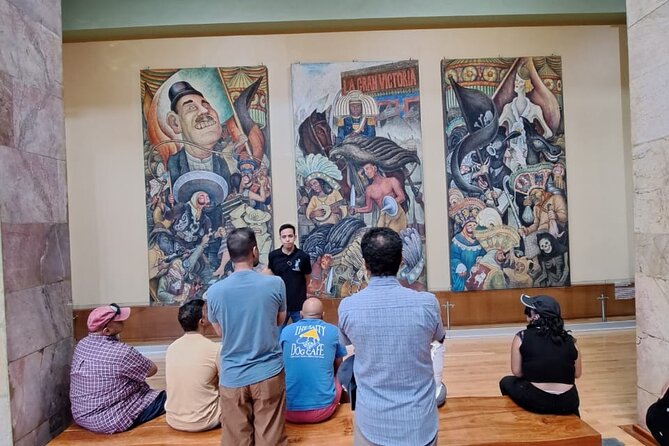
Rivera’s The Carnival of Huejotzingo provides a different tone. A carnival scene offers movement, celebration, and local cultural references, giving the tour some visual variety after the more serious political works.
The title points to Huejotzingo, a place and festival tradition that brings regional life into the Palace. Your guide explains the details that might otherwise pass unnoticed, including the relationship between popular culture and mural painting.
This work is a good reminder that Mexican muralism is not only about revolution or famous political figures. It can also record festivals, costumes, communities, and everyday cultural identity. You will get more from it if you take time to notice the smaller figures and activities rather than looking only at the mural’s central action.
Siqueiros, conflict, and the New Democracy
Two Siqueiros works receive attention: the Diptych Torment and Apotheosis of Cuauhtémoc and the Triptych of the New Democracy. Together, they broaden the tour’s treatment of Mexican history and political thought.
Cuauhtémoc is a major Indigenous figure in Mexico’s historical memory. The words torment and apotheosis suggest a movement from suffering toward heroic recognition. The guide explains the historical references and helps connect the image to ideas of resistance, identity, and national memory.
The Triptych of the New Democracy shifts the focus toward political ideals and social change. A triptych uses three connected panels, so you can consider how the parts work together rather than treating them as separate pictures. Siqueiros is often associated with forceful movement and dramatic public imagery, and this work gives the guide another chance to explain how style supports political meaning.
These murals may be the most demanding part of the visit if you have little background in Mexican history. The benefit of joining a guided tour is that you can ask for clarification instead of trying to sort out names and references later. The drawback is that a 90-minute visit cannot give every historical episode equal time.
Tamayo, Rodríguez Lozano, and a wider view
The tour also includes Rufino Tamayo and La Piedad by Rodríguez Lozano. This is important because it keeps the experience from ending with the most familiar muralists.
Tamayo gives you another point of comparison in Mexican modern art. His work can help show that Mexican art did not follow one single visual or political path. Rodríguez Lozano’s La Piedad adds another subject and artistic voice, allowing the guide to explain how religious or traditional themes could sit alongside modern national imagery.
The tour’s range is one of its best features. You hear about Rivera, Orozco, Siqueiros, Camarena, Tamayo, and Rodríguez Lozano, among others. You will not receive a full career study of each artist, but you will leave with a useful map of the main names and ideas to explore later.
Is $56.75 a fair price?
At $56.75 per person, this is not a cheap way to spend an hour. The value depends on how much interpretation you want. If you are content to enter the Palace and look at the murals on your own, the price may seem high. If you want the stories, symbolism, politics, and artistic context explained in English, the fee is easier to justify.
A certified guide is included, and the strongest feedback praises the quality of the explanations. Leon is singled out for speaking English well, showing strong preparation, and explaining details with patience and enthusiasm. That is the central product here: not transport, food, or extra attractions, but informed interpretation.
The tour information contains a point you should clarify before booking. It lists entries among the inclusions, but the itinerary also says admission is not included. Ask the provider, Educando con Cultura, what the entry line means and if you need to buy a separate Palace ticket. A small clarification before the visit prevents an awkward surprise at the door.
The tour is booked, on average, six days ahead. That suggests you should not wait until the last minute if your Mexico City schedule is fixed. Confirmation arrives when you book, and the ticket is mobile, which keeps the process simple.
Timing, meeting point, and group size
You meet at Palacio de Bellas Artes, Av. Juárez S/N, in the Centro Histórico. The activity ends at the same point, so you do not need to arrange a return transfer or figure out where the guide will leave you.
The stated duration is about one hour to one hour and 30 minutes. Plan around the longer time so you are not rushing to a restaurant, museum, or appointment afterward. Since the tour begins and ends in the Historic Center, it can fit neatly into a day of nearby sightseeing.
Public transportation is nearby, and most people can participate. Service animals are allowed. The maximum group size is 35, so arrive ready to stay with the group and keep close enough to hear. The mobile ticket is practical, especially if you are carrying a full day’s collection of paper slips and museum receipts.
Lunch and drinks are not included. The short duration means you probably do not need refreshments during the tour, but plan your meal before or after rather than expecting a food stop.
Who will get the most from this tour?
I would choose this experience if you want a focused introduction to Mexican muralism and prefer learning through stories. It suits first-time visitors to the Palace, art lovers who want historical context, and anyone curious about the political ideas behind Rivera, Orozco, and Siqueiros.
It is also a good fit if English explanations matter to you. The guide is offered in English, and Leon’s clear communication receives particular praise. That can make a major difference when the subject includes names, political movements, and historical references.
You may want to skip it if you prefer to set your own pace or spend a long time with a single painting. A guided group moves according to its schedule, and the possible 35-person size may limit quiet, close viewing. The tour is built for orientation and interpretation, not extended solitary study.
Free cancellation is available if you cancel at least 24 hours before the start time. Cancellations within 24 hours are not refunded, and late changes are not accepted. The cutoff uses local Mexico City time, so check the clock carefully if you are booking from another country.
Should you book the Palace of Fine Arts Mural Tour?
Book it if the murals are a priority and you want their stories explained in English. The strongest reason to go is the guide’s treatment of symbolism and context, especially Leon’s praised explanations and the account of Rivera’s destroyed Rockefeller Center mural.
At $56.75, I would not treat it as a casual add-on. I would choose it for a planned visit to the Palace, confirm the admission question first, and allow the full 90 minutes. If you want to understand why these paintings matter, rather than simply see them, this compact tour offers a useful and focused introduction.
FAQ
Where does the Palace of Fine Arts Mural Tour begin?
It begins at Palacio de Bellas Artes, Av. Juárez S/N, Centro Histórico, Cuauhtémoc, Mexico City.
Where does the tour end?
The activity ends back at the Palacio de Bellas Artes meeting point.
How long does the tour last?
The tour lasts approximately one hour to one hour and 30 minutes. The detailed duration is listed as 90 minutes.
What language is the tour offered in?
The tour is offered in English.
How much does the tour cost?
The listed price is $56.75 per person.
Is admission to the Palace included?
The tour details give conflicting information. They list entries as included but also say admission is not included, so confirm this point with Educando con Cultura before booking.
Is food included?
No. Lunch, food, and drinks are not included.
How many people can join the tour?
The maximum group size is 35 people.
Can I cancel for a full refund?
Yes, if you cancel at least 24 hours before the experience start time. Cancellations within 24 hours are not refunded, and changes made within 24 hours are not accepted.
Just added around Mexico
- Xochimilco floating gardens, Coyoacan and UNAM murals★ 4.0 · 6 reviews
- UNAM: Murals & Revolution★ 4.9 · 8 reviews
- Street Art & Cemetery Cultural Tour – half day★ 5.0 · 3 reviews
- Graffitis & Munchies biketour Playa del Carmen★ 4.5 · 18 reviews
- Street Art Walk★ 4.5 · 7 reviews
- Tour Women Muralists : Strokes that resist Mexico City★ 5.0 · 7 reviews
- Diego Rivera’s murals, hidden treasures★ 5.0 · 21 reviews
- Mexico City Private Tour with Teotihuacan, Murals, Guadalupe Basilica★ 3.0 · 2 reviews
Mexico City Mural Tours, compared.
Xochimilco, Coyoacan, Frida Kahlo Museum & Murals Tour
Read our review →
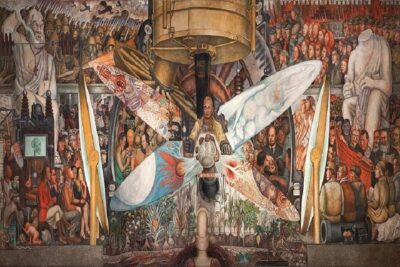
Walking Tour – Impressive murals in Historical Center of Mexico City
Read our review →
La Catrina & Muralism: Diego Rivera’s Legacy & Frida Kahlo
Read our review →
Muralist Art Semi Private Walking Tour in Mexico City Downtown
Read our review →
Xochimilco floating gardens, Coyoacan and UNAM murals
Read our review →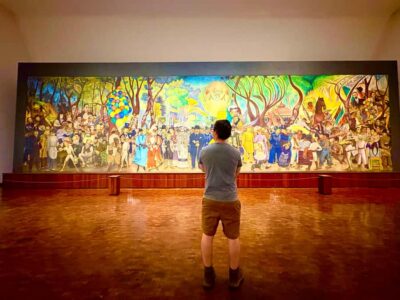
Browse the lists this tour appears in