
REVIEW · STREET ART BIKE TOURS
Urban Canvas: Osaka Street Art Bike Tour
Osaka reveals itself between the famous sights. This small-group bike ride takes you through Tenma, Nakazaki-cho, and Juso, where train lines, bridges, old bars, galleries, graffiti, and street art replace the usual postcard stops. I like the included bicycle, which saves you the trouble of renting one, and I like the generous mix of riding, coffee, snacks, and pizza. The main consideration is distance: the route can reach about 23 kilometers, so you need a moderate level of fitness.
The tour begins at 11 a.m. and lasts about three to four hours, returning to its starting point in Tenma. I also like the maximum group size of eight, since a guide can keep the ride together and explain the art without shouting across a crowd. Weather matters, though, and a rainy-day cancellation could affect your plans.
Key points to know before you ride
- A route of roughly 23 kilometers: This is a real city ride, not a short spin between two nearby sights.
- Three distinct Osaka neighborhoods: Tenma, Nakazaki-cho, and Juso each have a different feel, from food-filled backstreets to galleries and urban art.
- Coffee, snacks, and pizza included: The stops break up the cycling and give you a taste of local neighborhood life.
- A maximum of eight people: The small group suits riders who want conversation and personal guidance.
- A local guide with an artist’s eye: Guide Eric has been praised for explaining both Osaka and the street art, including work connected to his own artistic practice.
- A practical 11 a.m. start: You can have a relaxed breakfast first, then spend the middle of the day exploring away from the main tourist areas.
Why this bike tour shows a different Osaka
Osaka is easy to reduce to a few famous names: Dotonbori, Osaka Castle, neon signs, and food streets. Those places have their appeal, but they do not explain the whole city. This ride gives you another view, one shaped by railway corridors, river crossings, side streets, small businesses, and neighborhoods that most sightseeing schedules skip.
The bicycle is important here. On foot, these districts can feel scattered. By bike, you can connect them without spending half your day on trains or taxis. You move from one kind of Osaka to another, often within a short ride, and the changes in architecture and street life become part of the experience.
The route is also more than a collection of murals. You see graffiti and formal street art, but you also pass modern skylines, older buildings, bridges, train lines, boutiques, galleries, and local bars. The guide’s commentary helps tie these details together. Instead of simply photographing a wall, you get a sense of how art fits into Osaka’s less polished, more lived-in neighborhoods.
That makes this a good choice if you have already seen the headline sights or if you prefer to understand a city through ordinary streets. It is not the right pick if you want a slow, stationary art tour or a short beginner ride.
More Street Art Bike Tours in the world:
- London Bike Tour: Landmarks, Secret Gems, Pub Stop & Street Art
★ 5.0 · 943 reviews - Barcelona Street Art and Graffitti Bicycle Tour
★ 5.0 · 361 reviews - London: Landmarks & Secrets Bike Tour with Pub & Street Art
★ 4.9 · 314 reviews
Starting in Tenma at 11 a.m.
The meeting point is Cycle Osaka at 1-chōme-10-7 Tenma, Kita Ward. The location is near public transportation, and the tour ends back at the same place, which makes the logistics fairly simple. You receive a mobile ticket and confirmation when you book, so keep the ticket easy to access on your phone.
An 11 a.m. start gives you time to get there without an early alarm. It also places the main ride in the middle of the day, when you will want comfortable clothes, water, and protection from the sun. The supplied information does not specify helmet arrangements or bicycle types, so I would confirm those points directly if they matter to you.
The ride opens with an hour through Osaka’s urban maze. Expect a mix of railway lines, rivers, bridges, graffiti, street art, and modern buildings. This first section gives the guide room to explain the city’s less visible side, including the underground life and neighborhoods that do not appear on standard sightseeing routes.
This is a useful orientation before the smaller food and art stops. You are not simply being taken from one attraction to the next. You are learning to read the city as you ride through it. Train infrastructure, river crossings, narrow streets, and changing building styles help explain how Osaka fits together.
The pace should suit riders who like to keep moving, but the day is not one long push. Several stops let you rest, eat, and take in the surroundings. Still, I would not treat the route as effortless. One account puts the total distance at about 23 kilometers, which is a serious half-day ride for anyone unused to cycling.
Tenma: coffee and backstreet food ideas
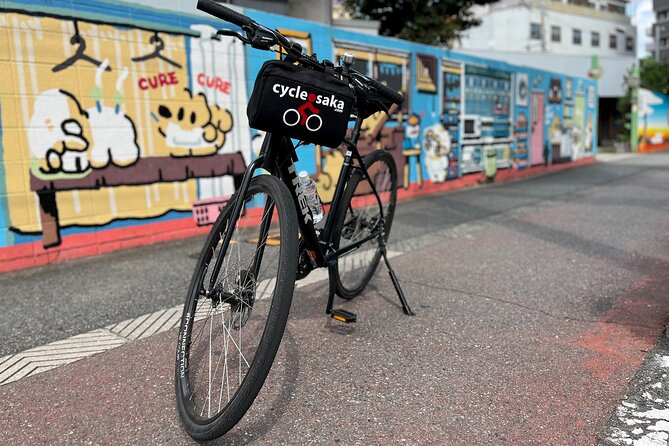
The Tenma section lasts about 20 minutes and focuses on the district’s backstreets. This is where the tour shifts from broad city orientation to local practical detail. The guide points out places to eat and drink, then stops for craft coffee at a small local stand.
The coffee is included, which is a modest but useful touch. You are not left searching for a café while trying to keep up with the group, and the stop gives your legs a break early in the ride. It also offers a chance to ask the guide for food and drink suggestions you can use later in your Osaka stay.
Tenma is a good place for this kind of stop because its appeal is found in its side streets and everyday businesses rather than one grand monument. You get a quick look at the area’s food culture and narrow urban rhythm without spending the entire morning there.
The short timing is both a strength and a limit. You get a taste rather than a full food crawl. If you want to linger over coffee or browse every shop, the schedule may feel brisk. If you want a varied route with several different neighborhoods, the short stop keeps the day moving.
Nakazaki-cho: boutiques, galleries, and pizza in an old building
From the more gritty feel of Juso and Tenma, the route heads toward Nakazaki-cho, a neighborhood known here for boutique shops and galleries. The setting changes again, giving you a different version of Osaka’s creative side.
The stop includes a slice of locally made pizza served at a local institution in a 100-year-old building. That detail gives the break a real sense of place. You are not stopping at a generic chain to refuel. You get a simple local food experience in a building that has its own age and character.
The itinerary allows about 20 minutes here. That is enough for pizza and a quick look around, but not enough for a long gallery visit or extended shopping. I would think of Nakazaki-cho as a compact sampler: notice the old structures, look at the independent shops, and enjoy the contrast between small creative businesses and the larger city around them.
The included snacks add another layer to the food side of the tour. Exact snack choices are not specified, and food preferences are not described, so anyone with dietary restrictions should ask the provider before booking. Coffee or tea and snacks are included, while alcoholic drinks are not.
More Bike Tours in the world:
- Mexico City; ART NACO : Murals & Street Art Bike Tour
★ 5.0 · 284 reviews - Mexico City: Art Naco, murals & street art bike tour
★ 4.7 · 166 reviews - Street Art Bike Ride
★ 5.0 · 125 reviews - Cologne: Ehrenfeld Street Art Bike Tour
★ 4.9 · 105 reviews
Crossing the Yodo River toward Juso
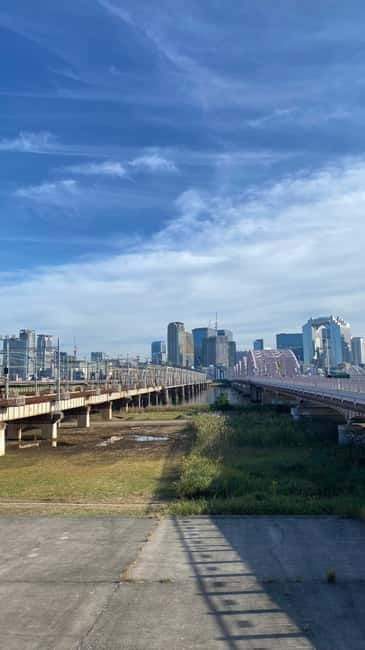
One of the most memorable parts of the route is the ride over the Yodo River toward Juso. The crossing changes the scale of the day. You leave the tighter streets behind, take in Osaka’s urban architecture, and reach a district across the river that is rarely part of a first-time sightseeing plan.
The bridge and river section also give your eyes a break from the close-up details of murals and shopfronts. You see the city from a wider angle, with the river, infrastructure, and skyline working together. The tour uses this transition to explain how Juso relates to the main city.
There is a practical point here: bridges and longer connecting stretches can add effort to the ride. You should be comfortable cycling for several hours, not just pedaling casually for a few blocks. The tour requires moderate physical fitness, and that guidance deserves attention.
If you are comfortable on a bicycle but do not ride often, the included rest stops help. If you have knee problems, poor balance, or limited stamina, ask about the route and bicycle setup before paying. The supplied details do not promise an easy or flat ride.
Juso and Jusohonmachi: Osaka street art away from the usual route
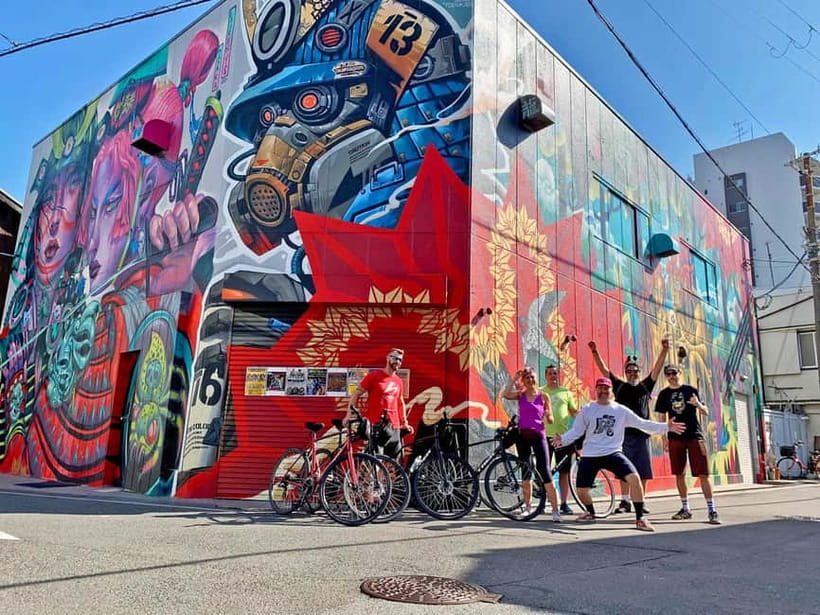
Juso is the artistic heart of this experience. The tour heads into Jusohonmachi, described as one of Osaka’s street art centers, and spends about an hour and a half in the area. This is the longest stop, and it gives the guide time to point out urban art, neighborhood details, and places most visitors would miss without local help.
The strongest praise for this experience centers on getting beyond busy tourist areas. That is exactly what Juso offers. It is across the river from central Osaka, and the route brings you into the middle of the neighborhood rather than simply viewing it from a bridge or train window.
The art itself may range from large painted pieces to graffiti and smaller works placed around the streets. The supplied details do not promise a fixed list of murals, so you should expect the scene to change over time. Street art is temporary by nature, and the guide’s local knowledge matters because pieces can be painted over, altered, or replaced.
Guide Eric is specifically praised for making this part engaging. He is an artist himself and has created one of the pieces shown on the route. That gives the discussion a useful personal angle. You can ask about the work as art, but also about how it appears in the neighborhood and interacts with the surrounding buildings.
The guide’s role is not limited to naming locations. The best part of a street art tour is learning how to look: noticing placement, scale, materials, and the way a piece changes an otherwise ordinary wall. Eric’s background should be especially useful if you are curious about the creative process rather than interested only in taking photographs.
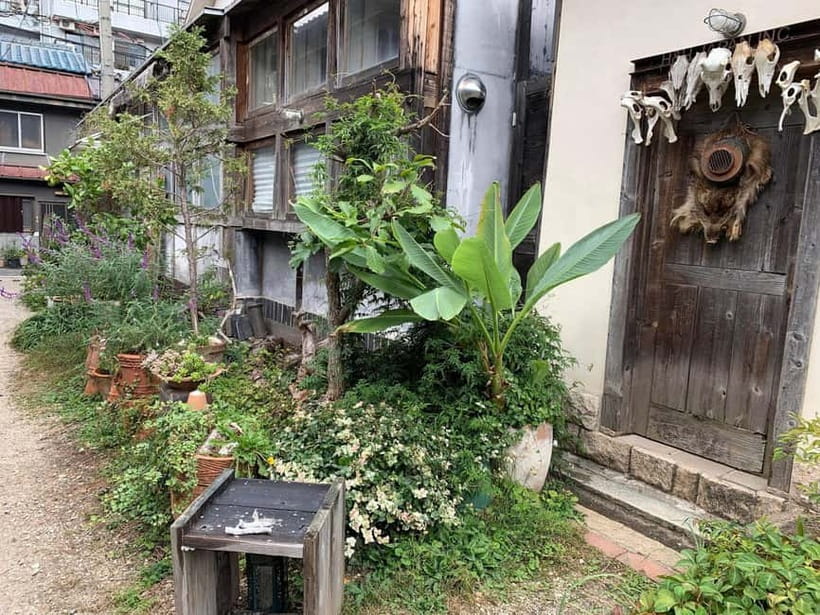
Juso also gives you a feel for local Osaka beyond the art. The route includes old-school Japanese bars and everyday urban spaces, although the supplied information does not promise a bar visit or alcohol tasting. You see the neighborhood as a living place, not a gallery designed only for sightseeing.
What the food and rest stops add
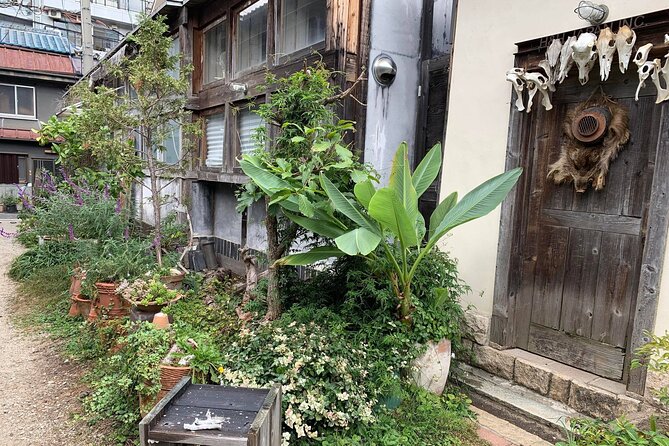
The included refreshments help justify the tour’s structure. Coffee or tea, snacks, and pizza are not a full meal, but they turn the ride into a series of manageable sections. You can rest, eat, ask questions, and reset before getting back on the bicycle.
That matters because cycling changes how you experience food. A pizza slice after a long urban stretch feels like part of the route rather than an unrelated restaurant booking. The coffee stop also gives you a chance to compare neighborhood businesses with the polished cafés found in central shopping areas.
Do not book this expecting a dedicated food tour. Food is a supporting part of the experience, while street art and neighborhood exploration are the main focus. The tour does not include alcoholic beverages, and alcohol is available only to people aged 20 and older under the stated conditions.
If food is a major reason for booking, confirm whether the included items meet your needs. The details do not specify vegetarian, vegan, allergy-friendly, or gluten-free choices. You can still enjoy the ride, but it is sensible to ask before you arrive.
Is the $89.17 price fair?
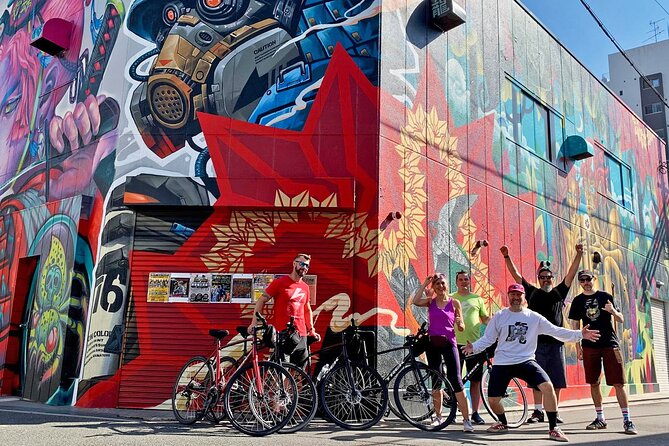
At $89.17 per person, this costs more than renting a basic bicycle and riding around on your own. The comparison is not quite fair, though. The price includes the bicycle, a local guide, coffee or tea, snacks, and pizza, plus a planned route through several districts that would be difficult to connect efficiently without help.
You are also paying for access to a side of Osaka that is easy to miss. Tenma, Nakazaki-cho, and Juso are not presented as isolated attractions. The guide links them through the city’s streets, rivers, architecture, and creative communities.
The small group improves the value. With no more than eight people, the guide can answer questions and keep the group together without the feel of a large coach excursion. The experience is also more personal because the guide’s own connection to street art adds context that a generic route would lack.
I would consider the price fair for an active half-day, especially if you value local guidance and do not want to plan a 23-kilometer route yourself. It is less attractive if you already have a bicycle, prefer to explore independently, or mainly want a quick look at a few murals.
Who will enjoy this ride most?
This tour suits you if you enjoy cities through their side streets. It is particularly good for:
- Art lovers who want graffiti and street art in real neighborhoods, not only formal museums.
- Repeat visitors looking for a less familiar side of Osaka.
- Active couples, friends, and small groups who like moving between several districts.
- People who enjoy local cafés, snacks, independent shops, and old buildings.
- Curious first-time visitors who want context beyond Osaka’s major sights.
It may not suit you if you dislike bicycles, tire easily, or want a slow and highly structured art presentation. Families should consider the age, fitness, and cycling confidence of each rider. The stated requirement is moderate physical fitness, and the possible 23-kilometer distance is not minor.
The tour also works best for people comfortable with some uncertainty. Street art changes, neighborhood stops can vary, and the experience is built around seeing what makes these districts interesting now. You get local character, not a polished attraction with every detail fixed.
Weather, cancellation, and practical planning
Good weather is required. If poor weather cancels the ride, you can be offered another date or a full refund. The same applies if the minimum number of participants is not met.
You can cancel for a full refund up to 24 hours before the 11 a.m. start time. Changes or cancellations made less than 24 hours before the start are not accepted for a refund under the stated policy. The cut-off follows local Osaka time.
Wear clothes you can cycle in for several hours. The details do not specify a dress code, but practical clothing and shoes should make the ride easier. Bring a phone for the mobile ticket, and consider carrying water even though refreshments are included.
Since the tour returns to the meeting point, you do not need to arrange a second pickup location. That is useful if you plan to continue sightseeing in Tenma or take public transportation elsewhere after the ride.
Should you book Urban Canvas?
Book it if you want Osaka to feel less like a checklist of major attractions and more like a city with layers. The combination of street art, local food, bridges, train lines, galleries, and neighborhood streets gives you a strong sense of place, while the small group and Eric’s artistic background add real value.
Skip it if you want a gentle, short ride or a formal museum-style art tour. The route can cover about 23 kilometers, and the weather policy means you should keep some flexibility in your schedule.
For most reasonably fit visitors who enjoy independent neighborhoods and city cycling, this is a smart way to spend a half-day. You get a bicycle, useful local advice, several food breaks, and a view of Osaka that is difficult to assemble on your own.
FAQ
Where does the Osaka Street Art Bike Tour begin?
It begins at Cycle Osaka, 1-chōme-10-7 Tenma, Kita Ward, Osaka, 530-0043, Japan.
What time does the tour start?
The tour starts at 11 a.m.
How long does the experience last?
It lasts approximately three to four hours.
Where does the tour end?
The ride ends back at the meeting point in Tenma.
Is a bicycle included?
Yes. Use of a bicycle is included in the price.
What food and drinks are included?
Coffee or tea and snacks are included, along with a slice of locally made pizza during the Nakazaki-cho portion.
Does the tour include alcohol?
No. Alcoholic beverages are not included. They are available only for people aged 20 and older.
How many people can join the tour?
The maximum group size is eight people.
What level of fitness is needed?
A moderate level of physical fitness is required. The route can cover about 23 kilometers, so you should be comfortable cycling for several hours.
Can I cancel for a refund?
Yes. You can cancel at least 24 hours before the experience start time for a full refund. Poor weather or failure to meet the minimum number of participants can also lead to a different date or a full refund.
Just added around the world
- Your Own Belgrade: Street Art and Hidden Gems Walking Tour★ 5.0 · 2 reviews
- Vancouver: Street Art & Craft Coffee Walking Tour w/ Tasting★ 4.8 · 11 reviews
- Wynwood Walls Street Art & Neighborhood Walking Tour★ 4.9 · 9 reviews
- Xochimilco floating gardens, Coyoacan and UNAM murals★ 4.0 · 6 reviews
- UNAM: Murals & Revolution★ 4.9 · 8 reviews
- Urban Canvas: Osaka Street Art Bike Tour★ 5.0 · 10 reviews
- Vancouver: Street Art & Craft Beer Walking Tour with Tasting★ 4.8 · 14 reviews
- Small-Group Graffiti Tour and Workshop in El Carmen★ 5.0 · 2 reviews
Street Art Bike Tours, compared.
London Bike Tour: Landmarks, Secret Gems, Pub Stop & Street Art
Read our review →
Barcelona Street Art and Graffitti Bicycle Tour
Read our review →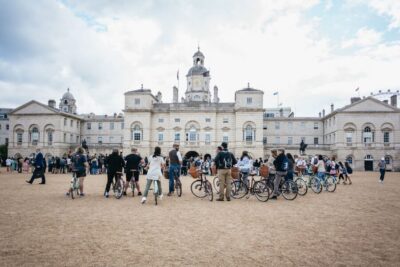
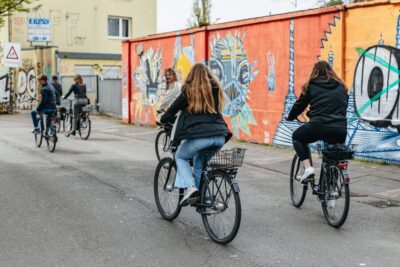
Landmarks & Secrets Bike Tour with Pub & Street Art
Read our review →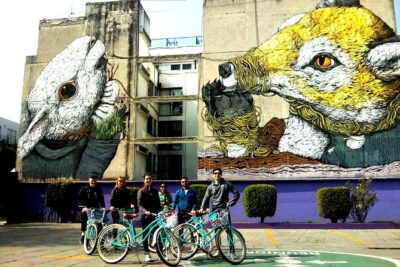
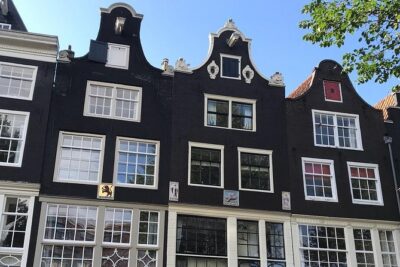
Urban Adventures Amsterdam Bike Tour, Graffiti and Magnet Fishing
Read our review →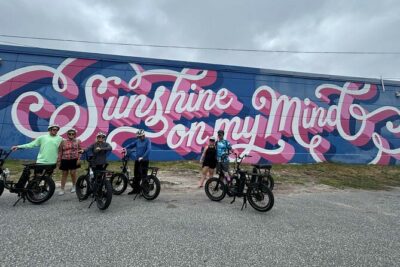
E-Bike Guided Tour Downtown St Pete: Sights & Murals
Read our review →Browse the lists this tour appears in