
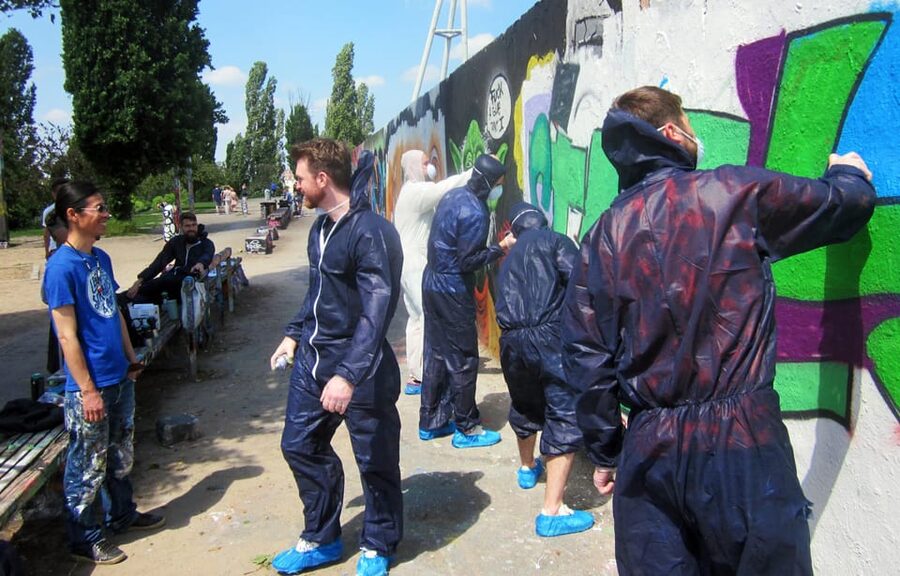
REVIEW · BERLIN MURAL TOURS
Graffitiworkshop Berlin
Berlin puts art on almost every available wall. This 90-minute graffiti workshop lets you move from looking at street art to making it, with local writers explaining styles, letters, tools, and spray-can technique. You finish by painting your own piece on a wall at Mauerpark.
I like the hands-on format and the chance to learn from people connected to Berlin’s graffiti scene. I also like that the workshop includes every basic material, from cans and caps to protective clothing. The main drawback is reliability: one verified booking reported that the guide never arrived, so I would keep the provider’s contact details handy on the day.
Key points to know before booking
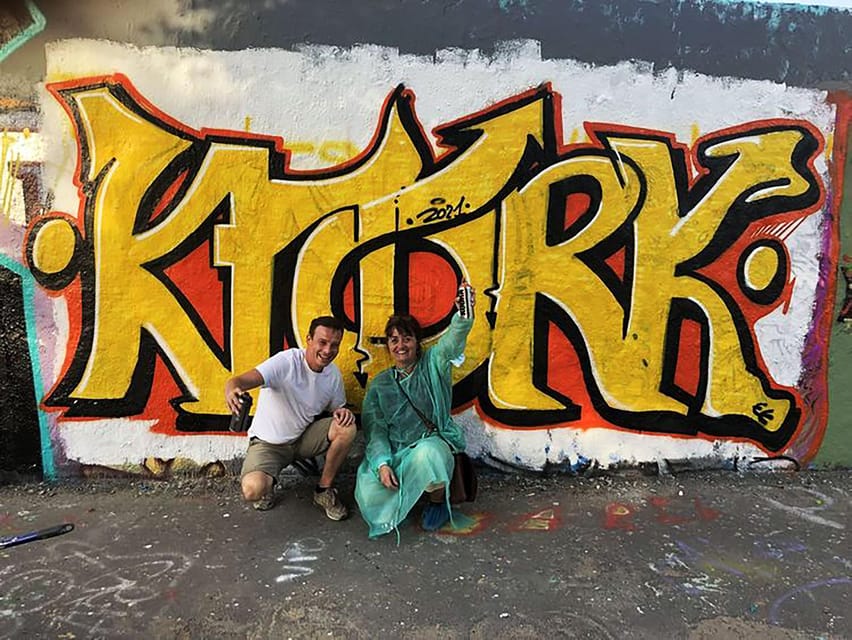
- You paint on a real wall at Mauerpark: This is not only a talk about graffiti. You sketch, handle the can, and help create artwork on a designated wall.
- The class begins with graffiti language and style: You learn the terms used by writers before moving into letter design and spray techniques.
- Experienced local instructors lead the session: Juriij, also referred to as Juri in another account, received especially warm praise for teaching and artistic skill.
- All core materials are included: Cans, caps, primer, paper, pens, gloves, a protective gown, and mouth and nose protection are supplied.
- The workshop suits ages 12 and up: It is a practical art activity for older children, teenagers, adults, couples, friends, and creative families.
- The price is $123 per person: That is a fairly serious fee for 90 minutes, so the value depends on how much you want the instruction and finished experience rather than a long sightseeing tour.
Why Mauerpark makes the right classroom
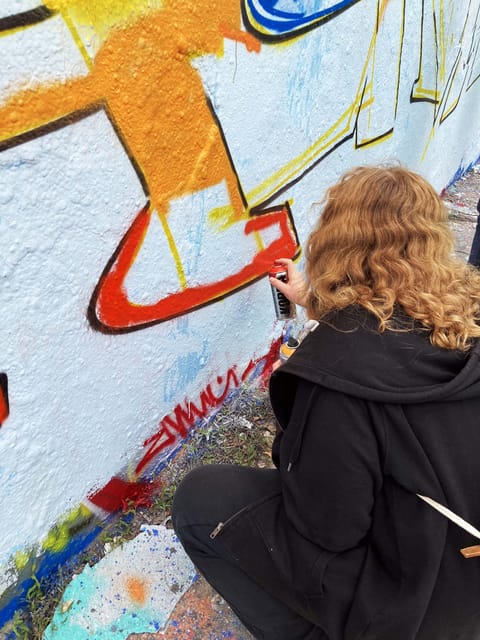
Mauerpark gives this class a fitting setting. The workshop meeting point is at the entrance beside Cafe Mauersegler, so you do not need to search through an unfamiliar neighborhood for a private studio or office.
The location matters because graffiti makes more sense in a public urban setting. You are not learning a decorative craft in isolation. You are learning about an art form tied to walls, streets, lettering, territory, and changing public space.
The workshop presents graffiti as more than random spray paint. You learn that the scene has its own vocabulary, habits, styles, and rules. That context gives the practical work some meaning. By the time you pick up a can, you have a better idea of what you are trying to create.
Mauerpark is also useful because the finished work is temporary. One account makes the point that the group artwork may last only a few days before someone paints over it. That is not a flaw in the experience. It is part of urban art’s character. You create something, share the wall, and accept that the city keeps changing.
More Graffiti Workshops in Berlin:
- Graffiti Workshop Berlin with professional graffiti artists
★ 4.0 · 4 reviews - Open graffiti workshop in the Mauerpark in Berlin
★ 5.0 · 2 reviews - Street Art Workshop & Tour – Private Group
★ 5.0 · 2 reviews
The first lesson: graffiti terms, styles, and scene culture
The class starts with an introduction to graffiti and its role in Berlin’s art culture. Your instructor explains common terms and tools used by writers, helping you understand how people inside the scene talk about their work.
This opening is important for beginners. Spray paint can look simple from a distance, but the result depends on choices about lettering, line width, color, spacing, and control. Learning the language first gives you a basic map before you begin making decisions.
The workshop also introduces different graffiti styles. You are not simply told to write a word in large letters. You first get a look at the range of approaches and the ideas behind them.
One particularly useful point raised during the workshop concerns legal painting space. Juri is described as supporting more freely available walls, both to bring parts of the scene out of illegal activity and to improve the quality of the art. That discussion helps explain the tension around graffiti without turning the class into a lecture.
I would value this part even if I had little artistic confidence. It gives you a way to look at Berlin’s walls with more attention. Afterward, you may notice how different pieces handle letters, outlines, fills, and movement.
Sketching letters before touching the wall
After the introduction, you work on paper with pens. The focus is the theory of letters and the first sketches for your piece.
This step keeps the session approachable. You do not have to invent a polished wall design in seconds while holding a spray can. Instead, you first work out the basic shape on paper, where corrections are easy.
The sketching stage also shows why graffiti is closer to graphic design than casual doodling. Letters need to work together. They must have a clear shape, and they need to fit within the space available on the wall.
The class appears to use a group-created word for the final artwork, based on the detailed account from a German participant. That means the finished wall may be a shared piece rather than a set of completely separate personal paintings.
That arrangement has a practical benefit. You get support from the group and instructor, and the final image has some unity. The tradeoff is that you may have less room to paint an entirely private design of your own. If individual authorship matters most to you, ask the instructor how the group piece is organized at the start.
Learning the spray can without making a mess
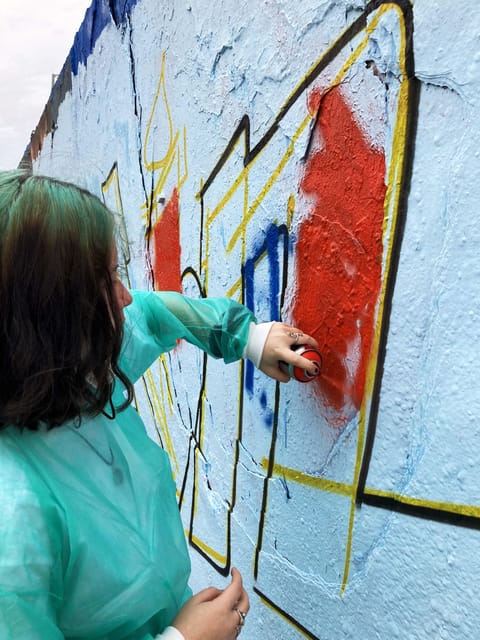
The instructor then explains how to use the spray can. You learn about the cans and caps, followed by demonstrations of techniques on the wall.
The caps matter because they affect the spray pattern and line width. A beginner can easily assume that every can produces the same result, but the choice of cap changes how the paint comes out. The class gives you a chance to see those differences under guidance instead of guessing.
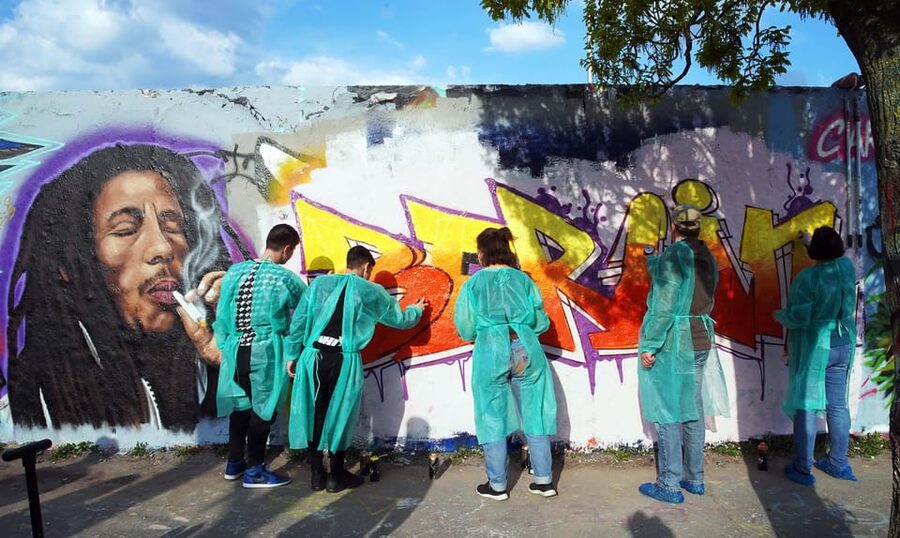
You also receive primer color, which helps prepare the wall or establish the foundation of the work. Paper and pens are provided for the planning stage, while gloves, a protective gown, and mouth and nose protection help keep the activity more comfortable.
The safety equipment is a practical plus. Spray paint is hands-on and messy by nature, so you should not dress as if you are heading to a formal dinner. The supplied gown and disposable gloves reduce the worry about paint on your clothing, though I would still choose clothes you do not mind wearing for an outdoor art activity.
The instructor’s demonstrations are likely the most valuable part for a first-timer. You can see how to control the can and how different movements affect the paint. Then you try the technique yourself, with help available as you work.
Same walls, a different guide:
- Berlin: City Street Art Guided Walking Tour
★ 4.8 · 1,051 reviews - Berlin: 3-Hour Street Art Tour
★ 4.7 · 778 reviews - Berlin Street Art Walking Tour – Off The Grid
★ 5.0 · 270 reviews - East Meets West: Berlin Food Culture & Street Art
★ 5.0 · 157 reviews
Creating your own piece on the wall
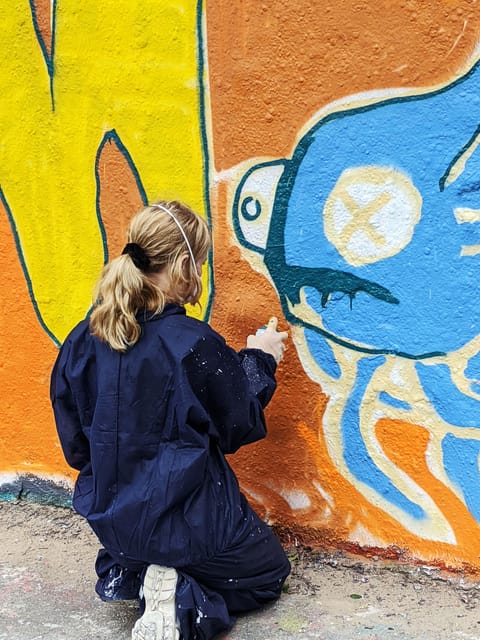
The central part of the workshop is painting your graffiti piece. This is where the class shifts from explanation to action.
You take your paper sketch and transfer its main ideas to the wall. The instructor helps you with the process, showing techniques and offering direction as you paint. You are not expected to arrive with a fully formed graffiti identity. The point is to try the tools, make choices, and experience the process.
For many people, this will be the strongest part of the activity. Berlin’s street art can feel distant when you only see finished work from behind a camera. Here, you work through the basic stages yourself. You handle the can, deal with the scale of the wall, and see how a simple idea changes when it becomes paint.
The group artwork also gives the session a social element. You are not painting alone in a silent studio. The class develops a shared word or concept and works together on the wall. That can make the experience easier for beginners because you have a common project instead of the pressure to produce a masterpiece.
Do not expect to take home a framed souvenir. Your lasting memory is the experience, the photos you take, and the skill of having tried a real wall. The artwork itself may disappear quickly as the wall changes. For some people, that temporary quality is part of the fun. For others, the lack of a portable finished product may make the $123 price harder to justify.
What the strongest feedback tells you
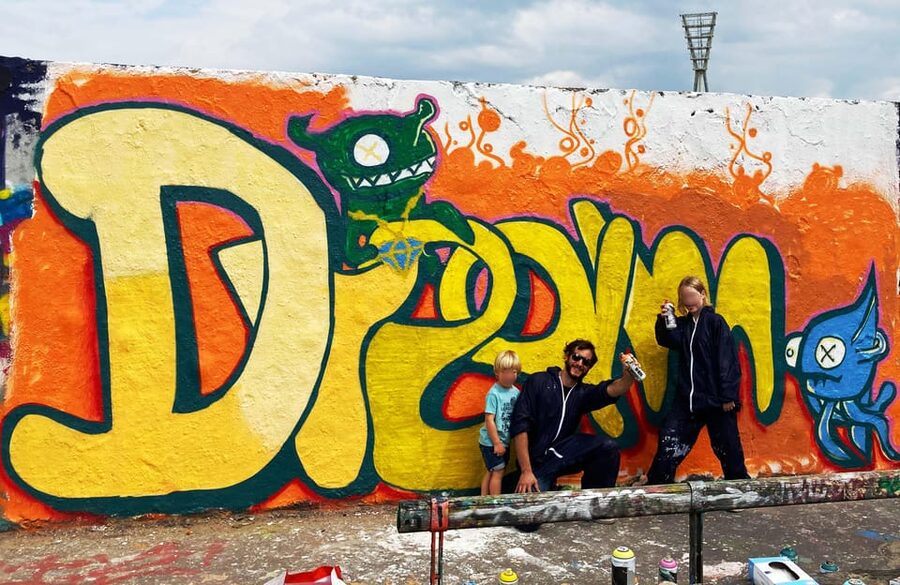
The most consistent praise concerns the instructors and the sense of fun. Adrienne from the United Kingdom described learning about graffiti’s history and its place in Berlin’s art culture, while Denise from the United States specifically praised Juriij as both an artist and teacher.
That combination matters. A person who can paint well is not automatically good at teaching beginners. The strongest accounts point to both artistic ability and clear instruction.
The workshop also earned praise for its relaxed mood. One German participant called the guide very easygoing, while another person from Japan said the instructor was excellent at teaching wall painting. This suggests the class is designed to help people try something new without taking themselves too seriously.
The overall score is 4.5 from eight reviews, with seven five-star ratings and one one-star report. The negative report is serious: the guide reportedly did not show up. It appears to be an isolated but important service failure in the available feedback. I would confirm the meeting point and start time before leaving for Mauerpark, especially if you have limited time in Berlin.
Is $123 fair for 90 minutes?
At $123 per person, this is not a cheap casual activity. You are paying about $82 for each hour, though the value is not only measured by time spent.
The fee includes the instruction, all paint and tools, primer, sketching materials, and protective equipment. You also receive access to a real wall, guidance from experienced graffiti writers, and a group artwork connected to Berlin’s street-art culture.
I think the price makes the most sense if you want a structured, creative activity and would otherwise struggle to know where to start. You are paying to use the right materials, learn basic technique, and get help from someone who understands the form.
The value is weaker if you mainly want to see Berlin street art or take a quick photo. A walking tour or self-guided visit to graffiti-covered neighborhoods would cost less, though it would not give you the chance to paint.
The 90-minute length is both a strength and a limit. It is short enough to fit into a busy day and long enough to cover the introduction, sketches, technique, and wall painting. It is not long enough for advanced instruction or a highly polished personal mural.
Who should book this workshop?
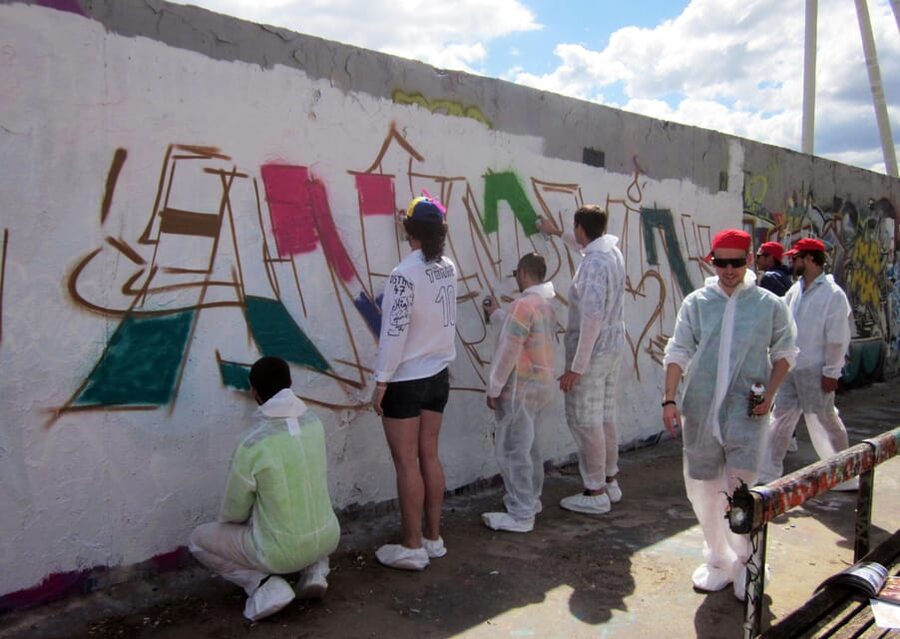
This is a good choice for anyone curious about graffiti but unsure how to begin. You do not need to know graffiti terms or have a background in drawing. The staged format, starting with styles and sketches before moving to the wall, gives you a useful path through the activity.
It should work well for:
- People who want a creative break from museums and historic sights
- Teenagers and adults aged 12 or older
- Friends looking for a shared activity
- Families with older children who enjoy hands-on art
- Visitors interested in Berlin’s urban art culture
- Beginners who want instruction rather than simply renting materials
The class may be less suitable for someone seeking a private lesson or a finished individual canvas. The group format appears to be an important part of the experience, and the final artwork is created together.
You should also be comfortable with the fact that graffiti is temporary. The wall may change soon after your session. Think of the workshop as a chance to participate in Berlin’s ongoing street-art culture, not as a guaranteed permanent souvenir.
Meeting point, language, and useful planning details
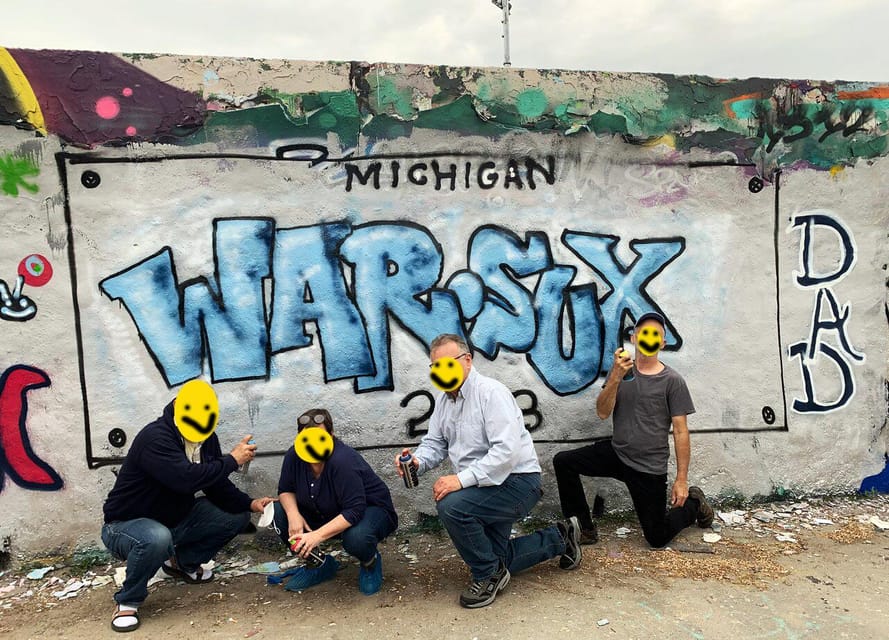
Meet at the entrance to Mauerpark beside Cafe Mauersegler. The class is taught in English, so English-speaking visitors can take part without needing German.
The activity lasts 90 minutes, but you should allow a little extra time to find the meeting point and get ready. The exact starting time depends on availability when you book.
Children under 12 cannot take part. Snacks and water are not included, so bring your own drink if you need one during the session. Tips are also not included.
The booking terms are flexible. You can cancel up to 24 hours before the activity for a full refund, and a reserve-now, pay-later option is available. Those terms are useful if your Berlin schedule is still changing.
Final verdict: a real hands-on Berlin experience
I would recommend Graffitiworkshop Berlin to people who want to make something rather than only look at something. The best parts are the local instructors, the clear progression from graffiti culture to sketching to spray-can work, and the chance to paint at Mauerpark.
The main questions are price and reliability. At $123, you should want the instruction and participation, not just a short diversion. Because one booking had a no-show, confirm the practical details before setting out.
Book it if you are curious, willing to share a wall, and happy with an artwork that may not last. Skip it if you want a permanent souvenir, a private lesson, or the lowest-cost way to see Berlin’s street art.
FAQ
Where does the graffiti workshop meet?
The meeting point is at the entrance to Mauerpark next to Cafe Mauersegler.
How long does the workshop last?
The workshop lasts 90 minutes.
What language is the workshop taught in?
The instructor teaches the workshop in English.
What materials are included?
The workshop includes spray cans, caps, primer color, paper, and pens. Protective clothing includes a gown, disposable gloves, and mouth and nose protection.
Do I need previous graffiti experience?
No previous experience is stated as a requirement. The session begins with an introduction to graffiti styles and letter theory, followed by sketches and instruction with the spray can.
Can children join the workshop?
Children under 12 cannot take part.
Are food and drinks included?
No. Snacks and water are not included.
Can I cancel for a full refund?
Yes. You can cancel up to 24 hours in advance for a full refund. A reserve-now, pay-later option is also available.
Just added around Berlin
- Graffiti Workshop Berlin with professional graffiti artists★ 4.0 · 4 reviews
- Alternative Berlin Private Tour with Jacob – Graffiti and Squats★ 5.0 · 6 reviews
- Alternative Berlin & Street Art Tour★ 4.5 · 14 reviews
- Open graffiti workshop in the Mauerpark in Berlin★ 5.0 · 2 reviews
- Private Alternative Berlin Tour -Murals, Graffiti and Squats★ 4.8 · 5 reviews
- Street Art Workshop & Tour – Private Group★ 5.0 · 2 reviews
- Street Art & Berlin Gay, Queer, Trans History + Free Gay Map★ 4.9 · 15 reviews
- Berlin : Private Street Art Walking Tour (Private Tour)★ 5.0 · 2 reviews
Berlin Mural Tours, compared.


East Meets West: Berlin Food Culture & Street Art
Read our review →
Street Art and Alternative Tour of Berlin in French
Read our review →Browse the lists this tour appears in