
REVIEW · THAILAND MURAL TOURS
Bangkok: Chinatown & Taladnoi Street Art Guided Walking Tour
Chinatown reveals itself one alley at a time. This four-hour walk moves from Wat Mangkon Kamalawat and morning markets to Talad Noi’s old workshops, shrines, and street art, giving you a closer look at Bangkok’s Thai-Chinese roots. I especially like the mix of religious sites and working neighborhoods, along with the way guides such as Jenny, Nok, Mai, and Mariyah explain immigration, trade, and daily life in clear, friendly English.
I also like the finish at River City Bangkok, where you can stop for lunch or continue along the Chao Phraya River. The main drawback is simple: this is a long walk in Bangkok heat, with no meal included. Comfortable shoes, light clothing, sunscreen, and a hat will make a real difference.
Key points at a glance
- Start beneath Bangkok’s Chinatown: Meet at MRT Wat Mangkon Exit 3, a handy rail connection for reaching Yaowarat.
- See Chinese spiritual life up close: Wat Mangkon Kamalawat and smaller shrines show how Chinese traditions remain part of local Bangkok life.
- Follow the Golden Buddha story: Wat Traimit adds a memorable tale about one of the city’s best-known religious treasures.
- Walk through Talad Noi’s working past: Old ironworks alleys connect the neighborhood’s Chinese craft traditions with its present-day art.
- Finish beside the Chao Phraya: River City Bangkok gives you an easy place to eat, browse, or arrange a boat ride.
- Good value for a walking tour: At $19 per person, the price covers a licensed English-speaking guide and bottled water, while meals and personal purchases remain your responsibility.
Why this walk is different from a standard Chinatown visit
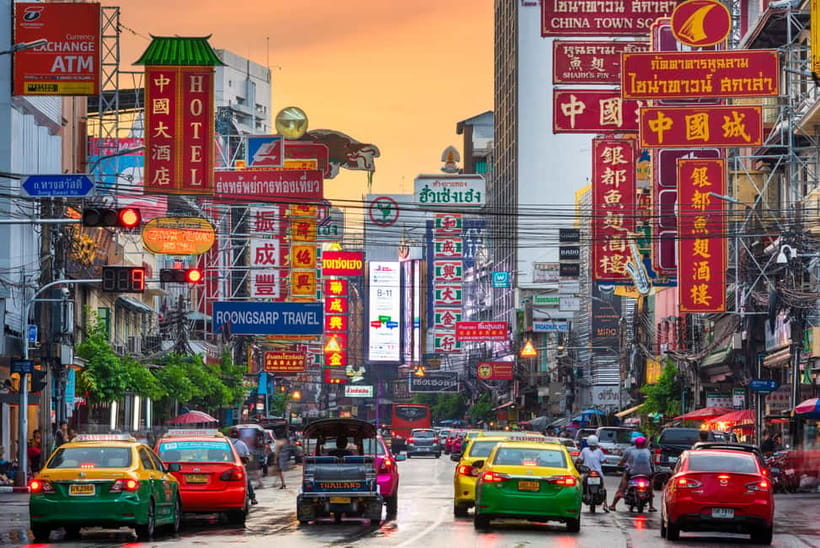
Bangkok’s Yaowarat area is famous for food, neon signs, gold shops, and crowds. This tour gives you those familiar Chinatown sights, but it spends much of its time on quieter lanes and community corners that are easy to miss when you are exploring alone.
The route also connects two neighborhoods rather than treating Chinatown as a single photo stop. You begin in the religious and commercial center of Yaowarat, then walk toward Talad Noi, where old Chinese craft traditions, riverside commerce, community life, and modern street art meet.
That combination is the strongest reason to book. You are not simply checking off temples. You are learning how migration, trade, faith, and local work shaped this part of Bangkok.
More Street Art Walking Tours in the world:
- London: Street Art and Graffiti Guided Walking Tour
★ 4.9 · 1,354 reviews - Berlin: City Street Art Guided Walking Tour
★ 4.8 · 1,051 reviews - Naples Spanish Quarters Walking Tour Street Art, Folklore & Sweet
★ 5.0 · 797 reviews
Meeting at Wat Mangkon MRT station
The standard meeting point is MRT Wat Mangkon Exit 3. This is useful because the subway avoids Bangkok’s road traffic and places you close to Yaowarat from the start.
If you choose an optional hotel pickup, you are asked to wait in the hotel lobby at least five minutes before the scheduled time. The guide holds a sign with your name. One booking included a private pickup in a clean car with a driver, while another had a delayed pickup, so I would confirm the pickup details carefully if timing matters to you. The walk itself begins after you reach the Chinatown area.
The starting point is especially practical for a morning tour. Markets are active, shops are opening, and the neighborhood feels like a place where people work and worship, not just a sightseeing district.
Wat Mangkon Kamalawat and Chinese spiritual life
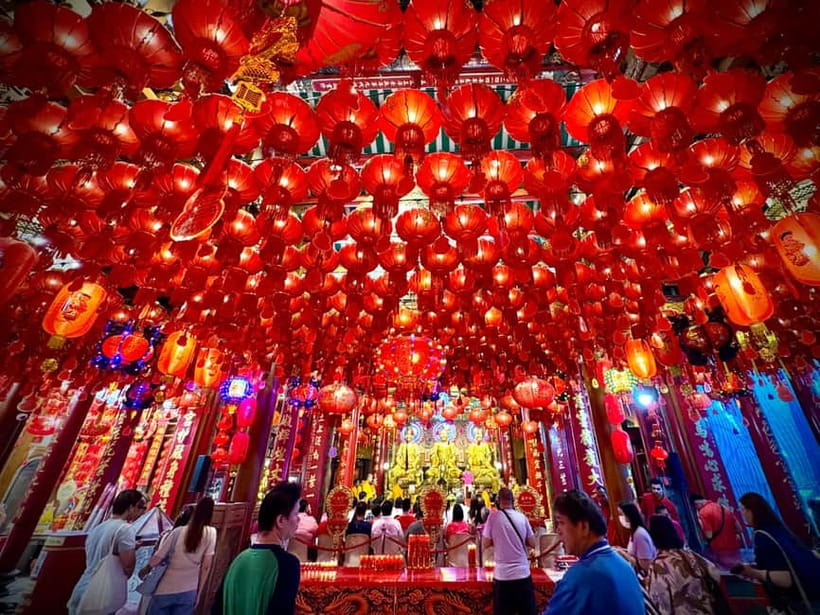
The first major stop is Wat Mangkon Kamalawat, one of the key Chinese Buddhist temples in Bangkok. The building is a hub of Chinese spiritual life, and your guide explains how the temple fits into the wider Thai-Chinese community.
You can expect an active religious setting rather than a silent museum. Incense, shrines, and visitors moving through the temple help you understand how faith operates as part of everyday life. A guide is useful here because the meaning of the images, offerings, and rituals may not be obvious when you walk in on your own.
This is also a good early stop for questions. Guides such as Jenny and Nok received especially strong praise for explaining culture and history clearly, while Mai was noted for adjusting the walk to personal interests. The exact guide can vary, but the experience depends heavily on having someone who can connect what you see with the area’s past.
Please dress lightly but respectfully. The tour information does not set out a formal temple dress code, so modest clothing is the sensible choice when visiting religious sites.
Markets, street food, and the morning pulse of Yaowarat
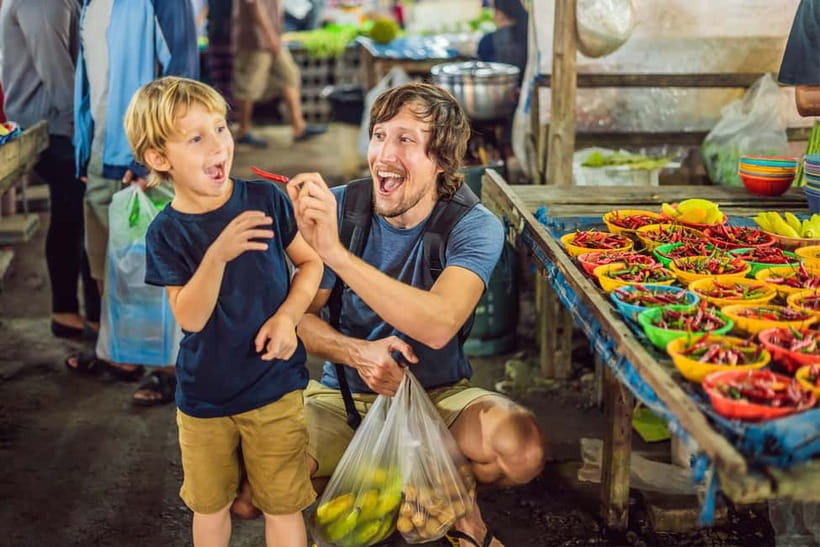
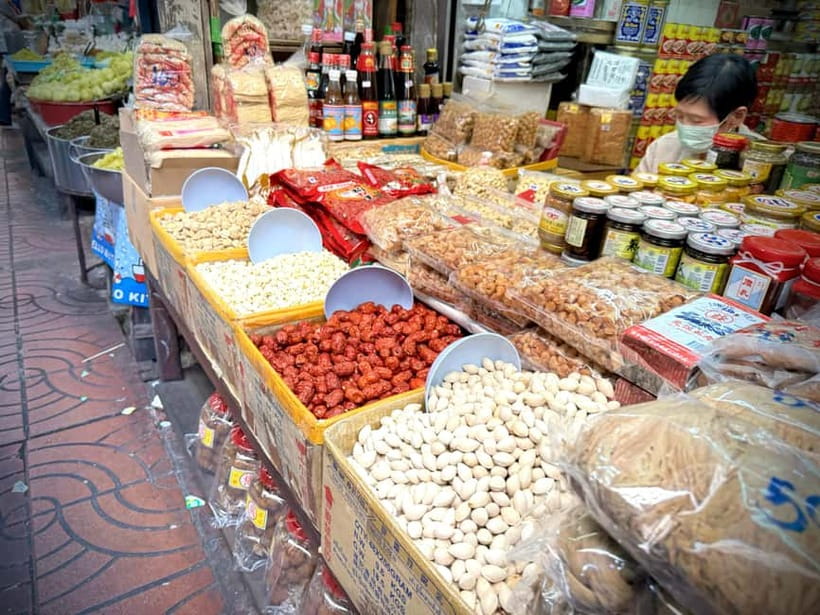
From the temple, the route continues through a lively morning market. This part adds sound, scent, and movement to the history lesson. You may see street food, incense, shop activity, and everyday buying and selling rather than a display arranged for tourists.
Meals are not included, so the market is not a scheduled food tasting. You can still ask your guide about what you are seeing, and one guide was praised for helping with market visits. If you want to buy something, carry small amounts of cash, though the tour information does not promise that every stall accepts a particular payment method.
The market section is a reminder that Chinatown is not just an evening food destination. Its identity comes from ordinary work as much as from restaurants and signs. I like that the tour does not rush straight from one famous landmark to another. It gives you time to notice how the streets function.
The tradeoff is that markets can feel tight and crowded, and you need to watch your footing. Keep your belongings close, stay near the guide, and avoid bringing more than you need.
More Guided Tours in the world:
- Palermo: Graffiti and Street Art Guided Tour in English
★ 4.8 · 684 reviews - Glasgow: Street Art Guided Walking Tour
★ 4.8 · 385 reviews - Dresden: Neustadt District Street Art Guided Walking Tour
★ 4.3 · 333 reviews - 3-Hour Guided Street Art Walking Tour of Lisbon
★ 5.0 · 278 reviews
Tian Fah Foundation Hospital and the Golden Buddha story
The walk includes the Tian Fah Foundation Hospital, described as Thailand’s first Chinese charitable hospital. This stop adds an important social side to the neighborhood. Chinatown was shaped not only by merchants and temples, but also by charitable institutions serving the Chinese community.
The guide then shares the story of the Golden Buddha at Wat Traimit. This tale is one of the tour’s more memorable historical moments, especially because it links religious art with changing ideas about value, protection, and discovery.
The information provided does not promise a formal interior visit at every stop, so treat some locations as guided sightseeing and photo opportunities rather than guaranteed extended temple tours. That is not a major weakness, but it is worth knowing if your main goal is to spend a long time inside each religious building.
Still, the sequence works well. You move from worship to charity to art, and each stop shows a different part of Thai-Chinese life.
Wat Pathum Khongkha brings a quieter pause
Wat Pathum Khongkha offers a change of pace. After the market streets and Chinatown activity, this temple feels more peaceful and carries royal associations.
A quieter stop matters on a four-hour walk. It gives you room to listen, take photographs, and let the earlier stories settle. The route is not built around nonstop spectacle. Instead, it alternates between active streets and calmer places.
You should expect a walking tour, not a coach excursion. The schedule allows about two and a half hours for Chinatown and another two and a half hours for Talad Noi in the detailed route description, though the total activity duration is listed as four hours. The exact timing may vary with the meeting option, walking pace, and stops.
Talad Noi’s ironwork lanes and Chinese craft traditions
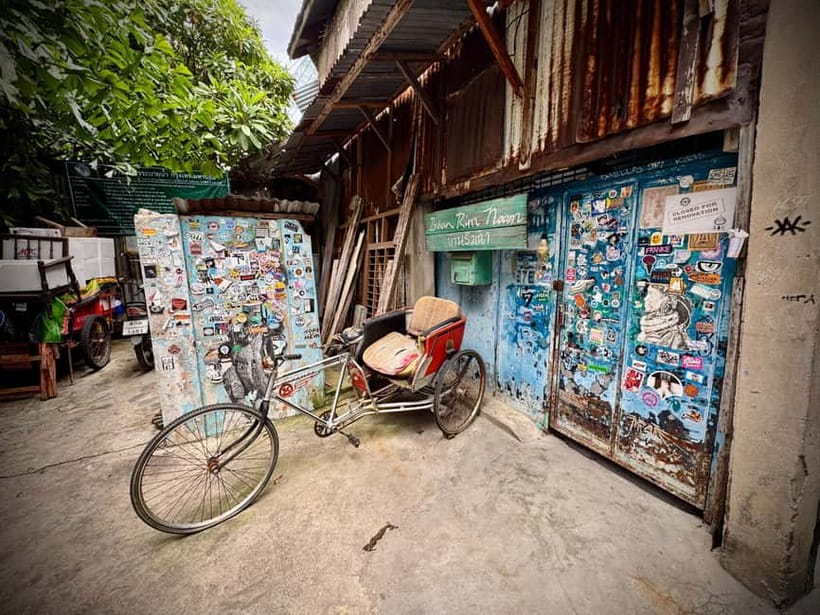
Talad Noi is where the tour becomes especially distinctive. The route enters old ironworks alleys connected with Chinese craftsmen who once forged metal tools.
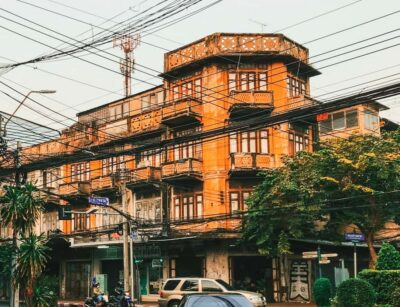
That detail gives the neighborhood a strong sense of place. You are not only seeing old buildings. You are walking through streets shaped by skilled manual work and small-scale commerce. The lanes help explain why Talad Noi feels different from the larger Yaowarat roads.
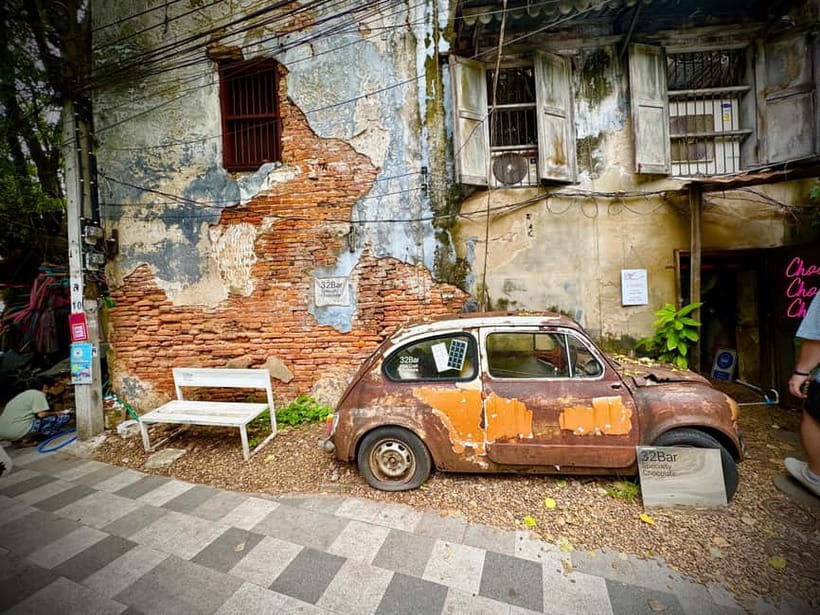
The area is also a good example of Bangkok’s layered character. Older homes, shrines, businesses, and newer art can appear close together. The guide fills in the gaps, explaining trade, migration, and the people who made the neighborhood their home.
Expect uneven surfaces and regular stops for photographs. The tour is not suitable for wheelchair users, and it is also listed as unsuitable for pregnant women. Even if you have no mobility concern, supportive shoes are important because the route keeps you on foot for hours.
Talad Noi Community Museum and street art
The Talad Noi Community Museum gives the neighborhood’s story a more focused setting. It helps connect the streets outside with the people, work, and local traditions that shaped them.
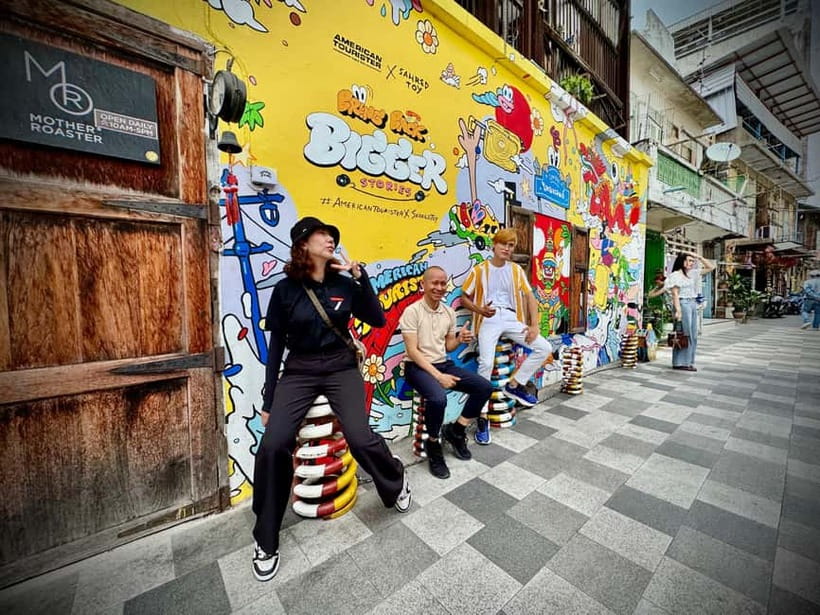
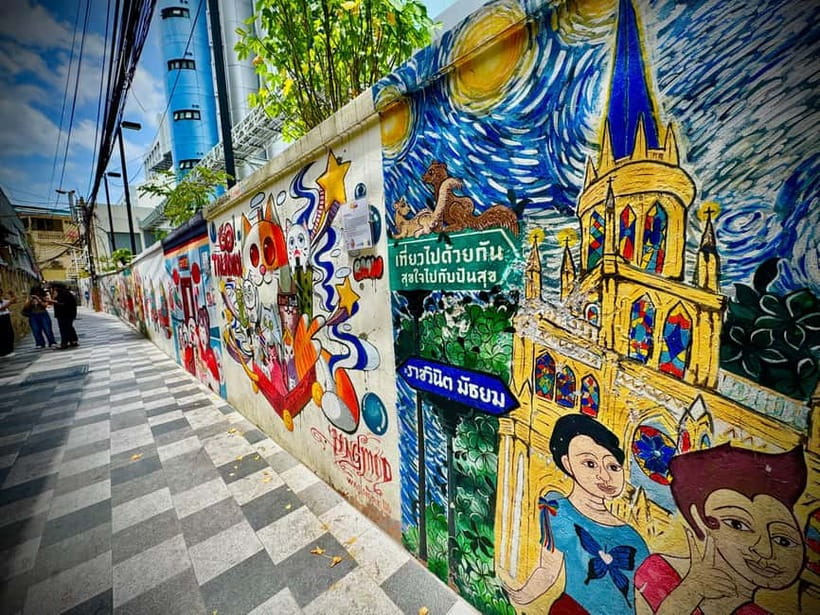
After the museum, the route turns toward colorful street art and old backstreets. This is likely to be one of the most photogenic parts of the walk, but the art is not the whole point. The contrast between painted walls and older community buildings shows how Talad Noi continues to change without losing every trace of its past.
The tour also includes smaller shrines tucked between old buildings. These modest sites can be easy to overlook when you walk alone. Your guide points them out and explains their place in the neighborhood, making the walk feel more personal than a simple street-art hunt.
Guides have been praised for being friendly, patient, and flexible. Jenny was described as especially clear with families and children, while Ploy was praised for bringing traditional snacks to one participant. Those details suggest a warm approach, though you should not expect snacks to be included as a standard feature.
Reaching River City Bangkok
The walk finishes at River City Bangkok on the Chao Phraya River. This is a smart endpoint because you are not left in an unfamiliar side street after four hours of walking.
You can continue your day with a riverside lunch, browse the area, or arrange a scenic boat ride. The tour does not include meals, boat tickets, or personal expenses, so plan to pay separately for anything you do after the walk.
The river ending also gives the route a clear shape. You begin with Chinese religious and commercial life, cross through older community streets, and finish at one of Bangkok’s major waterways. The city’s story feels connected rather than scattered.
Price, guide quality, and what the $19 covers
At $19 per person, this is strong value if you want context rather than a self-guided stroll. The price includes a fully licensed English-speaking guide and a bottle of water. It does not include meals, personal expenses, or any optional purchases along the way.
The guide is the main reason the price works. Without explanation, you would still see temples, markets, shrines, and murals, but you would miss much of the link between them. The strongest guide comments praised clear explanations, cultural context, patience, kindness, and the ability to adjust the walk.
The tour has a rating of 4.7 from 36 ratings, with praise spread across guides including Jenny, Nok, Mai, Jib, Mariyah, Ploy, and Toto. That range suggests the operator uses several guides rather than one fixed personality. Your experience may vary slightly by guide, but English is the stated language for the tour.
A private experience is possible through certain bookings, but group size is not specified as a standard feature. Do not book expecting a guaranteed private tour unless your selected option says so.
How to prepare for four hours on foot
Bangkok can be hot, and this route includes markets, temple grounds, alleys, and city streets. Wear comfortable shoes and light clothing, and bring a hat and sunscreen.
Carry water even though one bottle is included. You may also want a little extra room in your bag for a market purchase, but keep it light. A heavy daypack will become less charming by the third hour.
The tour is not suitable for wheelchair users or pregnant women. If you have trouble with long walks or uneven lanes, contact the provider before booking. The supplied information does not give a detailed accessibility plan, so do not assume that every stop can be adapted.
Families can enjoy the outing, especially if children like markets, stories, temples, and art. One family found Jenny patient and clear, and the route offers enough variety to keep the day from becoming a string of similar temple visits.
Who should book this Chinatown walk?
I would choose this tour if you want to understand how Bangkok’s Chinese community shaped Yaowarat and Talad Noi. It suits first-time visitors who want a structured introduction, as well as returning visitors who have already seen the main Chinatown roads.
It is also a good match for you if you enjoy local history, photography, architecture, markets, and guided walks. The mix of temples, charitable institutions, workshops, shrines, and street art gives the tour more range than a food-only Chinatown outing.
I would be cautious if you dislike heat, walking, market crowds, or unscheduled street conditions. It is not a restaurant tour, a luxury sightseeing trip, or a fully accessible route. You will need to buy your own food and manage your own comfort during the four hours.
Should you book it?
Book this walk if you want Bangkok explained through its neighborhoods rather than viewed from a vehicle. The best parts are the smaller shrines, Talad Noi’s ironwork past, the museum, and the stories connecting Thai-Chinese immigration with trade and daily life.
Skip it if your priority is a relaxed boat ride, a seated food tour, or a short list of famous sights. For $19, though, the combination of a licensed guide, bottled water, temples, markets, Talad Noi, and a riverfront finish offers a lot. Start at MRT Wat Mangkon Exit 3, wear good shoes, and leave room in your schedule after River City.
FAQ
Where does the tour meet?
The standard meeting point is MRT Wat Mangkon Exit 3.
Where does the tour finish?
The tour finishes at River City Bangkok beside the Chao Phraya River.
How long does the tour last?
The listed duration is four hours.
What language is the tour conducted in?
The live tour guide speaks English.
Is hotel pickup available?
Pickup is available as an optional booking choice. If selected, wait in your hotel lobby at least five minutes before the scheduled pickup time. The guide will hold a sign with your name.
Is food included?
No. Meals are not included, although the route passes through markets and street-food areas.
Is bottled water included?
Yes. One bottle of water is included.
What should I wear?
Wear comfortable shoes and light clothing. A hat and sunscreen are also advised.
Is the tour suitable for wheelchair users?
No. The activity is listed as unsuitable for wheelchair users.
Can I cancel for a refund?
Yes. You can cancel up to 24 hours in advance for a full refund.
Just added around the world
- Your Own Belgrade: Street Art and Hidden Gems Walking Tour★ 5.0 · 2 reviews
- Vancouver: Street Art & Craft Coffee Walking Tour w/ Tasting★ 4.8 · 11 reviews
- Wynwood Walls Street Art & Neighborhood Walking Tour★ 4.9 · 9 reviews
- Xochimilco floating gardens, Coyoacan and UNAM murals★ 4.0 · 6 reviews
- UNAM: Murals & Revolution★ 4.9 · 8 reviews
- Urban Canvas: Osaka Street Art Bike Tour★ 5.0 · 10 reviews
- Vancouver: Street Art & Craft Beer Walking Tour with Tasting★ 4.8 · 14 reviews
- Small-Group Graffiti Tour and Workshop in El Carmen★ 5.0 · 2 reviews
Thailand Mural Tours, compared.


Bangkok Heritage & Street Art Private Walking Tour
Read our review →
Phuket: Old Town Morning Street Art Walking Tour with Lunch
Read our review →Browse the lists this tour appears in