
REVIEW · THAILAND MURAL TOURS
Bangkok: Street Art e-Scooter Tour of Chinatown
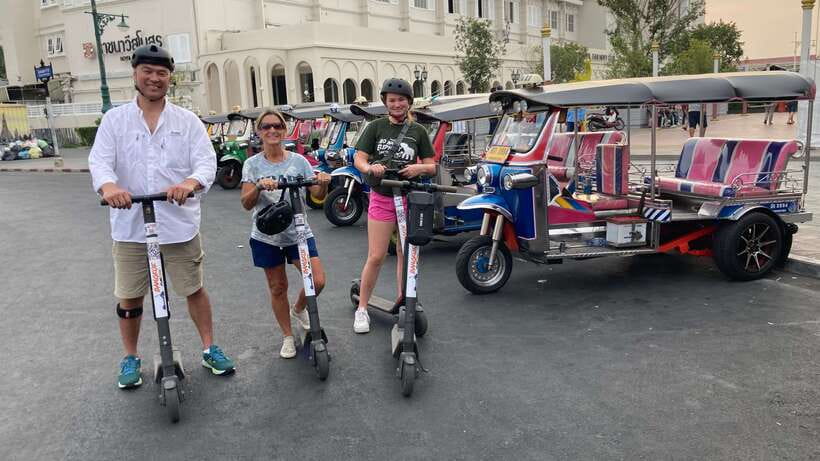
Bangkok reveals itself in side streets. This 210-minute e-scooter ride takes you from Khao San Road through old Bangkok, Chinatown, Talat Noi, riverside lanes, markets, temples, and canals. I like the photo-friendly route, especially the murals and views near the Chao Phraya River. I also like the friendly, patient guiding style, with guides such as John, AJ, Tai, and Nicolas praised for humor, help, and good local advice. The main consideration is that you need to feel comfortable on an electric scooter, and the tour cannot wait more than 10 minutes for late arrivals.
At $51 per person, this is not the cheapest way to see Bangkok, but it covers a lot of ground without asking you to walk through the heat for three and a half hours. You will not spend long inside major monuments, and street food is extra. Think of this as a moving city portrait, not a temple admission tour.
The route in five useful snapshots
- Old Bangkok from Khao San: Begin near Bangkok FunRide and move quickly into the historic center.
- Big landmarks, short stops: Democracy Monument, Loha Prasat, Wat Suthat, the Giant Swing, Wat Arun, and the Grand Palace provide strong visual anchors.
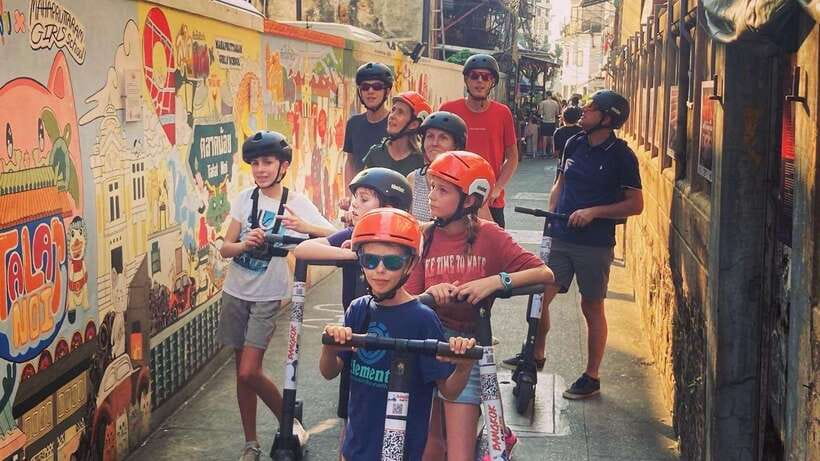
- Chinatown beyond Yaowarat Road: Murals, temples, red lanterns, Sampeng Market, and Wat Chakrawat show a more local side of the district.
- Talat Noi and the river: Sino-Thai street art leads to a refreshment pause opposite the Church of the Holy Rosary.
- A quiet ride home: The return route passes the Flower Market and follows Bangkok’s canals before ending back at Khao San Road.
Starting near Khao San Road
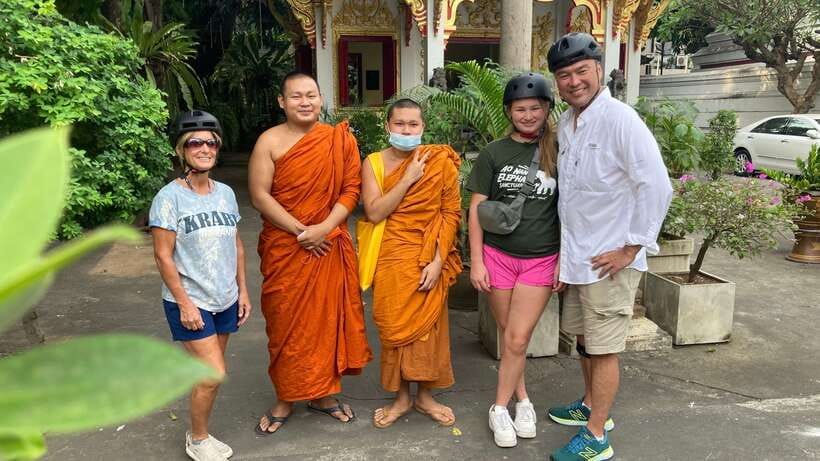
The meeting point is Bangkok FunRide, the electric scooter and bike shop. After booking, you can contact the operator by WhatsApp or email for help finding the store. That is worth doing, since the meeting point is more specific than simply saying Khao San Road.
You receive the equipment you need at the shop. The practical advice is simple: wear comfortable clothes and sports shoes. The latter matters more than it may sound. You will be riding for a long stretch, stopping, starting, and sometimes walking beside the scooter, so flip-flops are a poor choice.
There is a safety briefing before the route gets going. The tour is offered in English, French, Hindi, Thai, and Japanese, which gives you a better chance of finding a guide who can explain the route clearly. The exact guide depends on the departure, but previous guests singled out John for patience and helpful explanations, while AJ, Tai, and Nicolas were praised for warmth, humor, and personal care.
More Scooter Rentals in the world:
- Johannesburg Street Art & Museum Walking or E-scooter Tour
★ 4.5 · 10 reviews - Barcelona: Graffiti E-Scooter Tour
★ 4.4 · 9 reviews - E-Scooter Street Art Tour
★ 4.5 · 6 reviews
Democracy Monument sets the tone
The first proper stop is Democracy Monument. You get about five minutes for photos and a look around, rather than a long historical talk or an indoor visit. The monument gives the tour an immediate sense of Bangkok’s civic center and provides a broad, formal contrast to the narrow lanes that come later.
This short stop is useful because the tour does not try to make every landmark into a full visit. You get a chance to see it, photograph it, and keep moving. If you prefer long museum visits or detailed architectural lectures, you may find the pace brisk. If you want a varied route with many changing scenes, the short stops work well.
Loha Prasat and Wat Ratchanatdaram
The ride continues to the Royal Pavilion overlooking Wat Ratchanatdaram, best known for Loha Prasat. You stop for another short photo break, with roughly five minutes listed for this part of the route.
The appeal here is visual. The pavilion and temple complex offer a fine frame for photographs, and the route lets you see the area without spending the day inside a single temple compound. The experience is particularly suited to you if your camera roll matters as much as ticking off formal sightseeing stops.
Keep your expectations clear. This is a guided scooter stop, not a dedicated temple tour. The schedule allows a look and some free time, but not an extended religious or architectural study.
The Giant Swing and Wat Suthat
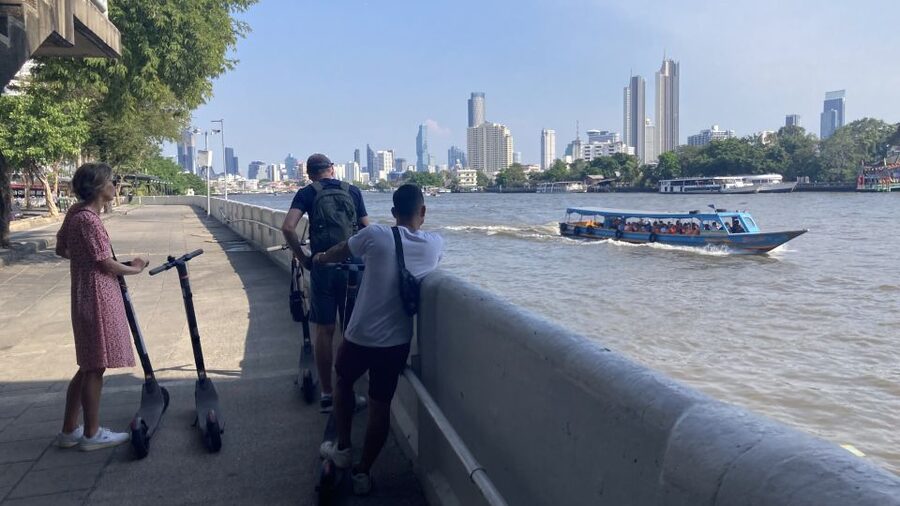
Wat Suthat and the Giant Swing offer another short pause. The Giant Swing is one of Bangkok’s most recognizable city sights, and the surrounding temple area gives the route a grander feel before it turns toward local lanes.
The five-minute stop is enough for photographs and orientation. You may also walk briefly, but the tour is built around the scooters, so do not expect a long visit inside Wat Suthat. The advantage is variety. In less than an hour, you have moved from a major civic monument to temple architecture and then toward the older neighborhoods that are the real focus of the outing.
A few more mural tours around the world worth a look
- Medellin: Comuna 13 Graffiti Tour, Cable Car & Street Food
★ 4.8 · 9,046 reviews - CDMX: Xochimilco, Coyoacan, Frida Kahlo Museum & Murals Tour
★ 4.4 · 3,025 reviews - Amsterdam: Streetart Museum STRAAT Entrance Ticket
★ 4.8 · 2,137 reviews - Belfast: Murals Taxi Tour
★ 4.9 · 2,047 reviews
Into the alleys and toward Chinatown
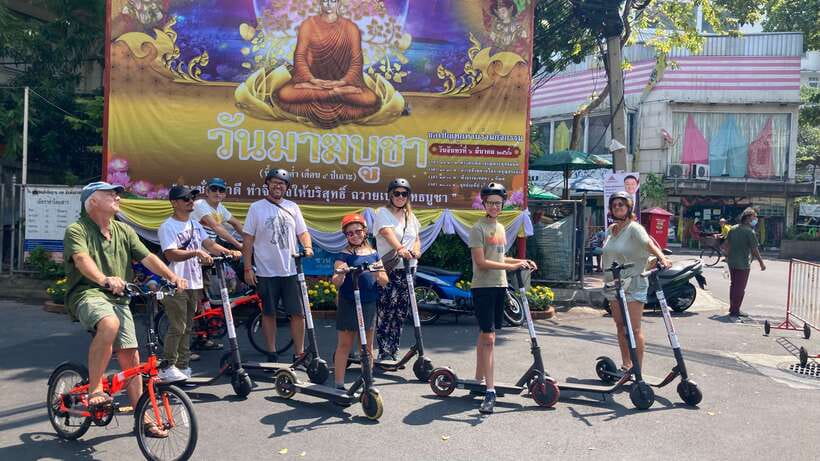
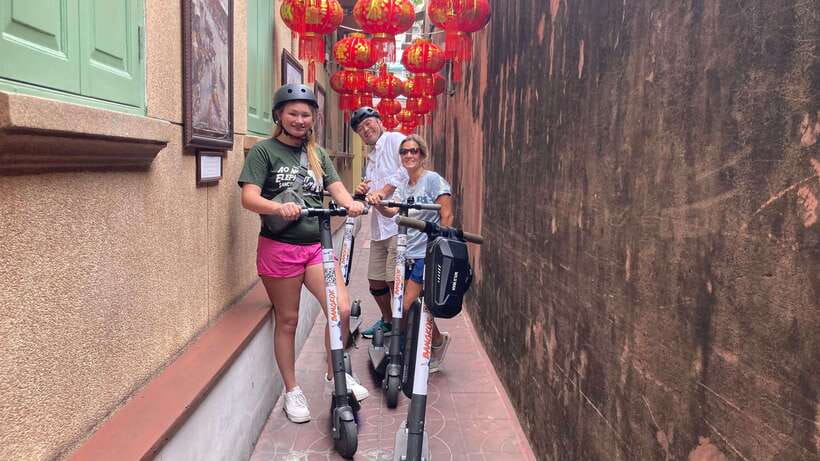
The best part of the tour begins when the group leaves the broad roads. You ride through lanes used by local residents and reach the first mural that signals Chinatown. Traditional red lanterns, temples, painted walls, and close-packed streets replace the formal views around the monuments.
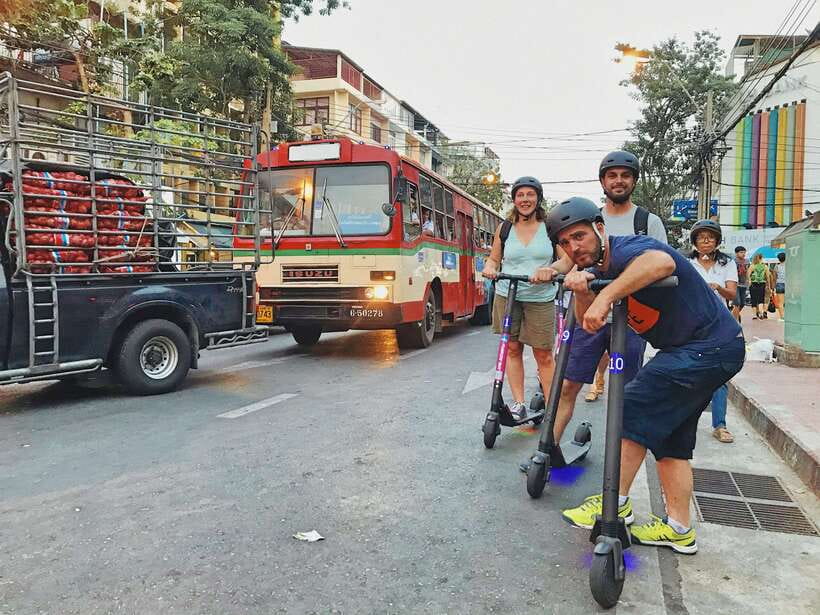
This is where the scooter earns its keep. You can cover more ground than on foot, yet still move slowly enough to notice details. You are not confined to the main tourist corridor, and the route gives you access to streets that would be easy to miss from a taxi or tour bus.
There is a practical tradeoff. Narrow lanes require attention, and Bangkok traffic can be unpredictable. You need to listen to the guide, stay with the group, and ride within your comfort level. The experience is not intended for people who cannot operate an electric scooter confidently.
Crossing Yaowarat Road and seeing Chinatown in motion
Yaowarat Road brings a sharp change in mood. It is the best-known artery of Bangkok’s Chinatown, with food, shops, signs, traffic, and constant movement. The route crosses this busy stretch rather than treating it as the only Chinatown experience.
That distinction matters. A short walk along Yaowarat would give you plenty of lights and food stalls, but this tour adds the smaller streets, murals, temples, and market lanes behind it. You still get the famous Chinatown atmosphere, yet you also see how the district extends beyond its main road.
Food is not included in the $51 price. Depending on the time of day, there may be plenty of street food along the way. If you want to stop and taste something, the guide can allow time, but you pay for anything you buy. I like this arrangement because it keeps the tour flexible, though you should not book it expecting a meal or tasting menu.
Sampeng Market and Wat Chakrawat
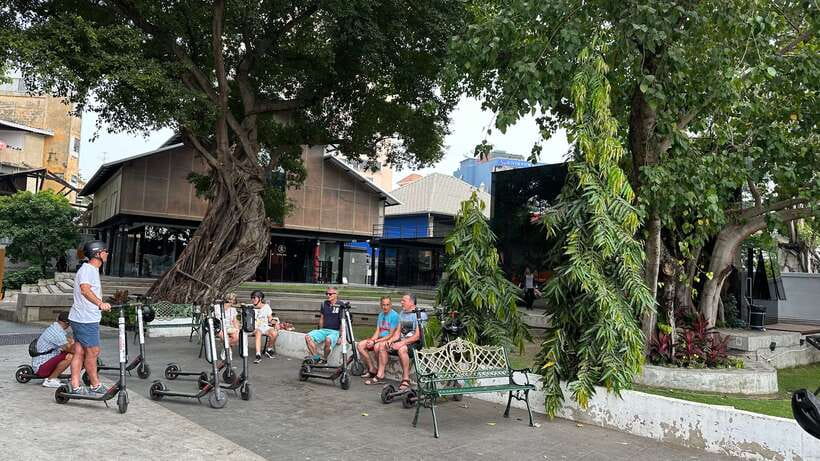
Sampeng Market adds a lively commercial layer to the route. The stop includes time for photographs, sightseeing, and a guided look. You may find the market more interesting than a polished shopping center because it shows the working side of Chinatown, with narrow passages and local trade.
Wat Chakrawat follows, with about 10 minutes listed for the visit and a safety briefing connected to the ride. The itinerary also allows for photos and a short look around. Since the tour is not built around long temple visits, you will see the setting as part of a wider neighborhood story rather than as a standalone attraction.
One useful point: the stop names and descriptions include some pass-by segments, and not every location has a fixed visit length. You should expect a flexible outdoor route, with the guide adjusting the rhythm to traffic, the group, and the time available.
Talat Noi’s murals and old neighborhood character
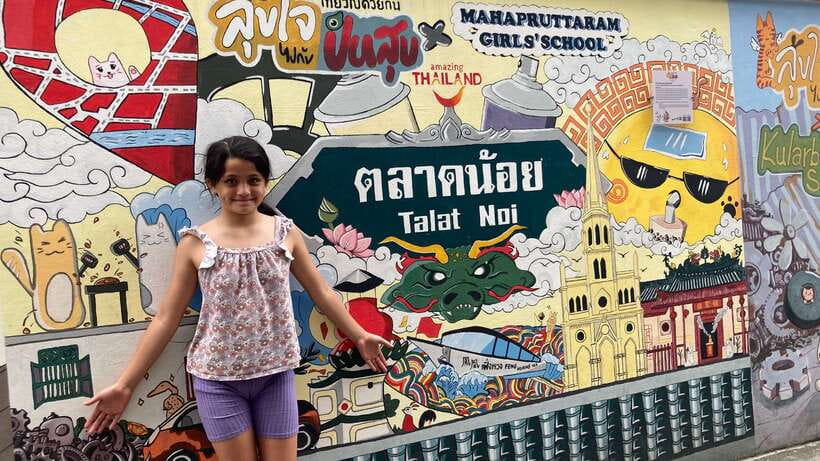
Talat Noi is the visual centerpiece for many people. This old riverside quarter is known for Sino-Thai character and street art, and the tour gives you time for photographs, a guided look, and some free time. The murals are not isolated gallery pieces. They appear among homes, workshops, shrines, lanes, and everyday city life.
I like this section because it connects art to place. You are not simply driven to a wall, given two minutes, and sent away. The route through Talat Noi lets you see how creative work sits alongside an older neighborhood.
The ride is also less tiring than a full walking tour. Bangkok’s heat can turn a long route into hard work, while the scooters let you cover the distance with less effort. You still need to stand, steer, stop, and walk at times, but the electric assistance makes the day more manageable.
A river pause opposite the Holy Rosary Church

The tour pauses by the Chao Phraya River opposite the Church of the Holy Rosary. This is a useful break after the tighter streets of Chinatown and Talat Noi. You can refresh, take photographs, and look across the water toward the church and riverside setting.
The stop adds breathing room to the itinerary. Without it, the route could feel like a continuous series of streets and landmarks. The river offers a slower scene and helps you understand Bangkok as a water-based city, not just a network of roads.
The church is viewed as part of the route, and the time is not presented as a full interior visit. If you want to study the church closely, you would need to return independently.
Flower Market, Grand Palace views, and Wat Arun
On the way back, the route passes the Flower Market and offers views of the Grand Palace. These are photo stops and pass-by experiences rather than extended admissions. That keeps the tour moving, but it also means you should not expect entrance to the Grand Palace or a full visit to Wat Arun.
Wat Arun appears in the later part of the route with a short guided stop and possible sunset views. Its riverside position makes it a strong subject for photographs, especially as the light changes. The tour uses the temple as part of the wider river route rather than building the whole outing around it.
This is one of the tour’s limits and one of its strengths. You see many famous places in one outing, but you do not get enough time for deep exploration at any one of them. I would pair this experience with a separate morning visit to the Grand Palace or Wat Arun if those sites are priorities.
Returning through Bangkok’s canals
The final ride along the city’s khlongs, or canals, is a fitting finish. After the noise of Chinatown and the visual rush of the murals, the canals offer a quieter view of waterside life. The route then returns toward Khao San Road, with another short stop there before reaching Bangkok FunRide.
This closing section is especially valuable because it changes the pace. You see Bangkok from streets, markets, a riverbank, and canals in one circuit. The ride does not end with one last crowded road; it finishes with a calmer view of the city.
The total duration is 210 minutes, or three and a half hours. That is long enough to make the price feel reasonable if you want a broad introduction to central Bangkok, but short enough to leave room in your day for dinner or an evening market.
What $51 buys you
At $51 per person, the value rests in the route and the convenience rather than admission tickets. You are paying for the electric scooter, equipment, guide, safety briefing, and a carefully linked journey through several districts.
I think the price is fair for you if you value:
- Covering more ground than a walking tour
- Seeing local lanes as well as headline sights
- Having a guide manage the route through traffic
- Getting regular photo stops
- Avoiding the fatigue of walking across central Bangkok
The value is weaker if you mainly want to enter temples, eat street food, or spend an hour at each landmark. Temple admission is not the focus, and food purchases are your own expense.
The average rating is 4.8 from seven reviews, with every listed review giving the experience five stars. That small sample does not prove every departure will be perfect, but it does point to a consistent pattern: friendly staff, patient support, good photo opportunities, and a route that reaches corners you might otherwise miss.
Family use, riding ability, and timing
The tour is not suitable for anyone over 264 pounds, or 120 kilograms. Comfortable clothing and shoes are required, and alcohol and drugs are not allowed.
An eight-year-old had trouble operating a scooter during one departure, and the staff provided a two-seater so the child could continue. That is a useful sign of flexibility, but you should not treat a two-seater as guaranteed. Ask before booking if a child will be riding or if anyone in your group is uncertain about handling the scooter.
The operator can wait only 10 minutes after departure. Plan to arrive early, especially if you are coming through busy central Bangkok streets. A late arrival could mean missing the group entirely.
The people behind the experience
The strongest human element is the guide service. John was praised for being patient and helpful. AJ and Tai assisted with practical matters after the tour, including directions to a night market and help arranging a tuk-tuk. Nicolas was remembered for stories, humor, and a distinctive Toulouse accent.
Guide names may change, but the pattern is worth noting. This is not presented as a silent equipment rental. The guide helps manage the route, gives the ride its personality, and may offer useful assistance beyond the final stop.
Should you book the Chinatown e-scooter tour?
Book it if you want an active, photo-heavy introduction to old Bangkok and you are comfortable riding an electric scooter. It suits first-time visitors who want landmarks, murals, markets, river views, and canals in one outing. It is also a good fit if walking in Bangkok’s heat sounds tiring.
Skip it if you want lengthy temple visits, a structured food tour, or a slow architectural study. You will see many places, but most stops are brief. At $51, the tour makes the most sense as a broad orientation ride that shows you where you may want to return later.
FAQ
How long does the Bangkok street art e-scooter tour last?
The tour lasts 210 minutes, or three and a half hours.
Where does the tour start?
It starts at Bangkok FunRide, Electric Scooter Tours, near the Khao San area. You can contact the operator by WhatsApp or email after booking for help finding the store.
Where does the tour finish?
The route returns to Bangkok FunRide, near the starting point.
Which languages are available?
The live tour guide service is available in English, French, Hindi, Thai, and Japanese.
What should I wear?
Wear comfortable clothes and comfortable sports shoes. Sports shoes are recommended for riding comfort.
Is food included?
No. Street food may be available during the route, and the guide can allow time for a break, but any food or drinks are at your own expense.
Can children join the tour?
Children may be able to join, but the supplied information does not give a general minimum age. One eight-year-old who had trouble operating the scooter was accommodated with a two-seater, so contact the operator before booking for a child.
Is the tour suitable for everyone?
No. It is not suitable for people over 264 pounds, or 120 kilograms. You also need to be comfortable operating an electric scooter.
How late can I arrive?
The operator can wait only 10 minutes after the scheduled departure time. Arrive early so you do not miss the group.
Can I cancel for a refund?
You can cancel up to 24 hours in advance for a full refund. You can also reserve now and pay later, which keeps your plans flexible.
Just added around the world
- Your Own Belgrade: Street Art and Hidden Gems Walking Tour★ 5.0 · 2 reviews
- Vancouver: Street Art & Craft Coffee Walking Tour w/ Tasting★ 4.8 · 11 reviews
- Wynwood Walls Street Art & Neighborhood Walking Tour★ 4.9 · 9 reviews
- Xochimilco floating gardens, Coyoacan and UNAM murals★ 4.0 · 6 reviews
- UNAM: Murals & Revolution★ 4.9 · 8 reviews
- Urban Canvas: Osaka Street Art Bike Tour★ 5.0 · 10 reviews
- Vancouver: Street Art & Craft Beer Walking Tour with Tasting★ 4.8 · 14 reviews
- Small-Group Graffiti Tour and Workshop in El Carmen★ 5.0 · 2 reviews
Thailand Mural Tours, compared.
Chinatown & Taladnoi Street Art Guided Walking Tour
Read our review →
Bangkok Heritage & Street Art Private Walking Tour
Read our review →
Phuket: Old Town Morning Street Art Walking Tour with Lunch
Read our review →Browse the lists this tour appears in