
REVIEW · STREET ART BIKE TOURS
Urban Canvas: Osaka Street Art Bike Tour
Osaka has more to offer than neon streets. This small-group bike tour takes you through Tenma, Juso, and Nakazaki-cho, where murals, rail lines, bridges, bars, and modern buildings show a less polished side of the city. I like the close look at local and international street art, and I like the chance to cross the Yodo River into Juso, a part of Osaka many visitors skip.
I also like the food stops: specialty coffee, a standing bar, and a pizza slice served in a 100-year-old building. The main consideration is physical. You may cycle about 23 kilometers over nearly four and a half hours, so this is not a gentle sightseeing ride for anyone with mobility issues or little comfort on a bike.
Key points at a glance
- About 23 kilometers by bike: You cover a good stretch of Osaka at a steady pace, with time to stop for art and refreshments.
- Juso beyond the main tourist routes: Crossing the Yodo River leads you into a local neighborhood known for its street art and everyday urban character.
- Three very different districts: Tenma feels gritty, Nakazaki-cho feels more creative and boutique-oriented, and Juso brings a rougher local edge.
- A 100-year-old pizza stop: The included pizza slice adds a simple, memorable food break rather than a formal restaurant meal.
- Guides with a personal connection: Ruben and Eric have been praised for explaining both the artworks and wider Osaka life.
- Only six people per group: The small size makes it easier to ask questions and keep the ride manageable.
Why this bike tour shows you another Osaka
I see this experience as a useful counterpoint to Osaka’s famous food streets, shopping arcades, and bright signs. You are not simply ticking off landmarks. You are moving through working neighborhoods and seeing how art fits into the spaces between railway lines, apartment buildings, rivers, bridges, and busy roads.
That matters because Osaka can feel easy to read at first. The central districts give you an immediate hit of signs and crowds, but they do not explain the city’s quieter edges. This ride gives you a broader sense of how the city is put together.
The art is the main reason to book, but the city itself is the larger subject. I like the way the route links murals and graffiti with urban architecture, elevated train tracks, river crossings, and skyline views. You get a city tour with art as the thread tying it together.
The five-star rating from 10 submitted ratings is a good sign, especially since the strongest praise centers on the guide, the artwork, and the pleasure of cycling. Still, the tour is best for people who want an active outing, not for anyone hoping to spend most of the day sitting and listening.
More Street Art Bike Tours in the world:
- London Bike Tour: Landmarks, Secret Gems, Pub Stop & Street Art
★ 5.0 · 943 reviews - Barcelona Street Art and Graffitti Bicycle Tour
★ 5.0 · 361 reviews - London: Landmarks & Secrets Bike Tour with Pub & Street Art
★ 4.9 · 314 reviews
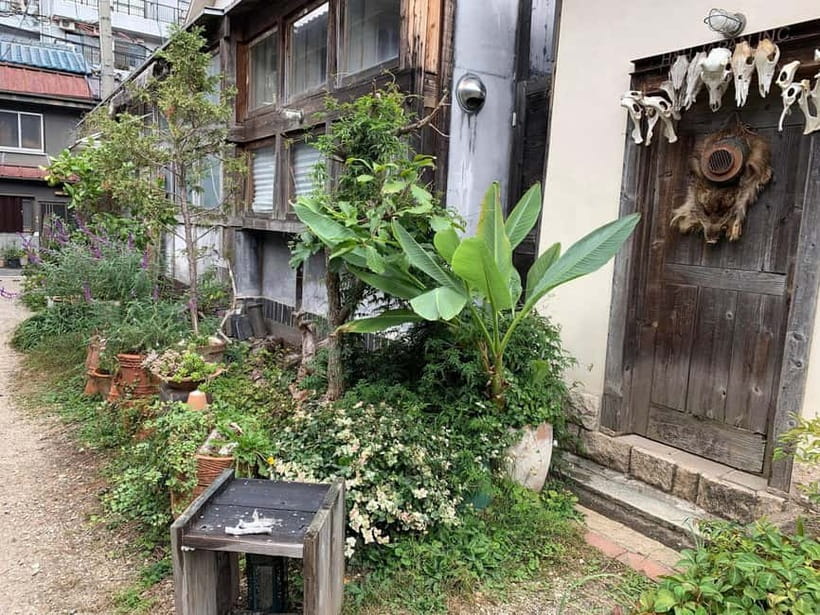
Starting near Tenmabashi and entering Tenma
The meeting point is about a 10-minute walk from Tenmabashi Station, served by the Osaka Metro and Keihan Line. That makes the start reasonably easy to reach, though you should allow enough time to walk from the station, find the meeting place, and get settled before the ride begins.
Your bike, helmet, and water are included. You should arrive in comfortable clothes and shoes, with a camera if you want to record the murals and city views. You also need to provide the heights of everyone in your group, which helps the operator prepare suitable bikes.
Tenma introduces the tour’s basic mood. Rather than directing you straight to Osaka’s headline sights, the route takes you through urban streets where the pleasure comes from watching the city change block by block.
You might pass rail infrastructure, older buildings, graffiti, and newer development in close quarters. That mix is part of the appeal. Osaka does not always present its past and present in separate districts, and a bicycle lets you notice those changes without being sealed inside a vehicle.
The cycling also changes your sense of distance. A train can carry you across the city quickly, but a bike shows you the spaces between stations. You see how streets connect, where bridges lead, and how neighborhoods shift as you move away from the center.
Crossing the Yodo River into Juso
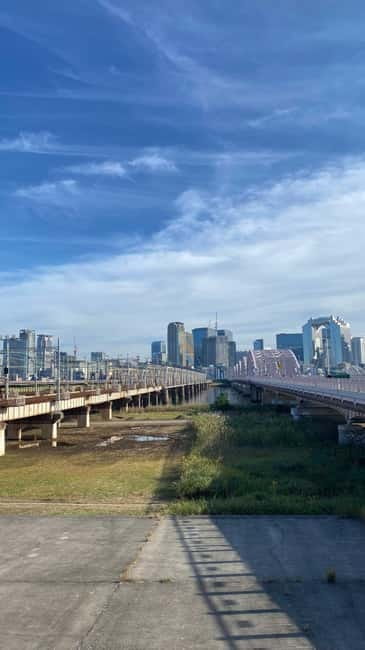
The ride across the Yodo River is one of the tour’s clear turning points. You get open views, a change in scale, and a look at Osaka’s bridges and modern buildings from a moving vantage point.
The river crossing also makes the outing feel like more than a street-art walk with bicycles. You are leaving the most familiar part of central Osaka and entering Juso, a district described as one of the centers of the city’s street art activity.
Juso is almost never visited by tourists compared with Osaka’s better-known areas. That does not mean it is empty or frozen in time. It is an active neighborhood with its own bars, coffee spots, shops, and local rhythm.
I would pay close attention here rather than rushing from one artwork to the next. The value of Juso is the combination of art and ordinary city life. The murals matter, but so do the narrow streets, the older storefronts, the bridges, and the sense that you are seeing a part of Osaka on its own terms.
Your guide provides commentary about the art and Osaka’s underground life. That personal explanation is important because street art can be easy to photograph and hard to understand. An informed guide can point out the difference between a quick tag, a large-scale piece, and work with a stronger connection to the neighborhood.
Meeting local and international street artists through their work
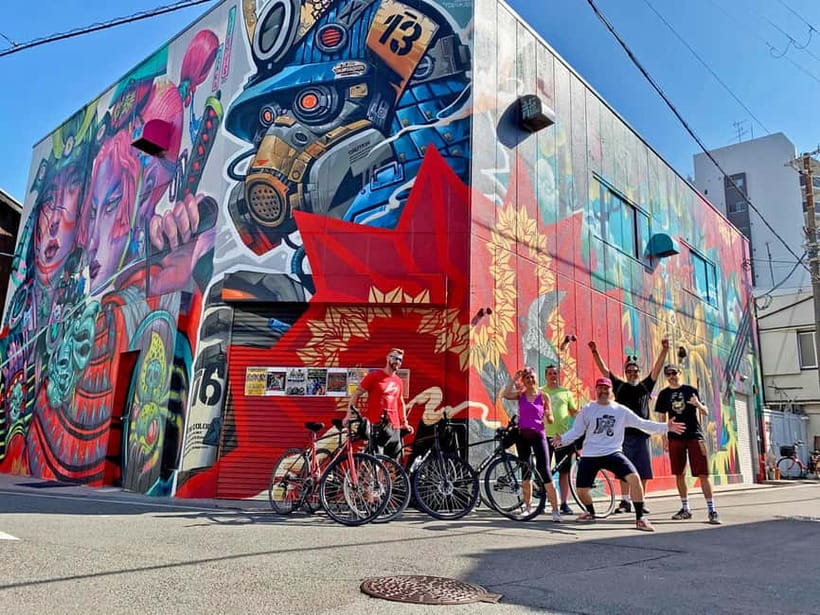
The tour focuses on Osaka’s growing street art scene, including work by local and international artists. The exact pieces can vary, but you should expect a route built around urban walls, graffiti, and public spaces rather than a formal gallery collection.
That gives the experience a little uncertainty, in a good way. You are not walking through a fixed indoor exhibition with labels beside every work. The city is the setting, and the art appears among infrastructure, shops, side streets, and buildings.
The best guide commentary adds context about the artists and the works. Eric has been praised for his passion for the displays and for explaining what you are seeing. Ruben has also been singled out for taking time to answer questions about street art, Osaka, and Japan.
You should use the small group to ask questions. With a maximum of six participants, this is not the sort of tour where you need to fight for the guide’s attention. If a piece catches your eye, you have a better chance of stopping for a proper explanation and a photograph.
One practical weakness is that you may not receive a written record of the art afterward. A participant specifically wished for a small pamphlet listing information about the works, since it can be hard to remember every interesting detail after a long ride. I recommend taking a few notes on your phone if you want to recall the artists later.
More Bike Tours in the world:
- Mexico City; ART NACO : Murals & Street Art Bike Tour
★ 5.0 · 284 reviews - Mexico City: Art Naco, murals & street art bike tour
★ 4.7 · 166 reviews - Street Art Bike Ride
★ 5.0 · 125 reviews - Cologne: Ehrenfeld Street Art Bike Tour
★ 4.9 · 105 reviews
Coffee, a standing bar, and the rhythm of Juso
The refreshment stops help break up the cycling. You can expect specialty coffee, time at an old-school standing bar, and other small pauses along the route.
These are not presented as a formal food tour, and that is worth understanding. You are not booking a long series of tastings or a sit-down meal. The stops are short local experiences that give you a chance to rest, look around, and see how people use the neighborhood.
I like this part because it keeps the tour from becoming a four-hour exercise session. A coffee break can reset your legs, while a standing bar offers a quick look at a distinctly local style of drinking and socializing.
The bar stop may not suit everyone. Standing means exactly that, and anyone expecting a comfortable seat at every break should adjust their expectations. The tour is built around movement and brief visits, not lingering over a full meal.
Still, these pauses add more than calories. They make Juso feel lived in. You are not simply passing through to photograph a wall. You are stopping in places connected to the area’s everyday life.
From Tenma’s grit to Nakazaki-cho’s creative side
Later, the route heads toward Nakazaki-cho, which has a different feel from Juso and Tenma. This area is known for boutique shops, galleries, and a more creative atmosphere.
The contrast makes the route stronger. If the entire tour stayed in one type of neighborhood, the experience could become visually repetitive. Instead, you move from rougher streets and industrial details toward smaller shops and art-focused spaces.
Nakazaki-cho is a good place to notice how older buildings can take on new uses. The tour’s description points to a local institution serving pizza slices in a 100-year-old building, and that stop is included in the price.
The pizza is one slice, not a full lunch. Think of it as a well-timed local snack and a memorable setting rather than the main meal of the day. If you need more food, plan accordingly, especially since the tour lasts 270 minutes.
I like the old-building setting because it connects the food stop to the wider theme of the tour. Osaka’s older structures, new creative businesses, and street art all share the same city blocks. You get a clearer sense of that relationship here than you would from a standard restaurant visit.
What the 270-minute ride feels like
Four and a half hours is long enough to give the route real substance. You are not getting a quick loop around one neighborhood. You are covering Tenma, crossing the Yodo River, spending time in Juso, and continuing toward Nakazaki-cho.
A past ride was described as roughly 23 kilometers completed at a good, safe pace, with time to photograph the art. That gives you a useful idea of the physical demand. The route is not described as a race, but it is a serious half-day ride.
I would book this early in your Osaka stay if you enjoy cycling and want the guide’s local perspective to shape the rest of your visit. It can help you understand the city beyond the main shopping and dining zones.
You should also watch the weather forecast. If the chance of rain is higher than 60 percent during the tour, the operator cancels and offers another date or a full refund. You need to remain reachable so you do not miss any change to the plan.
The weather rule is sensible for a long outdoor ride, but it can affect a tightly scheduled itinerary. Keep some flexibility in your Osaka plans if this experience is important to you.
Group size, guides, and the value of personal commentary
A group limit of six is one of the strongest practical features. The guide can keep the ride together more easily, and you can ask questions without turning the experience into a lecture from across a crowd.
The guides named in the feedback are Ruben and Eric. Ruben has been praised for answering questions about both street art and Japan, while Eric has been praised for his enthusiasm and strong grasp of the artworks.
That distinction matters. You are not only paying for a bike and a route. You are paying for interpretation. Without the guide, you would still see walls and buildings, but you might miss why a piece matters or how it connects to Osaka’s creative life.
The English-language format makes this accessible to English-speaking visitors. The small group also gives the tour a more informal feel than a large city excursion.
You should not expect a polished museum lecture or a detailed printed art catalogue. The experience depends on conversation, observation, and the guide’s ability to explain what is in front of you. For many people, that is an advantage. If you prefer fixed facts in a written format, bring your phone for notes.
Is $87 a fair price?
At $87 per person, I consider the price reasonable if you value the guide and the full half-day route. The fee includes the bicycle, helmet, water, pizza slice, and the guided ride, so you are not paying for the bike separately or adding a food charge at the main stop.
The value comes from the access and structure. You could cycle around Osaka independently, but you would need to plan a route through several neighborhoods, locate the artwork, understand its context, arrange a suitable bike, and find the food stops yourself.
The small group also supports the price. Six people or fewer is a much more personal setup than a large cycling group, and the guide can adjust explanations and pauses more easily.
I would not choose this tour mainly for the pizza or coffee. Those are welcome additions. The real purchase is a guided look at parts of Osaka that are easy to miss, plus the pleasure of covering them by bike.
For a visitor who already knows Osaka well and wants a fresh angle, the cost may feel especially justified. For someone on a tight budget who simply wants to see murals, an independent ride could cost less, provided you are comfortable planning it yourself.
Who should book this ride?
I recommend it for active adults, street-art fans, repeat visitors to Osaka, photographers, and curious first-time visitors who want to get away from the standard route. It also suits anyone who enjoys learning about a city through small businesses and ordinary streets rather than only famous sights.
The ride is not recommended for children under 13, and children under 10 are specifically listed as unsuitable. People with mobility impairments and wheelchair users should not book it.
Comfort on a bicycle is essential. You need suitable clothes and shoes, and you should be prepared for several hours outdoors. Smoking is not allowed during the activity.
You should also tell the operator about dietary restrictions in advance. That is especially important because a pizza slice is part of the included food, and the tour provider asks for this information before the ride.
Final call: book it for a different side of Osaka
I would book the Urban Canvas Osaka Street Art Bike Tour if I wanted a practical, active way to see Osaka beyond Dotonbori, the major shopping streets, and the usual skyline views. The combination of Juso’s rougher character, Nakazaki-cho’s galleries and shops, river crossings, rail lines, murals, and local food stops gives the tour a clear personality.
Skip it if you dislike long bike rides, need a fully seated itinerary, or want a formal art tour with a printed catalogue. For everyone else, $87 buys a well-organized half-day with a small group, two highly praised guides, and a genuine look at neighborhoods most short Osaka visits miss.
FAQ
How long does the Osaka Street Art Bike Tour last?
The tour lasts 270 minutes, or four and a half hours.
How much does the tour cost?
The listed price is $87 per person.
Where does the tour meet?
The meeting point is about a 10-minute walk from Tenmabashi Station, served by the Osaka Metro and Keihan Line.
What language is the tour offered in?
The live tour guide provides the experience in English.
How large is the group?
The tour is limited to six participants.
Is a bicycle provided?
Yes. The bicycle and helmet are included in the tour price.
Is food included?
Yes. A pizza slice is included. The route also includes stops for specialty coffee and an old-school standing bar, though the supplied details do not state that every refreshment is included in the price.
What happens if it rains?
If the chance of rain is higher than 60 percent during the tour, the operator cancels and offers a different date or a full refund. You should remain reachable in case of a weather change.
Is the tour suitable for children or wheelchair users?
Children under 10 are not suitable for the tour, and children under 13 are not recommended to participate. The tour is also not suitable for people with mobility impairments or wheelchair users.
Just added around the world
- Your Own Belgrade: Street Art and Hidden Gems Walking Tour★ 5.0 · 2 reviews
- Vancouver: Street Art & Craft Coffee Walking Tour w/ Tasting★ 4.8 · 11 reviews
- Wynwood Walls Street Art & Neighborhood Walking Tour★ 4.9 · 9 reviews
- Xochimilco floating gardens, Coyoacan and UNAM murals★ 4.0 · 6 reviews
- UNAM: Murals & Revolution★ 4.9 · 8 reviews
- Vancouver: Street Art & Craft Beer Walking Tour with Tasting★ 4.8 · 14 reviews
- Small-Group Graffiti Tour and Workshop in El Carmen★ 5.0 · 2 reviews
- Street Art Tour in Vienna★ 4.0 · 17 reviews
Street Art Bike Tours, compared.
London Bike Tour: Landmarks, Secret Gems, Pub Stop & Street Art
Read our review →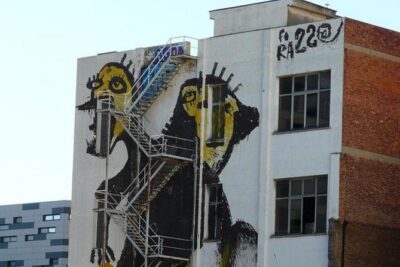
Barcelona Street Art and Graffitti Bicycle Tour
Read our review →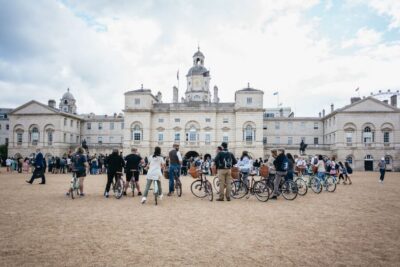
Landmarks & Secrets Bike Tour with Pub & Street Art
Read our review →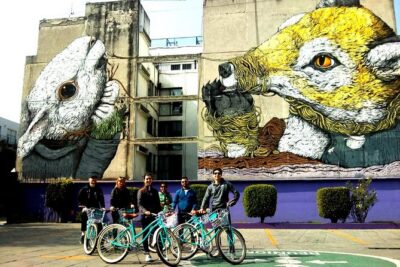
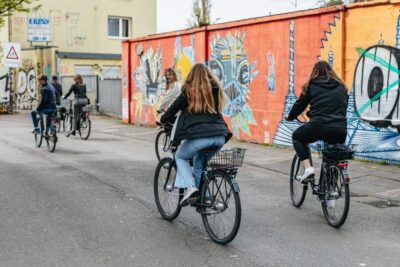
Urban Adventures Amsterdam Bike Tour, Graffiti and Magnet Fishing
Read our review →
E-Bike Guided Tour Downtown St Pete: Sights & Murals
Read our review →Browse the lists this tour appears in