
REVIEW · PARIS MURAL TOURS
Paris Off the Beaten Path Street Art Walking Tour
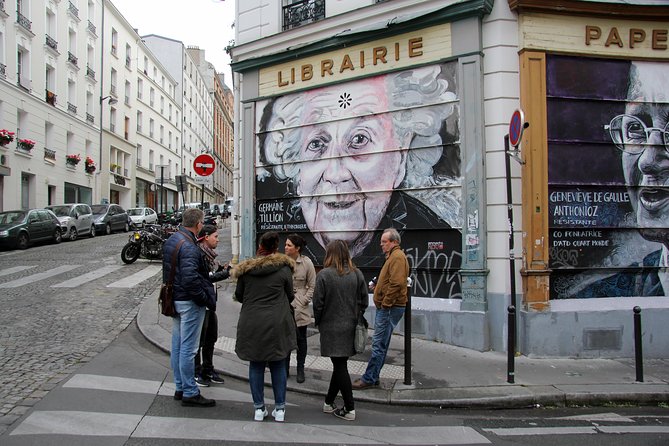
Paris has art beyond museum walls. This two-hour walk through Belleville reveals murals, mosaics, political pieces, and changing street scenes that most first-time visitors miss. I like the small maximum of eight people, which should make it easier to ask questions and keep up with the guide. I also like the mix of street art and neighborhood history, from Edith Piaf to the artists who moved here for cheaper rents in the 1980s.
The main drawback is the price: $96.13 per person for a two-hour walk is a serious investment. The tour also operates outdoors in all weather, and one scheduled outing was canceled because no guide was available, so I would keep your plans flexible if this is important to your itinerary.
Key Points Before You Book
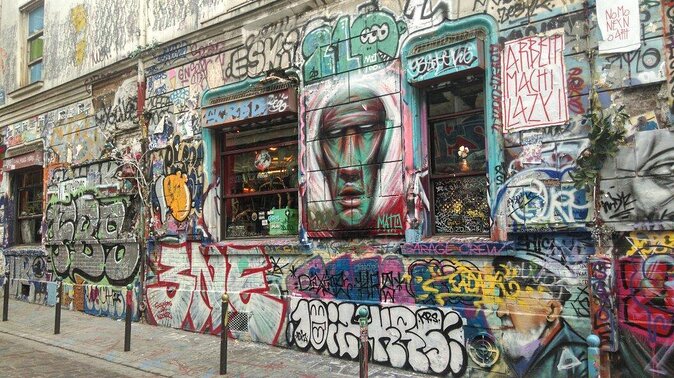
- Belleville is the focus: See one of Paris’s best-known areas for urban art rather than visiting a standard museum.
- Small group format: The tour allows a maximum of eight people, making conversation and questions more practical.
- Art keeps changing: Murals, graffiti, mosaics, and political works may look different from one visit to the next.
- Strong guides matter: Olga and Eloise received special praise for their stories, context, enthusiasm, and ability to involve children.
- Two hours on foot: Wear comfortable shoes and prepare for rain, wind, cold, or sun.
- A good family alternative: Colorful walls, short walking time, and a quiz or coffee stop on request can work well for older children and teenagers.
Why Belleville Makes a Better Art Lesson Than Another Museum
If your Paris plans already include the Louvre, Musée d’Orsay, or Centre Pompidou, Belleville gives you a useful change of pace. You are not looking at art behind glass or following a prescribed route through galleries. You are walking along ordinary streets and learning how art becomes part of daily life.
Belleville has a strong local identity. French singer Edith Piaf grew up here, and the neighborhood later attracted musicians and artists who needed cheaper places to live and work. Former industrial buildings became studios, helping Belleville grow into a center of Parisian urban art.
That background gives the walk more substance than a simple hunt for colorful walls. You learn why artists came here, how different styles share the same streets, and why some people call graffiti art while others call it destruction. The guide encourages you to form your own opinion.
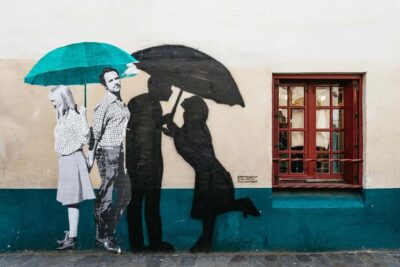
I like that open approach. Street art is not always pretty, and it does not need to be. Some pieces are funny, some are political, some focus on climate concerns, and others may disappear under a new layer of paint. The tour treats the neighborhood as a living art space rather than a fixed outdoor gallery.
More Alternative City Tours in Paris:
- London Bike Tour: Landmarks, Secret Gems, Pub Stop & Street Art
★ 5.0 · 943 reviews - Budapest: Street Art and Underground Movements Walking Tour
★ 5.0 · 365 reviews - Berlin: Street Art and Alternative Tour
★ 4.7 · 98 reviews
Meeting at 130 Boulevard de Belleville
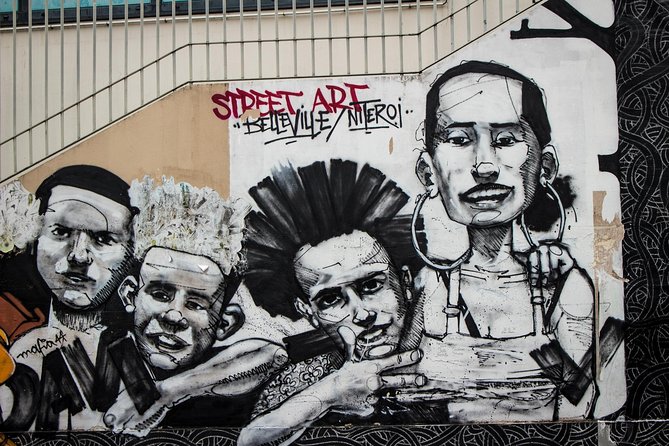
The tour begins at 10:00 a.m. at 130 Boulevard de Belleville in the 20th arrondissement. It ends back at the same meeting point, so you do not need to arrange a second pickup location or figure out where the walk finishes.
The meeting point is near public transportation, which is helpful because Belleville is not the natural starting point for a classic first-day Paris route. Check your route before the morning of the tour and allow enough time to arrive without rushing.
There is no hotel pickup or drop-off. That is normal for a neighborhood walking tour, but it matters if you are staying far from Belleville or traveling with young children. You will need to get yourself to the boulevard and back to your next stop.
The 10:00 a.m. start also leaves much of the afternoon free. You could pair the walk with more time in eastern Paris, or return toward central Paris for a museum later in the day. Since the activity lasts about two hours, it should fit easily into a larger sightseeing schedule.
Walking Through Belleville’s Changing Art Scene
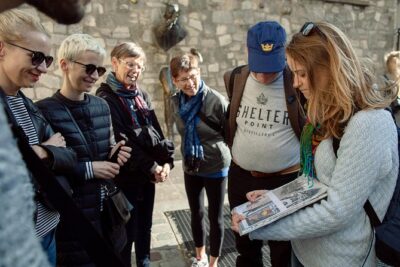
The main stop is Belleville itself, where the guide leads you through small streets decorated with murals and other forms of public art. The pace is described as leisurely, which suits the subject. You need time to stop, look closely, ask questions, and notice work that might be easy to miss from a passing car.
The route is not only about large wall paintings. You may see mosaics, smaller pieces, graffiti, and works tucked into corners or placed above eye level. Space Invader’s mosaic tiles are one example. These small tiled images have a different feel from a large fresco and show how varied street art can be.
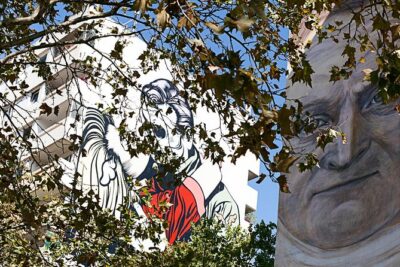
Jérome Ménager’s wall fresco provides another useful contrast. A large painted work changes the character of a building, while a mosaic can feel more like a quiet visual joke hidden in the city. Seeing both helps you understand why the guide discusses style, scale, placement, and purpose.
Do not expect the exact same walk every time. Street art can be painted over, damaged, removed, or added to. The changing canvas is part of the experience, but it also means you should not treat the tour as a guaranteed checklist of permanent sights.
That uncertainty may bother you if you want a fixed collection of famous works. I see it differently. The shifting route reflects how urban art actually works. You are seeing a moment in Belleville, not visiting a museum collection that will look the same next year.
The Stories Behind Piaf, Artists, and Industrial Buildings
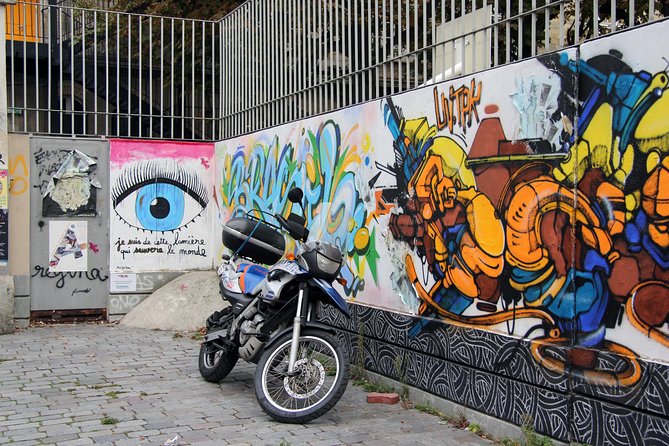
The historical material gives the walk a useful local frame. Edith Piaf’s connection to Belleville adds a famous name, but the tour does not stop with celebrity history. You also hear how lower rents in the 1980s drew artists and musicians to the neighborhood.
Former industrial spaces became studios. That detail explains why Belleville could support a creative community. Artists were not simply arriving to decorate an already fashionable district. They were using affordable space, building relationships, and helping shape the area’s identity.
This is one of the best reasons to choose the tour over looking up street art locations on your own. A map can point you toward a wall. A guide can explain why that wall matters, how the work fits into Belleville, and what local changes made the art scene possible.
The guides also bring different material to the walk. Olga was praised for her stories about artists, the history of specific locations, and the meaning behind individual works. Eloise used a quiz at the end to help a small group think about what they had seen. Both examples suggest that the guide does more than recite names and dates.
More Street Art Walking Tours in Paris:
- Paris: Street Art Walking Tour with a Street Artist Guide
★ 4.5 · 39 reviews - Paris: Urban Art Murals Walking Tour with an Expert
★ 5.0 · 5 reviews - London: Street Art and Graffiti Guided Walking Tour
★ 4.9 · 1,354 reviews - Berlin: City Street Art Guided Walking Tour
★ 4.8 · 1,051 reviews
Art That Can Be Beautiful, Funny, or Political
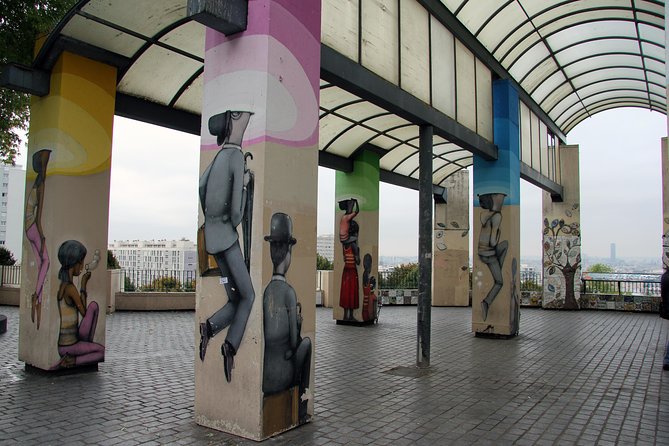
A good street art walk should not ask you to admire everything. This one leaves room for disagreement, which is important. You may like a mural but dislike a nearby tag. You may find a political message powerful, confusing, or overly direct.
Climate-related art is part of the material you may encounter. That gives the walk a connection to current public concerns, rather than presenting street art as decoration alone. Political work can change how you read the neighborhood because the walls become places for public argument.
The guide also helps you compare works. A polished fresco and a quick graffiti mark may have different goals, audiences, and levels of permanence. Learning to notice those differences is one of the tour’s real rewards.
I would recommend staying curious even when a piece does not appeal to you. Ask why it was placed there, what makes it legal or illegal, and how the artist uses the building. The tour works best when you take part in the discussion instead of waiting for the guide to announce a single correct interpretation.
Why the Eight-Person Limit Matters
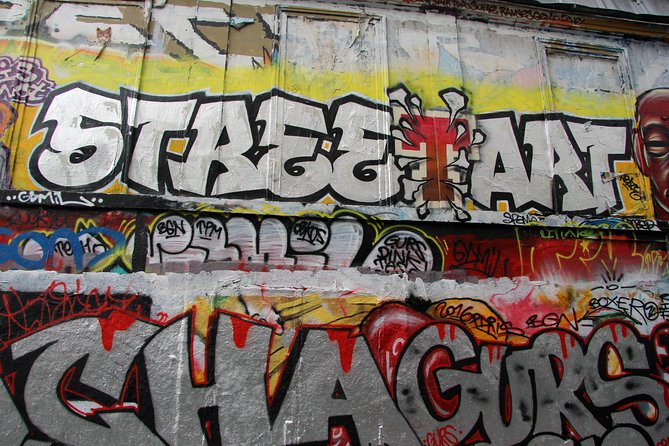
The maximum group size is eight people. That is a meaningful feature for a walking tour built around questions and close observation. A guide can stop without blocking a large crowd, and you have a better chance of hearing the explanation at each work.
A small group also helps the tour feel less like a public lecture. One person can ask about an artist, another can question the politics of a mural, and a child can speak up without having to compete with dozens of other people.
The experience may vary with the guide. Olga received especially warm praise for her stories and personal enthusiasm, while Eloise was noted for preparation, an engaging quiz, and a flexible coffee stop requested by a small group. Those details suggest that the guide can shape the tone of the walk in a positive way.
Still, no small-group format can guarantee a specific guide. If your enjoyment depends heavily on one person’s style, keep that in mind when booking.
A Good Choice for Children and Teenagers
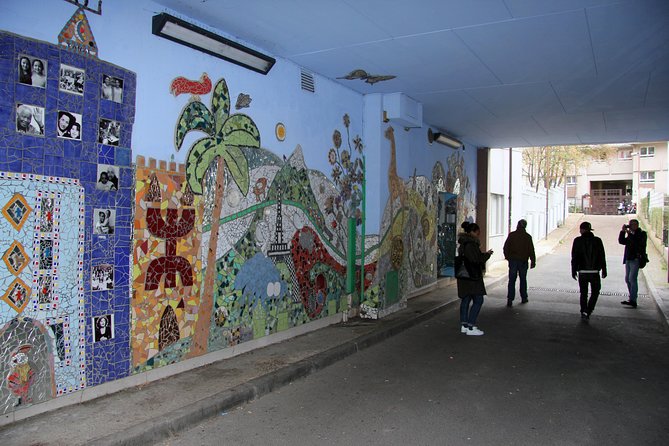
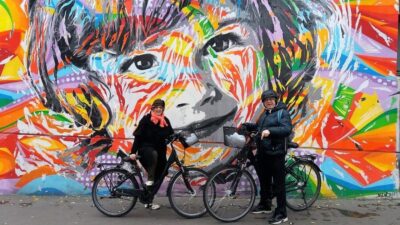
Belleville can work well for families who need a break from formal museums. Young people may respond more quickly to bold colors, recognizable figures, mosaics, and art placed at street level than to a long gallery visit.
One 10-year-old continued asking questions after the walk, which says a lot about the tour’s ability to hold a child’s attention. That does not mean every child will enjoy two hours on foot, but the subject gives families more to discuss than a standard sightseeing stroll.
Children must be accompanied by an adult. The walk is not a drop-off activity, and parents should be ready to help younger children keep pace and stay attentive near city streets.
For teenagers, the discussion about graffiti, public space, politics, and artistic freedom may be particularly useful. The guide does not force you to decide if every work is art. That freedom can turn a sightseeing stop into a real conversation.
Is $96.13 a Fair Price for Two Hours?
At $96.13 per person, this is not a budget walk. You are paying for a local guide, a small group, and access to a side of Paris that is difficult to understand from a self-guided list of addresses.
The value depends on what you want. If you simply want to see a few murals, you can walk through Belleville without paying for a tour. If you want context about artists, locations, local politics, and the neighborhood’s creative development, the guide adds the part that is hardest to provide for yourself.
The maximum of eight improves the value compared with a large group, especially if the guide answers questions and adapts the discussion. The two-hour length also keeps the cost from becoming an entire day’s commitment.
I would book it for someone who has already seen the classic Paris sights, has a strong interest in visual culture, or wants a more personal neighborhood experience. I would hesitate if your budget is tight or if your main goal is to cover a long list of major monuments.
The tour has a 4.4 rating from nine published ratings, with many strong marks for the guides and the unusual subject. The small number of ratings means I would treat that score as useful but not definitive.
Weather, Shoes, and Practical Comfort
This is an outdoor walk in all weather. Dress for the forecast, but do not assume that a dry morning is guaranteed to stay dry. A warm layer, rain protection, and comfortable shoes make sense.
The pace is leisurely, but you are still walking for around two hours. Shoes matter more than stylish clothes here. Belleville’s streets and slopes can be tiring if you are wearing footwear chosen only for photographs.
The tour is near public transportation, and most people can take part. The information provided does not specify a fully accessible route, so anyone with mobility concerns should confirm details before booking.
The activity requires a minimum number of people. If that number is not reached, the operator may offer another date or a full refund. There was also a reported cancellation caused by a lack of guides, followed by an apology from the operator. That appears to be an exception, but I would avoid placing the tour immediately before a train, flight, or day trip you cannot change.
Free cancellation is available up to 24 hours before the start time. Canceling or changing the booking inside that window does not qualify for a refund.
Who Should Book the Belleville Walk?
I would choose this experience if you want to see Paris as a working city rather than only as a collection of famous buildings. It suits adults who enjoy public art, families looking for something beyond museums, and repeat visitors who want a different neighborhood.
It is also a good match for people who like discussion. You will get more from the walk if you are willing to ask what makes a work effective, why it was placed there, and where the line between art and vandalism might fall.
I would skip it if you dislike outdoor activities, need a guaranteed list of permanent sights, or want a polished museum-style presentation. The art may be temporary, uneven, or politically pointed.
Should You Book This Tour?
Book the Belleville street art walk if you want a small, guide-led introduction to Parisian urban art and local culture. The best reasons are the eight-person limit, the guide’s stories, the connection to Edith Piaf and the 1980s artist community, and the chance to see work that changes over time.
At $96.13, it is expensive for two hours, so the decision comes down to context rather than quantity. You are not buying a long list of attractions. You are paying for interpretation, access to an overlooked part of Paris, and a better understanding of how art lives on ordinary streets.
For families, art fans, and repeat visitors, that can be worthwhile. For a first-time visitor with only one day in Paris, the Louvre and major landmarks should come first. For everyone else, Belleville offers a thoughtful change of rhythm and a side of Paris that does not fit neatly inside a museum.
FAQ
Where does the Paris street art tour begin?
The tour begins at 130 Boulevard de Belleville, 75020 Paris, France.
What time does the tour start?
The scheduled start time is 10:00 a.m.
How long does the experience last?
The walking tour lasts approximately two hours.
Where does the tour finish?
The activity ends back at the meeting point.
How large is the tour group?
The tour has a maximum of eight people.
Is the tour offered in English?
Yes. The experience is offered in English.
Is hotel pickup included?
No. Hotel pickup and drop-off are not included.
What happens if the weather is poor?
The tour operates in all weather conditions, so you should dress appropriately and wear comfortable shoes.
Just added around Paris
- Paris Street Art bike tour – Open Air Museum★ 5.0 · 18 reviews
- Private Street Art Tour in Paris with Local Expert★ 4.0 · 9 reviews
- Private Graffiti Workshop★ 5.0 · 5 reviews
- Paris: Street Art Tour with a Street Artist Guide★ 5.0 · 6 reviews
- From Louvre to Street Art – original museum guided tour (skip the line!)★ 5.0 · 21 reviews
- Paris Street Art, smartphone audioguided tour★ 5.0 · 15 reviews
- Private Street Art 2-Hour Guided Tour in Paris★ 4.5 · 5 reviews
- Paris: Graffiti on Canvas Workshop at an Art Studio★ 5.0 · 4 reviews
Paris Mural Tours, compared.
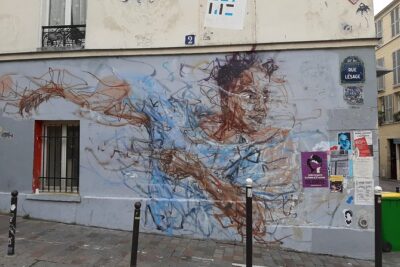

Street Art tour in Paris – Discover Paris murals !
Read our review →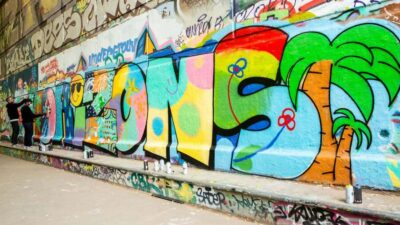
Street Art Walking Tour with a Street Artist Guide
Read our review →
Browse the lists this tour appears in