

REVIEW · UK MURAL TOURS
Street Art: The Modern History of the Northern Quarter
Manchester hides its story in plain sight. This two-hour walk uses 25 years of street art to explain how the Northern Quarter changed from a declining district into one of the city’s best-known cultural areas. I like the focus on social justice and public space, and I like that 10 percent of profits goes to local causes. The main consideration is that this is an outdoor walking tour, so poor weather can affect the experience.
You’ll see works and side streets often missed by standard city walks, including a ceramic art trail, newer street art, and lesser-known film locations. Guides such as Hayley bring an informed, personal voice, with useful details about the old fish market, political influences on public art, and current plans for the area.
Key points to know before you book
- 25 years of street art: The walk uses public art to tell the Northern Quarter’s recent story, not just to point out colorful walls.
- A serious look at change: You’ll hear about gentrification, social justice, lost public space, and the forces that reshaped Manchester.
- Ceramics have a starring role: A ceramic art trail helped draw attention and new life to the area.
- Off-path discoveries: The route includes artworks, streets, and film locations that may not appear in ordinary guidebooks.
- Small charitable contribution: Ten percent of profits supports local causes, adding a social purpose to your ticket.
- Easy central route: The walk begins at Shudehill at 11 a.m. and ends at Black Dog Ballroom on Church Street.
Why the Northern Quarter makes such a good classroom
The Northern Quarter is now packed with cafés, bars, independent shops, music venues, and creative businesses. Yet the district’s current reputation can make it easy to forget how recently it faced serious decline.
This tour starts with that contrast. In the 1970s, the area was losing businesses after the opening of the Arndale Centre, Manchester’s first American-style shopping mall. The Northern Quarter had old buildings, empty premises, and a shrinking commercial role. In the early 1990s, Tony Wilson described it as our Detroit, a sharp comparison that captured the sense of abandonment.
That background gives the art more meaning. A mural or ceramic piece is not treated as decoration alone. You’ll look at how public art can attract people, change how a district feels, and help create the conditions for investment. You’ll also consider the harder question: who benefits when a neglected neighborhood becomes fashionable?
I appreciate that balance. The walk celebrates the Northern Quarter’s creative energy without pretending every change has been good for everyone. You get the attractive parts of the story, along with questions about rising costs, commercial pressure, and the loss of shared public space.
More History Tours in the UK:
- Private Political History & Murals Tour Belfast
★ 5.0 · 182 reviews - 1 Hour Express Belfast Taxi/Cab Tour History, Murals, Troubles
★ 5.0 · 17 reviews - Belfast political history and mural unique private 90 min tour
★ 5.0 · 10 reviews
Starting at Shudehill and finding the older Northern Quarter
The meeting point is Shudehill, Manchester M4, with an 11 a.m. start. This is a practical time for a city visit. You can have breakfast first, take the walk, and still have most of the afternoon for museums, shops, or lunch.
From Shudehill, the guide sets the scene for the district’s transformation. The area contains Manchester’s highest concentration of protected buildings, which helps explain why its older character survived even during its years of decline. You’ll be looking at streets where the buildings themselves are part of the story, not simply a backdrop for modern businesses.
The route is likely to suit you if you prefer a walk with discussion rather than a quick succession of photo stops. The art provides something concrete to examine, but the guide also connects it to planning, economics, culture, and politics.
That approach makes this different from a basic mural hunt. You are not simply collecting pictures of painted walls. You are considering why particular artworks appeared, how they affected the district, and how public opinion about the Northern Quarter changed over time.
The ceramic art trail and the power of small details
One of the most distinctive parts of the walk is the ceramic art trail. This is a useful reminder that public art does not have to be huge to shape a place.
Ceramic installations can be easy to overlook if you are walking quickly. A guide gives you a reason to stop and read the street more carefully. You might notice small pieces, details on buildings, or art tucked into places that a standard sightseeing route would pass without comment.
The trail also helps explain how creative projects can support wider urban change. Art drew attention to the Northern Quarter and helped alter how people saw the district. That does not mean art alone fixed its problems, but it became part of the area’s renewal.
I like this part because it asks you to slow down. The most memorable stop may not be the largest work. It may be the piece that reveals how a neglected street was gradually given a new public identity.
The exact works can change with new installations, removals, or redevelopment. That is worth keeping in mind. This is not a fixed museum collection, and the street itself remains part of the experience.
Contemporary street art with politics behind it
The modern art on the route gives the tour its visual appeal, but the discussion goes beyond style. You’ll hear about the political influences behind some works and how artists respond to the city around them.
That context matters in Manchester, a city with strong links to music, protest, working-class culture, and independent creative movements. The tour presents street art as part of that wider counterculture, rather than as a backdrop for social media photographs.
A guide such as Hayley can add the kind of detail that is hard to get from a plaque. Her explanations have been praised for connecting individual pieces with broader changes in the Northern Quarter. The walk also includes anecdotes about the old fish market, adding everyday detail to the larger story.
You should expect interpretation rather than a formal art lecture. The strength of the experience is its direct, accessible way of linking images to local concerns. If you want technical information about artists, dates, and artistic movements at every stop, you may find the emphasis more social than academic.
For most people, that is a useful trade. You come away with a clearer idea of why street art matters in this particular part of Manchester.
A few more mural tours around the UK worth a look
- Belfast: Murals Taxi Tour
★ 4.9 · 2,047 reviews - London: Street Art and Graffiti Guided Walking Tour
★ 4.9 · 1,354 reviews - Belfast’s Political Mural Taxi Tour
★ 5.0 · 1,180 reviews - London Bike Tour: Landmarks, Secret Gems, Pub Stop & Street Art
★ 5.0 · 943 reviews
Gentrification, public space, and the difficult questions
The tour’s most valuable feature may be its willingness to discuss uncomfortable subjects. As the Northern Quarter became more popular, new businesses, visitors, and investment arrived. That brought energy and jobs, but it also raised questions about affordability, ownership, and who gets to use the area.
You’ll hear about gentrification and the loss of public space, not as abstract academic topics but as issues tied to the streets you are walking through. The guide invites you to consider whether a neighborhood can retain its independent identity once commercial success arrives.
This is where the tour earns its price. A standard sightseeing walk might tell you that the Northern Quarter is fashionable. This experience asks why it became fashionable, who helped make that happen, and what may be lost along the way.
The discussion will suit curious visitors who want more than a cheerful introduction to Manchester. It may not suit you if you prefer tours that avoid politics or stick only to architecture and photo opportunities. The tone is thoughtful, but the subject matter can be serious.
I also value the fact that 10 percent of profits supports local causes. That does not solve the social issues discussed on the walk, but it gives the booking a practical connection to the community rather than treating local problems as sightseeing material.
Film locations and streets beyond the usual list
The route includes off-path film locations and streets that do not usually appear in quick online lists. This helps keep the experience fresh, especially if you have already spent time in central Manchester.
The phrase off-path should not be read as difficult or remote. The walk lasts about two hours and stays within the Northern Quarter area, ending at Black Dog Ballroom, 52 Church Street. Still, the route encourages you to notice spaces you might otherwise ignore.
Film locations work well here because they reveal another layer of the district’s identity. A street can serve ordinary local life, an artistic community, and a fictional setting all at once. You may recognize a place from the screen, or you may simply enjoy seeing how directors use the older streets and buildings.
The walk’s appeal comes partly from this mix. You get visual art, urban history, political discussion, architecture, and film culture in one compact route. None of those subjects is treated as a separate lecture. They overlap as you move through the neighborhood.
What the guide adds to the experience
The guide makes a major difference on a tour like this. The Northern Quarter is easy to explore on your own, but it is harder to understand without someone who can connect separate details.
Hayley has received especially strong praise for being engaging and well informed. Her explanations cover the district’s past, present pressures, and possible future, while personal anecdotes make the information easier to remember. The fish market story and discussion of political influences on artworks are the kinds of details that can turn a short walk into a more lasting impression.
The experience also benefits from an authentic voice connected to Manchester’s counterculture. That does not mean you need specialist knowledge before joining. You can arrive with only a general interest in street art and still follow the story.
Group size is capped at 30 people. That is not an intimate private walk, but it is limited enough to keep the group manageable in city streets. A larger group can make it harder to hear at busy corners, so staying near the guide is sensible.
You can also use the walk to ask for suggestions about places to eat and other things to do. Since the end point is Black Dog Ballroom, Church Street gives you a useful location for continuing your afternoon in the Northern Quarter.
Is $20.70 a fair price?
At $20.70 per person, this is reasonably priced for a two-hour guided city walk, especially if you value local interpretation rather than a simple introduction. The ticket covers the guide’s time, route planning, and the work of explaining a complicated neighborhood in a clear way.
There is no separate admission ticket for the walk itself. Its value comes from access to the guide’s knowledge and the way the route is organized. You could walk through the Northern Quarter for free, but you would probably miss much of the context around the ceramic trail, public art, political influences, and urban change.
The 10 percent donation to local causes is another positive factor. If you are choosing between several city walks at similar prices, that contribution may help this one make more sense.
The value depends on your interests. If you only want dramatic murals and quick photographs, a self-guided walk may be enough. If you want to understand why the art appeared and what it says about Manchester, the price is easier to justify.
Practical details that affect your day
The experience uses a mobile ticket, and confirmation is provided when you book. You meet at Shudehill at 11 a.m. and finish at Black Dog Ballroom, 52 Church Street.
The walk takes about two hours. Wear shoes you can comfortably use on city streets, and check the forecast before setting out. The tour requires good weather, so poor conditions can lead to a different date or a full refund.
Free cancellation is available up to 24 hours before the start time. If you cancel less than 24 hours ahead, you will not receive a refund, and changes made inside that period are not accepted. The activity also requires a minimum number of participants, so a cancellation by the operator is possible if that number is not reached.
Service animals are allowed, and the activity is near public transportation. Most people can take part, though the information provided does not promise a fully step-free route or give detailed mobility guidance. If that matters to you, ask the provider before booking.
Who should book this Northern Quarter walk?
I would recommend it to you if you like city tours that explain how places change. It is particularly suitable for people interested in street art, architecture, counterculture, urban planning, social justice, film locations, and the politics of public space.
It also works well for repeat visitors. Someone who has lived in Manchester for years may still notice artworks and installations that have gone unseen. The route is designed to make familiar streets look different.
You may want another type of tour if you need a formal art-history lecture, a private group, or a route built around famous landmarks only. This walk asks you to think, not just look.
Should you book Street Art: The Modern History of the Northern Quarter?
Book this walk if you want to understand the Northern Quarter as a changing community, not merely a fashionable district with good cafés. The combination of street art, ceramic installations, film locations, local anecdotes, and honest discussion of gentrification gives the experience real substance.
The strongest reasons to go are the guide-led discoveries and the social context. Hayley’s engaging approach has earned particular praise, and the 10 percent donation to local causes adds a welcome sense of purpose.
Skip it if you want guaranteed sunshine, a purely visual mural tour, or a short route with no discussion of difficult issues. For curious visitors who have two hours and want to see Manchester through a more questioning lens, $20.70 is a fair spend.
FAQ
Where does the tour start?
The tour starts at Shudehill in Manchester, M4.
What time does the tour begin?
The scheduled start time is 11 a.m.
Where does the tour end?
The tour ends at Black Dog Ballroom, 52 Church Street, Manchester M4 1PW.
How long does the experience last?
The walk lasts approximately two hours.
How much does the tour cost?
The listed price is $20.70 per person.
Is the ticket mobile?
Yes. The experience includes a mobile ticket.
How many people can join the tour?
The maximum group size is 30 people.
Are service animals allowed?
Yes. Service animals are allowed.
What happens if the weather is poor?
The tour requires good weather. If it is canceled because of poor weather, you will be offered another date or a full refund.
Just added around the UK
- Manchester Street Art: Quest Experience★ 4.0 · 6 reviews
- 3-Hour Private Tour of East London Graffiti & Street Art★ 4.5 · 5 reviews
- London Street Art Tour of the East End Semi-Private 12ppl Max★ 5.0 · 23 reviews
- The Great Street Art Experience★ 5.0 · 2 reviews
- London Unexpected Private Tour – Markets, Street Art & Camden Town★ 5.0 · 2 reviews
- Private Royal London Bike Tour with pub & street art★ 5.0 · 2 reviews
- London Street Art Tour of the East End Exclusive Walking Tour★ 5.0 · 12 reviews
- Shoreditch Street Art Private Photography Tour including Brick Lane★ 5.0 · 5 reviews
UK Mural Tours, compared.
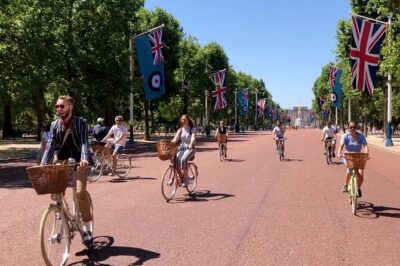
London Bike Tour: Landmarks, Secret Gems, Pub Stop & Street Art
Read our review →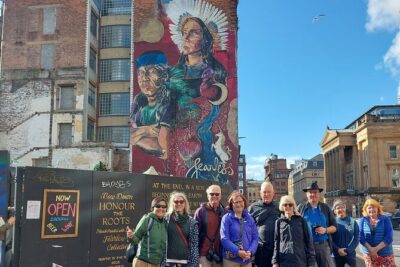
Browse the lists this tour appears in