

REVIEW · HISTORICAL TOURS
Bishkek Street Murals , Mosaics Arts and Kyrgyz Nomadic History
Bishkek tells its story in paint and stone. This walking tour connects Kyrgyz nomadic history with Soviet-era architecture, public mosaics, modern murals, and grand city squares. I like the way it mixes major sights with less obvious works, and I like that guide Alex explains the stories behind the art instead of treating each wall as a quick photo stop. The main consideration is pace: nearly three hours on foot and seven stops can feel full, especially if you want long breaks for photographs.
You begin at Ala-Too Square and finish near the Kyrgyz State Philharmonic Hall, with no admission fees to worry about along the way. The group is capped at 15 people, which should keep the discussion manageable, though the experience is still a walking tour rather than a relaxed sightseeing loop.
Key points at a glance
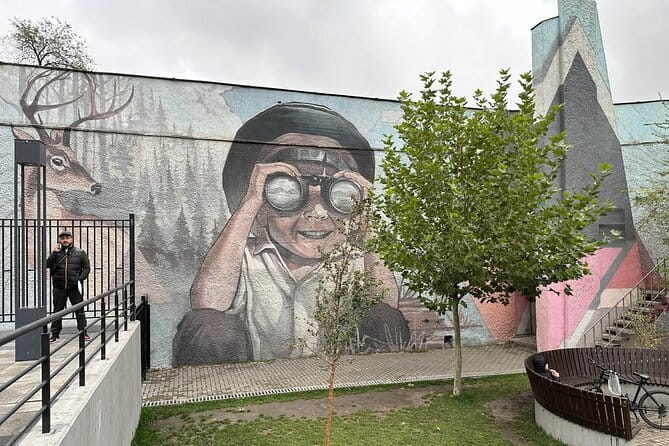
- Ala-Too Square sets the historical stage: Start with Kyrgyz national symbols, the hero Manas, and the central architecture of Bishkek.
- Soviet mosaics carry a political message: The stop near the Ala Too Theatre introduces a major mosaic about peace between two nations.
- Murals link art with daily life: Works such as Slam dunk on trash bring present-day concerns into the tour.
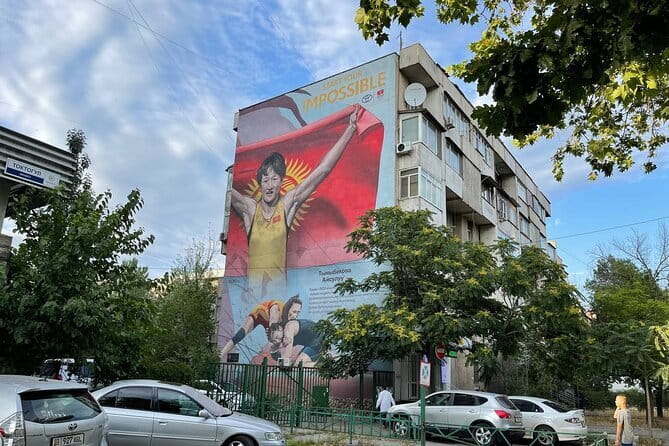
- The route includes famous Kyrgyz figures: You see references to wrestler Aisuluu Tynybekova and writer Chinghiz Aitmatov.
- Bishkek’s public art is the main attraction: The tour gives context to murals that are easy to miss when walking around alone.
- A small group and mobile ticket keep things simple: The tour accepts mobile tickets and limits attendance to 15 people.
Why Bishkek’s murals deserve a closer look
Bishkek is not a city where every major sight announces itself with a ticket booth. Some of its most interesting art sits outdoors, spread across avenues, public buildings, fountains, and shopping areas. Without context, a large wall painting may look like decoration. With a guide, it can reveal ideas about Soviet society, Kyrgyz identity, environmental concerns, sport, literature, and modern city life.
That is the appeal of this experience. It is not only a monument walk, and it is not only a street-art hunt. You move between the two. A square introduces national history, a theatre reveals Soviet architecture, a fountain points to public art from the 1980s, and a mural brings a modern social message into the picture.
I especially like the connection between the old and the new. Kyrgyzstan’s past is often presented through nomadic traditions and the epic hero Manas. Bishkek’s public art adds another layer, showing how the country changed during Soviet rule and how artists now address life in the capital.
More History Tours in the world:
- 3-Hour Atlanta Beltline Food, Street Art and History Tour
★ 5.0 · 345 reviews - History and Murals: Walking Tour Guadalajara
★ 5.0 · 237 reviews - Walking Tour – Impressive murals in Historical Center of Mexico City
★ 5.0 · 224 reviews
Starting at Ala-Too Square and meeting Manas
The tour begins at Ala-Too Square, the central meeting point in Bishkek. This is a useful place to start because it gives you the basic orientation needed for the rest of the walk. You learn about important national features, the city center, and the role of Manas, the celebrated Kyrgyz hero.
The square itself is a broad civic space, so expect a grand scale rather than an intimate old-town setting. The architecture and open layout reflect the capital’s Soviet planning, while the national symbols add a specifically Kyrgyz identity.
The first stop lasts about 15 minutes and is free. That short time is enough for an introduction, but not for a long historical lecture. If you want to ask about Manas, Kyrgyz national identity, or how nomadic traditions fit into modern Bishkek, this is a good moment to speak up.
I find this opening important because it prevents the murals from feeling random. You begin with the country’s national story, then see how later art reflects peace, public life, literature, sport, and civic responsibility.
Kurmanzhan Datka, the Ala Too Theatre, and Soviet mosaic art
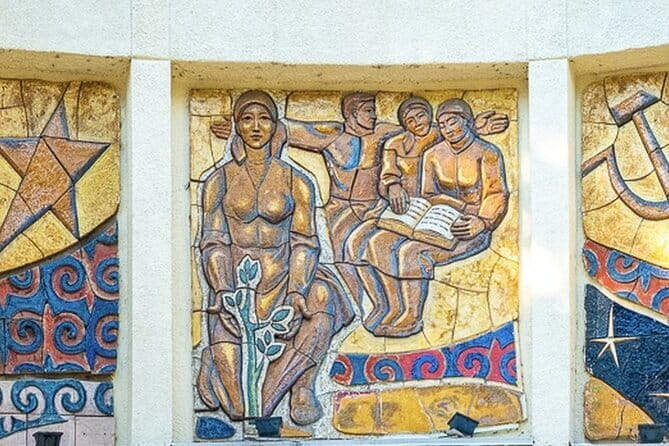
Next comes the Kurmanzhan Datka statue and the Ala Too Theatre area. Kurmanzhan Datka is an important Kyrgyz historical figure, and her presence helps widen the story beyond Manas. Here, the tour turns toward one of the most meaningful Soviet-era mosaic works on the route.
The mosaic presents a message about peace between two nations over a period of 100 years. That subject matters because Soviet public art often had a clear civic purpose. These works were not simply wall decoration. They communicated political ideals, social values, and ideas about cooperation to a broad audience.
You have about 25 minutes at this stop, with admission included. Since the artwork is viewed as part of the city rather than inside a formal museum, the guide’s explanation does much of the work. Alex’s strength is explaining the story behind each mural and mosaic, helping you notice why the image was made and what it was meant to communicate.
This stop may appeal most to anyone interested in public art, Soviet history, or the way governments use architecture and imagery to shape public space. If you prefer only traditional monuments, a mosaic discussion may feel less immediate. Give it time. The political message is the point.
The 1926 Opera and Ballet Theatre
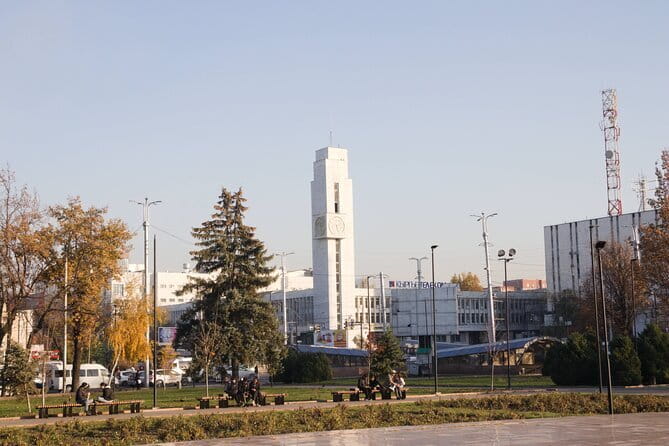
The walk continues to the Kyrgyz National Opera and Ballet Theatre, built in 1926. The stop lasts around 15 minutes and focuses on the building’s architecture and the statues positioned on top.
This is a change of mood from the murals. Instead of studying a painted wall, you look at a formal cultural building with decorative sculpture and a strong architectural presence. The theatre also shows how Soviet-era Bishkek was designed to project education, culture, and civic ambition.
You should expect a short exterior visit rather than a performance or interior tour. Admission is free, and no ticket is listed for a show. Bring your camera, but listen closely to the architectural explanation. Details high above street level can be easy to miss when you are walking alone.
The theatre works well as a middle step in the tour. It shows that Bishkek’s public art is not confined to graffiti or painted facades. Statues, theatres, fountains, mosaics, and murals all form part of the city’s visual record.
A few more mural tours around the world worth a look
- Medellin: Comuna 13 Graffiti Tour, Cable Car & Street Food
★ 4.8 · 9,046 reviews - CDMX: Xochimilco, Coyoacan, Frida Kahlo Museum & Murals Tour
★ 4.4 · 3,025 reviews - Amsterdam: Streetart Museum STRAAT Entrance Ticket
★ 4.8 · 2,137 reviews - Belfast: Murals Taxi Tour
★ 4.9 · 2,047 reviews
GUM Chynar Mall and the message behind Slam dunk on trash

From the theatre, the route passes GUM Chynar Mall, one of the city center’s modern shopping areas. This gives you a glimpse of present-day Bishkek before the tour returns to public art.
The focus here is the mural Slam dunk on trash. Its message is direct: throwing litter into a bin is better than treating rubbish like a basketball. The image uses a familiar sports idea to make an environmental point, which gives the stop a lighter and more accessible feel than the earlier political mosaic.
The stop lasts about 25 minutes. That allows time to view the mural, hear the explanation, and notice how it fits its urban setting. The work is especially useful for understanding how modern murals can speak to ordinary city habits rather than national history alone.
I like this part because it shows that Bishkek’s mural art is not only about heroic figures or grand events. It can also address clean streets and shared responsibility. The nearby mall adds contrast, placing a public message about litter beside the commercial side of the city.
The Sunny Fish Fountain and Aisuluu Tynybekova
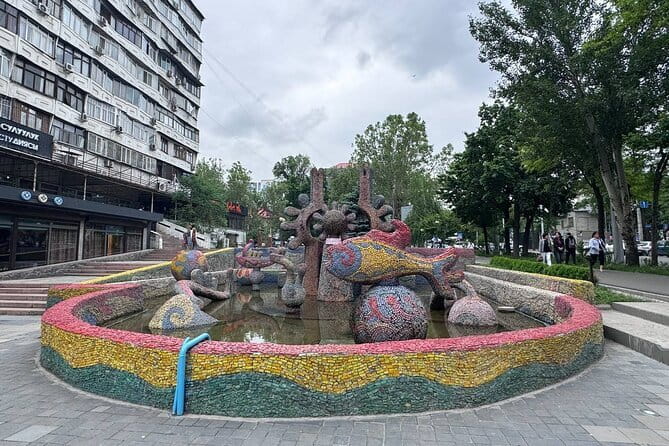
The next stop is the Sunny Fish fountain, created in 1982 by Russia. Before reaching it, you see a reference to Aisuluu Tynybekova, the Kyrgyz wrestler who won a silver medal at the 2022 Tokyo Olympics.
This section brings together two kinds of public recognition. Tynybekova represents modern Kyrgyz sporting achievement, while the fountain belongs to the Soviet period and its taste for large, symbolic public works.
You spend about 15 minutes here. The fountain is included in the walking route, and there is no separate admission to pay. A short stop is appropriate because the main value comes from the explanation and the connection between the artwork, the city, and Kyrgyz public figures.
The contrast is useful. You see how public space can honor a contemporary athlete and preserve an older Soviet artwork within the same city. If you are interested in how national identity changes over time, this is one of the more revealing transitions on the route.
Chinghiz Aitmatov and The Red Apple
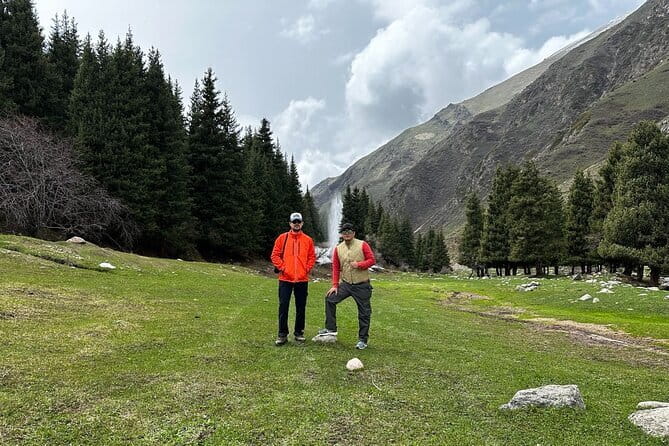
The longest individual stop comes at CDEK, after a walk along Bishkek’s avenues. Here, Alex introduces another graffiti work based on a short story by Chinghiz Aitmatov and the film The Red Apple, which was entered in the 9th Moscow International Film Festival.
The stop lasts around 35 minutes. That suggests a more detailed discussion than at the fountain or theatre. Aitmatov is one of the best-known Kyrgyz writers, and connecting street art with his writing gives you a way to see how literature continues to shape public culture.
You do not need to know the story or film in advance to follow the discussion, but reading a short description of The Red Apple before the tour could help you get more from the explanation. The important point is the link between a literary work, a film, and a modern wall painting.
This is also where the tour’s method becomes clearest. Alex does not simply point to a mural and name the artist. He explains the source behind it and places the work in a wider Kyrgyz cultural setting. That storytelling is the quality most likely to make the walk memorable.
Group DOXA murals and the Philharmonic Hall
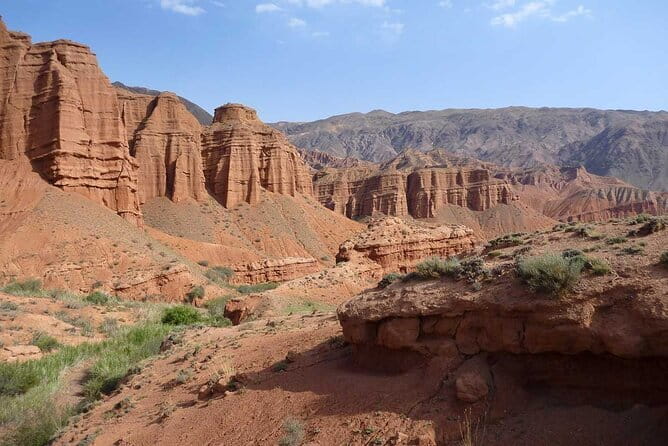
The final section takes you toward the Kyrgyz State Philharmonic Hall. Along the way, you see three other graffiti works by the Kyrgyz artist group DOXA. These murals represent the country and city in what the tour describes as real, current terms.
The stop lasts about 35 minutes, making it another substantial part of the experience. The route ends back at the meeting point, so you are not left at a distant attraction with no clear finish.
The Philharmonic Hall provides a fitting final setting. Like the Opera and Ballet Theatre, it represents formal culture and public architecture. The DOXA works add a more current artistic voice. Together, they show Bishkek as a city where Soviet buildings, national symbols, public fountains, literature, sport, and new street art occupy the same streets.
This final stretch may be the most rewarding part for anyone who wants to understand modern Bishkek rather than simply collect landmark photographs. You see how the city’s artists respond to local culture instead of copying a generic international street-art style.
What the $45 price gives you
The price is $45 per person. That is not the cost of a simple unguided walk, so value depends on how much context you want.
You are paying for a guided experience lasting about two hours and 45 minutes, with all listed fees and taxes included. There are no separate entry charges at the square, theatre, fountain, or Philharmonic Hall. The main value is Alex’s interpretation of the murals and mosaics, particularly the links to Kyrgyz history, Aitmatov, Soviet public art, and present-day city concerns.
The price makes more sense if you are new to Bishkek and want a structured introduction in one outing. It also suits you if you would otherwise walk past the murals without understanding them. If you only want to photograph large buildings, you can see several of these places without a paid tour.
A group discount is available, which can improve the cost for people booking together. The maximum group size is 15, so you should not expect a private tour, but the limit is small enough for questions and conversation.
Practical points before you book
The meeting point is at VJG3+MFG on Chuy Avenue in Bishkek. The tour ends back at the meeting point. Since this is a walking experience, wear comfortable shoes and allow enough time for outdoor stops. The duration is approximate, so avoid scheduling a tight appointment immediately afterward.
A mobile ticket is accepted, and confirmation arrives when you book. Most people can participate. Insurance is not included, so you need to arrange that separately if you want coverage.
The experience is free to cancel up to 24 hours before the local start time for a full refund. Cancellations or changes made within 24 hours are not accepted for a refund.
The tour is often booked around 30 days ahead. That does not guarantee every date sells out, but it is a useful warning if your Bishkek schedule is fixed. Booking early also makes sense if you want to travel with a group and use the group discount.
Who will enjoy this Bishkek walking tour?
I would choose this tour if you enjoy public art, urban history, Soviet architecture, literature, or learning how a city presents its identity. It is also a good first activity in Bishkek because Ala-Too Square helps you get oriented before the route spreads through the center.
The experience suits curious adults, older children interested in art, and anyone who prefers explanations over quick photo stops. The references to Manas, Kurmanzhan Datka, Aisuluu Tynybekova, Chinghiz Aitmatov, and DOXA give the walk a broad cultural range.
It may be less suitable if you dislike walking, want a private guide, or prefer indoor museums. The route includes several 15-minute stops and several 35-minute discussions, so the experience asks you to pay attention rather than simply follow along.
Should you book it?
Book this tour if you want Bishkek’s public art explained in context. The best reason to go is not the number of stops. It is the way Alex connects mosaics, murals, fountains, buildings, national heroes, literature, and modern city life.
Skip it if you are looking only for a quick list of landmarks or a short photo walk. At $45, the tour earns its price through interpretation, especially at the Soviet mosaic, the Aitmatov mural, and the DOXA works. For a first visit to Bishkek, that added meaning can turn an ordinary city walk into a much clearer introduction to Kyrgyz culture.
FAQ
How long does the tour last?
The tour lasts approximately 2 hours and 45 minutes.
How much does the experience cost?
The price is $45 per person. Group discounts are available.
Where does the tour begin?
The meeting point is VJG3+MFG on Chuy Avenue in Bishkek, Kyrgyzstan.
Where does the tour end?
The activity ends back at the meeting point.
What is included in the price?
The price includes a guided tour, all fees and taxes, and free recommendations for the city or country.
Is insurance included?
No. Insurance is not included in the tour price.
How large is the group?
The tour has a maximum of 15 participants.
Can I cancel for a full refund?
Yes. You can receive a full refund if you cancel at least 24 hours before the experience start time. Cancellations and changes within 24 hours are not accepted for a refund.
Just added around the world
- Your Own Belgrade: Street Art and Hidden Gems Walking Tour★ 5.0 · 2 reviews
- Vancouver: Street Art & Craft Coffee Walking Tour w/ Tasting★ 4.8 · 11 reviews
- Wynwood Walls Street Art & Neighborhood Walking Tour★ 4.9 · 9 reviews
- Xochimilco floating gardens, Coyoacan and UNAM murals★ 4.0 · 6 reviews
- UNAM: Murals & Revolution★ 4.9 · 8 reviews
- Urban Canvas: Osaka Street Art Bike Tour★ 5.0 · 10 reviews
- Vancouver: Street Art & Craft Beer Walking Tour with Tasting★ 4.8 · 14 reviews
- Zagreb Street Art Private Walking Tour with a Local Artist★ 5.0 · 12 reviews
Historical Tours, compared.

3-Hour Atlanta Beltline Food, Street Art and History Tour
Read our review →
Walking Tour – Impressive murals in Historical Center of Mexico City
Read our review →
Private Political History & Murals Tour Belfast
Read our review →
2-Hour Food, History and Street Art Tour of Ponce City Market
Read our review →
Historical Shared Tour Salsa, Graffiti & Resistance in Cali
Read our review →
Street Art: The Modern History of the Northern Quarter
Read our review →
Walking Tour of Houston: History, Architecture, Street Art
Read our review →Browse the lists this tour appears in