
REVIEW · BELFAST MURAL TOURS
2 Hour Terror and Mural History Belfast taxi Private Tour
Belfast’s past is painted on its walls. I like the way this two-hour taxi tour links the Peace Wall, Falls Road, Clonard, Crumlin Road, and Shankill Road into one focused lesson. I also like its effort to present both republican and loyalist viewpoints, rather than showing only one side of Northern Ireland’s conflict.
The main drawback is the pace. Nine stops fit into roughly 120 minutes, so most visits are brief and some places are seen from the vehicle or with only a short explanation. At $190.59 per person, the value depends heavily on how much historical detail your guide provides and how many people share the taxi.
Key points to know before booking
- A compact route through West and North Belfast: You visit the Peace Wall, Divis, Falls Road, Clonard, Bombay Street, Crumlin Road, and Shankill Road in one outing.
- Both sides of the conflict are included: Republican murals and memorials are paired with the loyalist murals of Shankill Road.
- The guide shapes the experience: One guide was personally wounded during the Troubles and gave an equal account of both communities.
- Most stops are short: The planned time ranges from 10 to 20 minutes, so this is a fast overview rather than a slow walking tour.
- Pickup has limits: Free collection is offered within 1 kilometer of Belfast City Hall, but not from cruise ships.
- The route is best for history-minded visitors: The subject is serious, political, and sometimes upsetting, with little time devoted to light sightseeing.
Why this Belfast tour matters
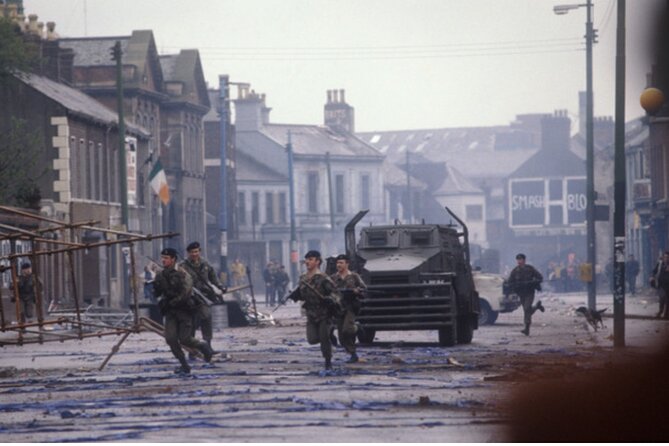
Belfast is not a city where the past sits neatly behind glass. It appears on neighborhood walls, memorial stones, church grounds, old security sites, and streets that still carry political meaning. A taxi tour helps you connect those places quickly, especially if you have only a short stay.
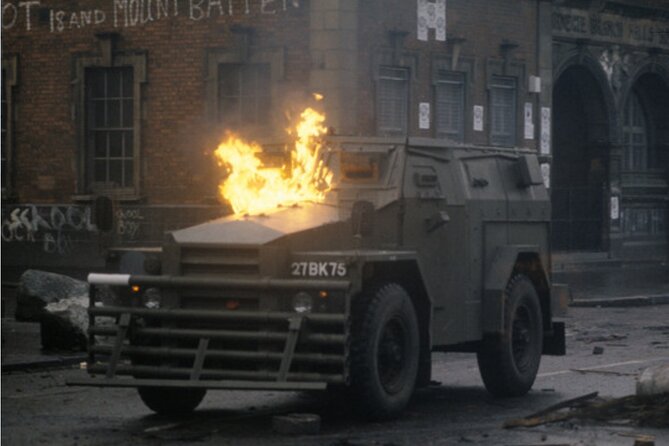
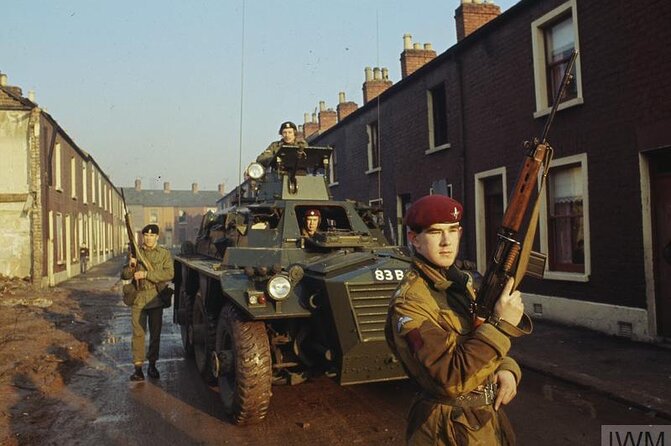
This experience focuses on the Troubles, the period of conflict that began in the late 1960s and continued until the peace process brought major change in the 1990s. The central issue was Northern Ireland’s constitutional future. Most Protestants and unionists wanted Northern Ireland to remain part of the United Kingdom. Most Catholics and nationalists wanted a united Ireland. Religion often marked those identities, but the conflict was also political, social, and national.
You will hear about the Provisional IRA, loyalist groups, British security forces, sectarian violence, hunger strikes, imprisonment, and the Good Friday Agreement. The route also shows how communities remember the conflict differently. That is the real value here. You are not just checking off murals. You are learning why the same city can preserve sharply different memories of the same decades.
The experience is offered in English and includes a mobile ticket. Parking fees are included, while coffee, tea, and alcoholic drinks are not. Most people can take part, and service animals are allowed. The group limit is listed as 25, though the use of the word private and the maximum group size may seem at odds. I would confirm the vehicle arrangement before paying if you are booking for a large party.
More Private Mural Tours in Belfast
- Belfast: Private Black Taxi Cab Political Murals Tour
★ 4.9 · 425 reviews - 2 Hour Private Belfast Taxi Cab Tour of Troubles & Peace walls
★ 5.0 · 240 reviews - Private Political History & Murals Tour Belfast
★ 5.0 · 182 reviews
The Peace Wall sets the tone
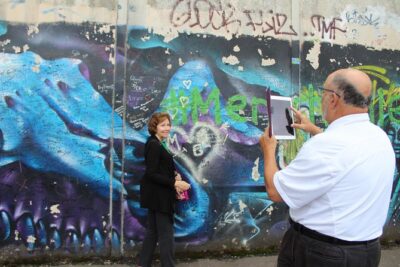
The first major stop is Belfast’s Peace Wall, where about 20 minutes gives you time to see the barriers and their painted messages. These walls were built during the Troubles to separate mainly Protestant and Catholic neighborhoods and reduce street violence.
The name can sound comforting, but the reality is more complicated. The barriers helped limit attacks in some areas, yet they also divided communities and became a lasting reminder that peace was never simple. Some gates still close at night, which makes the wall feel less like a museum display and more like part of a living neighborhood.
Murals and graffiti add another layer. Some express political loyalty, some remember deaths, and others call for peace or solidarity. Your guide’s explanation matters here because a quick look at a mural rarely tells you who created it, whom it honors, or how it may be viewed by people on the other side of the divide.
This is one of the tour’s strongest stops, but 20 minutes is not long. You should expect an introduction rather than a detailed walk along every section.
Divis Flats and the old Fort Apache
The short visit to Divis Flats gives you a glimpse of how the conflict entered ordinary housing. Built in the late 1960s, the high-rise complex became a focal point for sectarian tension and confrontations between local residents and British security forces.
A British Army base occupied the roof of the tallest building. Locals called it Fort Apache. From there, soldiers had a strategic view over the area, but the base also became a powerful symbol of surveillance and military control within a residential community.
You get about 10 minutes here, with no admission fee. That is enough to place the site on the map and understand why it mattered, but not enough for a long architectural or social history. I would pay close attention to personal stories from the guide, since they can explain the human effect of living beneath a military post better than the buildings alone.
Falls Road murals tell a political story
The International Wall on Divis Street, near Falls Road, is another quick stop. Its murals address local politics and international struggles for human rights, linking Belfast’s story with causes outside Northern Ireland.
The artwork changes over time, so the wall is not a fixed exhibit. That is useful to remember. You are seeing a public political space, not a formal gallery with one approved interpretation. The images can reflect resistance, grief, solidarity, and hopes for peace.
Ten minutes allows for a few photographs and a compact explanation. If you want to study the artwork closely, you may feel rushed. Still, the wall helps show how Belfast’s mural tradition reaches beyond local identity and places the city’s conflict in a wider political frame.
The nearby Bobby Sands mural has a more specific focus. Sands was a Provisional IRA member who died during the 1981 hunger strike. During the strike, he was elected to Parliament, which made his death an international political event as well as a local tragedy.
The mural honors Sands as a symbol of republican resistance and sacrifice. Other people view him through the lens of armed violence and the deaths caused by the IRA. That contrast is important. Your guide should explain why the image carries such force in the Falls Road area without presenting one interpretation as the only possible one.
Again, you have about 10 minutes. This is a place for context and reflection, not a full account of the hunger strikes.
More Private Mural Tours in the UK
- IRA Troubles Conflict Private Tour Museum Graves Murals and Political Analysis
★ 5.0 · 67 reviews - Award Winning Private 2 Hour Belfast Political Black Taxi Tour
★ 5.0 · 53 reviews - World Famous Private Belfast Troubles Taxi Cab Tour 2 Hour
★ 4.5 · 14 reviews - Belfast political history and mural unique private 90 min tour
★ 5.0 · 10 reviews
Clonard Monastery and the road to peace
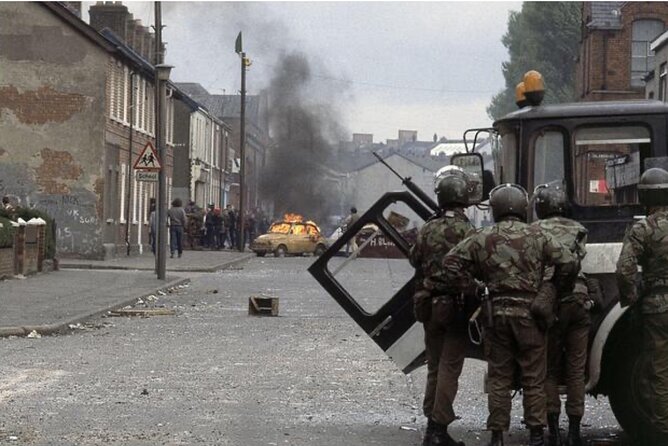
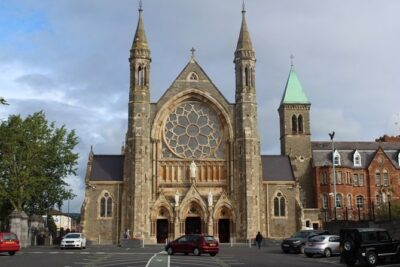
Clonard Monastery offers a different kind of story. The red-brick church was founded in 1896 and became closely involved in peace efforts during the Troubles.
Father Alec Reid, a priest associated with the monastery, worked behind the scenes to open communication between opposing sides. His efforts helped create dialogue that contributed to the peace process and the Good Friday Agreement in 1998.
This stop is valuable because it moves the tour away from violence and military history. It shows that peace often begins through private conversations, patient mediation, and people willing to speak with those their own communities distrust.
The visit lasts about 10 minutes and admission is free. You may have time to see the building and hear why it mattered, but do not expect a long interior tour or an extended religious history. The main point is the monastery’s role in reconciliation.
Next door, the Clonard Martyrs Memorial Garden provides about 15 minutes for a quieter pause. Plaques and memorials honor local people who died during the Troubles. The garden is small in purpose even if its meaning is large: it brings the conflict down from political slogans to individual lives.
This can be one of the more emotional parts of the route. It also helps explain why memory remains so personal in Belfast. A memorial is not simply a record of what happened. It reflects who is being remembered, how they are described, and what a community believes should not be forgotten.
Crumlin Road Gaol connects crime and politics
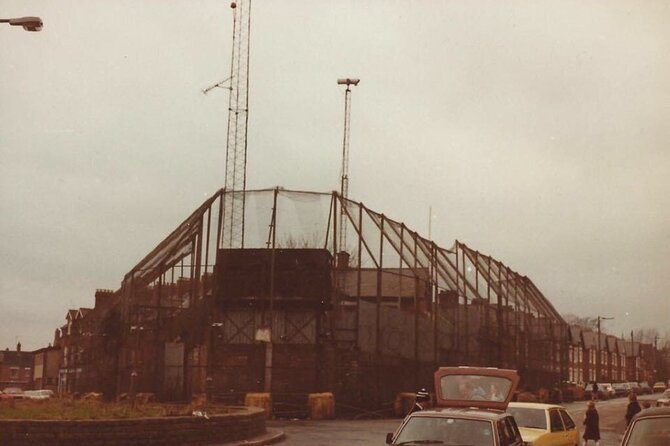
Crumlin Road Gaol is a former prison with a long connection to both ordinary crime and political imprisonment. During the Troubles, it held republican and loyalist prisoners, and the adjoining courthouse handled major trials connected with the conflict.
The jail and courthouse were linked by a tunnel. Prisoners could be moved directly between the two buildings, making the physical layout a clear reminder of how closely imprisonment and prosecution were tied together.
The gaol also saw escapes, hunger strikes, riots, and other moments of tension. Today, the restored site offers formal tours, but this two-hour taxi experience allows only about 10 minutes and does not include a full prison visit. That distinction matters. You will hear why the site is important, but you should not expect to explore the cells, tunnel, or courthouse in detail during this outing.
If you want an in-depth prison experience, you would need more time elsewhere. Here, Crumlin Road Gaol works as one piece of a much larger story.
Bombay Street and the birth of the Provisional IRA
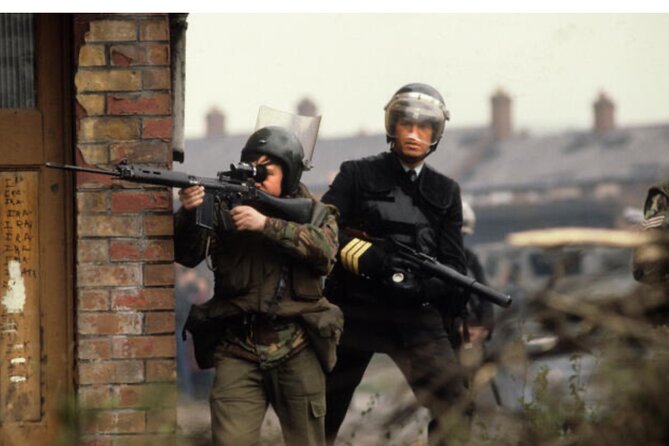
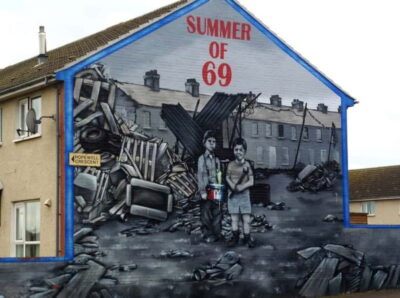
The Belfast Peace Lines section includes Bombay Street, a place linked to the formation of the Provisional IRA in 1969. Sectarian riots that August destroyed homes and displaced Catholic families. Many residents felt abandoned by the state and by the existing IRA organization.
Those events helped lead to a breakaway group, the Provisional IRA, which said it would defend nationalist neighborhoods and seek Irish reunification through armed struggle. The consequences shaped the conflict for decades.
You get about 15 minutes here. The stop is particularly useful because it explains that armed groups did not appear out of nowhere. The growth of the Provisional IRA followed a period of fear, displacement, and anger, though understanding those conditions does not remove the human cost of the violence that followed.
Memorials and restored homes now sit alongside the history. I would listen for the guide’s explanation of how residents experienced the 1969 attacks, since the political labels alone can make these events sound distant and abstract.
Shankill Road brings the loyalist view
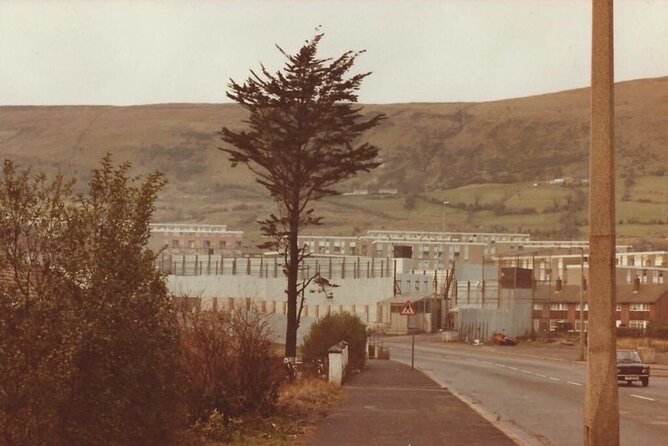
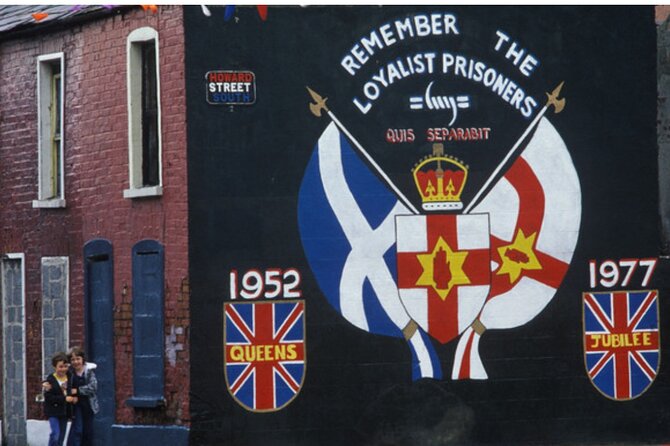
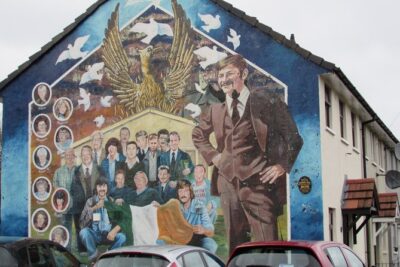
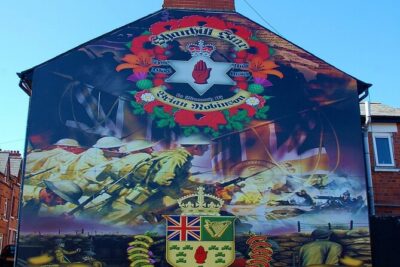
The final 20-minute stop is Shankill Road, a major loyalist area. Its murals reflect unionist identity, loyalty to Britain, remembrance of paramilitary groups, and the community’s experience during the Troubles.
The road is associated with the Ulster Volunteer Force and the Ulster Freedom Fighters, the latter used as a name by the Ulster Defence Association. These groups carried out violent campaigns against republican targets. The murals can commemorate people and events that are viewed very differently across the nearby divide.
This stop is essential for balance. If you only see Falls Road, you may leave with a partial picture of Belfast. Shankill Road shows how loyalist communities understood the conflict and why British identity remains important to many people in Northern Ireland.
The subject can be uncomfortable, and it should be. A good guide will explain the symbols without turning them into decoration. The route’s decision to include both Shankill and Falls Road is one of its best features.
The guide makes or breaks the experience
The most important variable is not the taxi or the murals. It is the guide. One account of the tour describes a guide who had been shot during the Troubles and still presented both sides of the conflict. That kind of personal connection can give the experience unusual force, but it also makes balanced delivery especially important.
You should expect political history told with feeling. That is not a flaw. Belfast’s past is personal for many people. The useful standard is fairness: republican suffering should be acknowledged without ignoring republican violence, and loyalist fears and losses should be explained without excusing loyalist paramilitarism.
The strongest guide will help you separate facts, memory, and political interpretation. Since no guide name is provided, I would confirm who will lead your tour if that matters to you.
Is $190.59 per person fair?
At $190.59 per person, this is expensive for a two-hour city tour. The price becomes easier to justify if you are a small group, value door-to-door transport, or want a concentrated introduction to Belfast’s political history without arranging several separate visits.
The tour covers a lot of ground in little time. Parking fees are included, and pickup is offered within 1 kilometer of Belfast City Hall. Those practical benefits save time and remove the need to navigate between neighborhoods.
The value is weaker if you are alone or if your main goal is to walk slowly, take photographs, and study the murals. Nine stops in two hours means the route is tightly packed. Before booking, ask how many people will share the vehicle and how much of the time will be spent outside it.
The experience is often booked about 40 days ahead, so reserving early may be sensible if your schedule is fixed. Free cancellation is available until 24 hours before the start time. Changes or cancellations inside that window are not accepted for a refund.
Pickup details you should handle early
The listed starting point is the Leonardo Hotel Belfast on Great Victoria Street, with the activity ending back at the meeting point. Free pickup is available within a 1-kilometer radius of Belfast City Hall.
Cruise ship pickup is not offered because the port is several miles from central Belfast. If you arrive by ship, the shuttle bus can leave you near Visit Belfast, across from City Hall, and you can arrange collection at the front gates of City Hall.
Contact the operator in advance with your preferred pickup point. A clear plan matters because a short tour loses valuable time if the driver is searching for you.
Who should book this tour?
I would recommend it to you if you want a serious introduction to the Troubles, have only a few hours, and prefer a guide to connect the sites rather than visiting murals on your own. It also suits students, history readers, and people interested in modern British and Irish politics.
It is less suitable if you want a relaxed sightseeing ride, a long walk, or extensive access inside Crumlin Road Gaol. Families with young children should also consider the subject matter. Stories of shootings, hunger strikes, prison life, and sectarian displacement can be hard to process.
The tour is accessible to most people according to the supplied information, and service animals are allowed. Still, the practical details of the vehicle and stops are not fully explained, so anyone with specific mobility needs should ask before booking.
Should you book it?
Book this taxi tour if you want breadth, local context, and both political viewpoints in a short period. Its route is unusually focused, and the pairing of Falls Road with Shankill Road gives you a fairer picture than a one-sided mural tour.
Skip it if the price feels high for two hours or if you want to linger at each site. The tour’s strength is its concentrated storytelling, not leisurely sightseeing. For the right reader, it can turn Belfast’s walls and memorials into a clear, human account of how conflict shaped the city and how peace began to take hold.
FAQ
How long does the Belfast taxi tour last?
The tour lasts approximately two hours.
What language is the tour offered in?
The tour is offered in English.
Where does the tour start?
The listed starting point is the Leonardo Hotel Belfast on Great Victoria Street, Belfast BT1 6DY.
Where does the tour end?
The activity ends back at the meeting point.
Is pickup available from Belfast City Centre?
Yes. Free pickup is offered within a 1-kilometer radius of Belfast City Hall.
Can the tour pick me up from a cruise ship?
No. Cruise ship pickup is not offered because the port is several miles outside Belfast city centre. You can arrange pickup at the front gates of Belfast City Hall.
What is included in the price?
Parking fees are included.
Are food and drinks included?
No. Coffee, tea, and alcoholic beverages are not included.
Can I cancel for a full refund?
Yes. You can cancel at least 24 hours before the experience start time for a full refund. Cancellations and changes made less than 24 hours before the start time are not accepted for a refund.
More Two-Hour Experiences in Belfast
- Award Winning Express 2 Hours Belfast Black Taxi/Cab tours
★ 5.0 · 35 reviews - 2 Hours Republican & Loyalist Mural Black Taxi Tour from Belfast
★ 5.0 · 21 reviews - 2-Hour Food, History and Street Art Tour of Ponce City Market
★ 5.0 · 159 reviews - Vienna: 2-Hour Street Art Tour
★ 4.5 · 76 reviews
More History Tours in Belfast
- 1 Hour Express Belfast Taxi/Cab Tour History, Murals, Troubles
★ 5.0 · 17 reviews - Belfast history of terror & mural 1 hr express private taxi tour
★ 5.0 · 3 reviews - 3-Hour Atlanta Beltline Food, Street Art and History Tour
★ 5.0 · 345 reviews - History and Murals: Walking Tour Guadalajara
★ 5.0 · 237 reviews
Just added around Belfast
- 2 Hours Republican & Loyalist Mural Black Taxi Tour from Belfast★ 5.0 · 21 reviews
- Falls road Murals Walking Tour with former prisoners★ 5.0 · 19 reviews
- World Famous Private Belfast Troubles Taxi Cab Tour 2 Hour★ 4.5 · 14 reviews
- Belfast history of terror & mural 1 hr express private taxi tour★ 5.0 · 3 reviews
- 1 Hour Express Belfast Taxi/Cab Tour History, Murals, Troubles★ 5.0 · 17 reviews
- Private Belfast Mural & Giant’s Causeway Tour from Belfast (2 in 1)★ 5.0 · 5 reviews
- Belfast political history and mural unique private 90 min tour★ 5.0 · 10 reviews
- Best of Belfast Driving Taxi Tour with Political Murals★ 5.0 · 9 reviews
Belfast Mural Tours, compared.
2 Hour Private Belfast Taxi Cab Tour of Troubles & Peace walls
Read our review →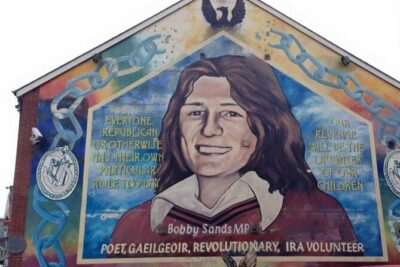
Private Political History & Murals Tour Belfast
Read our review →Browse the lists this tour appears in