
REVIEW · CANADA MURAL TOURS
Toronto: Must Do NonTouristy Street Art Tour by local Artist
Street art rewards curious walkers. This $8 Toronto art walk takes you through College West and Dundas West with a local artist, showing you small pasted figures, alley pieces, yarn work, stickers, graffiti, and large murals that are easy to miss on your own. I like the mix of art education and neighborhood tips, plus the small group limit of 10. The main drawback is that the two-hour walk spends much of its time outdoors, so weather, shoes, and walking ability matter.
The tour begins outside Loveless Café & Bar at the Gladstone and Dufferin intersection, not inside the café. I especially like that it starts in a less-visited part of Toronto rather than sending you to the city’s best-known sights, and Chloe has earned repeated praise for her patience, teaching, and artist’s perspective. Just note that the information describes the tour as wheelchair accessible but also says it is not suitable for wheelchair users, so confirm access details before booking.
Key points to know before you go
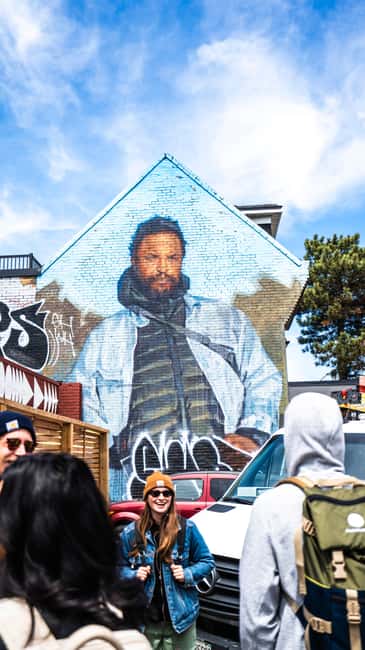
- A local artist leads the walk: Chloe explains street art terms, techniques, and the ideas behind the work.
- The route covers College West and Dundas West: You walk through Little Portugal and the area’s outdoor art corridor.
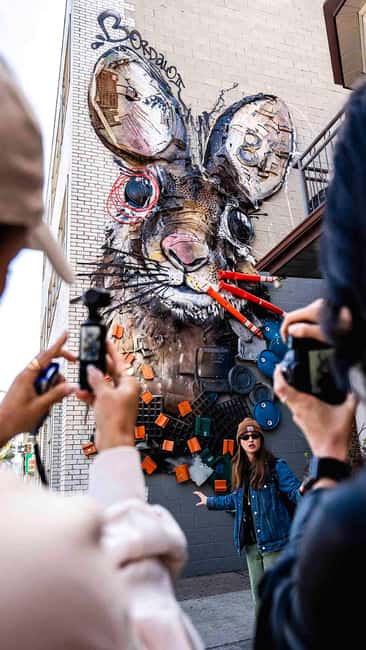
- Expect many art forms: Look for wheat pastes, yarn bombing, sticker art, graffiti, painted murals, and tiny installations.
- The group is limited to 10 people: That makes it easier to ask questions and keep up in streets and alleys.
- The price is unusually low: At $8 per person, the tour offers strong value if you want local context rather than a major attraction.
- You receive local recommendations: The restaurant, bar, and gallery list can help shape the rest of your Toronto visit.
Why this Toronto walk is different
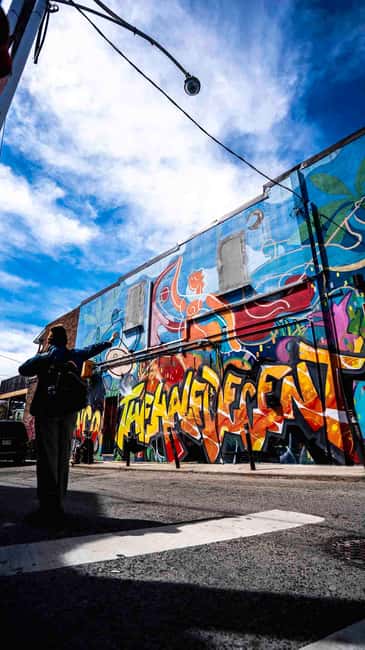
Toronto has plenty of famous sights, but this tour points you toward a part of the city that works better at street level. The route explores College West and Dundas West, beginning near Little Portugal and moving through blocks where public art appears on walls, doors, alleys, shopfronts, and overlooked corners.
I like the fact that the art is not treated as decoration alone. You learn how pieces are made, why artists choose certain methods, and how public art can be supported by city programs, nonprofit groups, private sponsors, and informal guerrilla work.
That mix matters. A commissioned mural and an unauthorized sticker may both catch your eye, but they come from different systems and carry different risks. A local artist can explain those differences in a way that a map or self-guided phone app cannot.
The tour also gives you a new way to look at Toronto after it ends. You are not simply shown a series of walls. You are taught to notice paste-ups, lettering, textures, small figures, and temporary work as you continue around the city.
More Artist-Led Mural Tours in Canada:
- NYC: Brooklyn Graffiti Workshop with Local Artist
★ 4.8 · 570 reviews - Belleville Street Art Tour with an Artist
★ 5.0 · 237 reviews - Melbourne: Street Art Walking Tour with a Street Artist
★ 4.9 · 147 reviews
Starting outside Loveless Café at Dufferin
Your meeting point is 1430 Dundas Street West, in front of Loveless Café & Bar at the Gladstone and Dufferin intersection. Wait on the sidewalk, not inside the bar. That detail is easy to miss, especially if you arrive early and see the café right away.
The Dundas West streetcar stops at the corner. You can also take Line 2, the Bloor-Danforth line, to Dufferin Station, then walk about 12 minutes to the meeting point.
This is a practical beginning because you are not being asked to cross central Toronto for a tour that starts in a major sightseeing district. Still, leave enough time to find the exact sidewalk meeting place. The tour is small, and a group of up to 10 people is not as easy to spot as a large coach party.
The café and surrounding streets can also serve as a useful place to get your bearings before the walk. Since restaurant and bar recommendations are part of the experience, the starting area fits the tone of the tour: local, informal, and focused on the neighborhood rather than grand monuments.
The first 30 minutes: learning how to read the walls
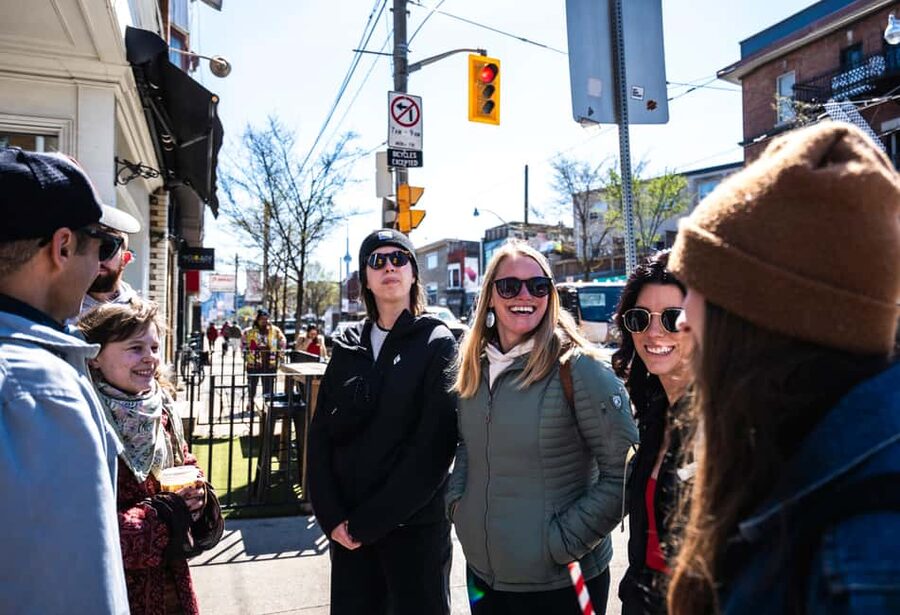
The opening portion lasts about 30 minutes and introduces the area and its art. Rather than rushing from one large mural to another, you begin to understand the visual language of Toronto’s street art.
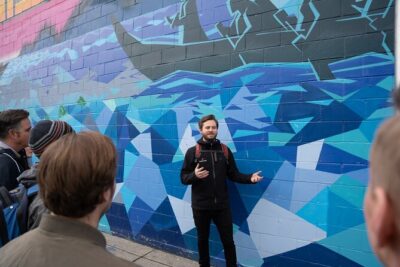
Chloe’s role is important here. She is not simply pointing at painted walls. She explains techniques and helps you notice the differences between work made with paint, paper, adhesive, yarn, stickers, and other materials.
You might see wheat pastes, a form of paper-based street art attached to a wall, alongside sticker pieces and small installations. Yarn bombing adds a softer, textile-based element. Graffiti and painted murals bring a more familiar look, but the tour places them beside less obvious forms so you can compare how artists use public space.
This is where the tour appears to earn its strong reputation. Chloe has been praised for answering questions carefully, explaining graffiti vocabulary, and bringing pieces to life. If you enjoy art but do not know the usual street art terms, that patient approach should make the experience accessible without turning it into a formal lecture.
The drawback is simple: art changes. Outdoor pieces can fade, disappear, or be covered. You should treat the route as a current look at the neighborhood, not a permanent museum collection.
The Little Portugal walk and the urban art corridor
The next section takes about 30 minutes on foot through Little Portugal. This is not a transfer between two fixed attractions. The walking itself is part of the tour, as you zigzag through streets and alleys in search of pieces.
That format suits street art. The best work is not always placed in a neat row, and a route that bends through side streets gives you a better sense of how art sits within daily neighborhood life. One wall may carry a large mural, while the next turn reveals a tiny figure or a sticker that you would pass without noticing.
The Dundas West area has developed into one of Toronto’s main urban art corridors through a mix of municipal and nonprofit programs, private sponsorship, and unofficial work. The result is not one tidy gallery. It is a changing outdoor collection with different levels of permission, finish, scale, and permanence.
I like this part for visitors who have already seen Toronto’s standard sights. It gives you a more ordinary side of the city, one shaped by local streets and small businesses rather than by a sightseeing plan.
You should wear comfortable shoes. Two hours of walking, with stops and turns, can feel longer than the distance suggests. The route also includes alleys and uneven urban surfaces, so anyone with mobility concerns should ask for current details before reserving.
A few more mural tours around Canada worth a look
- The Original Montreal Mural Arts Tour by Spade & Palacio
★ 5.0 · 577 reviews - Montreal: The Original Locally Owned Street Art Walking Tour
★ 4.9 · 97 reviews - PRIVATE 2-Hour tour of Montréal in Convertible Cadillac + Murals
★ 5.0 · 73 reviews - Street Art and Craft Beer 2 in 1 Walking Tour Vancouver
★ 5.0 · 61 reviews
The final art stops: small pieces, big walls, and local meaning
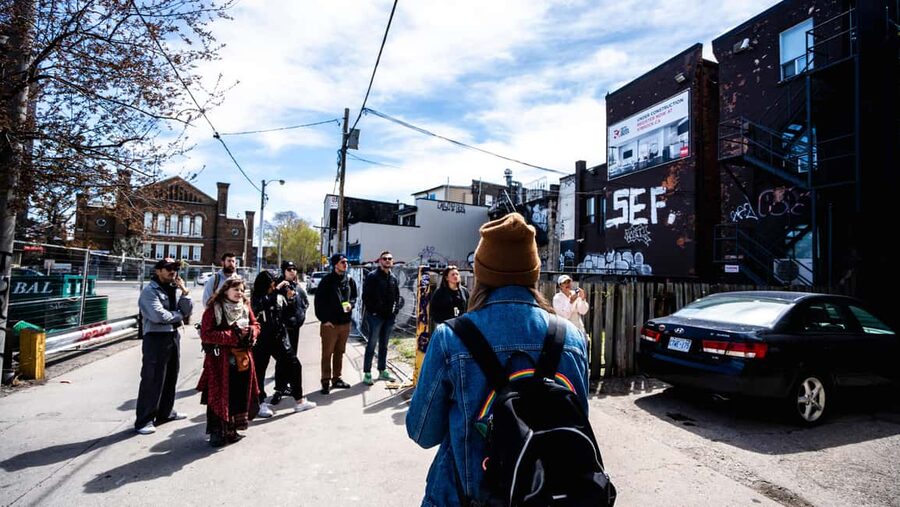
The later parts of the route include another roughly 30-minute visit, followed by additional walking and stops. The exact pieces can change, but the experience is built around variety rather than one headline mural.
That variety is one of the tour’s strongest features. You can move from a large painted wall to a small pasted work, then compare a soft yarn installation with classic graffiti. The scale changes your attention. A huge mural is easy to spot, but a small piece may reward the slower observer more.
One detail singled out by a Canadian participant was a set of tiny Sapien figures. That kind of work captures the appeal of the walk: you may leave with one or two large murals in your camera, but the smallest installation may be the image you remember most.
The guide also discusses meaning. That does not mean every piece receives a long art-school analysis. Instead, you learn enough about the artist’s method and intention to look at the work with greater care. Chloe’s own experience as an artist adds useful context, especially when she explains the practical language and working methods of street art.
Bring a camera, but do not spend the entire tour looking through it. Some of the smaller pieces are easy to miss when you are focused on taking pictures. The best rhythm is to photograph the larger works, then put the camera away while Chloe explains the details.
What makes the guide valuable
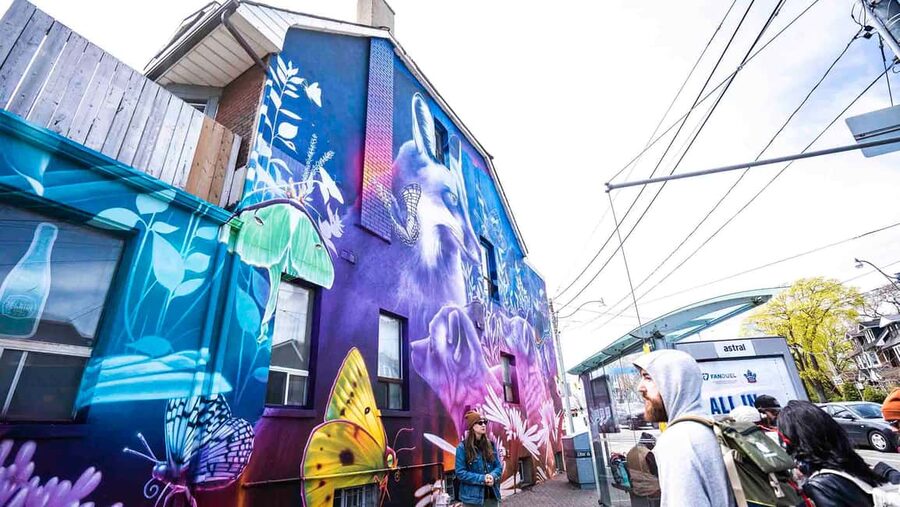
The strongest part of this tour is the guide’s personal connection to the subject. Chloe has been praised for being an excellent teacher, artist, and host, and for waiting when participants needed extra time. That matters in a small walking group, where the experience depends heavily on the person leading it.
You can ask questions about techniques, graffiti language, or the meaning of a piece. You also get a more candid sense of the local scene than you would from a generic city tour. The tour’s appeal is not just that Chloe knows where the art is. It is that she can explain how artists think about materials, walls, style, and public space.
Past art walk experience is not required. In fact, newcomers may get the most from the explanations because the route gives you a basic vocabulary for reading urban art. At the same time, repeat visitors to street art tours should still find something fresh in the Toronto focus and the artist-led format.
The 10-person maximum helps. You are less likely to be lost at the back of the group, and questions do not have to compete with a crowd. A 4.9 rating from 30 reviews also suggests that the guide-led part has been consistently well received, though the total number of ratings is still modest.
The $8 price and what you receive
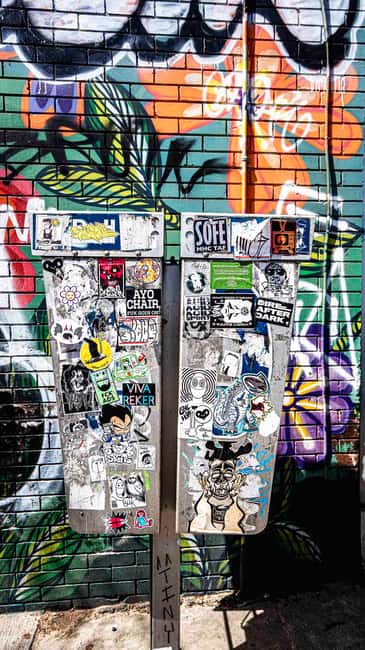
At $8 per person, this is one of the easier Toronto activities to justify. You receive two hours with a local street artist, a guided look at several forms of public art, background on the area, and a list of restaurant, bar, and gallery recommendations.
The value is especially good if you are willing to keep exploring after the walk. The neighborhood becomes more interesting once you know what to look for, and the recommendation sheet can help you plan lunch, drinks, or another gallery visit.
The low price does not mean the experience is designed for everyone. You are paying for a walking tour, not transportation, food, drinks, or entry to a formal museum. You also need to bring your own water and dress for the season.
There is free cancellation up to 24 hours before the start, and you can reserve now and pay later. Those terms are useful if your Toronto plans may change, but the more important value question is whether you enjoy walking and looking closely at urban art. If you do, the price is excellent.
Weather, clothing, and practical comfort
Summer can be hot, so bring water. In winter, dress for Canadian conditions rather than assuming a two-hour walk will feel mild. Comfortable shoes are essential in every season.
The activity runs outdoors, and the tour information specifically warns you to prepare for changing weather. A camera is useful, but it is not essential. The art itself is the reason to go.
Smoking, alcohol, drugs, and littering are not allowed. That is basic city-tour etiquette, but it is worth noting because the route moves through active neighborhoods rather than a closed attraction.
The experience is offered in English. The tour is described as wheelchair accessible in one section, while another says it is not suitable for wheelchair users or people with mobility impairments. Because those statements conflict, contact the provider before booking if access is important to you.
Who should book this art walk
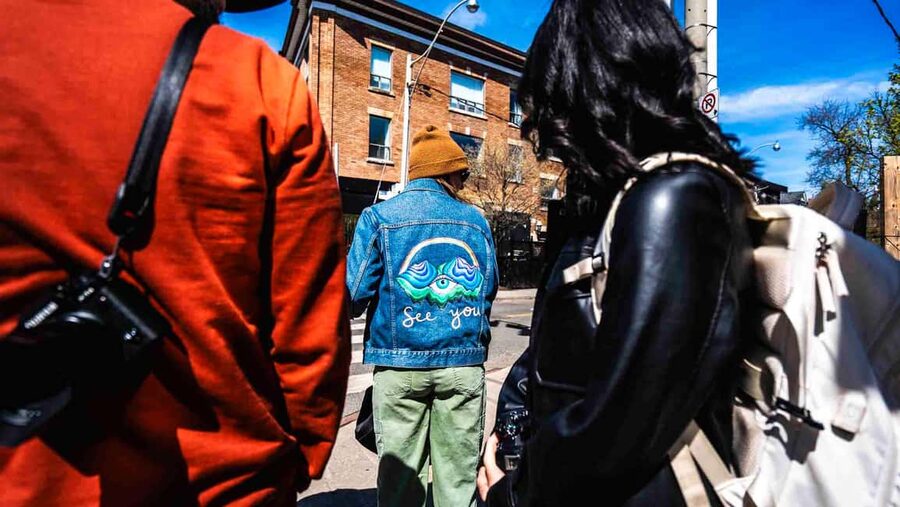
I would recommend it to you if you want a less conventional look at Toronto, enjoy photography, or like hearing from the person who makes the art rather than only reading a plaque. It is also a strong choice for repeat visitors who have already seen the CN Tower area, waterfront, and major museums.
It suits solo visitors and couples well, since the group is small and the subject gives you plenty to discuss. Families with older children who can manage two hours of walking may also enjoy the hunt for tiny pieces, though the available information does not give a minimum age.
You may want to skip it if you dislike walking in uncertain weather, need a fully step-free route, or prefer a structured museum with fixed exhibits. Street art is temporary, and the route can never promise that every piece will look exactly as it did before.
Should you book this Toronto street art tour?
Yes, if you want an affordable, personal, and local look at Toronto. The strongest reasons are the $8 price, the small group, the wide mix of art forms, and Chloe’s clear passion for teaching the subject.
Book it early in your visit if possible. The restaurant, bar, and gallery suggestions can help shape later plans, and you will notice more public art during the rest of your stay.
Choose another activity if you want famous landmarks, a seated experience, or guaranteed accessibility. For everyone else, this is a smart way to spend two hours in College West and Dundas West, with enough useful local insight to keep exploring after the guide says goodbye.
FAQ
How long is the Toronto street art tour?
The tour lasts two hours.
How much does the tour cost?
The price is $8 per person.
Where does the tour begin?
It begins at 1430 Dundas Street West, in front of Loveless Café & Bar at the Gladstone and Dufferin intersection.
Should I meet inside Loveless Café & Bar?
No. Meet on the sidewalk in front of the address, not inside the bar.
How can I reach the meeting point by public transit?
The Dundas West streetcar stops at the corner. You can also take Line 2, the Bloor-Danforth line, to Dufferin Station and walk about 12 minutes.
What areas does the walking tour cover?
The route covers College West and Dundas West, including the Little Portugal area.
What kinds of street art will I see?
You may see wheat pastes, yarn bombing, sticker art, graffiti, painted murals, and small installations.
Is the tour conducted in English?
Yes. The live tour guide leads the experience in English.
How large is the group?
The tour is limited to 10 participants.
What should I bring?
Bring comfortable walking shoes, water, and a camera. Dress for changing weather, with extra care in summer heat and Canadian winter conditions.
Just added around Canada
- Vancouver: Street Art & Craft Coffee Walking Tour w/ Tasting★ 4.8 · 11 reviews
- Vancouver: Street Art & Craft Beer Walking Tour with Tasting★ 4.8 · 14 reviews
- Toronto Street Art and Graffiti Walking Tour★ 5.0 · 22 reviews
- Street Art Exploration Game and Self-Guided Tour in Ottawa★ 4.0 · 20 reviews
- All about Montreal’s Murals – Saturday Walking Tour★ 5.0 · 11 reviews
- The Montreal Street Art & Mural Tour★ 5.0 · 17 reviews
- Montreal: Street Art & Mural 2-Hour Guided Walking Tour★ 4.9 · 13 reviews
- Calgary: Street Art & Craft Beer Walking Tour w/ Tastings★ 4.9 · 23 reviews
Canada Mural Tours, compared.
The Original Montreal Mural Arts Tour by Spade & Palacio
Read our review →
The Original Locally Owned Street Art Walking Tour
Read our review →
PRIVATE 2-Hour tour of Montréal in Convertible Cadillac + Murals
Read our review →
Street Art and Craft Beer 2 in 1 Walking Tour Vancouver
Read our review →
Toronto Graffiti Alley Street Art Walking Tour with an Expert
Read our review →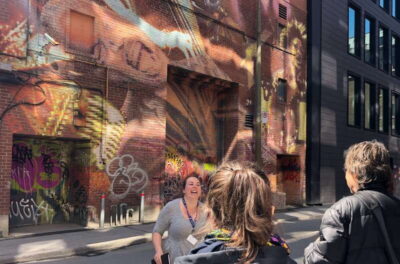
Vancouver Street Art and Craft Coffee 3 Hour Walking Tour
Read our review →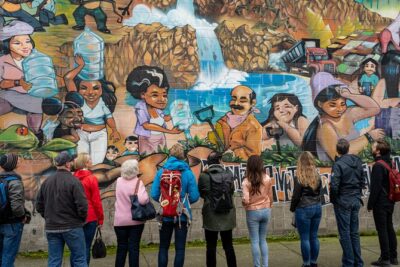
Calgary Street Art & Craft Beer 3 Hour Tasting Tour
Read our review →Browse the lists this tour appears in