
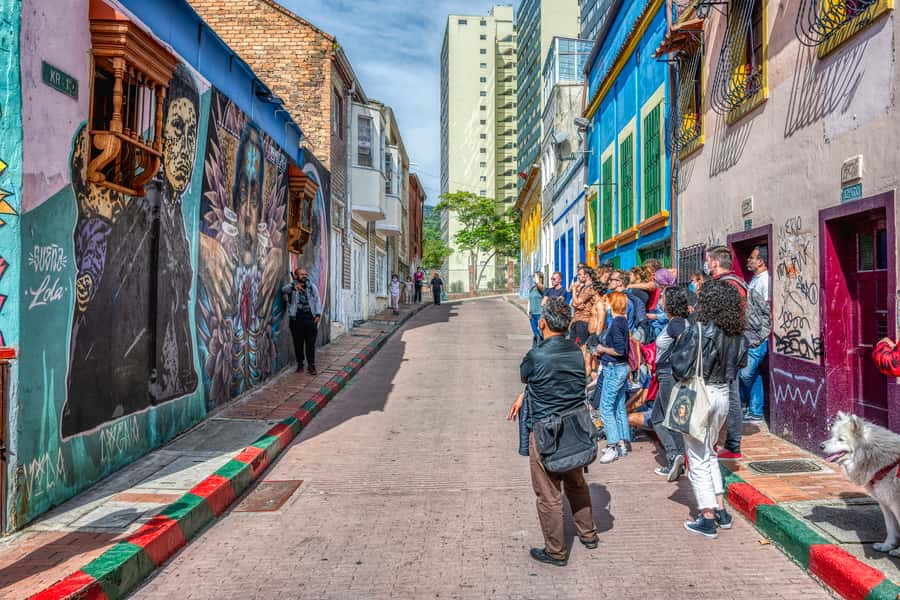
REVIEW · BOGOTA MURAL TOURS
Graffiti Tour: a fascinating walk through a street art City
Bogotá tells its arguments on walls. I like this tour because it treats street art as more than colorful decoration, linking murals and posters to Colombia’s past, peace process, and hopes for change. I also like the clear social purpose: your fee helps support local artists and community-led mural work.
The main consideration is that this is a serious, discussion-based walk, not just a photo stop parade. Political posters and the story of false positives can be difficult subjects, and two and a half hours on city streets may feel long if you want only quick snapshots.
Key points to know before you go
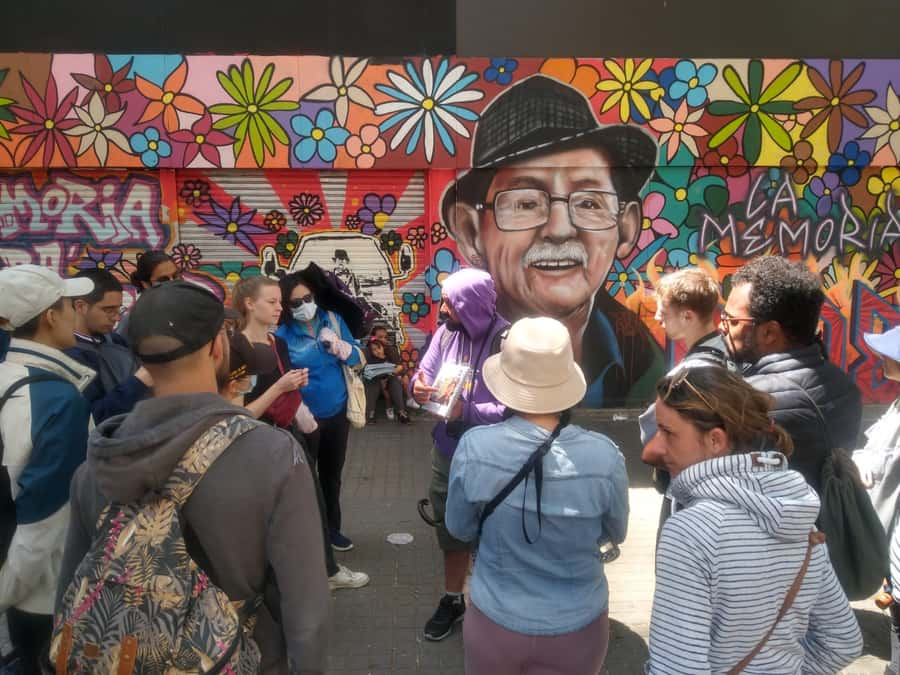
- The tallest illegal graffiti in Colombia is one of the tour’s headline sights, giving you a memorable example of how large-scale street art can reshape a city.
- Political posters address current social issues, so the route connects art with Colombia’s public debates rather than treating it as simple decoration.
- False positives are discussed through community resilience, adding a sober human dimension to the colorful walls.
- Artists and community leaders help shape the work, with funds reinvested into new murals and local cultural projects.
- A 150-minute guided walk costs $15 per person, with private and small-group choices available.
- English, Spanish, Italian, French, and German tours are offered, and the walk is listed as wheelchair accessible.
Why Bogotá’s walls deserve a closer look
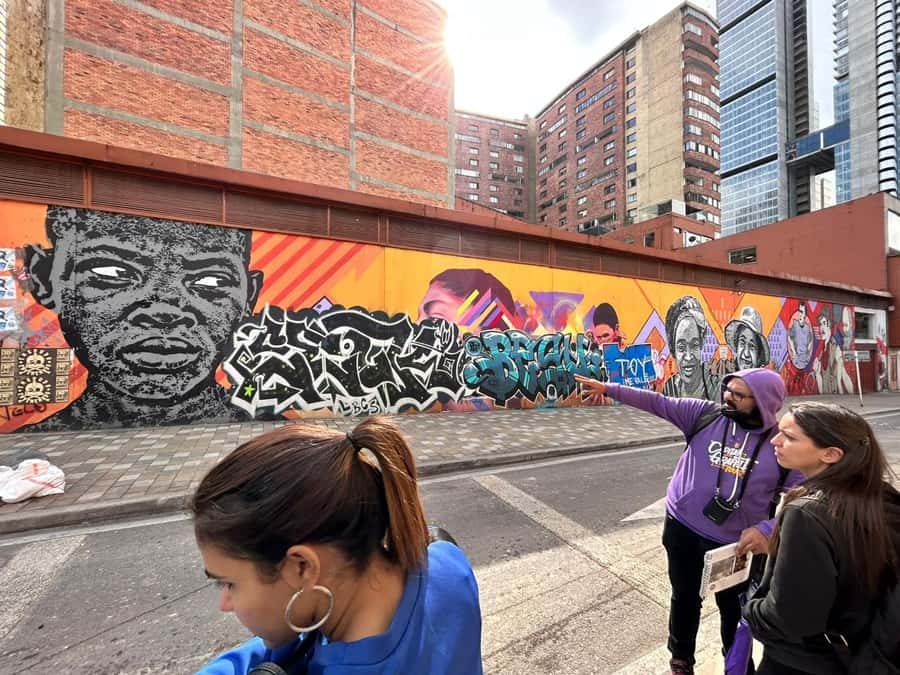
Bogotá’s street art is not confined to one tidy gallery. It appears across the city as murals, tags, posters, political images, and large-scale works that reflect how people see their country and their neighborhoods.
That makes this experience useful for first-time visitors who want more than a quick look at painted walls. You are given the political, cultural, historical, and geographical context needed to understand why a work is there and what it is trying to say.
I find that context especially valuable in Bogotá. A mural may use bold color and clever design, but its meaning can depend on a local event, a social movement, or a painful chapter in Colombia’s past. Without a guide, you can admire the skill while missing the point.
The tour is led by artists who work as cultural promoters. That matters because the focus is not only on identifying artists and techniques. You also learn how urban art can help communities speak publicly, reclaim space, and imagine a different future.
More Graffiti Tours in Colombia:
- Medellin: Comuna 13 Graffiti Tour, Cable Car & Street Food
★ 4.8 · 9,046 reviews - Medellín: Comuna 13 Tour with Snacks And Your Own Graffiti
★ 4.9 · 311 reviews - Bogotá: La Candelaria Graffiti & Urban Art Guided Tour
★ 4.7 · 250 reviews
Meeting beside the Gold Museum
The tour begins next to the Gold Museum at Carrera 6 # 15-88. Look for a guide wearing a purple hoodie or cap, or carrying a purple umbrella.
That meeting point is practical. The Gold Museum is a well-known central landmark, so you have a clear place to orient yourself before the walk begins. Still, give yourself enough time to find the exact meeting spot. A city-center meeting point can be busy, and a purple item is the key visual clue.
The tour lasts 150 minutes. That is long enough to move beyond a few famous walls and allow time for explanation, but it also means you should dress for a walking experience rather than a short city visit. Bring only what you need. Valuables are not allowed, so leave unnecessary items behind.
You can join a shared tour, choose a private option, or look for a small group. A shared group is likely the best value if you enjoy discussing art with other people. A private or smaller format may suit you better if you want more time for questions or a slower pace, though the supplied details do not specify how much extra those options cost.
The city’s largest illegal graffiti
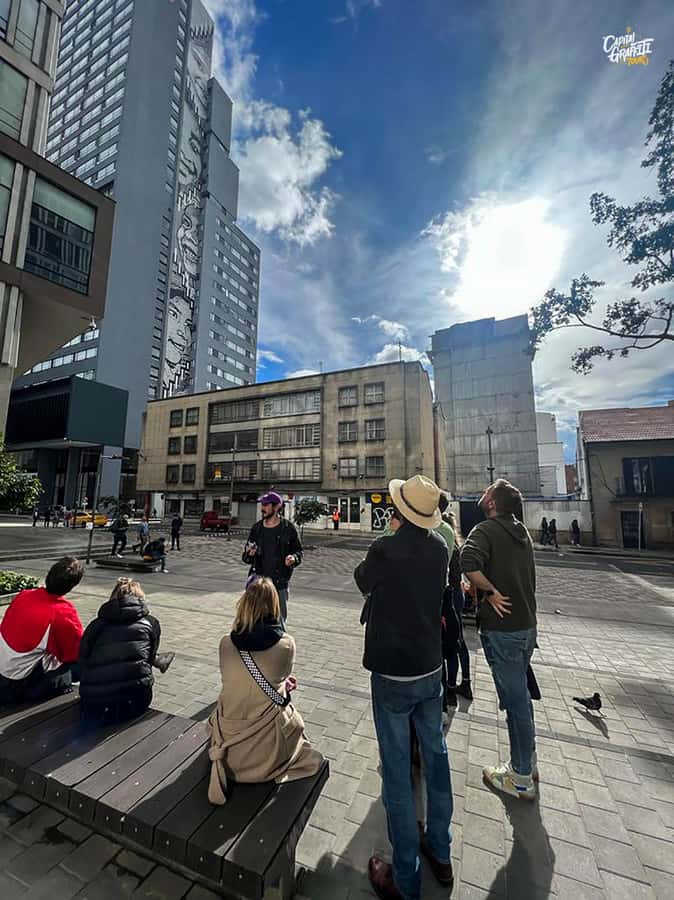
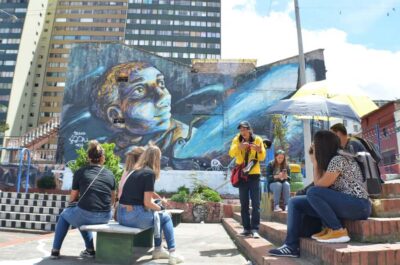
One of the strongest reasons to book this walk is the chance to see what is described as the tallest illegal graffiti in Colombia.
That phrase carries two kinds of interest. First, the scale makes the work visually memorable. Large graffiti changes how you read a street, because you cannot take in the entire piece in the same way you would a small stencil or poster. You have to look at its height, position, and relationship with the surrounding buildings.
Second, the word illegal points to the complicated status of street art. Graffiti often sits between public expression, property rights, regulation, and community acceptance. A guide can explain that tension in a way a photograph cannot.
You should not expect every work to be polished or easy to admire. Some pieces may be rough, confrontational, or made quickly. That is part of the point. Street art often records urgency. It can mark a protest, claim visibility, or challenge who gets heard in public space.
The tallest piece is therefore more than a large photo opportunity. It gives you a practical way to think about the difference between a commissioned mural and unauthorized graffiti, and about why both can matter in Bogotá.
Political posters and present-day arguments
The route also enters an area where political posters address current social issues. This is likely to be one of the most revealing parts of the experience, especially if you have seen Bogotá’s art mainly through colorful murals.
Posters work differently from huge painted walls. They can be produced quickly, repeated in large numbers, and updated as public concerns change. Their messages may be more direct than the symbolic imagery found in a mural.
You are shown how the city’s open-air art reflects the present, not just the past. The tour connects these works to Colombia’s peace process and to the country’s hopes for a better future. That connection gives the route a clear purpose: you are not simply looking at urban decoration, you are reading public messages.
I would make room for this part of the tour even if your main interest is photography. The posters may not be as conventionally attractive as a painted wall, but they can tell you more about what people want to discuss now.
The drawback is that political art can be uncomfortable. The experience is not designed to avoid difficult subjects or reduce them to a cheerful sightseeing story. If you prefer a light walk with little discussion, this may not be the right fit.
A few more mural tours around Colombia worth a look
- Medellín: Comuna 13 and Graffiti Guided Tour with a Local
★ 4.9 · 239 reviews - Historical Shared Tour Salsa, Graffiti & Resistance in Cali
★ 5.0 · 107 reviews - Medellín: Private Comuna 13 Street Art Tour
★ 4.8 · 88 reviews - Fun Graffiti Workshop: The Art of Aerosol and Color
★ 5.0 · 73 reviews
Understanding the story of false positives
The tour addresses the resilience of communities affected by false positives, a painful subject in Colombia’s recent past.
The supplied description does not provide specific names, dates, or individual stories, so you should expect the guide to explain the subject through the art and the community’s response rather than through a detailed academic lecture. That may be an advantage. The focus stays connected to real places and public expression.
This section gives the tour emotional weight. You see how art can preserve memory, challenge official narratives, and help a community keep speaking after trauma. The walls become a record of people’s determination to be seen and heard.
I appreciate that the experience presents resilience rather than only suffering. The point is not to turn a painful subject into a spectacle. It is to show how local people continue to create, organize, and shape their surroundings.
You should come prepared to listen. The guide’s explanations are central here, so rushing ahead for photographs would weaken the experience. Ask questions respectfully, especially when the topic involves violence, political conflict, and the lives of affected communities.
Art techniques, artists, and local voices
The guides introduce you to a range of artists and techniques. You may encounter different approaches to composition, lettering, portraiture, symbolism, and public messaging, although the exact works on the day can vary.
That variety helps you see that graffiti is not one single style. A large mural may require planning, teamwork, and considerable time. A poster or quick tag may depend more on speed and repetition. The guide’s job is to help you notice those differences.
The cultural value comes from linking technique to intention. You learn not only how an image was made, but also why an artist chose that method and how it fits the surrounding community.
This is where the experience feels different from walking around alone with a map. You might recognize a striking wall by yourself, but you may not know the artist’s source of inspiration or understand the geographical setting. The guide adds those missing connections.
No guide names are provided in the tour details, but the team is described as artists and cultural promoters. That suggests a practical, working connection to the art world rather than a guide reading a standard script from a card.
Social impact behind the tour
Capital Graffiti Tours presents the walk as a cultural project with a social purpose. The company works with local artists and community leaders, and money is reinvested into financing and managing new murals.
For you, this means the $15 price is not simply payment for two and a half hours of guiding. It also supports a program that aims to keep cultural projects active in the city. The exact amount returning to each project is not specified, so I would not treat the fee as a direct donation. Still, the stated model gives the tour more substance than a standard sightseeing walk.
The shared option has a useful pricing explanation. Your $15 per-person payment equals the suggested tip for the guides and covers their work, minus commission. You do not need to pay extra at the end, even if other people in the group decide to tip.
That arrangement makes the price easy to understand. At $15, you receive an English-speaking guide, access to multiple street art and graffiti locations, and the interpretive work that connects each place to wider issues. For anyone already interested in Bogotá’s public art, that is a fair price.
The value is less obvious if you want only landmark photographs. In that case, you might be paying for context you do not plan to use. The tour earns its price through explanation, local perspective, and the social work behind the route.
What the 150-minute pace feels like
Two and a half hours gives the guide room to build a story rather than rush from wall to wall. You can expect a sequence of street art and graffiti locations, with explanations about artists, techniques, politics, history, geography, and community life.
The precise order and number of stops are not provided, so I would avoid planning another fixed appointment immediately afterward. Walking tours can run at different speeds depending on group questions and the time spent at important works.
The route is listed as wheelchair accessible, which is helpful for planning. You should still confirm the exact route and current conditions when booking if you need particular accessibility details, since city streets and public spaces can change.
The walk is available in English, Spanish, Italian, French, and German. Choose the language in which you can best follow political and historical explanations. Street art can be enjoyed visually in any language, but the meaning of the posters and social themes depends heavily on what you understand.
Shared, private, or small group?
The shared tour is the natural choice for keeping the cost at $15 per person and meeting other people interested in Bogotá’s art. It also fits the tour’s educational purpose, since a group can bring different reactions to political images and social questions.
A private tour may suit you if you want the guide’s full attention or prefer to discuss sensitive subjects at your own pace. A small group gives you some of that ease without the full privacy of a private booking.
The tour data does not give maximum group sizes or price differences, so check those details before choosing. The important point is that you have more than one format available.
I would choose shared for a first visit and private for a focused art trip, a family group, or anyone who wants extended discussion. If you are unsure, the shared option keeps the financial risk low.
Practical booking advice
You can cancel up to 24 hours before the start for a full refund, which gives you useful flexibility. You can also reserve now and pay later, so you do not have to pay at the time of booking.
The guide can speak English, Spanish, Italian, French, or German. Starting times vary, so check availability when you reserve rather than assuming a fixed departure.
Wear something suitable for a long city walk and bring only necessary items. Valuables are not allowed. Since the tour involves public art and political material, bring patience as well as a camera. The guide’s explanation is the main product.
Who will enjoy this tour most?
I would recommend it to you if you like art with a social message, want to understand Bogotá beyond its major museums, or prefer experiences that connect sightseeing with local culture.
It is also a good match if you want a clearer introduction to Colombian political history and the peace process through public art. You do not need to be an art specialist. The tour is designed to explain techniques and context in accessible terms.
You may want to skip it if you are looking for a short, relaxed photo walk with no difficult themes. The discussion of false positives and current social issues requires attention, and the 150-minute duration is a real commitment.
Families and groups should consider the age and interest of everyone attending. The tour is educational, but its political subjects may not suit every child. The wheelchair-accessible listing is useful, though anyone needing specific route information should confirm it before booking.
Should you book Capital Graffiti Tours?
Book it if you want Bogotá’s street art explained rather than simply photographed. The tallest illegal graffiti, political posters, community resilience, and the connection to Colombia’s peace process give the walk a clear purpose.
At $15 per person, the shared option offers good value for a 150-minute guided experience with a stated social benefit. I especially like that the company reinvests in artists and community mural projects, and that the guides are presented as working artists and cultural promoters.
Skip it if you want only bright murals, quick stops, and an easygoing stroll. This is a thoughtful city walk with serious subject matter. Go ready to listen, and you will come away with a better sense of why Bogotá’s walls matter.
FAQ
Where does the graffiti tour meet?
The meeting point is next to the Gold Museum at Carrera 6 # 15-88. Look for a guide with a purple hoodie, cap, or umbrella.
How long does the tour last?
The tour lasts 150 minutes, or two and a half hours.
How much does the tour cost?
The listed price is $15 per person.
What does the shared option include?
The shared payment covers the suggested guide tip and the guides’ work, minus commission. You do not need to pay anything extra at the end, even if other people choose to tip.
What languages are available?
Guided tours are available in English, Spanish, Italian, French, and German.
Is the tour wheelchair accessible?
Yes. The activity is listed as wheelchair accessible.
Can I book a private tour?
Yes. Private and small-group options are available.
What does the tour include?
The tour includes an experienced English-speaking guide and visits to multiple street art and graffiti locations.
Can I cancel or pay later?
You can cancel up to 24 hours in advance for a full refund. You can also reserve your place and pay later.
Just added around Colombia
- Comuna 13 Neighborhood & Street Art Private Tour★ 4.7 · 12 reviews
- Medellín Comuna 13 local guides snacks and your own graffiti★ 4.9 · 13 reviews
- Medellin: Graffiti Tour Comuna 13★ 4.1 · 14 reviews
- Comuna 13: Recorrido de Arte Urbano, Cultura y Resiliencia★ 5.0 · 3 reviews
- Fun Graffiti Workshop: The Art of Aerosol and Color★ 5.0 · 3 reviews
- Complete Tour in Comuna 13: Graffiti, History and Street Delights★ 5.0 · 11 reviews
- Comuna 13: Graffiti tour & Street Food/drink with telesferic★ 4.4 · 19 reviews
- Comuna 13: Graffiti Tour with Tasting, Live Show, & Gallery★ 5.0 · 4 reviews
Bogota Mural Tours, compared.
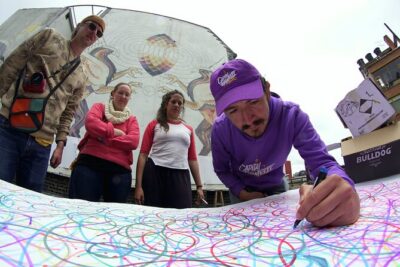
Fun Graffiti Workshop: The Art of Aerosol and Color
Read our review →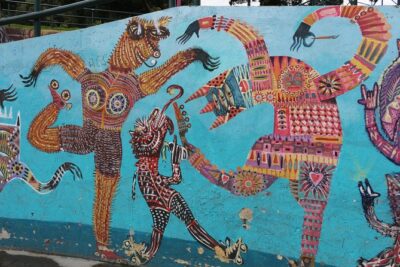
Graffiti Tour in La Candelaria Bogotá with Transportation
Read our review →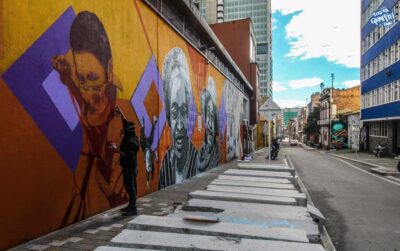
Graffiti Tour in La Candelaria Bogotá with Transportation
Read our review →
Browse the lists this tour appears in