
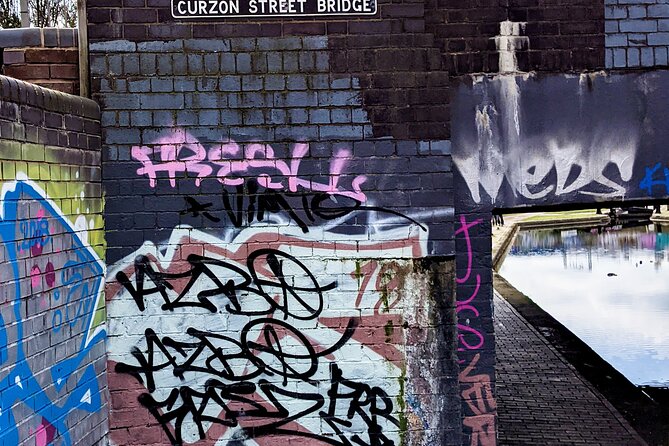
REVIEW · UK MURAL TOURS
Guided Tour of Street Art in Birmingham
Street art tells Birmingham’s story in paint. This guided walk links canals, Digbeth, and the Custard Factory while explaining the artists, causes, and local events behind the walls. I especially like the focus on home-grown artists and the route’s mix of public murals, old industrial spaces, and canal-side corners. I also like that you can choose a 5km walk or a quicker run.
The main drawback is the weather-dependent schedule, paired with a non-refundable booking policy in normal circumstances. You should also expect a fairly active outing, since the walk lasts about two hours and the running option takes about 90 minutes.
Key points at a glance
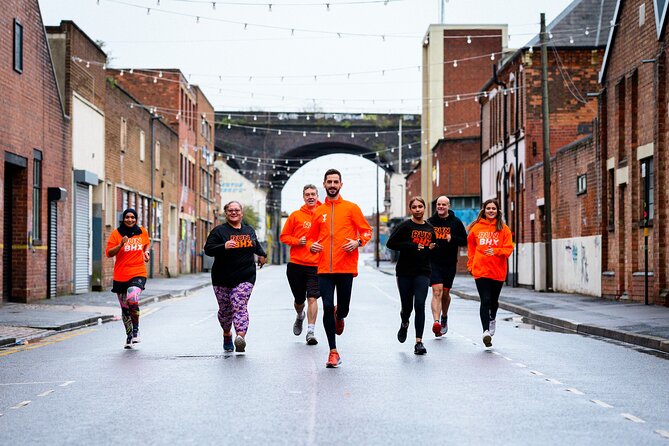
- A 5km route through Birmingham’s creative districts: The tour connects the canals, Digbeth, Lower Trinity Street, the Custard Factory, and suki10c.
- Local artists take center stage: You learn about Birmingham artists and the stories behind their work, not just famous names from elsewhere.
- A Banksy discussion adds context: The opening talk explains Birmingham’s graffiti scene and the 2019 Banksy mural in the Jewellery Quarter.
- The route mixes art with social issues: Expect discussion of animal rights, Black History Month, George Floyd’s murder, and the place of street art in private venues.
- Small enough to stay manageable: The maximum group size is 25 people, with group discounts available.
- The tour begins and ends at the Eagle and Ball: Look for the guide in orange at Gopsal Street, near Birmingham’s canals.
Starting at the Eagle and Ball in Birmingham
Your meeting point is the historic Eagle and Ball pub on Gopsal Street, Birmingham B4 7RJ. Look for the guide wearing orange. That simple detail matters in a city setting, especially if several people are gathering near the pub and canal routes.
The tour starts with the story of Birmingham’s graffiti and street art scene. This is a useful choice because it gives the murals a local setting before you begin photographing them. Instead of treating the art as a collection of colorful walls, the guide connects it with the city’s industrial past, changing neighborhoods, and home-grown creative community.
You also hear about the Banksy mural that appeared in Birmingham’s Jewellery Quarter in 2019. The important point is not simply that Banksy visited the city. The opening explanation looks at how Birmingham already had a street art scene before that famous name arrived, which helps put the mural in perspective.
The tour is capped at 25 people. That is not an intimate private walk, but it should keep the group more workable than a large coach-style outing. You will need to stay close to the guide and pay attention at street crossings and busy public areas.
More Guided Tours in the UK:
- London: Street Art and Graffiti Guided Walking Tour
★ 4.9 · 1,354 reviews - Glasgow: Street Art Guided Walking Tour
★ 4.8 · 385 reviews - Belfast Music and Street Art Small Group Guided Experience
★ 4.5 · 62 reviews
Along the canals toward Digbeth
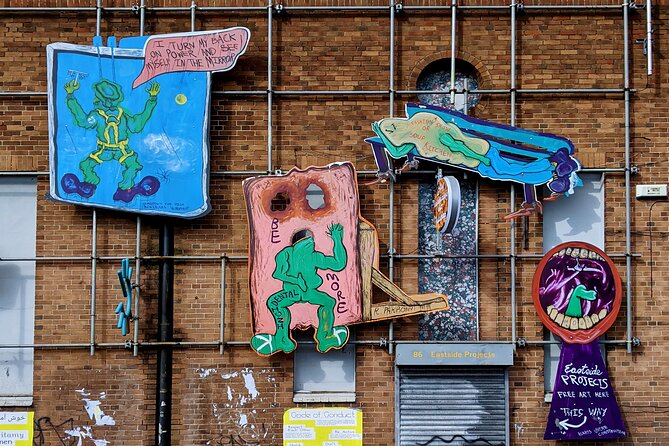
From the Eagle and Ball, the route follows a less obvious canal-side path toward Digbeth. The first section takes about 15 minutes and introduces the decorated canals before the tour reaches the city’s main street art district.
I like this opening because it creates a contrast. Birmingham’s canals recall the city’s industrial working life, while the art adds newer layers of color, humor, protest, and identity. You are not simply walking from one wall to another. The route shows how old infrastructure can become part of a modern creative setting.
The canal walk also helps you get your bearings fast. If you know Birmingham mainly from the Bullring or central shopping streets, Digbeth can feel like a different side of the city. The route reveals a district where old factories, waterways, car parks, music venues, and independent creative spaces meet.
The route covers about 5 kilometers in total. Wear shoes that you can walk in comfortably, and remember that the tour requires good weather. There is no promise of a short indoor alternative if rain arrives, so check the forecast before booking.
Digbeth, Birmingham’s street art center
Digbeth receives the largest share of the tour, with about 25 minutes devoted to several sights and murals. This is the heart of the experience. You stop to look, take photographs, and hear the stories behind the work.
The key strength here is the attention to the artists. You learn about the people who made Birmingham’s walls their canvas, rather than receiving a quick list of famous street art cities or international names. That local focus gives the route a stronger sense of place.
The artwork is described as changing over time. Some pieces may disappear, be painted over, or be replaced by something new. That is part of the nature of street art, but it also means the exact selection can vary. You should book this as a guided look at Birmingham’s creative scene, not as a fixed museum collection where every piece is guaranteed to remain unchanged.
This section should work well for families with older children. The colors and large murals offer an easy visual hook, while the stories give the walk more substance. Children who might lose interest in a standard history tour have a reason to keep looking, especially when the guide connects the images to real people and causes.
The Lock Keepers Cottage and a local female artist
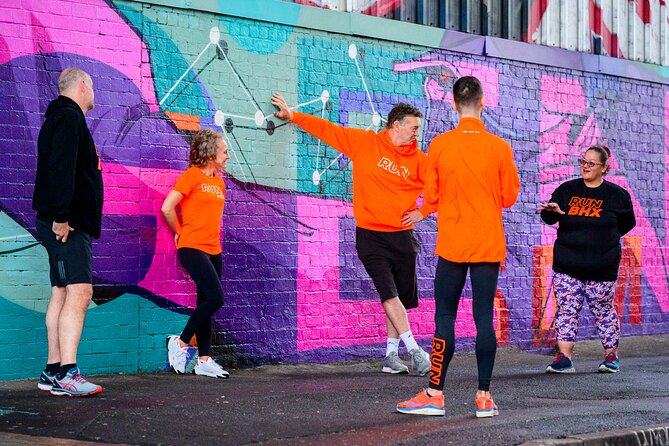
The Lock Keepers Cottage is one of the more distinctive stops. The visit lasts about 10 minutes and includes the story connected to the cottage, along with its decoration by one of Birmingham’s female artists.
This is the kind of stop that can be easy to miss if you explore alone. You might notice the painted building, take a photograph, and continue walking. With the guide, the cottage becomes part of the city’s social and artistic story.
The stop also broadens the picture of who shapes Birmingham’s street art. The tour does not focus only on the most famous male names or large-scale commercial commissions. The inclusion of a female Birmingham artist gives the route a wider view of the local scene.
Because this is a public outdoor stop, you are looking at the work from the street rather than entering a gallery. That keeps the experience free of extra admission charges, but it also means the viewing conditions depend on the location, light, and space around the artwork.
A few more mural tours around the UK worth a look
- Belfast: Murals Taxi Tour
★ 4.9 · 2,047 reviews - Belfast’s Political Mural Taxi Tour
★ 5.0 · 1,180 reviews - London Bike Tour: Landmarks, Secret Gems, Pub Stop & Street Art
★ 5.0 · 943 reviews - Glasgow Street Art Daily Walking Tour: 2pm
★ 5.0 · 648 reviews
Lower Trinity Street and Pongo the orangutan
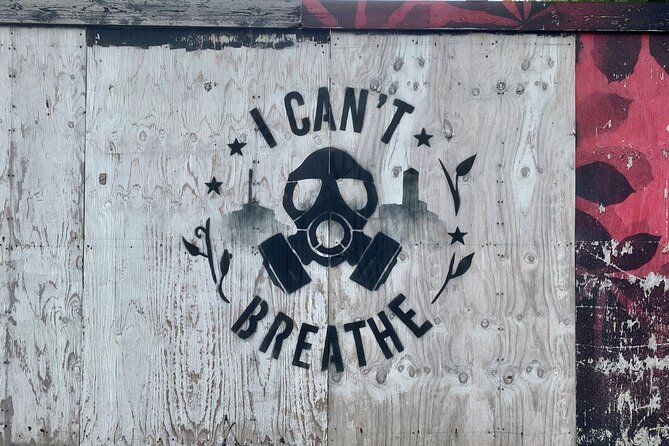
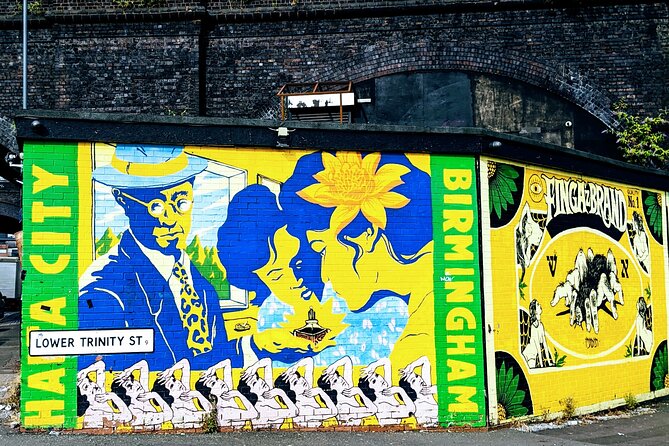
At Lower Trinity Street, you meet Pongo, an orangutan created by Louis Masai. The mural was made for animal rights activism, so the stop gives the tour a clear example of street art used to communicate a cause.
Pongo is more than a photo opportunity. The guide explains how an image can carry a message in a public place, reaching people who may never walk into an exhibition or attend an organized talk. That public-facing purpose is one of the most useful things to understand about street art.
The 10-minute stop is short, but it adds variety to the route. After hearing about Birmingham’s local artists and the city’s street art beginnings, you see a work tied to an international concern. The subject also makes this a good point for families, since an animal image can draw children in before the wider discussion begins.
You should expect time to take photographs, but not a long pause at every mural. The experience keeps moving, and the guide has several stops to cover within the overall two-hour walk.
The Custard Factory and the debate over public art
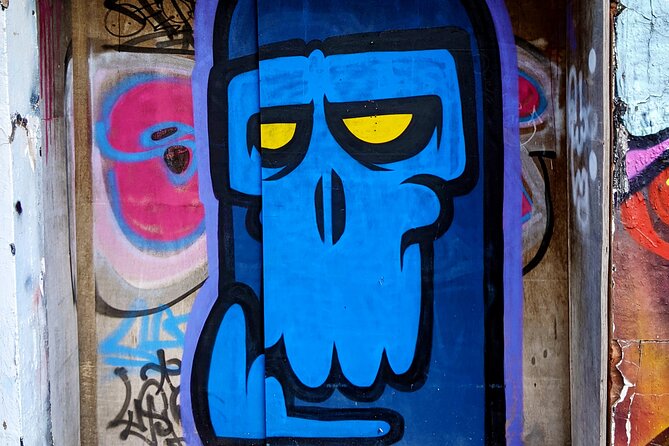
The Custard Factory is the longest stop, at about 20 minutes. This restored Victorian factory complex covers 15 acres and once served as the headquarters of Bird’s Custard. Today, it is a creative quarter with independent shops, cafes, bars, restaurants, and art spaces.
The setting helps explain how industrial buildings can gain a second life. Here, street art sits alongside businesses and creative venues rather than appearing only on abandoned walls. That raises a useful question: does graffiti and street art improve an area, or can it degrade one?
The tour does not treat that question as settled. You get a chance to consider the difference between commissioned murals, unauthorized graffiti, private property, and public support for art. I value this part because it moves beyond the easy idea that all street art is automatically good.
The Custard Factory is also practical for planning the rest of your day. It is a short walk from the Bullring, so you can continue into the city center afterward. The food and drink options are separate from the tour, but the area gives you an easy place to pause after walking.
One useful local tip comes from the tour’s connection with OPM. The stop is described as a good excuse to eat there, but food is not included in the ticket. If you plan to make a meal of the outing, treat OPM as a possible follow-on rather than part of the guided experience.
suki10c and Birmingham’s young Black creatives
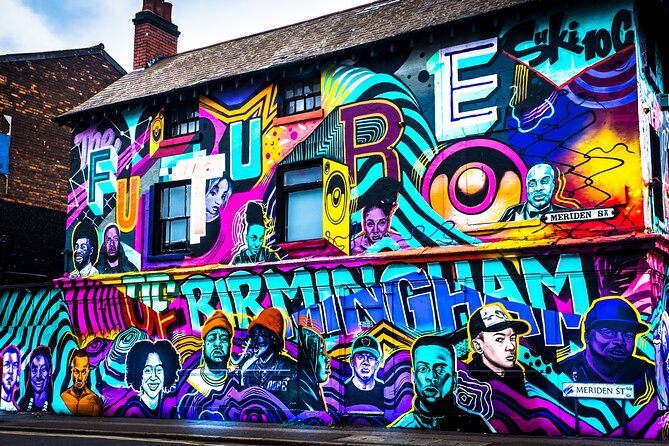
The final listed stop is suki10c, an eco-friendly live music venue covered by a mural created during Black History Month. The mural celebrates Birmingham’s young Black creatives, and the discussion also covers how the venue was used after George Floyd’s murder.
This is one of the most socially focused moments on the route. It shows how street art can mark a community’s identity and respond to events far beyond the immediate wall. You are encouraged to think about who gets represented in public space and how art can support local voices.
The stop lasts about 10 minutes. Admission is not included, so do not assume the tour ticket covers entry to the venue. The supplied details do not state an additional admission price, so check the arrangements when booking if access inside the venue matters to you.
This stop gives the tour a clear modern edge. The route has already covered industrial buildings, canals, activism, and commercial creative spaces. At suki10c, the focus turns firmly to representation, memory, and the role of local art after a major international event.
What you get for $54.74
At $54.74 per person, this is not a bargain-priced city stroll. Its value depends on how much you want explanation and local context. If you only want to photograph murals, you can explore public areas independently for less. If you want the artists’ stories, the route’s social themes, and a guide to places you might otherwise miss, the price is easier to justify.
The tour lasts roughly 90 minutes to two hours. The walking version covers about 5 kilometers, while the running version takes about 1.5 hours. That means you are paying for a focused route rather than a full-day activity, so the strongest value comes when you are interested in the subject itself.
Group discounts may improve the price for families, friends, or organized parties. The group limit of 25 keeps the experience from becoming a huge street procession, though it is still a shared tour rather than a private one.
I would compare the cost with what you want from a guide. This is not mainly about getting from one major attraction to another. It is about finding meaning in walls, buildings, and public spaces. For someone curious about Birmingham’s creative identity, that added interpretation is the central reason to book.
Who should take the walk?
I would recommend this tour to anyone who wants a different view of Birmingham, especially if you have already seen the main shopping district. It suits visitors who enjoy photography, urban culture, local artists, social history, and unusual walking routes.
Families can also get a lot from it. One direct account describes children loving the colors and the information behind the artworks. The tour is not designed as a children’s program, but the visual subject matter gives younger participants plenty to look at.
The running option suits people who want to cover the route at a quicker pace. If you prefer time for photographs and questions, choose the walk. The 5km distance is manageable for most participants, but you should still wear comfortable shoes.
This may not suit you if you want indoor shelter, a fixed list of guaranteed murals, or a polished gallery setting. Street art changes, and this route takes place outdoors in public areas. Poor weather can lead to cancellation, with a different date or a full refund offered in that case.
The activity is near public transportation, and service animals are allowed. Most people can participate, but the supplied details do not promise a step-free route or seating at each stop, so ask the provider if you have specific mobility needs.
Booking advice and the final call
The cancellation terms deserve attention. The booking is normally non-refundable and cannot be changed for any reason. If poor weather cancels the tour, you can receive a different date or a full refund. The same applies if the minimum number of participants is not reached.
This experience is usually booked about 10 days ahead. That does not guarantee availability, but it suggests you should not leave it until the last minute if the tour is important to your schedule.
I would book it if you want the stories behind Birmingham’s murals and are happy to spend two hours outside. The strongest parts are the local artist focus, the canal-to-Digbeth route, Pongo’s animal rights message, and the Black History Month mural at suki10c.
I would skip it if you only want a quick photo stop or dislike fixed outdoor activities. For everyone else, the tour offers a thoughtful way to see Birmingham through its walls, waterways, old factories, and creative communities.
FAQ
Where does the Birmingham street art tour start?
The tour starts at the Eagle and Ball, Gopsal Street, Birmingham B4 7RJ, England. Look for the guide wearing orange.
Where does the tour finish?
The activity ends back at the meeting point at the Eagle and Ball.
How long does the tour last?
The walking version takes approximately two hours. A running option takes about 1.5 hours.
How far do you walk?
The route covers about 5 kilometers.
What areas does the tour visit?
The route includes Birmingham’s canals, Digbeth, the Lock Keepers Cottage, Lower Trinity Street, the Custard Factory, and suki10c.
Is admission included at every stop?
The listed outdoor stops do not require an admission ticket. Admission at suki10c is not included.
What happens if the tour is canceled?
If poor weather causes cancellation, you will be offered a different date or a full refund. If the minimum number of participants is not reached, you will be offered a different date or experience, or a full refund.
Just added around the UK
- Manchester Street Art: Quest Experience★ 4.0 · 6 reviews
- 3-Hour Private Tour of East London Graffiti & Street Art★ 4.5 · 5 reviews
- London Street Art Tour of the East End Semi-Private 12ppl Max★ 5.0 · 23 reviews
- The Great Street Art Experience★ 5.0 · 2 reviews
- London Unexpected Private Tour – Markets, Street Art & Camden Town★ 5.0 · 2 reviews
- Private Royal London Bike Tour with pub & street art★ 5.0 · 2 reviews
- London Street Art Tour of the East End Exclusive Walking Tour★ 5.0 · 12 reviews
- Shoreditch Street Art Private Photography Tour including Brick Lane★ 5.0 · 5 reviews
UK Mural Tours, compared.
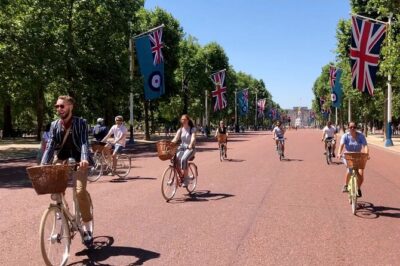
London Bike Tour: Landmarks, Secret Gems, Pub Stop & Street Art
Read our review →
Browse the lists this tour appears in