
REVIEW · USA MURAL TOURS
San Francisco: Mission District Street Art and Food Tour
The Mission tells San Francisco’s story in color. This two-hour walk pairs street murals with local food, 24th Street, old Victorians, and the neighborhood’s Latinx roots, making it a lively introduction to one of the city’s most distinctive districts. I like that the route goes beyond postcard sights, and I like that guides such as Eric, who grew up in the neighborhood, can add personal context. The main catch is that the $39 ticket covers the walk only, so you should plan on spending up to another $30 if you want all three recommended dishes.
I also appreciate the short 0.7-mile route. You get plenty of time to stop, eat, and listen without turning the afternoon into a marching exercise. Still, the tour runs on a schedule, and one participant who arrived late was unable to join after failing to reach the organizers, so arrive early and do not count on a delayed start.
Key points at a glance
- A 0.7-mile food-and-art walk: Two hours on foot, with seated breaks at several eateries.
- The Mission burrito takes center stage: Your food budget can include this classic San Francisco creation.
- 24th Street is the neighborhood anchor: The route explores an important commercial and cultural center of the Mission.
- Murals carry a message: Your guide explains the people, themes, and Frida Kahlo connection behind the artwork.
- History appears in unexpected places: You will see Victorian houses that survived the 1906 earthquake and fire.
- Bring cash for better food value: Two restaurants offer discounts for cash payments, according to the tour information.
Why the Mission District makes a good walking tour
San Francisco can feel like a stack of separate cities, each with its own food, architecture, and history. The Mission District is especially rewarding on foot because the streets bring several parts of the city together at once: Latinx culture, public art, old homes, neighborhood restaurants, and the changes brought by the modern tech economy.
I like the way this tour frames the Mission as more than a place to eat. Your guide discusses the area from before the Spanish conquest through the present day. That broad time span helps you understand why a mural, a Victorian facade, or a restaurant counter matters here.
The route covers only about 0.7 miles, but the distance does not tell the whole story. You will be on your feet for most of the two hours, with breaks when you eat. That makes the tour a good fit if you want substance without a long, tiring walk.
Meet your guide outside Voss Gallery. Look for the orange hat marked ExperienceFirst. This is a small but useful detail, especially on a busy San Francisco street where a group can be easy to miss.
More Mural and Street Food Tours in the USA:
- Tucson Food Tours- Locally Owned Mural and History Tour
★ 5.0 · 10 reviews - Handcrafted Donuts & Street Art: Wynwood’s Most Unique Food Tour
★ 5.0 · 10 reviews - Austin Street Art and Street Food Tour with Local Guide
★ 5.0 · 4 reviews
Starting on 24th Street, the Mission’s everyday center
The tour places 24th Street at the heart of the outing. This matters because the Mission is best understood through daily life, not just through its most photographed walls. Here you get a sense of how shops, food spots, street scenes, and local traditions share the same few blocks.
I would pay attention to the guide’s explanations rather than rushing from one sight to the next. The value of a neighborhood walk is not simply seeing a mural or ordering a dish. It is learning why that location matters and how the district has changed.
The tour also addresses the current tech economy takeover. That topic gives the walk a needed edge. San Francisco’s newer wealth has brought investment and change, but it has also raised difficult questions about displacement and the future of long-established communities. The information provided does not promise a full academic treatment, so you should see this as an accessible introduction rather than a complete study of local politics.
Still, the subject belongs in the tour. It helps you look at the Mission with more care and notice the tension between old neighborhood identity and newer pressures.
Reading the Mission’s murals instead of just photographing them
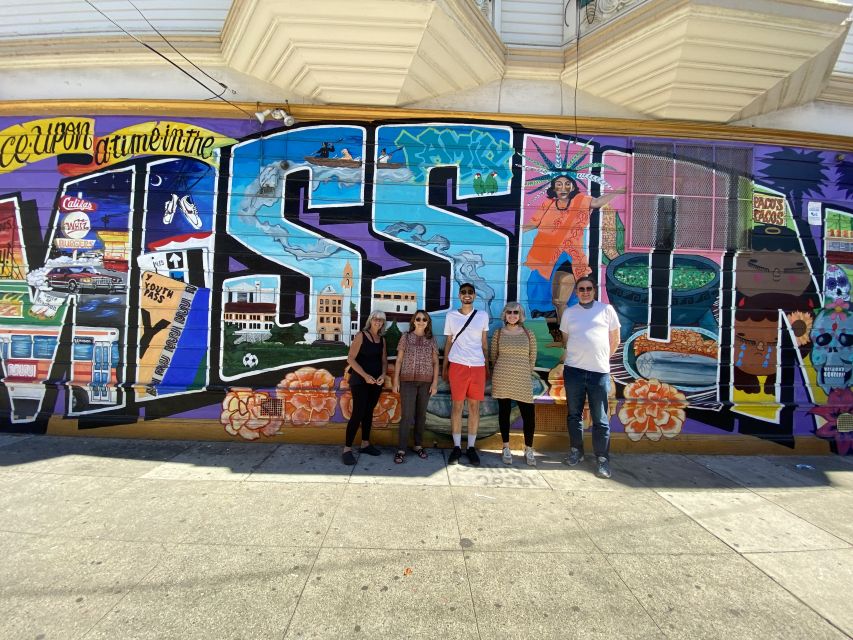
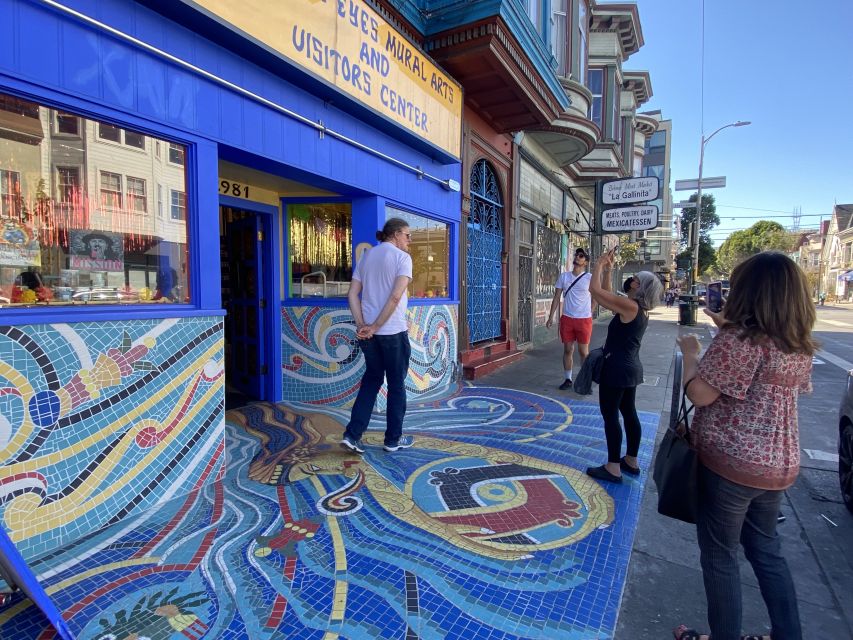
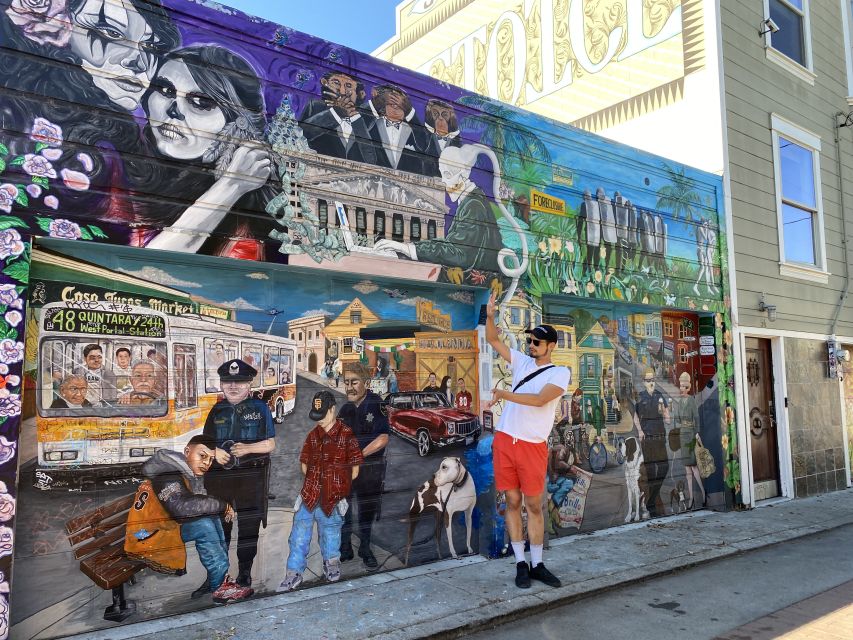
The Mission’s murals are a major reason to take this tour. You will see colorful street art and hear about what it means, rather than simply stopping for a quick photograph. That added explanation can change how you look at public art.
The route includes a connection to Frida Kahlo, an especially useful detail for anyone interested in Mexican art and the cultural references found across the district. The tour information does not specify the exact mural or the full story, so I would treat this as one of the highlights your guide explains on the day rather than expect a formal Frida Kahlo museum presentation.
Murals are also a good way to discuss community memory. Painted walls can honor political causes, celebrate cultural figures, or give a neighborhood a public voice. Your guide’s job is to connect those images with the Mission’s Latinx culture and history.
There is a practical advantage here, too. Street art changes, fades, and sometimes disappears. A guide helps you make the most of what is visible during your visit. I would bring a phone or camera, but keep it secondary to the stories. The artwork is more interesting when you know what you are seeing.
Meeting the Mission’s earthquake survivors
The tour includes Victorian houses that survived the 1906 earthquake and fire. This is a fine contrast with the murals. One part of the walk looks at art created in the street, while another points to buildings that have endured for more than a century.
The phrase survived matters. San Francisco’s earthquake story is often told through grand landmarks and citywide disaster accounts. Here, you get a more intimate view through homes that still shape the neighborhood’s streets.
The information does not identify the exact houses, so you should not expect a named architectural tour of every building. Instead, this part works as a brief visual lesson. Your guide can help you notice the details and understand why these older structures are significant.
I like this mix of old and new. It keeps the outing from becoming only a food crawl or only a mural walk. You see how the Mission’s identity is built from layers, some painted recently and others preserved by chance, care, or both.
More Food and Drink Tours in the USA:
- 3-Hour Atlanta Beltline Food, Street Art and History Tour
★ 5.0 · 345 reviews - Arts District Eats: Food, Art & Culture Walking Tour in Las Vegas
★ 5.0 · 191 reviews - 2-Hour Food, History and Street Art Tour of Ponce City Market
★ 5.0 · 159 reviews - Denver’s Beer and Graffiti Walking Tour
★ 5.0 · 138 reviews
Eating your way through three recommended dishes
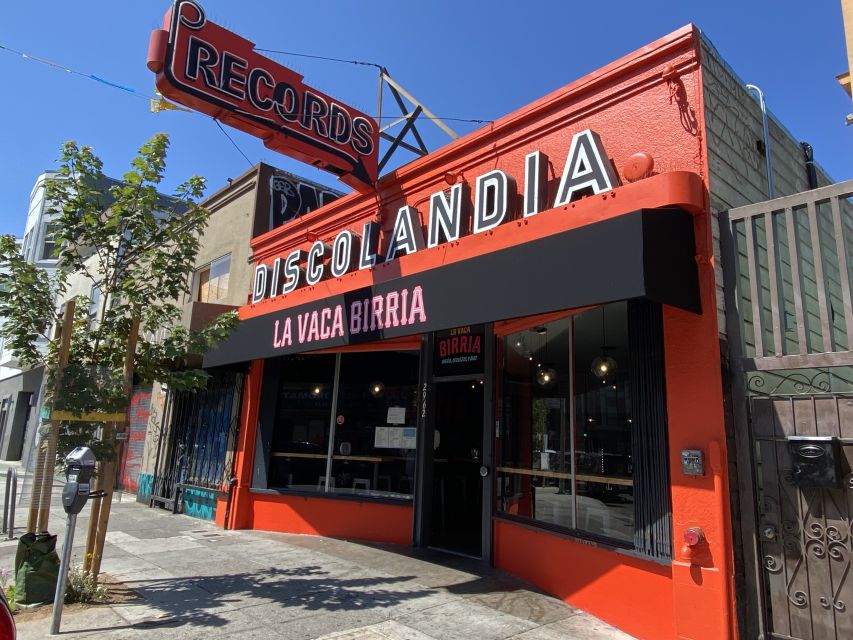
Food is not included in the $39 ticket, and that is the most important budget detail. You should bring about $30 if you want to try all three recommended dishes. The food is optional, so you can join for the walking and history portion without ordering everything.
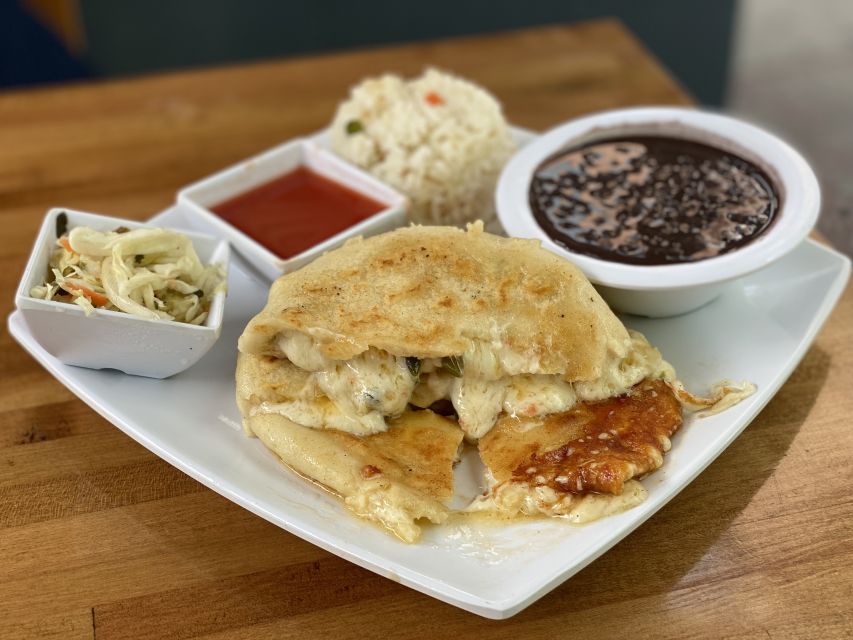
The best-known stop is the Mission burrito, a San Francisco invention that deserves its place on the route. The tour presents it as a classic local food, not just a convenient lunch. If you have never tried one, this is a good setting to learn why it became so closely linked with the neighborhood.
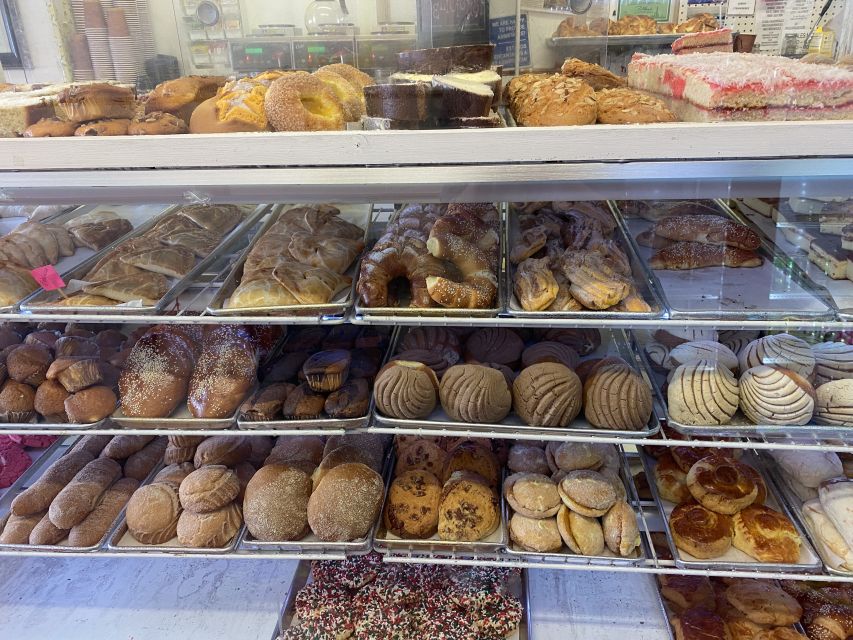
The exact restaurant names and full dish list are not provided, so I would avoid arriving with a fixed expectation of a particular menu. The useful promise is variety across several eateries, with the guide directing you toward local food spots rather than leaving you to guess.
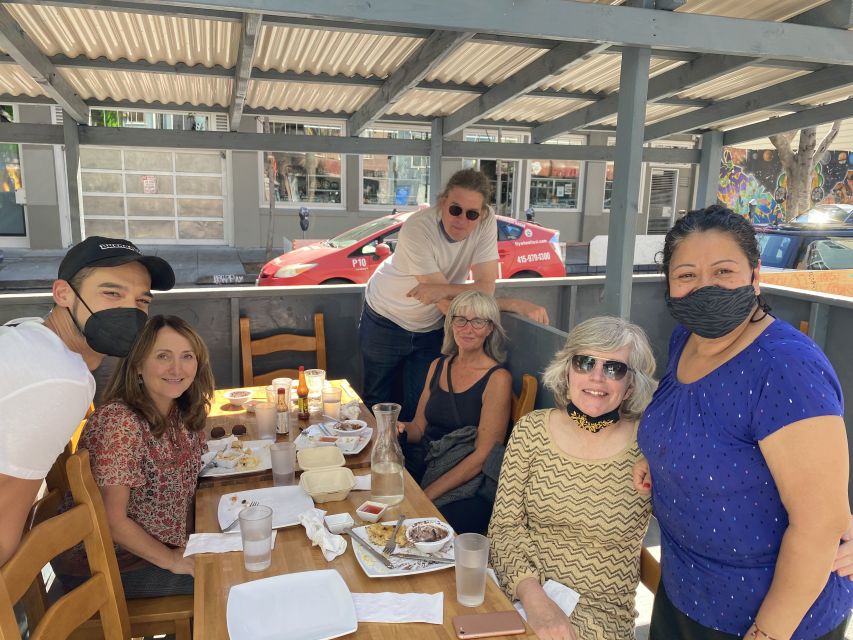
Bring cash. Paying in cash gives you a discount at two of the restaurants, which can soften the extra food cost. It also explains why cash is listed as something to bring, even though the walking tour itself has a fixed ticket price.
Dietary needs should not prevent you from booking. Vegetarian, vegan, gluten-free, and lactose-free choices are available, and the restaurants can accommodate most dietary restrictions. I would still tell your guide about your needs at the start, since the exact options depend on each stop.
The food portion has one clear advantage over a standard restaurant recommendation list: you get to eat while learning where you are. The downside is cost control. At $39, the tour looks inexpensive until you add the suggested $30 for food. If you are traveling on a tight budget, you can skip some tastings, but that reduces one of the tour’s main pleasures.
What the guide adds to the afternoon
The guide is central to the quality of this tour. The strongest feedback points to guides who are friendly, engaging, and closely tied to the neighborhood. Eric was born and raised in the Mission, and that background helped make the route feel personal rather than generic.
Seth also received praise for his stories and easy manner. Those comments suggest that the best version of this outing depends heavily on who leads it. That is common with walking tours, but it is worth keeping in mind when you book.
A good guide can make a familiar street corner meaningful. The guide can also point out food spots you might miss if you were walking alone, explain the mural references, and connect the Mission’s past with its current changes.
The weaker point is communication around late arrivals. One participant arrived late, had contacted the organizers in advance, and still missed the activity after receiving no response. I would arrive at least 10 to 15 minutes early and stand outside Voss Gallery with the meeting instructions ready on your phone.
Who will get the most from this two-hour route
I would recommend this tour to first-time visitors who want a clear introduction to the Mission without spending half a day on a long food crawl. It also suits repeat visitors who have seen central San Francisco but have not spent time in this neighborhood.
Food lovers will appreciate the chance to try several local dishes, especially the Mission burrito. Art fans will enjoy the murals and Frida Kahlo connection. History-minded visitors get the 1906 earthquake survivors and the longer story from before the Spanish conquest to the tech economy.
Families may find the short distance manageable, though the group remains on its feet for most of the two hours. Anyone who dislikes walking or standing should consider that before booking, even though the route is wheelchair accessible.
This is less suitable if you want a large meal, a private guide, or an exact list of restaurants in advance. It is also not the right choice if you want a full-day history course. The strength here is balance: a little art, a little architecture, a little neighborhood history, and several chances to eat.
Price, timing, and practical value
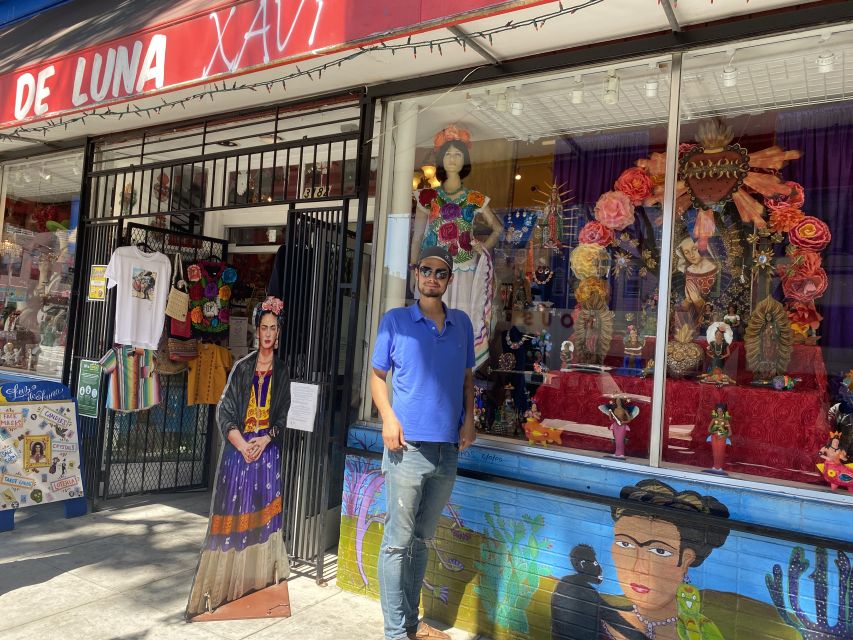
The ticket costs $39 per person for a two-hour guided walk. At that price, the experience offers a reasonable way to get oriented in the Mission, especially because a professional guide and insider food suggestions are included.
You should judge the total cost as $39 plus whatever you spend on food. The suggested food budget is $30, bringing the likely total to about $69 per person if you try all three recommended dishes. That is fair for a guided food-and-art outing, but it is not a bargain if you plan to eat only one small item.
The tour is usually offered in the afternoon. That timing works well for a relaxed neighborhood walk and gives you a useful plan between morning sightseeing and dinner. Since the exact start time can vary, check your booking details and arrive early.
Free cancellation is available up to 24 hours before the start time, and you can reserve now and pay later. Those policies are useful if your San Francisco schedule is still moving around.
The activity is conducted in English. It is wheelchair accessible, and the route is short, but you should still wear comfortable shoes because you will be standing and walking except during food stops.
A balanced verdict on the Mission street art and food tour
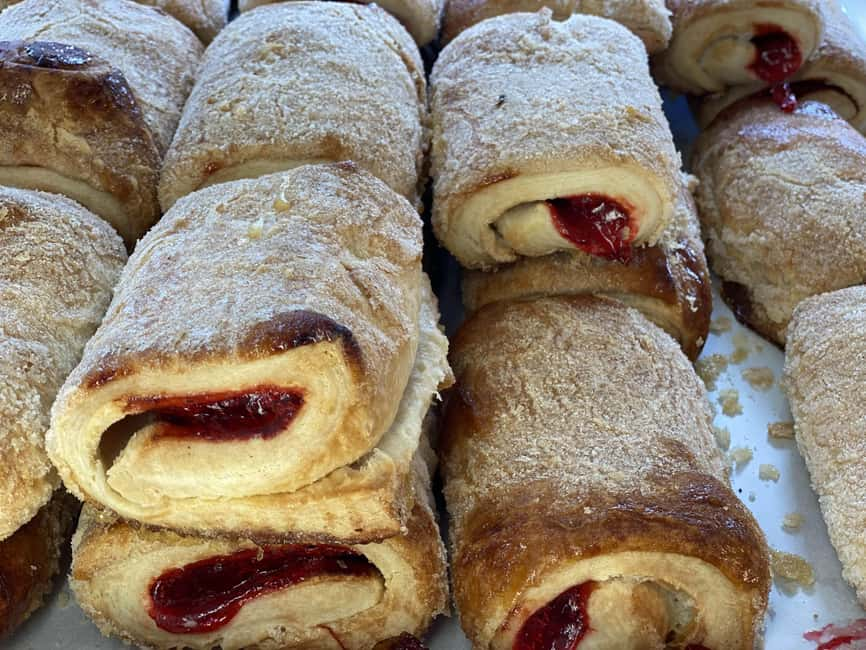
I like this experience because it gives you several ways into the neighborhood. The murals catch your eye, the food gives you a taste of local life, and the older homes connect the Mission to San Francisco’s earthquake past. The guide stories are the part that can turn those pieces into a coherent afternoon.
The main drawbacks are the extra food cost and the need to arrive on time. The small rating sample also means I would not treat the 4.3 score as a final judgment on every tour date. Guide quality can vary, though the strongest feedback specifically praises Eric and Seth.
Should you book it?
Book this tour if you want a compact, social introduction to the Mission District and are happy to spend about $30 beyond the ticket for food. It is especially useful early in your San Francisco stay, when you can use the guide’s restaurant tips for the rest of your visit.
Skip it if you want a private, highly detailed architecture tour, a full meal included in the ticket, or a flexible start time. For most visitors who enjoy murals, neighborhood stories, and a proper Mission burrito, the combination offers solid value, provided you arrive early and carry cash.
FAQ
How long does the Mission District street art and food tour last?
The tour lasts two hours.
How much does the tour cost?
The ticket costs $39 per person.
Is food included in the ticket?
No. The ticket covers the walking tour, while food is optional and paid for separately.
How much extra money should I bring for food?
The tour recommends budgeting $30 if you want to try all three recommended dishes.
What food is featured on the tour?
The tour includes a classic Mission burrito and food stops at several eateries. The full list of dishes is not specified.
Can I pay less at any of the restaurants?
Cash payments provide a discount at two of the restaurants.
Is the tour suitable for dietary restrictions?
Yes. Vegetarian, vegan, gluten-free, and lactose-free options are available, and the restaurants can accommodate most dietary restrictions.
Where do I meet the guide?
Meet outside Voss Gallery. The guide wears an orange hat marked ExperienceFirst.
How far do you walk?
The route covers about 0.7 miles. You will be on your feet except when eating at the restaurants.
Is the tour wheelchair accessible?
Yes, the activity is wheelchair accessible.
What language is the tour conducted in?
The tour is conducted in English.
Can I cancel for a refund?
Yes. You can cancel up to 24 hours in advance for a full refund.
More Food Tours in the USA
- Wynwood Walls Miami Food and Street Art Walking Tour
★ 5.0 · 116 reviews - Atlanta: Beltline Food, Street Art, and History Walking Tour
★ 5.0 · 47 reviews - Miami: Wynwood Walls Street Art and Food Walking Tour
★ 4.9 · 43 reviews - Atlanta: BeltLine Food and Street Art Tour
★ 4.5 · 4 reviews
Just added around the USA
- Wynwood Walls Street Art & Neighborhood Walking Tour★ 4.9 · 9 reviews
- Tucson Food Tours- Locally Owned Mural and History Tour★ 5.0 · 10 reviews
- St. Pete’s Must-Do Murals Tour — The Premier Street Art Trolley★ 5.0 · 22 reviews
- Sacramento Street Art Walking Tour – See the Murals Sacramento is Famous For★ 5.0 · 6 reviews
- Downtown Sacramento Mural and Art Walking Tour★ 5.0 · 4 reviews
- Would I Lie To You? Mural Walks★ 5.0 · 3 reviews
- Richmond’s Street Art Segway Tour★ 4.5 · 3 reviews
- MidTown Mural Pedicab Tour★ 4.5 · 6 reviews
USA Mural Tours, compared.
Murals of Nashville Instagram Tour by Golf Cart
Read our review →
Nashville Combo Tour: Sightseeing, Murals & Brewery/Distillery
Read our review →
Brooklyn Graffiti & Street Art Walking Tour in Bushwick
Read our review →
Wynwood Art District 1-Hour Street Art Tour by Golf Cart
Read our review →
Browse the lists this tour appears in