
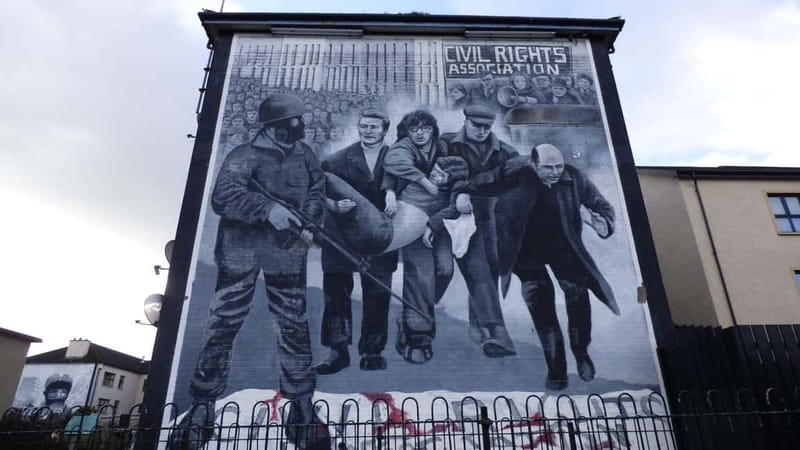
REVIEW · UK MURAL TOURS
Derry: Bloody Sunday and Bogside Murals Walking Tour
History hits harder on foot. This 1.5-hour Bogside walking tour links Derry’s murals, civil rights struggle, the Battle of the Bogside, and Bloody Sunday in one focused route. I like the human scale of it, especially when guides such as Gleann, Angela, Michael, and Tony add personal or local connections. The main drawback is that the tour deals with violence and loss, so it is not light sightseeing.
I also like the clear meeting point outside the Tower Museum and the modest $35 price. You see important places without giving up half a day, and the route finishes at the Bloody Sunday monument, where the story has its most sobering weight. Bring waterproof clothing, since the walk goes ahead in all weather, and note that it is not suitable for people with mobility impairments.
Key points to know before you book
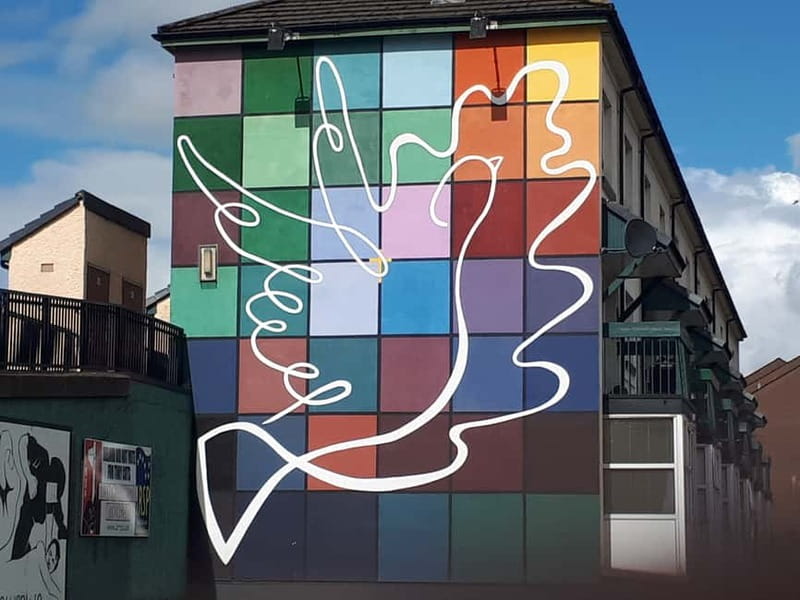
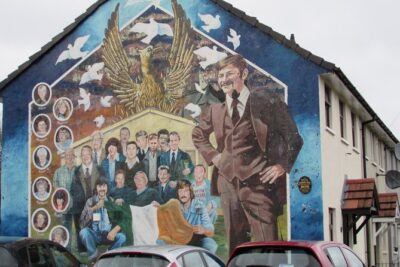
- The Bogside murals are the visual heart of the walk, turning local history into large public paintings.
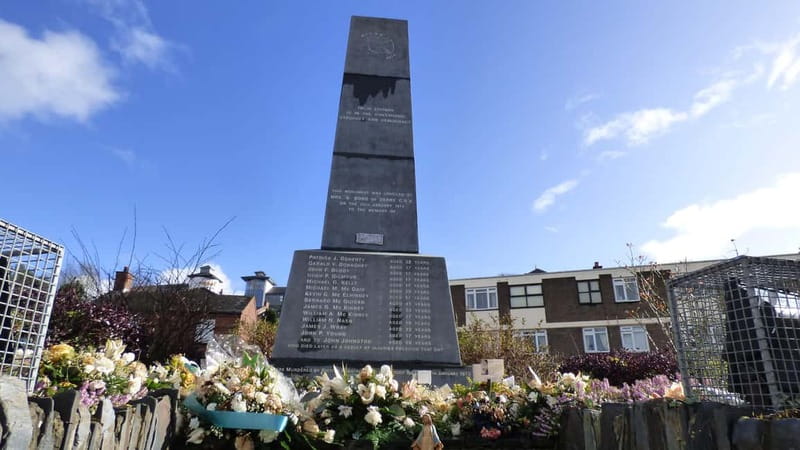
- Bloody Sunday is treated as a central event, not a brief footnote, with a visit to the massacre site and its monument.
- Guides bring strong personal connections, with Gleann, Michael, Angela, Tony, Ian, Laura, and Wendy among the guides praised for warmth and insight.
- The route takes about 90 minutes, making it easy to fit into a day of exploring Derry.
- You begin outside the Tower Museum, at Magazine Gate just inside the city walls.
- The walk costs $35 per person, a fair price for a focused guide-led introduction to Derry’s modern past.
Starting at Magazine Gate beside the Tower Museum
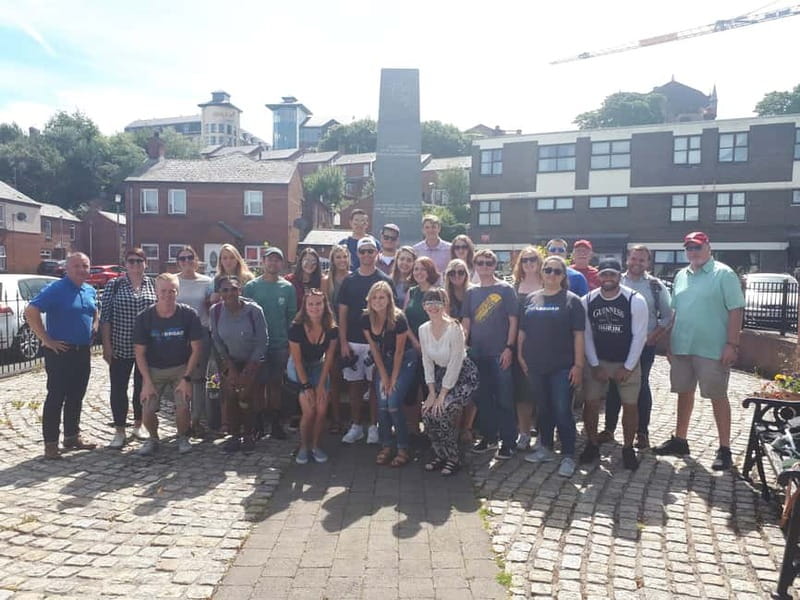
Your meeting point is outside the Tower Museum at Magazine Gate, just inside Derry’s city walls. This is a useful place to start because it puts you beside two of the city’s major reference points: the old walls and the museum devoted to local history.
Arrive ready to walk rather than expecting a coach or a series of indoor visits. The experience is a guided walking tour, and the city itself provides much of the setting. You move through the Bogside, where streets, murals, monuments, and remembered events are tied closely together.
The starting point is also easy to recognize. If you are unfamiliar with Derry, allow a little time to find Magazine Gate and gather yourself before the guide begins. The tour is conducted in English, and the tone can shift quickly from ordinary city sightseeing to painful twentieth-century events.
That change in mood is part of the point. You are not simply looking at paintings on a wall. You are walking through an area where political rights, identity, religion, policing, and community life collided.
More Street Art Walking Tours in the UK
- London: Street Art and Graffiti Guided Walking Tour
★ 4.9 · 1,354 reviews - Glasgow Street Art Daily Walking Tour: 2pm
★ 5.0 · 648 reviews - Glasgow: Street Art Guided Walking Tour
★ 4.8 · 385 reviews
How partition and discrimination shaped the story
The tour begins with the background needed to understand why the Bogside became such an important place. You hear about the partition of Ireland and the creation of the six-county state, followed by the discrimination experienced by Irish Catholics.
This opening matters because Bloody Sunday did not happen in isolation. Without the earlier political and social context, the murals can look like dramatic artwork without a clear reason for being there. The guide connects the older divisions to the civil rights movement and explains why ordinary demands for fair treatment became such a major source of tension.
I appreciate this broad opening because it keeps the walk from becoming a single-event memorial tour. You are given enough background to follow the chain of events: partition, discrimination, civil rights campaigning, the Battle of the Bogside in 1969, and the violence that followed.
The amount of information is considerable for a 90-minute walk, but the best guides adjust their delivery to the group. Lauren from Canada described Gleann as tailoring the discussion to what the small group already knew and to their different backgrounds. That kind of adjustment is useful if you are new to Irish history and do not want a lecture filled with unexplained names and dates.
The Bogside, where civil rights became visible
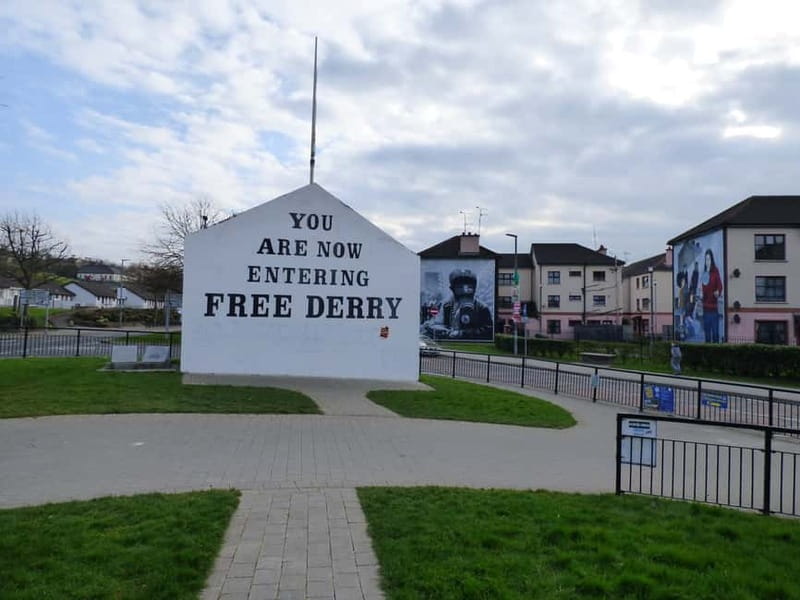
The Bogside is the key setting of the tour. It was a central area of the civil rights movement, and walking through it gives the subject a physical sense of place that a museum display cannot fully provide.
Your guide explains the Battle of the Bogside in 1969 and the conditions that made the area a center of protest and confrontation. The story is not presented as a detached list of political events. Guides with family or local connections can explain how these events affected residents and why the memories remain important.
Several people who took the tour praised Gleann for sharing personal experience and family connections. Michael was described as a local from the Bogside with a particularly strong connection to the subject. That personal element can make the walk more direct and moving, although it also means the experience is shaped by the guide’s perspective.
That is worth keeping in mind. This is not designed as a neutral academic seminar with every political interpretation set side by side. It is a local-history walk centered on the civil rights experience of the Bogside and the human cost of the conflict. If you want to understand how the events were felt by people in the area, that is a major strength.
The route is described as easy paced, but it still requires walking outdoors. Wind and rain are common possibilities, and one group completed the experience in poor weather. The guide’s storytelling may keep your attention, but good footwear and waterproof layers will help you focus on the subject rather than your cold feet.
Reading Derry through the Bogside murals
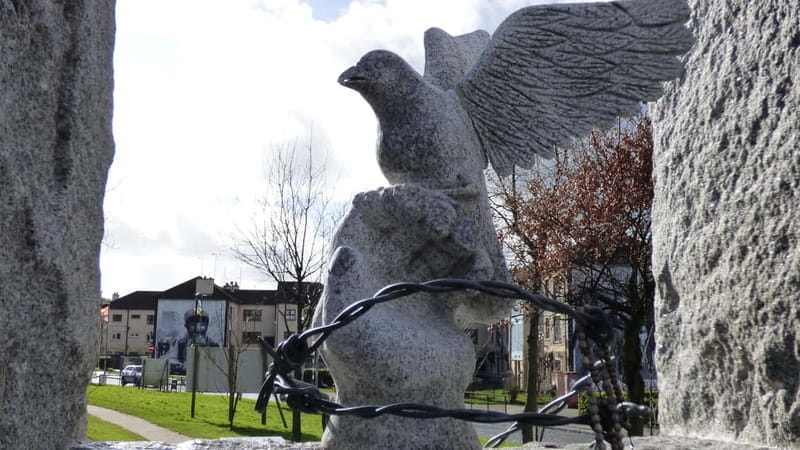
The murals are the tour’s most immediate visual feature. They depict the city’s past and bring political ideas, community memory, and loss into public view. Your guide explains what you are seeing rather than leaving you to guess at the meaning of each image.
This is where the tour offers good value for first-time visitors. You can photograph a mural in seconds, but understanding why it is there takes longer. The guide connects the paintings to the civil rights movement, the Bogside, Bloody Sunday, and the wider story of the Troubles.
The artwork also gives the walk a changing rhythm. After serious historical explanation, you stop to look at a powerful image. Then the guide adds the facts and personal context that make the image more than a backdrop.
The tour may also point out filming locations connected with Derry Girls. That is a lighter detail, and it provides a small link between the city’s modern popular image and the harder history beneath it. Do not expect the television references to take over. The murals and political history remain the main subject.
I would not book this tour only for photographs. The paintings are memorable, but their importance comes from the stories attached to them. If you pay attention to the guide’s explanation, the Bogside becomes easier to understand as a living community rather than a collection of famous walls.
Same walls, a different guide:
- Belfast: Murals Taxi Tour
★ 4.9 · 2,047 reviews - Belfast’s Political Mural Taxi Tour
★ 5.0 · 1,180 reviews - London Bike Tour: Landmarks, Secret Gems, Pub Stop & Street Art
★ 5.0 · 943 reviews - Shoreditch Street Art Tour London
★ 5.0 · 481 reviews
Bloody Sunday and the cost of the conflict
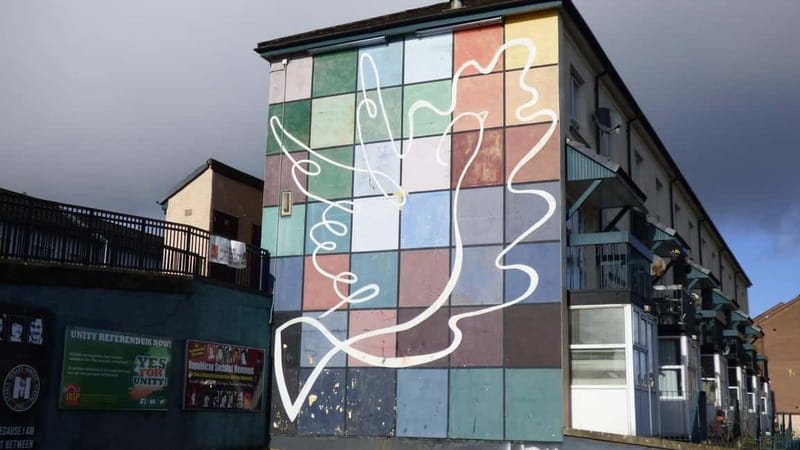
The most serious part of the tour concerns Bloody Sunday in January 1972. You hear about the massacre, visit the site, and learn about the inquiries that followed.
The stop is powerful because the location is part of the explanation. You are not hearing about a distant event in a classroom. You are standing in the area where it happened, while the guide explains the sequence of events and the effect on the people of Derry.
The tour then ends at the Bloody Sunday monument, a fitting final stop and a lasting tribute to the Civil Rights Association. The monument gives the walk a quiet sense of purpose. After the murals and the wider political discussion, the route comes back to individual lives and public remembrance.
Expect the subject to be handled with care. Guides have been praised for being respectful, funny when appropriate, and able to keep the group engaged without making light of the tragedy. That balance matters. A tour about Bloody Sunday should not be cold and purely factual, but it should never turn suffering into entertainment.
Personal connections are a recurring strength here. Gleann’s family was directly affected by the Troubles, and other guides have shared personal ties to the history. You may find that this adds emotional force and helps explain why the events remain important. It can also make the experience more intimate than a standard city tour.
If you prefer to process difficult history privately, this may feel intense. The 90-minute length helps keep the material focused, but it does not make it easy. The final monument is likely to stay with you after the tour ends.
What the guides add to the experience
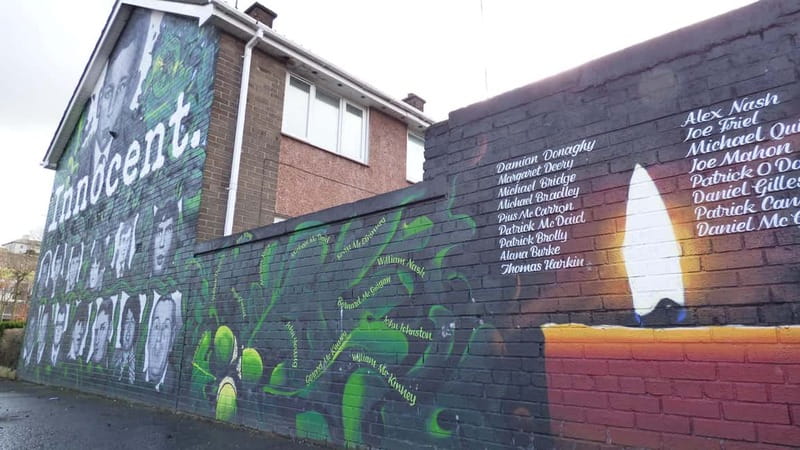
The guide can make or break a history walk, and this experience has a wide group of highly praised guides. Gleann appears frequently in the feedback, with Ian, Angela, Tony, Laura, Michael, and Wendy also mentioned for their work.
Gleann is repeatedly described as warm, funny, personal, and extremely well informed. That combination is valuable because the subject includes dates, political changes, military events, civil rights, and difficult moral questions. Facts alone can become hard to absorb. A natural storyteller gives the material shape.
Angela is praised for making the walk relaxed, informative, and engaging, even in strong wind and rain. Tony is noted for sharing personal connections, while Michael brings a local Bogside perspective. Wendy is praised for offering history from a personal point of view.
These details suggest that your guide may vary, and the tone may vary with the person leading the group. The common thread is a strong grasp of Derry’s history and a willingness to answer questions. You might receive a more personal account with one guide and a more structured presentation with another.
The humor also deserves a small warning. A friendly guide can make the walk easier to follow, but the experience still covers death, discrimination, and conflict. The best balance is not constant solemnity. It is knowing when a lighter comment helps people listen and when the subject requires silence.
Is $35 fair for 90 minutes?
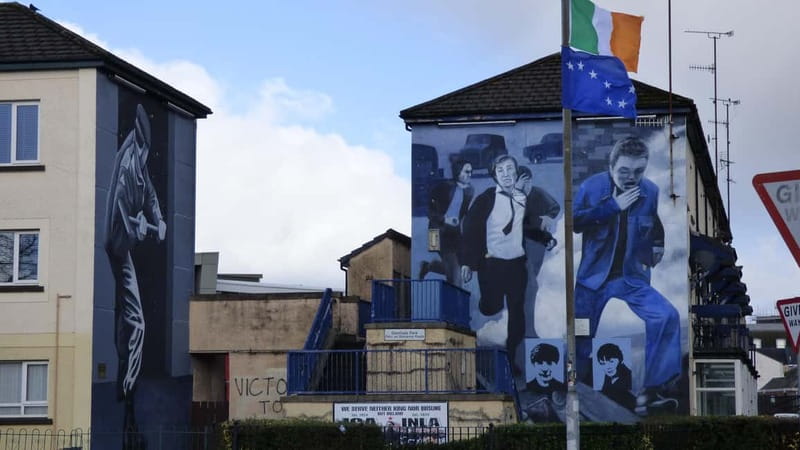
At $35 per person, this is not the cheapest way to spend an hour and a half in Derry, but I think the price is reasonable for a specialist walking tour.
You are paying for a guide who does more than point at murals. The experience ties together partition, the six-county state, discrimination, civil rights, the Battle of the Bogside, Bloody Sunday, the inquiries that followed, and the meaning of the memorial. That is a lot of context in a short period.
It is also good value if you have limited time in Derry. You do not need to commit to a full-day excursion, and the tour gives you a useful framework for exploring more on your own afterward. You may also pick up practical local suggestions, as Glenn once recommended places for a wider trip, including the Giant’s Causeway area and fish and chips at Morton’s in Ballycastle.
The price is less compelling if you already have a strong understanding of Derry’s political history or plan to visit only for the murals. In that case, you might prefer to walk around independently. But you would miss the explanations, local perspective, and connection between the sites.
Free cancellation up to 24 hours before the start and the option to reserve now and pay later also make the booking less rigid. Check the available starting times, since the tour runs at set times rather than whenever you arrive.
Who should take this Derry walking tour?
I would recommend it to first-time visitors who want to understand Derry beyond the old walls and attractive streets. It suits anyone interested in Irish history, civil rights, political conflict, public art, or local memory.
It is especially useful if you know the names Bloody Sunday and the Troubles but cannot clearly explain how the events connect. The guide fills in that missing structure.
It also suits people who prefer a personal account to a formal museum visit. The Free Derry Museum can pair well with the walk. One group visited the museum first and found the tour a natural next step, since the guide added outdoor context and a local voice.
Families and younger visitors should decide based on maturity and interest. The content is serious, and the tour does not avoid violence or grief. At the same time, the guides use humor and conversation to keep the walk accessible.
I would skip it if you have difficulty walking outdoors or if you want a light, purely scenic tour. The experience is not suitable for people with mobility impairments, and the emotional subject matter is central rather than incidental.
FAQ
How long does the Bloody Sunday and Bogside Murals Walking Tour last?
The tour lasts 1.5 hours, or about 90 minutes.
How much does the tour cost?
The listed price is $35 per person.
Where does the tour meet?
Meet outside the Tower Museum at Magazine Gate, just inside Derry’s city walls.
What language is the tour conducted in?
The tour is conducted in English with a live guide.
What does the tour cover?
It covers Derry’s modern history, partition, the six-county state, discrimination against Irish Catholics, the civil rights movement, the Battle of the Bogside in 1969, Bloody Sunday in January 1972, and the inquiries that followed.
Will I see the Bogside murals and the Bloody Sunday monument?
Yes. The route includes the famous Bogside murals and concludes at the Bloody Sunday monument.
What happens if the weather is bad?
You should be prepared for all weather. The tour is an outdoor walking experience.
Should you book it?
Yes, if you want a serious and personal introduction to Derry’s modern past. The strongest reasons to book are the guide’s local connections, the clear route through the Bogside, and the way the murals and Bloody Sunday site fit into one story.
The tour is short enough to fit into a busy day, yet substantial enough to change how you see the city. Bring waterproof clothing, arrive at Magazine Gate prepared to walk, and expect an emotional finish at the monument. For $35, it offers a useful, human account of Derry that is difficult to get from sightseeing alone.
Just added around the UK
- Manchester Street Art: Quest Experience★ 4.0 · 6 reviews
- 3-Hour Private Tour of East London Graffiti & Street Art★ 4.5 · 5 reviews
- London Street Art Tour of the East End Semi-Private 12ppl Max★ 5.0 · 23 reviews
- The Great Street Art Experience★ 5.0 · 2 reviews
- London Unexpected Private Tour – Markets, Street Art & Camden Town★ 5.0 · 2 reviews
- Private Royal London Bike Tour with pub & street art★ 5.0 · 2 reviews
- London Street Art Tour of the East End Exclusive Walking Tour★ 5.0 · 12 reviews
- Shoreditch Street Art Private Photography Tour including Brick Lane★ 5.0 · 5 reviews
UK Mural Tours, compared.
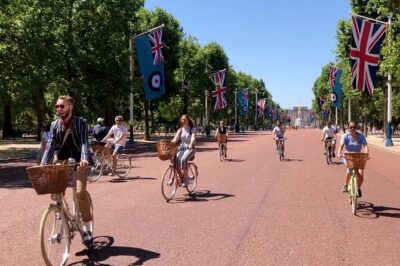
London Bike Tour: Landmarks, Secret Gems, Pub Stop & Street Art
Read our review →

Browse the lists this tour appears in