
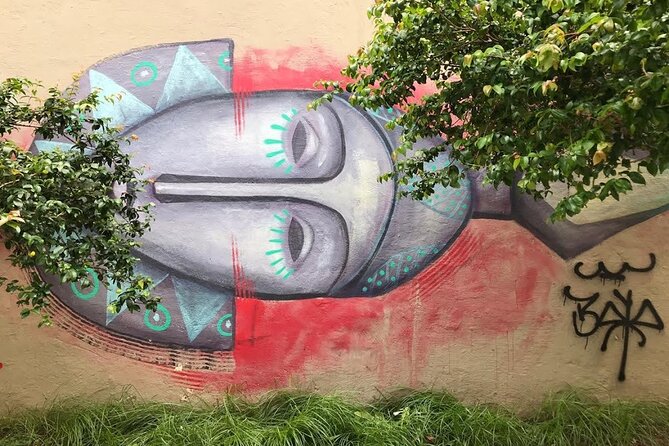
REVIEW · BRAZIL MURAL TOURS
Rio Street Art Tour
Street art here doubles as a city history lesson. This three-hour Rio Street Art Tour links murals with Afro-Brazilian culture, politics, Carnival, and architecture, giving you far more context than a quick photo stop. I like the use of Rio’s subway and VLT, and I like that the private format works even for a solo visitor. The main consideration is the pace: you will walk quite a bit and spend time using public transportation.
Guide Wellington receives especially warm praise for his English, humor, local knowledge, and personal approach. At $68.61 per person, the price is reasonable for a private tour, especially if two or more people share it, though public-transport fares and the lack of included admission tickets mean you are mainly paying for the guiding.
Five things to know before you go
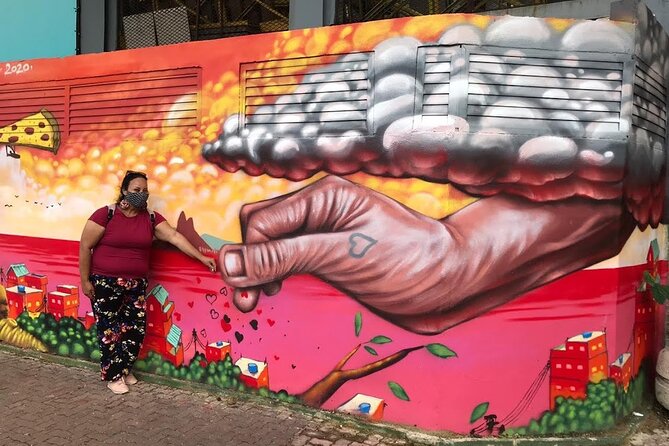
- Murals with meaning: Wellington explains the social, political, and cultural ideas behind the artwork, not just the names of the artists.
- A real city route: You use the subway, VLT, and your own feet between Glória, Cinelândia, Selarón Steps, and Porto Maravilha.
- Little Africa connection: The route reaches areas linked to the history of enslaved Africans in Brazil and Rio’s Afro-Brazilian culture.
- Private from one person up: The tour can operate with just you, making it useful for solo visitors or families wanting a flexible pace.
- A famous finish: The final stretch reaches the giant mural near Porto Maravilha and the Museum of Tomorrow.
- Bring water and good shoes: The walk is manageable, but three hours on city streets can feel long in Rio’s heat.
Why Rio’s street art deserves a closer look
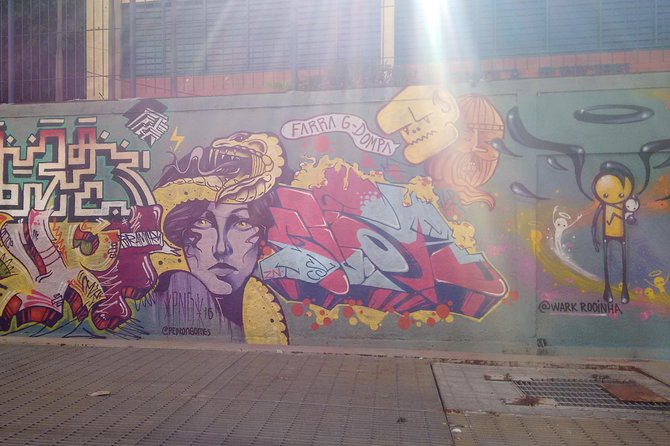
Rio’s murals are not simply colorful backdrops for holiday photographs. They can speak about race, inequality, politics, Carnival, religion, neighborhood identity, and the city’s changing public spaces.
That is the strength of this experience. Wellington does not treat the art as decoration. He explains the figures and messages shown on the walls, then connects them to Rio’s past and present. You get a lesson in the city while standing in front of the work itself.
Several people especially praised his ability to move between subjects. A mural may lead to a discussion about slavery, which may lead to the port, architecture, Carnival, samba schools, or current political issues. That broad approach suits you if you want to understand Rio rather than simply collect mural photographs.
The tour is also a useful introduction to central Rio. It brings together old civic buildings, public squares, transport systems, museums, famous stairways, and port redevelopment. You see how different parts of the city relate to one another instead of viewing each attraction in isolation.
A few more mural tours around the world worth a look
- Medellin: Comuna 13 Graffiti Tour, Cable Car & Street Food
★ 4.8 · 9,046 reviews - CDMX: Xochimilco, Coyoacan, Frida Kahlo Museum & Murals Tour
★ 4.4 · 3,025 reviews - Amsterdam: Streetart Museum STRAAT Entrance Ticket
★ 4.8 · 2,137 reviews
Meeting at the Municipal Theater
The published starting point is the Municipal Theater of Rio de Janeiro at Praça Floriano in Centro. This is a practical place to begin because the route quickly moves into the central districts and historic areas.
The first part includes a subway ride toward Glória, where the tour begins with what is described as Rio’s first legalized graffiti. That detail gives the opening some importance. You are not starting with the city’s most famous mural and working backward. You begin with a piece connected to the acceptance of graffiti as a legitimate part of public life.
From there, Wellington brings in Rio’s European architectural influence. This is one of the tour’s best ideas because the buildings help explain the setting around the art. The experience is not only about walls. It is also about how public architecture, transport, old streets, and new cultural projects share the same center.
If you are interested in urban design, this early section may be especially useful. If you only want a fast sequence of photo opportunities, the historical explanations may feel slower.
Selarón Steps and the color of Santa Teresa
The Escadaria Selarón is one of Rio’s best-known sights and is described as the city’s third most visited tourist attraction. The steps were decorated with colorful tiles by Chilean artist Jorge Selarón, and they have become a familiar Rio image.
The tour allows about 20 minutes here. That is enough to see the staircase and hear its place in the city, but it is not a long, unhurried visit. The steps can be busy, so your guide’s interpretation matters more than simply arriving, taking a picture, and leaving.
This stop also shows the tour’s balance. It does include a major sight, but it does not build the whole experience around famous attractions. Selarón Steps are one part of a route that also includes less familiar streets, public transport, murals, museums, and the port area.
You should expect some stairs and uneven walking here. Anyone who dislikes hills or long periods on foot should take the three-hour estimate seriously.
Cinelândia, old Rio, and the VLT connection
Cinelândia brings the tour back to Rio’s civic and cultural center. The stop includes the city’s main libraries and main theater, along with more discussion of architecture and urban history.
This is a good place to appreciate how much Rio’s central districts have changed. The tour links grand public buildings with the street art around them, showing the contrast between formal institutions and art created in public space.
The VLT, Rio’s light rail system, is part of the route from the central area toward the Olympic Boulevard. Public transportation is not a minor detail here. It helps you see how the districts connect and gives the outing a more local feel than riding from one attraction to another in a private vehicle.
One useful detail comes from a solo outing: Wellington handled the train ticket, helping the visitor avoid a possible fine. That suggests the guide pays attention to practical details during the transit portions. Still, you should confirm current ticket arrangements when booking, since the published information does not say that transport fares are included in the price.
Same walls, a different guide:
- Belfast: Murals Taxi Tour
★ 4.9 · 2,047 reviews - Wynwood Graffiti Golf Cart Small-Group Tour
★ 5.0 · 1,646 reviews - London: Street Art and Graffiti Guided Walking Tour
★ 4.9 · 1,354 reviews - Lisbon: Street Art Tour
★ 4.9 · 1,324 reviews
Olympic Boulevard and the Museum of Tomorrow
Olympic Boulevard is home to several of Rio’s main museums. The area was redeveloped around the 2016 Olympic period and is now one of the city center’s major cultural zones.
The route includes the Museum of Tomorrow, a futuristic building focused on science, society, and the future of the planet. The tour does not list an interior museum visit or an admission ticket, so you should expect to see the building and surrounding area rather than assume an included museum entry.
The nearby Museu de Arte do Rio is also part of the wider setting. The route gives you a chance to understand why these museums were placed beside the port and how the area has been reshaped as a public cultural district.
I like this part because it places street art beside polished museum architecture. Rio’s public art does not exist in a separate artistic quarter. It shares sidewalks and open spaces with major institutions, new construction, and older neighborhoods.
The published timing gives about 30 minutes at Olympic Boulevard. That is enough for orientation and outdoor viewing, but not enough for a full museum visit. Plan any museum interiors for another time unless Wellington confirms otherwise.
The giant mural at Porto Maravilha
The final stop is Porto Maravilha, where the tour ends near the large graffiti mural often called the Etnias mural. It is described as the largest graffiti mural in the world.
The mural was created by Brazilian artist Eduardo Kobra for the 2016 Olympics and features large faces representing Indigenous people from different parts of the world. Its scale is difficult to appreciate from a single photograph. The tour’s one-hour allocation gives Wellington time to explain the images and the port district around them.
This is also where the art connects directly with a painful part of Rio’s past. The port area is tied to the arrival and enslavement of Africans in Brazil. The nearby Little Africa area carries that connection into the streets, archaeological sites, and cultural memory of the district.
Several people valued this part of the experience most. One visitor changed the planned street-art focus to spend more time learning about Little Africa, and Wellington adjusted without difficulty. That flexibility matters if your interests lean toward slavery, Afro-Brazilian culture, and the formation of modern Rio.
The final section can be more rewarding than a simple mural stop because the port gives the artwork a setting. You see a huge contemporary painting in an area shaped by migration, forced labor, commerce, redevelopment, and public memory.
Wellington’s guiding style
Wellington is the guide most often named in the feedback, and his approach seems to be the main reason the tour scores so highly. People describe him as friendly, animated, patient with questions, and able to explain difficult subjects in clear English.
His value is not limited to art facts. He brings in stories about Rio, Carnival, samba schools, politics, architecture, and his own experience as a local. That makes the route feel less like a lecture and more like an informed walk with someone who wants you to understand his city.
He also appears comfortable with different kinds of visitors. The tour has worked for families, friends, and solo visitors. One person used the outing to practice Portuguese, while another appreciated the chance to ask detailed questions about political and social issues.
One point is worth keeping in mind. Most of the praise focuses on Wellington, while one comment names Gabriel as the guide. If having Wellington specifically matters to you, request him when you book rather than assuming every departure will use the same guide.
What the $68.61 price gets you
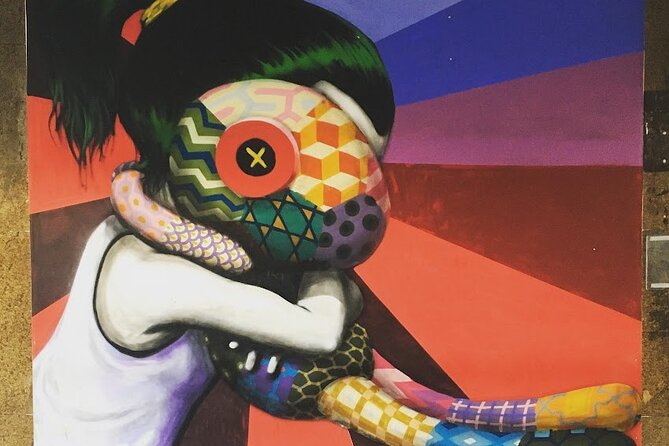
At $68.61 per person, this is not the cheapest way to see Rio’s center. It is also not a standard group bus tour. The activity is private, and only your party participates, which changes the value calculation.
For a solo visitor, the price buys personal attention and the ability to ask questions without holding up a large group. For a family or group of friends, the per-person cost becomes easier to justify because the guiding fee is spread across several people.
There are no admission tickets listed for the stops. You are paying for the guide’s time, interpretation, route planning, and help with public transportation. The tour is therefore a good buy if you want context and local conversation. It is less attractive if you only want transportation between famous sights or prefer to explore murals independently.
Because the tour lasts about three hours, you are paying for a compact introduction rather than a full-day city program. The route covers a surprising number of districts, but each stop receives limited time. That is useful early in a Rio visit, when you want to learn what deserves a longer return visit.
Walking, transport, and practical comfort
The tour combines walking with subway and VLT rides. That gives you a more grounded look at Rio, but it also means you should dress for movement rather than for a formal museum visit.
Bring water. One person specifically described the route as easy walking but still advised carrying a bottle. Rio’s heat can make a moderate walk feel demanding, and the schedule includes several outdoor areas.
Wear comfortable shoes, particularly for the Selarón Steps and the longer connections between stops. The published duration is approximate, so allow a little flexibility if you need regular pauses or if public transport takes longer than expected.
Most people can participate, and the activity is near public transportation. The information does not list specific wheelchair details or support for mobility devices, so anyone with access needs should confirm the route before booking.
The tour requires good weather. If poor weather cancels it, you can receive a full refund or move to another date.
Who will enjoy this tour most
I would recommend it to you if you enjoy public art but want more than artist names and photo stops. It is also a strong choice if you want a first look at central Rio, especially the port district and Little Africa.
Families may like the mix of murals, transport, famous steps, and large public spaces. Solo visitors get the greatest practical benefit from the private format, since the guide can adapt the conversation to your interests.
It suits visitors who want to learn about Brazil’s social and political past through visual material. The discussions of slavery, Afro-Brazilian culture, Carnival, and city development are central to the experience.
You may want another option if you dislike walking, prefer air-conditioned transport, or want long interior visits at museums. You should also know that some murals may be older rather than newly painted. One person specifically wished for more recent or younger works, so art collectors seeking the newest pieces may find the selection somewhat familiar.
Should you book the Rio Street Art Tour?
Book it if you want Rio explained through its walls, streets, transport, and people. The strongest reasons are Wellington’s personal guiding style, the private format, and the route from Cinelândia and Selarón Steps to Little Africa and the giant Porto Maravilha mural.
At 4.9 from 39 ratings, with all listed ratings recommending it, the experience has a strong record. Still, its value depends on your interests. You are paying for interpretation rather than admission tickets, and the three-hour route requires walking in the heat.
For a first or second day in Rio, I think it makes particular sense. You get your bearings, learn which central districts deserve more time, and see a side of the city that a coach tour usually misses. Request Wellington if possible, bring water, and leave room for the tour to lead you toward a later lunch or a return visit to Little Africa.
FAQ
How long does the Rio Street Art Tour last?
The tour lasts approximately three hours.
What is the price?
The listed price is $68.61 per person.
Where does the tour begin?
It begins at the Municipal Theater of Rio de Janeiro, at Praça Floriano in Centro, Rio de Janeiro.
Where does the tour end?
The activity ends at a different location from the meeting point, in the Porto Maravilha area near the large graffiti mural. The route also includes the Olympic Boulevard and Museum of Tomorrow area.
Is the tour private?
Yes. Only your group participates in the activity.
Can one person book the tour?
Yes. The tour can accommodate a group of one person.
Does the tour use public transportation?
Yes. The route includes the subway and the VLT, as well as walking between sights.
Are admission tickets included?
The listed stops show no admission ticket charge. No paid museum admission is listed as included.
Is the tour available near public transportation?
Yes. The experience is near public transportation, and public transit is used during the route.
Can I cancel for a full refund?
Yes, if you cancel at least 24 hours before the scheduled start time. Cancellations made less than 24 hours before the start are not refunded. If poor weather cancels the tour, you can receive a full refund or choose another date.
Just added around the world
- Your Own Belgrade: Street Art and Hidden Gems Walking Tour★ 5.0 · 2 reviews
- Vancouver: Street Art & Craft Coffee Walking Tour w/ Tasting★ 4.8 · 11 reviews
- Wynwood Walls Street Art & Neighborhood Walking Tour★ 4.9 · 9 reviews
- Xochimilco floating gardens, Coyoacan and UNAM murals★ 4.0 · 6 reviews
- UNAM: Murals & Revolution★ 4.9 · 8 reviews
- Urban Canvas: Osaka Street Art Bike Tour★ 5.0 · 10 reviews
- Vancouver: Street Art & Craft Beer Walking Tour with Tasting★ 4.8 · 14 reviews
- Small-Group Graffiti Tour and Workshop in El Carmen★ 5.0 · 2 reviews
Brazil Mural Tours, compared.


Private Street Art Tour of São Paulo with Batman´s Alley Visit
Read our review →

Sao Paulo, Pinheiros – Food & Graffiti Tour | in English
Read our review →
Browse the lists this tour appears in