
REVIEW · NAPLES MURAL TOURS
Rione Sanità Street Art and Traditions Tour for Small Groups
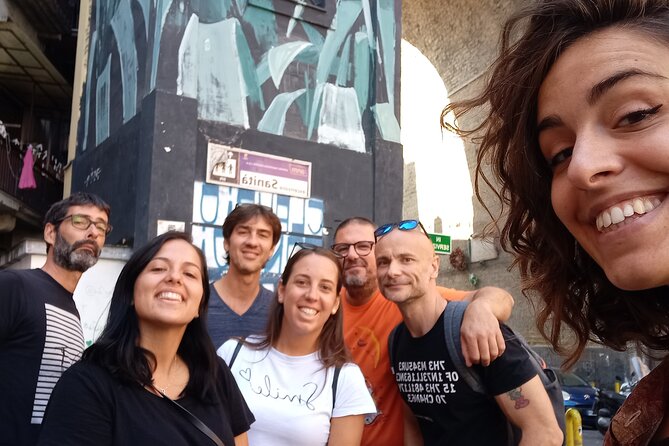
Naples rewards the curious walker. This small-group tour takes you through Rione Sanità, a neighborhood where Baroque palaces, ancient burial grounds, street art, cinema, food, and local renewal meet. Guide Valeria gives the walk a personal feel, sharing stories tied to her neighborhood and introducing the social changes shaping it today.
I like the maximum group of 12, which leaves room for questions and conversation. I also like the simple food finish: coffee or tea with Poppella’s Fiocco di Neve, the famous soft Neapolitan snowflake pastry. The main caution is that the Catacombs of San Gaudioso cost an additional €11, and the route may feel less polished than a standard city-center sightseeing walk.
Key points to know before booking
- Rione Sanità beyond the usual Naples route: See a working neighborhood rarely given much time in standard city tours.
- Valeria’s personal approach: Her stories connect architecture, local families, cinema, art, migration, and neighborhood renewal.
- Five strong cultural stops: Visit Palazzo dello Spagnolo, Palazzo Sanfelice, Santa Maria della Sanità, Totò’s birthplace, and the area around an ancient Neapolis entrance.
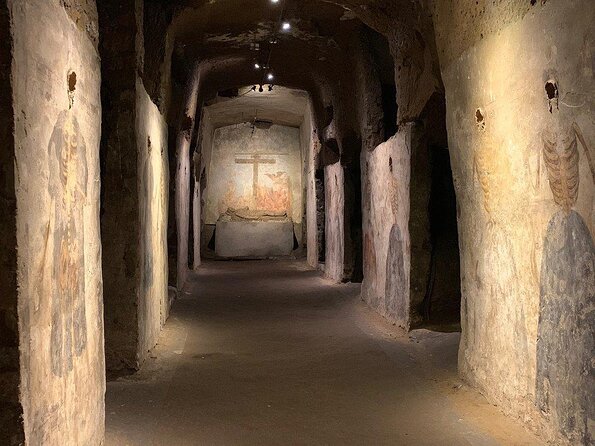
- Optional Catacombs of San Gaudioso: Add the €11 admission at the end if you want to see the early Christian cemetery beneath the basilica.
- Small group and short duration: Plan on about two and a half hours with no more than 12 people.
- A sweet Neapolitan finish: Coffee or tea and Poppella’s Fiocco di Neve are included.
Why Rione Sanità makes a better walk than another postcard stop
Many first visits to Naples focus on the historic center, the Spanish Quarter, or the waterfront. Those areas deserve your time, but Rione Sanità gives you a different view of the city. It is a neighborhood shaped by burial grounds, noble families, poverty, art, local enterprise, and attempts at renewal.
That mixture is the reason I find this tour more worthwhile than a simple walk from one pretty building to another. You are not only looking at façades. You are hearing how the district changed over centuries and how people are working to reshape its future.
The area has served very different purposes over time. It began as a burial area outside ancient Naples. In the 17th century, it became a refuge from plague beyond the city walls. Noble families later built grand homes here, and the district eventually became one of Naples’ most socially excluded neighborhoods.
Today, local youth cooperatives, cultural projects, art, and new hospitality are helping change its public image. The tour does not pretend that every problem has disappeared. That is part of its value. You get a more honest picture of Naples, one that includes beauty, contradiction, humor, and difficult social questions.
A few more mural tours around Naples worth a look
- Naples Spanish Quarters Walking Tour Street Art, Folklore & Sweet
★ 5.0 · 797 reviews - Naples: Spanish Quarters Folk Street Art w/ Sweets Tasting
★ 4.9 · 788 reviews - Naples: Street Art, Wine and Food Tasting Walking Tour
★ 5.0 · 163 reviews
Starting at Porta San Gennaro
The walk begins at Via Porta S. Gennaro, 2, near an entrance door to ancient Neapolis created in the 10th century. This gives you an immediate sense of how closely Naples layers different periods on top of one another.
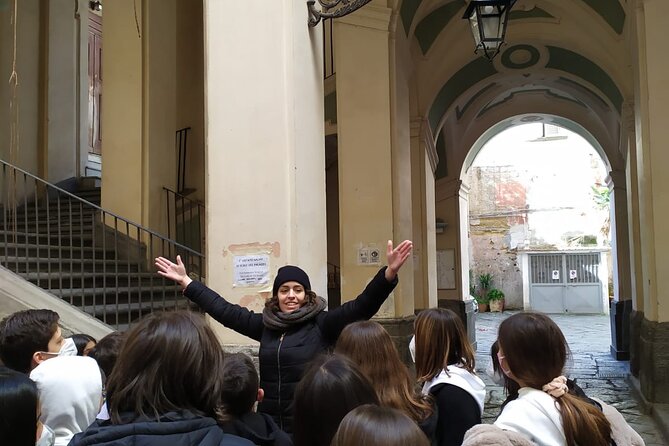
You begin with a threshold, both literal and historical. From here, the route moves into Rione Sanità and its narrow streets, where the setting is as important as the formal stops. Valeria’s style is conversational rather than stiff. She has been praised for turning the walk into something closer to a neighborhood visit than a speech delivered to a group.
A useful tip: arrive ready to walk slowly and listen. This is not a fast checklist of monuments. The route includes architecture, public art, personal stories, food, and social context, so the strongest moments may come between the official stops.
Palazzo dello Spagnolo and the drama of Neapolitan Baroque
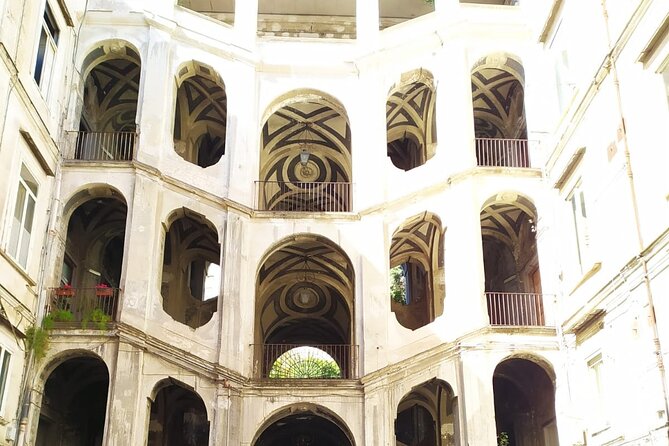
The first listed stop is Palazzo dello Spagnolo, a national monument known for its 18th-century Neapolitan Baroque design. You have about 10 minutes here, and admission is free.
The palace is best known for its grand staircase and theatrical architectural details. Even with a short visit, you can appreciate how noble buildings once used movement, decoration, and scale to create a sense of power.
I like that this stop does not require a ticket or a long indoor visit. It lets you see one of Rione Sanità’s signature buildings without turning the walk into a museum marathon. The drawback is that 10 minutes passes quickly, especially if the group is interested in architectural details or photography.
Valeria’s role matters here. A building like Palazzo dello Spagnolo can become just another ornate façade if you do not understand its place in the neighborhood. With local context, it becomes part of the larger story of how Rione Sanità welcomed wealthy families while remaining socially separate from other parts of Naples.
Palazzo Sanfelice and a palace with a personal connection
The next stop is Palazzo Sanfelice, linked to the architect Sanfelice and built in the early 18th century. The visit lasts about 10 minutes and is free.
This is another chance to see how grand architecture developed inside a district often reduced to stereotypes. The palace adds a personal dimension because it is associated with its architect, rather than being presented only as an anonymous historic building.
You may notice a pattern in the first part of the tour. The route places noble architecture beside streets shaped by ordinary daily life. That contrast is central to understanding Rione Sanità. The district is not simply poor, colorful, or photogenic. It contains layers of status and history that sit close together.
Do not expect a long palace interior visit. The experience is primarily a guided walk, and the listed time suggests that the focus is on the exterior, the architecture, and the story attached to the site.
Same walls, a different guide:
- Naples Essentials: Monuments, Local Life & Street Art
★ 4.9 · 79 reviews - Naples: The Spanish Quarters, Street Art and Local Market
★ 4.7 · 59 reviews - Rione Sanità tour among baroque, revival, street art & food
★ 4.8 · 59 reviews - Street art tour of the Spanish Quarters & Maradona idol
★ 4.7 · 49 reviews
Santa Maria della Sanità and its majolica dome
Santa Maria della Sanità receives about 20 minutes, making it one of the more substantial stops. The church is noted for its striking architecture and majolica dome, which is one of the visual highlights of the route.
The building has an evocative quality that rewards a slower look. Majolica is closely associated with the decorative style of southern Italy, and the dome gives the church a distinctive Neapolitan character. Even if you are not an architecture specialist, the combination of color, shape, and setting is easy to appreciate.
This stop also prepares you for the Catacombs of San Gaudioso below. The church is not an isolated monument. It sits above an older burial world, linking religious life, art, and the ancient history of the district.
Admission to the church is free. The visit may be especially useful for you if you want a cultural experience without paying an entry fee at every stop. As with the palaces, though, the tour cannot provide unlimited time for quiet viewing.
The Catacombs of San Gaudioso, worth the extra €11?
The Catacombs of San Gaudioso are the second early Christian cemetery in Naples, located beneath the Basilica of Santa Maria della Sanità. Entry is optional and costs €11 per person, paid separately at the end of the tour.
This is the clearest add-on decision you will make. If underground Christian burial sites interest you, the extra fee adds real value. The catacombs connect directly to the church and to the district’s earliest role as a burial area. They also help explain why Rione Sanità developed outside the old city walls.
If you prefer open-air walking, architecture, food, and street scenes, you may decide that the main tour is enough. The listed visit time is only about 10 minutes, so you should not expect the optional catacomb visit to become a long separate excursion within the two-and-a-half-hour experience.
I would decide before arriving. The catacombs are not included in the $50.60 tour price, and the additional €11 should be part of your budget if you want to go below the basilica.
Totò’s birthplace and the personal side of Naples
The tour visits Casa Natale di Totò, the birthplace of Totò, one of Italy’s best-known comic performers and a major figure in Italian theater and cinema. You have about 20 minutes here, with no admission charge.
The house is currently in very poor condition. That may sound disappointing, but it is also revealing. The stop is not about entering a beautifully restored museum. It is about paying respect to a major cultural figure while seeing how uneven preservation can be in Naples.
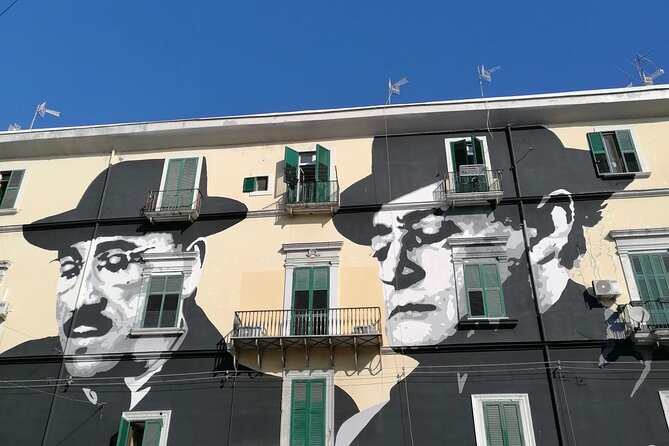
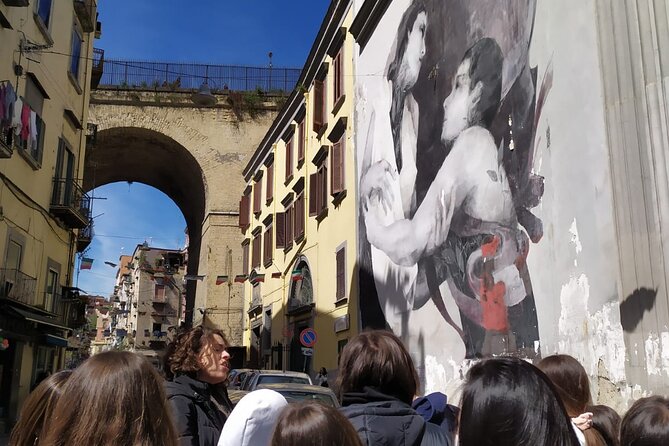
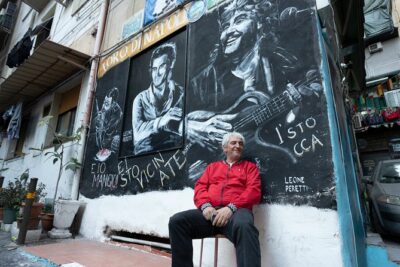
Totò gives the neighborhood a direct connection to Italian popular culture. The tour also brings in other local artists and performers, including Eduardo De Filippo and Massimo Troisi, through murals and public art. These references help show that Rione Sanità’s cultural identity is not limited to old churches and palaces.
I appreciate the honesty of this stop. You see both pride and neglect in the same place. That tension is more instructive than a polished display built only to please tourists.
Street art, Jago, and stories beyond the guidebook
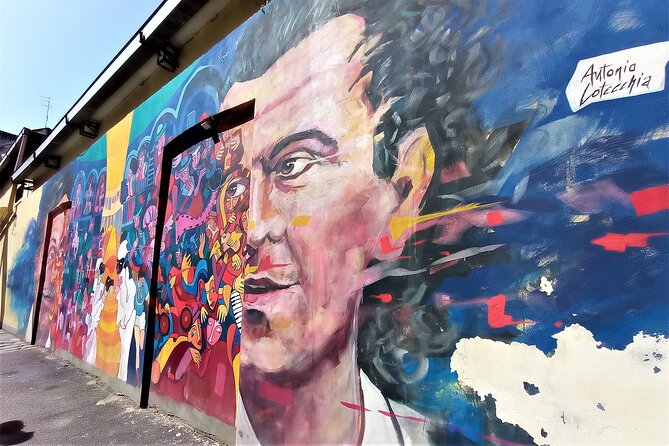
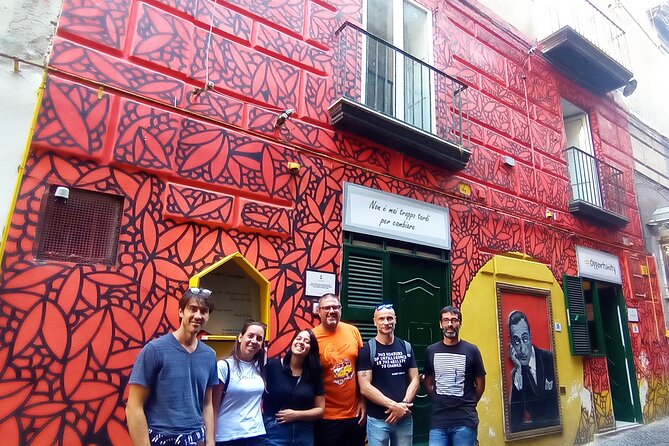
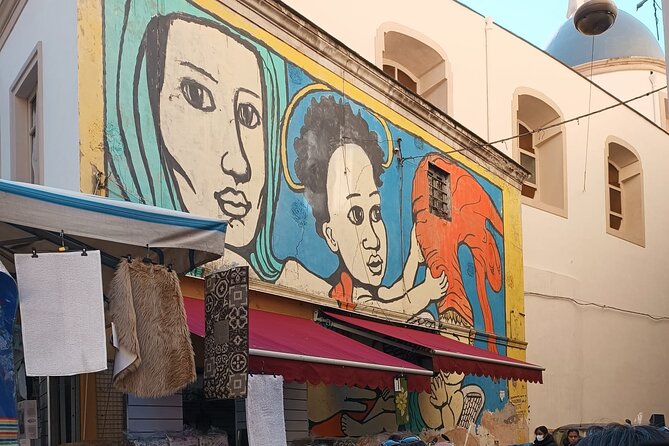
Street art is one of the reasons to choose this tour instead of a standard architecture walk. Murals connected with De Filippo, Troisi, and Totò add modern voices to the older streets. Sculptures by the young artist Jago, including the Veiled Son, bring another layer of contemporary art.
These works are not merely decoration. They form part of the district’s effort to use art and culture as tools for renewal. You get to consider how a neighborhood can tell its story through public spaces, local artists, and projects run by younger residents.
The tour also addresses migration and urban regeneration. That makes it more thoughtful than a walk focused only on colorful walls and amusing anecdotes. Valeria has been praised for discussing current issues with sensitivity, while still keeping the tone friendly and entertaining.
One unusual feature is the use of a treasure-hunt style approach. This can make the route more engaging, especially if you enjoy finding details in the streets rather than standing still while someone lists dates. It may feel less formal than a traditional guided tour, which is either a benefit or a drawback depending on what you want.
The food stop: Poppella’s Fiocco di Neve
Food is included in a small but meaningful way. You receive coffee or tea and a Fiocco di Neve from Poppella, a well-known local sweet associated with Naples.
The pastry gives the walk a pleasant finish and adds something you can taste, not just photograph. Some outings have also included fried pizza, but I would not count on that as part of the stated package. The confirmed inclusion is the drink and Fiocco di Neve.
This is not a food tour, so you should not book it expecting several tastings or a full meal. Think of the snack as a local punctuation mark after a neighborhood walk. If you are hungry, plan another meal separately.
The food also fits the tour’s wider purpose. You are not only being shown monuments from a distance. You are being introduced to a neighborhood through its people, stories, streets, and everyday pleasures.
Group size, language, and practical value
The price is $50.60 per person. For a two-and-a-half-hour English-language walk with a maximum of 12 people, that is a reasonable price if you value local interpretation and conversation more than a long list of paid attractions.
The free admission at Palazzo dello Spagnolo, Palazzo Sanfelice, Santa Maria della Sanità, and Casa Natale di Totò helps keep the base cost clear. The Catacombs of San Gaudioso are the only stated paid add-on, at €11.
A small group makes a difference in Rione Sanità. Streets can be close and active, and a group of 12 is easier to keep together than a large coach group. You also have a better chance to ask Valeria about the people, art, and social issues behind what you are seeing.
The tour is offered in English. It begins and ends at Via Porta S. Gennaro, 2, and is near public transportation. Service animals are allowed, and most people can take part. Since the experience depends on walking outdoors, poor weather can lead to a new date or a full refund.
Free cancellation is available up to 24 hours before the start time. If you cancel later, changes and refunds are not accepted under the stated policy. Confirmation arrives within 48 hours, subject to availability, and the experience may be canceled if the minimum number of participants is not reached.
Who should book this Rione Sanità walk?
I would choose this tour if you want Naples presented as a living neighborhood rather than a set of famous monuments. It suits you especially well if you enjoy architecture, local food, cinema, street art, social history, and guides who speak from personal experience.
It is also a good match if you have already seen the major central sights and want a different side of the city. The route adds context to Naples without requiring a full day or a major admission budget.
You may want another experience if you prefer formal museum visits, guaranteed indoor access, or a tightly timed schedule. The route is shaped by conversation and local encounters, so it may feel less predictable than a standard sightseeing program.
Should you book it?
Book this tour if you want a personal, small-group introduction to Rione Sanità and appreciate a guide who connects old buildings with present-day Naples. Valeria’s warmth, neighborhood ties, and attention to art and social change are the main reasons to choose it.
Add the Catacombs of San Gaudioso if early Christian burial sites interest you. Skip that extra cost if your priority is street life, architecture, Totò, public art, and the included Fiocco di Neve.
For $50.60, this is a strong choice for curious visitors who want to look beyond the usual Naples route. Just come prepared for an honest neighborhood walk, not a polished parade of restored sights.
FAQ
How much does the Rione Sanità Street Art and Traditions Tour cost?
The tour costs $50.60 per person. The Catacombs of San Gaudioso are not included and cost an additional €11 per person.
How long does the tour last?
The experience lasts approximately 2 hours and 30 minutes.
What language is the tour offered in?
The tour is offered in English.
How many people can join the tour?
The maximum group size is 12 people.
Where does the tour begin and end?
The tour begins at Via Porta S. Gennaro, 2, 80138 Naples, Italy, and ends back at the same meeting point.
Is the Catacombs of San Gaudioso visit included?
No. Entry is optional and costs €11 per person, paid separately at the end of the tour.
What food or drinks are included?
Coffee or tea and Poppella’s Fiocco di Neve are included.
Just added around Naples
- Naples Murals Catacombs and Folklore Sanità District Tour★ 4.5 · 5 reviews
- Street Art of Spanish Quarters and Maradona Tour★ 3.5 · 3 reviews
- The Spanish Quarters, Street Art and Local Market Tour in Naples★ 5.0 · 23 reviews
- Rione Sanità: tour among street art, architecture, folklore★ 4.5 · 2 reviews
- Naples : Spanish Quarter & Maradona Street Art Tour★ 4.8 · 5 reviews
- Naples Walking Food Tour: Street Food and Maradona Murales★ 3.1 · 4 reviews
- Naples: Football Tour with Maradona Stadium & Mural★ 4.4 · 5 reviews
- Spanish Quarter of Neaples StreetArt & Traditions, with coffee and babà★ 5.0 · 47 reviews
Naples Mural Tours, compared.
Naples Spanish Quarters Walking Tour Street Art, Folklore & Sweet
Read our review →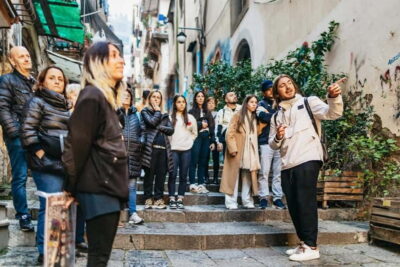
Spanish Quarters Folk Street Art w/ Sweets Tasting
Read our review →
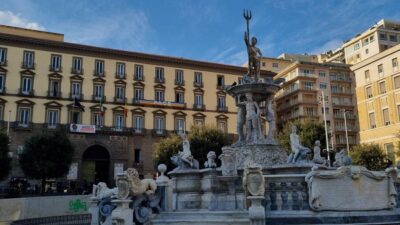
Naples Essentials: Monuments, Local Life & Street Art
Read our review →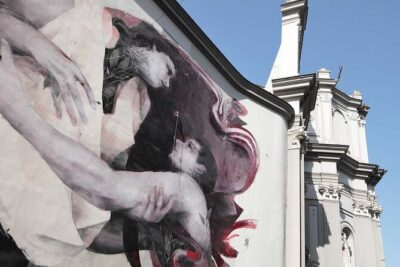
Rione Sanità tour among baroque, revival, street art & food
Read our review →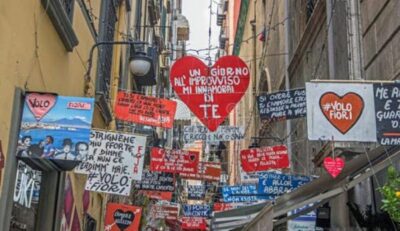
The Spanish Quarters, Street Art and Local Market
Read our review →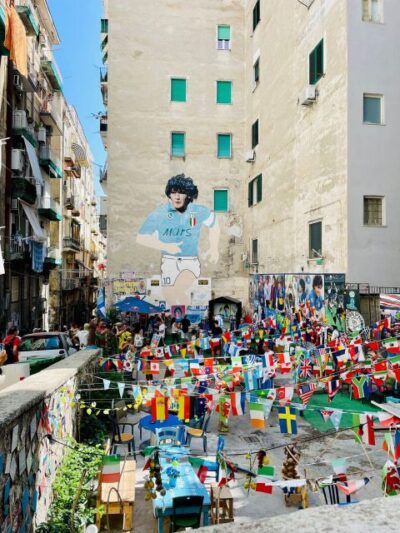
Street art tour of the Spanish Quarters & Maradona idol
Read our review →Rione Sanità Tour among Baroque, Revival, Street Art & Food
Read our review →Browse the lists this tour appears in